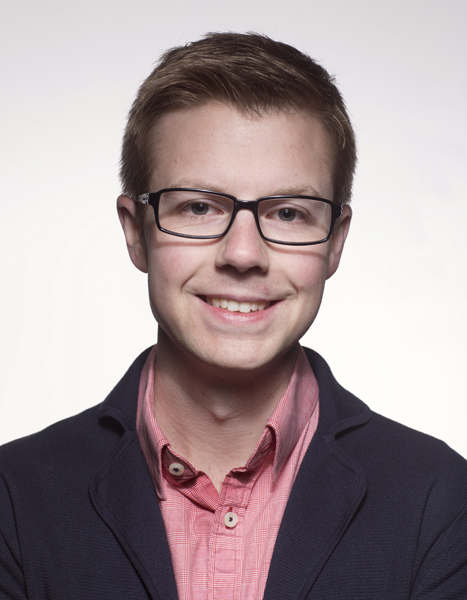
Christoph Hochrainer is a PreDoc Researcher at Technische Universität Wien, affiliated with the Software Engineering department. His academic role involves research in software systems and formal methods, supported by projects like ForSmart (2023–2027) and MirandaTesting (2023–2028). He completed his Diploma in automated reasoning at TU Wien in 2020. His research spans software engineering, cryptography, and programming languages, with specialized interests in fuzzing techniques, architecture description languages, and smart contract security. Recent work emphasizes zero-knowledge circuits, Solidity benchmarking, and macro systems for domain-specific tooling. Christoph's publications consistently explore automated testing and formal verification, with a trend toward practical applications in blockchain and secure software pipelines. He supervises student theses, including work on inconsistency detection in Solidity smart contracts. He contributes to collaborative projects focused on formal methods and software reliability, operating within TU Wien's research units. No scientific awards are documented.
Elia Annibale is a Full Professor of Computational Linguistics at the University of Salerno, Italy, holding positions since 1987. He leads the Department of Political, Social and Communication Sciences and previously directed the Department of Communication Sciences. His academic journey includes a PhD in Computational Linguistics from Paris 7 University (1979) and earlier roles at the University of Paris and the University of Southern California. Research focuses on computational linguistics, machine translation, and semantic web technologies. Notable projects include the ESPRIT MULTILEX and GENELEX EU initiatives, developing multilingual linguistic resources. Awards include Academia Europaea membership (1989) and leadership in PRIN research units. Education: PhD in Computational Linguistics, University of Paris VII (1979) Laurea in Modern Literature, University of Naples (1972) Publications span theoretical linguistics, applied computational linguistics, and semantic analysis. Current projects include a semantic web search engine and lexical resource development for e-government.
C.-T. James Huang is a Professor of Linguistics at Harvard University since 2001, where he has also served as Director of Graduate Studies (2002–present) and Acting Chair (2006). He previously held faculty positions at the University of California, Irvine (1989–2002), Cornell University (1985–1991), National Tsing Hua University (1983–1985), and the University of Hawai’i (1982–1983). His work focuses on formal linguistic theory, particularly syntax and its interface with semantics, with a strong emphasis on Chinese and East Asian languages. Ph.D. in Linguistics , Massachusetts Institute of Technology (MIT), 1982 MA in Linguistics , National Taiwan Normal University, 1974 BA in English , National Taiwan Normal University, 1971 His research spans generative syntax, the syntax-semantics interface, parametric theory, and syntactic typology. He has made significant contributions to understanding argument structure, syntactic movement, anaphora in Chinese, and the formal analysis of questions across languages. Recent work explores the analytic-synthetic macro-parameter in syntactic typology, linking it to micro-parameters in linguistic variation and change. He has been honored with prestigious awards, including election as Academician of Academia Sinica (2016), Fellow of the Linguistic Society of America (2015), and a Guggenheim Fellowship (1988–1989). He also served as President of the International Association of Chinese Linguistics (2000–2001) and founded the Journal of East Asian Linguistics .
Andrea Moro is a Full Professor of General Linguistics at the University School for Advanced Studies IUSS - Pavia since 2010. He has held previous academic positions at prestigious institutions including Università Vita-Salute San Raffaele (2001-2010) and Università di Bologna (1999-2001). Ph.D. in Linguistics, University of Padova (1993) Diplôme d'Études Supérieures in Syntax Theory, Université de Genève (1993) Laurea in Classical Letters, University of Pavia (1987) His research spans neurolinguistics, syntactic theory, and formal semantics, focusing on the intersection of language, cognition, and neuroscience. He pioneered the study of dynamic antisymmetry in syntax and explores the biological foundations of linguistic structures. He has received multiple literary and scientific awards, including the prestigious Flaiano Prize for Literature and recognition from the American Publishers Award. His work has been honored in both academic and literary contexts. Moro served as Vice Rector and Third Culture Delegate at IUSS since 2013, while directing research centers like NEtS (Neurolinguistics and Theoretical Syntax) and leading joint Ph.D. programs with San Raffaele University. He has contributed to international educational initiatives in Argentina, Chile, and Europe.
Tobias Nipkow is a Professor for Logic and Verification at the Department of Informatics, Technical University of Munich (since 2011), previously serving as Professor for Theory of Programming (1992-2011). His career spans academic roles at The University of Manchester, MIT, and University of Cambridge, including positions as Lecturer, Research Associate, and Advanced SERC Fellow. Research Interests focus on foundational aspects of computer science, particularly Formal verification of algorithms and systems Interactive theorem proving Term rewriting systems Semantics of programming languages Development of proof assistants Automated reasoning techniques Notable Publication Trends include extensive contributions to Isabelle/HOL formalization, verification of programming languages, and critical advancements in term rewriting and automated deduction. His work bridges theoretical foundations with practical verification tools. Scientific Awards Herbrand Award for Distinguished Contributions to Automated Reasoning (2021) Editorial Leadership includes tenure as Editor-in-Chief of the Journal of Automated Reasoning (2007-2020) and co-founding editor roles for ACM Transactions in Computational Logic and Logical Methods in Computer Science .
Mary Dalrymple is a Professor Emerita of Syntax at the University of Oxford's Faculty of Linguistics, Philology & Phonetics. She previously held the position of Professor of Syntax (2006–2021) and University Lecturer in General Linguistics (2004–2006). Her research focuses on Lexical Functional Grammar (LFG), glue semantics, descriptive and theoretical syntax, and the documentation of Austronesian and Papuan languages. Her major grants and projects include: 2022–2024: Arts and Humanities Research Council-funded project on lexical resources for Enggano 2019–2024: AHRC project analyzing Enggano's linguistic history 2017–2018: SynSem project on integrating linguistics and computing at the Norwegian Academy of Sciences Notable awards include Fellowship of the British Academy (2013) and Erskine Fellowship (2004). Her work bridges formal syntax with computational linguistics and typological documentation, particularly in endangered languages. Her research consistently explores the interplay between formal linguistic theory and empirical data from understudied languages, with a focus on number systems, anaphora, and morphosyntactic variation.
Terje Lohndal is a Professor of English Linguistics at the Norwegian University of Science and Technology (NTNU) and Adjunct Professor at UiT The Arctic University of Norway. He serves as Dean of the Faculty of Humanities at NTNU since April 2025 and previously held leadership roles, including Vice-Dean of Research (2021-2025) and Deputy Head of Research (2015-2021). His research spans grammatical structures across languages, focusing on heritage languages, multilingualism, and language change. Lohndal’s research explores abstract grammatical rules, language mixing in multilingual contexts, and the evolution of grammatical gender in Norwegian dialects. He is affiliated with the Center for Language, Brain & Learning (C-LaBL) at UiT and leads the GenVAC project on gender variation in Norwegian. His recent publications analyze syntactic variation, heritage language acquisition, and morphological shifts in Norwegian dialects, emphasizing cross-linguistic influence and theoretical linguistics. Lohndal’s work bridges empirical studies with formal grammatical theory. Awarded by the Research Council of Norway (2018), Fridtjof Nansen (2018), and the Nils Klim Prize (2014), he is a member of multiple academies, including Academia Europaea (2021) and the Norwegian Academy of Science and Letters (2015).
Michał Németh is a Full Professor and Head of the Research Centre for Language Documentation at the Institute of Linguistics, Translation Studies, and Hungarian Philology at Jagiellonian University in Kraków. His academic career includes roles as an Alexander von Humboldt Foundation Postdoctoral Fellow (2015-2018) and positions at Adam Mickiewicz University in Poznań. He holds a habilitation (2020) and PhD (2011) in Linguistics. His research focuses on historical linguistics, specializing in Turkic languages (particularly Karaim), Hungarian etymology, and Slavic language influences. Key projects include the ERC-funded '(Re)constructing a Bible' initiative, which digitizes and analyzes Karaim Biblical manuscripts. He leads critical editions of Karaim texts and explores language contact phenomena in Eastern Europe. Notable achievements include ERC Starting Grant (2018), Humboldt Fellowships, and Rector Awards for scientific contributions. His work bridges philology, codicology, and digital humanities, creating semantic web platforms for linguistic data. He investigates Karaim dialect diversification, Slavic-Turkic loanword dynamics, and the sociohistorical context of minority languages. Research interests span Turkic historical phonology, etymology of Hungarian words, and documentation of endangered languages. He collaborates internationally on Karaim language preservation and has published extensively on linguistic methodology and manuscript analysis.
Mark Steedman is a Professor of Cognitive Science at the School of Informatics , University of Edinburgh, and an Adjunct Professor in the Department of Computer and Information Science at the University of Pennsylvania. His research bridges Artificial Intelligence , Cognitive Science , and Computational Linguistics , with a focus on Combinatory Categorial Grammar (CCG) , Prosody and Intonation , and Temporal Semantics . He has led the Institute for Language, Cognition, and Computation and contributed to interdisciplinary research at the Human Communications Research Center and Centre for Speech Technology Research . Research Interests : Steedman's work explores the intersection of formal grammar, computational models, and cognitive processes. He investigates how CCG parsing can enhance semantic inference, how prosodic features improve speech processing, and the role of temporal semantics in language understanding. His projects often integrate language models with entailment graphs for question answering and dialogue systems. Scientific Awards : Fellow of the American Association of Artificial Intelligence (1993) Fellow of the Royal Society of Edinburgh (2002) Fellow of the British Academy (2002) Member of Academia Europaea (2006) Best Paper Awards at ACL 2023 and AACL/IJCNLP 2023 Influential Paper Award (IFAAMAS 2017) Recent Trends in Publications : His recent work emphasizes language models for semantic inference , entailment graphs in multilingual settings, and incremental parsing for brain-language interfaces. Papers address challenges in hallucination , cross-lingual transfer , and prosody-text alignment .
Dr. Ricardo Alcocer Urueta is a researcher at the Faculty of Philosophy and Education, Institute of Philosophy, specializing in ancient philosophical discourse and linguistic analysis. His work bridges classical metaphysics with modern linguistic theory, focusing on the verb εἰμί ('to be') in Parmenidean studies. Active in syntactic philosophy and temporal logic Recipient of Lise Meitner Scholarship (2021) and Medalla Gabino Barreda (2011) Organizer and speaker at international philosophical events His research examines the persistence of Aristotelian syntactic frameworks while analyzing the evolution of stative verbs in classical metaphysics. Recent publications explore noematic plenitude and the epistemic completeness of Parmenidean thought. Scientific contributions include: 2023: Editor of Rhizomata special issue on pre-Aristotelian being 2023: Analysis of εἰμί's role in philosophical discourse 2022: Critical edition of Frege's correspondence with Linke
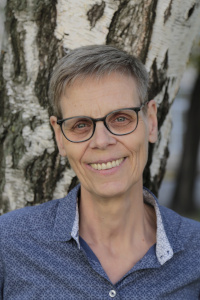
Mathilde Eveline Keizer is a Professor of English Linguistics: Variation and Cognition at the Department of English and American Studies, Faculty of Philological and Cultural Studies, University of Vienna. She serves as both Vice-Director of Studies for English and American Studies and Deputy Head of the Department of English and American Studies, demonstrating significant leadership within the institution. Professor Keizer's educational background includes: MA in English language and literature, Vrije Universiteit Amsterdam (1987) PhD in English Linguistics, Vrije Universiteit Amsterdam (1992) Her primary research focuses on the theoretical framework of Functional Discourse Grammar, with particular emphasis on the Noun Phrase in English and Dutch, possessive constructions, reference and predication, definiteness, English pronouns, apposition, information structure, linguistic categorization, and semi-fixed constructions. Professor Keizer leads the FunCog research group, which investigates the intersection of functional and cognitive approaches to language structure. Her work demonstrates how linguistic structures emerge from the interaction of cognitive processes and communicative needs, providing insights into the dynamic nature of language organization. Analysis of Professor Keizer's recent publications reveals a consistent focus on English syntax within the framework of Functional Discourse Grammar. Her work spans noun phrase structure, partitive constructions, prepositional phrases, and adverbial modification, demonstrating the versatility of FDG in addressing diverse syntactic phenomena. A notable trend is her increasing attention to cross-linguistic comparisons, particularly between English and Dutch, which enriches our understanding of language universals and specifics. Professor Keizer has made significant contributions to the field through her extensive publication record, including authored and edited books that have shaped contemporary understanding of functional-cognitive approaches to grammar. Her work has appeared in leading linguistics journals and handbooks, establishing her as a prominent voice in theoretical linguistics. As an educator, Professor Keizer teaches courses on Functional Discourse Grammar, Cognitive Grammar, Linguistic Categorization, Fuzzy grammar, Linguistic models and approaches, The English Noun Phrase, English adjectives, English idioms, and English syntax. She has supervised numerous graduate students through thesis seminars and advanced courses in linguistics, contributing significantly to the development of the next generation of linguists. Professor Keizer leads the FunCog research group, which brings together scholars interested in the intersection of functional and cognitive approaches to language. The group focuses on empirical investigations of linguistic structures through the lens of Functional Discourse Grammar, fostering interdisciplinary collaboration and innovative research methodologies that bridge theoretical linguistics with practical applications in language teaching and computational linguistics.