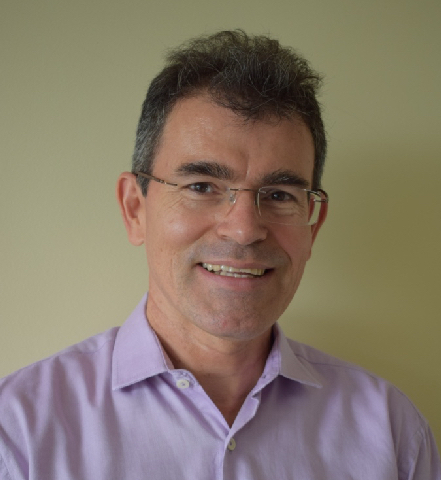
Tej Chajed is an Assistant Professor in the Department of Computer Science at the University of Wisconsin-Madison. His research focuses on formal verification of systems software, particularly addressing concurrency and crash safety in file systems and distributed protocols.
Clément Pit-Claudel is an assistant professor at École Polytechnique Fédérale de Lausanne (EPFL), where he heads the SYSTEMF lab in the School of Computer and Communication Sciences. His research focuses on programming languages, compilers, and formal verification, with broader interests spanning systems engineering, hardware design languages, security, performance engineering, and type theory. Education: Undergraduate studies at École Polytechnique PhD at MIT with Adam Chlipala, specializing in proof-producing compilers Pit-Claudel's research program is organized around three main axes: extensible compilation (teaching compilers domain-specific optimization tricks), hardware design languages and verification (creating ways to describe and verify hardware), and tooling for proof assistants (to support verification efforts and lower entry barriers). His work bridges theoretical foundations with practical applications, as evidenced by algorithms from his Elk project being merged into V8 (and hence Chrome and Node.js). Scientific Awards: Distinguished artifact, Untangling Mechanized Proofs, ACM SIGPLAN International Conference on Software Language Engineering (2020) William A. Martin Memorial Thesis Award for Outstanding Thesis in CS, MIT (2016) Frederick C. Hennie III Teaching Award in Recognition of Outstanding Contributions to Departmental Teaching, MIT (2016) Pit-Claudel has extensive experience mentoring students through MIT's Undergraduate Research Opportunities Program and currently teaches Software Construction to approximately 400 undergraduate students and Interactive Theorem Proving at the graduate level. He's deeply committed to educational excellence, having developed innovative teaching methods including continuous assessment through oral examinations and designing assignments that lead students to build concrete artifacts they can be proud of. The SYSTEMF lab, created in January 2023, focuses on building "small, fast, and completely verified components for critical systems, at reasonable cost." The lab's philosophy of "full assurance, without compromise" combines machine-checked proofs of correctness, hardware-software co-design, low-level compiler engineering, and new tools for interactive theorem proving.
Alastair F. Donaldson is a Professor in the Department of Computing at Imperial College London, where he leads the Multicore Programming Group. His primary affiliation is with Imperial College London's Department of Computing within the broader Faculty of Engineering structure. He serves as a Program Committee Member for major conferences including ASE, PLDI, and POPL. His research spans Programming Languages , Compilers , Verification , Testing , and Multicore Programming , with significant contributions to randomized testing techniques. He pioneered GraphicsFuzz (acquired by Google in 2018) and developed innovative approaches like grammar mutation for parser testing, metamorphic fuzzing for C++ libraries, and specialized tools for GPU API validation. His work bridges theoretical foundations with industrial impact, particularly in compiler correctness and GPU computing. Analysis of his recent publications reveals a strong trend toward fuzzing infrastructure development (40%), GPU/compiler testing (30%), and formal methods integration (30%). His research increasingly focuses on large-scale automated testing for complex systems including WebGPU, Dafny, and Rust, while maintaining rigorous theoretical grounding in concurrency models and memory semantics. Donaldson has held significant leadership roles including General Chair for PLDI 2020 and Program Chair for ECOOP. His research has been supported through conference organizational roles and industrial collaborations, notably the GraphicsFuzz spinout. He actively contributes to the PL community through mentoring initiatives like PLMW and community-building efforts such as The PLDI Song. He leads the Multicore Programming Group at Imperial College London, focusing on practical tools for compiler and GPU driver validation. The group's work combines theoretical program analysis with real-world testing frameworks, maintaining strong industry connections through projects adopted by Google and other technology companies.
Rachel Sterken is an Associate Professor in the Department of Philosophy at the University of Oslo. Her research focuses on philosophy of language, philosophy of mind, metaphysics, and conceptual ethics. She is affiliated with ConceptLab at the University of Oslo, exploring interdisciplinary empirical work. Her academic interests also extend to philosophical logic and social/feminist philosophy. Her research examines topics such as generics, social structural explanation, linguistic interventions, and conceptual engineering. She has contributed to debates on fake news, amplification in discourse, and the ethical dimensions of communication. Her work bridges theoretical philosophy with empirical approaches, particularly in cognitive science and social contexts. Notable contributions include analyses of generics in language, the structures of social explanation, and the role of linguistics in transformative communication. Her recent publications address amplification mechanisms and retweeting in digital discourse, reflecting her engagement with contemporary issues in applied philosophy of language. Rachel Sterken holds a research affiliation with ConceptLab, emphasizing collaborative interdisciplinary research. While no specific grants or awards are listed, her work demonstrates sustained academic engagement across multiple subfields within philosophy.
Affiliations & Roles Michael W. Godfrey is a Professor in the David R. Cheriton School of Computer Science at the University of Waterloo . He holds the David R. Cheriton Faculty Fellowship and has served as an associate director of Cornell's M.Eng. program. His roles include: General Chair for ICPC 2025 (IEEE Program Comprehension) Member of steering committees for ICSME, MSR, SCAM, and SWAN Course coordinator for CS138/CS246 and instructor for advanced topics courses Research Focuses on software evolution , program comprehension , and mining software repositories . His work addresses challenges in code clone analysis, developer productivity, and empirical software engineering. Notable contributions include: Advocating for intentional cloning as valid design practice Pioneering studies on code review quality and anomaly detection Developing tools like JavaDUCK (educational project) and mel (model extraction) Awards & Recognition Recipient of: Best Paper Awards at WCRE 2006, 2011, 2013 Most Influential Paper Award at SANER 2016 Outstanding Reviewer Awards (ICSME 2019/2020) Service & Outreach Active in: Program committee roles for ICSE, ICSM, MSR, and 30+ conferences University service: Undergraduate Recruitment Committee (2016–present) Industry collaborations with CWI (Amsterdam), Sun Microsystems, and automotive software teams
Marco Tulio Ribeiro is an Affiliate Assistant Professor at the University of Washington's Department of Computer Science & Engineering and a researcher at Google DeepMind. His work focuses on enhancing human interaction with machine learning models through explainability, debugging, and trust-building techniques. Ribeiro earned his Ph.D. from the University of Washington under advisors Carlos Guestrin and Sameer Singh. His research interests span AI interpretability, model testing frameworks, and human-centered AI evaluation. Notable contributions include the CheckList tool for behavioral testing of NLP models (ACL 2020, Best Paper) and the Anchors framework for model-agnostic explanations (AAAI 2018). His work often bridges theoretical machine learning with practical human-AI collaboration challenges. Ribeiro has been recognized with multiple awards, including the KDD 2016 Audience Appreciation Award and an ICML 2016 Best Paper Award for foundational interpretability work. His recent projects explore large language model reasoning (ART, 2023), interactive example curation (ScatterShot, 2023), and counterfactual explanations (Polyjuice, 2021). His research philosophy emphasizes practical impact, as evidenced by his Medium blog posts on research project design and writing processes. While no formal student advisees are listed, his prolific co-authorships highlight collaboration with top researchers like Scott Lundberg, Tongshuang Wu, and Carlos Guestrin.
André de Matos Pedro is an Assistant Professor in the Department of Computer Science at the University of Beira Interior. He teaches courses including Teoria da Computação (Theory of Computation), Programação Funcional (Functional Programming), and Segurança e Fiabilidade de Software (Software Security and Reliability). His research focuses on formal methods, runtime verification, and programming language theory. His publication record shows consistent focus on formal verification methods applied to real-time and embedded systems. Recent work emphasizes runtime monitoring frameworks, SAT/SMT-based verification techniques, and applications in safety-critical domains like autopilot systems. The research trajectory demonstrates increasing emphasis on practical applications of temporal logic and co-simulation testing platforms.
Dr. Bernard Butler is a Lecturer in the Department of Computing and Mathematics at the Walton Institute for Information and Communications Systems Science, South-East Technological University (SETU). He holds a PhD in Access Control System Specification (2016) and specializes in cybersecurity, terahertz communications, access control systems, and smart grid security. His research bridges theoretical frameworks with practical applications in 6G networks, vehicular systems, and augmented reality. Affiliations: SETU Walton Institute Key Focus Areas: Terahertz nanonetworks, UAV security, quantum machine learning, and climate change sensing via 6G Research Interests: Terahertz Engineering , Access Control Policies , and Vehicular Network Optimization . He explores disruptive technologies like the Internet of Paint (IoP) for environmental monitoring and AR applications in intelligent transportation systems. His 2024 work on False Data Injection Attacks on UAVs highlights cybersecurity vulnerabilities in drone delivery systems, while 2025's IoP research pioneers smart material-based communication networks. Recent projects include 'ATLAS' (access control system dimensioning) and 'SWAGGER' (mobile/web deployment platforms). Advising: Supervises PhD projects in UAV security, quantum machine learning, and smart grid security. Grants include leadership in two national projects (2008, 2014). Labs/Teams: Active in the Walton Institute's communications systems research group, collaborating on 6G applications and environmental sensing technologies.
Mikhail Barash is an Associate Professor at the Department of Informatics, University of Bergen. His research focuses on software language engineering, domain-specific languages (DSLs), and graphical user interface (GUI) frameworks. He explores innovative approaches to DSL design, including spreadsheet-based workbenches and reusable GUI structures. His work emphasizes user involvement in language standardization, such as in ECMAScript/JavaScript evolution. He also investigates formal methods for GUI abstraction and constraint-based systems. Barash collaborates with industry and academia, notably through the Magnolia programming language ecosystem and teaching experiences with JetBrains' MPS tooling. His contributions span over 20 peer-reviewed publications in top conferences like ACM SIGPLAN and IEEE. Key research areas include declarative GUI manipulation, language workbench democratization, and legacy grammar modernization. He has presented at venues such as the International Symposium on Formal Methods and contributes to frameworks like Event-B IDE development. His work bridges theoretical advances with practical tooling, aiming to make language engineering accessible to broader audiences.
M.Sc. Pascal Esser is a researcher at the Department of Informatics at Technical University of Munich (TUM). He specializes in theoretical computer science, formal methods, and machine learning, with a focus on neural networks and verification techniques. His teaching responsibilities include courses on theoretical computer science fundamentals such as Petri Nets, Automata and Formal Languages, Logic, and Model Checking. He has contributed to research in representation learning, graph neural networks, and probabilistic models, as evidenced by his recent publications. Esser is involved in the development of tools like Automata Tutor and has collaborated on projects such as PaVeS and ConVeY. His work bridges formal methods and artificial intelligence, emphasizing rigorous theoretical foundations while exploring practical applications in neural network verification and algorithm design. Education: Master of Science in Computer Science (degree details unspecified). Research Interests: Formal verification, machine learning theory, neural networks, representation learning, graph algorithms, and theoretical computer science. Professional Activities: Active in teaching advanced undergraduate and graduate courses since 2020, with a focus on foundational topics in informatics and emerging areas like neural network verification. Egger's research trends emphasize interdisciplinary approaches, combining insights from statistical learning theory with algorithmic analysis to address challenges in modern AI systems. His publications highlight advancements in understanding model dynamics, kernel-based methods, and graph neural network architectures. While no specific grants or awards are listed, his sustained academic contributions indicate active engagement in the informatics research community. He is part of a research group at TUM including notable figures like Javier Esparza and Jan Křetínský, contributing to tools and frameworks for automata theory and model checking. His work often intersects with practical software implementations such as the Automata Tutor educational platform and Strix verification tools.
Carla Tierney-Hendricks is an Adjunct Assistant Professor and PhD student in Rehabilitation Sciences at the MGH Institute of Health Professions. She is affiliated with the Cognitive Neuroscience Group under Dr. Sofia Vallila-Rohter and holds a CCC-SLP clinical certification. Her work focuses on communication, cognitive, and swallowing impairments in adult neurogenic populations, with expertise in aphasia and burn injury rehabilitation. Education: PhD Candidate: Rehabilitation Sciences, MGH Institute of Health Professions MS: Communication Sciences and Disorders, MGH Institute of Health Professions BA: Psychology, College of the Holy Cross Research Interests: Carla investigates aphasia treatment frameworks, cognitive-communication deficits post-burn injuries, and implementation of standardized neurological evaluations. Her work bridges clinical practice with evidence-based methodologies, emphasizing outcome measurement and patient-centered care. Grants & Advising: While specific grants are not listed, her collaborative research indicates involvement in interdisciplinary projects. No formal advisees are documented here. Labs/Teams: Active member of the Cognitive Neuroscience Group, focusing on neurorehabilitation and aphasia.
Ognjen Savkovic is an Assistant Professor (RTD-a) at the KRDB Research Center for Knowledge and Data, Faculty of Engineering, Free University of Bozen-Bolzano, Italy. He is based at the NOI Techpark in Bolzano and is actively involved in research on Knowledge Graphs, Semantic Web, and data quality. His work bridges formal logic and machine learning to enhance data management systems. His research interests include Knowledge Graphs, Semantic Web, Database Management, Data Quality, Artificial Intelligence, and Logic Reasoning. He focuses on schema validation (e.g., SHACL), property graph schemas (PG-Schema), and integrating machine learning with declarative languages like Datalog for industrial applications such as welding quality monitoring and cloud resource configuration. His recent publications show a strong trend in semantic technologies for industrial applications, particularly in collaboration with Bosch and Siemens. His work spans theoretical foundations of schema languages and practical implementations in smart manufacturing and cloud systems. He has published in top venues including WWW, ISWC, CIKM, and SIGMOD. Scientific Awards: No specific awards mentioned. Ognjen Savkovic advises students and collaborates on research projects, though specific students are not listed. His research involves significant grant-funded collaborations, particularly in EU-level industrial AI and semantic technology initiatives. He has contributed to projects involving Siemens and Bosch, focusing on semantic diagnostics and scalable data science solutions. He is a key member of the KRDB Research Center, contributing to a vibrant research team working on knowledge representation, reasoning, and industrial applications of semantic technologies.
Arvind Satyanarayan is an Associate Professor of Computer Science at the Massachusetts Institute of Technology (MIT), where he leads the Visualization Group at MIT CSAIL. His research centers on interactive data visualization as a mechanism for intelligence augmentation—enhancing human cognition and creativity while preserving agency. Education PhD in Computer Science, Stanford University (advised by Jeffrey Heer, UW Interactive Data Lab) His research spans four primary themes: Visualization Authoring Tools , where he develops languages and systems (e.g., Vega-Lite extensions) to democratize visualization creation; Interpretability & Alignment , focusing on metrics and interfaces to align ML models with human expectations; Accessible Data Representations , co-designing non-visual displays with blind collaborators using alt text, screen readers, and tactile graphics; and Sociocultural Design , studying visualizations as social artifacts that shape norms and propagate misinformation. His work on Animated Vega-Lite , Bluefish , and Tactile Vega-Lite exemplifies his focus on expressive, usable, and inclusive tools. His recent publications show a strong trend toward AI-human collaboration , accessibility , and cultural interpretability of LLMs , with frequent appearances at top venues like ACM CHI, IEEE VIS, ACL, and UIST. Key topics include semi-formal programming, generative AI agency, tactile chart prototyping, and saliency evaluation frameworks. Scientific Awards & Recognition NSF CAREER Award Alfred P. Sloan Research Fellow (2024) Best Paper Honorable Mention, ACM CHI 2021 Outstanding Paper Award, ACL 2023 Apple Scholars in AIML (advised student) Forbes 30 Under 30 (advised student) He advises a vibrant group of PhD, MEng, and postdoctoral researchers, with alumni now faculty at MIT, Brown, and Utah. His group has secured significant recognition and impact, with tools widely used in industry, Wikipedia, and the Jupyter/Python data science communities. He collaborates across disciplines, including anthropology (Graham M. Jones), medicine, and social science. The Visualization Group at MIT CSAIL is actively developing next-generation tools for semi-formal programming with foundation models, accessible multimodal representations, and culturally grounded AI evaluation frameworks.
Engelbert Hubbers is a Lecturer at Radboud University, affiliated with the Digital Security Group within the Institute for Computing and Information Sciences (iCIS). His primary role involves teaching responsibilities across multiple courses such as Mathematical Structures, Formal Reasoning, and Logic and Applications. His research interests focus on formal methods, electronic voting systems, and discrete mathematics, with a particular emphasis on cybersecurity applications like Java Card security and e-passport systems. Engelbert has contributed to significant projects such as the RIES internet voting system and the KOA remote voting system, emphasizing formal verification and secure protocol design. He has held roles in academic governance, including membership in the Exam Committee and Program Committee of iCIS. His work bridges theoretical computer science with practical applications in secure voting technologies and embedded systems. Publications span topics from formal logic in education to cryptographic protocols, reflecting his transition from foundational research (e.g., polynomial automorphisms) to applied security. His teaching includes coordinating courses on formal reasoning, discrete mathematics, and semantics, demonstrating a commitment to both education and cybersecurity innovation.
Mauricio Ayala Rincón is a Full Professor at Universidade de Brasília, affiliated with the Department of Computer Science and the Department of Mathematics. He is a leading researcher in computational logic, formal methods, and term rewriting systems, and heads the Theory of Computation research group (GTC/UnB). Research Interests: His work focuses on the formalization of mathematical and computational theories using proof assistants like PVS. Key areas include term rewriting systems, equational and rewrite-based deduction, automated reasoning, unification, nominal logic, formal verification, and applications in genomics and evolutionary algorithms. He also explores ethics in AI and mechanized mathematics. Recent Publication Trends: His recent articles (2023–2024) reflect a strong emphasis on formalizing algebraic and logical theories in PVS, advancing nominal equational reasoning, anti-unification over algebraic theories, and applying evolutionary algorithms to computational biology. The work is highly theoretical yet applied in verification and combinatorics. Scientific Awards: Best Paper Award at CICM 2023 for "Nominal AC-matching" Advising and Grants: He actively seeks PhD students in algorithmics, formal methods, theorem proving, and AI ethics. He has led numerous research projects, evidenced by extensive publications and editorial roles. He has not listed specific grants, but his continuous output suggests sustained funding. Labs and Teams: He leads the Grupo de Teoria da Computação (GTC/UnB) , which develops PVS libraries for term rewriting (TRS), nominal theories, and evolutionary algorithms. The group maintains public repositories and contributes to the NASA PVS library.