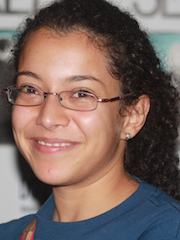
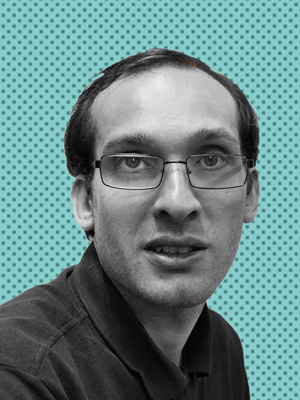
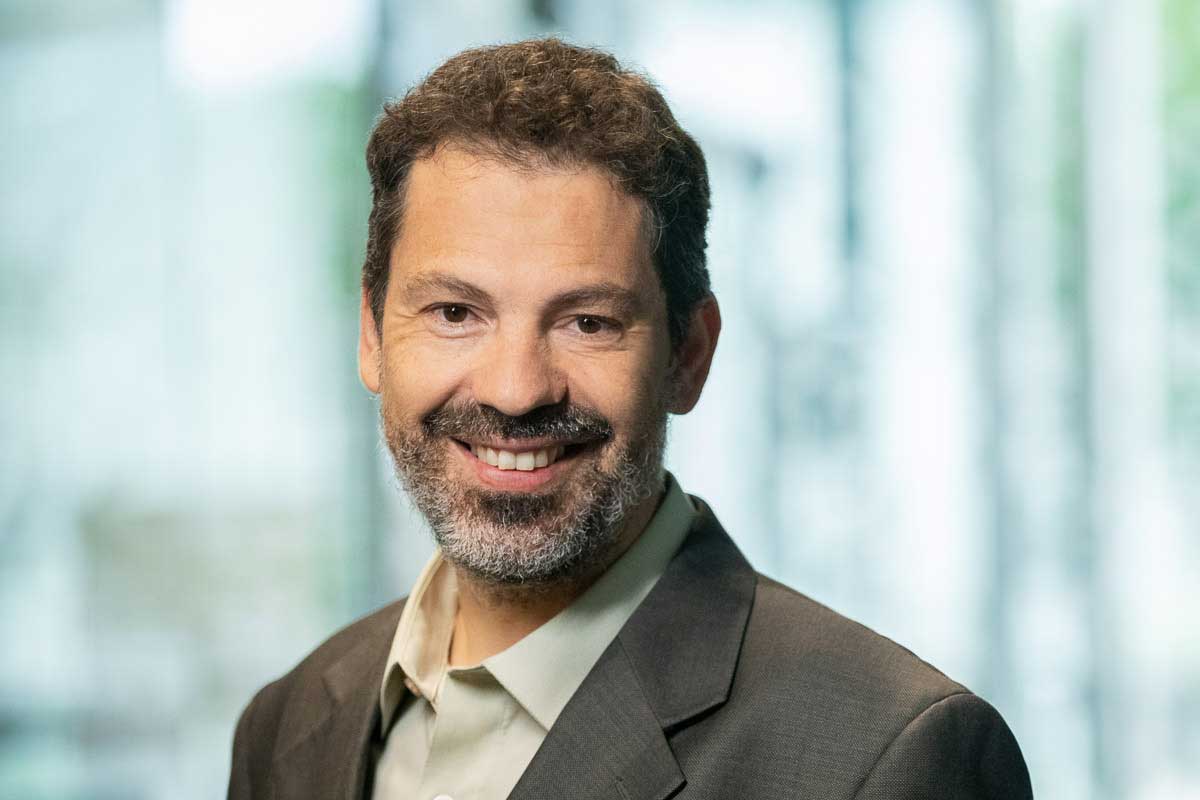
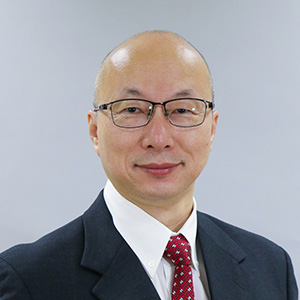
Adrien Pommellet is an Associate Professor at EPITA , affiliated with the Laboratoire de Recherche en Informatique (LRE) automata team. His research focuses on formal methods, automata theory, and program synthesis. Education: PhD in Computer Science from Université Paris-Diderot (2018), Parisian Master of Research in Computer Science (2012) His research interests include active and passive learning of automata , model-checking algorithms for Büchi automata, and program synthesis . He actively contributes to the development of the Spot formal verification tool. Recent publications emphasize synthesis algorithms , automata reduction techniques , and LTL verification . He has also explored type systems and formal verification of concurrent programs. Teaching roles include courses in computer science (AAA, COMP, CPXA) and formal logic (FOLO, LOFO). Formerly taught ALGO, LOGI, and PING. He worked as a research engineer at CS Communications & Systèmes before joining EPITA's LRDE (now LRE) verification team in 2019.
Benjamin Gregoire is a Researcher at INRIA Sophia Antipolis , affiliated with the Marelle Team . His work focuses on compilers , formal verification , cryptography , proof assistants , and type theory . Education : PhD in Computer Science, Université Paris 7 (2003) Research Interests : Dr. Gregoire specializes in formal verification of cryptographic systems, compiler design for security-critical applications, type-based termination, and proof assistants like Coq. His projects include the INRIA-Microsoft Research Joint Lab , ANR Scalp (Security of Cryptographic Algorithms with Probabilities), and ANR DeCert (Certified Decision Procedures). He led the Mobius project (IP FET) and contributed to Java security validation via the JACK tool . Scientific Awards : He received the Best Paper Award at CRYPTO 2011 for 'Computer-Aided Security Proofs for the Working Cryptographer.' Advising & Collaborations : Dr. Gregoire has advised PhD students Michael Armand , Julien Charles , Sylvain Heraud , and Jorge-Luis Sacchini , with former advisee Cesar Kunz . He collaborates with teams including Marelle and INRIA-Microsoft Research .
Maxime Cordy is a researcher in Computer Science with a focus on Software Engineering and Formal Verification. He holds a PhD in Computer Science from the University of Namur, earned in 2014, and has engaged in visiting research at the University of Luxembourg (2017-2018). He also co-founded SkalUp as an R&D manager from 2015 to 2016. Education: Doctor of Science (University of Namur, 2014), Master in Computer Science (University of Namur, 2011) His research spans Software Product Lines , Model Checking , and Variability-Intensive Systems , emphasizing formal verification and automated analysis. He has contributed to over 53 research outputs with 949 citations and an h-index of 17. Recent publications include advancements in Featured Transition Systems , Mutation-Based Model Checking , and Machine Learning for Software Quality . He co-organized workshops like MaLTeSQuE 2019 and the Machine Learning and Software Engineering in Symbiosis workshop (2018). Scientific Awards: VAMOS 2024 Ten-Year Most Influential Paper Award (co-recipient) Maxime has collaborated extensively with institutions including the University of Luxembourg and co-authored works with leading researchers in formal methods and software engineering.
Prof. Dr. Mario Fritz is a leading academic at the CISPA Helmholtz Center for Information Security and Saarland University , with a focus on Trustworthy Information Processing . His work sits at the intersection of AI, Machine Learning, Security, and Privacy, addressing challenges in foundation models, health data, and adversarial robustness. Key Projects : ELLIOT (Multi-Modal Foundation Models), ELSA (Secure AI), PriSyn (Synthetic Health Data), AIgency (Generative AI in Cybersecurity), HMSP (Medical Security) Research Themes : AI/ML security, privacy-preserving techniques, causal modeling, healthcare applications, and ethical AI Recent Publications : Focus on LLM sampling, causal inference, model stealing, and privacy-aware document analysis Collaborations : European Laboratory for Learning and Intelligent Systems (ELLIS), BMBF-funded initiatives, GHGA (Human Genome Archive) Academic Leadership : As a Professor , he coordinates large-scale EU projects and mentors emerging researchers in AI ethics and security.
Christine Rizkallah is a Senior Lecturer in the School of Computing and Information Systems at the University of Melbourne, Australia. She joined the university in December 2021 after serving as a Lecturer at the University of New South Wales (UNSW) from April 2018 to December 2021. Her research focuses on interactive theorem proving, formal verification, programming languages, and systems, with an emphasis on building practical tools for high-assurance software development. She leads a research group working on the Cogent and Dargent languages, aiming to reduce the burden of formal verification in systems programming. Education: PhD in Computer Science, Universität des Saarlandes and Max-Planck-Institut für Informatik, Germany (2015), thesis: Verification of Program Computations , supervised by Prof. Dr. Kurt Mehlhorn. MSc in Computer Science, Universität des Saarlandes, Germany (2009), thesis: Proof Representations for Higher Order Logic , supervised by Prof. Dr. Gert Smolka and Dr. Chad E. Brown. BSc in Computer Science, German University in Cairo, Egypt (2007), thesis: X2-Planner: A Hierarchical Task Network Planner for Real Time Gaming Applications , supervised by Prof. Dr. Slim Abdennadher and Dr. Thorsten Maier. Her research interests lie at the intersection of programming languages and formal methods. She develops domain-specific languages with strong type systems and verified compilers to enable trustworthy software systems. Her work spans algorithms, logic, security, and social choice theory, reflecting a strong interdisciplinary approach. She has published extensively in top venues such as POPL, ICFP, ASPLOS, JAR, and PACMPL, with a focus on certifying compilation, refinement verification, and mechanized reasoning. Her recent publications reveal a consistent focus on formal verification of systems software, particularly through the Cogent language and its ecosystem. Key themes include verified data layout refinement (Dargent), property-based testing, termination analysis, cost modeling, and integration with foreign functions. Her work combines theoretical rigor with practical implementation, often involving mechanized proofs in Isabelle/HOL and Coq. Scientific Awards and Recognition: Distinguished Artefact Award at SLE'22 (awarded to Zilin Chen for work under her supervision). First Prize, SPLASH'22 Student Research Competition (undergraduate), won by Raphael Douglas Giles. Second Prize, ACM-wide Student Research Competition (undergraduate, 2023), won by Raphael Douglas Giles. She has supervised numerous PhD, Masters, and Honours students, many of whom have continued in academia or industry research roles. She has received research funding through institutional support and collaborative grants, though specific grants are not detailed in the provided text. She is actively involved in the programming languages community, serving on program committees for POPL, ICFP, CPP, PLDI, and others, and holding leadership roles such as Program Chair for FUNARCH'25 and Diversity and Inclusion Co-Chair for PLDI'25. She teaches core courses including Declarative Programming and Models of Computation at the University of Melbourne. She leads a vibrant research team and collaborates widely across institutions including UNSW, University of Pennsylvania, and international partners. Her lab focuses on building verified systems using functional programming and formal methods, with strong ties to the DeepSpec project and the Isabelle/HOL community.
Xavier Rival is a Senior Researcher at Inria, affiliated with multiple project teams including Antique , GraphDeco , Sierra , and Quantic . He focuses on data structures and algorithms within operating systems and embedded programs, with a strong emphasis on artificial intelligence and software engineering. Rival received the ERC Proof of Concept grant in 2018 for his work on formal verification tools. Current teams: GraphDeco (since 2016), Quantic (since 2021), Sierra (2016-2024) Key collaborations: European Research Council grants, Inria Startup Studio Research trends include neural network security, curiosity-driven machine learning, and AI safety verification. Notable projects involve SOFA open-source coordination and DeepTech initiatives at Inria Saclay. Scientific awards ERC Proof of Concept grant (2018)
Laure Gonnord is a Full Professor in Computer Science at Grenoble INP , affiliated with the Esisar Engineer School in Valence, France, since September 2021. She is a member of the CTSYS research team at the LCIS laboratory and an external member of the CASH team at the University of Lyon / CNRS / LIP / Inria. Her research focuses on compilation , static analysis , and applications to safety , security in high-performance and embedded systems . Fields of Interest : Compiler Design Static Analysis for Safety & Security Abstract Interpretation Embedded Systems High-Performance Programming Hardware Security Engineering Research Trends (from recent publications): Her work explores modular verification through monadic abstract interpreters, complexity bounds in term rewriting , and educational tools for theorem proving . Notable contributions include compiler hardening schemes for hardware security and memory layout optimizations for algebraic data types. Academic Leadership : Scientific Director of the Summer School EJCP (École Jeune Compilation et Programmation) Board Member of the French national research group GDR GPL Teaching Responsibilities at Grenoble INP include courses in architecture , compilation , programming languages , algorithms , and databases . She has also taught at University of Lyon, ENS Lyon, Polytech'Lille, and INSA.
Jonathan Timmis is a Professor at Aberystwyth University, actively contributing to research in robotics, artificial immune systems, and bio-inspired computing. He has authored over 280 research outputs and is recognized for his work in swarm robotics, evolutionary algorithms, and formal methods in robotic software design. Affiliation: Aberystwyth University Research Focus: Robotics, Artificial Immune Systems, Evolutionary Computation Recent Collaborations: Alan Tyrrell, Emma Hart, Andy Wuensche, Ana Cavalcanti His research interests span robotics, swarm intelligence, bio-inspired algorithms, software verification, and evolutionary computation . He has pioneered work in artificial immune systems applied to robotics and developed formal methods for robotic controller design using tools like RoboChart. His work integrates theoretical modeling with practical robotic implementation. The recent publications reflect a strong trend in formal verification of robotic systems, swarm robotics, and hardware-software integration in evolutionary robotics . His work bridges theoretical computer science with real-world robotic applications, particularly in adaptive and self-repairing systems. Scientific Awards: Fellow of the Learned Society of Wales (2025) Jonathan Timmis has led and participated in numerous research projects, likely involving grant funding, though specific grants are not listed. He collaborates extensively across institutions and has co-authored with PhD students and researchers, indicating an active supervisory and mentoring role. His editorial contributions, including prefaces and workshops, suggest leadership in the academic community. He is associated with research groups focused on robotics, bio-inspired computing, and formal software engineering , likely contributing to interdisciplinary teams at Aberystwyth University. His recent work on evolvable hardware and swarm systems indicates ongoing innovation in autonomous robotic systems.
Dr. Stephanie Balzer is an Assistant Professor in the Principles of Programming Group at Carnegie Mellon University's School of Computer Science. Her research focuses on enabling failure-free software through formal methods like type systems and verification logics. She emphasizes compositional proofs for scalability and practical validation via software artifacts. Programming Languages Type Theory Program Verification Concurrency & Security Her recent work explores timed protocols, disentanglement logic, and multiparty session types. Articles demonstrate semantic logical relations for termination (2025), deadlock freedom in Rust embeddings (2022), and information flow control (2024). Key collaborative papers address cyclic process networks and separation logic frameworks. Scientific recognition includes: NSF CAREER Award (2025) ACM SIGPLAN Distinguished Paper (2022) ECOOP Distinguished Paper (2022) She supervises PhD candidates Yue Yao, Yinsen Zhang, and Zak Kent (with Guy Blelloch), plus Master's student Sonya Simkin. Former advisee Jules Jacobs received Cum Laude distinction at Radboud University. Active in academic service, Balzer chairs PLMW@POPL workshops and co-organizes Oregon Programming Language Summer School. She serves on program committees for LICS, POPL, and ICFP.
Michael Eichberg is a Professor at Technische Universität Darmstadt, Germany, where his work centers on software engineering, static analysis, programming languages, and secure software development tools. He is the principal architect of the OPAL framework for Java bytecode analysis and has an extensive publication record spanning PLDI, ICSE, ESEC/FSE, ISSTA, ASE, FSE, SOAP, and other premier venues. Research Interests: Static program analysis and its scalability to real-world code bases Software security, particularly cryptographic API misuse and Android app repackaging detection Concurrent and parallel programming models, including deterministic concurrency in Scala Software architecture conformance, drift and erosion detection, and rule reuse Development of open extensible tools and frameworks (OPAL, LectureDoc, QScope, Sextant, XIRC, IRC) Publication Trends: His recent work (2015-2022) demonstrates a strong focus on empirical evaluation of static analysis techniques, modular composition of analyses, and security-related program understanding. Key themes include unsoundness in call graph construction, purity and immutability analyses, parallelization of static analyses, and large-scale studies of cryptographic API misuse. Tools & Frameworks: OPAL – A flexible Java bytecode analysis and manipulation framework (core developer until 2019) LectureDoc 2 – Web-based lecture material authoring and presentation system QScope – Open extensible metrics framework for modern software projects Sextant – Eclipse-integrated software exploration tool XIRC/IRC – Frameworks for enforcing system-wide properties and architectural constraints
Stavros Tripakis is an Associate Professor at the Khoury College of Computer Sciences at Northeastern University , where he joined in 2018. He is on sabbatical during the 2024-2025 academic year. His research focuses on the foundations of software and system design , emphasizing formal methods , computer-aided verification and synthesis, with applications to safety-critical, embedded, and cyber-physical systems, security, and trustworthy AI. He leads a group developing theory and tools for designing better systems. Recent publications explore distributed protocol synthesis, neural network verification, and inductive invariant inference, reflecting trends in formal methods for AI and distributed systems. His work often intersects with automated reasoning, model checking, and tool development. Scientific awards include the Distinguished Artifact Award at TACAS 2018 for the Refinement Calculus of Reactive Systems (RCRS) toolset. He advises Derek Egolf , Daniel Melcer , and William Schultz (graduated 2025). Former postdocs include Rômulo Meira-Góes (now Penn State) and Eunsuk Kang (now CMU). Current projects include the NSF FMitF grant (2023-2027) on safe multi-agent reinforcement learning and the NSF SaTC grant (2018-2022) on protocol design.
Michael H. Borkowski is an Assistant Teaching Professor in the Department of Computer Science at Purdue University. He earned his Ph.D. from the University of California, San Diego (UCSD), specializing in software verification, type theory, and interactive theorem provers. His research focuses on developing techniques to ensure software correctness and performance through formal methods. Ph.D., UCSD Computer Science (2024) M.S., UCSD Computer Science (2019) B.A., Amherst College Computer Science (2016) His research interests include refinement types, functional programming, and mechanizing proofs. Recent work emphasizes software verification tools (e.g., the 2024 POPL publication on refinement types). Earlier contributions span plant biology and applied mathematics, including studies on auxin gradients and wood grain modeling. Notable awards include the Computer Science Prize and Phi Beta Kappa from Amherst College. Teaching roles include courses at UCSD (e.g., CSE 20 Discrete Mathematics) and Purdue. He was affiliated with UCSD’s ProgSys Group during his Ph.D.
Alessandra Cavarra is a University Lecturer in Software Engineering at the University of Oxford, holding roles as Director of Graduate Studies for Professional Programmes and Supernumerary Fellow at Kellogg College. She earned her MSc and PhD in Computer Science from the University of Catania (Italy), with research periods at U.S. and German institutions. Her research focuses on formal methods, UML behavioral diagrams, model-based testing, and integrating formal/semi-formal languages. She teaches postgraduate courses in Object-Oriented Design and Software Testing. Research interests include formal semantics for UML diagrams, tool development for symbolic execution and test case generation, and abstract state machines (ASMs). Her work bridges software engineering theory and practice, emphasizing rigorous methods for system validation. Publications span model-based testing, UML formalization, and concurrency analysis. Key areas include data-flow approaches for multi-agent systems, workflow testing, and formal verification of software models. Recent work addresses challenges in concurrent workflows and abstract state machine analysis. No scientific awards were explicitly mentioned. She has advised at least one student, Aadya Shukla, and contributes to academic service roles. No lab or team affiliations are detailed in the provided information.
Jordan Smart is an Assistant Professor in the Department of Aerospace Engineering at the University of Illinois Urbana-Champaign, affiliated with The Grainger College of Engineering. His roles include teaching and research in aerospace systems design and computational methods. He holds a Ph.D. and M.Sc. from Stanford University (2023 and 2018) and a B.Sc. in Mechanical Engineering from Rutgers University (2015). Prior to academia, he worked as a Mechanical Engineer at Lockheed Martin Space Systems (2016-2017) and co-founded Stargazer Design Technologies Inc. (2022-present) and Aerospace Research Community LLC (2023-present). His research focuses on numerical techniques, optimization, AI/ML-driven design, and aerospace systems modeling. Key areas include simulation acceleration, uncertainty quantification, and generative AI for configuration design. Recent work includes DeepSPACE (2024) and studies on SUAVE software optimization (2021-2023). His articles span space policy, neural network applications, and propulsion system aerodynamics. Education: Ph.D., Aeronautics and Astronautics, Stanford University, 2023 M.Sc., Aeronautics and Astronautics, Stanford University, 2018 B.Sc., Mechanical Engineering, Rutgers University, 2015 He has received multiple honors, including the NSF Graduate Research Fellowship (2018) and JEDI Service Award (2022). Professional memberships include AIAA and Sigma Xi. Courses taught include Aerospace Systems Design I/II (AE 442/443).
Jiang Kan is a Lecturer at the Department of Computer Science, National University of Singapore. He earned his Ph.D. in Computer Science from NUS in 2023, following an MComp (2017) and B.Sc. (1994) from NUS and Shanghai Jiao Tong University respectively. His teaching portfolio includes courses like Introduction to Computing , Introduction to Programming , Database Systems and Management , and Systems Programming . Education: Ph.D., Computer Science, National University of Singapore, 2023 M.Comp., National University of Singapore, 2017 B.Sc., Shanghai Jiao Tong University, 1994 Research Focus: Jiang Kan specializes in sports analytics, integrating computer vision and probabilistic modeling to analyze sports strategies, player dynamics, and broadcasting data. His work includes tennis and soccer strategy analysis , event recognition in sports videos , and injury prediction models . Publication Trends: Recent articles (2023-2025) explore hybrid approaches combining deep learning with probabilistic model checking for sports analytics. Key contributions include automated court detection , fine-grained event analysis , and dynamic team strategy modeling in tennis and soccer. Teaching: He teaches foundational and advanced courses in programming, computer organization, software engineering, and databases to both full-time and part-time students.