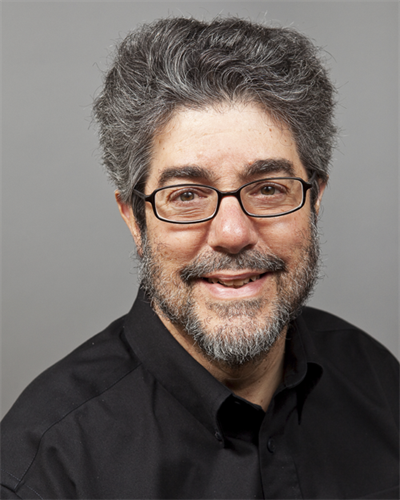
Stuart Kurtz is a Professor in Computer Science and the College at the University of Chicago, and serves as Master of the Physical Sciences Collegiate Division. He holds the endowed position of George and Elizabeth Yovovich Professor. His research focuses on theoretical computer science, including computational complexity theory, randomness in computation, type theory, and formal logic. He has contributed to foundational areas such as the Berman-Hartmanis Isomorphism Conjecture and the computational properties of random sets. Kurtz is affiliated with the Theoretical Computer Science and Programming Languages Groups at the University of Chicago. He has been recognized with the 2009 Quantrell Award for teaching excellence. His service roles include Director of Undergraduate Studies and Department Chair in Computer Science. He actively mentors Ph.D. students and has advised multiple graduates in complexity theory and related fields. His academic background includes a Mathematics Ph.D. from the University of Illinois, supervised by Carl Jockusch. He approaches type theory as an intersection of formal logic and functional programming. Research interests span measure-theoretic randomness, computational logic, and complexity class separations. His recent work explores connections between theoretical computer science and interdisciplinary fields like physics and statistics. In teaching, Kurtz has instructed courses such as Formal Language Theory, Discrete Mathematics, and Honors Intro Programming. His service contributions include roles in the Computation Institute and Toyota Technological Institute at Chicago. His lab affiliations and collaborative work reflect a strong commitment to advancing theoretical foundations in computer science.