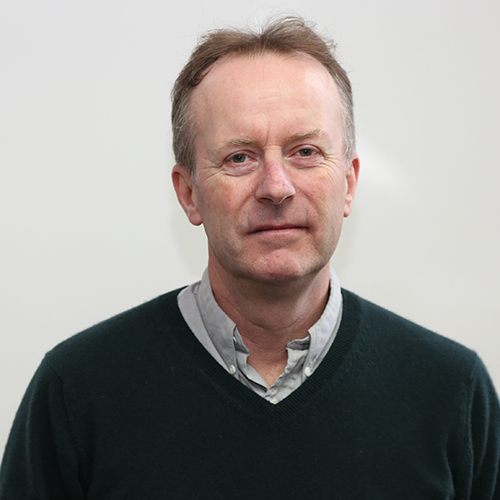
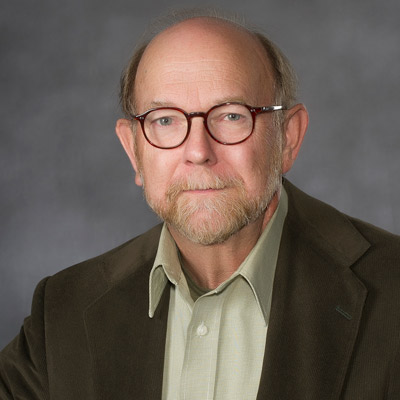
Professor Ted Briscoe is a renowned academic in Computational Linguistics, previously affiliated with the University of Cambridge's Department of Computer Science and Technology (Computer Laboratory). He moved to MBZUAI in Abu Dhabi as a Professor of Natural Language Processing. His research focuses on computational linguistics, speech/language processing, and evolutionary linguistics, with contributions to tools like the RASP parsing system. He is a Fellow of Girton College, Cambridge. His work spans grammatical error correction, automated essay scoring, and language acquisition models. For more details, see his MBZUAI profile .
Dr. Franziska Pannach is an Assistant Professor at the Faculty of Arts of the Rijksuniversiteit Groningen (Netherlands), affiliated with the Centre for Language and Cognition (CLCG) . She specializes in Computational Linguistics , Digital Humanities , and Semantic Web Technology , focusing on modeling narratives and mythological texts using NLP and ontologies. Her work emphasizes Open Science and cross-cultural comparisons of folktales and myths. Education : Dr. rer. nat. (PhD) in Applied Computer Science (Digital Humanities/Computational Linguistics), University of Göttingen, Germany (2024) MSc in Applied Computer Science (Digital Humanities), University of Göttingen (2019) BSc in Applied Computer Science (Computational Neuroscience), University of Göttingen (2013) Research Interests include computational approaches to mythological and folkloristic analysis, shallow ontologies for narrative comparison, and semantic web applications in cross-cultural studies. She leads the GOLEM (Graph Ontologies for Literary Evolution Models) project and contributed to the STRATA (Stratification Analyses for Mythic Narrative Materials) project. Teaching : Semantic Web Technology (MSc), Database-driven Web Technology (BSc), Digital Humanities: Tools and Methods (MSc), Analysing Data (MSc) Supervision : PhD students Pritha Majumdar (RUG) and Kristina Schneider (RUG/University of Mainz) Publications focus on narrative ontologies, mythological event annotation, and NLP for under-resourced languages. Her recent work includes the GOLEM Triple Store and shallow ontologies for myth comparison. Networks & Memberships : Member, Digital Humanities Association of Southern Africa (DHASA) since 2019 Co-founder and editor of the Journal of Digital Humanities Association of Southern Africa (JDHASA) Collaborations with institutions in Germany, South Africa, and Denmark
Prof. Dr. Anke Holler is a Professor of German Linguistics at the University of Göttingen , specializing in formal grammar, discourse analysis, and computational linguistics. Her career spans roles in academic administration, including Vice President for Appointments since 2021, and leadership in DFG and Leibniz Association committees. Education : University of Tübingen, University of Leipzig, and University of Massachusetts, Amherst Current Projects : GRK 2636 'Form-Meaning Mismatches', DFG 'Structuring Literature' (SPP 2207), VW Foundation 'Uncertain Attribution' Research Interests focus on the intersection of grammar theory, experimental linguistics, and computational modeling. She explores discourse structures, narrative perspective, and constraint-based parsing, with applications in digital humanities and text mining. Her recent work involves neural networks for speaker attribution and computational analysis of literary reflexivity. Collaborations include the Carl Friedrich Lehmann-Haupt Doctoral Program and the 'Textstrukturen' center. She serves as editor for the Zeitschrift für Sprachwissenschaft and coordinates interdisciplinary initiatives.
Malihe Alikhani is an Assistant Professor at Khoury College of Computer Sciences , Northeastern University , a Visiting Fellow at the Brookings Institution specializing in AI policy, and serves as the Ethics Chair of the Association for Computational Linguistics . She is also a member of the Northeastern Ethics Institute . Her research focuses on developing AI systems that enhance communication, decision-making, and knowledge-sharing through rigorous integration of cognitive and social sciences with machine learning. Her work spans academic, policy, and applied research domains, emphasizing contextual AI systems. She leads the Contextual AI Lab , which develops models capturing human interpretation to support collaborative meaning construction between humans and machines. Her recent publications address uncertainty modeling in dialogue systems, bias mitigation in sign language processing, and ethical AI frameworks. Key contributions include: Advancing sign language understanding in NLP Developing uncertainty-aware dialogue systems Creating discourse-coherent task-oriented dialogue frameworks Formalizing equity in text generation Scientific Awards: Best Theme Paper Award (ACL 2021) Best Paper Award (UAI 2022) She mentors students and researchers in areas spanning sign language processing, dialogue systems, and ethical AI. Her lab collaborates with Deaf and Hard-of-Hearing communities and cognitive science experts to ensure inclusive AI development.
Massimo Poesio is a Professor of Computational Linguistics at Queen Mary University of London and a full Professor of Natural Language Understanding at Utrecht University. He leads the ARCIDUCA project (EPSRC-funded) on conversational agents and the Dealing with Meaning Variation project (NWO-funded) exploring NLP applications. His research focuses on anaphora resolution, games-with-a-purpose, and applying NLP to combat deception and misinformation. He is a Fellow of the Alan Turing Institute and supervises students in PhD programs like IGGI and Health Data in Practice. Education: Previous affiliations include University of Essex and University of Trento (founded CLIC Lab). Research Projects: DALI (ERC), SENSEI (EU), AnaWiki (EPSRC), and LiveMemories (Provincia di Trento). His work combines formal semantics with empirical methods, including brain data and corpus analysis. He has developed tools like Phrase Detectives and BART for anaphora resolution, and co-founded the Lingotowns platform for language learning.
Prof. Dr. Kai Essig is a Professor of Human Factors and Interactive Systems at the Faculty of Communication and Environment, Rhine-Waal University of Applied Sciences, Kamp-Lintfort, Germany. He has a strong interdisciplinary background combining computer science, cognitive science, and human-computer interaction, with a focus on eye tracking, visual perception, and assistive technologies. Master of Science in Computer Science and Chemistry, Bielefeld University (1998) Ph.D. in Computer Science, Bielefeld University (2007) His research centers on eye tracking, human-computer interaction, usability engineering, visual attention, and cognitive interaction technology . He investigates how movement expertise influences visual perception and how multimodal software can support real-time human actions. His work integrates computer vision, machine learning, and neuroscience to develop intelligent systems that adapt to user behavior. The 15 most recent publications reflect a consistent trend in eye movement analysis, mental representations, brain-machine interfaces, and assistive technologies . These works span domains such as sports psychology, robotics, augmented reality, and cognitive neuroscience, demonstrating a strong interdisciplinary approach. Key themes include gaze-based interaction, automated annotation of visual behavior, and the implementation of smart systems for daily living assistance. Scientific recognition includes: Landmark in the Land of Ideas (2018) – for the ADAMAAS project, awarded by 'Land of Ideas', a joint initiative of the German government and the Federation of German Industries Prof. Essig has been actively involved in research projects such as ADAMAAS (Adaptive and Mobile Action Assistance in Daily Living Activities), which received national recognition. He has collaborated extensively with the Neurocognition and Action-Biomechanics Research Group at Bielefeld University and the Excellence Cluster CITEC. While no formal advising of students is listed, his publications suggest mentorship and collaboration with junior researchers. His lab work is centered on eye-tracking systems, multimodal interaction, and cognitive modeling , particularly within applied environments like smart glasses and assistive technologies.
Jean Wagemans is a Professor at the University of Amsterdam's Faculty of Humanities, where he leads research in the Department of Speech Communication, Argumentation Theory and Rhetoric. His work specializes in the interdisciplinary study of argumentative discourse, bridging philosophy, linguistics, and computational analysis. He maintains an active research profile with recent publications exploring AI-generated argumentation, legal/medical discourse, and digital misinformation. Wagemans' research centers on argumentation theory, rhetoric, and debate, with emphasis on practical applications in AI ethics, healthcare communication, and public discourse. His recent investigations include: Developing computational models like Adpositional Argumentation (AdArg) for natural discourse analysis Examining ethical frameworks for AI-generated arguments Creating argument-checking methodologies to combat misinformation Analyzing normative structures in public deliberation His scholarly publications (2022-2024) demonstrate a distinct trajectory toward computational argumentation, with recurring themes of AI ethics, misinformation detection, and applied discourse analysis. Recent works systematically address: The intersection of argumentation theory with AI systems Methodologies for evaluating reasoning in natural language Cross-disciplinary applications in law, medicine, and digital humanities
Pablo Calleja is a Research Fellow at the Faculty of Computer Science, Polytechnic University of Madrid (UPM), where he has been a member of the Ontology Engineering Group (OEG) since March 2014. His research focuses on Natural Language Processing (NLP), medical terminology mapping, and legal domain applications. He holds a degree in Computer Engineering from San Pablo CEU University (2013) and has prior industry experience as a software developer at IECISA (2008–2011) and a collaboration grant at the Open Access Classroom, San Pablo CEU University (2011–2013). Key contributions include projects like Drugs4covid for pandemic drug discovery, TermitUp for terminological enrichment, and esT5s , a Spanish text summarization model. His work spans legal knowledge graphs, multilingual compliance systems, and NER techniques for academic content analysis. He has also explored accessibility multimedia services and semantic graph applications in tourism ( DBtravel ). Professional roles include collaboration grants at UPM and active participation in interdisciplinary projects such as SNOMED-CT annotation for medical technical sheets. Research trends emphasize cross-domain adaptation (e.g., K-Flares), data augmentation (Widaug), and multilingual NLP solutions. Advising and grants: His current position is supported by a collaboration grant at OEG. Earlier grants include work at San Pablo CEU University. No formal advisees are listed, but he contributes to collaborative research teams. Labs and teams: Core member of the Ontology Engineering Group (OEG), focusing on knowledge representation, NLP, and applied informatics in healthcare and law domains.
Rolando Coto Solano is an Assistant Professor of Linguistics at Dartmouth College , with an Adjunct Assistant Professor appointment in Computer Science and an Affiliate Professor role in the Quantitative Social Science Program (QSS) . He focuses on creating computational tools to document and revitalize Indigenous languages like Cook Islands Māori and Bribri. Education : PhD and MA in Linguistics from the University of Arizona; BA in Computer Science from the University of Costa Rica. Research Interests include: Natural Language Processing for Indigenous and Under-Resourced Languages Tonal Phonetics and Phonology, with a focus on tonal reduction Sociophonetics, particularly interisland variation in Cook Islands Māori Publication Trends show expertise in automatic speech recognition (ASR) for Indigenous languages, computational sociophonetics, tonal priming, and metadata standards in academic publishing. He collaborates on tools like Universal Dependencies treebanks and the ELPIS pipeline . Scientific Awards : Fulbright Foreign Student Program (Master’s Degree) National Science Foundation (NSF) Consultant Royal Society of New Zealand Marsden Fund Ship for World Youth Program (Office of the Prime Minister of Japan)
Dr. Jonathan Kummerfeld is a Senior Lecturer at the University of Sydney's School of Computer Science, specializing in Natural Language Processing (NLP) and AI collaboration. He holds a PhD from UC Berkeley and a B.Sc. from the University of Sydney, with postdoctoral research at the University of Michigan. His work focuses on enabling computers to collaborate effectively with humans through NLP, including interactive systems, dialogue, and crowdsourcing. Education: PhD in Computer Science, UC Berkeley (advised by Dan Klein), 2016 B.Sc. in Computer Science, University of Sydney (advised by James Curran), 2010 Postdoctoral Researcher at University of Michigan (2016–2021) Research Interests: Interactive Executable Semantic Parsing NLP Data Science for Messy Real-World Data AI Collaboration in Games and Dialogue His recent work explores empathetic AI systems, alignment algorithms, and AI-resilient interfaces. Over 50 publications span venues like ACL, NAACL, and ICML. Grants & Advising: CHIRON (DARPA): AI for recognizing opponent narratives Google/Amazon grants for annotation tools and dialogue systems Advising PhD student Kent O'Sullivan His lab develops tools like SLATE and contributes to dialogue corpora. Labs/Teams: Leads the Sydney NLP Lab, focusing on human-AI collaboration and scalable NLP systems.
Robert Godwin-Jones is a Professor in the Department of Foreign Language at Virginia Commonwealth University's College of Humanities and Sciences, where he has served since 1979. He holds the position of Foreign Language Liaison and maintains active scholarly contributions through his "German Stories" digital repository and "Communicating Across Cultures" blog, focusing on technology-enhanced language pedagogy and intercultural communication. His educational background includes: B.A. in French and German from Franklin and Marshall College (1971) M.A. in Comparative Literature (German, French, and English) (1973) Ph.D. in Comparative Literature from the University of Illinois Urbana-Champaign (1977) Dr. Godwin-Jones specializes in Computer-Assisted Language Learning (CALL), with research spanning artificial intelligence applications, virtual reality environments, and digital literacies for language learners. His work examines how emerging technologies transform second language acquisition through ecological semiotics, distributed agency models, and multimodal communication frameworks. He investigates pedagogical translanguaging strategies for less commonly taught languages and analyzes authenticity in AI-mediated language interactions, particularly in pragmatics and writing development. Analysis of his 2021-2025 publications reveals three dominant trajectories: (1) generative AI integration in language instruction with emphasis on ethical implementation and threat mitigation; (2) extended reality applications creating immersive language spaces in the metaverse; and (3) ecological approaches connecting smart devices, ambient intelligence, and situated learning contexts. His scholarship consistently bridges theoretical frameworks with practical classroom applications across 19th-century German literature studies and contemporary language education. He maintains active professional engagement through memberships in: Delta Phi Alpha German Honorary Society Phi Kappa Phi Honorary Society Modern Language Association American Association of Teachers of German American Association of Teachers of French Foreign Language Association of Virginia As director of the "German Stories" project since 1994, he has curated verified editions of 19th-century German narratives with English translations under Creative Commons licensing, creating what has become a foundational resource for literary study and language acquisition. His blog extends this work through contemporary analyses of intercultural communication challenges, while his scholarly leadership in organizations like CALICO shapes national discourse on technology in language education. His laboratory functions as the "German Stories" digital ecosystem, which has evolved into a comprehensive platform hosting annotated texts, pedagogical resources, and research archives. This environment supports both formal classroom instruction and informal learning communities, demonstrating his commitment to porous classroom models that integrate physical and digital learning spaces.
Johan Bos is a Professor of Computational Semantics at the University of Groningen. His research focuses on formal semantics, natural language processing, and semantic parsing, with contributions to tools like Boxer and the C&C parser. He leads the Groningen Meaning Bank project, creating multilingual semantic annotations. His work bridges computational linguistics and AI, emphasizing structured meaning representations. Key contributions include foundational textbooks such as Representation and Inference for Natural Language and Learn Prolog Now! . His research spans semantic analysis, discourse representation theory, and cross-lingual meaning parsing. Collaborations include projects on annotated corpora and neural semantic parsing advancements. Publications address challenges in semantic parsing, discourse structures, and interdisciplinary applications like tombstone inscription analysis. He actively contributes to computational semantics conferences and workshops, driving semantic tagging and interlingual meaning representation initiatives.
Sophia A. Malamud is an Associate Professor in the Department of Computer Science at Brandeis University, where she directs the Meaning In Language Research Group (MILa) and is affiliated with the Language & Linguistics Program. Her research specializes in theoretical linguistics with a focus on formal semantics, formal pragmatics, discourse-syntax interactions, and semantics-pragmatics interface. Her educational background includes a Ph.D. in Linguistics with a dissertation on Semantics and pragmatics of arbitrariness and an M.A. in Mathematics exploring statistical decision theory in Entropy as relevance: maximizing entropy and minimizing loss . Malamud's research investigates discourse coherence, word order variations, indexicality, semantics of impersonals/plurals, speech acts, and utterance modifiers. She leads NSF-funded projects creating annotated corpora of spoken Russian (including the BiRCh Corpus), examining bilingual acquisition and heritage language phenomena. Her work employs corpus linguistics, experimental methods, and formal modeling. Her publications demonstrate consistent focus on pragmatic computation models, conversational dynamics, and cross-linguistic semantics, with frequent examination of Russian, Mandarin, and Greek data. Key themes include commitment avoidance strategies, conversational scoreboard modeling, and formal analyses of particles/pronouns. Awards include: NSF Grant BCS-1651083 for BiRCh Corpus development Mandel Foundation Faculty Grant for heritage language research Theodore and Jane Norman Award (2018) Multiple Brandeis Provost Research Grants Malamud has advised 8+ graduate/undergraduate theses on topics including heritage Russian pragmatics, utterance particles, reduplication, and distributivity. She collaborates internationally on corpus projects and directs research teams at Brandeis' Laboratory for Linguistics and Computation.
Aaron Steven White is an Associate Professor of Linguistics at the University of Rochester, with a secondary appointment in Computer Science and affiliation with the Goergen Institute for Data Science. He directs the Center for Language Sciences (CLS) and the Formal and Computational Semantics Lab (FACTS.lab). Previously, he was a postdoctoral fellow at Johns Hopkins University’s Science of Learning Institute (2015-2017) and earned his PhD in Linguistics from the University of Maryland (2015). His research focuses on computational semantics, investigating relationships between linguistic expressions and conceptual categories. Key projects include the MegaAttitude Project, analyzing predicate distributions and inferential properties, and the Decompositional Semantics Initiative (Decomp), which annotates corpora for semantic parsing and NLU systems. Recent work emphasizes integrating behavioral experiment data with corpus evidence to develop unified computational models. He teaches courses on probabilistic dynamic semantics and has presented keynote talks on ontology-driven evaluation of summarization systems. His contributions span theoretical linguistics, NLP, and cognitive science.
Patrizia Paggio serves as an Associate Professor and Senior Researcher within the Department of Nordic Studies and Linguistics at the University of Copenhagen's Faculty of Humanities, concurrently holding a full professorship at the University of Malta's Institute of Linguistics and Language Technology since September 2011. Her scholarly work centers on the intricate relationship between verbal and nonverbal communication modalities, with international recognition for advancing methodologies in multimodal analysis. Academic Background: PhD in Computational Linguistics from the University of Copenhagen (1997), dissertation: "The Treatment of Information Structure in Machine Translation" Professor Paggio's research program investigates how gestures, head movements, and other nonverbal cues interact with spoken language to construct meaning in natural communication. She has pioneered methodologies for constructing and analyzing multimodal corpora, while maintaining technical expertise in machine translation systems, grammar engineering, and content-based querying frameworks. Her theoretical work spans formal syntactic structures, discourse phenomena, information packaging, and ontological representations for linguistic data, consistently bridging computational methods with linguistic theory. Analysis of her recent publications (2020-2025) reveals a sustained focus on computational approaches to nonverbal communication, particularly the automatic detection and annotation of head movements and gestures in both physical and digital environments. Key contributions include the GEHM Zoom corpus for online interaction analysis, eye-tracking studies of emoji processing, and diachronic modeling of historical language change. Her work strategically integrates eye-tracking, corpus linguistics, and machine learning techniques, establishing her at the convergence of linguistic theory, cognitive science, and artificial intelligence applications. Professional Leadership: Coordinator of the international GEHM (Gestures and Head Movements in Language) research network Organizer of MULTIMODAL CORPORA 2018, 4th European/Nordic Symposium on Multimodal Communication, and LREC2022 Workshop on People in Vision, Language and the Mind