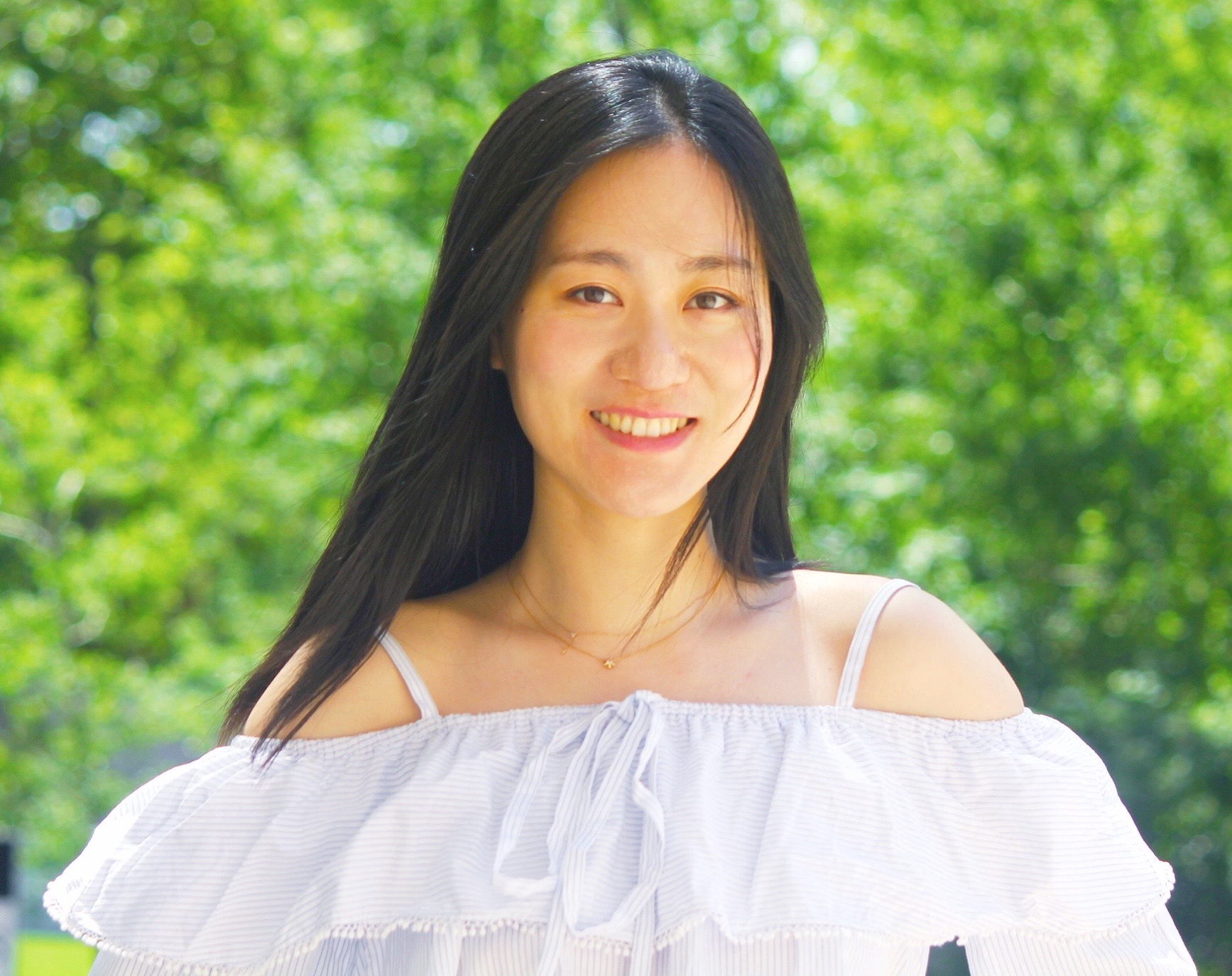
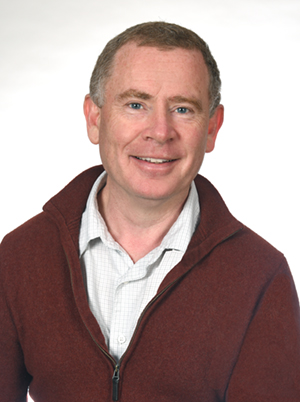
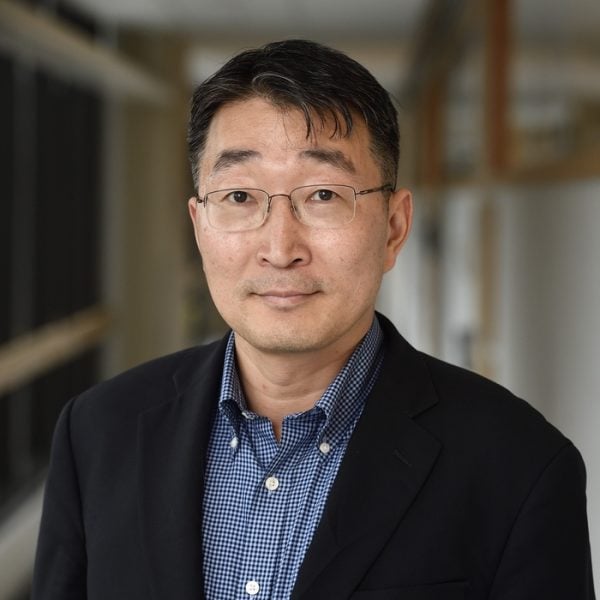
Dr. Danfeng Wu is a Research Fellow at Magdalen College, University of Oxford, conducting interdisciplinary research in syntax-semantics and syntax-prosody mappings. Her work focuses on ellipsis, focus in coordination, and the empirical interplay between syntactic structure and prosody, employing experimental phonetic methods. She investigates languages like English and Mandarin Chinese to explore the cognitive and computational aspects of linguistic structure. Her research themes include phonetics, prosody, semantics, and syntax, with a particular emphasis on how syntactic configurations interact with prosodic phrasing and stress patterns. She has contributed to studies on corrective constructions, clitic climbing in Wolof, and vowel lengthening in Zulu, demonstrating a broad methodological approach combining theoretical linguistics with experimental and computational methods. Dr. Wu is affiliated with the Phonetics Lab and Language & Brain Lab within the Faculty of Linguistics, Philology & Phonetics. She has organized interdisciplinary events such as the Oxford workshop on AI language models and developed linguistics courses for computer scientists and cognitive scientists at MIT. Her work bridges formal linguistics with cognitive science and computational linguistics, emphasizing realistic models of language acquisition and evolution.
Kieron Burke is a Distinguished Professor in the Department of Chemistry and Department of Physics at the University of California, Irvine (UCI), where he also leads the Burke research group. His academic contributions focus on advancing density functional theory (DFT), a cornerstone of computational quantum mechanics. He collaborates with institutions like Google Accelerated Science and DeepMind to integrate machine learning into DFT, enhancing its predictive power for materials and chemical systems. His research spans theoretical and computational physical chemistry, materials science, and quantum mechanics. Notable achievements include pioneering density-corrected DFT and exploring DFT applications in extreme conditions like planetary interiors and fusion reactors. Prof. Burke's work is internationally recognized, with over 25,000 annual citations, and he holds prestigious fellowships from the American Physical Society and British Royal Society of Chemistry. Prof. Burke's educational initiatives include teaching a popular graduate course on machine learning for scientists and advocating for interdisciplinary training. His research group includes students from chemistry, physics, math, computer science, and engineering, reflecting his belief in cross-disciplinary approaches to scientific challenges. Awards: Fellow of the American Physical Society, British Royal Society of Chemistry, AAAS; Member of International Academy of Quantum Molecular Sciences Labs/Teams: Burke Research Group, focusing on DFT development and machine learning applications
Dr. Mahvish Shami is an Assistant Professor at the Department of International Development, London School of Economics and Political Science. She serves as Programme Co-Director of Development Management and holds visiting research affiliations with Johns Hopkins University and Oxford University. Her academic background includes a PhD from LSE, post-doctoral fellowship at Copenhagen University, and a Leverhulme Early Career Fellowship. Her research examines how unequal power relations—particularly clientelism—impact poverty outcomes. She investigates alternative solutions beyond redistributive policies, focusing on bargaining power dynamics that affect public goods provision, collective action under hierarchical structures, and interventions improving formal justice access for marginalized groups. Current projects analyze urban clientelism in Lahore slums using unique household data, contrasting rural-urban network variations. Publications demonstrate consistent focus on clientelism's intersection with development challenges, evolving from market exposure studies to sophisticated analyses of justice barriers and urban brokerage systems. Recent work (2022-2024) shows intensified examination of institutional constraints in justice access and urban poverty targeting. Awards: Leverhulme Early Career Fellowship
David Danks is a Professor of Data Science, Philosophy, and Policy at the University of California, San Diego. His work bridges AI ethics, causal inference, and policy, focusing on governance frameworks for emerging technologies. He leads research on trustworthy AI systems, healthcare technology applications, and sociotechnical risks. Danks is affiliated with the DIVER Lab, exploring interdisciplinary approaches to AI's societal impact. His research spans causal discovery algorithms, ethical AI design, and the intersection of science and policy. Notable themes include mitigating bias in quantum machine learning, dynamic certification for autonomous systems, and addressing unforeseen technological harms. He has contributed to national AI policy through roles like the National Artificial Intelligence Advisory Committee. Publications emphasize ethical challenges in AI development, such as algorithmic fairness, epistemic utility, and moral responsibilities in dual-use technologies. His work frequently intersects with healthcare innovation, including personalized hemodynamic models for surgical risk reduction. While no formal awards or grants are listed, Danks' involvement in high-profile initiatives like the CCC Whitepaper on pandemic prevention underscores his leadership in translational ethics and policy.
Deok-Ho Kim, PhD, is a Professor in the Department of Biomedical Engineering at Johns Hopkins University. His research focuses on integrating nanotechnology, biomaterials, and mechanobiology to advance tissue engineering, regenerative medicine, and disease modeling. Key areas include stem cell engineering, organs-on-chips, and bio-inspired materials for drug screening and cell-based therapies. Education: PhD in Biomedical Engineering from Johns Hopkins University (2010), MS in Mechanical Engineering from Seoul National University (2000), and BS in Mechanical Engineering from POSTECH (1998). Research emphasizes understanding how mechanical and biochemical signals regulate cell behavior in health and disease. Notable work includes microphysiological systems (MPS) for precision medicine, spaceflight effects on cardiac function, and engineered heart tissue models. Recent studies highlighted the impact of microgravity on heart cells and the role of LOXL2 in hypertension. Laboratory: Kim Lab develops cutting-edge tools like nanopatterned electrodes and biomimetic substrates. Collaborations span academia and industry, with media features in Scientific American and coverage of heart-on-a-chip studies in space. Grants and Funding: Active in securing federal and foundation grants for tissue engineering and biomaterials research. Advising: No formal student list provided, but mentors trainees in multidisciplinary approaches.
Dr. Damian Arellanes is a Lecturer (Assistant Professor) in Computer Science at Lancaster University, UK, affiliated with the Software Engineering Group and Lancaster Centre for Intelligent, Robotic and Autonomous Systems (LIRA). He holds a PhD from The University of Manchester (2020) and a Postgraduate Certificate in Academic Practice from Lancaster University (2023). His research focuses on theoretical foundations of algebraic composition for high-level computation models, including emergent/self-organising systems and software composition. He has contributed to areas such as category theory, control-flow separation, and compositional programming for IoT systems. Education: PhD in Computer Science, University of Manchester (2020) Postgraduate Certificate in Academic Practice, Lancaster University (2023) MSc in Computer Science, supported by CONACYT (2012–2014) BEng in Computer Engineering, supported by PRONABES (2009–2012) Research Interests: Damian’s work emphasizes algebraic semantics, compositional models for software, and theoretical computer science principles. He explores how abstract mathematical frameworks (e.g., category theory) can formalize computational systems and enable scalable IoT solutions. Publications: Damian has published extensively on algebraic composition, IoT systems, and formal methods. Key themes include compositional programming, self-organizing software, and scalable service architectures. Awards: Official Nominator for the VinFuture Prize (2024) Honourable Mention for Most Outstanding Mexican Student in STEM (2021) Nick Sanders Kickstarter Fund (2019) Outstanding Doctoral Paper Award (2019) Best MSc Thesis in AI (2015) Advising & Grants: Damian supervises PhD students, such as Mina Yavari, and actively reviews for journals like IEEE TSC and conferences like TASE. He has secured scholarships and fellowships from CONACYT and the Mexican government. Labs/Teams: Member of LIRA’s Fundamentals Section and the Software Engineering Group at Lancaster University.
Anna Gautier is an Assistant Professor in the Department of Computer Science at Chalmers University of Technology, affiliated with the Division of Data Science and AI. Previously, she was a Digital Futures Postdoctoral Fellow at KTH Royal Institute of Technology (2023–2025), focusing on mechanism design for multi-robot systems. Her research emphasizes planning under uncertainty, multi-agent systems, and human-robot interaction. She holds a PhD from the University of Oxford (2023), an MSc from the London School of Economics, and dual undergraduate degrees from Washington University in St. Louis. Education Background: PhD in Computer Science, University of Oxford (2023) MSc in Applied Mathematics, London School of Economics BA in Mathematics and BS in Computer Science, Washington University in St. Louis Research Interests: Dr. Gautier explores planning algorithms for multi-agent systems, particularly in uncertain environments. She designs mechanisms to coordinate robots and humans, leveraging game theory and formal methods. Her work addresses challenges like resource allocation, risk-aware decision-making, and trust in autonomous systems. Recent projects include contingency planning for autonomous vehicles and auction-based resource distribution. Professional Activities: She co-chairs the ECAI 2025 Demonstration Track and teaches the course Safe Robot Planning and Control at KTH. Her projects include collaborations with WASP-Nest (PerCorSo) and TECoSA on trustworthy autonomy. She actively publishes in top venues like AAMAS and AAAI. Labs and Teams: Affiliated with Chalmers' Data Science and AI division, she leads research in multi-agent systems and human-AI collaboration.
Siddharth Garg is the Institute Associate Professor of Electrical and Computer Engineering at NYU Tandon School of Engineering, leading the EnSuRe Research Group. He holds a Ph.D. from Carnegie Mellon University (2009) and a B.Tech. from IIT Madras. His research focuses on secure and energy-efficient computing systems, integrating machine learning, cybersecurity, and hardware design. He previously held roles as Assistant Professor at NYU Tandon (2014-2020) and the University of Waterloo (2010-2014). Key affiliations include NYU Center for Cybersecurity (CCS), NYU Wireless, and the Center for Advanced Technology in Telecommunications. His work has been recognized with prestigious awards like the NSF CAREER Award (2015) and inclusion in Popular Science’s 'Brilliant 10' (2016). Notable research includes private inference optimization, secure hardware IP protection, and adversarial machine learning defenses. Publications highlight advancements in zero-knowledge proofs, AI-driven chip design, and mitigating backdoor attacks in neural networks. His grants include funding from NYU Wireless and NSF initiatives like the Chips4All project. The EnSuRe group emphasizes bridging software and hardware design gaps using AI and fostering cybersecurity education.
Niklas Engbom is an Assistant Professor at the Stern School of Business of New York University , specializing in macroeconomics and labor economics. He holds affiliations with NBER, CEPR, IFAU, and UCLS as a researcher. His prior experience includes a Junior Scholar role at the Federal Reserve Bank of Minneapolis (2018–2019) and a PhD from Princeton University (2018) under Richard Rogerson's supervision. His research focuses on labor market dynamics, firm behavior, and their macroeconomic implications. Key themes include wage stagnation, job ladder decline, workforce aging effects, and minimum wage policies. He has contributed to understanding how labor market fluidity impacts skill accumulation and earnings inequality, with cross-country analyses in OECD nations and Brazil. Engbom's work integrates theoretical models with empirical data, such as employer-employee panels and Swedish labor market records. His findings highlight structural shifts in labor markets—such as reduced job mobility and increased employer concentration—as critical drivers of wage growth slowdowns. He also examines how demographic changes suppress entrepreneurship and firm dynamics, linking aging populations to reduced economic growth. His research has been featured in outlets like The Economist , MarketWatch , and the Economic Report of the President . Notable projects include analyzing Brazil's inequality decline through firm policies and evaluating the consequences of German labor market reforms.
Do Own (Donna) Kim is an Assistant Professor at the University of Illinois Chicago's Department of Communication. Her research bridges technology studies, cultural studies, and computer-mediated communication, focusing on boundary-crossing practices in human-technology interactions. She examines questions of authenticity, hybrid spaces, and mediated identities through case studies like virtual influencers and K-pop digital cultures. Donna holds a Ph.D. in Communication from USC Annenberg (2022), with earlier degrees from Korea University (BA, 2015) and USC (MA, 2020). Her book project Virtually Real explores virtual influencers' cultural integration through cross-cultural fieldwork. She teaches courses on emerging technologies and communication theory, emphasizing qualitative research methods. Donna serves on Pop Junctions' editorial board and has written for platforms like In Media Res and Civic Imagination Project . Key awards include the KFAS Fellowship and a 2021 Browne Award for her chapter on Korean feminist activism. Her work appears in New Media & Society , International Journal of Communication , and CHI PLAY . Recent presentations include talks on AI ethics at UIC and virtual influencers at Curtin University's symposium.
Sandeep Kumar is an Associate Professor in the Department of Computer Science and Engineering at Texas A&M University, College Station. He holds a PhD in Computer Science from Purdue University (1995) and a B.Tech in Electrical Engineering from the Indian Institute of Technology, New Delhi (1985). His research focuses on computer security, networking, and system-level programming. Prior to academia, he worked in industry roles including at VMware in Palo Alto, CA. He currently teaches courses such as CSCE 313 (Introduction to Computer Systems) and CSCE 222 (Discrete Mathematics), emphasizing system software, networking, and cybersecurity. His teaching philosophy incorporates modern tools like GCP and Docker for practical learning. He advises students on technical projects but notes his non-tenure track role limits formal research supervision. Professional interests include curriculum design, educational technology, and bridging industry-academia gaps in cybersecurity. Education: Ph.D., Computer Science, Purdue University, 1995 M.S., Computer Science, University of Tennessee, 1987 B.Tech, Electrical Engineering, IIT Delhi, 1985 Research Interests: Computer Security, Networking, Operating Systems Teaching: CSCE 313 (Computer Systems), CSCE 222 (Discrete Math), CSCE 111 (Java Programming) Industry Experience: VMware (Networking & Security), Former Googler Awards: Hagler Fellow (2023), Google GCP Educational Grants Dr. Kumar’s work emphasizes practical system-level programming and security, with contributions to intrusion detection systems and secure enterprise networks. His courses integrate modern tools like RustRover and Docker, reflecting industry standards. He actively engages with educational technology, including LaTeX-based lecture materials and Gradescope integration.
Florian Naef is an Assistant Professor in the School of Mathematics at Trinity College Dublin. His research spans topological and algebraic structures with applications to mathematical physics, including string topology, Poisson geometry, and homotopy theory. Publications emphasize formality theorems, torsion invariants, and quantization methods. Recurring themes include loop spaces, deformation quantization, and connections between differential geometry and algebraic topology.
Sophie Othman is a Lecturer at the University of Franche-Comté, affiliated with the Centre de Linguistique Appliquée (CLA) and the DEFLET department. She is actively engaged in research and teaching in language didactics, digital education, and innovative pedagogical practices. Her work spans multiple roles in research coordination, program leadership, and international academic collaboration. Research Interests: Her primary research areas include digital technology in language teaching and learning, design of online and distance learning environments, digital engineering in education, pedagogical innovation, comodal and hybrid training models, MOOCs, e-portfolios, and teacher training in ICT. She explores how digital tools transform language education, especially in multilingual and multicultural contexts. The recent scholarly output shows a consistent focus on post-pandemic educational transformation, AI integration in learning systems, and the design of flexible pedagogical scenarios. Her publications appear in journals such as ALSIC and in international conference proceedings, reflecting a strong engagement with digital pedagogy and language education innovation. Leadership and Service: Vice-President, Scientific and Pedagogical Commission, CLA – University of Franche-Comté (2021–present) Co-Responsible, TIPED Research Program, ELLIADD (2017–present) Scientific Coordinator, Innov'FLE Thematic Thursdays (2022–present) Former Coordinator, Master 2 FLE 'Political and Digital Environments' and FLE Track at CTU Besançon (2018–2020) Scientific Committee Member for international conferences (e.g., ADCUEFE, CEDIL, UBEST, EIAH) Expert reviewer for language didactics journals and collective works International trainer for the French Ministry and OIF in over 15 countries Projects and Grants: #ApproprIA: AI Appropriation in Education (2025–...) UNPEAA: Digital Use by Allophone Adults (2024–...) Innov'FLE: Innovation in FLE Teaching (2022–...) HUMANE: Digital Humanities for Education (2019–2022) ANR-IDEFI Innovalangues (2013–2016) Advising and Grants: While no formal students are listed, she has supervised research teams and mentored junior researchers through collaborative projects and editorial roles. She has secured national and international funding, notably through the ANR-IDEFI program, and contributes to large-scale educational initiatives supported by governmental and Francophone institutions. Labs and Teams: She is affiliated with the ELLIADD research laboratory (University of Franche-Comté) and was previously associated with LIDILEM (Université Grenoble Alpes). She leads and participates in interdisciplinary research groups focused on digital language education, teacher training, and innovation in didactics.
Tianyu Guan is an Assistant Professor in the Department of Mathematics and Statistics at York University, Faculty of Science. He previously served as an Assistant Professor at Brock University and joined York University in 2024. He holds a PhD in Statistics from Simon Fraser University (2020), an MSc in Actuarial Science from the same institution (2014), and a BSc in Statistics from Jilin University (2011). PhD in Statistics, Simon Fraser University, 2020 MSc in Actuarial Science, Simon Fraser University, 2014 BSc in Statistics, Jilin University, 2011 His research centers on sports analytics, functional data analysis, and nonparametric statistics, with strong applications in machine learning and data science. He applies statistical methodologies to understand sports performance, player behavior, and game dynamics. His work also extends to theoretical developments in sparse modeling and functional regression. The recent publications highlight a clear trend toward integrating advanced statistical techniques with real-world sports and entertainment data. His work combines functional data analysis, machine learning, and probabilistic modeling to extract insights from complex longitudinal and high-dimensional datasets. Topics span soccer, rugby, football, and movie reviews, demonstrating interdisciplinary reach. While no formal scientific awards are listed in the provided text, his publications in high-impact journals such as Annals of Applied Statistics and Statistics and Computing reflect strong academic recognition. Tianyu Guan actively advises multiple graduate students at both MSc and PhD levels, primarily at Brock and Simon Fraser Universities. His teaching portfolio includes advanced courses in nonparametric statistics, sampling theory, and experimental design at the undergraduate and graduate levels. He has not received external grant information in the provided text, but his research output suggests active engagement in funded or independent research projects. He leads methodological and applied research in sports analytics, often co-supervising students with colleagues across institutions. His lab or research group appears focused on developing and applying statistical tools for performance analysis and decision-making in sports, supported by computational implementations such as the R package ngr .
Jeffrey Sanford Russell is a Professor of Philosophy at the University of Southern California's School of Philosophy, where he also serves as Director of Graduate Studies. He holds a PhD from New York University (2011). His research focuses on decision theory, ethics, formal epistemology, metaphysics, and the philosophy of religion and mathematics. Russell teaches courses on topics like probability, rational choice, and the limits of logic, emphasizing interdisciplinary approaches blending philosophy with mathematics, psychology, and economics. His work explores foundational questions in ethics, such as infinite value aggregation paradoxes, and decision theory, including stochastic dominance and self-locating evidence in cosmology. He has contributed to debates on multiverse hypotheses, moral hedging, and the structure of possible worlds. Russell’s publications appear in top journals like Noûs , Philosophical Review , and Philosophy and Phenomenological Research . His recent research addresses moral and epistemic challenges in infinite scenarios, such as infinite ethics and fanaticism in decision-making. He also investigates the intersection of metaphysics and formal logic, including composition principles and qualitative grounds for non-qualitative facts. Russell’s work bridges abstract philosophical inquiry with practical implications, such as ethical dilemmas in collective action and the epistemology of divine hiddenness.