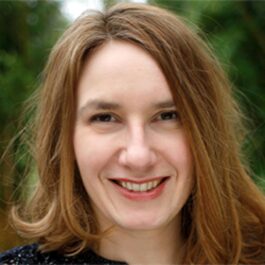
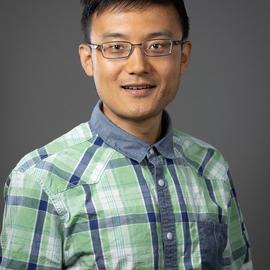
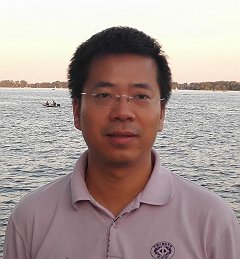
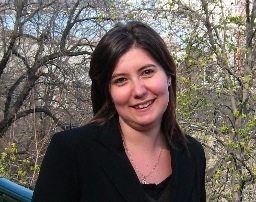
YooJung Choi is an Assistant Professor at the School of Computing and Augmented Intelligence, Arizona State University. Her research focuses on probabilistic machine learning, trustworthy AI, and tractable probabilistic modeling. She holds a PhD in Computer Science from UCLA and has been recognized with awards like the Cisco Research Award and Simons-Berkeley Research Fellowship. Education: PhD in Computer Science (University of California, Los Angeles). Research interests include probabilistic reasoning, fairness, robustness, and interpretability. Her work bridges theoretical foundations and practical applications, with contributions to probabilistic circuits and optimal transport. Notable achievements include co-organizing TPM 2024 and presenting at venues like NeurIPS and AAAI. She actively promotes fairness in AI through frameworks that address label bias and discrimination patterns. Awards: Cisco Research Award, Simons-Berkeley Fellowship, AAAI 2023 New Faculty Highlights. Teaching: Courses on artificial intelligence, machine learning, and research supervision. Service: Tutorial leadership on probabilistic circuits, workshop organization, and academic talks globally.
Jessica Hullman is the Ginni Rometty Professor of Computer Science at Northwestern University's McCormick School of Engineering and a Faculty Fellow at the Institute for Policy Research. Her research develops theoretical frameworks and interfaces for human-AI collaboration, focusing on uncertainty quantification, statistical modeling, and decision-making in domains like scientific research and AI-assisted analysis. Education: PhD in Information (Visualization), University of Michigan (2013) MS in Information Analysis, University of Michigan (2008) BA in Comparative Studies, Ohio State University (2003) Tableau Postdoctoral Fellowship, UC Berkeley (2015) Research Focus: Hullman's work bridges formal models of rational inference (e.g., Bayesian decision theory) with real-world applications. Key areas include: human-AI complementarity in decision-making, visualization of uncertainty, statistical reform, and LLM applications in behavioral science. Her research consistently addresses the alignment of data-driven interfaces with human cognitive capabilities. Publication Trends: Recent work demonstrates a strong emphasis on human-AI collaboration frameworks, decision-theoretic evaluation of visualizations, and methodological rigor in machine learning and social science. Key themes include uncertainty quantification (conformal prediction, privacy tradeoffs), behavioral experiments in AI-assisted tasks, and critical analyses of scientific practices. Awards & Honors: Microsoft Faculty Fellow (2019) Google Faculty Award NSF CAREER, Medium, and Small Awards Multiple best paper/honorable mention awards at top HCI/visualization venues (CHI, VIS) Funding & Labs: Principal Investigator for NSF-funded projects including HCC: Medium on visualization tools. Previously affiliated with University of Washington's Interactive Data Lab and DataLab. Current research includes NSF-supported work on improving data visualization for reasoning about analytical assumptions.
Dr Nour Ali is a Reader in the Department of Computer Science at Brunel University London , where she co-heads the Brunel Software Engineering Lab and serves as Vice-Dean of Education for the College of Engineering, Design and Physical Sciences. She holds a PhD in Software Engineering from Universidad Politecnica de Valencia, Spain, and a Major in Computer Science from Bir-Zeit University, Palestine. Research Interests: Software architecture for distributed and adaptive systems, integrating techniques like Model-Driven Engineering, Reverse Engineering, and Machine Learning. Teaching: Module leader for Software Project Management and supervisor of undergraduate group projects and final-year projects. Scientific Contributions: Over 70 publications in journals, conferences, and books. Key research areas include microservice architecture recovery, autonomic healthcare systems, and mobile self-adaptive architecture. Scientific Awards: Fellow of the Higher Education Academy (HEA). Membership: Deputy Editor-in-Chief for IET Software, member of multiple conference program committees, and reviewer for EPSRC, NWO, and other funding bodies.
Alireza Poshtkohi is an interdisciplinary researcher at the University of Hertfordshire , affiliated with the School of Physics, Engineering & Computer Science and the Department of Computer Science . He applies computational and mathematical approaches to neuroscience, physics, and engineering challenges, focusing on modeling the human nervous system and brain diseases at the cellular level using supercomputing technologies. Education: PhD in Neuroscience (Ulster University, 2023), MSc in Parallel Simulation of Electronic Systems (Shahed University, 2011), BSc in Embedded Systems and Computer Networks (2006). His research spans computational neuroscience , mathematical modeling , and high-performance computing , with publications on microglia dynamics, P2X receptors, and parallel system modeling. Recent work includes a 2024 study on the PI3K/Akt pathway and a 2023 book on distributed systems. He collaborates with experimental neuroscientists from the University of Reading and Michigan State University , integrating molecular neurobiology with computational frameworks. His technical expertise includes grid computing, cybersecurity, and simulation environments.
Larry D. Wigger serves as Teaching Professor of Supply Chain Management and Faculty Director of Assessment and Accreditation at the Henry W. Bloch School of Management, University of Missouri-Kansas City. With over twenty years of industry experience spanning strategic leadership, operations, and global project management, he integrates practical expertise into academic instruction. His educational background includes: MA in Economics from University of Missouri-Kansas City MS in Supply Chain Management and general MBA from Elmhurst University BA in Business Administration from William Jewell College He is currently completing his PhD dissertation in Economics at UMKC with a co-discipline in Public Affairs and Administration. Wigger's research bridges supply chain visibility through blockchain technology, public policy responses to automation-induced unemployment, and modern monetary theory constraints. His work examines systemic economic structures while addressing practical industry challenges in labor markets and capital allocation. Recent publications demonstrate consistent thematic focus on securing supply chains via traceability systems, analyzing labor-housing dynamics in critical materials networks, and developing holistic economic frameworks for supply chain analysis. His scholarship uniquely connects theoretical economics with tangible supply chain disruptions and policy interventions. Though no formal advisees are documented, Wigger's industry leadership included equity positions in construction startups serving petroleum, retail, and hospitality sectors, plus three years managing post-earthquake reconstruction in Port-au-Prince. His accreditation role indicates significant administrative responsibilities within the business school.
Fnu Suya is a tenure-track Assistant Professor in the Department of Electrical Engineering and Computer Science at the University of Tennessee, Knoxville. Prior to this, he served as an MC2 Postdoctoral Fellow at the University of Maryland, College Park (Oct 2023–Jul 2024), and completed his Ph.D. in Computer Science at the University of Virginia under Professors David Evans and Yuan Tian.
Dr. Dragan Doder is an Assistant Professor in the Intelligent Systems group within the Faculty of Science at Utrecht University. His office is located in the Buys Ballot Building at Princetonplein 5, Room 5.20, 3584 CC Utrecht, Netherlands. He is actively engaged in research and teaching within the domain of Artificial Intelligence, with a specific focus on logical frameworks for AI systems. Dr. Doder's research expertise spans several interconnected areas of theoretical and applied AI. His primary interests include: Artificial Intelligence with emphasis on logical foundations Argumentation theory and frameworks Probabilistic reasoning and temporal logic Deontic logic for normative reasoning Human-centered AI approaches His work bridges theoretical computer science with practical applications in multi-agent systems and decision-making frameworks. Analysis of Dr. Doder's recent publications (2020-2025) reveals a strong focus on the intersection of logic, probability, and AI. His research trajectory shows increasing sophistication in handling uncertainty through probabilistic temporal logics, while maintaining strong connections to practical applications in multi-agent systems and argumentation frameworks. A notable trend is his work on integrating causal reasoning with probabilistic models, particularly in multi-agent contexts where group responsibility and risk assessment become critical concerns. His publications demonstrate consistent contributions to top AI conferences including IJCAI, AAAI, and ECAI. Dr. Doder actively collaborates with researchers across multiple institutions. His collaborative network includes prominent researchers in AI and logic from institutions worldwide. His research has practical implications for developing AI systems that can reason under uncertainty, handle complex normative constraints, and make responsible decisions in multi-agent environments. Dr. Doder is affiliated with the Intelligent Systems research group at Utrecht University, which focuses on developing theoretically sound approaches to AI that can be applied to real-world problems. The group emphasizes human-centered AI approaches that consider ethical implications and practical usability alongside technical excellence.
Scott Nelson is an Associate Professor of Finance at the University of Chicago Booth School of Business. His research bridges consumer credit markets, regulatory frameworks, and behavioral economics, with a focus on how information asymmetries and algorithmic decision-making shape market outcomes. He has contributed to understanding the impacts of the 2009 CARD Act, eviction protections in housing markets, and fairness in credit scoring systems. PhD in Economics, Massachusetts Institute of Technology BA (summa cum laude) in Economics and Mathematics, Yale College Nelson's work employs diverse data sources, including credit reports, court filings, and tax records, combined with structural models to analyze consumer and firm behavior. Key themes include regulatory efficiency, validity disparities in predictive models, and the welfare implications of policy interventions. His articles reveal trends in algorithmic regulation (2025), eviction dynamics (2025), credit scoring disparities (2024), and public finance impacts on Chinese real estate (2023). These publications highlight interdisciplinary methodologies integrating economics, law, and data science. Scientific awards include the AQR Top Finance Graduate Award (2018) and National Science Foundation Graduate Research Fellowship. He has held postdoctoral roles at the Consumer Financial Protection Bureau/Princeton University and visiting research positions at the Federal Reserve Bank of Boston.
Judith Fauth is a researcher at the Technical University of Munich's Chair of Computing in Civil and Building Engineering, where she pioneers digital transformation in building permit processes through Building Information Modeling (BIM) and digital twin technologies. Her work bridges civil engineering, computer science, and public policy to streamline regulatory compliance across international contexts. Her research expertise spans Building Permit Processes , Digital Building Permits , Ontology Engineering , and Process Modeling , with emphasis on developing standardized frameworks for global permit system benchmarking. She investigates how semantic technologies and digital twins can automate regulatory compliance while accommodating regional variations in construction law and administrative practices. Analysis of her 2023-2025 publications reveals three dominant trends: (1) integration of digital building permits with digital building logbooks for lifecycle data management, (2) development of ontologies like OBPA for automated permit reviews, and (3) creation of taxonomies and process models (e.g., PACE-BP framework) enabling cross-national comparisons of permit systems. This work increasingly incorporates sustainability metrics and stakeholder-specific KPIs. Within TUM's research infrastructure, Dr. Fauth contributes to the BIM Lab and Digital Twinning research groups, collaborating on projects involving Gaia-X-based data frameworks and semantic modeling of the built environment. She teaches practical software development skills through the SoftwareLab course, preparing engineering students for digital construction workflows.
Fei He is an Associate Professor at Tsinghua University's School of Software, where he leads the THUFV research lab focused on formal verification and program analysis. His research spans formal methods, automated reasoning, and program verification, with applications in concurrent systems, networking (P4 programs), and probabilistic systems. Education & Employment: PhD from Tsinghua University (2008) Visiting Scholar at Carnegie Mellon University (2010-2011) and Politecnico di Milano (2006-2007) Faculty positions at Tsinghua since 2008 (Assistant Professor 2008-2011, Associate Professor 2011-present) Research: He's developed innovative techniques in SMT solving for concurrency verification, termination analysis, and regression verification. His tools like Deagle have won gold medals at SV-COMP. Current work focuses on probabilistic program verification and network program analysis. Publications: His 80+ publications demonstrate consistent contributions across formal methods (PLDI, OOPSLA, ICSE), networking (NSDI, INFOCOM), and software engineering (TSE, TOSEM), with recent emphasis on data-driven verification and automated invariant inference. Awards: Gold Medals in SV-COMP ConcurrencySafety (2022, 2023, 2025) Best Paper Awards at PPoPP 2022 and SETTA 2022 Advising: Mentors 13 PhD/Master's students in THUFV lab, with graduates joining Huawei, MPI-SP, and research institutions. Secured multiple NSF China grants for trustworthy software research. Service: Associate Editor for Theory of Computing Systems, program committees for PLDI/ICSE/OOPSLA, and former Local Chair for ISSTA 2019.
Todd Millstein is a Professor in the Computer Science Department at the University of California, Los Angeles (UCLA). He served as the Computer Science Department Chair from 2022-2025 and is also an Amazon Scholar. His research focuses on making software systems more reliable through programming languages techniques, with significant contributions to network verification and probabilistic programming. Millstein received his Ph.D. from the University of Washington Department of Computer Science, where he was a member of the Cecil group led by Craig Chambers. Prior to that, he completed his undergraduate studies at Brown University under the guidance of Paris Kanellakis and Pascal Van Hentenryck. Millstein's research spans several areas of programming languages and systems with a focus on reliability. He has made significant contributions to network verification, developing the Batfish network configuration analyzer which is now managed by Amazon Web Services and forms the basis of Oracle Cloud's Network Path Analyzer. His work has been recognized with the ACM SIGCOMM Networking Systems Award in 2025. He also works on interactive program verification through lemma synthesis and scalable reasoning methods for probabilistic programming languages. His research bridges programming languages theory with practical systems challenges, as highlighted in his SPLASH/OOPSLA 2024 keynote "Everything is a Program (even if it's not)". Millstein's recent publications demonstrate a consistent focus on verification and reliability across multiple domains. His work shows a progression from foundational programming language techniques to practical applications in networking and probabilistic systems. Key themes include data-driven approaches to program analysis, synthesis of verification artifacts, and applying programming languages techniques to non-traditional domains like network configuration. Millstein's scientific achievements have been recognized with numerous prestigious awards including an NSF CAREER Award, an ACM SIGPLAN Most Influential PLDI Paper Award, an ACM SIGCOMM Networking Systems Award, IEEE Micro Top Picks selection, best-paper awards from PLDI, OOPSLA, and SIGCOMM, a Microsoft Research Outstanding Collaborator Award, an Okawa Foundation Research Grant, an IBM Faculty Award, and a Facebook Research Award. He has also received both the Northrop Grumman Excellence in Teaching Award (for junior faculty) and the Eon Instrumentation Inc. Excellence in Teaching Award (for senior faculty) from UCLA Engineering. Millstein advises several Ph.D. students including Ana Brendel, Poorva Garg (co-advised with Guy Van den Broeck), Rajdeep Mondal (co-advised with George Varghese), and Rathin Singha (co-advised with George Varghese). His research has been supported by various grants including an NSF CAREER Award, Okawa Foundation Research Grant, IBM Faculty Award, and Facebook Research Award. He has also been a Co-Founder and Chief Scientist of Intentionet, which was later acquired by Amazon Web Services. Millstein is actively involved in the Batfish project, an open-source network configuration analyzer that has had significant practical impact. Batfish is now managed by AWS, powers Oracle Cloud's Network Path Analyzer, and is used by dozens of companies. His research group continues to work on network reliability, developing techniques for scalable BGP policy verification and behavioral testing of protocol implementations.
Dr. Silvia Bonomi serves as an Associate Professor in the Department of Computer, Control and Management Engineering at Sapienza University of Rome, where she has held academic positions since 2006. Her career progression includes Research Fellow (2010-2011), Tenure Track Assistant Professor (2016-2019), and current Associate Professor appointment since 2019. She maintains her office in Room B114 and is actively engaged in research and teaching within the university's engineering faculty. Her educational background includes: PhD in Computer Engineering, Sapienza University of Rome and Institut de Formation Supérieure en Informatique et Communication (IFSIC/IRISA), Rennes, France (completed under advisors Prof. Roberto Baldoni and Prof. Michel Raynal) Dr. Bonomi's research critically examines dynamic distributed systems where entities autonomously join and leave networks, with applications spanning VANETs, airborne networks, social networks, and distributed cloud services. She pioneers work in Byzantine fault tolerance for mobile environments, blockchain security with emphasis on smart contract vulnerability analysis, and resilient cybersecurity frameworks integrating human factors. Her investigations into publish-subscribe systems focus on quality-of-service enhancements, while her peer-to-peer systems research addresses fundamental connectivity challenges in large-scale decentralized environments. This interdisciplinary approach bridges theoretical distributed computing with practical cybersecurity applications. Analysis of her 15 most recent publications (2021-2024) reveals dominant trends in blockchain security (particularly smart contract vulnerability taxonomies and analysis tool efficacy) and fault-tolerant distributed systems (reliable communication under Byzantine faults in dynamic networks). Her work increasingly integrates human factors into cybersecurity models and develops visual analytics for business-centric risk assessment. Publications span top venues including IEEE CSR, OPODIS, SAFECOMP, and journals like Computers & Security, demonstrating consistent contributions to both theoretical foundations and practical cybersecurity implementations.
Professor Michael Gordon is a Professor of Law at the University of Liverpool, affiliated with the School of Law and Social Justice within the Faculty of Humanities and Social Sciences. He holds a Law degree from Queens' College, University of Cambridge, and a PhD from the University of Manchester. His research focuses on UK constitutional law, parliamentary sovereignty, Brexit implications, and constitutional reform, with notable contributions including his monograph Parliamentary Sovereignty in the UK Constitution (2015) and ongoing engagement with Brexit-related legal challenges. He co-authored Cases and Materials on Constitutional and Administrative Law and is co-editor of the UK Constitutional Law Association Blog. Teaching interests include Public Law and Jurisprudence, with awards including the Faculty of Humanities and Social Sciences Learning and Teaching Prize (2014, 2016). He supervises PhD students researching public law and legal theory, with a focus on UK, European, and international dimensions. Professional activities include membership in the Study of Parliament Group, UK Constitutional Law Association, and Society of Legal Scholars, alongside peer review roles with the AHRC. Research highlights include the British Academy-funded project Twenty Years On: Assessing the State of New Labour's Constitution (2017–2017). His work frequently addresses the interplay between law and politics, democratic accountability, and post-Brexit governance challenges, with media commentary across television, radio, and print outlets.
Heiko Falk is a Professor and Head of the Institute of Embedded Systems at Technische Universität Hamburg (TUHH). His roles include serving as Workshop Chair for the 2024 Embedded Systems Week (ESWEEK), Scientific Coordinator for the B.Sc. and M.Sc. Computer Science programs, and Deputy Head of the Board of Examiners for Computer Science and Engineering. His research focuses on real-time systems, compiler optimizations, and worst-case execution time (WCET) analysis. Key areas include multi-core architectures, cache management, energy efficiency, and hardware/software co-design. Falk's work emphasizes practical compiler techniques for improving real-time performance, such as WCET-aware memory allocation, dynamic SPM optimization, and event-driven scheduling. His publications analyze shared cache interference, preemptive/non-preemptive scheduling, and DMA-aware optimizations. Recent work explores multi-objective trade-offs between WCET, energy consumption, and code size in embedded systems. No scientific awards are explicitly listed, but his contributions to WCET benchmarking (e.g., haRTStone project) and compiler frameworks demonstrate significant impact in the field. Advising and grants: No formal advisees are listed in the provided texts. Falk's work is supported through projects like teamplay, focusing on cyber-physical systems optimization. Labs/Teams: His group operates within TUHH's Institute of Embedded Systems, collaborating on projects addressing real-time system challenges in multi-core environments.
Dr. Lauren A. Siegel is a Senior Lecturer in Tourism and Events at the University of Greenwich, part of the Faculty of Business and School of Management and Marketing. She transitioned from a decade-long career in New York City’s tourism and events sector to pursue her MSc at the Hong Kong Polytechnic University (Distinction) and later her PhD at the University of Surrey, focusing on social media’s transformative role in tourism experiences and 'Instagrammable' destinations. Her research examines behavioral performances of travelers, destination impacts, and the interplay between digital media and cultural consumption. Her work has been featured in global media outlets such as BBC, CNN, and The Independent. Education: MSc (Distinction) in Tourism and Events Management from Hong Kong Polytechnic University; PhD in Tourism from the University of Surrey. She is affiliated with the Travel and Tourism Research Association (TTRA), International Federation for IT and Travel & Tourism (IFITT), Royal Geographical Society, and Royal Photographic Society. Research interests center on social media’s impact on tourism behaviors, digital marketing strategies, and the cultural dimensions of travel experiences. Her studies explore how platforms like Instagram shape destination perceptions, tourist behaviors, and the commodification of experiences. She also investigates emerging trends like autonomous vehicles in leisure travel and the socio-cultural effects of student mobility programs like Erasmus+. While no formal grants or advising roles are explicitly detailed, her scholarly contributions emphasize practical solutions for destinations facing overtourism and leveraging behavioral interventions. She actively engages in interdisciplinary research, blending tourism studies with digital sociology and policy analysis.