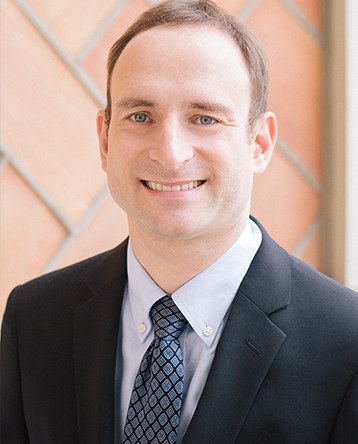
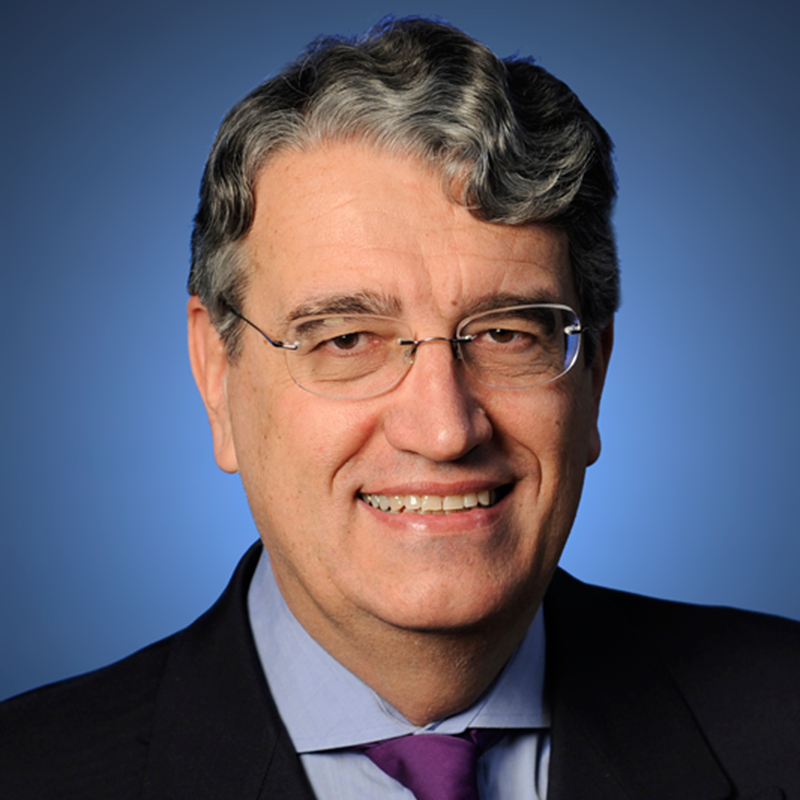
Brandon M. Lucia is the Kavčić-Moura Professor of Electrical and Computer Engineering at Carnegie Mellon University and CEO/co-founder of Efficient Computer Company. He leads the Abstract research group and focuses his work on the intersection of computer architecture, systems, and programming languages. Education: Ph.D. in Computer Science and Engineering, University of Washington (2013) — advised by Luis Ceze Research Focus: Brandon's research is broadly centered on intermittent computing , edge computing , and energy-efficient architectures . Two major thrusts define his current work: Intermittent Computing: Making battery-free, energy-harvesting devices programmable and reliable despite frequent power failures. Applications include medical implants, space systems, and large-scale sensing. Orbital Edge Computing: Designing nanosatellite constellations that perform on-orbit data processing, enabling low-latency, high-resolution sensing in space-constrained environments. Scientific Awards: NSF CAREER Award (2017) IEEE TCCA Young Computer Architect Award (2019) Sloan Foundation Fellowship (2021) ASPLOS 2020 Best Paper Award OOPSLA 2015 Distinguished Paper & Artifact Awards IEEE Micro Top Picks (2016, 2018 Honorable Mention) Advising & Grants: Brandon actively advises a strong cohort of Ph.D. students including Zhuo Cheng, Bradley Denby, Souradip Ghosh, Harsh Desai, Kiwan Maeng, Emily Ruppel, and others. His group is funded by the NSF (CAREER and SHF grants), the Sloan Foundation, and industry partnerships. Labs & Teams: He directs the Abstract research group at CMU ECE, which hosts interdisciplinary projects spanning hardware design, compiler construction, and system software for ultra-low-power and space-borne computing platforms.
Sicun Gao is an Associate Professor in the Computer Science and Engineering department at the University of California, San Diego. His research focuses on practical algorithms for NP-hard search and optimization problems in computational systems, emphasizing combinatorial perspectives in numerical and statistical contexts to achieve reliable autonomy. Research Interests: Automated reasoning, Hamilton-Jacobi reachability, safe reinforcement learning, control barrier functions, and optimization in cyber-physical systems. Teaching: Courses on AI search, optimization, and graduate research seminars. The 15 most recent publications highlight advancements in safe AI control, motion planning, and policy optimization, often integrating neural networks with formal verification. Awards include the IEEE Power & Energy Society Technical Committee Prize Paper Award and the IROS RoboCup Best Paper Award. He advises PhD students working on AI-driven control and robotics, with alumni placed at institutions like Seoul National University, Amazon, and Apple. Grants include NSF Career, Air Force Young Investigator, and DARPA Assured Autonomy funding. His lab develops tools like dReal for automated reasoning in nonlinear theories over the reals.
James McCann is an Associate Professor at the Carnegie Mellon Robotics Institute, where he leads the Carnegie Mellon Textiles Lab. He has been a faculty member since May 2017 after working at Disney Research Pittsburgh. McCann's academic journey includes a PhD from Carnegie Mellon advised by Nancy Pollard, followed by a postdoc at Adobe Research and a period developing video games. McCann's research focuses on building creative tools that operate in real-time and build user intuition, with particular emphasis on textiles fabrication and machine knitting. His work spans computer-aided fabrication, simulation, graphics, and creative tools development. He has pioneered systems for machine knitting design, including compilers for knitting instructions and tools for automatic conversion of 3D meshes to knitting patterns. His recent publications demonstrate a strong trend toward computational textiles, with significant contributions to knitting semantics, deployable textile structures, and applications of machine knitting in healthcare and robotics. McCann's work bridges computer science, robotics, and textile arts, creating practical systems for once-off manufacturing with industrial knitting machines. McCann actively mentors students, with current PhD candidates working on solid knitting machines, knit calibration, and assistive devices. His teaching portfolio includes courses on Real-Time Graphics, Algorithmic Textiles Design, and Game Programming. He has taught at CMU since 2017, developing innovative courses that blend computer science with physical fabrication. As director of the Textiles Lab, McCann oversees research projects spanning machine knitting, robotic painting, and real-time graphics systems. His lab develops practical tools for creators, emphasizing intuitive interfaces and real-time feedback that lower barriers to advanced fabrication techniques.
Justine Sherry is the A. Nico Habermann Associate Professor of Computer Science at Carnegie Mellon University, affiliated with the College of Engineering. She holds a PhD (2016) and MS (2012) from UC Berkeley and a BS/BA (2010) from the University of Washington. Her research focuses on networked systems, including middleboxes, cloud computing, congestion control, and hardware acceleration (e.g., SmartNICs/FPGAs). Notable projects include Pigasus (open-source 100Gbps IDS), APLOMB (cloud-based middlebox scaling), and BlindBox (encrypted traffic scanning). Her academic roles include serving on the SIGCOMM CARES Committee, DARPA ISAT Study Group, and ACM CoNEXT Steering Committee. Awards include the Alfred P. Sloan Fellowship, VMware Systems Award, and IETF Applied Networking Prize. She advises over 15 students and collaborates with industry partners like Intel and VMware. Research highlights include radical shifts in datacenter architectures (SmartNIC compute control), fairness in congestion algorithms (BBR analysis), and database-proxy innovations (Tigger with eBPF). Her teaching emphasizes systems as science labs, integrating experimental design and hypothesis testing into projects. Education: PhD UC Berkeley (2016), MS UC Berkeley (2012), BS/BA University of Washington (2010) Labs/Teams: CyLab, SNAP Research Group, CMU Portugal Collaboration Grants: NSF, Intel, Google Faculty Awards
Brandon Lucia is a Professor in the Department of Electrical and Computer Engineering at Carnegie Mellon University's College of Engineering. He holds the Kavčić-Moura Professorship and leads the Abstract research group. As CEO and co-founder of Efficient Computer Corp., he bridges academic research with commercial applications in energy-efficient computing. Dr. Lucia received his Ph.D. in Computer Science and Engineering from the University of Washington in 2013, following an MS from the same institution in 2010 and a BS in Computer Science from Tufts University in 2007. His research focuses on the intersection of computer architecture, computer systems, and programming languages, particularly in energy-constrained environments. His primary research interests include intermittent computing, energy harvesting computers, orbital edge computing, and parallel computing systems. Lucia's work addresses fundamental challenges in creating programmable, reliable computing devices that operate without batteries by harvesting energy from their environments, with applications in sensing, medical implants, and space systems. He also investigates software systems and architectures for making parallel computing correct, reliable, and efficient in the post-Moore's Law era. Lucia's publication record shows a clear trajectory toward orbital edge computing and nanosatellite systems, with recent work focusing on computational constellations, visual navigation for satellites, and energy-efficient processing in space. His research spans both theoretical foundations of intermittent computing and practical implementations in hardware and software. 2021 Sloan Research Fellowship 2018 NSF CAREER Award 2018 ASPLOS Best Paper Award IEEE MICRO Top Picks in Computer Architecture (2009, 2010, 2016) 2015 OOPSLA Best Paper Award 2019 IEEE TCCA Young Computer Architect Award 2022 Engineering Faculty Award As an advisor, Lucia has mentored numerous graduate students including Brad Denby, Zhuo Cheng, and Kyle McCleary, many of whom have become co-authors on his significant publications. His lab developed the world's first batteryless PocketQube nanosatellite (Tartan-Artibeus-1), which was deployed to low-Earth orbit aboard the SpaceX Transporter-3 Rocket. Lucia's research has received funding from sources including NSF, DARPA, Google, and VMware, supporting both fundamental research and practical implementations of energy-harvesting computing systems.
Franz Franchetti is the Kavčić-Moura Professor of Electrical & Computer Engineering at Carnegie Mellon University. He serves as Associate Dean for Research and Director of the Engineering Research Accelerator at CMU. Education: Ph.D. in Computational Mathematics (Vienna University of Technology, 2003) M.Sc. in Technical Mathematics (Vienna University of Technology, 2000) His research interests focus on automatic performance tuning and program generation for emerging parallel computing platforms , including multicore CPUs , GPUs , and 3DIC chip design . He leads the SPIRAL effort to automate highly optimized software libraries and explores domain-specific compiler transformations in HPC applications for smart grids and material sciences . Recent work extends SPIRAL to quantum computing . The scientific awards Franchetti has received include the Gordon Bell Prize (2006) , HPC Challenge Class II Award (2010) , and the CIT Dean's Early Career Fellowship (2013) . He and his students have won multiple Best Paper Awards at HPEC, DAC, and ISPA ACM TODAES Best Paper (2014) Student Research Competition wins (PACT 2024, CGO 2023) Franchetti has advised students like Richard Veras and Thom Popovici . He has secured significant grants from agencies such as DARPA, DOE, NSF, and industry partners (Intel, NVIDIA, Mercury). He co-founded SpiralGen, Inc. and holds leadership roles in organizations like ASciNA Western Pennsylvania and as Honorary Consul of Austria in Pittsburgh.
Steve Awodey is a Professor of Philosophy and Mathematics at Carnegie Mellon University, affiliated with the Dietrich College of Humanities and Social Sciences and the Department of Philosophy. His research bridges Category Theory, Homotopy Type Theory, and Algebraic Set Theory, with significant contributions to constructive mathematics and the philosophy of type theory. PhD in Mathematics, University of Chicago (1997), dissertation: Logic in Topoi: Functorial Semantics for Higher-Order Logic Awodey's work focuses on the intersection of categorical logic, homotopy theory, and constructive mathematics. He co-founded the Univalent Foundations Program at the Institute for Advanced Study and leads the Hoskinson Center for Formal Mathematics at CMU. His recent publications explore algebraic models of type theory, cubical set models, and higher categorical structures. His research output spans formal verification, proof-theoretic semantics, and topos-theoretic interpretations of modal logic. The 15 most recent articles emphasize Homotopy Type Theory (HoTT), polynomial functors, and applications of algebraic geometry to intuitionistic logic. Trends include univalent foundations, higher inductive types, and model category-theoretic approaches. Scientific Awards: The Dean's Chair in Logic, Carnegie Mellon University Participant Support Grant for Homotopy Type Theory Conferences NSF Grant for Homotopy Type Theory Research Advising and Grants: Awodey has advised numerous PhD students across philosophy, mathematics, and computer science on topics like Martin-Löf complexes, polynomial pseudomonads, and synthetic homotopy theory. He has secured multiple NSF grants for HoTT research and conference support, with affiliations to the Institute for Advanced Study and nLab collaborative projects. Labs and Teams: He leads the Hoskinson Center for Formal Mathematics and collaborates with the Laboratory for Symbolic and Educational Computing at CMU. His work engages international research groups in categorical logic and higher category theory.
Riad S. Wahby is an Assistant Professor in the Department of Electrical and Computer Engineering at Carnegie Mellon University's College of Engineering. His work focuses on designing secure hardware and software systems, with recent emphasis on cryptographic proof systems. He actively mentors PhD students and collaborates across disciplines in cybersecurity, blockchain, and formal verification. PhD in Computer Science, Stanford University MEng in Electrical Engineering, Massachusetts Institute of Technology SB in Electrical Engineering, Massachusetts Institute of Technology Wahby's research spans cryptography , blockchain security , zero-knowledge proofs , and secure hardware-software co-design . His work addresses challenges in verifiable computation, privacy-preserving protocols, and hardware subversion resistance. Recent publications reveal trends in zero-knowledge proof systems (SNARKs, MPC), blockchain security (anonymous blocklisting, decentralized auctions), and hardware-crypto integration (weird machines, verifiable ASICs). Technical focus areas include formal verification, side-channel analysis, and cryptographic compilers. Distinguished Student Paper Award, IEEE Symposium on Security and Privacy (Oakland16), 2016 Best Paper Award, USENIX Annual Technical Conference (ATC18), 2018 Wahby collaborates with researchers across institutions and industries, including Dan Boneh at Stanford, Mike Walfish at NYU, and Silicon Labs in industrial roles. His CyLab affiliations connect him to over $400K in seed funding opportunities and blockchain initiatives at CMU.
Sean Welleck is an Assistant Professor at Carnegie Mellon University's School of Computer Science, specifically within the Language Technologies Institute (LTI). He leads the L3 Lab and serves as an advisor for the AI for Math Fund. His academic journey includes a PhD from New York University under Kyunghyun Cho and postdoctoral positions at the Allen Institute for Artificial Intelligence and the University of Washington with Yejin Choi. Dr. Welleck's educational background shows a strong foundation in computer science. He earned his PhD in Computer Science from New York University, where he worked under the mentorship of Kyunghyun Cho and Zheng Zhang. Prior to this, he completed his MSE and BSE in Computer Science from the University of Pennsylvania, demonstrating a long-standing commitment to the field. Dr. Welleck's research focuses on bridging informal and formal reasoning with AI, with particular emphasis on developing learning, inference, and evaluation algorithms for large language models. His work spans multiple cutting-edge areas including mathematical reasoning , code generation , inference algorithms , and AI reasoning agents . A significant portion of his recent work involves combining AI with formal methods for mathematics, where he has developed frameworks like Llemma (an open-source language model for mathematical reasoning) and meta-generation (for inference-time algorithms). His research is characterized by a strong theoretical foundation coupled with practical applications that push the boundaries of what AI systems can achieve in formal reasoning domains. Analysis of Dr. Welleck's recent publications reveals a clear research trajectory focused on enhancing language models' capabilities in formal reasoning and mathematical problem-solving. His work demonstrates an evolution from foundational research in neural text generation to increasingly sophisticated approaches that integrate formal methods with deep learning. Key trends include the development of inference-time algorithms that improve model performance without additional training, frameworks for mathematical reasoning that connect informal and formal proofs, and novel evaluation methodologies for language models. His publications consistently appear in top-tier conferences including NeurIPS, ICLR, ICML, and ACL, reflecting the high impact of his contributions to the field. Dr. Welleck's scientific achievements have been recognized with several prestigious awards: NAACL 2025 Best Paper Award ICLR 2025 Oral Presentation (Top 2%) ICLR 2025 Spotlight Presentation (Top 5%) NeurIPS 2021 Outstanding Paper Award (Top 0.1%) for MAUVE NVIDIA AI Labs Pioneering Research Award (2017 and 2018) As an educator and mentor, Dr. Welleck actively guides the next generation of AI researchers. He currently advises multiple PhD students including Pranjal Aggarwal, Weihua Du, Andre He, and Seungone Kim (some co-advised with other faculty), along with MS students Riyaz Ahuja, Jiewen Hu, Qinyue Tan, and Thomas Zhu, and undergraduate Tate Rowney. At CMU, he teaches advanced courses such as Neural Code Generation and Advanced NLP, and has previously taught at New York University and the University of Washington. His commitment to education extends to creating resources like the Thesis Review Podcast and developing tutorials on neural theorem proving that have been presented at major conferences. Dr. Welleck leads the L3 Lab at CMU, which focuses on the intersection of language, learning, and logic. The lab brings together students and researchers to tackle challenging problems in AI reasoning, with particular emphasis on mathematical reasoning and code generation. Recent initiatives include the development of Llemma, an open-source language model specialized for mathematical reasoning, and work on inference-time algorithms that enable language models to improve their performance through additional computation during inference rather than through additional training.
David Garlan is a Professor at the Software and Societal Systems Department within the School of Computer Science at Carnegie Mellon University , where he also serves as Associate Dean for Master’s Programs . He received his Ph.D. from Carnegie Mellon in 1987 after working in industry as a software architect. His research focuses on controlling complexity in large software systems through formalized architectural design, self-adaptive systems, and cyber-physical systems. He developed AcmeStudio , a widely used architecture design environment, and pioneered formal representation and analysis of software architecture. Education : Ph.D. in Computer Science (Carnegie Mellon, 1987) Research Interests include: Software Architecture: Formal methods for architectural design, end-user composition, and architectural styles Self-Adaptive Systems: Stochastic planning, model checking, security adaptation, and uncertainty reduction Cyber-Physical Systems: Multi-view design methods, consistency checking, and automotive systems Recent Article Trends address microservice resiliency, hybrid planning (combining formal methods and ML), simulation-augmented robotics, and sustainable machine translation. Themes include stochastic modeling , probabilistic verification , and adaptive decision-making . Scientific Awards : Stevens Award Citation (2005) ACM SIGSOFT Outstanding Research Award (2011) Allen Newell Award for Research Excellence (2016) IEEE TCSE Distinguished Education Award (2017) Nancy Mead Award (2017) Fellow of IEEE and ACM Advising and Grants : He has advised 25+ graduate students and collaborated on projects with Toyota and the Software Engineering Institute. His work includes model-based adaptation, automated planning, and formal verification of adaptive systems. Labs & Teams : Affiliated with the Institute for Software Research and works on tools like AcmeStudio, Rainbow, and IPL for architectural modeling and self-adaptation.
Claire Le Goues is an Associate Professor in the School of Computer Science at Carnegie Mellon University , affiliated with the Software and Societal Systems Department (formerly Institute for Software Research). She holds a Ph.D. and M.S. in Computer Science from the University of Virginia and a B.A. in Computer Science from Harvard College. Her research focuses on software engineering with emphasis on program analysis , transformation , and search-based repair . She leads the squaresLab group and co-directs the REUSE@CMU summer program. Her work spans automated program improvement (stochastic/formal approaches), software assurance, quality metrics, and systems from open source to robotics. Recent scientific awards include the ACM FSE 2025 Test of Time Award Honorable Mention and the Presidential Early Career Award for Scientists and Engineers (PECASE) . She mentors students in software engineering and actively collaborates on projects like SearchRepair and GenProg , supporting empirical benchmarks such as ManyBugs and IntroClass . She teaches software engineering and program analysis at undergraduate, master’s, and doctoral levels, addressing challenges in scaling modern systems. Her lab focuses on software repair , code transformation , and AI-driven testing .
Travis D. Breaux is an Associate Professor in the School of Computer Science at Carnegie Mellon University, where he directs the Requirements Engineering Lab . His research bridges software engineering, privacy, security, and legal compliance, with a focus on developing formal methods to ensure software systems adhere to regulatory frameworks. He holds appointments in the Software and Societal Systems Department and directs the Masters of Software Engineering (MSE) Professional Programs. Breaux's research investigates privacy policy compliance , empirical extraction of legal requirements , and risk quantification in system design. His work employs AI, formal specification, and empirical methods to resolve ambiguities in policies and quantify privacy/security risks. Key themes include regulatory alignment, automated reasoning for compliance, and human factors in risk perception. Recent publications emphasize AI-driven requirements engineering , including LLM applications for goal modeling, legal requirement extraction, and automated question generation. His work consistently addresses the intersection of formal methods, policy analysis, and scalable compliance verification. Awards and Honors: NSF CAREER Award (2015) IEEE RE Distinguished Paper Award (2018) Distinguished Reviewer Awards (ICSE 2018, RE 2023) IEEE RE Most Influential Paper Award (Honorable Mention, 2016) Breaux advises PhD and Master's students in privacy engineering and requirements formalization. He has led NSF-funded initiatives including the Workshop on Designing Accountable Software Systems (DASS) . Current courses include Prompt Engineering and Artificial Intelligence for Software Engineering , focusing on LLM applications and AI ethics.
Manfred Paulini is a Professor of Physics and the Associate Dean for Research at Carnegie Mellon University's Mellon College of Science. His research spans nuclear and particle physics, focusing on high-energy physics experiments at colliders like the Tevatron and Large Hadron Collider (LHC). He actively explores the intersection of particle physics and cosmology, particularly investigating matter-antimatter asymmetry and dark matter. His work combines traditional high-energy physics with modern machine learning techniques for event classification. Ph.D. and M.S. in Physics from University of Erlangen-Nürnberg Paulini's research focuses on CP violation in B meson systems and dark matter detection via supersymmetric particle production at the LHC. He contributes to the CMS experiment at CERN and previously worked on the CDF experiment at Fermilab. His machine learning work applies convolutional neural networks to collider data analysis for improved event classification accuracy across diverse decay topologies. His recent publications emphasize end-to-end ML classification of LHC data, supersymmetry searches, and precision measurements of CP violation parameters. Research spans 2000-2020 with consistent contributions to fundamental physics questions. Scientific Awards Fellow, American Physical Society Paulini's work involves developing novel detector data analysis frameworks and leading investigations into matter-antimatter asymmetry mechanisms. He supervises graduate student research through Carnegie Mellon's Department of Physics. Current projects include anomaly detection in collider data and improving supersymmetry search sensitivities through advanced ML techniques. His experimental work at CERN and Fermilab combines with computational innovations, maintaining active collaborations across multiple institutions while serving in leadership roles at Carnegie Mellon University.
Kevin Kelly is a Professor of Philosophy at Carnegie Mellon University and the Director of the Center for Formal Epistemology. His work bridges formal epistemology, computational learning theory, and philosophy of science, with a focus on Ockham's razor, belief revision, and the topology of inquiry. Key Research Areas: Ockham's Razor, Epistemology, Formal Learning Theory, Modal Epistemic Logic, and Interdisciplinary Applications of Topology. Grants: John Templeton Foundation grant for research on truth-finding efficiency and scientific simplicity. Scientific Awards: John Templeton Foundation grant (2018–2021) Kelly's publications emphasize connections between probabilistic reasoning and qualitative belief, solutions to the lottery paradox, and computational models of knowledge acquisition. His recent work explores lighting design, human-centric ergonomics, and machine learning epistemology, reflecting a deep interdisciplinary engagement with technology and science.
Virgil D. Gligor is a Professor in the Department of Electrical and Computer Engineering at Carnegie Mellon University (CMU), affiliated with the College of Engineering. He serves as Co-Director of CyLab, CMU's cybersecurity research center. His academic career spans over four decades, with a Ph.D. (1976) and M.Sc. (1973) from UC Berkeley, preceded by a B.Sc. (1972) in Electrical Engineering. His research focuses on network and distributed systems security, applied cryptography, and formal methods, with contributions to sensor network security, ad-hoc network trust models, and cryptographic protocol design. Recent work includes pioneering secure communication architectures (e.g., MiniSec), distributed detection of node replication attacks, and formal verification of security protocols. He has received prestigious recognitions, including induction into the Cybersecurity Hall of Fame (2019) and a Distinguished Paper Award at the NDSS Symposium (2019). His teaching includes courses on applied cryptography and network security. Current projects involve designing secure tactical mobile ad-hoc networks (MURI grant) and dynamic coalition management systems. Dr. Gligor’s work bridges theoretical foundations with practical implementations, emphasizing provable security guarantees even in compromised environments. His lab develops cryptographic primitives and security frameworks for modern distributed systems, addressing challenges in IoT, sensor networks, and coalition resource management.