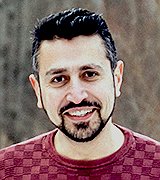
Luciano Baresi is a Full Professor at the Polytechnic University of Milan (Politecnico di Milano), Italy, affiliated with the Department of Electronics, Information and Bioengineering. He earned his laurea (MSc) and PhD in Computer Science from the same institution and has held visiting positions at the University of Oregon (USA), Tongji University (China), and the University of Paderborn (Germany). His research spans software engineering, with current focuses on self-adaptive systems, edge computing, and AI/ML-based software. His work integrates formal methods with practical applications, emphasizing autonomous systems, cloud-edge continuum, and federated learning. Recent publications highlight AI-driven advancements in software testing, resource optimization, and educational tools. Key research themes include: AI/ML for autonomous driving testing and data augmentation Serverless computing at the edge Federated learning system architectures Containerization and cloud resource management Awarded for impactful contributions: RE 2020 Most Influential Paper ICSOC 2020 Best Paper SEAMS 2022 Best Paper He advises 14+ PhD students and leads projects like Ketonet (health app), WHO's Essential Items Estimator, and dynaSpark. As Editor-in-Chief of Proceedings of the ACM on Software Engineering and senior editor for multiple journals, he shapes academic discourse in adaptive systems and software engineering.
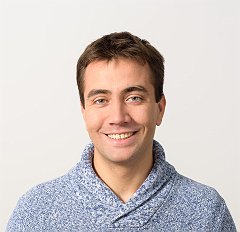
Mohammad Adnan Hamdaqa is an Associate Professor at the Department of Computer Engineering and Software Engineering at Polytechnique Montréal (Canada), where he leads the Software and Emerging Technologies Lab. He holds a Ph.D. in Software Engineering from the University of Waterloo (2016), along with a Master's in Electrical and Computer Engineering from Concordia University, an MBA from New York Institute of Technology, and a Bachelor's in Computer Engineering from Jordan University of Science and Technology. His research focuses on the intersection of emerging technologies and software engineering, particularly how software engineering approaches can be adapted for new platforms like Cloud Computing and Blockchain. His work spans model-driven software engineering, cloud applications, and blockchain technologies. Analysis of his recent publications reveals a strong emphasis on blockchain technology, especially smart contracts and Ethereum, with significant work on security, evolution, and visualization of these systems. His research also demonstrates growing integration of large language models in software engineering tasks, particularly for model specification and code generation. There's also a notable thread of work on sustainability in infrastructure as code and security practices across cloud platforms. Hamdaqa actively contributes to the academic community as a member of IEEE Computer Society and ACM, and has served on program committees for numerous conferences in software engineering and services communities. He has successfully supervised multiple Master's students, with recent theses focusing on smart contract auditing, epidemiological modeling using model-driven approaches, and security practices in infrastructure as code. His lab maintains active research in both theoretical and applied aspects of software engineering for emerging technologies.
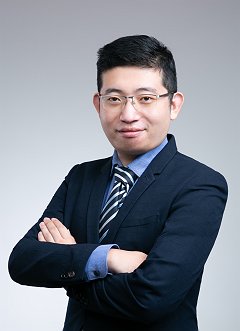
Đorđe Žikelić is an Assistant Professor of Computer Science at the School of Computing and Information Systems at Singapore Management University (SMU) in Singapore. He completed his PhD in 2023 at the Institute of Science and Technology Austria (ISTA) under Krishnendu Chatterjee and Petr Novotný, receiving both Outstanding PhD Thesis and Outstanding Scientific Achievement awards. Prior to his doctorate, he earned bachelor's and master's degrees in mathematics from the University of Cambridge. His educational background includes: PhD in Computer Science, Institute of Science and Technology Austria (ISTA), 2023 Bachelor's and Master's in Mathematics, University of Cambridge Dr. Žikelić's research focuses on advancing formal methods to ensure software and AI systems are correct, safe, and trustworthy. His work bridges theoretical aspects of formal reasoning about probabilistic systems with practical automated verification methods. His primary research interests span three interconnected areas: Program Analysis and Verification: He develops techniques for analyzing probabilistic programs, numerical programs, and efficient quantifier elimination methods, addressing fundamental challenges in verifying complex software systems. Trustworthy AI and Safe Autonomy: He creates formal verification frameworks for learning-enabled control systems and neural networks, ensuring AI operates safely in uncertain environments through methods like runtime monitoring and certificate repair. Probabilistic System Verification: He explores broader applications including bidding games on graphs and blockchain protocol analysis, extending formal methods to novel domains beyond traditional finite-state verification. His publication trajectory shows a consistent progression from theoretical foundations to practical applications, with recent work increasingly focused on integrating formal verification with machine learning. His 2024-2025 publications demonstrate growing expertise in verifying learning-based systems and developing practical tools like PolyQEnt for quantified entailment solving. His scientific achievements have been recognized with: Outstanding PhD Thesis Award at ISTA Outstanding Scientific Achievement Award at ISTA Distinguished Paper Award at FM 2024 Dr. Žikelić serves on program committees for major conferences including TACAS, PLDI, AAAI, and CAV. He actively mentors through the Programming Languages Mentoring Workshop (PLMW) at PLDI 2025. His research group at SMU focuses on developing novel algorithms for verifying correctness of programs and AI systems, with current projects spanning formal methods, artificial intelligence, and programming languages.
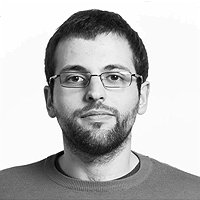
Dr. Yutian Tang serves as an Assistant Professor (UK Lecturer) and Principal Investigator at the School of Computing Science, University of Glasgow, where he supervises PhD students and leads research in AI-driven software engineering. His academic journey includes a PhD from The Hong Kong Polytechnic University's Department of Computing. His research spans AI+SE integration , particularly focusing on Large Language Models for program analysis, software testing, and Android security. Key areas include: LLM-assisted vulnerability detection and repair Empirical studies of real-world software systems Privacy protection mechanisms Configuration compatibility in mobile applications Smart contract security optimization His publication portfolio shows a clear trajectory toward AI-augmented software engineering , with recent work demonstrating how LLMs can enhance taint analysis, binary code similarity detection, and test generation. This evolution reflects the field's broader shift toward AI integration while maintaining rigorous empirical validation. Award highlights include: Best Industry Paper Award at ISSRE'18 Elevation to IEEE Senior Member (2024) Three Android OS defects confirmed by Google Security Team As an active researcher and community contributor, Tang serves on 40+ program committees including PLDI, ICSE, and FSE. His work receives funding from National Natural Science Foundation of China, Shanghai Science Commission, OpenAI, and Google. Current projects focus on automated bug localization and LLM-based testing frameworks, with recent grants from OpenAI Cybersecurity and Google Cloud programs. He leads research groups investigating Android security and AI-assisted program analysis, collaborating with institutions like Lund University.
Gian Luca Scoccia is an Assistant Professor at the Gran Sasso Science Institute (GSSI) in Italy, where he also completed his PhD in 2019. He maintains active roles in major software engineering conferences as a program committee member for ASE (2024-2025) and SANER (2026). His academic background includes: PhD from Gran Sasso Science Institute, Italy (2019) Scoccia's research centers on empirical software engineering with specialized focus areas including mobile app security , software repository mining , and program analysis . His recent work increasingly integrates artificial intelligence into software development practices, particularly examining ethical implications in autonomous systems and energy efficiency in LLM-driven applications. He employs rigorous empirical methodologies across all research domains. Analysis of his 2023-2025 publications reveals strong convergence between traditional software engineering and AI innovation, with significant emphasis on mobile contexts, developer tooling, and ethical frameworks. His work consistently combines theoretical architecture design with empirical validation through user studies and systematic assessments. Scoccia demonstrates deep community engagement through program committee service for ASE and SANER conferences, contributing to the advancement of software engineering research standards and discourse.
Leopoldo Teixeira is an Assistant Professor at the Informatics Center (CIn) of the Federal University of Pernambuco, where he leads the Software Testing and Analysis Research group. He is also affiliated with the Software Productivity Group and CIn-Trust. Since May 2023, he has served as head of graduate studies at his department. His educational background includes: PhD in Computer Science from the Federal University of Pernambuco (CIn-UFPE) in 2014, supervised by Paulo Borba and Rohit Gheyi MSc in Computer Science from CIn-UFPE in 2010 Bachelor's degree in Computer Engineering from the Polytechnic School of Pernambuco in 2007 During his PhD, he spent a winter term at the University of Waterloo working with Krzysztof Czarnecki. In 2022, he was a CAPES-Alexander von Humboldt Experienced Research Fellow at the Chair of Software Engineering of Universität des Saarlandes, working with Sven Apel on variability analysis over time and space. His research focuses on Software Engineering with emphasis on improving software quality and productivity. His work spans software product lines, configurable systems, refactoring, formal methods, software testing, and mobile development. His publication record shows a consistent focus on software analysis, testing, and maintenance, with recent work exploring Dockerfile repair and flaky test detection. His scientific recognition includes the CAPES-Alexander von Humboldt Experienced Research Fellowship in 2022. As an active member of the software engineering research community, he has served on program committees for numerous conferences including ASE, ICSE, ESEC/FSE, and others across multiple years. Leopoldo leads the Software Testing and Analysis Research group at CIn-UFPE and is affiliated with the Software Productivity Group and CIn-Trust, indicating a strong institutional presence and collaborative research environment.
Zhenbang Chen is a Professor in the College of Computer at National University of Defense Technology (NUDT), China. His academic career spans over a decade with significant contributions to software engineering, particularly in program analysis and formal methods. He has served on program committees for major conferences including ASE, ICSE, and FSE, and has been actively involved in research that bridges theoretical formal methods with practical software engineering applications. Dr. Chen received his Ph.D. and Bachelor degrees in computer science from National University of Defense Technology (NUDT) in June 2009 and July 2002, respectively. His educational background from NUDT has provided a strong foundation for his research in software engineering and formal methods. Ph.D. in Computer Science, National University of Defense Technology (NUDT), 2009 Bachelor's Degree in Computer Science, National University of Defense Technology (NUDT), 2002 Zhenbang Chen's research primarily focuses on program analysis, with special emphasis on symbolic execution techniques. His work extends to formal methods and their practical applications in software engineering. He investigates constraint solving approaches to improve the efficiency of program analysis and explores program synthesis techniques to automate software development tasks. His research bridges theoretical foundations with practical software engineering challenges, particularly in the areas of software verification and testing. His recent work has increasingly focused on optimizing symbolic execution through novel constraint solving techniques and exploring multi-modal approaches to behavior tree synthesis. This demonstrates his commitment to advancing both the theoretical underpinnings and practical applications of software analysis techniques. Professor Chen's publication record shows a consistent focus on symbolic execution and constraint solving, with a clear progression toward more sophisticated optimization techniques. His recent work demonstrates a shift toward multi-objective optimization for floating-point constraints and multi-modal approaches to program synthesis. The research spans both theoretical foundations and practical implementations, with several tools developed from his research participating in international competitions. Dr. Chen's research excellence has been recognized through multiple prestigious awards: ACM SIGSOFT Distinguished Paper Award for FSE 2025 paper "QSF: Multi-Objective Optimization based Efficient Solving for Floating-Point Constraints" ACM SIGSOFT Distinguished Paper Award for ISSTA 2021 paper "Type and interval aware array constraint solving for symbolic execution" ACM SIGSOFT Distinguished Paper Award for ICSE 2018 paper "Towards optimal concolic testing" Bronze Medal (3rd place) in Cover-Branches category at Test-COMP 2025 for the FDSE tool Professor Chen is actively involved in mentoring the next generation of researchers, currently seeking Ph.D. and M.Sc. students to work with him on cutting-edge research in program analysis and formal methods. His research group has developed several tools that have gained recognition in international competitions, including AISE which ranked 1st in SV-COMP 2025's ReachSafety-Loops category and FDSE which won Bronze Medal in Test-COMP 2025. His research has been supported by grants that enable participation in major international conferences and competitions, fostering collaborations with researchers worldwide. Dr. Chen leads a research group focused on program analysis and formal methods at NUDT. His team has developed several notable tools including AISE for program verification and FDSE for software testing, which have achieved top rankings in international competitions like SV-COMP and Test-COMP. The research group maintains active collaborations with other institutions and participates regularly in major software engineering conferences, contributing to both theoretical advancements and practical tool development in the field.
Song Wang is an Associate Professor in the Department of Electrical Engineering and Computer Science at York University's Lassonde School of Engineering since May 2024. Previously, he served as an Assistant Professor at the same institution from July 2019 to May 2024. He earned his Ph.D. in Computer Engineering from the University of Waterloo in December 2018 under Prof. Lin Tan, an MS degree from the Chinese Academy of Sciences in June 2014 under Profs. Ye Yang and Wen Zhang, and BE and BHRM degrees from Sichuan University in June 2011. Dr. Wang's research focuses on the intersection of Software Engineering and Artificial Intelligence, with two main thrusts: 1) leveraging AI technologies to address software reliability challenges (AI for SE), and 2) developing software reliability techniques to improve AI infrastructure systems (SE for AI). His specific interests include software testing, program analysis, software reliability, and machine learning applications in software engineering. His research has led to tools that have detected hundreds of true bugs across various open-source projects. His recent publications reveal a strong focus on applying large language models to software engineering tasks, analyzing vulnerabilities in deep learning libraries, and developing techniques for software testing and reliability. The research spans multiple subfields including API testing, vulnerability detection, bias analysis in generated code, and automated assurance case generation. TOSEM Distinguished Reviewer Award 2023 APSEC'23 Distinguished Paper Award ACM SIGSOFT Distinguished Paper Award (ICPC 2022) ACM SIGSOFT Distinguished Paper Award (ICSE 2020) Best Paper Award at PROMISE 2019 Dr. Wang actively mentors students at all levels, currently supervising multiple PhD and MASc students. His research group has produced numerous publications in top-tier software engineering venues, including ICSE, FSE, ASE, and TOSEM. He also serves on the editorial board of ACM TOSEM and has been involved in organizing major conferences like ASE and CASCON.
Marie Rathmann is a Researcher and doctoral candidate at Helmut Schmidt University's Chair of Continuing Education and Lifelong Learning in Hamburg, Germany. She actively contributes to two major dtec.bw-funded research initiatives: DigiTaKS* (Digital Key Competencies for Study and Career) and hpc.bw (Competence Platform for Software Efficiency and Supercomputing) at the Chair of High Performance Computing. Her work bridges digital transformation with adult education theory, focusing on practical implementations in academic and professional contexts. Rathmann's research investigates how digitality reshapes time, space, and media appropriation in everyday educational practices. She develops theoretical frameworks around agency constitution in digital environments while examining transformative digital competencies, critical thinking development, and ethical implications of artificial intelligence in education. Her methodology combines practice theory with multi-perspective analyses to address equity challenges in digitally mediated learning spaces, particularly emphasizing student experiences in higher education settings. Her publication portfolio (2021-2025) reveals consistent exploration of digital competencies across educational contexts, with recurring themes including temporal dimensions of academic work, media appropriation patterns, and AI ethics in student practices. The research demonstrates strong interdisciplinary connections between educational theory, digital sociology, and learning technology design, often employing comparative and multi-level analytical approaches. Scientific Awards: First place for doctoral project at DGfE Summer School for Qualification Projects awarded by German Society for Educational Science (DGfE) Rathmann's research is supported by competitive dtec.bw grants funding the DigiTaKS* and hpc.bw projects. While currently completing her doctoral studies, she collaborates extensively with senior researchers but has not yet assumed formal student advising responsibilities. Her grant work focuses on developing practical frameworks for digital competency acquisition in academic and professional transitions. She operates within Prof. Dr. Sabine Schmidt-Lauff's research team at the Chair of Continuing Education and Lifelong Learning, maintaining close collaboration with Dr. Therese Rosemann and Dr. Jan Schiller. This interdisciplinary unit specializes in analyzing digital transformation impacts on educational structures, with particular expertise in document analysis, competency modeling, and policy development for adult learning ecosystems.