
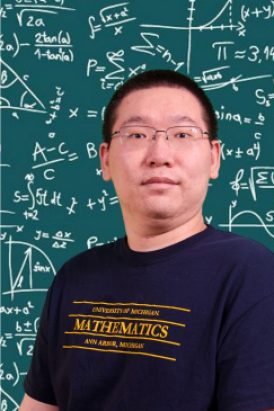
Prof. Dr. Thomas Hofmann is a Full Professor and Head of the Department of Computer Science at ETH Zurich since 2014. He also leads the Institute for Machine Learning. His research focuses on machine learning, deep learning, natural language understanding, and text understanding. Hofmann holds a Ph.D. from the University of Bonn (1997) and has held academic positions at Brown University (1999–2004) and TU Darmstadt. He transitioned to industry as Director of Engineering at Google (2006–2014), leading the Zurich R&D center, before returning to academia. He co-founded Recommind (2000) and 1plusX (Swiss marketing tech company), currently serving as Chief Scientist and board member at 1plusX. Education: Ph.D. in Computer Science, University of Bonn (1997) Postdoctoral Work: MIT (CBCL/AI Lab), UC Berkeley (EECS/ICSI) His research explores advanced machine learning techniques, including diffusion models, generative adversarial networks, and optimization dynamics. Hofmann’s entrepreneurial ventures reflect his focus on applying AI to real-world challenges, such as e-discovery and marketing technology. His work spans theoretical contributions (e.g., neural network training dynamics, continual learning) and applied innovations (e.g., image editing, portrait generation). Hofmann actively bridges academia and industry, influencing both research and commercial AI applications.
جستجوی استاد راهنمای دانشگاهی
برای مسیر پژوهشیتان، استاد راهنما، استاد دانشگاه و پژوهشگر مناسب را پیدا کنید و با آنها ارتباط بگیرید.
نمایش ۱-۱۵ از ۴٬۳۳۵ استاد راهنما
اطلاعات پروفایلها از صفحات عمومی دانشگاهها گرفته شده و ممکن است بهروز نباشد.

Adrian Wellerمشاهده پروفایل
استاد پژوهش
Adrian Weller is a prominent researcher and academic at the University of Cambridge, serving as a Director of Research in Machine Learning within the Department of Engineering. He holds multiple significant leadership roles including Programme Director for Trust and Society at the Leverhulme Centre for the Future of Intelligence (CFI), and previously served as Programme Director for AI at The Alan Turing Institute, the UK national institute for data science and AI. His work bridges theoretical machine learning research with practical applications and societal implications of artificial intelligence. Weller's research interests span a broad spectrum of AI and machine learning topics with a particular focus on ensuring beneficial societal outcomes. His work encompasses explainability, fairness, robustness, scalability, privacy, safety, and ethics in AI systems. He has made significant contributions to trustworthy machine learning, including developing frameworks for AI governance, certification, and human-AI collaboration. His research group actively investigates neuro-symbolic approaches, privacy-preserving techniques, and methods for improving the reliability and interpretability of AI systems. His recent publications demonstrate a strong trend toward addressing the practical challenges of deploying AI systems in real-world contexts, particularly focusing on certification frameworks, governance mechanisms, and human-centered approaches. His work spans theoretical advances in machine learning architectures while maintaining a strong connection to societal impact, with publications appearing in top venues across AI, machine learning, and interdisciplinary applications. Scientific Awards: MBE for services to digital innovation (2022 Queen's Birthday Honours) Turing AI Fellowship for Trustworthy Machine Learning Weller actively supervises a large group of PhD students and postdocs, with current students including Juyeon Heo, Yanzhi Chen, Katie Collins, Isaac Reid, Yichao Liang, Herbie Bradley, and Shoaib Siddiqui. His former students have gone on to positions at leading institutions including Google DeepMind, ETH Zurich, NYU, and MPI-IS Tübingen. He has served on numerous advisory boards including the Centre for Data Ethics and Innovation, UNESCO's expert group on AI ethics, and the World Economic Forum's Global Future Council on AI. His research has been supported through his Turing AI Fellowship and various collaborative projects focused on safe and ethical AI development. Weller leads a vibrant research group focused on trustworthy machine learning, which actively organizes workshops and conferences including ICML 2024 (where he served as Program Chair), multiple workshops on responsible AI, and events through the ELLIS network. His group collaborates extensively across disciplines, working with researchers in computer science, social sciences, law, and policy to address the multifaceted challenges of developing beneficial AI systems.
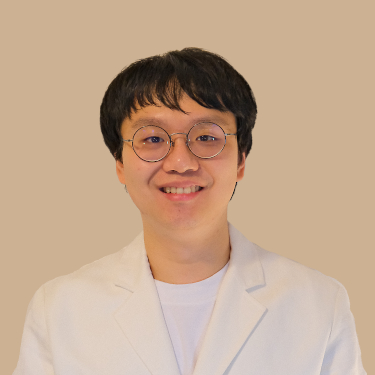
Huan Zhangمشاهده پروفایل
استادیار
Huan Zhang serves as an Assistant Professor in the Department of Electrical and Computer Engineering at the University of Illinois Urbana-Champaign (UIUC), with affiliate appointments in the Department of Computer Science and the Coordinated Science Laboratory. His research focuses on building trustworthy AI systems with formal verification techniques to provide provable guarantees for safety-critical applications, particularly in machine learning and neural networks. Dr. Zhang received his Ph.D. in Computer Science from UCLA in 2020, advised by Professor Cho-Jui Hsieh. His academic journey includes an M.S. in Computer Engineering from UC Davis (2014) and a Bachelor of Engineering from Zhejiang University (2012). Prior to joining UIUC, he completed a postdoctoral fellowship at Carnegie Mellon University (2021-2023) with Professor Zico Kolter. Huan Zhang's research program centers on formal verification of machine learning systems, with particular emphasis on neural network verification, AI safety, robustness, and reliability. He pioneered the linear bound propagation-based verification framework that enables formal verification for networks with millions of neurons. His work spans five major research categories: formal verification of machine learning, training trustworthy ML models, machine learning safety and adversarial attacks, reinforcement learning safety, and optimization for scalable machine learning. His CROWN framework (NeurIPS 2018) established a foundational approach for neural network verification through efficient linear bound propagation. His recent publications demonstrate a strategic expansion from foundational verification techniques toward increasingly complex systems including large language models, vision-language models, and robotic control systems. The research trajectory shows a clear progression from theoretical frameworks to practical implementations with real-world applications, particularly in safety-critical domains. His work increasingly bridges formal methods with practical AI deployment requirements. Winner of International Verification of Neural Networks Competition (VNN-COMP) as team leader (2021-2024) Schmidt Futures AI2050 Early Career Fellowship ($300,000 research grant) Adversarial Machine Learning (AdvML) Rising Star Award (2021) IBM PhD Fellowship (2018) Dr. Zhang leads the development of α,β-CROWN, a neural network verifier that has won VNN-COMP 2021-2023, and auto_LiRPA, a PyTorch-based library for perturbation analysis on general computational graphs. He has mentored numerous graduate students from CMU, UCLA, UIUC, and Columbia University. His research is supported by significant funding including the Schmidt Futures fellowship and industry collaborations. He teaches courses including ECE 120, ECE 484, ECE 584, and ECE 598 HZ on topics ranging from computing fundamentals to safe autonomy and machine learning. Dr. Zhang maintains active research collaborations across multiple institutions and is affiliated with UIUC's Coordinated Science Laboratory. His work has significant implications for safety-critical AI applications in autonomous systems, healthcare, and other mission-critical domains where reliability guarantees are essential. He regularly gives guest lectures at institutions including Yale, Stony Brook, and the University of Nebraska Lincoln on formal verification techniques.
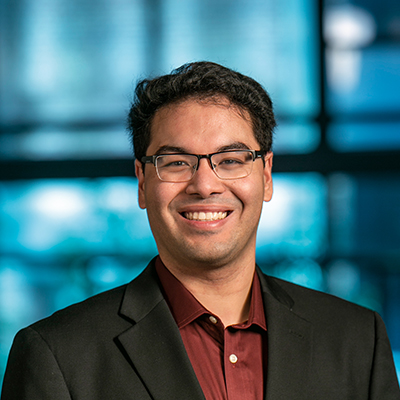
Osbert Bastaniمشاهده پروفایل
دانشیار
- Machine Learning
- Neurosymbolic AI
- Program Synthesis
- +۱۰ مورد دیگر
Osbert Bastani is an Associate Professor at the Department of Computer and Information Science, University of Pennsylvania, leading the trustml@Penn research group. He is affiliated with the ASSET , PRECISE , and PRiML centers, and the PLClub research group. His research focuses on Trustworthy Neurosymbolic Systems , Synthesizing Neurosymbolic Programs , and Machine Learning for Programmer Productivity , with applications in verification, fairness, and human-AI collaboration. He received the NSF CAREER Award in 2023. His recent publications (2024-2025) emphasize AI Safety , LLM Robustness , and Algorithmic Fairness , including work on adversarial robustness, conformal prediction, and program synthesis. Students he has advised include Sagnik Anupam, Stephen Mell, Jason Ma, Shuo Li, and others. Awards: NSF CAREER Award (2023)
Andreas Bodeمشاهده پروفایل
پژوهشگر ارشد
Andreas Bode is a Research Fellow at the University of Wuppertal, where he is part of the group led by Sascha Orlik in the Department of Mathematics. His research focuses on D-modules on rigid analytic spaces, integrating geometric representation theory and nonarchimedean geometry. His research interests span several areas of algebraic geometry and number theory, including the study of p-adic differential operators, nonarchimedean geometry, and representation theory. He explores the interplay between D-modules and rigid analytic spaces, contributing to the understanding of holonomicity, Auslander regularity, and the application of almost mathematics in p-adic contexts. His work bridges geometric and analytic approaches to problems in nonarchimedean settings. Bode's recent publications include advancements in the theory of Auslander regularity for p-adic structures, contributions to the holonomicity of D-cap-modules on rigid analytic spaces, and explorations into locally analytic representations of p-adic groups. His work often intersects with homological algebra and functional analysis, reflecting a deep engagement with both theoretical and methodological challenges in nonarchimedean geometry. He has not been mentioned as having received any scientific awards in the provided texts. Bode's current role as a postdoctoral researcher does not involve formal academic advising of students. No grants are specifically mentioned in the provided information. He is affiliated with the Algebra and Number Theory group at the University of Wuppertal, collaborating with colleagues such as Sascha Orlik and contributing to the broader research community in nonarchimedean geometry.

Kaki Ryanمشاهده پروفایل
استادیار
Kaki Ryan is a Teaching Assistant Professor at the Department of Computer Science, University of North Carolina at Chapel Hill. She holds a Ph.D. (2025), M.S. (2021), and B.S. (2020) from UNC, with a minor in AAAD. Her research focuses on hardware security, symbolic execution, and computer science education. Education Ph.D., 2025, UNC-Chapel Hill M.S., 2021, UNC-Chapel Hill B.S., 2020, UNC-Chapel Hill (Computer Science and Mathematics) Ryan's research centers on hardware security, particularly using symbolic execution to identify bugs and vulnerabilities in hardware designs. She also emphasizes broadening participation in computing and improving pedagogical strategies in computer science education. Her recent publications (2023-2025) explore symbolic execution techniques for hardware security verification, including query caching, information flow analysis, and path explosion mitigation. These works span conferences like ASPLOS, VTS, FMCAD, and workshops such as HASP. Scientific Awards John M. Glotzer Graduate Teaching Assistant Award (2020-2021) Tanner Award for Excellence in Undergraduate Teaching (2022) As an educator, Ryan has served as Instructor of Record for COMP 435 (Computer Security Concepts) and COMP 311 (Computer Organization) in Fall 2025. She has extensive teaching experience as a Graduate Teaching Assistant, Head Teaching Assistant, and Undergraduate Teaching Assistant for courses like COMP 210, COMP 110, and COMP 435, with a focus on data structures, security concepts, and programming fundamentals.
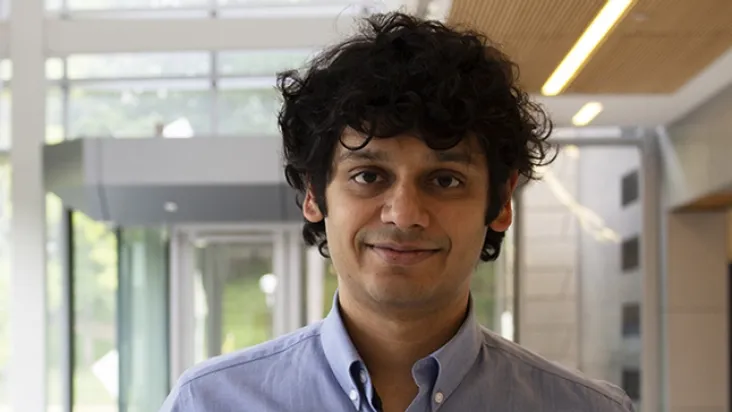
Ram Vasudevanمشاهده پروفایل
دانشیار
- Optimization and control of nonlinear systems
- Legged robot locomotion
- Autonomous systems safety
- +۴ مورد دیگر
Ram Vasudevan is an Associate Professor and Associate Chair of Graduate Studies in the Department of Robotics at the University of Michigan. His research focuses on developing tools for safe and robust deployment of robotic systems, emphasizing optimization, nonlinear control, and real-world applications. Key areas include legged robot locomotion, shared control systems, and safety-critical autonomous systems. Research Interests: Optimization and control of nonlinear systems, locomotion of legged robots, shared control active safety systems, and automation of diagnostic/rehabilitative tasks. His ROAHM Lab prioritizes mathematical guarantees for robotic performance, with applications in medical robotics, autonomous vehicles, and soft robotics. Recent work emphasizes trajectory optimization, sensor fusion, and safety-aware control strategies. He has contributed to benchmarks for autonomous vehicle perception and novel methods in thermal image restoration using neural radiance fields. Awards: None explicitly listed in provided text. Labs/Teams: Directs the ROAHM Lab, collaborating on projects like robotic tail mechanics, real-time motion planning, and sensor data analysis. Active in academic conferences including RSS and ICRA.
Jenna Wise DiVincenzo is an Assistant Professor at the Elmore Family School of Electrical and Computer Engineering at Purdue University. She specializes in research areas such as software verification, formal methods, and programming languages, with a focus on gradual verification techniques that combine static and dynamic analysis. Her work emphasizes usability and scalability in verification tools, and she has contributed to projects like Gradual C0 and gradual null-pointer analysis. Dr. DiVincenzo earned her PhD in Software Engineering from Carnegie Mellon University (2023) and a BS in Mathematics and Computer Science from Youngstown State University (2017). She has interned at IBM Research, MIT Lincoln Laboratory, and the Software Engineering Research and Empirical Studies Lab at YSU. Her awards include the Google PhD Fellowship, NSF GRFP Fellowship, and 2022 Rising Star in EECS. Her research projects span theoretical advancements in gradual verification, empirical studies on usability, and practical tool development. She advises PhD students (e.g., Craig Liu, Conrad Zimmerman) and collaborates on initiatives like gradual verification for Rust and educational tools to teach verification concepts. Her work also explores leveraging large language models for specification generation and enhancing verification tool soundness through formal proofs.
Professor Scott A. Shalkowski is a faculty member in the Department of Philosophy at the University of Leeds, part of the School of Philosophy, Religion and History of Science. He holds the academic rank of Professor and specializes in modality, philosophy of religion, philosophical logic, and the epistemology of religious belief. His work bridges metaphysics, epistemology, and the philosophy of religion, with a focus on modal epistemology and theoretical virtues. Education: PhD in Philosophy, University of Michigan BA in Philosophy, Houghton College Research Interests: Shalkowski’s research explores modal epistemology, method in metaphysics, mathematical nominalism, and the epistemology of religious belief. He has contributed to debates on logical pluralism, modal realism, and the relationship between science and religion. Publications: His work spans topics like modal logic, theoretical virtues, and metaphysical frameworks. Notable articles include Modal Epistemology for Modalists (2023) and Modalism and Logical Pluralism (2009). His research often emphasizes empirical grounding in philosophical theorizing. Awards: Shalkowski has received awards from the National Endowment for the Humanities, Australian Research Council, and British Academy. He was also nominated for an Excellence in Teaching Award. Grants & Labs: His research has been supported by grants from major funding bodies. He contributes to interdisciplinary discussions through his work in the Centre for Philosophy of Religion and Theology and the Centre for Theoretical Philosophy at Leeds.
Brent Pymمشاهده پروفایل
دانشیار
Brent Pym is an Associate Professor in the Department of Mathematics and Statistics at McGill University. His research focuses on the intersection of differential, algebraic, and noncommutative geometry, with a particular emphasis on Poisson varieties and deformation quantization. He has held academic positions at the University of Edinburgh, University of Oxford, and was a Postdoctoral Fellow at McGill and the University of Toronto. Education: BScE in Engineering Physics, Queen's University (2007) MSc in Mathematics, University of Toronto (2008) PhD in Mathematics, University of Toronto (2013) Research Interests: Pym studies Poisson structures, their quantizations, and connections to mathematical physics. His work involves classical/derived algebraic geometry, D-modules, moduli spaces, the Stokes phenomenon, and multiple zeta values. Recent projects include holonomic Poisson manifolds, log symplectic structures, and software for symbolic calculations in deformation quantization. Awards: Lichnerowicz Prize (2018) Advising & Grants: Pym has openings for graduate students (admission 2026) and undergraduate projects (2026–27). He develops the Star Products software package for symbolic calculations in Poisson brackets and quantization. His work is supported by research collaborations and institutional grants. Labs & Teams: Pym collaborates with researchers in geometry and mathematical physics, contributing to projects in noncommutative algebra and geometric quantization. His software tools enhance symbolic computation in these fields.
Sam Staton is a Professor of Computer Science at the University of Oxford and Senior Research Fellow at Jesus College. He holds a Royal Society University Research Fellowship and leads the ERC-funded BLaSt project on probabilistic programming. His research focuses on programming language theory, particularly probabilistic and quantum programming, and category theory. Staton earned his PhD from the University of Cambridge in 2007, with prior roles as a lecturer and researcher at Cambridge, Paris, and Nijmegen. Research Interests: His work explores foundational aspects of programming languages, including semantics, algebraic effects, and applications to quantum computing and statistical modeling. Recent grants include the ARIA Safeguarded AI initiative and an AFOSR award. Education: PhD in Computer Science (2007), BA from Cambridge (2002). Students & Collaborators: Supervises multiple PhD students and postdocs, including those funded through his grants. Notable advisees include Swaraj Dash (now at Heriot-Watt) and Mathieu Huot (postdoc at MIT). Awards & Grants: Royal Society Fellowship, ERC Consolidator Grant (BLaSt), EATCS Best Paper Award, and Facebook Research Award. Labs & Teams: Leads the BLaSt project and collaborates on quantum programming via algebraic effects. Engaged in editorial roles for ACM Transactions on Quantum Computing and program committees for major conferences like POPL and LICS.
Prof. Peter Scholze is a leading mathematician at the Max Planck Institute for Mathematics in Bonn, specializing in algebraic geometry and arithmetic geometry. He holds the academic rank of Professor and is part of the Arbeitsgruppe Algebraische Geometrie und Darstellungstheorie. His research focuses on foundational questions in algebraic geometry, number theory, and representation theory, particularly through the lens of the Langlands program, p-adic Hodge theory, and perfectoid spaces. Scholze has pioneered geometric approaches to the local Langlands correspondence and introduced revolutionary concepts like prismatic cohomology and condensed mathematics. He actively contributes to academia through advanced courses on topics such as geometrization of the Langlands program, étale cohomology, and condensed mathematics. His work bridges algebraic geometry with representation theory, addressing fundamental problems in arithmetic geometry and p-adic analysis. Scholze’s research outputs include seminal papers on perfectoid spaces, prismatic cohomology, and the geometrization of local Langlands correspondence. He collaborates extensively with leading mathematicians globally, contributing to collaborative research initiatives like the ARGOS seminar and the Habiro ring project. His teaching engagements include advanced lectures on algebraic geometry, representation theory, and p-adic geometry, reflecting his commitment to training the next generation of researchers. Despite no explicitly listed awards in the provided text, Scholze is widely recognized as a Fields Medalist (2018) and a leading figure in modern mathematics.
Irina Bobkovaمشاهده پروفایل
دانشیار
Irina Bobkova is an Associate Professor in the Department of Mathematics at Texas A&M University, affiliated with the College of Arts & Sciences. Her research focuses on algebraic topology, particularly computational aspects of equivariant and chromatic homotopy theory. She has received significant support from the National Science Foundation (NSF) via a CAREER Grant and an RTG Grant. Her research interests include equivariant homotopy theory, chromatic homotopy theory, and the study of stable homotopy groups of spheres. She explores computational methods involving Morava stabilizer groups, Picard groups, and topological modular forms. Her work often involves collaborations with leading mathematicians in the field, such as Agnès Beaudry and Vesna Stojanoska. Bobkova has published extensively in top journals like Mathematische Zeitschrift , Journal of Topology , and Algebraic & Geometric Topology . Her recent work includes groundbreaking contributions to K(2)-local homotopy theory, duality resolutions, and the cohomology of Morava stabilizer groups. She co-organizes the South Central Topology Conference, fostering regional collaboration in topology. Her grants and awards reflect her leadership in advancing algebraic topology. She actively engages in academic service, including organizing workshops and mentoring early-career researchers. Despite no listed formal advisees, her collaborative approach shapes the field’s future directions.

Tengyu Maمشاهده پروفایل
استادیار
Tengyu Ma is an Assistant Professor of Computer Science at Stanford University. His research focuses on machine learning, deep learning, optimization, and theoretical computer science. He is particularly known for work on neural networks, reinforcement learning, and algorithmic guarantees in AI systems. His email is tengyuma@stanford.edu . Ma's research interests span foundational aspects of machine learning, including generalization theory, optimization algorithms, and the theoretical underpinnings of deep learning. He has contributed to areas such as self-play theorem provers, learning rate schedules, and robustness in low-light vision tasks. His work often bridges theoretical insights with practical algorithm design. His recent publications emphasize advancements in large language models (LLMs), theorem proving via self-play, and understanding training dynamics in deep networks. Despite prolific output, no specific scientific awards are explicitly mentioned in the provided texts. Ongoing work includes exploring in-context learning mechanisms, formal verification of AI systems, and efficient pretraining techniques. His research has implications for both theoretical understanding and real-world applications of AI.
- Robotics
- Computer Vision
- Machine Learning
- +۳ مورد دیگر
Danica Kragic is a Professor of Computer Science at the School of Electrical Engineering and Computer Science at the Royal Institute of Technology (KTH) in Stockholm, Sweden. She serves as the Director of the Centre for Autonomous Systems and leads the Robotics, Perception and Learning Lab at KTH. Her research focuses on advancing robotics capabilities through computer vision and machine learning approaches. MSc in Mechanical Engineering from the Technical University of Rijeka, Croatia (1995) PhD in Computer Science from KTH (2001) Professor Kragic's research primarily centers on robotics, computer vision, and machine learning, with particular emphasis on robotic manipulation, grasp planning, and human-robot interaction. Her work bridges theoretical foundations with practical applications, exploring how robots can understand and interact with objects in complex environments. She investigates how visual and tactile sensing can be integrated to improve robotic perception and manipulation capabilities, with applications ranging from industrial automation to assistive robotics. Her recent publications demonstrate a strong focus on advanced grasp planning techniques, tactile sensing for manipulation, and mathematical representations for robotic control. Kragic's research shows increasing integration of machine learning approaches with traditional robotics frameworks, particularly in the areas of grasp synthesis, object recognition, and human-robot collaboration. Her work spans theoretical contributions in mathematical representations of grasps to practical implementations of robotic systems capable of adapting to novel objects and situations. 2007 IEEE Robotics and Automation Society Early Academic Career Award IEEE Fellow ERC Starting Grant (2012) Member of The Royal Swedish Academy of Sciences Member of The Royal Swedish Academy of Engineering Sciences Honorary Doctorate from Lappeenranta University of Technology Professor Kragic's research has been supported by major funding bodies including the EU, Knut and Alice Wallenberg Foundation, Swedish Foundation for Strategic Research, and Swedish Research Council. While specific student names aren't listed in the provided information, her publication record suggests extensive mentorship of PhD students and postdoctoral researchers in robotics and computer vision. Her lab, the Robotics, Perception and Learning Lab, serves as a hub for interdisciplinary research connecting computer science, engineering, and cognitive science perspectives on robotic systems. As Director of the Centre for Autonomous Systems at KTH, Kragic oversees a major research initiative focused on advancing autonomous technologies. Her Robotics, Perception and Learning Lab brings together researchers working on visual perception, machine learning, and robotic manipulation, with particular emphasis on developing systems that can understand and interact with objects in unstructured environments. The lab's work spans theoretical foundations of robotic manipulation to practical implementations of systems capable of learning from experience.
نمایش نتایج تا ۷۵۰ مورد اول. برای یافتن نتایج دقیقتر، جستجوی خود را با فیلترها محدود کنید.