
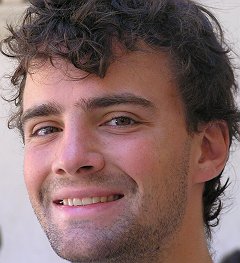
Dominique Devriese is a professor at the Department of Computer Science, KU Leuven, and a member of the DistriNet research group. His work bridges computer security, programming languages, and formal verification. Research interests: Functional Programming, Object Capabilities, Secure Compilation, Dependently-typed Programming, Modal Type Theory Teaching: Formal Systems, Object-Oriented Programming, CyberSecurity, Secure Software His research focuses on rigorous software systems security through capability machines and secure compilation techniques. He actively contributes to formal verification using Agda and Haskell, with recent work on multimode type theory and effect parametricity. Key publication trends include: multimode/presheaf type theory, capability-based security models, formal verification of hardware/software abstractions, and parametricity applications in programming languages. Contact: Email: dominique.devriese@kuleuven.be ORCID: 0000-0002-3862-6856
جستوجوی استاد و پژوهشگر
استاد راهنما، استاد دانشگاه یا پژوهشگر مناسب برای مسیر پژوهشیتان را پیدا کنید و با او ارتباط بگیرید.
نمایش ۶۱-۷۵ از ۱٬۳۸۰ استاد راهنما
اطلاعات این پروفایلها از صفحات عمومی دانشگاهها جمعآوری شده و ممکن است بهروز نباشد.

Andrea Burattin is an Associate Professor at the Department of Applied Mathematics and Computer Science, Technical University of Denmark. His work bridges formal methods and practical process analysis, focusing on process mining, business process management, and hybrid modeling techniques. He actively contributes to research in healthcare process optimization, streaming data analysis, and system verification through Petri nets and CCS transformations. UN Sustainable Development Goals: Poverty eradication, environmental protection, and prosperity for all (via process optimization) Active projects: Immersive Process Mining (2024-2027), Usability and Understandability of Hybrid Process Models (2018-2021) His research explores large language model integration with process mining, proposing frameworks like Tiramisù for multi-faceted process visualization and PN2CCS for formal model translation. Recent work emphasizes real-time monitoring, conformance checking, and IoT-driven process analytics. Key trends in his publications include: 1) Streaming process mining pipelines (2022-2025); 2) LLM-plan generation frameworks (2024); 3) Formal verification techniques (Petri nets, CCS); 4) Healthcare process modeling (2019-2023); 5) Behavioral pattern analysis in process compliance. Scientific Awards Best Demo Award (2022, 2016) Best Process Mining Dissertation Award (2014) Best Workshop Paper (EDBA and PODS4H, 2023) As advisor, he supervises PhD projects on process mining and hybrid modeling. His editorial roles include Information Systems reviewer (2024-2025) and past editor for Engineering Applications of AI (2022-2023). Collaborations span Denmark, Italy, and the Netherlands.
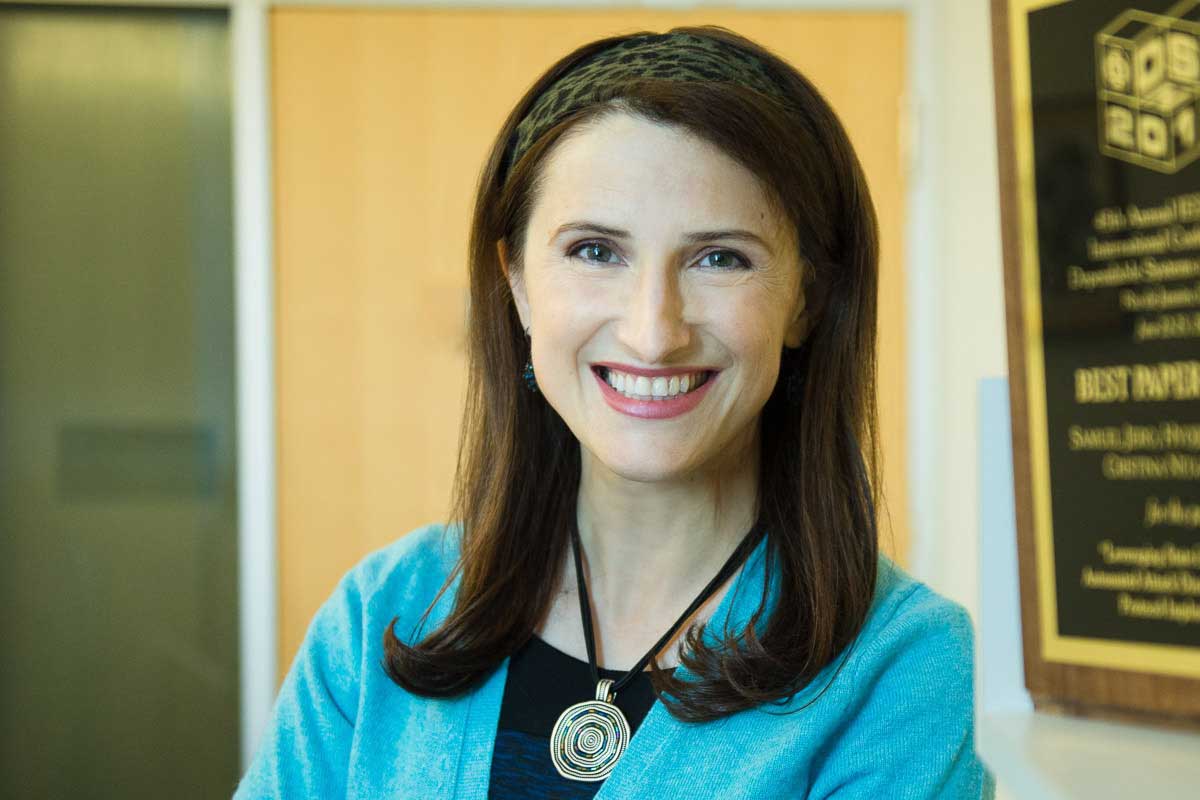
Cristina Nita-Rotaru is a tenured Professor of Computer Science at Northeastern University's Khoury College of Computer Sciences , where she leads the Network and Distributed Systems Security Laboratory (NDS2) and is a founding member of the Cybersecurity and Privacy Institute . Previously, she was a faculty member at Purdue University from 2003 to 2015. Education: Ph.D. in Computer Science from Johns Hopkins University M.S. in Computer Science from Politehnica University of Bucharest , Romania Research Focus: Her research lies at the intersection of cybersecurity , distributed systems , and computer networks . She designs and builds resilient distributed systems and network protocols that maintain security, availability, and performance despite faults, misconfigurations, and attacks. Her work integrates formal methods , adversarial testing , blockchain security , and trustworthy AI . Funding & Impact: Her research has been supported by NSF , DARPA , ONR , Google , Ethereum Foundation , and others. She has received numerous awards, including the NSF CAREER Award (2006) and multiple best paper awards at top venues like NDSS , ACM CCS , and IEEE S&P . Scientific Awards: NSF CAREER Award (2006) NETYS 2023 Best Paper Award ACM SACMAT 2022 Best Paper & Test-of-Time Awards IEEE SafeThings 2019 Best Paper Award NDSS 2018 Best Paper Award ISSRE 2017 Best Paper Award DSN 2015 Best Paper Award IETF/IRTF Applied Networking Research Prize (2016, 2018, 2025) Purdue College of Science Research Award (2013) Purdue Excellence in Research Award (2012) Purdue College of Science Leadership Award (2012) Purdue College of Science Undergraduate Advising Award (2008) Purdue Teaching for Tomorrow Award (2007) Advising & Students: She has advised over 30 PhD and MS students at Northeastern and Purdue. Notable former students include Reza Curtmola (NJIT Professor) , Endadul Hoque (Syracuse University Assistant Professor) , and Max von Hippel (Bencify founding partner) . Labs & Teams: She directs the NDS2 Lab , focusing on network and distributed systems security, with projects spanning blockchain protocols , SDN security , IoT and connected cars , and formal verification of protocols .
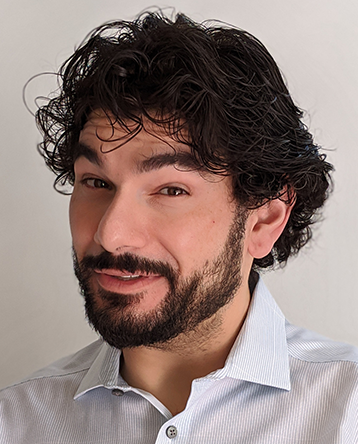
Riad S. Wahbyمشاهده پروفایل
استادیار
Riad S. Wahby is an Assistant Professor in the Department of Electrical and Computer Engineering at Carnegie Mellon University's College of Engineering. His work focuses on designing secure hardware and software systems, with recent emphasis on cryptographic proof systems. He actively mentors PhD students and collaborates across disciplines in cybersecurity, blockchain, and formal verification. PhD in Computer Science, Stanford University MEng in Electrical Engineering, Massachusetts Institute of Technology SB in Electrical Engineering, Massachusetts Institute of Technology Wahby's research spans cryptography , blockchain security , zero-knowledge proofs , and secure hardware-software co-design . His work addresses challenges in verifiable computation, privacy-preserving protocols, and hardware subversion resistance. Recent publications reveal trends in zero-knowledge proof systems (SNARKs, MPC), blockchain security (anonymous blocklisting, decentralized auctions), and hardware-crypto integration (weird machines, verifiable ASICs). Technical focus areas include formal verification, side-channel analysis, and cryptographic compilers. Distinguished Student Paper Award, IEEE Symposium on Security and Privacy (Oakland16), 2016 Best Paper Award, USENIX Annual Technical Conference (ATC18), 2018 Wahby collaborates with researchers across institutions and industries, including Dan Boneh at Stanford, Mike Walfish at NYU, and Silicon Labs in industrial roles. His CyLab affiliations connect him to over $400K in seed funding opportunities and blockchain initiatives at CMU.
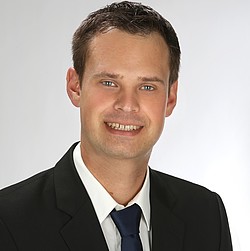
Jun.-Prof. Dr. Christian Krupitzer is a Tenure Track Professor in Food Informatics at the University of Hohenheim's Institute of Food Science and Biotechnology, part of the Faculty of Natural Sciences. He leads the Department of Food Informatics and is a member of the Computational Science Hub (CSH). His research focuses on self-adaptive software systems, machine learning (especially edge computing), IoT technologies, and software engineering applied to food processing and agricultural systems. Education: PhD in Business Information Systems (Dr. rer. pol.), University of Mannheim (2018) M.Sc. and B.Sc. in Business Information Systems, University of Mannheim (2010–2012) High School Diploma (Abitur) from Wilhelmi-Gymnasium Sinsheim (2007) Research Interests: Krupitzer’s work integrates computational methods with food science, emphasizing adaptive systems for food quality monitoring, IoT in agriculture, and machine learning for predictive analytics. He explores edge computing’s role in real-time decision-making and secure group communication schemes for IoT networks. Publications: His recent work spans predictive maintenance in Industry 4.0, digital twins in food systems, and blockchain applications in supply chain authentication. The articles highlight trends in interdisciplinary approaches combining AI, IoT, and domain-specific challenges in food production and logistics. Awards: No scientific awards explicitly listed in the provided materials. Grants & Advising: While specific grants are unmentioned, his roles as department head and tenure-track professor suggest involvement in research funding. No formal advisee list provided, though his team includes postgraduate researchers like Dana Jox, Daniel Einsiedel, and others. Labs & Teams: Leads the Food Informatics department and collaborates with the Computational Science Hub. His team focuses on developing innovative solutions for food systems through computational methods.
Roger Flage is a Professor of Risk Management at the University of Stavanger, affiliated with the Faculty of Science and Technology and the Department of Security, Economics and Planning. His research focuses on foundational and applied aspects of risk analysis, uncertainty quantification, and decision-making under uncertainty, with applications in critical infrastructure, environmental systems, and offshore energy. Roger Flage's research interests lie at the intersection of risk science, safety engineering, and decision theory. He investigates how uncertainty—especially epistemic uncertainty and assumptions—affects risk assessments, and advocates for more transparent and robust frameworks. His work spans theoretical advances, such as the treatment of 'black swan' events and the concept of 'real risk', as well as practical applications in offshore safety, power systems, and geohazards. He emphasizes the integration of data-driven methods, AI, and digital twins while critically assessing their limitations and associated security risks. His recent publications show a strong trend toward integrating dynamic, data-rich, and interdisciplinary approaches to risk analysis. Themes include the role of time in risk, AI applications, infrastructure interdependencies, and environmental risk in the oil and gas sector. He frequently publishes in top-tier journals like Risk Analysis , Reliability Engineering & System Safety , and Safety Science , often in collaboration with leading scholars such as Terje Aven and Seth Guikema. No scientific awards are mentioned in the provided text. Roger Flage has supervised or collaborated with several researchers, though no formal list of advisees is provided. His work is supported through academic collaborations and institutional affiliations rather than explicit grant mentions. He is actively involved in advancing risk science methodology, particularly in the treatment of assumptions and uncertainty, and contributes to both theoretical foundations and real-world applications in safety-critical domains. He is associated with research groups and collaborative networks at the University of Stavanger, particularly within the Department of Security, Economics and Planning. His work often involves interdisciplinary teams focusing on risk in complex engineered systems, including energy, transportation, and environmental systems.
Mike Papadakisمشاهده پروفایل
دانشیار
Mike Papadakis is an Associate Professor at the University of Luxembourg's Interdisciplinary Centre for Security, Reliability and Trust (SnT), where he leads the SerVal research group. His research focuses on software engineering, software security, and artificial intelligence. He holds a PhD in Software Testing and Verification from Athens University of Economics and Business, with an MSc and BSc from the same institution. His research explores mutation testing, machine learning applications in software development, and test optimization. Recent publications demonstrate a strong emphasis on AI robustness, flaky test analysis, and automated debugging techniques. Notable achievements include the IEEE TCSE Rising Star Award (2020) and 12 additional research awards. He has published over 100 peer-reviewed articles and delivered more than 30 invited talks globally.

Kok Sheik Wong is a Professor and Deputy Head (Research) at the School of Information Technology, Monash University Malaysia. He holds a Doctor of Engineering from Shinshu University, Japan, and Master’s and Bachelor’s degrees in Computer Science and Mathematics from Utah State University, USA. His academic leadership and research excellence are central to his role at Monash. B.S. Computational Mathematics, Utah State University (2002) M.S. Computer Science, Utah State University (2006) M.S. Mathematics, Utah State University (2004) Doctor of Engineering, Shinshu University, Japan (2009) His research focuses on multimedia signal processing and cybersecurity , particularly in data hiding , reversible data hiding , coverless steganography , and multimedia encryption . He is also expanding into digital health , applying AI to mental health in workplace environments. His work aligns with UN SDGs, particularly in health and education. The recent publication trends show a strong emphasis on reversible data hiding , image watermarking , and AI-driven health applications . His interdisciplinary work spans computer science, engineering, and public health, with increasing focus on real-world impact through EU and national grants. He has received several honors, including: Academic of Science Malaysia - Young Scientist Network (2020) Best Paper Award, IWDW 2019 ITEX 2021 Gold Medal for BAITRADAR School of IT Excellence in Research Award (2022) Dr. Wong actively supervises PhD students and leads major research projects, including the EU-funded WAge project. He has served as an associate editor for IEEE Signal Processing Letters and the Journal of Information Security and Applications, and is a member of IEEE IFS and APSIPA technical committees. His grants reflect strong external collaboration and funding in cybersecurity and digital health. He is involved in key research labs and teams through Monash University and international consortia, particularly in the areas of multimedia security and digital health innovation. His leadership in the WAge project connects him with European and Asia-Pacific research networks, enhancing global impact.
- Computer System Security
- Artificial Intelligence and Image Processing
- Computer Communications Networks
- +۵ مورد دیگر
Professor Emil Lupu is a Professor of Computer Systems at the Department of Computing , Imperial College London. He leads the Resilient Information Systems Security Group and serves as Co-Director of the National Research Institute in Trustworthy Inter-Connected Cyber-Physical Systems (RITICS) . As a Security Science Fellow at Imperial’s Institute for Security Science and Technology, his work bridges academic research with real-world security challenges. Education: PhD in Computing, Imperial College London (1994–1998) His research focuses on security and resilience of cyber-physical systems (CPS) , with emphasis on defending against data spoofing attacks , adversarial machine learning , and IoT vulnerabilities . He pioneered the Ponder policy systems for access control and the Self-Managed Cell framework for autonomic computing, and developed Bayesian Attack Graphs for scalable risk assessment in CPS. Recent publications highlight trends in adversarial robustness (2025–2022), including LIDAR spoofing defense for autonomous vehicles, LLM security , and attack graph analysis for IoT. His work explores the intersection of safety and security , applying model-checking to identify adversarial threats in train control, microgrids, and aviation systems. Scientific Awards: Security Science Fellowship, Imperial College London (2011–present) As co-founder of the PETRAS National Centre of Excellence in IoT Cybersecurity (2016–2021), he advanced security methodologies for interconnected systems. His collaborations with institutions like the Cyber Security Body of Knowledge (CyBoK) demonstrate his leadership in shaping cybersecurity research standards. Current projects include the RITICS Institute , focusing on trustworthy cyber-physical systems, and exploring generative AI for security poisoning with practical defenses against adversarial ML.
Prof Ghassan Beydoun is a Professor and Head of Discipline (Information Systems) at the School of Computer Science, University of Technology Sydney (UTS). He leads the Information Systems discipline and is affiliated with the Centre for Advanced Modelling and Geospatial Information Systems (CAMGIS). His research focuses on AI-driven systems, agent-based modelling, ontologies, and disaster management, with notable contributions to knowledge graphs, enterprise architecture, and IoT applications. Beydoun actively supervises Masters and PhD students in these domains. His research interests span metamodelling, agent systems, and AI applications in disaster management (e.g., flood, landslide, and earthquake risk assessment), health systems, and smart infrastructure. He has pioneered frameworks for reproducible machine learning solutions, digital identity systems, and cloud migration strategies. Beydoun’s work integrates interdisciplinary methods, such as bibliometric analysis for journal evolution and XAI for spatial hazard prediction. Recent publications highlight his expertise in AI for climate-induced hazard modelling, agent-based knowledge transfer mechanisms, and metaverse applications in education. His funded projects include AI-powered circular economy initiatives, smart beach safety systems, and health data querying frameworks. Beydoun collaborates with industry partners like CSIRO, Capsicum Business Architects, and Data Zoo, translating research into practical solutions for enterprise architecture, cybersecurity, and public health.
Alvaro A. Cardenas is a Professor of Computer Science and Engineering at the University of California, Santa Cruz (UCSC), affiliated with the Erik Johnson School of Engineering and Computer Science. Previously, he held positions at the University of Texas at Dallas and conducted research at UC Berkeley and Fujitsu Laboratories. His research focuses on cybersecurity and privacy in emerging technologies, particularly cyber-physical systems like autonomous vehicles, drones, and SCADA systems controlling critical infrastructure. Education: Ph.D. and M.S. in Computer Science from University of Maryland, College Park B.S. in Computer Science from Universidad de Los Andes, Colombia Research Interests: Security of Industrial Control Systems Smart Grid and IoT Security Cyber-Physical System Exploitation Resilience in Critical Infrastructure Formal Verification of Safety-Critical Systems Awards: NSF CAREER Award 2018 Faculty Excellence in Research Award Eugene McDermott Fellow Endowed Chair IEEE TCSEC Distinguished Service Award Best Paper Awards at ACM CPS & IoT Security, IEEE Smart GridComm, and U.S. Army Research Conference Grants & Funding: Supported by NSF, ARO, AFOSR, NSA, NIST, MITRE, DHS, DoT, Google, Phoenix Technologies, and Intel. Research emphasizes practical defenses against cyber threats in critical systems. Labs/Teams: Leads the Cyber-Physical Systems Security Research Group at UCSC, focusing on innovative solutions for securing emerging technologies.
Jeyavijayan 'JV' Rajendran is an Associate Professor in the Department of Electrical and Computer Engineering at Texas A&M University, part of the College of Engineering. He is an ASCEND Fellow and leads the Secure and Trustworthy Hardware (SETH) Lab. His research focuses on hardware security, computer security, and novel applications of AI in secure hardware design. Education: PhD in Electrical Engineering (NYU 2015), MS in Computer Engineering (NYU Tandon 2010), BE in Electronics and Communication Engineering (Anna University 2008). Research Interests: Hardware Security, Computer Security, Logic Locking, Hardware IP Protection, and Reinforcement Learning for Security. He explores AI-driven approaches to detect vulnerabilities, protect intellectual property, and enhance secure hardware design through fuzzing, obfuscation, and formal verification. Notable Awards: 2022 Office of Naval Research Young Investigator Award, 2021 IEEE CEDA Ernest Kuh Early Career Award, 2017 NSF CAREER Award. Lab and Teams: The SETH Lab focuses on trustworthy hardware design, developing techniques to secure integrated circuits against reverse engineering and IP theft. Current projects include LLM-based hardware code generation, formal approaches for hardware fuzzing, and AI-driven vulnerability detection.
Valeriy Vyatkin is a Professor at the Department of Electrical Engineering and Automation, Aalto University. His research focuses on advancing industrial automation, control systems, and their integration with emerging technologies like machine learning and digital twins. He specializes in standards such as IEC 61499, addressing interoperability, formal verification, and performance optimization in distributed automation systems. Key research interests include: Physics-informed machine learning for industrial processes (e.g., steel rolling, reservoir engineering) Formal methods for control system validation and safety-critical applications Development of adaptive automation frameworks for Industry 5.0 challenges, including human-robot collaboration and energy systems Interoperability between legacy and modern industrial standards (OPAS, OPC UA) Recent work emphasizes real-time simulation, FPGA-based control prototyping, and AI-driven solutions for energy efficiency and sustainability in manufacturing, horticulture, and process industries. Publications span topics like robotic walker design, probabilistic model checking, and decentralized learning management systems. He collaborates on EU and industry-funded projects, focusing on digital twin implementation, edge computing, and virtual commissioning. His team develops tools for automated code generation, system migration, and anomaly detection in complex industrial settings.
Flavio Esposito is an Associate Professor in the Computer Science Department at Saint Louis University's School of Engineering. He also serves as a Research Institute Fellow and CS Graduate Coordinator. His office is located in ISE 234D at 3450 Lindell Blvd, St. Louis, MO. Dr. Esposito's research focuses on cyber-physical systems and networked systems, including network virtualization, network management, Software-Defined Networks (SDN), network architectures, and wireless networks. He has a strong interest in interdisciplinary applications of these technologies to medicine and agriculture. His work bridges theoretical networking concepts with practical implementations. His publications span key areas in networking research, with recent work focusing on congestion control algorithms, virtual network embedding, recursive network architectures, and edge computing applications. The research trends show a progression from foundational networking protocols toward more sophisticated applications integrating machine learning, edge computing, and cyber-physical systems, with increasing emphasis on real-world applications in diverse domains. Outstanding Graduate Mentoring Faculty Award from the School of Engineering (2021) Finalist for the Undergraduate Mentoring Award in the College of Arts and Sciences Multiple NSF research awards including US Ignite, ICE-T, CNS Core, CC* Integration, CPS:TTP, and ModernCARE projects COMCAST Innovation Fund Award (January 2020) International Center for Responsible Gaming (ICRG) Award ($150K) Dr. Esposito actively mentors PhD and MS students, with numerous current and past students who have gone on to positions at major tech companies, universities, and research institutions. He has been a Principal Investigator on multiple significant research grants totaling millions of dollars. He co-founded Spaghetti Code Labs with former PhD student Alessandro Sangiorgi, whose cybersecurity educational app WeeNet has achieved 5.7M+ downloads. He leads several research labs and teams focused on cyber-physical systems, with current openings for PhD students, visiting researchers, and postdocs working on networks, learning, edge computing, and applications to medicine and agriculture. His teams have developed numerous software systems including Software Mutant, Neighborhood Method Prototype, VINEA, ProtoRINA, and BUtorrent.
Naranker Dulay is a Professor in the Department of Computing at Imperial College London, part of the Faculty of Engineering. He holds affiliations with the Centre for Cryptocurrency Research and Engineering, Centre for Smart Connected Futures, and the Distributed Software Engineering group. His research focuses on Distributed Computing, Applied Economics, Policy and Administration Law, Computer Software, and Information Systems. His work explores blockchain technologies, smart contracts, consensus algorithms, and distributed systems. Recent research includes optimizing post-trade processing using distributed ledgers and developing adaptive protocols for dispute resolution in smart contracts. He is also involved in cybersecurity and privacy-preserving technologies for data management. Key contributions include frameworks like Chainlog for logic-based smart contracts and FADE for self-destructing data. His articles span over a decade, emphasizing blockchain scalability, energy-efficient neural networks, and decentralized macro-programming in wireless sensor networks. Dr. Dulay collaborates across interdisciplinary domains, blending technical innovation with socio-technical challenges. His affiliations reflect a commitment to advancing smart connected futures through cutting-edge research.