Dr. Mahesh Tripunitara is a Professor in the Department of Electrical and Computer Engineering at the University of Waterloo, serving as Associate Chair for Undergraduate Studies. He holds a PhD (2005) and Master's (1995) in Computer Science from Purdue University, along with a BSc (1993) in Computer Science from Dalhousie University. His research focuses on information security, authorization mechanisms, cryptographic key management, and hardware security, with industry experience at Motorola's R&D labs and Silicon Valley. His work spans theoretical advancements like access control policy analysis and practical applications such as secure payments systems and IoT device reliability. Notable awards include the Best Student Paper at Usenix Security 2013 and Best Paper at ACM SACMAT 2013. He actively serves on program committees for major security conferences including CCS, CODASPY, and SACMAT. Recent publications highlight innovations in cellular security (SUCI-Catchers defense), role-mining optimization, and blockchain smart contract auditing. Teaching includes advanced algorithm design courses (ECE 406/606) and digital computation (BME 121). His research emphasizes balancing security rigor with usability in authorization systems and hardware protection mechanisms.
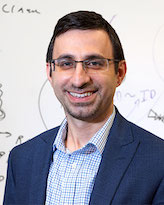
Amir Rahmati is an Assistant Professor in the Department of Computer Science at Stony Brook University , where he directs the Ethos Security and Privacy Lab and contributes to the Stony Brook National Security Institute . His research focuses on system security , with specific emphasis on the security and privacy challenges of emerging technologies such as IoT , AR , and ML systems . Teaching: Instructor of SBU102: Computer Security (Spring 2025) Collaborations: Frequent collaborations with institutions like University of Michigan, University of Toronto, and IEEE/USENIX conferences. Rahmati’s research addresses security vulnerabilities in resource-constrained devices and real-world ML applications. His work includes adversarial robustness in neural networks, attack synthesis on medical devices, and privacy-preserving frameworks for IoT ecosystems. Trends in his publications reveal a focus on practical system design to mitigate security threats in cyber-physical systems , augmented reality , and blockchain technologies . Prospective students: Rahmati seeks researchers with expertise in hardware/software, machine learning, network protocols, and security to tackle system-stack challenges in his lab.
Professor Guy-Vincent Jourdan is affiliated with the School of Electrical Engineering and Computer Science at the University of Ottawa. He holds a Ph.D. from Université de Rennes/INRIA (France, 1995) focusing on distributed systems analysis. Prior to academia, he served as CTO and CEO of Decision Academic Graphics, an Ottawa-based firm. His research interests span software security, cybersecurity (including cybercrime prevention), distributed systems modeling, formal methods, mobile applications, and rich internet applications. Specific technical emphases include phishing detection systems, blockchain fraud analysis, and adversarial machine learning. Professor Jourdan has pioneered tools like D-ForenRIA for reconstructing user interactions in Rich Internet Applications and contributed to cybersecurity frameworks such as HEART for log anomaly detection. His work integrates machine learning techniques with domain-specific challenges in network security and software verification. His publications (2023-2025) reflect advancements in AI-driven vulnerability analysis, blockchain fraud detection, and automated phishing detection systems. Notable projects include SV-TrustEval-C for source code vulnerability analysis and Intellitweet for social media threat detection. While no scientific awards are explicitly listed, his prolific publication record and industry-academia transition highlight sustained contributions to computer science and cybersecurity domains.
Carlisle-Martin is an Associate Department Head and Professor of Practice in the Department of Computer Science & Engineering at Texas A&M University. They also serve as Director of the United States Air Force Academy Center for Cyberspace Research. Their research focuses on computer security, programming languages, and innovative computer science education techniques. Education: Ph.D., Computer Science, Princeton University (1996) B.S., Mathematics and Computer Science, University of Delaware (1991) Research Interests: Malware analysis and detection Cybersecurity frameworks for DNS and network protocols Visual programming tools like RAPTOR for education Ada language modernization and integration Cybersecurity education through CTF competitions Awards: 2016: Meritorious Civilian Service Award (USAF) 2014: SANS Institute Security Award 2009: ACM Distinguished Educator 2008: Colorado Professor of the Year 2007: Arthur S. Flemming Award Advising & Grants: Known for mentoring through cybersecurity initiatives and leading the USAF Academy's cyberspace research programs. No specific grant details listed, but their work aligns with defense and education funding priorities. Labs/Teams: Directs the USAF Academy's Center for Cyberspace Research, focusing on applied cybersecurity solutions and educational outreach.
Aniello Murano is a Professor of Computer Science at the Department of Electrical Engineering and Information Technologies , University of Naples Federico II. He serves as Scientific Director of the ASTREA (Automated Strategic Reasoning) Laboratory and leads cutting-edge research in Artificial Intelligence, Strategic Reasoning, Multi-Agent Systems , and Formal Verification . Research Interests : Strategic reasoning under perfect/imperfect information, specification/verification/synthesis of reactive systems, temporal/modal logics, automata theory, parity games, game theory, mechanism design, and formal languages. Notable Projects : PNRR Research Unit Coordinator (2023-2025) on Resilient AI, PRIN 2020 Unit Coordinator (RIPER: Resilient AI-Based Self-Programming and Strategic Reasoning), H2020-MSCA SEAL (Principal Coordinator). Awards & Honors : JPMorgan Faculty Research Award (2022), Royal Society Award (2016), Best Paper PRIMA (2015), INDAM Project Leader (2023), Italian Scientific Habilitation (2017-2018). Students & Postdocs : Supervised 6 PhD students (e.g., Silvia Stranieri, Vadim Malvone) and mentored postdocs such as Munyque Mittelmann and Bastien Maubert. Laboratory : Leads ASTREA Lab, focusing on automated strategic reasoning and resilient AI systems.
Hamid Bagheri is an Associate Professor in the Department of Computer Science and Engineering at the University of Nebraska-Lincoln , affiliated with the School of Computing and the Institute for Software Research (ISR) at UC Irvine. He co-directs the ESQuaReD Lab and focuses on software engineering, security, and formal methods. Research Interests span software reliability, mobile/IoT security, automated program repair, and cyber-physical systems. His work integrates lightweight formal methods, testing, and machine learning. Publications appear in top venues like IEEE TSE , ISSTA , and ICSE . Recipient of the EPSCoR FIRST Award and NSF CISE Career Award Advisor to PhD students (e.g., Clay Stevens, Mohannad Alhanahnah) now in tenure-track roles Active in program committees (IEEE TSE, ACM TOSEM) and research leadership
Prof. Peter Müller is a Full Professor at the Department of Computer Science at ETH Zurich since 2008. Previously, he held positions as Assistant Professor at ETH Zurich (2003-2008), Researcher at Microsoft Research Redmond (2007-2008), and IT project manager at Deutsche Bank. He earned his Diploma in Computer Science from Technical University of Munich (1996) and his Dr. rer. nat. from University of Hagen (2001) with a dissertation on modular verification of object-oriented programs. His research focuses on enabling correct software development through programming languages, verification methods, and tools. Key areas include formal verification for Rust and Go programs (Prusti and Gobra projects), separation logic, security protocols, and distributed systems verification. Müller's work emphasizes practical verification techniques for real-world systems, including secure router implementations and smart contract verification. Recent research trends highlight advancements in hyperproperties, modular reasoning for iterators and closures in Rust, and formal validation of verification tools. His methodologies bridge theoretical foundations with industrial applications, addressing challenges in concurrency, memory safety, and security assurance. Notable contributions include the SCION internet architecture, the Prusti verifier for Rust, and formal verification frameworks for distributed systems. His work often integrates rigorous mathematical foundations with scalable software engineering practices.
Jeff Offutt is a Professor and Chair of the Department of Computer Science at the University at Albany, College of Nanotechnology, Software, & Engineering. Previously, he was a Full Professor with Tenure in Software Engineering at George Mason University since 2005. He received his PhD in Information & Computer Science from the Georgia Institute of Technology in 1988. His research spans software testing, mutation testing, model-based testing, automatic test data generation, web application testing, and software engineering education. He has led significant projects such as the NSF-funded integration of CS into K-5 classrooms and the Google-funded SPARC project for scalable CS1/CS2 instruction. The 15 most recent articles reflect a continued focus on mutation testing cost reduction, model-based testing oracles, educational innovations, and security aspects of web applications. Trends include empirical validation, industrial applicability, and bridging theory with practice in software testing and engineering education. John Toups Presidential Medal for Excellence in Teaching (2020) George Mason University’s Alumni Association Faculty Member of the Year (2020) Outstanding Faculty Award from the State Council of Higher Education for Virginia (2019) Best Paper Award at ICST 2021 10-Year Most Influential Paper Award at MODELS 2020 George Mason University Teaching Excellence Award (2013) ACM Notable Article Award (2013) Jeff Offutt has mentored numerous graduate students including Upsorn Praphamontripong, Nan Li, and Yu-Seung Ma, and has led major grant-funded projects such as the SPARC educational model and NSF initiatives on K-5 CS integration. His textbook Introduction to Software Testing (with Paul Ammann) is widely adopted globally. He led the MS in Software Engineering program at GMU and developed several new courses in software testing, web engineering, and usability. He pioneered innovative teaching methods using web technologies and asynchronous learning models. He also co-founded the IEEE International Conference on Software Testing, Verification and Validation (ICST) and served as Editor-in-Chief of Software Testing, Verification and Reliability from 2007 to 2019.
Dr. Mark G. Reith is an Assistant Professor of Computer Science at the Air Force Institute of Technology (AFIT), part of the U.S. Air Force’s Air University. He is based at Wright-Patterson Air Force Base, Ohio, within the Graduate School of Engineering and Management. Dr. Reith holds a Ph.D. in Computer Science from the University of Texas at San Antonio (2009), an M.S. in Computer Science from AFIT (2003), and a B.S. in Computer Science from the University of Portland (1999). Ph.D., Computer Science, University of Texas at San Antonio, 2009 M.S., Computer Science, Air Force Institute of Technology, 2003 B.S., Computer Science, University of Portland, 1999 Dr. Reith's research focuses on cybersecurity, cyber education, game-based learning, and multi-domain operations. He investigates operational cybersecurity in space systems, software factories, and military training through serious games. His work emphasizes trust management, cyber risk assessment, and defense acquisition innovation. He actively promotes STEM outreach and cyber workforce development within the Department of Defense. His recent publications reflect a strong trend in defense-oriented cybersecurity research, particularly in the domains of space system security, military software acquisition, and gamified cyber training. Articles span journals such as Air & Space Operations Research , Defense Acquisition Research Journal , and International Journal of Serious Games , highlighting interdisciplinary work bridging computer science, military strategy, and education. Dr. Reith has received notable recognition, including: AFA Colonel Charles A. Stone Award (2023) DAF Outstanding STEM Outreach Champion Award (2023) AFIT Team of the Quarter (2017) Bernard A. Schriever Essay Contest Winner (2017) He has advised numerous graduate students, many of whom are co-authors on his publications, particularly in the areas of cyber risk, space cybersecurity, and educational games. Dr. Reith has also contributed to research grants and initiatives focused on improving cyber hygiene, military IoT security, and multi-domain command and control. He is a frequent invited speaker on topics such as game-based learning and industry-academia collaboration in cybersecurity. Dr. Reith is actively involved in research labs and teams at AFIT, particularly those focused on cyber education, serious games (e.g., Battlespace Next), and operational cybersecurity. His work often involves collaboration with students and faculty across engineering, systems, and defense domains.
Dimitris Mitropoulos is an Assistant Professor at the National and Kapodistrian University of Athens (NKUA) in the Department of Business Administration, where he teaches courses on Distributed Ledger Technologies, Data Security and Privacy, Algorithms and Business Analytics, and Introduction to Programming. He also serves as Head of the Reliability Engineering Directorate at the National Infrastructures for Research and Technology (GRNET), Greece's national research and education network organization. Previously, he was a Postdoctoral Researcher in the Computer Science Department at Columbia University. Dr. Mitropoulos received his Ph.D. degree in Secure Software Development Technologies from the Athens University of Economics and Business (AUEB) in 2014. His doctoral research was supported by the Heracleitus II Scholarship, co-financed by the European Union and Greek national funds. He is a member of prestigious professional organizations including ACM, IEEE, and USENIX. Dr. Mitropoulos conducts pioneering research at the intersection of software engineering and cybersecurity, with particular expertise in secure software development, vulnerability analysis, and blockchain security. His work spans multiple dimensions of software security including code injection attacks, infrastructure as code security, smart contract analysis, and dependency management in software ecosystems. His research methodology combines static and dynamic analysis techniques with empirical studies of real-world software systems, particularly focusing on Java, Python, and Solidity ecosystems. His recent work has made significant contributions to understanding security vulnerabilities in modern software development practices and infrastructure management. Dr. Mitropoulos has received numerous prestigious awards for his research contributions, including the Research Excellence Award from NKUA (2025), Distinguished Paper and Artifact Awards at PLDI '22, Best Data Showcase Award at MSR 2018, and multiple postdoctoral research funding scholarships. His work on "Finding typing compiler bugs" was recognized with both Distinguished Paper and Artifact Awards at PLDI '22, highlighting the significance and reproducibility of his research. He has also received recognition for his service to the academic community, including a Certificate of Appreciation from ESEC/FSE '21 for his contributions to conference organization. Dr. Mitropoulos has been actively involved in securing research funding and leading significant research projects. He currently serves as Principal Investigator for the SecOPERA project (2023-Today), funded by the European Commission under Horizon Europe. Previously, he contributed to several major EU and US-funded projects including eSSIF-Lab (2019-2022), FASTEN (2019-2022), PRIViLEDGE (2018-2021), CERTCOOP (2017-2020), PANORAMIX (2016-2019), and TREDISEC (2016-2018). His research has been supported by diverse funding sources including the European Commission's Horizon 2020 program, the National Science Foundation, and the Defense Advanced Research Projects Agency (DARPA). Dr. Mitropoulos plays an active role in the international research community through various leadership positions. He serves on program committees for top-tier conferences including OOPSLA (2026), ICSE (2026), ESEC/FSE (2025), and ISSTA (2025). He has previously served as Workshop Co-Chair for ISSTA 2025 and Student Volunteer Chair for ESEC/FSE 2021. His contributions to mentoring the next generation of researchers include serving as a mentor for the ICSE Student Mentoring Workshop (2022) and supervising Google Summer of Code projects (2017).
Bryan Parno is a Professor at Carnegie Mellon University in the Departments of Electrical & Computer Engineering and Computer Science . He is the recipient of the Kavčić-Moura Chair and leads the Secure Foundations Lab , focusing on end-to-end secure systems through formal verification. Research spans secure systems , applied cryptography , distributed systems , and zero-knowledge proofs Developed Verus (verified Rust systems) and Project Everest (verified HTTPS stack) Key contributions include Ironclad , Flicker , and Pinocchio , with impacts on Intel CPUs and Windows/iOS security models His work emphasizes open-source tools and reproducibility , often published in top venues like POPL, PLDI, and IEEE S&P. Recent projects address WebAssembly security and formal verification of complex distributed systems . Major Awards Jay Lepreau Best Paper Award (OSDI 2025) IEEE Cybersecurity Award for Practice (2024) Sloan Research Fellowship (2018) Test-of-Time Awards (IEEE S&P 2023, IEEE S&P 2020) Best Paper Awards at USENIX Security, OOPSLA, and PLDI
Ebru Cankaya is a Senior Lecturer II in the Department of Computer Science at the University of Texas at Dallas (UTD), part of the Erik Jonsson School of Engineering and Computer Science. She holds a Ph.D. in Computer Science from Ege University (Turkey) and has extensive academic experience across multiple institutions, including adjunct roles at Southern Methodist University and visiting professorships at Izmir University of Economics and Earlham College. Her research focuses on cybersecurity, risk modeling in databases, lossless text compression, and cloud computing. She has received numerous teaching awards, including the 2019 Outstanding Faculty of the Year award at UTD. Educational Background: Ph.D. in Computer Science, Ege University (2004) M.S. in Computer Science and IT & Management, Ege University (2004/2009) MBA in Economics and Administrative Sciences, Ege University (2000) B.Sc. in Computer Engineering, Ege University (1994) Research Interests: Computer and Network Security: Including access control models (e.g., Bell-LaPadula, Chinese Wall) and cryptographic techniques. Risk Modeling in Databases: Focusing on privacy-preserving data storage and obfuscation strategies. Text Compression: Innovations in encoding methods like Star Encoding and hybrid techniques. Cloud Computing: Security and dependability in distributed systems. Awards and Recognition: 2022: Teaching Award, Jonsson School 2019: Outstanding Faculty of the Year 2013: Faculty of the Month (NACURH) Multiple nominations for University and System-Wide Teaching Awards TUBITAK/EBILTEM Research Awards (2003–2004) Her professional activities include organizing doctoral symposiums (e.g., COMPSAC 2012/2013), participating in faculty development programs (e.g., Working Connections IT Institute), and mentoring undergraduate researchers. She has held academic roles across Turkey and the U.S. since 1997, including research assistantships at Ege University and a decade-long tenure at Ege University as a lecturer and assistant professor.
Brendan Dolan-Gavitt is an Associate Professor in the Computer Science and Engineering Department at NYU Tandon School of Engineering and part of the NYU Center for Cybersecurity (CCS). He holds a Ph.D. in Computer Science from Georgia Tech (2014) and a BA in Math and Computer Science from Wesleyan University (2006). His research spans cybersecurity, program analysis, virtualization security, memory forensics, and embedded/cyber-physical systems, focusing on automating the understanding of large software systems to develop novel defenses. Research interests include developing techniques for static and dynamic analyses of real-world software to reveal hidden design assumptions. His work has been presented at top security conferences like USENIX Security, ACM CCS, and IEEE Security & Privacy. He led the development of the open-source PANDA platform for dynamic analysis. His publications primarily focus on AI-driven security solutions, vulnerability discovery, and automated testing tools. Recent work explores LLMs in offensive security, fuzzing enhancements, and secure code generation, emphasizing practical applications in cybersecurity. Scientific Awards: NSF CAREER Award for improving software vulnerability testing and education He leads the OSIRIS Lab, a student-run cybersecurity group, and collaborates on interdisciplinary projects addressing emerging security challenges through grants and industry partnerships.
Xiaowen Zhang is a Professor of Computer Science at the College of Staten Island (CSI), City University of New York (CUNY), and a Doctoral Faculty Member at the CUNY Graduate Center. His academic work bridges theoretical and applied research in cybersecurity, information systems, and network technologies. Dr. Zhang holds a Ph.D. in Computer Science from the CUNY Graduate Center (2007) and a Ph.D. in Electrical Engineering from Northern Jiaotong University (1999), along with an M.A. from CUNY Queens College, an M.S. from Northern Jiaotong University, and a B.S. from Shanxi University. His research focuses on Cryptography, Information Security, Cybersecurity, Secure Biometrics, RFID Security & Privacy, Information Retrieval, and Wireless Sensor Networks . He explores both foundational cryptographic methods—such as secret sharing schemes and hash functions—and their practical implementations in secure systems, including RFID authentication protocols and data visualization platforms for sensor networks. The analysis of his recent publications reveals a consistent focus on security mechanisms in distributed and wireless environments . His work frequently combines cryptographic theory with system-level implementations, particularly in RFID and sensor networks. There is a strong trend toward privacy-preserving protocols, efficient data retrieval, and secure information sharing , often leveraging mathematical structures like Latin squares and Bloom filters. Dr. Zhang has been actively involved in mentoring students, as evidenced by numerous co-authored publications with graduate and undergraduate researchers. His contributions span journals such as Security and Communication Networks , Journal of Applied Security Research , and International Journal of Security and Networks , as well as major conferences including IEEE LISAT, ACM CODASPY, and IEEE Sarnoff Symposium.
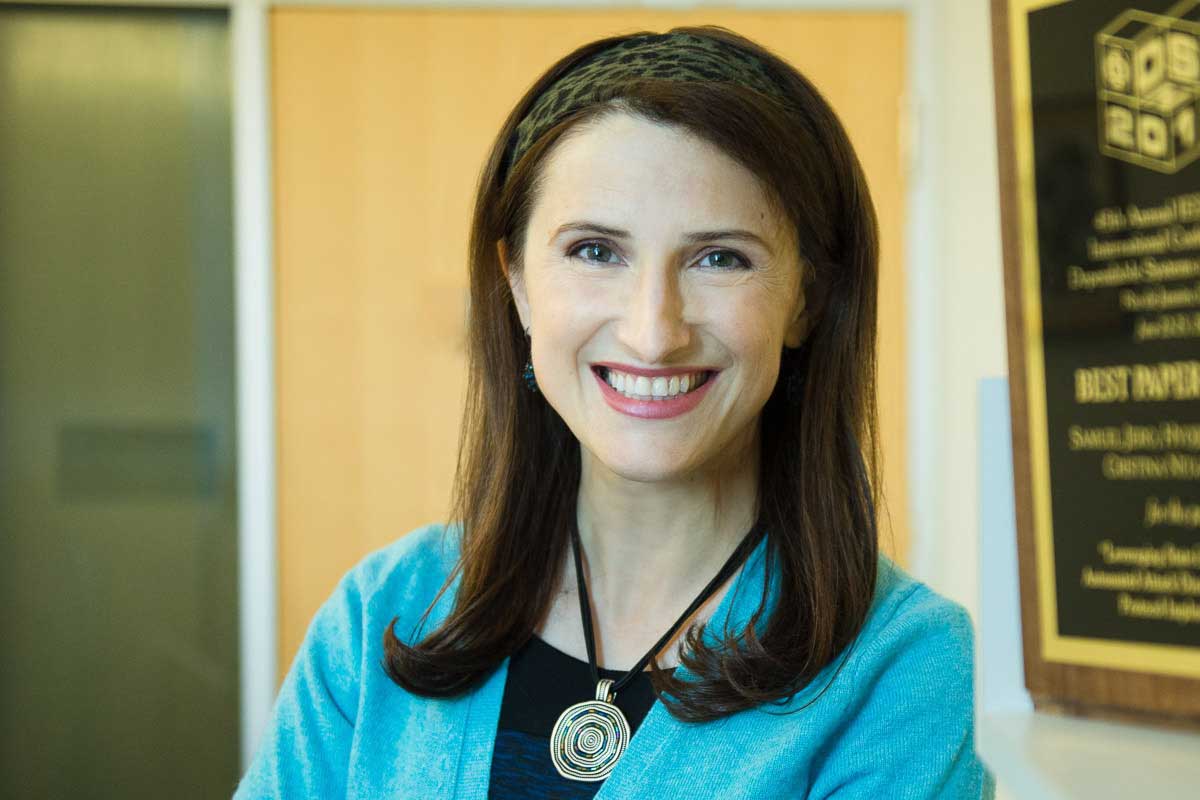
Cristina Nita-Rotaru is a tenured Professor of Computer Science at Northeastern University's Khoury College of Computer Sciences , where she leads the Network and Distributed Systems Security Laboratory (NDS2) and is a founding member of the Cybersecurity and Privacy Institute . Previously, she was a faculty member at Purdue University from 2003 to 2015. Education: Ph.D. in Computer Science from Johns Hopkins University M.S. in Computer Science from Politehnica University of Bucharest , Romania Research Focus: Her research lies at the intersection of cybersecurity , distributed systems , and computer networks . She designs and builds resilient distributed systems and network protocols that maintain security, availability, and performance despite faults, misconfigurations, and attacks. Her work integrates formal methods , adversarial testing , blockchain security , and trustworthy AI . Funding & Impact: Her research has been supported by NSF , DARPA , ONR , Google , Ethereum Foundation , and others. She has received numerous awards, including the NSF CAREER Award (2006) and multiple best paper awards at top venues like NDSS , ACM CCS , and IEEE S&P . Scientific Awards: NSF CAREER Award (2006) NETYS 2023 Best Paper Award ACM SACMAT 2022 Best Paper & Test-of-Time Awards IEEE SafeThings 2019 Best Paper Award NDSS 2018 Best Paper Award ISSRE 2017 Best Paper Award DSN 2015 Best Paper Award IETF/IRTF Applied Networking Research Prize (2016, 2018, 2025) Purdue College of Science Research Award (2013) Purdue Excellence in Research Award (2012) Purdue College of Science Leadership Award (2012) Purdue College of Science Undergraduate Advising Award (2008) Purdue Teaching for Tomorrow Award (2007) Advising & Students: She has advised over 30 PhD and MS students at Northeastern and Purdue. Notable former students include Reza Curtmola (NJIT Professor) , Endadul Hoque (Syracuse University Assistant Professor) , and Max von Hippel (Bencify founding partner) . Labs & Teams: She directs the NDS2 Lab , focusing on network and distributed systems security, with projects spanning blockchain protocols , SDN security , IoT and connected cars , and formal verification of protocols .