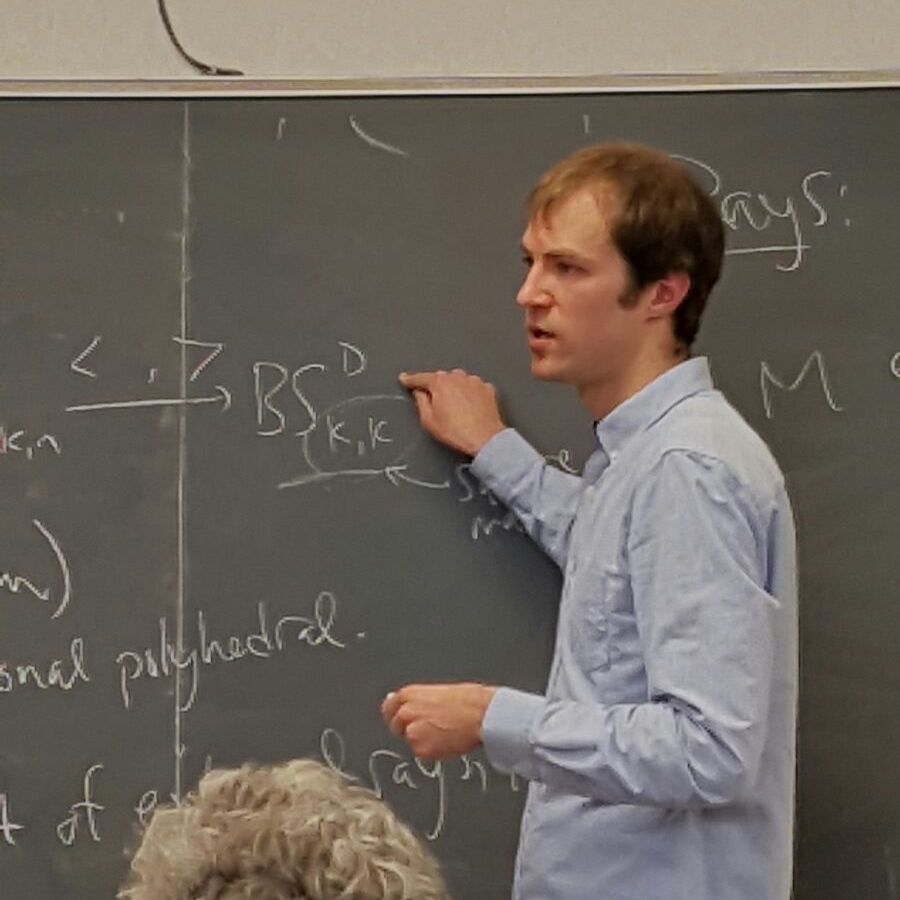
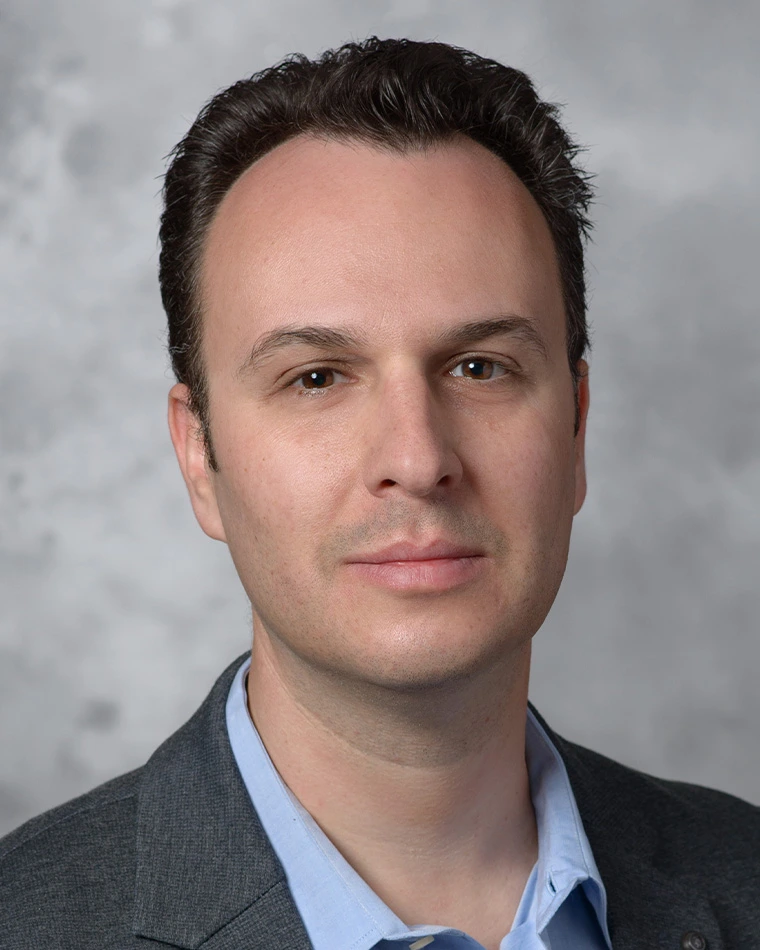
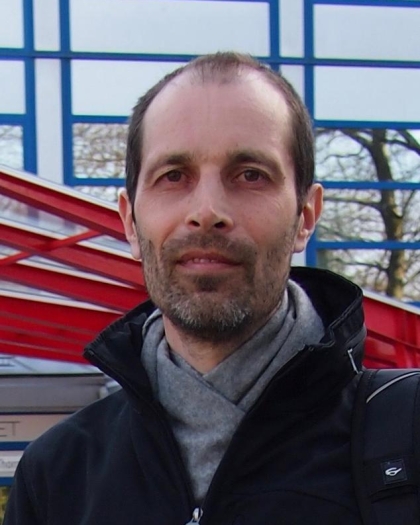
Jake Levinson is an Assistant Professor in the Department of Mathematics and Statistics at Université de Montréal. His research focuses on algebraic geometry and algebraic combinatorics, with particular interests in moduli spaces, Schubert calculus, toric varieties, and equivariant free resolutions. He previously held positions at Simon Fraser University (2020–2023), the University of Washington (2017–2020), and completed a postdoctoral fellowship at LaCIM (UQAM). His Ph.D. from the University of Michigan (2017) was advised by David Speyer. Research Interests: - Algebraic Geometry: Moduli spaces, Schubert calculus, toric varieties, homological algebra. - Algebraic Combinatorics: Crystal graphs, Young tableaux, representation theory, combinatorial aspects of algebraic geometry. - Recent work includes studies on Schubert curves, Springer fibers, and applications of algebraic methods to problems in combinatorics and theoretical computer science. Teaching: - Taught MAT 6620 (Algebraic Geometry: Schemes) at Université de Montréal (Winter 2024). - Previously taught courses on intersection theory, representation theory, and Lean formal proof systems. Key Contributions: - Developed combinatorial models for Schubert curves using crystals and tableaux. - Contributed to Boij-Söderberg theory for Grassmannians and studies of class groups in algebraic geometry. - Collaborated on projects linking algebraic geometry to neural networks and random matrix theory.
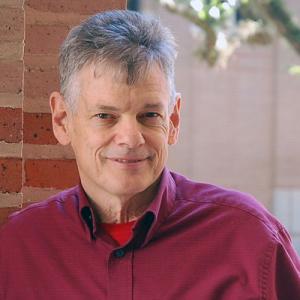
Robert 'Corky' Cartwright is a Professor of Computer Science at Rice University, specializing in programming languages and software engineering. His research focuses on parallel programming extensions for Java/Scala/Swift, smart programming environments for error-free code, pedagogic tools like DrJava, and intent-driven programming in the FAST language. He has contributed to cyber-physical systems modeling through frameworks like Acumen and DrHJ. Education: PhD (Computer Science, Stanford University, 1976), BA (Applied Mathematics, Harvard College, 1971). Awards include ACM Fellow (1998). Teaching emphasizes principles of programming languages and program design. His work bridges theoretical foundations (domain theory, formal semantics) with practical tools for education and industry.
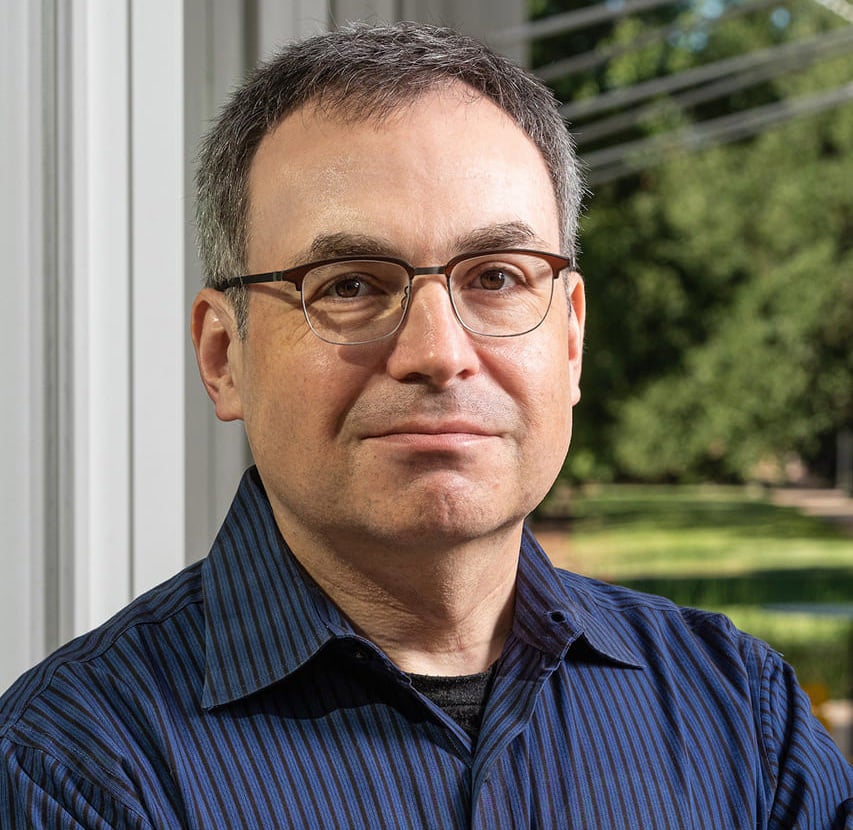
Dan S. Wallach is a Professor of Computer Science and Electrical and Computer Engineering at Rice University, and a Program Manager at DARPA's Information Innovation Office since June 2023. He holds a PhD (1999) and MA (1995) from Princeton University, and a BS (1993) from UC Berkeley. His research focuses on cybersecurity, electronic voting systems, and mobile security. He directed the NSF-funded ACCURATE Center (2005-2011), led the STAR-Vote project, and advised U.S. election security policies including testifying before state and federal committees. He also served on the Air Force Science Advisory Board (2011-2015), USENIX Board (2011-2013), and IEEE Technical Guidelines Committee (2019-2023). Recent work includes developing ElectionGuard cryptographic tools for verifiable elections and analyzing cyber warfare in Ukraine. His 15+ years of teaching include courses like Introduction to Program Design and Election Systems Technologies. Publications span secure voting protocols, smartphone security, and election auditing. Collaborations include Microsoft and VotingWorks on cryptographic voting systems like ElectionGuard and Arlo-CVR-Encryption.
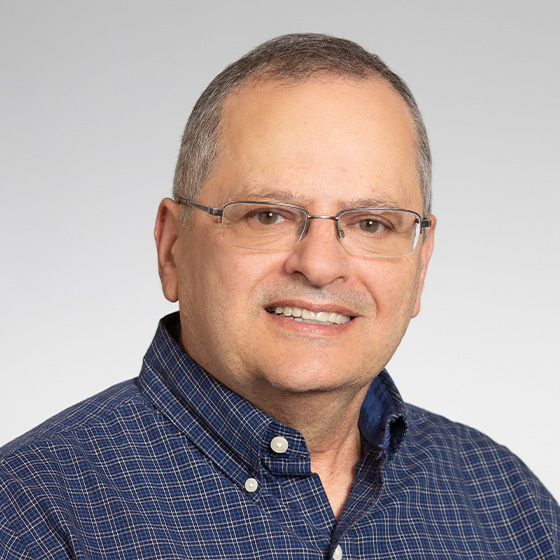
Badi H. Baltagi is a Distinguished Professor of Economics and Senior Research Associate at the Center for Policy Research, Maxwell School of Citizenship and Public Affairs, Syracuse University. He previously served as the George Summey, Jr. Professor of Liberal Arts at Texas A&M University (1993–2005) and has held visiting positions at the University of Arizona and the University of California, San Diego. He currently holds a part-time chair position in Economics at the University of Leicester, United Kingdom. Ph.D. in Economics, University of Pennsylvania, 1979 Baltagi’s research focuses on econometrics, particularly panel data, spatial econometrics, health econometrics, and theoretical econometrics. His work has significantly advanced methodologies in fixed and random effects models, spatial dependence, and network effects in panel data. He is renowned for his authoritative textbooks, including Econometric Analysis of Panel Data and Econometrics , which are standard references in graduate econometrics courses worldwide. His recent publications (2021–2025) demonstrate a strong trend toward integrating spatial and network structures into panel data models, with applications in health, labor, and international trade. He frequently publishes in top journals such as Journal of Econometrics , Econometric Reviews , and Economics Letters , emphasizing robust estimation, specification testing, and dynamic modeling. Kuwait Prize for Economics and Social Sciences (2018) Distinguished Achievement Award in Research, Texas A&M University (2002) Multa and Plura Scripsit Awards, Econometric Theory Distinguished Authors Award, Journal of Applied Econometrics Fellow, Journal of Econometrics Fellow, Econometric Reviews Fellow, International Association for Applied Econometrics Fellow, Spatial Econometrics Association Fellow, Society for Economic Measurement Research Fellow, IZA (since 2002) Research Fellow, CESifo (since 2003) Global Labor Organization (GLO) Fellow Lifetime Fellow, Economic Research Forum (MENA region) Baltagi has held major editorial roles, including co-editor of Economics Letters (2011–present), former editor of Empirical Economics (1999–2018), and replication editor for Journal of Applied Econometrics (2003–2018). He is the series editor for Contributions to Economic Analysis (Emerald Publishing) and Advanced Studies in Theoretical and Applied Econometrics (Springer). He has advised numerous Ph.D. students and collaborates extensively with researchers globally, particularly in spatial and health econometrics. He is actively involved in organizing and presenting at major conferences such as the International Panel Data Conference and the International Association of Applied Econometrics. Baltagi is a founding member and former director of the International Association for Applied Econometrics and serves on the board of directors and advisory boards of the Spatial Econometrics Association and the Journal of Spatial Econometrics , respectively. His leadership in establishing and promoting specialized econometric fields underscores his influence in shaping modern econometric research.
Jasmin Blanchette is a Professor of Theoretical Computer Science and Theorem Proving at the Institute for Informatics, Ludwig-Maximilians-Universität München (LMU), where he also serves as Dean of Studies for Computer Science since January 2024. He is additionally affiliated as a guest researcher with the VeriDis group at Loria in Nancy, France. His research lies at the intersection of automated and interactive theorem proving, with a focus on higher-order logic and proof automation. Key projects include the development of tools like Sledgehammer, Nitpick, and Zipperposition, and foundational work on (co)datatypes and higher-order superposition. His recent publications reflect a strong trend in formalizing and verifying automated reasoning techniques, especially in higher-order logic, with applications in proof automation, SMT solving, and logical verification. Articles frequently appear in top venues such as CADE, ITP, and the Journal of Automated Reasoning. CADE 2023 Best Paper Award for 'Verified given clause procedures' FroCoS 2023 Best Paper Award (with Visa Nummelin and Sander Dahmen) IPA Dissertation Award (awarded to his student Petar Vukmirović) Dutch 'cum laude' distinction (awarded to his student Anne Baanen) Dutch Prize for ICT Research 2022 Blanchette has advised numerous PhD and postdoctoral researchers, many of whom are now active contributors to the formal methods community. He has received significant research grants through projects like Matryoshka and Nekoka. He is also the editor-in-chief of the Journal of Automated Reasoning and plays a central role in organizing key conferences such as ITP, CADE, and CPP. He leads an active research group at LMU, consisting of postdocs and PhD students working on topics such as higher-order superposition, formalization of voting systems, categorical logic, and proof search heuristics. The team collaborates closely with international groups, including those at Inria and TU Wien.
Christos Gagatsos is an Assistant Professor in the Department of Electrical and Computer Engineering and a member of the Wyant College of Optical Sciences at the University of Arizona. He joined the university in 2018 as a postdoctoral research associate, was promoted to Assistant Research Professor in 2020, and became an Assistant Professor in ECE in 2023. Prior to this, he was a postdoctoral research fellow at the University of Warwick, UK. His educational background includes: PhD in Engineering Sciences and Technology, Université Libre de Bruxelles and École Polytechnique, Belgium (2014) MSc in Physics of Elementary Particles, University of Athens, Greece (2010) BSc in Physics, University of Athens, Greece (2007) Christos Gagatsos's research lies at the intersection of quantum information, quantum sensing, and quantum communications, with a strong theoretical focus on bosonic systems. His work explores fundamental concepts such as entanglement, non-Gaussianity, and Bayesian estimation in quantum systems. He is particularly interested in pushing the limits of quantum-enhanced sensing, including optical phase and transmissivity estimation, and in developing theoretical frameworks for quantum detection and discrimination. His teaching interests include quantum information, quantum optics, probability theory, and applied mathematics. The recent trend in his publications reflects a deep engagement with Bayesian methods in quantum parameter estimation, quantum change point detection, and the characterization of quantum states through measures like Wigner entropy. His work spans both fundamental quantum theory and practical applications in sensing and communication, often bridging classical and quantum approaches. He advises several graduate students across departments, including Boyu Zhou (Physics), Ali Cox (Physics), Qipeng Qian (Mathematics), and Leo Bia (Optical Sciences). While no formal scientific awards are listed in the provided text, editorial recognition such as an Editor’s Pick in APL Quantum highlights the impact of his research. Christos Gagatsos leads a research group focused on theoretical quantum information, actively collaborating with quantum research groups across the University of Arizona, Arizona State University, and international institutions in the USA and Europe. His lab investigates quantum sensing, communications, and foundational aspects of quantum mechanics using bosonic platforms, fostering a collaborative and interdisciplinary research environment.
Charlotte Albrechtsen is an External Lecturer in the Department of Business & Management at the University of Southern Denmark, Faculty of Social Sciences. She is actively engaged in teaching, research, and editorial activities, contributing to interdisciplinary studies at the intersection of digital media, communication, and participatory research methods. Institution: University of Southern Denmark Department: Department of Business & Management (DBM) Academic Role: Lecturer Email: charal@sam.sdu.dk Her research interests center on innovative qualitative methodologies, including mobile ethnography, collaborative data analysis through gamified techniques, and the integration of generative AI in creative research practices. She explores how digital tools can enhance participatory research and democratize knowledge production. Recent publications reveal a strong trend toward blending humanities perspectives with digital technologies—such as drawing analogies between medieval monastic practices and modern prompt engineering, or using board games to involve stakeholders in data interpretation. This reflects a unique interdisciplinary approach that bridges communication theory, design, and AI literacy. Scientific recognition includes: Forbundet Kommunikation & Sprogs ph.d.-pris (2006) Forfatterlegat (2007) She has taught courses in strategic communication, research methodology, and market analysis, and has served as a peer reviewer for journals like CoDesign . Her current project, Balancing AI in EDU , investigates ethical and pedagogical implications of AI in higher education. While no formal advisees are listed, her supervisory role in teaching suggests mentorship experience. She does not appear to lead a formal lab but contributes to collaborative, participatory research networks.
Lekha Adhikari is a Teaching Professor in the Department of Physics and Astronomy at Iowa State University. Her research focuses on theoretical nuclear and particle physics, particularly using light-front quantization methods to study hadron structure, angular momentum distributions, and quark-gluon dynamics. She has contributed extensively to understanding parton distributions, spin structures of mesons, and heavy quarkonia physics. Her work bridges advanced computational techniques with fundamental questions in quantum chromodynamics. Her research interests include: Light-Front Quantization and Basis Expansion Methods Generalized Parton Distributions and Form Factors Angular Momentum Decomposition in Hadrons Heavy Quarkonia and Hadron Spectroscopy Recent publications emphasize advancements in basis light-front quantization frameworks and their applications to transverse spin physics and hadron decay mechanisms. No scientific awards or grants are explicitly listed in the provided information. She advises no students in the given data. Her academic contributions are centered at Iowa State University's Physics Department with no secondary affiliations noted.
James Nugent, MD, MPH, is an Instructor of Pediatrics in the Division of Pediatric Nephrology at Yale School of Medicine and an Investigator at Yale’s Clinical and Translational Research Accelerator (CTRA). He practices pediatric nephrology at Yale-New Haven Children’s Hospital and provides primary care at Fair Haven Community Health Center. Appointments: Pediatric Nephrology, General Pediatrics Organizations: Clinical and Translational Research Accelerator (CTRA), Janeway Society Dr. Nugent’s research is focused on pediatric hypertension, particularly improving the diagnosis and evaluation of high blood pressure in children. His work spans clinical epidemiology, health services research, and translational applications, with emphasis on home and ambulatory blood pressure monitoring, EHR-based phenotyping, and the epidemiology of pediatric hypertension. He has contributed to national efforts such as the SUPERHERO registry. His recent publications reflect a strong trend in understanding diagnostic accuracy, monitoring practices, and risk factors for hypertension in youth, especially in the context of obesity and preterm birth. Much of his research aims to bridge gaps between primary care and specialty nephrology in the management of pediatric hypertension. Board Certified: Pediatrics, Pediatric Nephrology Education: MD (Duke), MPH (UNC), Residency (Walter Reed), Fellowship (Yale) Dr. Nugent has served as an active-duty pediatrician in the U.S. Air Force and integrates clinical care with research to advance preventive strategies in pediatric kidney health. He collaborates frequently with researchers such as F. Perry Wilson and Jason Greenberg. While no formal advisees or awards are listed, his scholarly output and institutional roles indicate active mentorship and research leadership.
Jaakko Timo Henrik Järvi is a Professor in the Department of Informatics at the University of Bergen, Norway, with additional affiliations at the University of Turku, Finland. His research focuses on programming language design, generic programming, and human-computer interaction, particularly in GUI frameworks and software reuse. His research interests include generic programming, programming language design (especially the Magnolia language), high-performance computing, array programming, and GUI engineering. He emphasizes formal methods and algebraic specifications to build reusable and efficient software systems. His work bridges theoretical foundations with practical applications in software development and education. The recent publications highlight a strong trend in declarative GUI frameworks, multi-selection models, and generic programming. His work explores domain-specific languages for GUI structure manipulation, reusable selection semantics across platforms, and optimizing array computations using the Mathematics of Arrays. These efforts reflect a consistent focus on software abstraction, correctness, and reusability. Jaakko Järvi has supervised doctoral students, including Tetiana Yarygina, whose dissertation explored microservice security. While no specific grants are detailed, his work on VisAST was supported by the Research Council of Norway (Project 250683), indicating active external funding. He frequently collaborates with researchers like Magne Haveraaen, Knut Anders Stokke, and Sean Parent. He contributes to tools and frameworks such as the MultiselectJS library and the VisAST educational tool. These are outcomes of collaborative research teams focused on improving software development practices and computer science education.
Paul Marc Collin is a Lecturer in Management Sciences at iaelyon School of Management, Jean Moulin Lyon 3 University, where he has been teaching since 2003. He is the Educational Manager of the Master 2 IBR (International Business Realities) and the Master 2 GMP (General Management Program), both delivered in international formats. His academic work spans teaching, research, and program coordination in strategic and international management. University: Jean Moulin Lyon 3 University School: iaelyon School of Management Position: Lecturer in Management Sciences Roles: Educational Manager, Course Manager, Researcher His research and teaching focus on strategic and international management, with strong interests in innovation, intercultural dynamics, project management, and sustainable business models. He explores qualitative methods and philosophical aspects of management, including degrowth and ethical consumption. His work bridges theoretical inquiry with practical applications in global business contexts. The recent publications and video clips reflect a trend toward critical management studies, digital transformation in marketing, and sustainable corporate strategies. His work integrates innovation in services, international coordination, and alternative economic paradigms, often from a qualitative and reflective perspective. Paul Marc Collin has not been listed as receiving any formal scientific awards in the provided text. He actively supervises master's level programs and contributes to curriculum development, particularly in international and strategic management courses. While no doctoral students are listed, he guides students through thesis methodology and partnership management courses. There is no mention of external research grants in the available information. He is affiliated with the Strategy Research Group and the Thematic Research Team in International Management, contributing to collaborative research on global business strategies and innovation in service sectors.
Yue Li is an Associate Professor at the School of Computer Science, Nanjing University, where they co-run the PASCAL Research Group with Tian Tan. Their work focuses on static program analysis techniques and tools for programming languages, software engineering, security, and hardware verification. PhD in Computer Science from UNSW Sydney (2016) Postdoctoral research at Aarhus University (Denmark) and UNSW Sydney B.Eng and M.Eng from Northwestern Polytechnical University (2010, 2012) Research interests center on Program Analysis and Programming Languages , with a focus on: Pointer analysis for database-backed applications Context sensitivity optimization Reflection analysis in Java/Android Operational semantics for hardware languages Distributed dataflow analysis frameworks Developer-friendly static analysis tools Key publication trends (2016-2025) span static analysis , pointer precision , reflection handling , and tool frameworks across conferences like OOPSLA, PLDI, ICSE, ISSTA, and journals including TOPLAS and IEEE TSE. Notable artifacts include Tai-e and Chianina systems. 2025: ICSE Best Artifact & Distinguished Paper Awards 2024: IEEE TSE Publication on Generic Sensitivity 2023: OOPSLA Distinguished Artifact, SPLASH/ECOOP committees 2021: National Youth Talent Support Program, ZiJin Scholar 2016: ECOOP Distinguished Paper, CGO Best Paper As co-PI of PASCAL Research Group, they lead projects on precision-guided analysis, microservice systems, and cloud-based dataflow frameworks, with teaching awards for SICP and Software Analysis courses.
Dr. Vadim Cheianov is an Associate Professor in the Leiden Institute of Physics (LION) within the Faculty of Science at Leiden University. He leads the Cheianov Group, which specializes in theoretical quantum many-body physics with applications in condensed matter and ultracold atomic systems. His research interests span several cutting-edge domains in theoretical physics, including the behavior of mobile quantum impurities in quantum fluids, adiabatic protocols in driven many-body systems, mechanisms of non-ergodicity in quantum systems such as many-body localization and integrability, and the macroscopic manifestations of quantum anomalies like the chiral magnetic effect in condensed matter and cosmological contexts. The recent publications from his group reflect a strong focus on quantum dynamics, topological effects, and fundamental aspects of quantum statistical mechanics. These works integrate concepts from condensed matter, ultracold atoms, quantum field theory, and mathematical physics, often bridging theoretical predictions with potential experimental observations in quantum simulators and solid-state devices. Scientific Awards: NWO Physics Projectruimte Grant (2018) Dr. Cheianov has secured competitive research funding, including the NWO Physics Projectruimte grant awarded in 2018, which supports innovative and high-risk theoretical physics research. While formal advising roles are not detailed in the provided text, his leadership of an active research group implies mentorship of PhD and master’s students. His work contributes significantly to foundational understanding in quantum matter and has implications for quantum technologies and emergent hydrodynamic phenomena in quantum systems. The Cheianov Group operates within the Quantum Matter and Optics division of LION, collaborating with experimental and theoretical physicists to explore non-trivial quantum phenomena in both synthetic and natural quantum materials.
Prof. Dr. Marcus Vetter is the founder and director of the Institute for Applied Artificial Intelligence and Robotics (A²IR) at Mannheim University of Technology's Faculty of Information Technology. His work bridges Deep learning Medical imaging and navigation Embedded systems Real-time computing Software engineering for medical devices He has taught courses including Deep Learning Methods, Image-Guided Medicine, and Embedded Systems. Education Computer Science, Technical University of Mannheim, 1999 Doctorate ('summa cum laude superato') in 'Image-based navigation systems', University of Heidelberg, 2003 Research focuses on AI-driven medical imaging tools, real-time deformation models, and open-source frameworks like MITK. His 15 most recent publications span 6D pose estimation for medical robotics Spectroscopy-based diagnostics Formal software verification Gesture and gaze recognition interfaces UAV drive train optimization Scientific achievements Doctorate with distinction (2003) Co-founder of MITK open-source project Director of A²IR institute since 2007 He has received BMBF grants for real-time deformation models and tracking systems, and has led development of navigation systems for laparoscopic surgery and cardiac ablation procedures.
Olivier Bournez is a Professor of Computer Science at École Polytechnique, part of Institut Polytechnique de Paris (IP Paris), where he is affiliated with the Department of Computer Science (DIX) and the Computer Science Laboratory (LIX), a joint CNRS unit (UMR 7161). He previously served as Director of LIX from 2010 to 2015 and currently holds key leadership roles including Vice-head of the Computer Science, Data and Artificial Intelligence department at IP Paris, Head of the 'Proofs and Algorithms' pole, and Head of the 'Algorithms and Complexity' team at LIX. His research focuses on the theoretical foundations of computation, particularly continuous-time models such as analog computing and dynamical systems, computational complexity over real numbers, distributed computing models like population protocols, and the interplay between differential equations and computation. He explores the limits of computability and complexity in both discrete and continuous domains, with applications in verification, rewriting systems, and chemical computation models. The recent publications reflect a strong trend in characterizing computability and complexity using discrete and continuous ordinary differential equations, with significant contributions to the understanding of polynomial-time computation over real numbers and the Turing completeness of chemical reaction networks. His work bridges theoretical computer science, mathematics, and biological computation, often yielding foundational insights with broad implications. MFCS'2023 Best Paper Award (coauthored with Manon Blanc) MCU'2022 Student Best Paper Award (Manon Blanc) ICALP'2016 Best Paper Award (Track B) CIE'2016 Best Paper Award CMSB'2017 Best Paper Award Ackermann Award 2017 (Amaury Pouly, PhD co-supervised) Bournez has advised several successful students, including Amaury Pouly and Manon Blanc, and has secured research funding, notably the ANR project ∂IFFERENCE. He is actively involved in the academic community, managing the Computability in Europe (CIE) association membership and serving on the editorial board of the journal Computability . His work includes educational outreach through articles in La Recherche , Le Monde 's blog 'Binaire', and the co-authorship of a French computer science textbook. He leads the 'Algorithms and Complexity' research team at LIX and is central to the 'Proofs and Algorithms' pole, fostering collaborative research in foundational computer science.