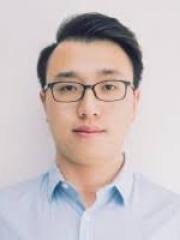
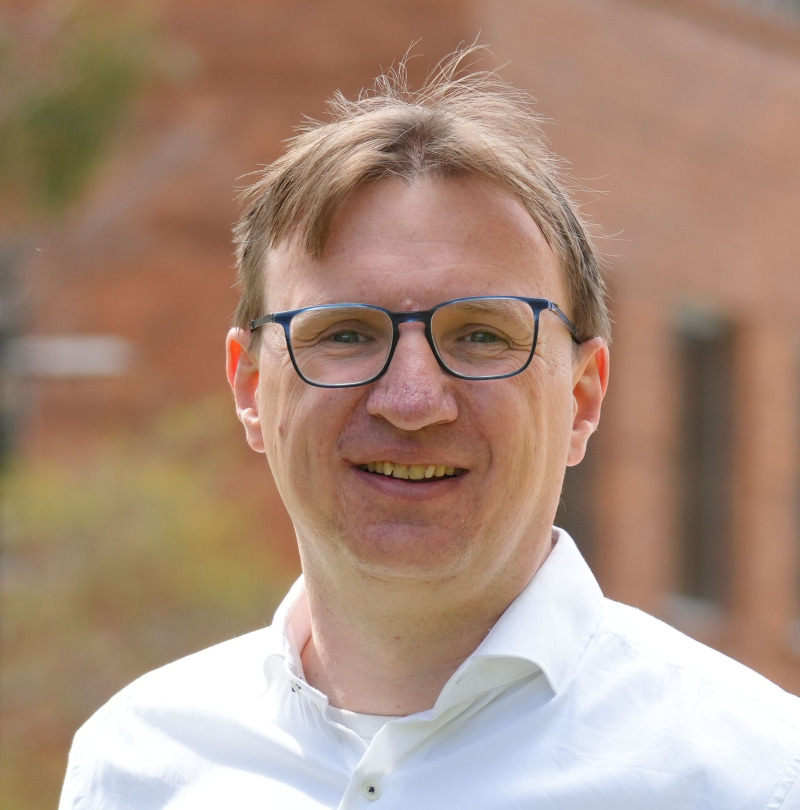
Dr. Joseph van Buuren is a Lecturer at the School of Global, Urban and Social Studies (GUSS) at RMIT University, located at City Campus in Australia. His research focuses on criminology, law, and linguistics, with particular emphasis on legal systems, international comparative law, and the intersection of language barriers in justice processes. He holds an ORCID identifier: 0000-0003-4862-048X. His work addresses issues such as police discretion in domestic violence cases, linguistic challenges in legal proceedings, and systemic marginalization within the justice system. Recent publications highlight topics like covert police investigations, language access rights, and wrongful convictions linked to managerialist approaches. No formal student advisees or academic awards are listed in the provided materials. Contact information includes two institutional email addresses.
Professor Nao Tsuchiya is a neuroscientist at Monash University's Turner Institute for Brain & Mental Health, specializing in consciousness studies. He holds a PhD in Computation and Neural Systems from Caltech and a Bachelor's in Science from Kyoto University. His research explores the neural basis of consciousness, attention, and qualia, employing methods like neuroimaging (EEG/MEG/fMRI), psychophysical experiments, and mathematical frameworks (category theory, quantum cognition). Current projects include the Dreamscape Project (neurophysiology of dreams), analyzing multi-channel neurophysiological data, and testing quantitative theories of consciousness. He also leads the 'Lifting the Veil' project on visual perception disorders and serves as an editorial board member for Neuroscience of Consciousness . His work addresses fundamental questions about consciousness in animals, machines, and humans, contributing to UN Sustainable Development Goals. Education PhD in Computation and Neural Systems, California Institute of Technology (2000-2005) Bachelor in Science, Kyoto University (1996-2000) Research Interests His lab investigates: Neuronal correlates of conscious/non-conscious processing Consciousness vs attention mechanisms Quantitative theories of consciousness (e.g., Integrated Information Theory) Qualia structure mapping via mathematical models Cross-modal perception and emotion Grants & Projects Leads/co-leads 15+ research projects including: Australian Research Council-funded Dreamscape Project (2024-2027) NHMRC Equipment Grant for neural stimulation technology (2023-2024) Adversarial testing of consciousness theories (2021) Awards & Recognition While no explicit awards are listed, his work has been referenced in multiple Wikipedia pages and news outlets, indicating academic impact. Labs & Teams Runs the Tsuchiya Lab at Monash with active collaborations across disciplines (psychology, physics, computer science), focusing on experimental and theoretical approaches to consciousness.
Chenghao Huang is a Research Fellow in the Department of Data Science & AI at Monash University, pursuing a Doctorate by Research. His work focuses on integrating machine learning techniques with energy systems, particularly in smart grids, renewable energy optimization, and AI-driven solutions for energy management. He actively contributes to the UN Sustainable Development Goals related to affordable and clean energy. Recent research emphasizes multi-agent reinforcement learning for EV charging stations, federated learning in electricity markets, and fraud detection in photovoltaic systems. His publications span conferences like IEEE Smart Cities and IEEE Power & Energy Society General Meeting. Collaborations include projects on energy disaggregation, weather factor fusion, and large foundation models for power systems. No formal student advising or awards are explicitly listed, though his work demonstrates significant engagement with industry-relevant challenges in energy and AI.
Dr. Nelly Bencomo is an Associate Professor in the Department of Computer Science at Durham University. She leads the SE@Durham research team and is Principal Investigator (PI) for the EPSRC-funded Twenty20Insight project, which focuses on explainability in intelligent systems. Her interdisciplinary work bridges Software Engineering, Requirements Engineering, Design Thinking, and Machine Learning, with applications to Digital Twins and human-machine teaming under uncertainty. Education : PhD from Lancaster University (UK) Research interests center on AI/ML decision-making under uncertainty, software engineering for autonomous and self-adaptive systems, and runtime modeling frameworks. Her work integrates Bayesian surprise theory, Markov processes, and non-functional requirements analysis to address challenges in system adaptability and human-AI collaboration. Recent publications emphasize uncertainty quantification in adaptive systems, digital twin lifecycle management, and explainable AI. Articles span topics like automated traceability for LLM-generated code, uncertainty flow diagrams, and SPECTRA's Markovian framework for NFR tradeoffs. Scientific Awards include: Best Paper & Software Artefact Awards (2024) Women for Innovation Recognition (2024) 10-Year Influential Paper Awards (2019) Best Paper REFSQ 2013 Leverhulme & Marie Curie Fellowships She supervises PhD students and has served as ACM Distinguished Speaker (2022), MODELS/SEAMS PC Co-Chair (2022), and IEEE TCSE Executive Committee member (2020-). Her labs focus on models@run.time, digital twins, and adaptive system governance.
Dr. Hongxu Chen serves as an Honorary Research Fellow at the University of Queensland's School of Electrical Engineering and Computer Science. His research focuses on machine learning, data mining, and network analysis, particularly in the context of recommendation systems and graph-based models. He has contributed to advancements in graph neural networks, network representation learning, and social network analysis through collaborative projects with international researchers. Dr. Chen's work spans theoretical and applied domains, including social-boosted recommendation systems, graph convolutional networks for centrality analysis, and scalable tensor factorization models. His publications address challenges in link prediction, user behavior modeling, and mobility demand forecasting using graph-based and probabilistic approaches. While no formal awards are listed, his contributions reflect significant engagement with high-impact conferences like NeurIPS, ICDE, and KDD. No advising or grant details are provided in the text. His research activities are centered within the School of Electrical Engineering and Computer Science, though specific lab affiliations are not mentioned.
Dr. Peter Hoefner is an Associate Professor and Associate Director of Education at the School of Computing, Australian National University (ANU). He specializes in formal verification, secure systems, and concurrency, with a focus on ensuring software reliability through rigorous mathematical methods. His leadership oversees 80+ courses, 3,700+ students, and multi-million-dollar education programs, achieving 100% student satisfaction in 2024 and successful ACS reaccreditation. His research addresses protocol modeling, distributed systems, and high-assurance systems, with major contributions including the AWN formal modeling language and verification of protocols like AODV. He secured $1.5M in funding and led DARPA’s HACMS program, earning a Game Changer Award (2023). Professional roles include Vice Chair of IFIP TC2, Chair of IFIP Working Group 2.1, and editor of the Journal of Logical and Algebraic Methods in Programming . Key achievements: Exposed vulnerabilities in AODV, developed formal methods for concurrent systems, and advanced cybersecurity practices globally. Grants: $4.5M HACMS program leadership, multiple competitive grants as Chief Investigator. Education leadership: Curriculum redesign, operational efficiency improvements, and staff coordination across 40+ academic and 180+ casual staff. His work bridges academia and industry, influencing cybersecurity standards and government projects. Current focus includes advancing algebraic methods and strategic rewriting frameworks.
Susan McDonald is a Sessional Academic in the School of Education within the Faculty of Education and Arts. Her research focuses on early childhood education, mathematics education, and Indigenous education. She explores how creative technologies and digital tools can enhance learning, particularly in preservice teacher training and Indigenous student contexts. Her work emphasizes the role of oral language, rich mathematical representations, and social competence frameworks in early formal schooling. Her publications (2011-2012) analyze gender differences in technology engagement and teacher practices influencing Indigenous students' mathematical understanding. The Social Processing Framework (SPF) is a key tool in her studies on social competence development in young children. No scientific awards or grants are explicitly mentioned in the provided text. She has not listed any advisees or students in her profile.
John Patrick Hawthorne is a Professor of Philosophy at the Dianoia Institute of Philosophy within the Faculty of Theology and Philosophy. His work primarily focuses on advanced topics in epistemology, metaphysics, philosophy of language, and formal logic. He has contributed extensively to debates around knowledge safety, counterfactuals, modal logic, and the philosophy of religious belief. Notable research areas include the analysis of skeptical scenarios, the nature of propositional attitudes, and the application of formal methods to epistemological problems. Hawthorne’s recent publications explore themes such as counterfactual contamination, epistemic akrasia, and the boundaries of metaphysical possibility. His research demonstrates a deep engagement with both classical philosophical questions and contemporary analytic methodologies, including dynamic logic and probabilistic frameworks. Collaborations with co-authors like Yoaav Isaacs and Juhani Yli-Vakkuri have produced influential work on topics ranging from narrow content theories to the ethics of statistical evidence in legal contexts. While no specific awards or grants are listed, his prolific publication record reflects sustained academic excellence across multiple subfields. Hawthorne’s contributions maintain a focus on rigorously addressing foundational issues in philosophy while engaging with interdisciplinary tools from logic and decision theory.
Rosalind Thornton is a Professor in the Department of Linguistics at Macquarie University, affiliated with the Centre for Language Sciences (CLaS). Her research focuses on children's acquisition of syntax, semantics, and morphology within the framework of Universal Grammar, particularly in relation to language delay (specific language impairment). She has contributed significantly to understanding innate linguistic knowledge versus environmental learning through experimental studies with young children. Her research interests include the syntax-semantics interface, cross-linguistic studies (e.g., Mandarin, Turkish), and the implications of child language data for theoretical syntax. Notably, she has explored how children with language impairments process negation, disjunction, and syntactic structures. Rosie has led several funded projects, including 'Unexpected Wide Scope Phenomena in Child Language' (2020–2022) and 'CLaS - MQRC' (2019–2021). Her publications span experimental methods, parameter setting in Universal Grammar, and language disorders. Despite no longer supervising students, her work has shaped understanding of linguistic deficits in children with SLI. Collaborations include studies on MEG systems for child language research and audio-visual tools for clinical applications. She is a key figure in the intersection of formal linguistics and developmental psycholinguistics.
Brian Stasak is a Post Doctoral Research Fellow in the Discipline of Speech Pathology at the Sydney School of Health Sciences, University of Sydney. His research focuses on speech-based clinical health applications, including illness and voice disorder screening/monitoring using smart device AI technology. He also designs experimental protocols to extract acoustic, linguistic, and affective features for illness detection and manages large clinically validated datasets involving audio, nasometer, and aero-dynamic pressure recordings. Brian previously worked in audio speech forensics as a defense contractor, applying automated AI techniques to real-world speech issues, and has 3 years of experience as a speech language therapist in K-12 schools. His research interests span Audio Voice Forensics , Machine Learning (AI) , Digital Health , and Speech Language Pathology . Current projects include organizing Australia's largest voice disorder corpus and exploring AI-driven acoustic feature analysis for automated screening. Brian collaborates internationally with institutions such as: Australia : University of Canberra, The Black Dog Institute, University of New South Wales United States : Brown University, MIT Lincoln Labs, Sonde Health, University of Michigan While no scientific awards or grants are explicitly listed, his work bridges clinical speech pathology with advanced AI technologies. He has not listed formal advisees or students in his profile.
Professor Lang White is a faculty member at the University of Adelaide, holding the position of Professor of Electrical Engineering within the School of Psychology and Faculty of Health and Medical Sciences. His research focuses on statistical signal processing, control systems, optimization, and multi-agent systems with applications in defense, AI-human interaction, and communication networks. He leads projects on hidden reciprocal chain modeling, sensor array processing, and game-theoretic resource allocation strategies. Collaborations include institutions in Italy, France, and the U.S., and he is actively involved in defense-funded initiatives. Current research areas include Bayesian rationality in satisfaction games, Stackelberg game models for asymmetric conflict, and adaptive reinforcement learning algorithms. He has secured postdoctoral positions in human-AI interaction and maintains expertise in MIMO radar waveform design and TCP congestion control. His work bridges engineering and psychology, addressing interdisciplinary challenges in decision-making and system optimization. Professor White seeks consultancy opportunities in signal processing and control systems for defense clients and contributes to academic outreach through conference presentations and journal publications. He advises on emerging trends in distributed optimization and maintains a lab focused on temporal modeling and stochastic processes.
Dr Jason Li is a Senior Lecturer in the Deakin Business School at Deakin University, Faculty of Business and Law. His academic work bridges strategy, management, and organisational behaviour with a strong focus on supply chain resilience and innovation. He holds a PhD in Management from the University of Melbourne and previously served as a Lecturer at the University of Western Australia. PhD in Management, University of Melbourne, Australia Dr Li’s research centers on how firms adapt their global supply chains and business models in response to disruptions such as product recalls and geopolitical risks. He employs advanced quantitative methods and natural language processing (NLP) to analyze unstructured data, uncovering insights into supply chain dynamics and organisational resilience. His work contributes significantly to the fields of logistics, international business, and operations management. His recent publications span high-impact journals including Journal of Operations Management , Operations Research , and Transportation Research Part E . These works reflect a consistent trend toward understanding risk mitigation, digital transformation (e.g., blockchain), and strategic responses to crises like the pandemic. His research integrates empirical rigor with practical relevance for global firms. Dr Li has earned recognition through citations and readership across platforms like Mendeley and Wikipedia, though no formal scientific awards are listed in the provided text. Co-supervising PhD students: Arza Prameswara (Year 2), Muhammad Hafiz Riandi (Year 1), Chao Li (Year 1) Teaching units: Data Storytelling, Supply Chain Analytics, Business Decision Analysis, Business Analysis & Decision Making While no specific lab or research team name is mentioned, his collaborative publications and methodological focus suggest active engagement in interdisciplinary research groups focusing on supply chain analytics and organisational resilience.
Dr. Michael Bain is a Senior Lecturer at the School of Computer Science and Engineering, University of New South Wales (UNSW). His research focuses on integrating machine learning with declarative programming to create explainable AI systems, particularly for complex domains like bioinformatics, social networks, and medical informatics. He has taught courses including Machine Learning and Data Mining and Computational Bioinformatics . Key Research Areas: Explainable AI through logic programming Bioinformatics applications in systems biology Medical claim fraud detection using graphical models Swarm robotics and epigenetic learning Recent Publications highlight his work on fairness-aware AI, knowledge acquisition for event extraction, and hybrid models combining temporal features with collaborative filtering. He actively mentors students, with 8 current advisees and over 30 graduates, and has contributed to projects in online dating recommendation systems and dynamic systems control. Education: PhD in Statistics and Modelling Science from University of Strathclyde; BSc (Hons) from University of Edinburgh. He is affiliated with the Smart Services Cooperative Research Centre for industry grants.
Graeme Best is a Lecturer in robotics at the University of Technology Sydney's School of Mechanical and Mechatronic Engineering within the Faculty of Engineering and Information Technology. He joined UTS in April 2022 after working as a Postdoctoral Scholar at Oregon State University from 2018 to 2022, where he collaborated with Carnegie Mellon University and University of Washington on projects funded by DARPA, ONR, NSF, and NAVFAC. Dr. Best completed his PhD titled "Planning Algorithms for Multi-Robot Active Perception" at the University of Sydney's Australian Centre for Field Robotics. His educational background includes a BE (Electrical and Computer Systems) and BSc (Computer Science) from Monash University, both completed in 2014. His research focuses on developing fundamental algorithms for multi-robot systems, with particular emphasis on active perception, where robots plan their motion to obtain high-value observations. His work spans from theoretical algorithm development to full-scale system demonstrations across diverse environments including subterranean spaces, marine settings, precision agriculture, and planetary exploration. He has pioneered approaches such as decentralized Monte Carlo tree search, self-organizing maps for active perception, and spatiotemporal optimal stopping to address challenges like online planning, decentralized coordination, long planning horizons, and unreliable communication. Dr. Best's publication record shows a consistent trajectory of high-impact research in top robotics venues, with recent work focusing on behavior trees for intent communication, multi-room exploration, and resilient multi-sensor systems. His publications demonstrate strong interdisciplinary connections between theoretical computer science, control theory, and practical field robotics applications. Google Research Scholar Program Award (2023) DARPA Subterranean Challenge: Winner for the Tunnel Circuit (2019) DARPA Subterranean Challenge: Second Place for the Urban Circuit (2022) IEEE ICRA Best Paper Award on Multi-Robot Systems (2021) RSS Best Systems Paper Award, Finalist (2022) Dr. Best actively contributes to the robotics community through editorial roles at major conferences including IEEE ICRA, IROS, and MRS. He currently serves as Program Director for UTS's undergraduate Mechatronics major and teaches courses related to robotics software and algorithms. His funded research includes projects like the Multi-Robot Mission Control System for Maritime Autonomous Systems and the Online Behaviour Tree Synthesis for Adaptive Multi-Agent Coordination project funded by Google. He leads the UTS Motorsports Autonomous Vehicle team and supervises capstone projects, demonstrating his commitment to translating research into practical student experiences. His work on the DARPA Subterranean Challenge, where his team won the "Most Sectors Explored" award, exemplifies his ability to bridge theoretical research with real-world field applications.
Lyn Tieu holds dual roles as an Honorary Senior Research Fellow at Macquarie University's Department of Linguistics Hearing Research Centre and an Assistant Professor at the University of Toronto (since July 2022). Her research focuses on semantics, pragmatics, and experimental approaches to language processing. Key interests include scalar implicature, emoji interpretation, and prosodic effects in language. Her work bridges theoretical linguistics with empirical methods, examining topics such as free choice inferences, cross-linguistic disjunction patterns, and social media's impact on communication among individuals with language disorders. Collaborations involve international teams across disciplines, including cognitive psychology and disability studies. Notable contributions include foundational studies on emoji semantics and experimental validation of pragmatic theories. Her research outputs span 44 peer-reviewed articles, with recent emphasis on digital communication and linguistic theory.