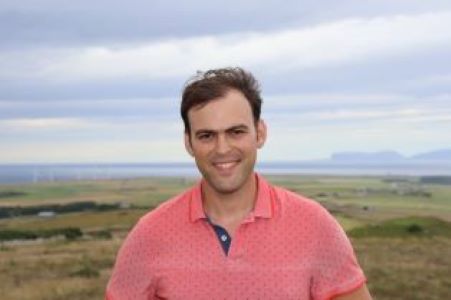
Jari Puttonen is a Professor of Structural Engineering at Aalto University's Department of Civil Engineering, School of Engineering. His research focuses on structural analysis, fire safety, materials science, and nuclear infrastructure safety. He has held roles as Principal Investigator in projects related to nuclear waste repository concrete modeling and aging management of NPP infrastructure. He has advised over 20 academic visitors and served in doctoral thesis committees. Education: Doctoral degree (1987), Licentiate (1984), and Master's degree (1979) in Engineering and Technology from Helsinki University of Technology (now part of Aalto University). Research Interests: Steel and composite materials behavior under extreme conditions Fire resistance of structural systems Long-term performance of concrete in nuclear facilities Non-destructive testing of construction materials Seismic resilience of critical infrastructure Awards: Recipient of the Knight, First Class of the Order of the White Rose of Finland (2020), PUUPalkinto 2010, and Schweighofer Prize 2011 for innovative energy facade research. Grants & Projects: Led 13 research projects including PERCO2_2023 (nuclear waste repository modeling) and CONAGE2022 (NPP concrete aging). Active in EU-funded initiatives and industry collaborations. Labs & Teams: Core member of Aalto's Structural Engineering Research Group, collaborating with Chalmers University and Technical University of Munich on advanced materials testing.
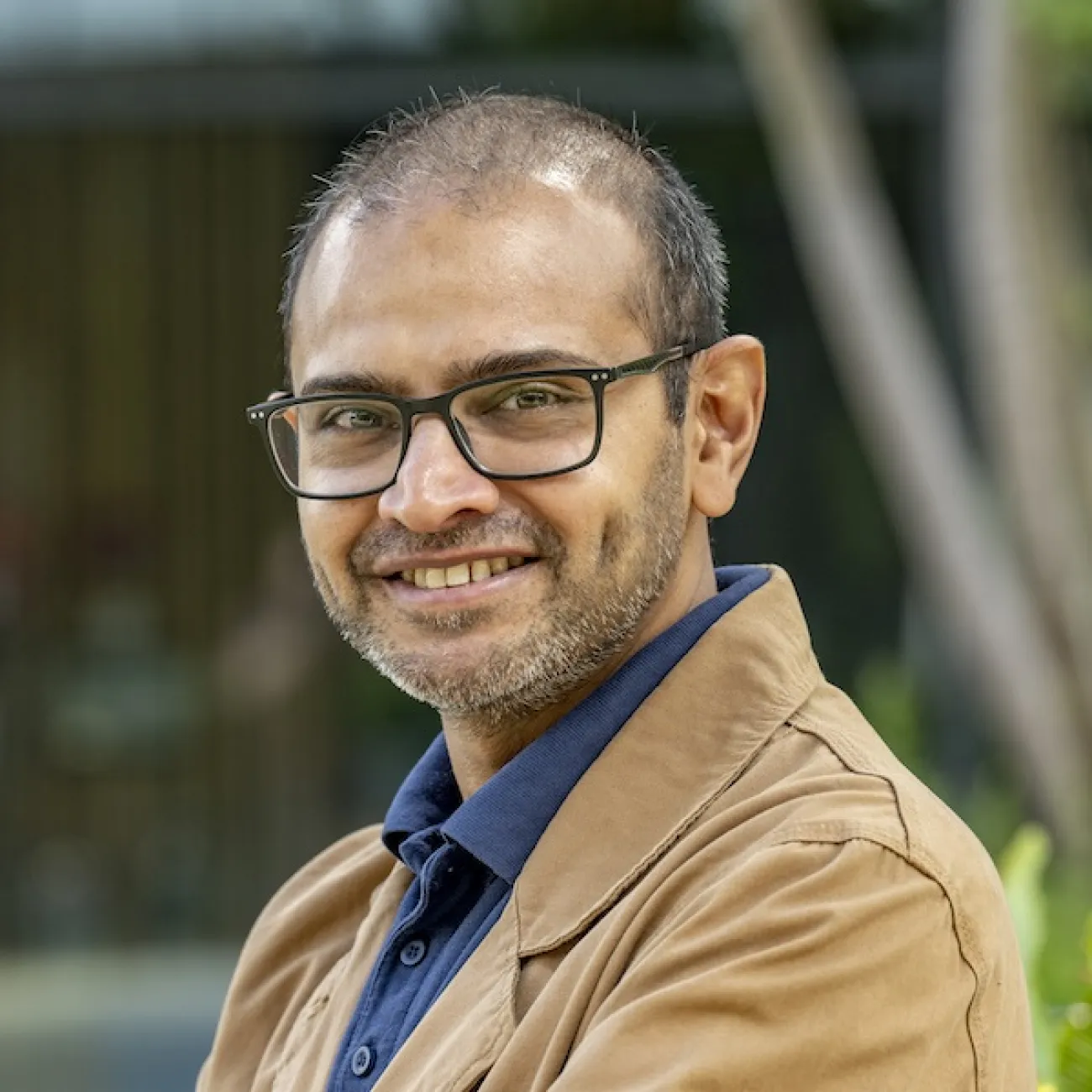
Dr Dongbin Wei is an Associate Professor at the School of Mechanical and Mechatronic Engineering , University of Technology Sydney (UTS), with a career spanning academia and industry. He holds a PhD in Materials Processing Engineering from the University of Science and Technology Beijing (2001) and academic appointments from 2005–2012 at the University of Wollongong (Research Fellow to Lecturer) and 2013–2017 at UTS (Senior Lecturer) before his promotion to Associate Professor in 2018. His research lies at the intersection of Mechanical Engineering , Manufacturing Engineering , and Materials Processing , focusing on: Ultrasonic Additive Manufacturing (UAM) Micro Metal Forming and Size Effects Tribology and Lubrication Numerical Simulations of Material Processing Composite Material Fabrication Key contributions include: Development of the Springback Path–Displacement Adjustment (SP-DA) method for stamping accuracy Advancements in femtosecond laser texturing for silicon wettability control Studies on nanolubrication in hot rolling Optimization of micro-deep drawing parameters He has secured competitive grants from the Australian Research Council (ARC) and industry partners like Weir Minerals Australia Ltd , including projects on: Revolutionizing mineral separation via additive manufacturing Super high-speed grinding technologies Mechanics of micro composite drill fabrication As a lead supervisor, he guided the 2022 thesis 'Creation and Validation of 3D Printable Mineral Separation Spiral' . His work bridges theoretical analysis, computational modeling (FEM/FEA), and practical validation in advanced manufacturing systems.
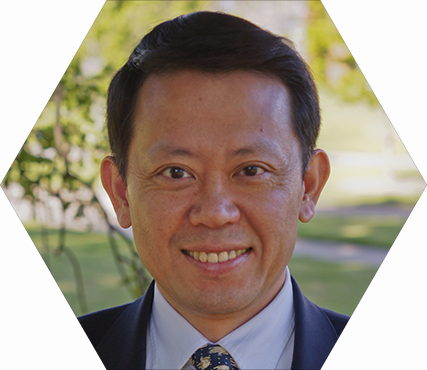
Yvain Bruned is a Professor of Mathematics at Université de Lorraine, Nancy, France, where he leads research in singular stochastic partial differential equations and related fields. He serves as Principal Investigator for the ERC Starting Grant LoRDeT (2023-2028), which focuses on advancing the theory of decorated trees and Hopf algebraic structures for solving singular SPDEs and dispersive PDEs at low regularity. Previously, he was a Lecturer at the University of Edinburgh (2019-2022) and completed postdoctoral work at Imperial College London and University of Warwick under Martin Hairer. His educational background includes: PhD in Mathematics (2012-2015), UPMC (Paris 6), on "Singular KPZ type equations" under Lorenzo Zambotti Master 2 in Probability and Statistics, ENS Cachan / Rennes 1, with honors Master 1 in Mathematics, ENS Cachan, with honors Bachelor in Mathematics and Computer Science, University of Rennes 1, with honors Student at ENS Cachan Brittany extension (2009-2013) Classes Préparatoires in Mathematics and Physics (2007-2009) Bruned's research centers on singular stochastic partial differential equations, with particular focus on Regularity Structures, renormalization theory, and their connections to Hopf algebras. His work bridges theoretical mathematics with applications in quantum field theory, wave turbulence, and numerical analysis. He has developed novel approaches using decorated trees to handle renormalization procedures for singular SPDEs and has extended these methods to dispersive PDEs with random initial data. His research program aims to establish existence and uniqueness results for quasilinear and dispersive SPDEs while developing algebraic tools through deformations of Hopf algebras. His extensive publication record demonstrates consistent contributions to the field of singular SPDEs, with a clear trajectory from foundational work on Regularity Structures to more recent applications in dispersive PDEs and numerical methods. The publications reveal a strong collaborative network with leading researchers in stochastic analysis, mathematical physics, and algebra. His work shows increasing sophistication in handling renormalization procedures through algebraic structures, with recent papers exploring connections between different mathematical frameworks. His major scientific recognition includes: ERC Starting Grant LoRDeT (2023-2028) Bruned actively supervises a large group of researchers, currently advising 4 PhD students and 2 postdoctoral researchers at Université de Lorraine, with several former PhD students having completed their degrees at the University of Edinburgh. His ERC grant has enabled him to organize multiple international workshops in Nancy, fostering collaboration between researchers in singular SPDEs, algebraic structures, and numerical analysis. The grant also supports the development of software platforms for decorated trees and their Hopf algebraic structures. As Principal Investigator of the ERC LoRDeT project, Bruned leads a vibrant research team based at the Elie Cartan Institute of Lorraine, which includes postdocs, PhD students, and visiting researchers. The team regularly organizes specialized workshops on topics including operads, symmetries for quantum field theory, and normal forms for singular dynamics, creating a dynamic research environment that bridges multiple mathematical disciplines.
Francesco Cellarosi is an Associate Professor in the Department of Mathematics and Statistics at Queen's University, within the Faculty of Arts and Science. His research focuses on the intersection of dynamics, probability theory, ergodic theory, number theory, and mathematical physics. He investigates how classical number-theoretic objects exhibit random features, employing dynamical methods such as spectral theory of group actions and analysis of flows on homogeneous spaces. Educational Background: PhD in Mathematics (2011), Princeton University MSc in Mathematics (2007), Princeton University Laurea Magistrale (Master's) in Mathematics (2006), Università degli Studi di Bologna Research Interests: Dr. Cellarosi explores probabilistic phenomena in number theory, including theta sums, quadratic Weyl sums, and k-free integers. His work bridges ergodic theory and quantum mechanics, analyzing autocorrelation functions and spectral properties of physical systems. Key themes include limit theorems, random processes of number-theoretic origin, and applications to statistical mechanics. Professional Profile: He teaches advanced courses such as MATH 892 and MATH/MTH 328. His office is Jeffery Hall 506, and he maintains a Google Scholar profile and personal website. No awards are explicitly listed, but his extensive publication record reflects scholarly contributions. Labs/Teams: While no specific labs are mentioned, his collaborations span pure mathematics and mathematical physics, often involving interdisciplinary dynamics and probability.
Dr. Benjamin de Haas is a vision scientist and faculty member at Justus Liebig University Giessen , Germany, within the Department of Psychology and Sports Science . He currently leads the ERC-funded Indivisual project and co-leads project C9 Factors influencing categorical face processing within the Collaborative Research Centre CRC/TRR 135. He is also a principal investigator in the NeurOscientific Workflow Assistance (NOWA) infrastructure project, dedicated to open, reproducible neuroscience. Research Focus Dr. de Haas pursues two intertwined questions: How do early and late stages of visual processing interact—from the initial registration of slanted edges to the recognition of faces? How and why do our perceptions differ from one person to the next? To answer these questions his group combines psychophysics, high-resolution eye-tracking, functional and quantitative MRI, and computational modelling, with a strong emphasis on face perception, individual differences, and naturalistic viewing conditions. Publications Overview Across more than 20 publications since 2016, Dr. de Haas has advanced understanding of individual differences in face processing, gaze control, and visual salience. His work repeatedly appears in Journal of Vision , Nature Communications , PNAS , and NeuroImage , highlighting a sustained focus on eye-movement behaviour, cortical representations of faces and scenes, and methodological best practices in neuroimaging. Current Supervision & Team Dr. de Haas currently supervises two PhD students: Elaheh Akbarifathkouhi Hilal Nizamoglu Together with Dr. Katharina Dobs (co-project leader) and affiliated post-docs and research technicians, the group forms the Indivisual laboratory at Giessen. Contact & Resources Email: Benjamin.de-Haas@psychol.uni-giessen.de Department of Psychology and Sports Science Otto-Behaghel-Str. 10F, 35394 Gießen, Germany
Pieter C. Roos is an Associate Professor in Water Systems at the University of Twente, specializing in morphodynamics, tidal sand wave formation, and sediment transport. With over 199 research outputs and an h-index of 18, his work spans coastal engineering, estuarine dynamics, and geophysical fluid mechanics. Recipient of multiple teaching awards (2013-2017) Active in nonlinear river dune modeling and GIS-based sand wave analysis Develops nature-based solutions for salt intrusion mitigation Research trends show focus on: Tidal sand wave-induced form roughness quantification Interdisciplinary approaches combining hydrodynamics, sedimentology, and ecology Long-term morphological evolution under anthropogenic and natural influences Recent work (2025) includes joint effects of aquaculture on sediment dynamics and stability analysis on sloping shelves.
Professor Bharath Ganapathisubramani is a faculty member in the Department of Aeronautics and Astronautics at the University of Southampton. He holds the title of Professor of Experimental Fluid Mechanics and leads research on aerodynamic/hydrodynamic phenomena relevant to transportation, energy, and autonomous systems. His work is supported by funding from EPSRC, EU programs, and industry partners like Rolls-Royce and Huawei. He is affiliated with the National Wind Tunnel Facility and serves as an Associate Editor for Experiments in Fluids and Flow . Education: B.Tech in Naval Architecture (IIT Madras, 1999), M.S. and Ph.D. in Aerospace Engineering (University of Minnesota, 2004), followed by postdoctoral research at the University of Texas at Austin. Administrative Roles: Head of Aero/Astro Department (2019–2022), Deputy Head of School for Research (2018–2019). Research focuses on experimental methods to predict/control fluid flows, including boundary layer manipulation, flow control for aerodynamics/aeroacoustics, and data-driven approaches using machine learning. Current projects explore rough wall turbulence, flapping foil energy harvesting, and advanced diagnostics like FoRMS facilities. Awards include the ERC Starting Grant (2012) and Fellowships from the Royal Aeronautical Society/AIAA. He advises ~6–7 PhD/undergraduate projects annually, emphasizing experimental design (wind/water tunnels) and CFD modeling in aerospace/energy sectors. External engagements include invited speaking roles at conferences like the International Symposium on PIV (2013) and advisory roles in international research boards.
Steven Y. Liang , Regents' Professor at the Georgia Institute of Technology 's Woodruff School of Mechanical Engineering, focuses on precision manufacturing , additive manufacturing , and materials-driven process optimization . His research program bridges materials science and computational mechanics to develop predictive models for advanced manufacturing systems. Ph.D., University of California, Berkeley (1987) M.S., Michigan State University (1984) B.S., National Cheng-Kung University, Taiwan (1980) Dr. Liang's work emphasizes physics-based modeling of thermal-mechanical interactions in machining and additive manufacturing, particularly for Ti6Al4V and Inconel 718 alloys. Recent publications highlight tool wear prediction , laser-assisted micro-milling , and residual stress modeling using machine learning and analytical mechanics. His research has been recognized with the ASME Milton C. Shaw Manufacturing Research Medal (2016) , SME Gold Medal (2021) , and Outstanding Lifetime Service Award of NAMRI/SME (2021) , among others. Funded by federal agencies and aerospace/automotive industries, his work provides scientific foundations for process planning and optimization.
Robert Heinemann is a Senior Lecturer in the Department of Mechanical and Aerospace Engineering at the University of Manchester, affiliated with the School of MACE. His work focuses on advanced machining, tool condition monitoring, and sustainable manufacturing processes. He holds a PhD from the University of Manchester Institute of Science and Technology (2004) and has extensive research experience in drilling technology, carbon-based coatings, and environmental benign machining. Education: Diplom Ingenieur (Dipl.-Ing. FH) in Mechanical Engineering, University of Paderborn, Germany (1999) MSc in Electronic Engineering and Engineering Management, University of Paderborn/Bolton University (2001) PhD in Mechanical Engineering, University of Manchester Institute of Science and Technology (2004) Research interests include: Drilling and reaming technology for minimally invasive surgery Development of diamond-like carbon coatings for cutting tools Process and tool optimization for aerospace and biomedical applications Environmental sustainability in manufacturing design His research outputs emphasize adaptive drilling strategies, deep learning applications in process monitoring, and sustainable manufacturing practices aligned with UN SDGs. He leads the Laser Processing Research Centre (LPRC), focusing on laser-based machining innovations. Scientific achievements include a Leverhulme Trust Early Career Fellowship (2010) and contributions to over 40 peer-reviewed articles. He advises 9 postgraduate research students and collaborates on multi-disciplinary projects addressing industrial challenges in composites and precision engineering.
Prof. Suzanne J.M.H. Hulscher is a Full Professor in Water Systems at the University of Twente, specializing in fluvial and coastal morphodynamics. Her research focuses on flood risk management, sediment dynamics, and climate adaptation. She has contributed to over 845 publications and supervised 55 research projects, including Vera van Bergeijk's PhD work on overtopping flows. Key achievements include the Simon Stevin Meester award (2016) and multiple best paper awards. Her work addresses UN Sustainable Development Goals through studies on saltwater intrusion, dike breach modeling, and nature-based solutions. Research highlights include hydraulic model calibration, estuarine sand wave dynamics, and vegetation effects on hydrodynamics. She actively contributes to editorial roles (CivilEng Journal) and policy advisory bodies (Wetenschappelijke Raad). Her interdisciplinary efforts bridge engineering, ecology, and climate science. Research areas: Coastal morphology, river dynamics, environmental hydraulics Key collaborations: 4TU.Centre for Research Data, IAHR, Netherlands Academy of Engineering Grants: Not explicitly listed, but extensive publications imply significant funding Her lab focuses on combining field data with numerical modeling for real-world applications like flood dashboard development and machine learning-based prediction systems. Current projects explore climate change impacts on engineered estuaries and distributive justice in climate policy.
Professor Anna Giacomini is a leading academic in Rock Mechanics and Civil Engineering at the University of Newcastle. She holds a PhD from the University of Parma, Italy, and has been at the University of Newcastle since 2005. Her roles include Director of the Priority Research Centre for Geotechnical Science and Engineering and Deputy President of the Academic Senate (Research). She specializes in rockfall hazard analysis, mine geotechnics, and numerical modeling of geomechanical systems. Her research focuses on improving safety in mining and civil environments, with over $7.5M in funding and 140+ publications. Key areas include rockfall trajectory analysis, energy absorption in safety barriers, and drapery systems. She has led 20 major projects through ACARP and pioneered low-cost photogrammetric monitoring systems for rock slopes. Professor Giacomini is also a co-founder of HunterWiSE, promoting women in STEM. She has received prestigious awards such as the 2022 NSW Premier’s Engineering Prize and the 2019 John Booker Medal. Her administrative roles include membership in the ARC College of Experts and leadership in gender equity initiatives. Her technical contributions span experimental and numerical rock mechanics, including advancements in discrete element modeling (DEM) and stochastic approaches for discontinuity shear strength prediction. She collaborates internationally with institutions like the Colorado School of Mines and the University of Bologna.
Anders Brandt is an Associate Professor (Docent) in Geospatial Information Science and Senior Lecturer in Geomatics at the University of Gävle, Sweden, within the Department of Computer and Geospatial Sciences under the Faculty of Engineering and Sustainable Development. His research focuses on flood risk mapping uncertainties, agent-based modeling of pedestrian movement, and spatial decision-support systems for sustainable urban planning. He holds a PhD in Physical Geography from the University of Copenhagen and has extensive international collaboration experience. Education: PhD in Physical Geography (University of Copenhagen, Denmark), focusing on fluvial geomorphology of Costa Rica’s Reventazón River Master’s Degree in Physical Geography (Uppsala University, Sweden) Research Interests: Brandt’s work addresses uncertainties in flood modeling, spatial decision analysis, and geospatial data applications for urban resilience. His projects include the 'Big Data Methodology for Experiential and Cognitively Sustainable Urban Growth' initiative, emphasizing ecosystem service mapping and spatial MCDA methods. His agent-based modeling research explores emergent urban path systems to optimize pedestrian infrastructure. Publications Trends: Recent work spans flood risk visualization, blue-green infrastructure roles in climate resilience, and urban form complexity metrics. His 2025 papers highlight innovative applications of agent-based modeling and systematic reviews of climate hazard mitigation strategies. Advising & Grants: While no formal advisee list is provided, his collaborative publications suggest involvement in student projects. His grants include international initiatives like Mongolia’s land administration capacity-building programs. Labs/Teams: Co-founded GeoVega , a consulting firm specializing in flood risk mapping and geospatial solutions. Active in educational initiatives like harmonizing GIS curricula in Swedish universities.
Professor Massimiliano Gubinelli is the Wallis Professor of Mathematics at the University of Oxford and a Professorial Fellow at St. Anne's College. He leads the Stochastic Analysis Group within the Mathematical Institute, where his research focuses on stochastic analysis, constructive quantum field theory, and the intersection of probability theory with partial differential equations (PDEs) and renormalization group methods. His work spans statistical mechanics of multiscale systems, analysis of PDEs with random terms, homogenisation theory, mathematical quantum mechanics, path-integral formalisms, and non-commutative probability/geometry. He has pioneered paracontrolled distribution techniques to study singular stochastic PDEs and explored rough paths in ramification and transport equations. Recent publications highlight advancements in the sine-Gordon model via stochastic quantization, nonlinear PDEs with modulated dispersion, and ρ-irregularity in stochastic systems. His research bridges stochastic analysis, quantum field theory, and PDEs, emphasizing pathwise behavior and renormalization. Scientific Awards Junior member of the Institut Universitaire de France (2013–2018) Invited session speaker at the 2018 International Congress of Mathematicians (ICM) in Rio He contributes to scientific software development as a lead developer of TeXmacs , an open-source platform for technical documents, and teaches courses such as C8.1 Stochastic Differential Equations (MT22). No formal student advisement or grant details are provided.
Prof. Dr. Francesca Biagini is a full Professor at the Department of Mathematics, University of Munich (LMU Munich) , leading the Stochastics and Financial Mathematics working group. She serves as Vice President for International Affairs and Diversity at LMU Munich since October 1, 2019, and as President of the Bachelier Finance Society (2022–2023). She is also a Correspondent of the Deutsche Aktuarvereinigung (DAV) and a member of the Executive Board of the Munich Risk and Insurance Center (MRIC) since 2017. Her research focuses on stochastic processes in financial markets , particularly asset price bubbles , default risk modeling , and robust hedging under model uncertainty. Recent work includes deep learning applications to bubble detection and non-linear affine processes for market dynamics. She actively contributes to academic leadership through teaching and publications, including 15+ recent articles on topics like liquidity-induced bubbles, machine learning calibration, and systemic risk transfer equilibrium. Her workgroup collaborates on quantLab initiatives and DAV certificate programs .
Ramón Jerez Mesa is a Professor at the Polytechnic University of Catalonia (UPC), affiliated with the Department of Mechanical Engineering at the Barcelona School of Engineering (EEBE). His research focuses on surface integrity, additive manufacturing, and vibration-assisted machining processes. He leads the TECNOFAB research group, specializing in advanced manufacturing technologies, and collaborates with the DigiFACT network for digital factory advancements. He holds a Doctorate in Mechanical Engineering, Aeronautics, and Fluids from UPC's École Doctorale Mécanique, Energétique, Génie Civil & Procedés. Education: Doctorate in Mechanical Engineering, Aeronautics, and Fluids Superior Industrial Engineering Degree Research Interests: Surface finishing techniques (e.g., ball burnishing) Materials characterization for 3D printing Tribology and fatigue behavior analysis Industrial applications of additive manufacturing Dr. Jerez has published over 128 works, including studies on ultrasonic vibration-assisted machining and 3D printing materials. He has secured competitive grants like the EU's 'Unite! Learning Network' project and led initiatives like the EEBE 3DDay event to promote STEM education. His awards include UPC's environmental ideas contest recognition. He mentors students in advanced manufacturing and collaborates with industry on projects like medical 3D printing prototyping and sustainable materials development. Key Labs/Teams: TECNOFAB, DigiFACT, PROCOMAME (metal forming processes).