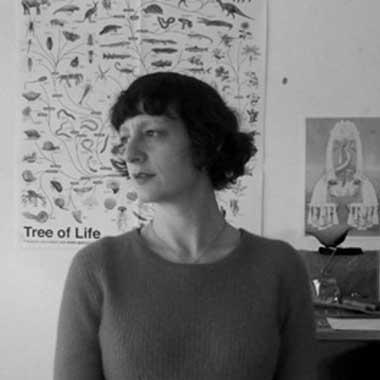
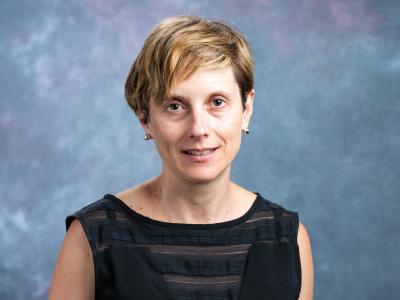
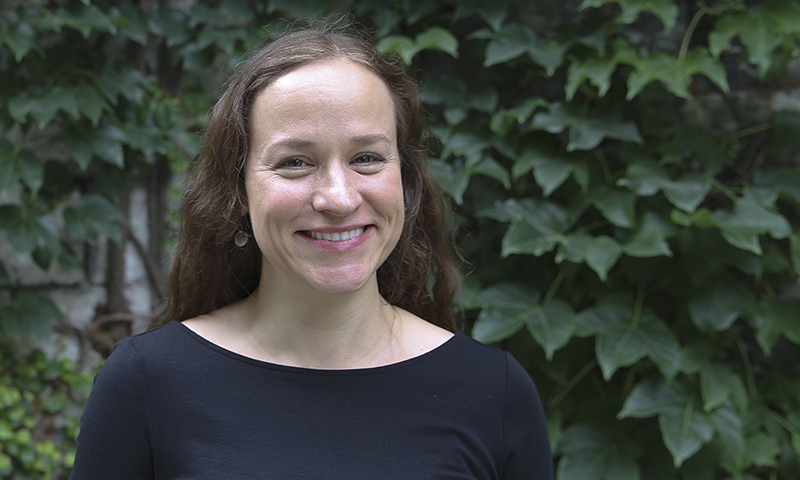
Maya Yablonski is a Postdoctoral Scholar in Pediatrics at Stanford University, affiliated with the Maternal & Child Health Research Institute (MCHRI). Her research focuses on the neural mechanisms of reading development and disorders, particularly in pediatric populations. She employs advanced neuroimaging techniques like functional MRI and diffusion MRI to study how brain regions such as the inferior frontal cortex and visual word form area (VWFA) contribute to reading proficiency, dyslexia, and neuroplasticity. Her work integrates structural and functional neuroimaging to understand how specific brain regions interact during reading tasks. Notable projects include identifying anatomically distinct regions in the inferior frontal cortex modulated by reading skill and demonstrating that dyslexic individuals often exhibit smaller or absent VWFA regions despite interventions. She has also developed rapid online assessments for reading ability, enabling scalable research into literacy mechanisms. Key collaborations involve Jason Yeatman, contributing to studies on developmental reading circuits and functional connectivity patterns in the ventral temporal cortex. Her research addresses both basic science questions (e.g., neural pathways for morphological processing) and translational goals, such as improving diagnostic tools and interventions for reading disorders.
Dr. Grzegorz Iwanicki is a Lecturer at the Department of Socio-Economic Geography, Faculty of Earth Sciences and Spatial Management, Maria Curie-Skłodowska University. He holds a PhD in Earth Sciences (Geography, 2017) from UMCS and a postgraduate pedagogy degree (2015) from Lublin University of Technology. Supervised by dr hab. Anna Dłużewska (UMCS) Teaches: Travel agency operations, Tourism transport, Client service, Tourism research projects Coordinates dark sky park research initiatives Research Focus: Specializes in urban tourism, astrotourism, and light pollution analysis. Key interests include sustainable development, dark sky parks, and emerging tourism forms. His work connects geographical analysis with tourism policy. Scientific Output Trends: 15 most recent publications (2015–2023) address dark sky conservation, urban nightlife dynamics, and stag/city-break tourism. Collaborates with Croatian, Czech, and UK researchers. Uses interdisciplinary methods combining geographical analysis with sociocultural studies. Grants & Projects: Recipient of NCN and MNiSW grants (2019–2021) for dark sky park research. Participated in light pollution studies (2014) and Arctic river sediment transport projects (2013). Conducted fieldwork in Spitsbergen. Conferences: Presented at 10+ events (2013–2021) on dark sky impacts, urban tourism, and light policy. Key talks at International Light Pollution Conference (Łódź, 2021) and MEKON conference (Ostrava, 2015).
Ed Cooper is a composer, writer, and current Postdoctoral Visiting Fellow at the University of Leeds' School of Music within the Faculty of Arts, Humanities and Cultures. He serves as Research Network Administrator for the AHRC-funded Inner Music and Wellbeing Network led by Freya Bailes and Kelly Jakubowski. His interdisciplinary work bridges composition, philosophy, and contemporary music studies. Education: PhD in Music Composition and Aesthetics, University of Leeds (2024), supervised by Scott McLaughlin and Martin Iddon, with commendation of Research Excellence from Leeds Doctoral College MMus in Critical and Experimental Composition BA in Music (International) Cooper's research centers on aural limits found between listening and hearing, language and sense, interiority and exteriority. His work explores liminality in contemporary music, examining how sound intersects with philosophical concepts, particularly drawing on Jean-Luc Nancy's work. He investigates perceptual boundaries in music from the 1980s to present day by composers like Gérard Grisey, Luigi Nono, Morton Feldman, and Pauline Oliveros. His creative practice manifests in diverse forms including solo repertoire, performance-installations, choral works, and electroacoustic pieces, often incorporating heartbeats, field recordings, detuned guitars, poetry, autotune, and fragmented melodies. His publications reveal a strong focus on contemporary music analysis, with particular attention to composers like Beat Furrer (about whom he guest-edited a special issue of Tempo) and Jennifer Walshe. His work spans music philosophy, gender studies, and the relationship between sound and social issues like homelessness. Cooper's monograph Aural Liminalities in New Music is under contract with Cambridge University Press (2026). Recognition: Research Excellence commendation from Leeds Doctoral College As a composer, Cooper has collaborated with prominent ensembles and artists including Apartment House, Marsyas Trio, Octandre Ensemble, Terra Invisus, and individual performers like Jack Adler-McKean, Ryoko Akama, and Kathryn Williams. His work has been presented by major organizations including BBC Radio 3, Darmstadt Summer Courses, and venues across Europe and North America. His album HEKATE'S VOICES was released through Sawyer Spaces in April 2025. Cooper is also active in interdisciplinary projects, having created works involving amplified heartbeats, spatial audio, and performance-installations that explore the physicality of sound.
Thomas Stodulka is Professor of Social and Cultural Anthropology at the University of Münster, where he teaches courses on affect theory, ethnographic methods, and psychological anthropology. His academic career spans over two decades of research with marginalized communities in Indonesia and Southeast Asia, establishing him as a leading figure in affect studies and collaborative ethnographic methods. He maintains an active teaching schedule through 2025 with seminars on writing project proposals, decolonizing classrooms, and affect theory. Stodulka's research interests form an interconnected web focusing on affect and emotion , psychological anthropology , marginalization and stigmatization , and visual and performative anthropology . His work bridges theoretical innovation with applied practice, particularly in understanding how emotions shape social interactions among street communities in Java and how collaborative methods can transform anthropological research. His third major research focus examines school gardens and permaculture networks across Southeast Asia, connecting environmental activism with future-making practices. Analysis of his recent publications reveals a consistent trajectory exploring affective dimensions of fieldwork, decolonial approaches to psychological anthropology, and sensory knowledge systems. His work increasingly engages with pandemic impacts on research methods while maintaining his foundational interest in marginalization and mental health. Notably, his scholarship demonstrates remarkable consistency in focus while expanding methodological innovation across multiple disciplinary boundaries. Stodulka actively mentors a diverse cohort of doctoral students working on topics ranging from mental health in Indonesia to gender-based violence and migration studies. His supervision approach emphasizes collaborative learning through the 'Ethnography Workroom' where early-career scholars share challenges and frustrations. He has edited multiple special journal issues and book collections that have shaped contemporary discourse in psychological anthropology. His teaching methodology is highly innovative, incorporating walking sessions to understand student motivations, 'world café' discussions of core texts, and 7-minute flash presentations to develop students' ability to pitch research ideas concisely. Stodulka's approach draws on intersectional teaching principles that emphasize inclusive and culture-fair practices, attending to students' positionalities and biographies to diversify voices in academic spaces.
Satoru Suzuki is a Professor and Director of Graduate Studies in the Department of Psychology at Northwestern University . He leads research in cognitive and affective neuroscience, focusing on visual perception, attention, and neural dynamics. Research spans psychophysical investigations of global form perception, multistable visual awareness, and computational modeling of cortical mechanisms. Uses paradigms like binocular rivalry, rapid flicker, and stochastic resonance to study perceptual integration and metastability. Contact: satoru@northwestern.edu , Cresap 303, Northwestern University, 847-467-1271.
Dr. Yvette Kisor is a Professor of Literature at Ramapo College of New Jersey's School of Humanities and Global Studies (HGS), specializing in English and Literary Studies. She joined the institution in 2004 and maintains office B-142. Currently scheduled for sabbatical during Fall 2025, her academic foundation includes a B.A. from Rice University and both M.A. and Ph.D. degrees from the University of California, Davis. Her research explores the interplay between medieval traditions and modern reinterpretations, with focus areas including: Old and Middle English literature, particularly Beowulf and Chaucer Tolkien's literary adaptation of medieval forms Gender and queer theory applications to medieval texts History of the English language and computer-assisted textual analysis She teaches diverse courses spanning British medieval literature, Tolkien studies, Arthurian legends, and popular literature. Kisor's publications demonstrate consistent focus on medieval literature and its modern receptions, especially in Tolkien's works. Recent scholarship emphasizes gender/queer readings of fantasy literature while maintaining rigorous analysis of medieval textual traditions. Her 15 most recent works (2007-2023) show progression toward interdisciplinary approaches combining literary criticism with gender studies and cultural theory.
Kate Stanley is an Associate Professor in the Department of English and Writing Studies at Western University . She earned her PhD from Columbia University (2013) , MA from University of British Columbia (2004) , and BA Hons from Queen's University (2002) . Her academic work bridges American literature , pragmatist philosophy , and aesthetic education , with a particular focus on modernist writers and their engagement with philosophical surprise . She is currently leading a SSHRC-funded project on pragmatist pedagogical methods for climate crisis contexts . Research Interests : Pragmatism and pedagogy American modernism Aesthetic experience in humanities education Climate crisis and literary form Interdisciplinary methodologies William James's influence Recent Awards : 2025-26 Graham and Gale Wright Distinguished Scholar SSHRC Insight Grant (2025-30) for "Pragmatist Practices of Aesthetic Education in the Context of Climate Change" SSHRC Insight Development Grant (2018-21) for "Varieties of American Pedagogy"
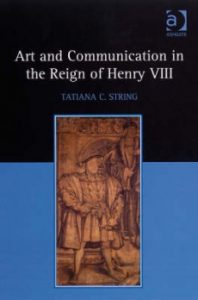
Tatiana C. String is an Associate Professor in the Department of Art History at the University of North Carolina at Chapel Hill . Her expertise lies in Early Modern European art and culture , with a focus on portraiture, gender dynamics, and visual communication during the sixteenth century. Before joining UNC in 2010, Dr. String taught at the University of Bristol. She has curated major exhibitions at the National Portrait Gallery and collaborated with institutions like the North Carolina Museum of Art. Her research currently explores masculinity and the male body in Renaissance art . Scientific Awards : Fellow of the Society of Antiquaries of London Kress Doctoral Fellow at the Warburg Institute Dr. String has supervised doctoral research on topics including family portraiture, architectural representation, and micro-pictorial techniques. Her publications reveal consistent trends in Renaissance gender studies, Tudor visual culture, and artistic communication across academic monographs and book chapters. She has served as historical consultant for the BBC and Historic Royal Palaces, blending academic work with public engagement through exhibitions like On the Nature of Women and History and Mystery at NCMA.
Jean M. Breny serves as Professor and Undergraduate Program Coordinator in the Department of Public Health at Southern Connecticut State University's College of Health and Human Services. She holds dual affiliations as Associate Scientist at Yale University's Center for Interdisciplinary Research on AIDS and Affiliated Researcher at Boston University Center for Antiracist Research, while co-developing SCSU's Center for Health Equity and Eliminating Racism (CHEER). Her research centers on eliminating health disparities through antiracist photovoice methodology and community-based participatory research. Key focus areas include HIV/AIDS prevention, gender dynamics in sexual health, stigma reduction, and structural interventions to address systemic racism. Her work emphasizes community empowerment and translating research into actionable public health practice, particularly through visual storytelling and collaborative frameworks that center marginalized voices. Recent publications (2019-2025) reveal consistent thematic evolution toward antiracist praxis across multiple domains: health pedagogy transformation, digital adaptation of participatory methods during the pandemic, LGBTQ+ health equity, and community-driven policy advocacy. Her scholarship demonstrates methodological innovation in photovoice applications while maintaining focus on power dynamics, intersectionality, and actionable solutions for racial justice in health systems. Dr. Breny's scholarly recognition includes: Fulbright Senior Specialist in Global/Public Health (Izmir, Turkey) Past Presidency of the Society for Public Health Education (SOPHE) She has secured significant grant funding including Connecticut Health Foundation support for implicit bias training systems change ($25,000), CSU projects on campus breastfeeding experiences ($5,000), and formative evaluations of peer education programs for male students ($3,000). Her grant portfolio demonstrates consistent focus on community-academic partnerships addressing health equity through photovoice methodology. As co-developer of SCSU's Center for Health Equity and Eliminating Racism (CHEER), she leads initiatives training students in antiracist research while collaborating with Yale and Boston University centers to advance systemic approaches to health justice.
Bonnie Camplin is a Senior Lecturer in Fine Art at Goldsmiths, University of London, where she has been teaching since prior to 2018. Her academic career includes serving as a guest professor at Städelschule in Frankfurt (2008-2010), program mentor for LUX Associate Artists (2012-2013), and workshop leader for the Hayward Gallery's Wide Open School (2011). She has lectured at numerous prestigious institutions including the Slade School of Art, Central Saint Martins, the Royal Academy School, and Oxford's Ruskin School of Drawing and Fine Art. Camplin received her formal education at St. Martins School of Art, earning a BA (Hons) in Fine Art - Film and Video (2:1) from 1989-1992, followed by a Post Graduate Diploma in Advanced Photography from 1995-1996. Her research interests span a unique synthesis of contemporary art practice with esoteric knowledge systems, alternative physics theories, consciousness studies, and perception theory. Camplin's work explores the nature of reality through what she describes as 'gnostical modality' or 'dimensional gates,' investigating spirals, time consciousness, and the holographic nature of reality. She has spent 25 years researching Celtic ritual, quantum physics, extrasensory perception, experimental theatre, anomalous psychology, military science, and femtotechnology, synthesizing these into a comprehensive theory of perception and ontology. Her practice blends artistic creation with what she terms 'psionic interaction with the rest of nature,' moving beyond traditional gallery-based work toward more direct engagement with consciousness and the natural world. Her publications from 2014-2025 reveal a clear trajectory from traditional art objects toward more conceptual and interactive practices, with increasing focus on consciousness, perception, and alternative knowledge systems. The 2016-2023 period shows a significant shift from gallery-based exhibitions toward more collaborative, discursive formats including panel discussions, interviews, and theoretical explorations of cosmic consciousness, military-industrial critique, and alternative physics. Her most recent works like 'Plasma is the Sister of Water' (2025) and 'Caribic Matter' (2024) indicate continued exploration of ecological and metaphysical themes through interdisciplinary approaches. Paul Hamlyn award for artists (2014) Turner Prize nomination (2015) As an educator, Camplin has mentored numerous students through her teaching positions, with particular emphasis on encouraging students to explore beyond traditional gallery systems. She has actively reworked public materials for her program of study to de-emphasize the gallery system as the ultimate destination for artists, instead promoting more fluid, less aspirational approaches to artistic practice. Her teaching philosophy centers on the belief that 'all humans will realize that they are born creators,' challenging the professionalized notion of 'artist' as a 'special case.' She has conducted unconventional workshops including remote viewing sessions and field trips to factories, reflecting her commitment to experiential learning that connects art with broader knowledge systems. While not affiliated with a traditional laboratory setting, Camplin's creative practice functions as a research facility, particularly evident in her 2015 Turner Prize exhibition 'The Military Industrial Complex,' which took the form of an experimental research space. She has developed innovative conceptual frameworks around mental mapping of natural environments, especially her work with a 200-acre forest in Cumbria as a model for understanding neural networks and thought processes. Living off-grid in a yurt on the edge of an ancient forest, she integrates her physical environment directly into her research methodology, using the forest as both subject and tool for exploring consciousness and perception.
Sabrina Ann Kenny is an Assistant Professor in the Department of Occupational Therapy at Kean University's College of Health Professions and Human Services. She holds a Ph.D. from University at Buffalo and completed postdoctoral training at Oregon State University, following her MSOT degree from Sacred Heart University. Ph.D. in Occupational Therapy (University at Buffalo) Postdoctoral Scholar (Oregon State University) MSOT in Occupational Therapy (Sacred Heart University) Her research focuses on school readiness assessment methodologies, social-emotional learning frameworks, and occupational therapists' conceptualization of assessment tools in early childhood education. She has developed expertise in analyzing assessment validity through meta-analytical techniques and mixed-methods approaches. Her recent publications demonstrate trends in educational psychology, child development metrics, and assessment theory, particularly examining the predictive validity of motor skill tasks for academic performance and evaluating digital assessment conceptions among educators. She has also investigated ergonomic interventions for specialized work environments. Dr. Kenny teaches foundational occupational therapy courses, research methodology, and kinesiology, contributing to professional development through conference presentations and peer-reviewed publications.
Kathryn Cowles is an Associate Professor of English and Creative Writing at Hobart and William Smith Colleges, where she also serves as Chair of the English and Creative Writing Department. She holds a Ph.D. and M.A. in Creative Writing and English from the University of Utah and has been on faculty since 2011. Position: Associate Professor of English and Creative Writing Institution: Hobart and William Smith Colleges Department: English and Creative Writing Leadership: Chair, English and Creative Writing Department Education: Ph.D. and M.A., University of Utah Her research and creative practice focus on poetry, hybrid forms, and experimental writing, with particular interests in contemporary and modernist American poetry, the European avant-garde, gender theory, and ekphrasis. She explores the boundaries between genres, often integrating visual art into her poetic works, sometimes creating fictional artworks to which she then writes poems. Her publications include the award-winning Eleanor, Eleanor, not your real name (Brunsman Poetry Prize, 2008) and Maps and Transcripts of the Ordinary World (Milkweed Editions, 2019). Her recent poetic projects include a series of lake-inspired poems written during daily visits and ekphrastic works based on imagined art installations, such as Notes on the Imminent Art Show . These pieces often appear in journals like Boston Review , The Georgia Review , and Colorado Review , showcasing her engagement with conceptual and material dimensions of poetry. Her scholarly writings, such as her essay on Donald Revell, reflect deep engagement with poetic theory and transubstantiation of language. She is also co-editor of poetry and hybrid forms for Seneca Review , underscoring her role in shaping contemporary experimental literature. Brunsman Poetry Prize (2008) for Eleanor, Eleanor, not your real name Cowles teaches courses in creative writing, advanced poetry, hybrid forms, modernist and contemporary American poetry, and women's studies. She mentors students in innovative writing and collaborates across disciplines, notably with artist Kirin Makker on artist books and multimedia projects. Her teaching philosophy emphasizes experimentation, interdisciplinary collaboration, and close attention to language and form. She has previously taught at Ohio Northern University and the University of Utah.
Jubin Aboutalebi is an Adjunct Professor (Professor II) in Linguistics at the Department of Language and Culture, UiT The Arctic University of Norway, located in Tromso. He specializes in psycholinguistics and cognitive neuroscience with a focus on bilingualism and multilingualism. His research explores the neurocognitive mechanisms of language processing, bilingual brain plasticity, and cognitive reserve across the lifespan. Key interests include: Neural correlates of bilingual language control Neuroplasticity in multilingual individuals Cognitive reserve enhancement through bilingualism Emotional processing in native vs. foreign languages Neuroimaging of language comprehension (fMRI, EEG) Aboutalebi's recent publications (2022-2025) demonstrate a consistent focus on bilingual cognition, with topics spanning neurodevelopmental effects of multilingualism, emotional interference in language processing, and the neuroprotective benefits of bilingualism in aging. His work frequently employs advanced neuroimaging methodologies to investigate brain-behavior relationships. He collaborates extensively with international researchers and contributes to projects through the Psycholinguistics of Language Representation (PoLaR) lab, C-LaBL, and AcqVA-Nor research groups.
Joaquim Félix is an Assistant Professor at the Faculty of Theology, Universidade Católica Portuguesa, where he actively contributes to research, teaching, and supervision. His academic work spans theology, liturgical studies, religious architecture, and poetics of faith, with a strong emphasis on public theology and cultural ecology. His research interests include the theological dimensions of beauty, religious art and architecture, liturgical symbolism, and the interplay between poetics and spirituality. He explores how sacred spaces, rituals, and artistic expressions mediate theological meaning in contemporary contexts. The most recent articles reflect a deep engagement with liturgical theology, sacramental symbolism, Marian devotion, and the role of joy and struggle in worship. His publications often bridge academic theology with pastoral and cultural reflections, emphasizing interdisciplinary and aesthetic approaches. Joaquim Félix is an active researcher in the COLIVING2020 project, which investigates intercultural living and public theology during pandemic times. He supervises multiple students and serves as an examiner in theological dissertations, demonstrating a strong commitment to academic mentorship. His collaborative network includes scholars across Europe and Latin America, focusing on Christianity, public theology, and religious culture. While no formal awards are listed, his sustained scholarly output and leadership in research projects underscore his academic impact.
Dr James Deehan is a researcher and educator at the School of Education, Faculty of Arts and Education, Charles Sturt University (CSU). He has been actively involved in teaching, research, and academic service since 2014, with a focus on primary science, technology, and educational research methods. He earned his PhD from CSU in 2017 and has since contributed significantly to curriculum design, online teaching, and higher education research. Bachelor of Education (Primary), First-Class Honours (2012), Charles Sturt University PhD in Education (2017), Charles Sturt University James Deehan's research centers on primary education, particularly science and technology education, STEM initiatives in non-metropolitan areas, and university teaching practices. His work emphasizes inclusive pedagogy, feedback mechanisms, and the integration of technology in teacher education. He employs mixed-methods approaches, including meta-analysis, qualitative inquiry, and scoping reviews, to advance educational knowledge. His recent publications reflect a strong trend toward equity in STEM education, with a focus on rural, regional, and remote communities. He investigates how simulation technologies can enhance teacher preparation and how feedback practices influence student learning in higher education. His research also explores connectedness in creative arts education and inclusive practices in regional universities. James Deehan has received multiple competitive grants and awards, including the CSU Faculty Excellence Award (2018), an Early Career Researcher Grant (2021), and a major collaborative grant in 2023 for STEM policy development in underserved communities. These reflect his growing leadership in educational research. Charles Sturt University Faculty of Arts and Education Excellence Award (2018) Early Career Researcher Grant (2021) Re-envisioning STEM Education in Regional, Rural and Remote Communities Grant (2023) Research Officer/Research Assistant Support Scheme (2019) James is a registered HDR co-supervisor and welcomes opportunities to mentor Honours, Masters, and PhD students in educational research. He has taught over 40 subject offerings in science education, technology curriculum, and research methods. He also contributes to the academic community through editorial roles, serving as Associate Editor for the Asia-Pacific Journal of Teacher Education and as a reviewer for leading journals such as Studies in Science Education and Innovations in Education and Teaching International . His current research projects include investigations into online and on-campus learning communities in creative arts, a national overview of primary science education in Australian universities, and student feedback perceptions in regional higher education. These projects are supported by formal ethics approvals and collaborative networks across institutions.