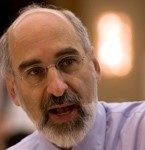
Dragan Huterer is a Professor of Physics and Associate Chair for the Graduate Program at the University of Michigan. His research focuses on cosmology, particularly dark energy and large-scale structure, utilizing data from the Dark Energy Survey (DES) and the Dark Energy Spectroscopic Instrument (DESI) collaborations. He earned his Ph.D. from the University of Chicago (2001) and B.S. from MIT (1996). His work explores the nature of dark energy through cosmological probes like Type Ia supernovae, galaxy clustering, and cosmic microwave background anisotropies. Key contributions include co-leading DESI's first-year cosmological analysis, revealing unprecedented constraints on dark energy and neutrino masses. He also investigates the statistical isotropy of the universe and authored the textbook A Course in Cosmology: From Theory to Practice . Awards include the Friedrich Wilhelm Bessel Research Award (2019) and the Chambliss Astronomical Writing Award (2025). He has advised numerous graduate and undergraduate students, and his funding includes DOE, NSF, and NASA grants. Current projects include the Michigan Cosmology Summer School and leadership in the DESI Collaboration.
Harry Nelson is an Associate Professor at the University of British Columbia (UBC) within the Faculty of Forestry , specifically the Department of Forest Resources Management . His work focuses on natural resource policy, climate change adaptation, and sustainable forest management in Canada. Research Themes : Ecosystems and Climate Change, Sustainable Forest Management, Indigenous Governance Key Interests : Climate change impacts on forestry, ecosystem services, policy development Nelson’s research explores the structural transformation of the forest sector under changing markets and public expectations. He investigates ecosystem services as a business model for Indigenous forest management in BC and analyzes global climate adaptation strategies. Recent publications highlight cross-border forestry challenges, wildfire risks, and socio-economic dynamics in forest enterprises. His 15 most recent articles (2019–2025) span interdisciplinary topics such as climate change adaptation, Indigenous governance, bioeconomy, and global forest policy. These works emphasize the integration of ecological and economic frameworks to address sustainability. Scientific awards and recognitions: No awards explicitly mentioned in the provided texts. Nelson’s email address ( harry.nelson@ubc.ca ) and research areas are publicly available. No student advisement details or grant information is provided in the scraped data.
Professor Daniel Rueckert is a leading academic in Artificial Intelligence and Medical Imaging, holding dual positions at Imperial College London (as Professor of Visual Information Processing) and Technical University of Munich (Alexander von Humboldt Professor for AI in Medicine and Healthcare). He obtained his MSc from Technical University Berlin (1993) and PhD from Imperial College London (1997), followed by postdoctoral work at King’s College London. At Imperial, he led the Department of Computing (2016–2020) and founded the Biomedical Image Analysis group. His research focuses on AI-driven medical image analysis, including algorithms for image reconstruction, registration, and clinical decision support. His research interests span AI applications in healthcare, machine learning for medical imaging, and computational methods for clinical diagnostics. Notable contributions include over 500 publications and 60+ PhD graduates, with key works in federated learning, cardiac motion analysis, and biomarker development. Awards include the Leibniz Prize (2025), Royal Academy of Engineering Fellowship (2015), and multiple ERC grants. He leads the BioMedIA research group and is an editorial board member of Medical Image Analysis . Recent publications highlight advancements in AI-driven medical imaging, such as secure federated learning frameworks and deep learning models for disease prediction. His work bridges academic and industrial sectors through initiatives like IXICO, an Imperial spin-out. Current affiliations include roles at both Imperial and TUM, emphasizing interdisciplinary collaboration in healthcare technology. Advising and grants: Supervised over 60 PhD students and 40 post-docs. Secured grants including ERC Synergy (2013) and ERC Advanced (2020). Active in labs focused on biomedical image computing and AI in healthcare systems. Collaborative efforts include the BioMedIA group and TUM’s AI initiatives. Labs/teams: Leads the Biomedical Image Analysis group at Imperial and the TUM AI in Medicine team. Collaborates extensively on projects like cardiac imaging analysis and federated learning for healthcare.
Prof. Dr. Stefanie Hellweg serves as a Full Professor for Ecological Systems Design at the ETH Zürich , Department of Civil, Environmental and Geomatic Engineering. She is Deputy Head of the Institute of Environmental Engineering and leads groundbreaking research at the intersection of industrial ecology, life cycle assessment, and circular economy systems. PhD in Environmental Engineering (ETH Zürich, 2000) Industrial Engineering Degree (Karlsruhe University, 1996) Her research develops advanced methodologies for environmental impact assessment of products and technologies, focusing on: Life Cycle Assessment (LCA) with correlated uncertainty modeling Circular economy implementation in chemical and energy sectors Industrial symbiosis optimization for heat and nutrient flows Urban wastewater systems redesign for resource recovery Chemical pollution analysis in plastic materials Key publication trends reveal expertise in: Hybrid wastewater treatment systems Energy-efficient greenhouse cultivation Exergy analysis for sustainability metrics Machine learning applications in environmental modeling Policy-relevant industrial ecology studies She actively participates in global sustainability initiatives as: President of the International Society of Industrial Ecology (ISIE) Member of UN Environment's International Resource Panel Editorial board member for leading environmental journals
Malgorzata Blicharska is a Senior Lecturer in Sustainable Development at Uppsala University, affiliated with the Department of Geosciences and the Institute for Research on Conflicts of Interest in Sustainable Social Transformation. Her work spans multiple research domains focused on sustainable natural resource management and policy implementation. Dr. Blicharska's research focuses on sustainable development with expertise in ecosystem services, biodiversity conservation, climate change governance, and the Water-Energy-Food-Ecosystem (WEFE) nexus. She integrates social science perspectives with environmental management, examining policy implementation and stakeholder engagement in conservation initiatives. Her work includes extensive research on urban ponds, recreational fisheries, and nature-based solutions, particularly focusing on ponds and wetlands as key components of sustainable landscape management. Her recent publications reveal a strong emphasis on transdisciplinary approaches to environmental challenges, with growing focus on nature-based solutions, drought vulnerability in forested regions, and governance aspects of implementing the WEFE nexus concept. Her work increasingly addresses justice dimensions in environmental management and stakeholder engagement in policy implementation. LANDPATHS: Swedish Environmental Protection Agency-funded program on multifunctional landscapes (coordinator) PONDERFUL: Horizon 2020 project on pond biodiversity and ecosystem services (WP lead) NEXOGENESIS: Horizon 2020 project on WEFE nexus policy integration (WP lead) Wet-Kit: Swedish Environmental Protection Agency project on wetland optimization PUDDLE-JUMP: Formas-funded project on small artificial waterbodies
Hisham Zerriffi is an Associate Professor at the University of British Columbia (UBC) in the Department of Forest Resources Management, Faculty of Forestry. He also serves as Associate Dean for Equity, Diversity, and Inclusion. His research intersects technology, energy, and the environment, focusing on rural areas in the Global South. Affiliation: BioProducts Institute Affiliation: Clean Energy Research Centre Affiliation: Institute for Resources, Environment and Sustainability His research examines institutional factors in technology diffusion, household energy choices, and welfare impacts of energy use. Current projects include analyzing forest density's ecological impact, clean cooking transitions in India, and decentralized energy systems. Recent publications address just transitions, biomass energy economics, and policy misalignments in Indigenous communities. He has authored works on climate change mitigation via forest carbon credits and rural electrification strategies. Scientific Award: Ivan Head South/North Research Chair As a PhD supervisor, he has guided Natalie Payer on urban energy poverty in the U.S. He collaborates on interdisciplinary grants and leads the Energy Resources, Development and Environment Lab (ERDELab).
Véronique Perdereau is a Full Professor at Sorbonne Université's Institute of Intelligent Systems and Robotics (ISIR) , specializing in robotics and dexterous manipulation. She leads the ASIMOV research team and serves as a principal investigator for multiple European projects, including SOFTMANBOT, INDEX, and CORSMAL, focusing on tactile feedback, multimodal control, and human-robot interaction. Role: Full Professor (2024) Email: veronique.perdereau@sorbonne-universite.fr Office: H13, Campus Pierre et Marie Curie, Paris Research Focus Perdereau's work centers on tactile-driven robotic control systems, human-inspired manipulation strategies, and multimodal fusion for industrial automation. Her research bridges theoretical modeling (e.g., Cosserat mechanics, dual quaternions) with practical applications in manufacturing sectors. Key Themes: Tactile Feedback Systems Dexterous In-Hand Manipulation Human Motion Data Integration Autonomous Grasp Stability Flexible Object Handling Reproducibility in Robotic Experiments Notable Projects She has spearheaded projects like: SOFTMANBOT (2019–2023): Advanced robotic technology for handling soft materials in manufacturing. INDEX (2019–2022): Developing motor action dictionaries for robotic hands. CORSMAL (2019–2022): Multimodal fusion for collaborative object recognition. Scientific Leadership Perdereau has led work packages in 10+ international collaborations with institutions across Europe, including Decathlon, IIT, and Queen Mary University. Her research emphasizes safety, ethics, and industry 4.0 applications.
Yevgeny Seldin is a Professor in the Department of Computer Science at the University of Copenhagen, specializing in Machine Learning Theory . He leads the Machine Learning Section and is a member of the DeLTA Lab . Education : PhD in Computer Science at The Hebrew University of Jerusalem under supervision of Prof. Naftali Tishby His research focuses on Machine Learning , particularly Online Learning and PAC-Bayesian Analysis , with applications to Bandit Algorithms , Reinforcement Learning , and Information Theory . Recent work includes optimal algorithms for delayed feedback, stochastic-adversarial trade-offs, and feedback graphs. Positions Available : PhD and Postdoc positions in Theoretical Machine Learning or energy sector applications Labs & Collaborations : Head of Machine Learning Section Member of DeLTA Lab
Janina Grabs is Professor of Sustainability Research at the University of Basel, where she heads the subject area of Sustainability Research within the Department of Social Sciences at the Faculty of Humanities and Social Sciences. She is responsible for social science teaching in the Master's program in Sustainable Development and leads a research group investigating sustainability governance in global value chains, particularly in tropical agricultural commodities. Her academic background includes a PhD in Political Science from Westfälische Wilhelms-Universität Münster (2018), with research stays at Carleton University in Ottawa and Yale University in New Haven. Prior to her current position since June 1, 2024, she worked as an assistant professor at ESADE Business School in Barcelona (2021-2024) and as a postdoc at ETH Zurich (2019-2021). Professor Grabs' research focuses on transnational sustainability governance in global value chains, examining how states, firms, NGOs and other actors can improve environmental and social sustainability in commodity production. Her interdisciplinary work bridges political economy, regulatory governance, and business in society scholarship to investigate who defines sustainability in the marketplace, what rule-making mechanisms exist, their effectiveness, and potential unintended consequences on smallholders' livelihoods. She places special emphasis on coffee, palm oil, and cocoa sectors, exploring how global production and consumption processes can be steered toward more sustainable directions within market frameworks. Analysis of her recent publications reveals a strong focus on zero-deforestation initiatives, supply chain due diligence legislation (particularly the EU Deforestation Regulation), jurisdictional approaches to sustainable commodity governance, and the evolving role of various actors in sustainability governance. Her work spans multiple commodities but shows particular depth in coffee and palm oil sectors, examining both environmental and social dimensions of sustainability through field research in Colombia, Honduras, Costa Rica and Indonesia. Her significant contributions to the field have been recognized with prestigious awards: 2021 Organizations and the Natural Environment Book Award from the Academy of Management 2022 Lynton Keith Caldwell Award for the best book in the field of science, technology and environmental politics from the American Political Science Association Professor Grabs actively mentors doctoral students and postdoctoral researchers including Alexandra Bögner, Charline Depoorter, Lucia Casalegno, Lesly Nassila, and Philipp Dunker. Her research is supported by multiple third-party funded projects such as EXPECT-AGRI (investigating political economy of expectations in agri-food sustainability transformations), PACSMAC (examining paradoxes of climate-smart coffee production), and research on zero-deforestation commitments in the palm oil sector. She also serves as book review editor for the journal Regulation & Governance and participates in professional associations including the ECPR Standing Group on Regulatory Governance and the International Studies Association. She leads the Sustainability Research Group at the University of Basel, which conducts interdisciplinary research on sustainability governance and transformations toward more sustainable socio-economic systems, with particular focus on agri-food, energy, and mobility sectors while addressing critical questions of justice, equity, and inclusivity in sustainability transitions.
Dr Megan Evans is a Senior Lecturer in Public Sector Management at the School of Business, UNSW Canberra. She is an interdisciplinary social scientist focusing on environmental laws, policies, and tools, particularly in biodiversity and carbon offsetting frameworks. Education: PhD in environmental policy (Australian National University), BSc (Ecology) and BA (Mathematics) from The University of Queensland Her research drives policy impact in carbon offset integrity , biodiversity conservation , and environmental markets , including contributions to the Australian Government’s Biodiversity Offset Policy and the Queensland Land Restoration Fund . Her recent work examines biodiversity credits, carbon-negative technologies, and policy implementation challenges in human-induced regeneration projects. Key awards: Young Tall Poppy Award (2021) UQ Faculty of Science Rising Star Award (2018) ARC CEED scholarships (2014, 2017) She supervises five PhD students and has completed supervision of Dr Toiaba Binta Taher (PhD, with Professor Catherine Althaus). Her grants include an ARC DECRA Fellowship (2020–2023) and funding from the Department of Agriculture, Water and the Environment. Contact: megan.evans@unsw.edu.au
Dominik Roeser is a Professor and Associate Dean of Research Forests & Community Outreach at the University of British Columbia's Faculty of Forestry, Department of Forest Resources Management. With over 21 years of experience in forest research and innovation, he has built a comprehensive forest operations research program since joining UBC in 2018, following his tenure as Senior Director at FPInnovations where he managed multidisciplinary teams focused on improving forest sector competitiveness and wildfire management solutions in Western Canada. Professor Roeser's research interests center on sustainable forest management and the bioeconomy, with specific expertise in forest bioproduction, supply chain design, steep slope harvesting, and biomass operations. His work through the Forest Action Lab applies diverse research methods including productivity studies, field trials, and modeling to address sustainability challenges across different operational environments. His research portfolio spans sustainable forest biomass utilization, harvesting in difficult terrain, innovative forest planning tools, operational productivity, carbon management, and community sustainability impacts from reforestation. His publication record shows a strong focus on practical applications of forest science, with recent work emphasizing wildfire management, remote sensing technologies for precision forestry, biomass energy systems, and the socio-ecological dimensions of forest management. His research increasingly integrates advanced technologies like LiDAR and drone-based systems with traditional forest operations to address contemporary challenges in sustainable forest management. Roeser has received the Recognition Award from the Canadian Forest Service (2017) for his contributions to forest science and innovation. His work demonstrates significant impact on both academic understanding and practical implementation of sustainable forest operations across North America and Europe. As an educator, Professor Roeser teaches several key courses including FOPR 264 Introduction to Forest Operations, FOPR 362 Harvesting systems and forest access, FOPR 464 Operational planning and management, and FRST 452 Coastal field school. He considers educating the next generation of forestry professionals one of his passions, bridging theoretical knowledge with practical industry applications. The Forest Action Lab, led by Professor Roeser, represents a multidisciplinary research hub applying diverse methodologies to address forestry stakeholders' needs across British Columbia, Canada, and globally. The lab's work connects academic research with industry implementation, focusing on practical solutions for sustainable forest utilization in varied operational environments.
Charles J. Vörösmarty is a Professor of Civil Engineering at The City College of New York and Founding Director of the Environmental Sciences Initiative at the CUNY Advanced Science Research Center. He leads the Environmental Crossroads Group, focusing on global water systems, climate interactions, and FEWS (Food-Energy-Water Systems) resilience. His research integrates hydrology, geospatial data, and engineering to address water security, climate change, and infrastructure strategies. Educational background: Ph.D. in Environmental Sciences, though specific institution details are not provided in the text. Professional experience includes over 25 years at the University of New Hampshire, where he founded the Water Systems Analysis Group (1992–2008). Research interests include modeling water cycle dynamics, anthropogenic impacts on water resources, reservoir engineering effects, and sustainable development goals. He emphasizes nature-based solutions and engineered infrastructure for FEWS resilience, with recent work on private-sector water security investments and U.S.-Hungarian regional redevelopment projects. Publications (2023–2024) highlight FEWS frameworks, climate extremes, and interdisciplinary strategies for resource management. He advises governments and academic partners on infrastructure integration. Grants include leadership roles in NASA, NSF, and UN initiatives, including co-chairing the Global Water System Project (2004–2015). Labs/Teams: Environmental Crossroads Group, CUNY ASRC; previously led Water Systems Analysis Group at UNH. Collaborates with UN agencies, private funds (e.g., UBS, PGGM), and national panels (e.g., Arctic Research Commission, NRC).
Dr. Anja Schmidt is a Postdoctoral Researcher at the Helmholtz Centre for Environmental Research - UFZ , specifically within the Department of Conservation Biology & Social-Ecological Systems. She has been affiliated with UFZ since 2020 and previously worked at the German Centre for Integrative Biodiversity Research (iDiv) and UFZ's Community Ecology Department. Her research focuses on ecosystem processes, particularly decomposition dynamics driven by invertebrates in tropical and agricultural systems, climate change impacts, and biodiversity conservation. PhD in Ecology (UFZ, 2012–2015) Master's in Ecology, Environmental Science, Bioinformatics (University of Giessen, 2008–2011) BSc in Biotechnology, Animal Physiology, Organismic Biology (University of Erlangen/Nuremberg, 2005–2008) Her work explores the interplay between decomposition processes , invertebrate biodiversity , and human-driven environmental changes . She investigates how climate change, land use, and pollution affect soil and aquatic ecosystems, with a focus on multitrophic interactions. Her research integrates experimental platforms like the iDiv Ecotron and UFZ's environmental observatories (TERENO, MOSES) to simulate and monitor real-world conditions. Dr. Schmidt's recent publications highlight her contributions to understanding invertebrate decline and its cascading effects on microbiomes, soil biodiversity assessments, and policy frameworks for conservation. She collaborates extensively with networks such as iDiv, STACCATO, and LEGATO, bridging experimental ecology with societal decision-making through projects like Faktencheck Artenvielfalt . She is associated with experimental infrastructures including: iDiv Ecotron Project (2018–2020) Global Change Experimental Facility (GCEF) TERENO (Terrestrial Environmental Observatories) MOSES (Modular Observation Solutions for Earth Systems) MOBICOS (Mobile Stream Laboratories) River Experiment Leipzig
John D. Sterman is the Jay W. Forrester Professor of Management at the MIT Sloan School of Management and a Professor in the MIT Institute for Data, Systems, and Society. He serves as Director of both the MIT System Dynamics Group and the MIT Sustainability Initiative at MIT Sloan. With decades of experience in systems thinking and sustainability, Professor Sterman is a leading expert in understanding complex systems dynamics in business, environmental, and social contexts. Professor Sterman's research focuses on systems dynamics, climate change, sustainability, business management, and energy systems. His work bridges academic theory with practical applications through interactive management flight simulators like the World Climate Simulation, Fishbanks, and the Beer Game. These tools help students, policymakers, and business leaders understand complex systems and develop effective strategies for sustainability challenges. His research emphasizes the interconnectedness of economic, environmental, and social systems, particularly in addressing climate change. Professor Sterman has received significant recognition for his work, including his named professorship as the Jay W. Forrester Professor of Management. His leadership extends to directing the MIT System Dynamics Group, which pioneered systems dynamics methodology at MIT in the 1950s, and the MIT Sustainability Initiative, which applies academic rigor to real-world sustainability problems. He has developed influential educational tools used globally for management education and climate policy understanding. Director, MIT System Dynamics Group Director, MIT Sustainability Initiative at MIT Sloan Professor, MIT Institute for Data, Systems, and Society Professor Sterman's work has been featured in numerous media outlets including The New York Times, Washington Post, Bloomberg, and MIT Sloan publications. He has advised policymakers and business leaders on climate change strategies and sustainability practices, emphasizing the urgent need for action on climate change through existing technologies and systemic approaches.
Dr. Jonathan T. Overpeck is the Samuel A. Graham Dean of the School for Environment and Sustainability (SEAS) at the University of Michigan, where he also holds the William B. Stapp Collegiate Professorship of Environmental Education. He is a Professor of both Climate and Space Sciences and Engineering, and Earth and Environmental Sciences, with a career spanning climate-vegetation interactions, abrupt climate change, monsoon dynamics, drought hydroclimate, sea level rise research, and interdisciplinary climate assessment. Overpeck has published over 230 works cited 60,000+ times, emphasizing public education, university-community partnerships for climate solutions, and environmental justice initiatives. PhD in Geological Sciences, Brown University MSc in Geological Sciences, Brown University BA in Geology (Honors), Hamilton College His research spans climate-biosphere interactions , climate variability and abrupt change , monsoon dynamics , drought and hydroclimate , sea level rise , climate law , and climate adaptation . Overpeck pioneered studies on megadrought terminology, temperature-driven drought intensification, and the aridification of North America. His work with the NOAA Paleoclimate Program and World Data Center for Paleoclimatology established foundational understanding of climate dynamics through annually-laminated sediment analysis in the Cariaco Basin. Overpeck's 2020-2024 research includes climate aridification , hydroclimate scaling mismatches , and temperature-precipitation interactions , with recent focus on Antarctic heatwaves, Mississippi River Basin changes, and corporate climate accountability. His article trends show concentration in climate attribution , hydrological extremes , paleoclimate modeling , and climate policy analysis . Scientific Honors: 2024 U.S. National Academy of Sciences 2015 American Geophysical Union Fellow 2009 AAAS Fellow 2007 Nobel Peace Prize contributor (IPCC) 2005 Guggenheim Fellowship Multiple U.S. Department of Commerce awards Overpeck has led or participated in significant climate adaptation projects , including NSF grants totaling $5.1M+ for Southwest Hydroclimatic Extremes (2017-2020), Amazon Drought Impacts (2014-2018), and Quantifying Drought Risk (2013-2018). He serves on the Colorado River Research Group (2014-present) and advises Climate Communication (2011-present). Current initiatives include Great Lakes University positioning, Michigan's climate resilience planning, and the Audacious Water podcast series examining Mississippi River Basin transformations. Overpeck actively contributes to climate policy discourse , advocating for science-informed decision-making and stakeholder collaboration across government, military, and corporate sectors.