Prof. Alberto S. Cattaneo is a faculty member at the University of Zurich, affiliated with the Department of Mathematics. He holds the rank of Professor and has been actively involved in teaching and research since at least 1998. His research interests span mathematical physics, differential geometry, topology, and interdisciplinary areas like computational biology, genomics, and digital forensics. He has developed courses on topics such as field theory, quantum mechanics, and differential manifolds, reflecting his expertise in theoretical and applied mathematics. Prof. Cattaneo has contributed to numerous publications, including works on distributed genomic analysis, sensor pattern noise (PNU) in forensics, and algorithm optimization for big data frameworks like Hadoop and Spark. His work bridges pure mathematics with applications in bioinformatics and cybersecurity. Though no awards are explicitly mentioned, his extensive publication record and teaching roles highlight his academic standing. He maintains an active presence through courses and research collaborations, with no indication of part-time roles or retirement.
Dr. Roberto Puch-Solis is a Principal Investigator at the Leverhulme Research Centre for Forensic Science , affiliated with the University of Dundee . His work focuses on probabilistic decision support systems, forensic statistics, and computational methods in forensic analysis. Expertise: Forensic genetics, DNA profiling, gas chromatography-mass spectrometry (GCMS), convolutional neural networks (CNNs), and Y-STR mutation modeling. Key Contributions: Development of open-access software ( MUCalc ), segmentation datasets for firearm analysis, and ground truth datasets for drug profiling. Collaborations: Active in interdisciplinary networks, with partnerships in digital forensics, analytical chemistry, and machine learning. Research Trends: Recent work integrates deep learning for forensic image analysis (e.g., shoeprint matching, cartridge case segmentation) and statistical frameworks for DNA evidence interpretation. Applications span firearms identification, drug quantification, and crime scene reconstruction. Activities: Delivered invited talks on probabilistic systems, served as an external examiner, and participated in neural network training workshops.
Professor Stacey Conchie is a leading academic in the Department of Psychology at Lancaster University , specializing in socio-psychological factors influencing behavior in high-risk environments. As Director of the ESRC National Centre for Research and Evidence on Security Threats (CREST) and co-lead of the EPSRC SPRITE+ Network Plus , she bridges academic research with practical applications in security, privacy, and trust. Her work is funded by government agencies, private industry, and charities.
Jesse Hartloff, PhD, is an Associate Professor of Teaching in the Department of Computer Science and Engineering at the University at Buffalo. He holds appointments in the School of Engineering and Applied Sciences. His research focuses on computer science education, with prior work in cybersecurity and biometric authentication systems. Hartloff earned his PhD in Computer Science from the University at Buffalo (2015), alongside dual BS degrees in Computer Science and Business Administration and a BA in Mathematics (all from UB, 2011). His research explores innovative teaching methodologies in computer science, emphasizing student engagement and practical skill development. He has also contributed to biometric security research, including privacy-preserving authentication protocols and secure fingerprint recognition systems. Notably, he received the UB Teaching Innovation Award in 2023 for his educational contributions. Hartloff's publications span both pedagogical advancements and technical cybersecurity solutions. He maintains an active research profile through his Google Scholar page and personal academic website. No formal lab affiliations or grant details are explicitly stated in the provided materials.
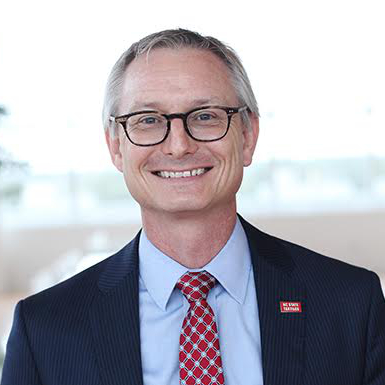
David Hinks is Dean of the Wilson College of Textiles and Professor of Textile Chemistry at North Carolina State University. He leads over 145 employees, mentors hundreds of students, and manages over $10 million in research contracts with industry and government agencies. He holds the Cone Mills Distinguished Professorship and is a member of both the Academy of Outstanding Teachers and the Academy of Outstanding Faculty Engaged in Extension. His educational background includes: B.Sc. (Honors) in Colour Chemistry, University of Leeds, 1989 Ph.D. in Cationic Reactive Dyes for Cellulosic Fibres, University of Leeds, 1993 Dr. Hinks' research focuses on color science, forensic textile analysis, sustainable dyeing processes, and environmentally responsible dyestuff design . His work bridges chemistry, engineering, and forensics, with applications in both industry and criminal justice. He has developed novel methods for neutral pH cotton bleaching, forensic fiber databases, and ultra-deep dyeing technologies. His recent publications reflect a strong trend toward forensic applications of textile chemistry, sustainability in dyeing processes, and advanced analytical techniques such as LC-TOF MS and microfluidics. These works demonstrate interdisciplinary collaboration across chemistry, engineering, and computational science. His scientific honors include: Member, NC State Academy of Outstanding Teachers Member, NC State Academy of Outstanding Faculty Engaged in Extension Dr. Hinks has mentored dozens of graduate and undergraduate students, many of whom have won top awards including the AATCC Student Paper Competition, NSF Graduate Fellowships, and the Barry Goldwater Scholarship. Five of his former students are now professors internationally. He has secured substantial research funding from NSF, USAID, National Institute of Justice, Cotton, Inc., and Hanesbrands, supporting projects in forensic science education, sustainable textiles, and crime scene reconstruction. He leads or contributes to key research initiatives including: Comparative Finished Fiber Analytical Database (COMFFAD) IC-CRIME: Interdisciplinary Cyber-Enabled Crime Reconstruction Development of non-genotoxic dyes and sustainable textile processing
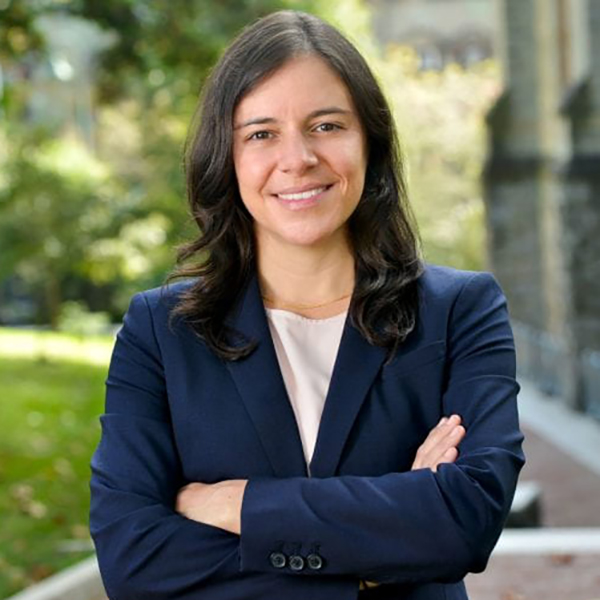
Maria Cuellar is an Assistant Professor at the University of Pennsylvania , holding joint appointments in the Department of Criminology, Department of Statistics and Data Science, and Department of Biostatistics, Epidemiology, and Informatics. Her work bridges statistics and law , focusing on causal inference and the statistical foundations of forensic science. Education: PhD in Statistics and Public Policy (2017), MPhil in Public Policy (2016), MS in Statistics (2015) from Carnegie Mellon University; BA in Physics (2009) from Reed College. Her research in causal inference addresses legal questions like determining causation in toxic torts and shaken baby syndrome cases. She developed a robust influence-function-based method for estimating probabilities of causation without strict parametric assumptions. In forensic science, she investigates issues like toolmark analysis validity , contextual bias , and facial recognition accuracy in law enforcement. Dr. Cuellar’s publications highlight her focus on improving statistical rigor in forensic disciplines. Recent work includes probabilistic models for contextual bias, critiques of black-box firearm comparison studies, and algorithmic approaches to toolmark identification. Her interdisciplinary methodology combines machine learning and nonparametric estimation techniques. She serves as an expert witness and consultant in legal trials, translating complex statistical concepts for lay audiences. Affiliated with organizations like CSAFE , Quattrone Center , and Penn Center for Causal Inference , she advocates for evidence-based practices in criminal justice. Her personal life includes being a mother of twins and being married to philosopher Justin Humphreys.
Matthias O. Franz is a Professor in the Department of Computer Science at Hochschule Konstanz University of Applied Sciences, Konstanz, Germany, since 2007. His academic work spans theoretical and applied research in Machine Learning, Computer Vision, and Computational Neuroscience. Research Interests His research focuses on interdisciplinary applications of computational methods, including: Machine Learning algorithms for image analysis and signal processing Computer Vision techniques in object recognition and 3D reconstruction Computational Neuroscience studies on echolocation and visual saliency Quantum Physics applications in space missions Notable contributions include kernel methods for image modeling, steganalysis frameworks, and biomimetic navigation systems inspired by biological processes. Publication Trends Dr. Franz’s 15 most recent publications (2022–2011) demonstrate a trajectory from foundational work in nonlinear system modeling to applications in space technology, computer vision, and acoustic signal analysis. Key trends include: 2022: Image novelty detection using mean-shift algorithms for sensor technology 2015: Dual-species atom interferometry for space-based physics and hybrid image registration 2014: Geometric primitive classification in point clouds and multi-camera stereo matching 2013–2011: Steganalysis, Gaussian process calibration, and computational models of echolocation 2008–2007: Early work on Wiener series and visual saliency prediction
Elkan Akyürek is a Professor of Cognitive Neuroscience and Chair of the Department of Experimental Psychology at the University of Groningen. He leads a research group focused on understanding the neural mechanisms underlying working memory, temporal integration, and attention. His work employs EEG, behavioral experiments, and computational modeling to explore how sensory information is integrated, maintained, and processed in the brain. He has been instrumental in advancing methodologies like impulse perturbation and concealed information testing, with applications in cognitive neuroscience and forensic psychology. Research interests center on cognitive neuroscience, particularly in the domains of working memory maintenance, temporal processing, and the neural correlates of conscious awareness. He investigates how attention modulates perception and memory, with a focus on adaptive mechanisms in visual and auditory systems. His lab also explores the effects of nutritional interventions (e.g., cocoa flavanols) on cognitive performance. Recent research highlights include studies on concealed information detection using EEG and eye-tracking, adaptive forgetting dynamics in working memory, and the neural basis of temporal integration. His work has been published in high-impact journals like *Nature Neuroscience*, *Psychological Review*, and *NeuroImage*, and he has secured grants from the Dutch Science Foundation (NWO) and the Police and Science program. Dr. Akyürek has supervised numerous PhD students and postdocs, fostering collaborations with institutions globally. He is actively involved in science outreach, including educational initiatives to demystify cognitive neuroscience for secondary students. His lab’s interdisciplinary approach integrates psychology, neuroscience, and computational modeling to address fundamental questions about human cognition.
Associate Professor Wong Kok Sheik is the Deputy Head (Research) at the School of Information Technology, Monash University Malaysia. He holds a Doctor of Engineering from Shinshu University (Japan) and advanced degrees in Computer Science and Mathematics from Utah State University (USA). His research focuses on multimedia signal processing, cybersecurity, and digital health, with contributions to data hiding, encryption, and smart grid security. He leads a EU-funded WAge project on post-pandemic workplace health interventions. Education: PhD in Engineering, Shinshu University, Japan (2009) Masters in Computer Science & Mathematics, Utah State University, USA (2005-2004) Bachelor of Science, Utah State University, USA (2002) Professional Roles: Associate Editor, IEEE Signal Processing Letters Member, IEEE Signal Processing Society’s IFS Technical Committee Board Member, APSIPA Multimedia Security and Forensics (MSF) Committee His research interests span multimedia forensics, encrypted domain processing, and cybersecurity frameworks. Notable projects include recovery of missing coefficients in compression standards and HDR imaging enhancement. Recent work integrates digital health, addressing workplace mental/physical health in post-pandemic environments. Publications reflect expertise in watermarking, encryption, and biometric security. Key contributions include encryption-resistant data embedding and secure smart grid analytics. Awards include IEEE CES Service Awards (2015, 2016) and Best Paper recognitions. He supervises over 20 PhD/MSc students, focusing on topics like biometric recognition, data hiding, and anomaly detection. Grants include a €2M EU Horizon 2020 project (IDENTITY) and a RM146k smart grid initiative. His teaching emphasizes foundational IT research methods and theoretical computer science.
Almabrok Essa is an Assistant Professor in the Department of Mathematics, Computer Science, and Data Science at John Carroll University. His research focuses on advanced machine learning techniques applied to medical imaging, computer vision, and signal processing. He holds a faculty position at Dolan Science Center E207 and can be reached via email at aessa@jcu.edu. His work bridges theoretical computer science with practical applications in healthcare, environmental monitoring, and security systems. Research interests include deep learning architectures for medical diagnostics (e.g., chest X-ray analysis and skin lesion segmentation), steganography for secure image transmission, and remote sensing technologies for geospatial analysis. He has pioneered methods like Multibit LSB matching for data hiding and developed frameworks like COVID-CLNet for pandemic response. His contributions span over 20 peer-reviewed articles from 2015 to 2025, showcasing innovations in face recognition algorithms, brain signal analysis, and environmental pattern recognition. Notable applied projects include real-time heart/respiration monitoring systems and automated machinery threat detection for infrastructure protection. His research demonstrates strong interdisciplinary potential, combining computational methods with domains like biomedical engineering, environmental science, and cybersecurity.
Dr Wencheng Yang is a Senior Lecturer in Computing at the School of Mathematics, Physics and Computing , University of Southern Queensland. He holds a PhD in Computing from UNSW, an MSc from Korea, and a BMgmt from Wuhan University of Technology. His research spans multiple domains including machine learning security , biometric authentication , privacy-preserving systems , and IoT applications . Education : BMgmt (Wuhan University of Technology), MSc (Korea), PhD (UNSW) Yang’s work emphasizes privacy and security in AI systems, particularly in biometric authentication (e.g., fingerprint, face, ECG) and IoT security. His recent publications focus on model inversion attacks , homomorphic encryption , and federated learning for healthcare applications. Key trends include secure face-swapping , Alzheimer’s disease prediction , and anti-forensic detection . His research has been cited 3378 times, with 1458 total downloads and 31 monthly views. While no explicit scientific awards are listed, his interdisciplinary work bridges computer science , healthcare , and cryptography . Current projects include privacy-preserving frameworks for implantable medical devices and military health systems .
David Doermann is a Professor and Department Chair of the Department of Computer Science and Engineering at the University at Buffalo's School of Engineering and Applied Sciences. His research focuses on document image understanding, video analysis, pattern recognition, computer vision, media forensics, and artificial intelligence. Education: PhD in Computer Science, University of Maryland, College Park (1993) MS in Computer Science, University of Maryland, College Park (1989) BS in Computer Science/Mathematics, Bloomsburg University of PA (1986) Research Interests: Dr. Doermann's work spans computer vision, document analysis, and AI, with recent emphasis on histopathology image synthesis, motion prediction, and personalized vision-language models. His publications highlight advancements in neural architecture search, federated learning, and binary neural networks. Scientific Awards: Award for Excellence from the Under Secretary of Defense (2017) DARPA Results Matter Award (2016) IEEE Fellow (2014) IAPR Fellow (2014) Royal Academy of Engineering Fellowship (2011-2013) Honorary Doctorate from University of Oulu (2002) Future Work: He is exploring the integration of generative AI in software development and advancing techniques for human-centric video-depth generation.
Benjamin Aziz is an Associate Professor at Buckinghamshire New University, where he leads courses in Software Engineering, Cyber Resilience, and Computer Science. Previously, he was a Senior Lecturer at the University of Portsmouth's School of Computing (2010-2023) and worked as a Senior Research Scientist at Rutherford Appleton Laboratory. He holds a Ph.D. in Computer Science from Dublin City University (2003) and an M.Sc. in Networks and Distributed Systems from Trinity College Dublin (1999). His research focuses on formal methods, cybersecurity, IoT systems, and data-driven approaches to systems security. Key affiliations include Fellow of Advance HE and memberships with IEEE, IET, BCS, and ERCIM. He has contributed to EU projects like GridTrust and Consequence, and serves as Associate Editor for Wiley's Security and Communication Networks journal. His work spans over 160 peer-reviewed publications and two books, emphasizing formal analysis of protocols, steganography detection, and incident response metrics. Research interests include: Cybersecurity frameworks for IoT and cloud systems Formal specification and verification of security protocols Data-driven approaches for anomaly detection Attribute-based access control models Recent articles explore requirements engineering matrices, healthcare monitoring logic models, and Korean police dataset analysis. He has advised on cyber resilience strategies and contributed to tools like Trusty for social network data sharing.
Chris Rasmussen serves as an Adjunct Professor in the Investigations Department within the Henry C. Lee College of Criminal Justice and Forensic Sciences at the University of New Haven. He brings extensive frontline experience from international financial crime prevention to his academic role. Professor Rasmussen's professional expertise spans critical areas in financial integrity: Anti-Money Laundering systems implementation Match-Fixing Detection in global sports markets Sports Betting Risk Management protocols Financial Crime Investigation techniques Odds Compilation and manipulation analysis His practical experience directly informs his academic work, with frequent media consultations on high-profile sports integrity cases across soccer, tennis, and handball competitions. Professor Rasmussen regularly provides expert commentary to major international publications including The New York Times, The Athletic, and European media outlets regarding suspicious betting patterns and match-fixing investigations.
Jeffrey Paone is a Teaching Professor and Undergraduate Director in the Department of Computer Science at the Colorado School of Mines. He holds a Ph.D. and B.S. in Computer Science from the University of Notre Dame, an M.Eng. from the University of Colorado, and has experience in industry software development for state municipalities. His post-doctoral work at Oak Ridge National Laboratory focused on computer vision and biometrics. His research interests include computer vision, biometrics (face/iris recognition), camera calibration, computer graphics, augmented reality, and Android development. His work bridges theoretical research with practical applications in areas like naturalistic driving studies and forensic science. Paone’s publications span topics from camera calibration in automotive environments to differentiating identical twins via facial recognition. While no scientific awards are listed, his contributions to biometric systems and computer vision have been consistently applied in real-world scenarios. He advises no listed students but has contributed to undergraduate education through his director role. No grants or labs are explicitly mentioned, though his research collaborations likely involve interdisciplinary teams.