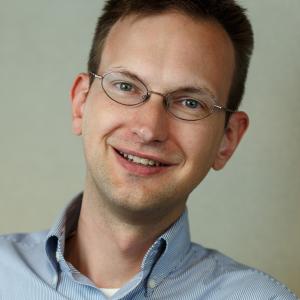
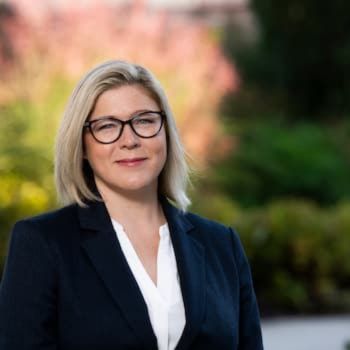
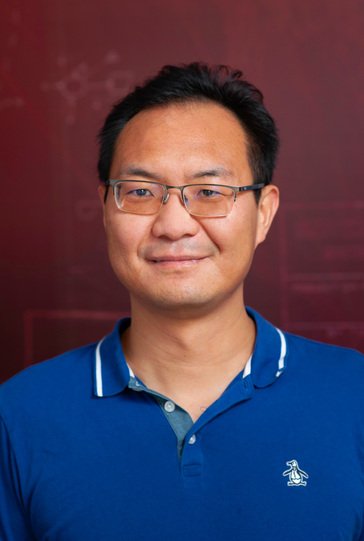
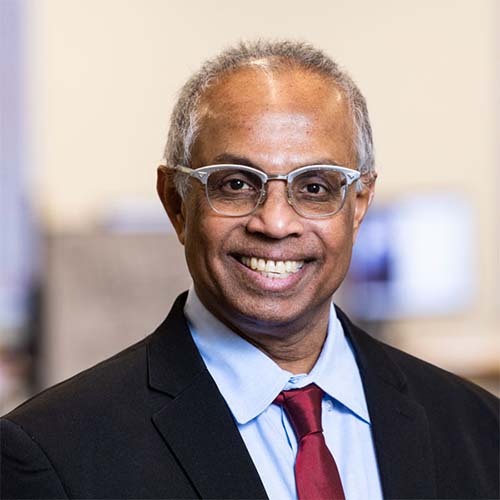
Simon Stern is a Professor at the University of Toronto Faculty of Law, where he has taught since 2007, holding progressively senior positions from Assistant to full Professor since 2019. He serves as Chair in Innovation Law (2020-present) and Director of the Center for Innovation Law & Policy (2012-present). His research bridges legal doctrines with literary/intellectual history, focusing on legal fictions, the "reasonable man" standard, and intersections between law and sexuality. Ph.D. in English (UC Berkeley), J.D. (Yale), B.A. in English (Yale, magna cum laude) Editor-in-Chief of Yale Journal of Law & Humanities during law school Research interests include: law and literature, legal history, sexuality and the law, criminal law, and intellectual property. His work examines narrative techniques in legal reasoning, evidentiary standards, and historical evolution of legal concepts through literary frameworks. Recent publications analyze legal fictions, reasonable person standard evolution, and 19th-century tort law narratives. He co-edits Oxford University Press' Law and Literature series and the New Rambler Review. 2012 SLS Partnership Award for student advocacy 2023-2026 President of academic organization Serves on SSHRC Insight Grants Committee and multiple editorial boards
David Mimno is an Associate Professor and Chair of the Department of Information Science at Cornell University. He holds a PhD from the University of Massachusetts Amherst and previously worked at the Perseus Project and Princeton University. His research focuses on computational social science, natural language processing, and historical text analysis. Mimno is known for developing the MALLET toolkit, a widely used Java-based platform for machine learning in text processing. He teaches courses such as INFO 4940: How LLMs Work and INFO 6150/CS 6788: Advanced Topic Modeling. His work has been supported by the Sloan Foundation, NEH, and NSF. Mimno advises PhD students in Information Science and Computer Science, emphasizing interdisciplinary research at the intersection of computing and humanities/social sciences. He also contributes to initiatives like AI for Humanists, making large language models accessible for text-as-data research. Bachelor’s degree: Not explicitly stated in text PhD: University of Massachusetts Amherst Research Interests: Mimno explores large language models, topic modeling, cross-lingual semantics, and ethical AI applications in humanities and legal domains. His recent work addresses data curation practices for language models, LLM memorization of poetry, and generative AI’s societal impacts. He co-authored reports on generative AI in academic research and education. Grants & Collaborations: His projects include the Text as Data (TADA) conference and collaborations on generative AI law workshops. Mimno’s MALLET toolkit supports document classification, clustering, and topic modeling, with applications in cultural analytics and computational historiography.
Dr. Shanna Williams is an Assistant Professor in the Department of Educational and Counselling Psychology at McGill University's Faculty of Education. She holds clinical licensure in Quebec and Ontario, with expertise in forensic child psychology and maltreatment-related research. Her work focuses on child lie-telling, commercial sexual exploitation, moral development, and eyewitness testimony. Prior roles include a postdoctoral fellowship at the University of Southern California’s Gould School of Law and forensic law enforcement collaboration in Los Angeles. Education: Ph.D., McGill University: School/Applied Child Psychology M.A., McGill University: Educational Psychology B.A., McGill University: Psychology Postdoctoral Visiting Fellow, University of Southern California Research Interests: Lie-Telling Dynamics: Investigating how cognitive and social factors influence children's deception across contexts. Child Maltreatment: Developing trauma-informed forensic interview protocols and assessing maltreatment impacts on memory and disclosure. Legal Systems: Enhancing child-witness support through improved questioning techniques and cross-cultural legal practices. Publications Trends: Her recent work emphasizes pandemic-era challenges in child protection, digital exploitation, and legal system adaptations. Over 20 peer-reviewed articles address topics like forensic interviewing methods, maltreatment detection, and interdisciplinary collaboration. Awards: SSHRC Postdoctoral Fellowship (2016-2017) SSHRC Joseph-Armand Bombardier CGS Doctoral Fellowship (2010-2013) Advising & Grants: Supervises graduate students in child psychology and maltreatment studies. Research funded by SSHRC, NSF, and NIH grants focusing on forensic child development. Labs/Teams: Child Interviewing & Witness Lab Canadian Child Interviewing Research Team
Carolina Matos is a Professor at City, University of London's School of Communication & Creativity, specializing in media studies, gender politics, and communications research with a particular focus on Brazil and Latin America. Her scholarly work bridges academic inquiry with practical advocacy, especially in the areas of sexual and reproductive health rights (SRHR), feminist media studies, and democratic processes in the Global South. Dr. Matos's research interests span several interconnected domains: Gender politics and feminist media studies, with particular attention to Brazilian and Latin American contexts Sexual and reproductive health and rights (SRHR) communications and advocacy across global contexts Media democratization and public service broadcasting in Brazil and Latin America Digital activism and online networks for social change and gender equality Health communication in the age of misinformation, particularly regarding women's health in politically polarized environments Journalism's role in democratic processes and political transitions Her recent publications (2021-2025) demonstrate a clear trajectory toward examining how marginalized communities, particularly women in the Global South, navigate complex media landscapes around reproductive health. Her methodology frequently employs focus group research designed to empower participants while gathering insights on media consumption and interpretation. She has conducted significant research in partnership with NGOs like Reprolatina in Brazil and Open Arms in Florida, examining how disadvantaged communities process health communications in contexts of political polarization and misinformation. Dr. Matos has made substantial theoretical contributions through both foundational and recent works: Her book "Globalization, gender politics and the media" (2016) examines changing media representations in relation to feminist movements globally Her seminal work "Journalism and Political Democracy in Brazil" (2009) analyzes media's critical role in Brazil's democratization process following the military dictatorship She has conducted extensive comparative research on how NGOs communicate about SRHR across the Global North and South Her research on "New Brazilian feminism and online networks" (2017) documents the emergence of digital feminist activism in Brazil Her methodological approach consistently combines rigorous academic frameworks with practical applications, often utilizing mixed methods including content analysis, discourse analysis, and participatory research techniques designed to center marginalized voices while advancing scholarly understanding of media, gender, and power dynamics.
Jennifer Lavoie is an Associate Professor at Wilfrid Laurier University's Faculty of Human and Social Sciences, affiliated with the Department of Psychology and Criminology. She specializes in mental health crisis response, policing strategies, de-escalation techniques, and scenario-based training. Wilfrid Laurier University: Faculty of Human and Social Sciences, Psychology and Criminology Departments Research Interests : Her work focuses on integrating virtual reality and scenario-based training to improve police de-escalation skills. She examines violence risk assessment , correctional systems , and housing first programs for homeless individuals with mental illness. Recent studies address big data governance , cyberstalking victimization , and community-driven policing approaches . Publication Trends : Her research spans mental health policy , police training efficacy , and technological integration in crisis management . She explores virtual reality applications and community co-designed interventions , alongside longitudinal studies on stress and coping mechanisms in correctional and psychiatric settings. Scientific Awards : No scientific awards listed in available data. Advising : Actively supervises students in psychology and criminology, with unlisted advisees. Her work bridges academic research and practical policing applications .
Emily D. Gottfried, PhD, is an Associate Professor at the Medical University of South Carolina (MUSC) in the Department of Psychiatry and Behavioral Sciences, College of Medicine. She serves as Director of the MUSC Sexual Behaviors Clinic and Lab (SBCL) and CPSPD Student Education & Research, conducting forensic evaluations, physiological sexual arousal assessments, and mentoring students. She is licensed in South Carolina and Georgia, and a National Register Health Service Psychologist. Bachelor’s in Psychology, San Diego State University Master’s in Psychology, Teachers College, Columbia University PhD in Clinical Psychology, Florida State University Her research focuses on sex offender risk assessment , malingering detection (PPG/VPP technology), female offender psychology , and forensic evaluation validity . Recent work includes dimensional personality models and QAnon-related threat analysis . She has published extensively on psychopathy , penile/vaginal plethysmography , and mental health court outcomes . Notable publication trends include Forensic validity of symptom detection tools Psychopathy in female offenders Technology's role in sexual behavior assessment Telehealth adaptation during pandemics MMPI-2-RF applications in correctional settings Psychological factors in civil commitment She leads ongoing funded studies on female sexual arousal and police officer behavioral outcomes , operating at the intersection of forensic science and clinical psychology .
Haagen Klaus is a Professor in the Department of Anthropology at George Mason University, specializing in bioarchaeology, paleopathology, and forensic anthropology. Since 2013, he has directed research on the north coast of Peru, focusing on human skeletal biology, mortuary practices, and the impacts of colonialism and environmental stressors on prehistoric and historic societies. Ph.D., Department of Anthropology, The Ohio State University (2008) M.A., Department of Anthropology, Southern Illinois University (2003) B.A., Department of Anthropology, State University of New York at Plattsburgh (2000) Klaus's research explores biocultural transformations in complex societies, with emphasis on health, violence, identity, and ethnogenesis. His Lambayeque Valley Biohistory Project (founded 2003) investigates skeletal markers of disease, stress, and violence across 10,000 years of Andean history. Methodologies include isotopic chemistry, ancient DNA analysis, and dental phenetics. Recent work (2025) examines oral microbiomes during Spanish colonization, syndemic processes in colonial dynamics, and stress indicators in pre- and postcontact populations. Projects integrate osteoimmunology, ecoimmunology, and life history trade-offs to understand physiological and cultural resilience. Current graduate students under his supervision include Rae-Ocean Blake, Kimberly Hargrave, Megan Jankowski, Emily Schopmeyer, and Celeste Schultheiss. He leads international collaborations involving Peruvian, Japanese, Canadian, and American researchers through the Lambayeque Valley Biohistory Project.
Professor Philip Birch is a distinguished academic in Criminology at the University of Technology Sydney (UTS), Faculty of Design & Society, School of International Studies & Education. With over 15 years of academic experience across British, American, and Australian university systems, he has established himself as a leading expert in policing, community safety, and criminal justice. His extensive practical background in criminology, including roles as a Specialist Crime Team Manager, Community Safety Research Manager, and Through Care Worker in UK correctional facilities, informs his applied research approach. Professor Birch's educational background includes a BSocSci. (Hons) in Social Policy (Crime & Justice) from the University of Manchester, multiple postgraduate qualifications from the Open University (including an MSc. in Social & Criminological Research Methods), a Post Graduate Certificate in Higher Education Practice from the University of Huddersfield, and a PhD in Criminology from the University of New South Wales. He also holds a Fellowship with the Higher Education Academy. His research centers on six key areas: Police & Policing; Community Safety & Crime Prevention; Prisons, Probation & Parole Policy & Practice; Assessment, Treatment & Management of Offenders; Gender & sexuality inclusive Domestic and Family Violence; and Sex Work, Sex Workers and Procurement. His work emphasizes the practical application of criminological research to real-world justice issues, with strong industry engagement across law enforcement and correctional services. Recent publications reveal a clear trend toward police mental health, aging in policing, hate crime identification, trauma-informed policing approaches, and digital community safety initiatives. His research employs diverse methodologies including qualitative case studies, Delphi methods, rapid evidence assessments, and comparative analyses across multiple jurisdictions. Teaching award (2019) from Australian College of Educators for outstanding contribution to education Literati Award (2019) for published work Fellowship of the Higher Education Academy Professor Birch has supervised numerous Honours, Masters by Coursework, Masters by Research and PhD students in Criminology, Criminal Justice and Policing, with several completions to date. He has secured over $1.3 million in research funding, including an ARC Linkage grant, and has acted as an external assessor for domestic and international funding bodies. His research projects address critical issues in criminology and policing, often with direct policy implications. He established the Crime & Security Science (CaSS) Research Group at UTS in 2022, a cross-faculty initiative connecting academia with industry to advance evidence-based criminology, criminal justice, policing, and community safety research. This group serves as a hub for collaborative projects addressing contemporary security challenges through translational research.
Adrian Linacre is a Professor and Chair in Forensic DNA Technology at Flinders University, within the College of Science and Engineering, Department of Biological Sciences. He is a leading figure in forensic science, with a focus on DNA analysis, wildlife forensics, and crime scene investigation. BSc in Biological Sciences (Hons), University of Edinburgh, 1984 DPhil in Molecular Genetics, University of Sussex, 1988 His research centers on getting more from less at crime scenes , particularly through developing highly sensitive DNA typing methods and studying the transfer and persistence of biological materials. He also pioneers the use of non-human DNA in forensic investigations, notably in wildlife forensic science , aiding in species identification and combating illegal wildlife trade. His recent publications reflect a strong trend in trace DNA analysis , body fluid identification , and DNA transfer dynamics , with applications in drug cases, sexual assault investigations, and environmental DNA degradation. His work increasingly integrates molecular techniques with real-world forensic challenges. Notable scientific awards include: Medal of the Order of Australia (OAM), 2020 Inspirational Scientist of the Year, Royal Society of Edinburgh, 2005 Fellow of the Royal Society for the Encouragement of Arts and Commerce (FRSA) Finalist, South Australian Science Excellence and Innovation Awards (2023, 2024) He has successfully supervised several students, including Piyamas Kanokwongnuwut and Alicia Haines, many of whom have won international recognition. He has secured significant research funding and contributed to national and international forensic policy, including a key review for the UK Home Office on low-template DNA. His professional leadership includes presidencies of the ANZFSS and ISFG, and vice presidency of the IAFS. Linacre is actively involved in editorial roles, serving as Associate Editor for Forensic Science International: Genetics and on the boards of Forensic Science, Medicine and Pathology and the Australian Journal of Forensic Science . He is a sought-after expert witness and media commentator in forensic science.
Ju Sun is an Assistant Professor at the University of Minnesota, Twin Cities, in the Computer Science & Engineering department. He leads the Group of Learning, Optimization, Vision, Healthcare, and X (GLOVEX) and plays key roles in the UMN Data Science Initiative (DSI), Program for Clinical AI, and AI-CLIMATE institute. Research Focus : Theoretical foundations of machine learning, computer vision, and numerical optimization with applications in healthcare, inverse problems, and medical imaging. Grants : $4.5M+ in funding including NSF ACED Program and NIH R01 grants for constrained deep learning and imbalanced classification. Teaching & Leadership : Featured in UMN seminars and AI institutes, with affiliations across Electrical and Computer Engineering, Health Informatics, and Medical School. Recent Publications address inverse problems, federated learning, imbalanced classification, and phase retrieval using deep generative priors and diffusion models. His group website details these innovations. Scientific Awards : McKnight Land-Grant Professorship (2025–2027) 2021 AAAI New Faculty Highlights Advising : Mentored three PhD graduates now at Meta, Amazon, and UCLA. Collaborations span medicine, materials science, and biomedical engineering, integrating physics-informed constraints into AI.
Hal S. Stern is Provost and Executive Vice Chancellor at the University of California, Irvine (UCI), and a Distinguished Professor in the Department of Statistics. He previously served as founding Chair of the Department of Statistics, Dean of the Donald Bren School of Information and Computer Sciences, and Vice Provost for Academic Planning at UCI. Earlier, he held faculty positions at Iowa State University and Harvard University. B.S. in Mathematics, Massachusetts Institute of Technology M.S. and Ph.D. in Statistics, Stanford University Stern is a leading expert in Bayesian statistical methods, with significant collaborative work in life sciences and social sciences. His current research focuses on forensic statistics (e.g., footwear impression and bloodstain pattern analysis), psychiatric studies of early-life adversity's impact on brain development, and statistical applications in sports analytics. He co-directs the NIST-funded Center for Statistics and Applications in Forensic Evidence and leads the Conte Center's NIMH-funded research on mental health vulnerabilities. His notable contributions include the third edition of Bayesian Data Analysis , which expanded computational methods and Bayesian nonparametric modeling, featuring STAN software. Stern has secured major grants from NIST and NIMH for interdisciplinary projects. Fellow, American Association for the Advancement of Science Fellow, American Statistical Association Fellow, Institute for Mathematical Statistics He has mentored graduate programs as Vice Provost for Graduate Education and contributed to UCI's academic strategy as Vice Provost for Academic Planning. Stern's leadership extends to directing centers that bridge statistics with forensic science and mental health research.
Karen Panetta is a Professor at Tufts University School of Engineering with appointments in Electrical and Computer Engineering, Computer Science, Mechanical Engineering, and Academic Services. She currently serves as Dean of Graduate Education for the School of Engineering and holds the title of Distinguished Professor. Ph.D. in Electrical Engineering, Northeastern University M.S. in Electrical Engineering, Northeastern University B.S. in Computer Engineering, Boston University Dr. Panetta's research focuses on developing efficient algorithms for simulation, modeling, and signal and image processing for security and biomedical applications. Her work brings together artificial intelligence, machine learning, and visual sensing systems to create solutions for robot vision and biomedical imaging. She develops algorithms inspired by the human visual system to enable machines to 'see' like humans, with applications in homeland security, biomedicine, facial recognition, and search and rescue operations. Her research has significant humanitarian applications, addressing global challenges facing women and children. Dr. Panetta has received numerous prestigious awards including induction into the National Academy of Engineering (2023), the Presidential Award for Science and Engineering Education and Mentoring (2011), and the IEEE Award for Distinguished Ethical Practices (2013). She is a fellow of multiple prestigious academies including the National Academy of Inventors, European Academy of Sciences and the Arts, and IEEE. Member, National Academy of Engineering (2023) Presidential Award for Science and Engineering Education and Mentoring (2011) IEEE Award for Distinguished Ethical Practices (2013) Fellow, National Academy of Inventors Fellow, European Academy of Sciences and the Arts Fellow, Asia-Pacific Artificial Intelligence Association As an educator and mentor, Dr. Panetta founded the nationally acclaimed Nerd Girls program to promote engineering to young students, particularly women. She previously served as worldwide director for IEEE Women in Engineering and editor-in-chief of the IEEE Women in Engineering magazine. Her approach to graduate education emphasizes the importance of building strong collaborative relationships between faculty and students, with a focus on proactive communication and documentation of research progress. Dr. Panetta's humanitarian research applies engineering solutions to global challenges, including developing technology to help doctors find cancerous tumors, security screeners find concealed weapons, and law enforcement agencies find criminals and missing children. Her work demonstrates a commitment to 'Doing The Right Thing' by addressing issues affecting populations with limited resources or 'voice' in society.
Serra Hakyemez is Assistant Professor of Anthropology and Global Studies at the University of Minnesota, currently on leave until January 2023. Her research examines the intersection of counterinsurgency warfare and judicial violence in Turkey's Kurdish regions, focusing on prison solidarity networks and decolonial resistance. She employs interdisciplinary methods combining political anthropology, legal studies, and ethnography to analyze state violence and resistance movements. Education includes: Ph.D. in Cultural Anthropology, Johns Hopkins University, 2016 M.A. in Sociology and Anthropology, Central European University, 2008 M.Sc. in Social Policy, London School of Economics, 2006 B.A. in Political Science & Business Administration, Bogazici University, 2005 Her research investigates the juridical and visual economies of counterinsurgent violence, with ongoing work on prison-based solidarity and insurgent justice frameworks in Kurdistan. Publications explore themes including feminist resistance in conflict zones, archival politics of state violence, and the anthropology of dissent. Awards include: ACLS Fellowship Wenner-Gren-Hunt Fellowship
Raquel E. Aldana is the Martin Luther King Jr. Professor of Law at UC Davis School of Law, where she rejoined as a full-time faculty member in 2020 after serving as Associate Vice Chancellor for Academic Diversity (2017–2020). She holds a J.D. from Harvard Law School and B.A. degrees in English and Spanish from Arizona State University (summa cum laude). Her academic career includes prior roles at the McGeorge School of Law and the University of Nevada, Las Vegas, as well as a Fulbright Scholarship in Guatemala (2006–2007). Her research focuses on transitional justice, criminal justice reform, sustainable development in Latin America, and immigrant rights. Aldana has authored or edited five books and over thirty law review articles, earning recognition through grants such as the UC Davis Academic Senate Interdisciplinary Grant for the project Building Bridges: Narrowing the Legal-Scientific Divide in Immigration Forensic Assessments . She teaches courses on immigration law, asylum, comparative forced displacement, and critical race theory. Aldana leads the Aoki Center for Critical Race and Nation Studies, co-directing its mission to advance interdisciplinary scholarship on race, ethnicity, and law. She co-founded the Critical Race Theory Book Series with UC Press, aiming to globalize and diversify critical race discourse. Her awards include the ABA’s Margaret Brent Women Lawyers of Achievement Award and the UC Davis Chancellor’s Achievement Award for Diversity. Her service includes roles on the American Law Institute, American Bar Foundation, and the Council on Foreign Relations. She chairs the ABA’s Latin America and Caribbean Council and co-chaired the UC Davis taskforce to achieve Hispanic Serving Institution (HSI) status, realized in 2024. Her work integrates legal education, policy reform, and grassroots advocacy to address systemic inequities in migration, criminal justice, and global development.
Duminda Wijesekera serves as Professor in the Department of Cyber Security Engineering and Department of Computer Science at George Mason University, where he was inaugural chairman of the Cyber Security Engineering Department until December 2022. He concurrently held the position of visiting research scientist at the National Institute of Standards and Technology (NIST) from 2007-2022 and maintains status as a fellow at the Potomac Institute of Policy Studies. He leads the Mason Innovation Laboratory at Mason Square, driving translational research in cyber-physical security. His educational foundation includes: PhD in Computer Science, University of Minnesota (1997) PhD in Mathematical Logic, Cornell University (1990) BSc in Mathematics, University of Colombo Professor Wijesekera's research centers on cyber-physical system security , with pioneering work in Intelligent Transportation Systems spanning trains, aircraft, and connected vehicles. His digital forensics innovations establish frameworks for evidence-based scenario reconstruction and error management, while his formal methods research provides mathematical guarantees for safety-critical systems. Current projects address Next G-based edge services, digital twin vulnerability detection, and healthcare security architectures, consistently bridging theoretical rigor with real-world infrastructure protection. Analysis of his 2022-2025 publications reveals intense focus on autonomous vehicle security (38% of recent output), including traffic signal control optimization, ramming attack countermeasures, and CARLA-based scenario validation. Digital forensics using AI (20%) and secure manufacturing/edge computing (27%) constitute other major thrusts, demonstrating how formal verification and machine learning converge to solve complex cyber-physical security challenges across transportation, energy, and healthcare domains. His scientific recognition includes: CCI Impact Award (2022) for groundbreaking cyber-physical security contributions Fellowship at the Potomac Institute of Policy Studies for cybersecurity policy leadership Professor Wijesekera has secured substantial research funding through: NIST grants for health record security frameworks (2014-2015) US Department of Transportation projects on wireless frequency mapping for high-speed rail (2013-2014) Cyber Security Research Alliance funding for trust architectures in cyber-physical systems (2014) Commonwealth Cyber Initiative awards for autonomous vehicle security and energy-efficient manufacturing His industry partnerships with Honeywell and NIST ensure practical impact of theoretical research. The Mason Innovation Laboratory under his direction serves as an interdisciplinary hub for cyber-physical security, integrating researchers from computer science, electrical engineering, and policy studies to develop deployable solutions for transportation networks, power grids, and critical infrastructure protection.