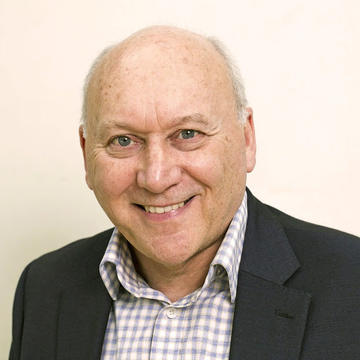
Tom Brown is a Professor of Nucleic Acid Chemistry at the University of Oxford's Department of Chemistry. His research focuses on designing and synthesizing chemically modified DNA and RNA for diagnostic and therapeutic applications, including CRISPR systems for genome editing. He has developed Scorpion primers and HyBeacons, used in personalized medicine and rapid forensic analysis. His work has led to the creation of biotech companies like ATDBio and Primer Design, contributing significantly to COVID-19 diagnostics. Research Interests: Brown's group explores nucleic acid modifications, DNA structure-function relationships, and the application of click chemistry for gene assembly. They use techniques like X-ray crystallography and NMR to study DNA interactions with repair enzymes and mutagenic lesions. Key Contributions: Contributions include rapid mutation identification methods, oligonucleotide delivery platforms, and spherical nucleic acids for stem cell isolation. His work bridges chemistry and medicine, with applications in diagnostics, therapeutics, and biotechnology. Awards: While no specific awards are listed, his impactful research has driven industry collaboration and innovation in nucleic acid-based technologies. Labs/Teams: Leads the Nucleic Acids Research Group and the Brown Group, focusing on interdisciplinary projects in chemistry, biology, and medicine.
Christopher McCarthy is an Associate Professor in the Department of Computing Technologies within the School of Science, Computing and Emerging Technologies at Swinburne University of Technology. His research focuses on computer vision algorithms applied to robotics, intelligent transport systems, and assistive technologies, particularly for people with low vision. He serves as Stream Leader in Swinburne’s Innovative Planet Research Institute, leading the Intelligent Transport stream, and is a Chief Investigator in the Australian Cobotics Centre funded by the ARC. He has held research roles at CSIRO Data61, the Bionics Institute, and the University of Melbourne, contributing to bionic eye technology under the Bionic Vision Australia consortium. His research interests include: Computer Vision and AI for real-time systems Robot perception and navigation Assistive technologies for low-vision and blind users Intelligent transport systems and video analytics Human-machine interaction and cyber-human teams His recent publications reflect strong trends in deep learning, continual learning, and real-world deployment of vision systems in transport and healthcare. He has led numerous field trials and evaluations to assess system performance in real-world contexts. His work is highly interdisciplinary, combining computer science with engineering, medicine, and urban planning. Christopher McCarthy has received multiple awards, including: FSET Research Collaboration Award Excellence in Industry Engagement Special Commendation – VC Research Impact Finalist – National Disability Award in Technology Best Paper Award (IEEE) Excellence in Teaching (University of Melbourne) He has supervised over 20 HDR students in areas including robotics, AI, assistive tech, and transport analytics. He has led major research grants from ARC, Defence, SmartCrete CRC, iMOVE, and city councils. He also served as Academic Director for Work-Integrated Learning (2016–2023) and coordinated professional placements. His teaching includes core computer science units such as Computer Systems and Object-Oriented Programming. He maintains ongoing affiliations with: Bionics Institute (Honorary Member) Bionic Vision Australia (Affiliate) Data61 (Honorary Member) Royal Children's Hospital, Melbourne International Task Force for Vision Restoration Outcomes (Chair)
Mathieu Olivier is an Assistant Professor in Isotopic Geochemistry at the University of Burgundy's Department of Earth and Environmental Sciences, affiliated with the SEDS (Sédimentologie, Environnement et Dynamique Sédimentaire) research team within the CNRS UMR 6282 Biogéosciences. His work focuses on carbon and nitrogen biogeochemical cycles' role in global change, particularly greenhouse gas emissions and organic matter dynamics. He employs stable isotope techniques (e.g., δ¹³C, δ¹⁵N) and advanced analytical methods like Py-GC-MS. Research interests include soil respiration, nitrogen cycling, and microbial contributions to carbon sequestration. His studies integrate field measurements (e.g., soil moisture imaging) with lab-based analyses, addressing agricultural and environmental challenges such as vineyard water management and microplastic contamination. Teaching spans 250+ hours/year across undergraduate and postgraduate levels at Université de Bourgogne. He supervises postgraduate labwork and has published over 40 peer-reviewed articles since 2006, focusing on isotopic methods, soil-plant interactions, and climate change impacts.
Tuğba ÜNSAL SAPAN is an Assistant Professor in the Department of Forensic Sciences at Üsküdar University since 2017. She serves as Deputy Head of the Undergraduate Department of Forensic Sciences and Head of the Forensic Genetics Graduate Program at the Institute of Addiction and Forensic Sciences. Her academic roles span teaching and research in forensic biology, genetics, and crime scene investigations. Education: BSc in Biology (Eskişehir Osmangazi University, 2008), MSc in Forensic Sciences/Forensic Genetics (Istanbul University, 2011), PhD in Forensic Sciences/Forensic Genetics (Istanbul University, 2016) Her research focuses on forensic genetics, DNA analysis techniques, and crime scene evidence recovery. Key areas include rapid DNA technology, FTIR spectroscopy applications, and DNA database development. She has supervised numerous graduate theses on topics like DNA recovery from washed stains, lubricant characterization, and epigenetic age determination. Recent publications highlight her work on acid-exposed tooth DNA recovery (2025), rapid DNA kinship analysis (2023), X-InDel multiplex systems (2023), and FTIR-based body fluid identification (2024). These studies reflect interdisciplinary efforts in forensic biology, analytical chemistry, and bioinformatics. Administrative roles include Deputy Head of Department (2020–present), Erasmus Coordinator (2019–present), and membership in various academic boards. She has directed TÜBİTAK-funded projects on forensic DNA recovery and identification methods.
Laura PIGANI is an Associate Professor at the Department of Chemical and Geological Sciences , University of Modena and Reggio Emilia. With expertise in analytical chemistry, she specializes in electrochemical sensor development for applications in clinical, environmental, and food analysis. Research Interests : Electrochemical sensors, biosensors, chemometrics, and optoelectronic materials. Teaching : Courses in Analytical Chemistry and Chemical Sensors at both undergraduate and postgraduate levels. Her work focuses on portable systems for Cannabis sativa analysis, metal bioaccumulation studies in plants, and multisensor data fusion for agricultural monitoring. Recent publications highlight innovations in THC/CBD discrimination , caffeic acid detection , and deep eutectic solvent applications . Collaborations with forensic and environmental institutions underscore her translational research impact. Techniques : Cyclic voltammetry, screen-printed electrodes, sonogel-carbon devices, and multivariate statistical analysis. Applications : Drug testing, grape ripening monitoring, battery recycling, and sustainable pigment extraction. Dr. PIGANI's laboratory employs advanced materials like carbon black , PEDOT , and metal nanoparticles to develop cost-effective, reusable sensors. Her interdisciplinary approach bridges material science, electrochemistry, and analytical methodology.
Amy Rattenbury serves as a Senior Lecturer in Forensic Science at Wrexham University, where she has been a key faculty member since 2016. Her professional journey includes prior roles as a programme leader at the University Centre Southend and extensive experience in UKAS accredited laboratories, specializing in the search, recovery, and identification of human remains. Her academic qualifications include: BSc (Hons) in Forensic Biology from Staffordshire University MSc in Forensic Archaeology and Crime Scene Investigation from Bradford University Ramifying from her expertise in forensic anthropology and osteology, Amy's research centers on forensic taphonomy , examining decomposition processes and their impact on identification methods. She pioneers the integration of drone technology in forensic search operations and maintains active interests in cold case analysis, concealed evidence, and forensic pathology. Her work bridges theoretical research with practical applications in disaster response and crime scene investigation through collaborations with national forensic teams. Analysis of her scholarly output from 2017 to 2024 demonstrates a consistent trajectory in decomposition science, with particular attention to Total Body Score reliability, UK environmental challenges, and microbial indicators in saline contexts. Her publications also highlight efforts to establish collaborative frameworks and open-access databases for advancing forensic taphonomy research and education. No scientific awards or major prizes are documented in the provided materials. In her academic role, Amy Rattenbury mentors students in forensic science disciplines and contributes to professional development through her consultancy with Kenyon International Emergency Services. Her field deployments as a Database Manager during mass fatality incidents complement her teaching, while her collaborations with national forensic search dog units and human remains recovery programs underscore the practical relevance of her expertise. She actively engages with the forensic community through memberships in the Chartered Society of Forensic Sciences, the British Association of Forensic Anthropologists, and the British Association of Biological Anthropology and Osteoarchaeology. Amy is currently pursuing Certified Forensic Anthropologist status (FA-III) with the Royal Anthropological Institute, further solidifying her commitment to professional excellence.
Lucio Calcagnile is a Full Professor of Applied Physics (SSD FIS/07 - Physics applied to Cultural Heritage, the Environment, Biology and Medicine) at the University of Salento, Department of Mathematics and Physics "Ennio De Giorgi" since 2005. He serves as Deputy Director of the Department and is a member of the scientific committee of ISUFI-Istituto Superiore Universitario di Formazione Interdisciplinare. His work is centered at CEDAD (Center for Applied Physics, Data and Diagnostics), which he founded and directs. Dr. Calcagnile received his PhD in Physics from the University of Bari in 1991. He began his academic career at the University of Lecce as a researcher in 1992 and was promoted to Associate Professor in 1999 before becoming a Full Professor in 2005. His educational background established the foundation for his interdisciplinary research approach spanning physics, archaeology, and environmental science. Professor Calcagnile's research is predominantly experimental and interdisciplinary, focusing on ion-matter interactions, development of new materials using ion beams, non-destructive nuclear techniques for dating and analysis of materials, isotope mass spectrometry, and accelerator mass spectrometry. His work has significant applications in archaeology, geology, environmental sciences, and forensic sciences. He has established CEDAD as the first Italian center for radiocarbon dating research and services, creating a hub for interdisciplinary scientific investigation. His recent publications demonstrate a strong focus on applied physics in cultural heritage preservation, environmental monitoring, and advanced materials. Calcagnile's work frequently involves accelerator mass spectrometry for radiocarbon dating across diverse applications from archaeological artifacts to environmental samples. He also conducts significant research on semiconductor materials and their applications in radiation detection, showing the breadth of his scientific contributions. Professor Calcagnile has held leadership roles in numerous international conferences, including serving as co-chairman of the 11th International Conference on Accelerator Mass Spectrometry (Rome, 2008) and upcoming co-chairmanship of the 4th International Radiocarbon in the Environment Conference (Lecce, September 2024). He is a member of the Advisory Committee for multiple international conferences including Radiocarbon International Conference and Accelerator Mass Spectrometry International Conference. As a research leader, Calcagnile has been responsible for significant projects including PON SIDArt, Blu-Archeosys, ITA@CHA, DICET formazione, DEDALO, BIO OPEN LAB, and PRP@CERIC. He has participated in PRIN, INFN, and International Atomic Energy Agency projects. For the IAEA, he developed two training courses on radiocarbon and accelerator mass spectrometry available on the NUCLEUS portal. He has also served as a referee for ESF, ERC, PRIN projects and the European IPERION-HS platform. Calcagnile coordinates the Applied Physics Group at the University of Salento and is co-responsible for the BIO OPEN LAB Laboratory for the strengthening of the CERIC-ERIC European Research Infrastructure. He is also responsible for the University of Salento's participation in the European research infrastructure project ACTRIS: Aerosols, Clouds and Trace Gases. His laboratory network supports international research collaborations and provides essential services for cultural heritage dating and environmental analysis.
Professor Joyanto Routh serves as Head of Unit at Linköping University's Department of Theme (TEMA), Theme Environmental Change (TEMAM) . His research focuses on Biogeochemistry with applications in Environmental Issues , particularly pollution , climate change , and food/water security . He teaches Environmental Science , Introductory Geology , and Climate Science at undergraduate and graduate levels. Key Research Areas: Biogeochemical cycles in aquatic systems Climate change impacts on ancient civilizations Environmental monitoring in Himalayan and African watersheds Coal-fired power plant pollution analysis Paleoclimatic reconstruction Research Projects: Coal-based economies in developing countries (Swedish Research Council 2021-24) Holocene climate-culture evolution in Iran (Swedish Research Council & STINT Grant) Paleoenvironmental changes in Lake Victoria (Swedish Research Council) Monsoon variability in Sri Lanka (Swedish Research Council) Collaborations: Prof. P.A. Meyers, University of Michigan (USA) Dr. Patrick Roberts, Max Planck Institute (Germany) Prof A. Roychoudhury, Stellenbosch University (South Africa) Prof. T. Filley, Purdue University (USA) Prof. T. Bianchi, University of Florida (USA) Dr. Sayantan Sarkar, IIT-Mandi (India) Supervision: Main supervisor for PhD students: Dennis Njagi, Chen Luo Co-supervisor for PhD students Supervised Master's theses: Rajendra Bhandari (Kathmandu University) Other advisees: Amira Elbarmelgy, Tebid Caprice, Furkan Özkan, Ra'eesah Hendricks
Gwyneth Gordon is a Research Professor at Arizona State University (ASU) in the School of Earth and Space Exploration, with interdisciplinary affiliations in the School of Life Sciences. She is part of the Anbarlab research group and is based in the Bateman Physical Sciences building in Tempe, AZ. Her primary email is gwyneth.gordon@asu.edu. Her research focuses on isotopic analysis of radiogenic and mass-dependent isotopes, pioneering the use of Mo and U isotopes to study early Earth oxygenation. She also applies geochemical techniques to modern societal challenges, including forensic science, human health (e.g., bone mineral balance in astronauts, multiple myeloma progression), and environmental monitoring. Recent projects include developing Ca isotope biomarkers for bone health, analyzing dietary patterns via hair isotopes, and improving forensic methodologies for evidence analysis. Her work spans interdisciplinary collaborations, such as the Forensic Science Initiative at ASU, which bridges academic research with practical forensic applications. Key themes include forensic isotope taphonomy, planetary oxygenation dynamics, and archaeological mobility studies. Her publications highlight advancements in isotope analytical methods, forensic evidence interpretation, and applications in paleoenvironmental reconstruction. Notable projects include the interlaboratory evaluation of glass evidence analysis and the development of isotopic tools for tracking plant materials and human mobility.
William L Crepet is a Professor at the School of Integrative Plant Science, Cornell University, specializing in Plant Biology. His work focuses on integrating fossil evidence with molecular and ecological approaches to address fundamental questions in plant evolution. Education: PhD from Yale University (1973), Master of Philosophy (1971), BA (1969) Research Interests: Primarily centered on establishing a reliable fossil record for flowering plants, emphasizing phylogenetic significance, adaptive traits, and implications for climate change, molecular evolution, and angiosperm dominance in modern ecosystems. Publication Trends: Focus on Cretaceous fossil analysis, phylogenetic methodologies, and interdisciplinary approaches to angiosperm evolution and diversification. Scientific Awards: Joseph F. Cullman Fellowship Top 25 contributors to American Journal of Botany (2014) SUNY Chancellor's Award for Excellence (2016) Outstanding Service to CALS Community Award (2015) Ermine Cowles Case Memorial Lecture (2012) Botanical Society of America Merit Award (2007) Teaching: PLSCI 6560 - Topics in Plant Evolution PLSCI 2480 - Vascular Plant Systematics PLSCI 1150 - CSI: Forensic Botany
Dr. Steven Janssens is an Associate Professor at the Department of Biology , KU Leuven , where he leads and co-leads research projects in plant evolutionary biology, conservation genetics, and genomics. His work spans molecular ecology, climate-resilient agriculture, and forensic botany. Research Focus : Phylogenomics, species delimitation, energy sensing systems in plants, and climate-smart crop production. Projects : Includes "Reconstructing Evolution of the Plant Energy Sensing System" (2025–2028) and "Genomic barcoding to trace illegally logged African trees" (2018–2024). Key Collaborations : Partnered with institutions across Europe, Africa, and Asia on biodiversity monitoring and crop improvement. Publications highlight his expertise in resolving taxonomic controversies (e.g., Impatiens, Galianthe) and advancing DNA-based identification tools for economically significant species like Coffea and Pterocarpus . He also co-supervises PhD students in molecular biodiversity studies.
Allan Crowe is an Adjunct Professor in the School of Earth, Environment & Society at McMaster University. His academic work focuses on groundwater-surface water interactions , contaminant transport , and coastal ecosystem dynamics , with a particular emphasis on the Laurentian Great Lakes region. He has contributed extensively to studies on environmental remediation , hydrological modeling , and public health implications of groundwater quality . Research Interests : Crowe's work spans environmental hydrology , groundwater contamination , and wetland remediation . His studies often integrate field measurements with numerical modeling to address issues like nutrient loading , pesticide transport , and microbial pollution in coastal zones. Publication Trends : Over 35+ years, Crowe has published on topics including stochastic groundwater modeling , constructed wetland effectiveness , and DDT persistence . His recent work (2013-2018) emphasizes urban stormwater management , herbicide impacts , and microbial water quality in Great Lakes beaches. Methodological Contributions : Notable technical developments include Excel-based tools for trilinear plot generation and groundwater level animation , enhancing accessibility for hydrological data analysis.
Blake Marques Carrington is an Associate Professor at Pratt Institute's School of Art, Department of Digital Arts and Animation, where he coordinates the Art+Technology program. His work merges sound, visual, and performing arts through the lens of 'speculative forensics', exploring transdisciplinary practices in art and technology. In 2025, he will pursue research at the University of São Paulo via a Fulbright U.S. Scholar Award. Key research areas: Transdisciplinary Art and Technology Ambient Narrativity AI-Driven Creative Workflows Phenomenology in Digital Landscapes Sound-Visual Interplay Notable works: Interactive audiovisual installations like Study on the Metaphysical Status of a Table (2022) and An Infinite Density Over Zero (2021) explore simulated realities, authorship in AI, and the materiality of digital landscapes. His practice spans electronic music releases, public projections, and collaborative concert visuals with artists like Patti Smith. Awards: Fulbright U.S. Scholar Award (2025) Jerome Foundation Travel Study Grant NYFA Fellowship in Electronic Arts NYSCA Distribution Grant Education: B.A. in Digital Media, Indiana University Bloomington M.F.A. in Computer Art, Syracuse University
Dr. Guillem Mateu Vicens is a Full Professor in the Department of Biology at the University of the Balearic Islands, with research expertise in Marine Ecology, Sedimentology, and Foraminiferal Bioindicators. He teaches advanced courses in Marine Biology, Paleoecology, and Ecological Techniques across multiple master's programs. Key Research Areas: Marine pollution monitoring using foraminifera, carbonate factory dynamics from Paleocene to Present, seagrass meadow preservation, and anthropogenic impact assessment on Mediterranean ecosystems. Recent Publications: Focus on heavy metal bioindication in lagoons, Red Sea mesophotic analogues, Pleistocene seagrass records, and microplastic effects on echinoderms. R&D Participation: Member of consolidated groups "Biodiversidad Balear (GBB)" and "Ecología Interdisciplinaria (ECOINT)". Specialties: Invertebrate Paleontology, Protozoology, and Sedimentology.
Yann Busnel is a Full Professor at IMT Atlantique in France, where he serves as Head of the Network Systems, Cyber Security and Digital Law (SRCD) department at the Rennes Campus since January 2017. He also leads the D2-NTS department (Networks, Telecommunications and Services) within UMR IRISA. His academic journey includes positions as Assistant Professor at Université de Nantes (2009-2014), Associate Professor and Head of Computer Science Department at ENSAI (2014-2016), and postdoctoral work at Università "La Sapienza" in Rome. Busnel's research focuses on models for large-scale distributed systems and networks, with particular expertise in data stream analysis over massive datasets. His work spans cybersecurity, dependability, medical data analysis (including pharmacovigilance and genomic sequence analysis), and the self-organized coordination of drone fleets for disaster management. He has published over 100 peer-reviewed papers and coordinated numerous national and international research projects. His recent scholarly output demonstrates a clear progression toward applied cybersecurity solutions, particularly in federated learning for intrusion detection, blockchain analysis, and wireless network security. The research shows strong interdisciplinary connections between distributed systems theory and practical security applications, with increasing emphasis on medical data analysis and drone coordination systems. His work bridges theoretical computer science with real-world security and networking challenges. Busnel actively mentors PhD students across multiple institutions, with current advisees working on topics including AI in cybersecurity using game theory, threat intelligence tools for IoT, and trust in distributed network services. He has coordinated substantial research funding through projects like CMA TCE (France 2030), EDIH Bretagne (Horizon Europe), and various ANR-funded initiatives. He leads several research chairs including OM&AI2MD (Operations Models and Artificial Intelligence to Manage Disasters), PRACom (Pôle de Recherche Avancée en Communications), and Cyber CNI (Cyber Security of Critical Infrastructures), demonstrating his leadership in both academic research and industry collaboration. His work with these chairs focuses on practical applications of his theoretical research in disaster management, communications technology, and critical infrastructure protection.