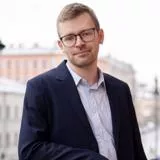
Dr Maxim Alyukov is a Research Fellow at the University of Manchester's Department of Russian and East-European Studies, focusing on political communication and media in authoritarian contexts, particularly Russia. He holds a PhD in Social Sciences from the University of Helsinki and an MA in Sociology from the European University at Saint-Petersburg. Previously, he was a postdoctoral fellow at King’s Russia Institute (2021-2023), remaining a research associate there. His work explores how citizens process political information in autocracies, leveraging mixed methods like experiments and computational analysis. Research Interests: Alyukov investigates media reception in hybrid systems, propaganda adaptation, and political cognition. His current Leverhulme Trust-funded project examines how authoritarian regimes exploit citizen reflexivity in saturated media environments. Publications and Media: His work appears in journals like Political Communication, Nature Human Behaviour, and Qualitative Psychology. He frequently contributes to non-academic media (BBC, Al Jazeera, NYT) and public discourse on Russian politics and information warfare. Key themes in his articles include propaganda strategies, media credibility, and conflict narratives in authoritarian settings. Labs and Affiliations: He is part of the Public Sociology Laboratory (comparing post-Soviet politics) and the International Panel on the Information Environment (analyzing global information threats). His expertise spans UN Sustainable Development Goals related to informed societies and democratic governance.
Elouise Botes is a Postdoctoral Researcher in the Department of Behavioural and Cognitive Sciences at the University of Luxembourg's Faculty of Humanities, Education and Social Sciences. Her work focuses on emotions in language learning, parenting dynamics, and the psychological underpinnings of educational outcomes. She investigates constructs such as foreign language anxiety, motivation, and the interplay between personality traits and language acquisition. Her research employs mixed-methods approaches, including meta-analyses, scale development, and longitudinal studies. Her research interests span Second Language Acquisition (SLA), Educational Psychology, and Parent-Child Relationships. Key areas include: (1) Emotional dynamics in language classrooms (e.g., enjoyment, anxiety, boredom), (2) Predictors of language learning success (e.g., grit, dark triad traits, mindset), and (3) Parental involvement mechanisms impacting child development. She has contributed to validated instruments like the Parental Grit Scale and short-form Foreign Language Enjoyment/Anxiety Scales. Recent work highlights trends in emotion regulation strategies among educators, cross-cultural comparisons of teacher well-being, and the role of congruent emotions between teachers and learners. Her 2025 studies emphasize moderated effects of skill level on motivational attitudes and the bidirectional impacts of imposter syndrome in language learners. She also explores Western bias in educational psychology publishing and the validation of new assessment tools for parenting dynamics. While no specific awards are listed, her prolific publication record indicates sustained contributions to language education and family psychology. Her work often addresses applied aspects of theory, offering practical insights for educators and policymakers. Current affiliations include the Maison Sciences Humaines research facility in Esch-sur-Alzette.
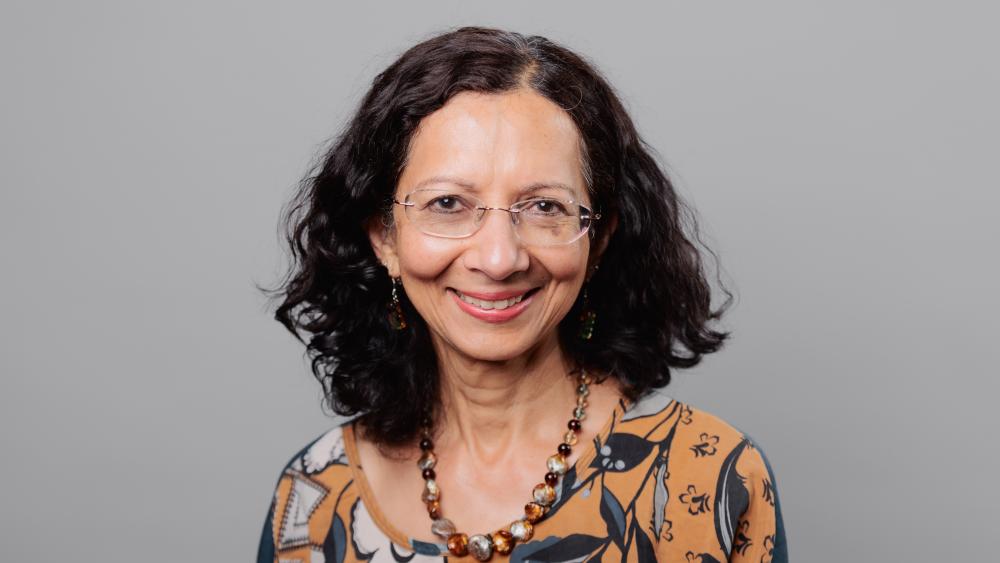
Bhavna Davé is a Senior Lecturer in the Department of Politics and International Studies at SOAS University of London , with additional affiliations to the Centre of Contemporary Central Asia and the Caucasus. She holds a PhD from Syracuse University and has been a Visiting Research Scholar at institutions such as the Institute of Developing Economies (IDE-JETRO) in Japan, RSIS Singapore, and the Watson Institute at Brown University. Her educational background includes BA and MA degrees from Bombay University, and an MA from Syracuse University. Research Interests span the geopolitics of Eurasia , Russia-Central Asia relations , Sino-Russian dynamics , the Belt and Road Initiative (BRI) , labour migration across Eurasia , ethnicity and language policies , and India-Central Asia relations . Her work examines how geopolitical alliances, economic frameworks, and legal policies shape migration flows and state-society dynamics in the region. Publications reflect her focus on Eurasian geopolitics, migration governance, and regional cooperation. Key works include analyses of China’s BRI in Central Asia, migrant worker status in Russia and Kazakhstan, and energy-security linkages between India and Central Asia. Teaching includes postgraduate modules on State and Society in Central Asia , Geopolitics and Security , and undergraduate Politics of Nationalism .
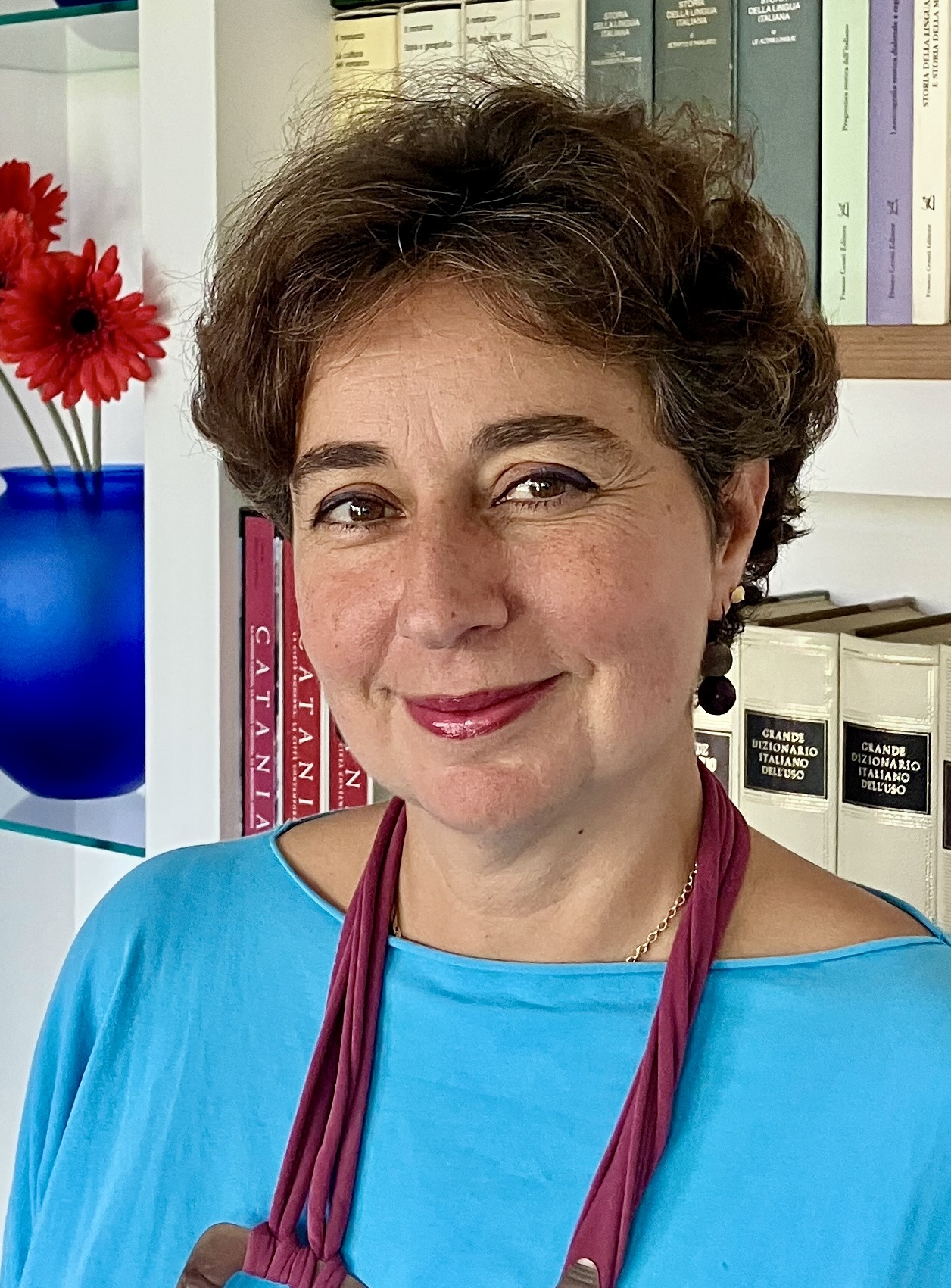
Daria Motta is an Associate Professor of Italian Linguistics at the Department of Humanities, University of Catania, with a strong affiliation to the Special Teaching Structure of Foreign Languages and Literatures in Ragusa. She holds a formal academic position in the scientific disciplinary sector L-FIL-LET/12 and is actively engaged in research, teaching, and academic service. Her work bridges philology, sociolinguistics, and language pedagogy, with a particular emphasis on Italian literary and linguistic history. Her research interests span Italian linguistics, historical and sociolinguistic analysis of spoken and written language, pragmatics in literature and media, dubbing studies, Italian as a second language (L2), and corpus-based philological research. She has extensively studied 19th- and 20th-century authors like Giovanni Verga and Vitaliano Brancati, focusing on the representation of spoken language in literary texts. Her work also explores language teaching methodologies, multilingualism in migrant literature, and the role of media in shaping linguistic norms. The trends in her recent publications reveal a consistent focus on linguistic variation, historical pragmatics, and the intersection of language with literature and media. She frequently analyzes how language functions in narrative, theatrical, and audiovisual contexts, particularly through the lens of realism and sociocultural change. Her scholarly output combines philological rigor with sociolinguistic insight, contributing to both literary studies and applied linguistics. Member of the editorial board of «Annali della Fondazione Verga» (since 2012) Member of the editorial board of «Bollettino - Centro di Studi Filologici e Linguistici Siciliani» (since 2012) Member of ASLI (Associazione per la Storia della Lingua Italiana) and ASLI-Scuola Anonymous reviewer for journals such as «Italiano linguaDue» and «L’italiano a scuola» Referee for doctoral projects at the University of Rome “Tor Vergata” Daria Motta has supervised numerous master’s theses and mentored students through formal tutoring programs. She has played key institutional roles, including serving as a delegate for continuing education and school relations, coordinator for LIS interpreting services, and contact person for placement activities. She has also been involved in research projects funded by the University of Catania and national PRIN grants, focusing on language teaching, historical corpora, and textual analysis. Her leadership in academic events and research groups underscores her active engagement in the scholarly community. She has contributed to various research groups, including the PIACERI and Prometeo projects at the University of Catania, and has led her own research initiatives on literary dialogue and 17th-century language invention. She has also participated in major national projects like the Corpus of Reference for a New Vocabulary of Modern and Contemporary Italian under the Accademia della Crusca.
Hatice GÜR is a full-time Lecturer at the School of Foreign Languages of Karabük University. With a Master's degree in Rumi Studies from Selçuk University (2019) and another Master's in English Language and Literature from Karabük University (2018), her academic profile spans interdisciplinary research in language education and literary analysis. Education Highlights: MA in Rumi Studies, Selçuk University (2019) MA in English Language and Literature, Karabük University (2018) BA in Foreign Language Education, Istanbul University (2010) BA in Translation and Interpreting, Hacettepe University (inactive) BA in Sociology, Istanbul University (2010) Research Focus integrates English pedagogy, autonomous learning frameworks, and comparative literary studies. Her work bridges Shakespearean drama with Latin American magical realism, Sufi allegorical traditions, and Neo-Victorian feminist reinterpretations. Professional Development includes 84 certifications from institutions like University of Arizona, Columbia University, and OECD, with recent engagements in AI in education, virtual exchange methodologies, and extended reality (XR) in language instruction. Academic Affiliation : Member of the British Association for Applied Linguistics (TEASIG) since 2020.
Tolga ERDEM is a Researcher at Trakya University's Faculty of Economics and Administrative Sciences, Department of International Relations. Holding a PhD in International Relations (2020) and two bachelor's degrees (2012) with full scholarships, his work bridges cybersecurity, international security, and geopolitical dynamics. Key affiliations include editorial roles in security anthologies and presentations at international conferences. PhD: Cyberspace as a Power Competition Domain Master's Thesis: Europeanization & Religious Identity in Turkey-EU Relations Research spans cybersecurity , space weaponization , AI-driven security , and energy geopolitics . Recent 2024-2025 publications analyze Balkan cybersecurity, water security, and biosecurity frameworks. His 2023 book Uluslararası İlişkilerin Yeni Güç Rekabet Sahası: Siber Uzay established him as a digital geopolitics expert. Journal trends show 2023-2024 focus on UN disarmament policies for AI weapons, space diplomacy frameworks, and EU-Turkey energy dynamics. Conference papers (2024) examine Central Asian water security and Balkan cyber threats. Teaching since 2020, courses include World Conflict Regions , EU-Turkey Relations , and Contemporary International Issues . No scientific awards listed.
Simonetta Anna Valenti is a Full Professor of French Literature at the University of Parma's Department of Humanities, Social Sciences and Cultural Enterprises. She serves as President of the three-year degree program in Modern Foreign Languages and Civilizations and previously held positions as Pro-Rector for Internationalization and Director of the Interuniversity Master's Degree in Languages, Culture, and Communication. Before joining Parma, she was Associate Professor at the University of Valle d'Aosta and researcher at the Catholic University of Milan. Her education includes a Laurea in French Literature and a PhD in 'Linguistic, Philological and Literary Sciences' from the Catholic University of Milan, along with studies at École Normale Supérieure de Fontenay/St. Cloud as a 'Pensionnaire Scientifique Étranger'. Research interests focus on: French Symbolism and Decadentism of the late 19th century Francophone literature (Aostan, Lebanese, Caribbean) Theater and poetry of Paul Claudel Literary translation practices Contemporary Francophone narratives Her publications demonstrate strong emphasis on Paul Claudel studies, French Symbolism, and Francophone literature from Lebanon and the Caribbean, with recent works exploring Lebanese-Quebec writer Wajdi Mouawad. Awards include: René Willien Prize (2013) for critical edition of Magdeleine Gamba's novel Letter of Commendation from Valle d'Aosta's Education Authority (2009) She has led international initiatives as: Head of the University Language Center (Valle d'Aosta) Coordinator of binational Italian-French diploma programs Scientific director for international conferences on Francophonie Principal investigator for PRIN research projects on French literature Member of scientific committees for multiple academic journals
Emma Sdegno is an Associate Professor of English Literature (L-LIN/10) at the Department of Comparative Linguistic and Cultural Studies , Ca' Foscari University of Venice . She is also affiliated with the Interdepartmental School of Economics, Languages and Entrepreneurship for International Exchanges (SELISI). Academic Background : 1989: Degree in Foreign Languages and Literatures, Ca' Foscari University 1991-1992: MA in Literature and the Visual Arts (1840-1940), University of Reading Research Focus : Her work centers on John Ruskin , his influence on Victorian and Modernist art criticism , and his reception in France and Italy . She explores travel literature through the lens of Venetian and Alpine mythmaking , examines the intersections between literature and visual arts (especially Ruskin's critiques of Jacopo Tintoretto ), and investigates Victorian biblical exegesis . Her projects include Enacting Fors: Ruskin and 21st Century Venice , collaborating with English artists The Poly-Technic. Academic Contributions : She co-organized international conferences on Ruskin (2008, 2019), Dickens (2012), and Victorian culture (2013). She serves on the editorial board of Scritture Migranti and as a referee for The Eighth Lamp: Ruskin Studies Today . Her institutional roles include Erasmus coordinator for four universities and leadership in academic committees since 2008. Teaching Portfolio : Courses on Victorian essays , Victorian novel , Romantic poetry , travel literature , Modernist novel , and literary translation .
Dr. Orsolya Nador is an Associate Professor at the Department of Hungarian Linguistics, Institute of Hungarian Language, Literature and Cultural Studies, Faculty of Humanities and Social Sciences at Károli Gáspár Reformed University in Budapest, Hungary. With a PhD in Linguistics and Applied Linguistics from the Hungarian Academy of Sciences (1998), she has dedicated her career to the study of language policy, Hungarian as a foreign language, and the linguistic landscape of East-Central Europe. Her work bridges academic research with practical applications in language teaching and policy development across Central and Eastern European contexts. PhD in Linguistics and Applied Linguistics, Hungarian Academy of Sciences (1998) MA in Hungarian Language and Literature, Eötvös Loránd University (1983) Habilitation, University of Pécs (2001) Dr. univ. in Contemporary Hungarian Literature, Eötvös Loránd University (1988) Teacher of Hungarian-Russian Primary School, Eger Teacher Training College (1981) Dr. Nador's research focuses on language policy history, Hungarian as a foreign language (including educational policy and psycholinguistic aspects), Hungarian as a language of origin, the history of Hungarian applied linguistics, and diachronic analysis of linguistic-ethnic issues in East-Central Europe. Her interdisciplinary approach connects historical linguistics with contemporary language policy challenges, particularly regarding minority languages in the Carpathian Basin region. She has pioneered research on language identity formation and the relationship between linguistic diversity and social cohesion in multi-ethnic contexts, examining how language policies shape national identities across Central Europe. Her recent publications reveal a consistent focus on the linguistic landscape of the Carpathian Basin, with particular attention to language policy development, minority language rights, and the teaching of Hungarian as both a foreign and heritage language. Dr. Nador's scholarly work demonstrates how historical language policies continue to influence contemporary linguistic practices and identity formation across East-Central Europe. Her research increasingly addresses digital aspects of language teaching and the evolving role of Hungarian in the European multilingual context, reflecting her commitment to adapting linguistic research to contemporary educational challenges. Teacher of the Year, Károli Gáspár Reformed University (2015) Brassai Prize, Hungarian Association of Applied Linguists and Language Teachers (2023) Dr. Nador has supervised numerous doctoral students working on language policy issues across Europe, including research on Norwegian language policy, Swiss multilingualism, Hungarian language in Burgenland, and media discourse analysis. She has led international research projects including Te-Le-Hu (2008-2010) and Hungarobox (2013-2015), focusing on language teaching methodologies for Hungarian as a foreign language. Her editorial work includes serving as editor-in-chief for Modern Language Teaching journal since 2018 and previously for THL2 - Journal of Hungarian Language Teaching (2005-2018), where she shaped the discourse on Hungarian language pedagogy for over a decade. As leader of the Hungarology Research Group, Dr. Nador coordinates collaborative research on Hungarian language and culture across international borders. Her team works closely with institutions in Slovakia, Croatia, Romania, and Serbia to document and analyze the linguistic practices of Hungarian minority communities throughout the Carpathian Basin, creating a comprehensive picture of how Hungarian functions as both a majority and minority language in different national contexts.
Assoc. Prof. Arif Yilmaz (b. 1970, Manisa) is a Turkish academic, poet, and literary scholar affiliated with Usak University since 2012, where he serves as Chair of the Department of Turkish Language and Literature at the Faculty of Humanities and Social Sciences. He previously held academic positions at Gaziantep University (2008-2012), Celal Bayar University, and Ankara University. Doctorate (2004): Ankara University - New Turkish Literature Master's (1996): Gazi University - New Turkish Literature Bachelor's (1992): Van Yuzuncu Yil University - Turkish Language and Literature His scholarly focus lies in modern Turkish literature, philology, and literary criticism, particularly examining social realism, epic theater, and 20th-century Turkish poets like Sabahattin Kudret Aksal and Niyazi Yıldırım Gençosmanoğlu. He has published critical editions of Aksal's works and over 15 peer-reviewed articles. Scientific contributions include: 2019 Special Jury Prize for Aksal's critical editions Leadership in Turkish language education centers (GAÜN TÖMER) Academic service including Institute of Social Sciences deputy directorship As an educator, he has mentored 3 doctoral students and taught courses spanning New Turkish Literature , Literary Theory , and Poetic Analysis across multiple universities. His 2024 visiting scholar appointment at Samarkand State Institute of Foreign Languages underscores his international academic engagement.
Stefan-Michael Newerkla is a University Professor of West Slavic Linguistics at the Department of Slavonic Studies, Faculty of Philology and Cultural Studies, University of Vienna. He has served as Head of the Institute of Slavic Studies since 2022, following previous leadership roles as Deputy Head (2018-2022) and Head (2005-2008). His academic leadership extends to significant positions including Member of the Academy Council of the Austrian Academy of Sciences (2022-2026), Member of the International Board of Palacký University Olomouc (2022-2026), and Member of the Scientific Council of the Czech Academy of Sciences (since 2013). Professor Newerkla earned his doctorate in 1998 with a dissertation on "Intended and actual linguistic reality in Bohemia. Diglossia in the school system of the Czech-speaking countries of the Habsburg Monarchy 1740–1918 using the example of the West Bohemian district town of Plzeň (Pilsen)" and completed his habilitation in 2003 on "Language Contacts Czech – German – Slovak. German Loanwords in Czech and Slovak: Historical Development, Evidence, Previous and New Interpretations." His academic journey began with studies in Slavic Studies, English Studies, and American Studies at the University of Vienna from 1992-1998. His research focuses on West Slavic linguistics with particular emphasis on contact linguistics, areal linguistics, linguistic geography, and historical sociolinguistics. He investigates the development of linguistic contacts between German, Hungarian and Slavic languages, examining Central Europe as a linguistic area with special attention to Austriazisms and Internationalisms research. His work also explores the school system and language teaching in the Habsburg Monarchy, analyzing language legislation versus language reality and diglossia or polyglossia in the educational system. Additional research interests include the National Renewal in the Bohemian Lands, Vienna's role in the Czech National Renewal, the Slovak national awareness process, and the grammatology and grammarography of West Slavic languages. Analysis of his recent publications (2023-2025) reveals a continued focus on historical language contact in Central Europe, particularly examining multilingualism in the Habsburg Monarchy and linguistic heritage. His work increasingly incorporates interdisciplinary approaches, connecting linguistic analysis with historical, educational, and cultural studies perspectives. Recent publications show particular attention to Czech language in Austria, language teaching methodologies, and the reconstruction of historical language contact phenomena, with several multilingual publications reflecting his expertise in cross-cultural communication. Professor Newerkla's scientific achievements have been recognized with numerous prestigious awards: Medal of the Minister for Foreign Affairs of the Czech Republic (August 7, 2024) for Services to Diplomacy Premia Bohemica for 2023 for outstanding contribution to promoting Czech literature abroad Josef-Dobrovský-Ehrenmedaille of the Czech Academy of Sciences (April 25, 2017) Full member of the Austrian Academy of Sciences (since 2018) Corresponding Member of the Austrian Academy of Sciences (since 2014) Member of the Academic Assembly of the Czech Academy of Sciences (since 2010) Award from University of Vienna for Innovative Teaching (June 22, 2001) As an academic leader, Professor Newerkla has supervised numerous theses across various levels of study. His research is supported by significant grants, most notably his role since 2016 as consortium member and board member of the Special Research Programme "German in Austria. Variation – Contact – Perception" (SFB F 60-G23), where he heads Task Cluster C and subprojects 05 and 06. He also led the research project "Slavists in Exchange: Austria and Russia 1849-1939" (2021-2025). His administrative roles have included Chairman of the Curricular Commission of the Senate of the University of Vienna (2010-2016) and Member of the Senate of the University of Vienna (2009-2016). Professor Newerkla is actively involved in multiple international research teams and collaborations, including the Permanent Conference of Austrian and Czech Historians on Common Cultural Heritage (SKÖTH), which he has co-chaired since 2009. His research group at the University of Vienna's Institute of Slavic Studies focuses on West Slavic linguistics, with particular expertise in historical language contact phenomena and the linguistic heritage of Slavic languages in Central Europe. He has also served as editor for numerous publications including the Vienna Slavic Yearbook (New Series) since 2013.
Dr. Ala Alrababah is an Assistant Professor in the Department of Social and Political Sciences at Bocconi University, with affiliations including the Evidence in Governance and Politics (EGAP) network, Immigration Policy Lab (IPL) at ETH Zurich and Stanford, BAFFI Center on Economics, Finance and Regulation at Bocconi, and the Abdul Latif Jameel Poverty Action Lab (J-PAL). She holds a Ph.D. in Political Science from Stanford University (2021). Her research examines immigration, refugees, and political violence using innovative mixed-methods approaches combining fieldwork with experimental and computational techniques. Primary domains include comparative analysis of migration policies, conflict dynamics in the Middle East, prejudice reduction strategies, and quantitative analysis of political discourse. She maintains active field research programs focused on Syrian refugee communities. Publications demonstrate consistent focus on migration policy impacts, refugee decision-making, and political violence analysis across multiple contexts. Computational methods feature prominently alongside field experiments, with strong methodological contributions to survey research and text analysis. As an active member of international research networks, Dr. Alrababah collaborates on large-scale projects examining refugee integration policies, transitional justice mechanisms, and political behavior in conflict regions. Her work has received international media coverage in outlets including The Economist, Foreign Policy, and BBC Arabic.
William Fleming is an Assistant Professor in the Department of East Asian Languages and Cultural Studies at the University of California, Santa Barbara (UCSB). He specializes in early modern Japanese literature, with a focus on 18th- and 19th-century fiction, popular theater, book history, and cultural exchange between Japan, China, and the West. Fleming holds a Ph.D. from Harvard University and has held visiting research positions at Kyoto University, Waseda University, and the National Institute of Japanese Literature in Tokyo. Before joining UCSB, he taught at Yale University’s Department of East Asian Languages and Literatures and the Theater Studies Program. His research explores the circulation of Chinese fiction in early modern Japan and its adaptation in Japanese literary works. He has authored a monograph and numerous peer-reviewed articles on topics ranging from Kabuki theater to Japan’s cultural interactions with overseas influences. Fleming also contributes to pedagogical innovation, advocating for problem-based learning in humanities education. Education: Ph.D., Harvard University Undergraduate studies, Harvard University Research Interests: Fleming’s work centers on the interplay between Japanese literature and broader cultural contexts. Key themes include literary adaptation, transnational cultural flows, and the role of performance and print media in shaping cultural narratives. His monograph Strange Tales from Edo: Rewriting Chinese Fiction in Early Modern Japan (2023) examines the reception and transformation of Chinese stories in Japanese literary traditions. He also investigates how popular theater forms like Kabuki engaged with ideas of national identity and foreign cultures. Professional Contributions: Fleming has published commentaries on rare books in the Gerhard Pulverer Collection and contributed reviews to journals like Japan Forum and Asian Theatre Journal . His teaching philosophy emphasizes active learning strategies, as detailed in his 2017 article on problem sets in humanities education.
Ingunn Lunde is a full-time Professor of Russian at the Department of Foreign Languages , Faculty of Humanities , University of Bergen, Norway. She also holds a part-time (20%) Professor II position in Russian literature and culture at the University of Tromsø (2012–2019). Research Focus: Russian sociolinguistics, Slavic medieval culture, 19th–21st-century Russian literature, Byzantine hagiography, and digital media. Leadership: Head of the Research Group for Contemporary Russia at the University of Bergen. Projects: Principal Investigator for Landslide of the Norm (2005–2008) and The Future of Russian (2008–2013), funded by the Research Council of Norway. Publications: 85 works including 3 monographs, 56 articles, and 13 edited books. Notable works: Language on Display (2018), Fragmenter av fortid (2019), and Digital Russia (2014). Founding editor of the Slavica Bergensia book series (2000–present). Scientific Awards: Ugleprisen (2020) FUND-status (2019) Spurveugleprisen (2017) Fellowship at Wissenschaftskolleg zu Berlin (2014/15) Meltzer Prize for Young Researchers (2000) Outreach: Regular public speaker, media commentator, and contributor to the Great Norwegian Encyclopaedia on Russian literature.
Dr. Mantas Martišius is an Associate Professor at the Faculty of Communication, Vilnius University, specializing in the Centre for Journalism and Media Research. His work focuses on information warfare, propaganda dissemination, political communication, and media studies. He holds a PhD in Information Warfare from Vilnius University (2007), with a dissertation analyzing the impact of information warfare during the Second Chechen War. His research explores topics such as Russian information warfare tactics, media market transformations, and the role of media in conflict zones. He has contributed to peer-reviewed journals like Informacijos mokslai and Žurnalistikos tyrimai . Martišius frequently engages in science promotion, discussing media literacy and information warfare on platforms like LRT Radijo and Bernardinai.lt . He has served on doctoral defense committees for studies addressing topics like the influence of Russian media on Baltic perceptions and the analysis of Soviet-era films in Lithuanian media. His work emphasizes the societal impact of media narratives and the need for critical media literacy in combating misinformation.