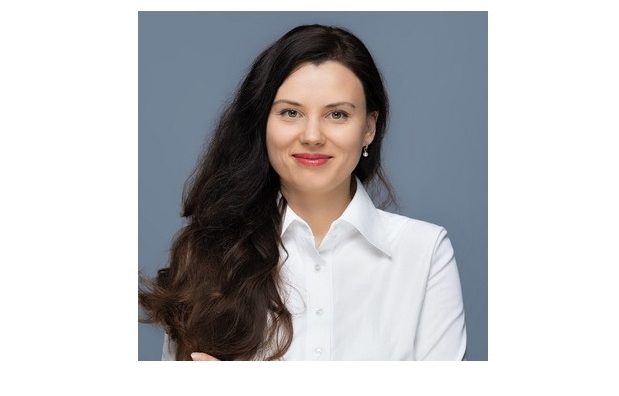
Katažyna Bogdzevič is a Professor at Mykolas Romeris University (MRU) Law School, specializing in Private International Law , European Law , Human Rights , and Environmental Law . She leads the MRU Human Rights LAB and contributes to the Environmental Management Research LAB, focusing on legal frameworks for ecosystem services, climate change mitigation, and stakeholder engagement. Key Research Themes: Integration of Private International Law with Environmental Law , analysis of legal conflicts in nature-based solutions, and name rights under international human rights conventions. Policy Engagement: Serves as advisor to Lithuania's Minister of Justice Ewelina Dobrowolska , emphasizing knowledge transfer to legislative and judicial practices. Email: roffice@mruni.eu
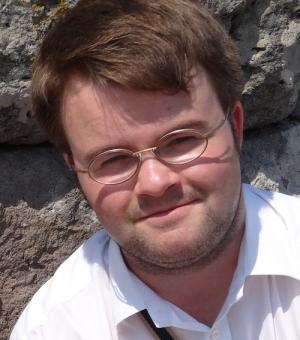
Dr. Guy Westwood is an Associate Professor in Greek Language and Literature at the University of Oxford, affiliated with Lady Margaret Hall as a Fellow and Tutor in Classics. He holds an MA, MSt, and DPhil from Oxford, with academic roles spanning Balliol, Merton, and Birmingham. His research focuses on classical Greek and Roman rhetorical prose, particularly Athenian democratic oratory, exploring how historical narratives shaped political persuasion. He has authored a monograph on Demosthenes and Aeschines and published widely on topics such as Athenian lawcourt rhetoric, intertextuality in poetry, and ancient historiography. Teaching encompasses Greek language, literature, and history at both undergraduate and graduate levels, with supervision in ancient rhetoric and related fields. He encourages graduate applications in Greek rhetoric and comedy. His work bridges rhetoric with drama and historiography, reflecting a broad engagement with fifth and fourth-century Greek studies. Publications highlight themes like legal oratory's performative aspects, intertextual poetic analysis, and the role of memory in persuasion. His career includes fellowships at Merton and teaching roles at Birmingham, showcasing a trajectory of academic leadership in classical studies.
Laura Collins is an Associate Professor in the Department of Education at Concordia University, specializing in applied linguistics. Her research focuses on input processing in second language acquisition, pedagogical grammar, and cross-linguistic influence among bilingual speakers. She has extensive international teaching experience across diverse age groups and serves as the 2nd VP of the American Association for Applied Linguistics and Chair of the IRIS digital repository advisory board. PhD in Humanities, Concordia University MEd in Second Language Teaching, University of Ottawa BEd in Second Language Teaching, University of Toronto BA in History, York University Collins' current projects examine the use of speech technologies to extend second language classrooms and document longitudinal grammatical development in school programs. Funded by SSHRC Insight Grants, her work bridges cognitive approaches with practical pedagogical applications. Recent publications highlight trends in classroom input optimization, frequency-based phonological learning, and intensive language program efficacy, with subfields spanning morpheme perception, vocabulary distribution, and task-based interaction dynamics. Her academic leadership includes editorial roles in The Modern Language Journal and contributions to major handbooks. She teaches courses ranging from classroom-based SLA research to pedagogical grammar, emphasizing practical applications of theoretical insights.
Lucas Klein is an Associate Professor at Arizona State University within the School of International Letters and Cultures . His research focuses on Chinese literature, translation studies, and the intersection of classical and modern poetics. He holds a PhD from Yale University (2010) and a BA from Middlebury College (2000). Research Interests: Modern/prehistorical Chinese literature, poetry translation theory, meta-sinology, labor/environmental writing, and kung-fu cinema. Active in editorial roles for the Hsu-Tang Library of Classical Chinese Literature , Bloomsbury Handbook of Modern Chinese Literature in Translation , and Cha: An Asian Literary Journal . Awards: 2019 PEN/Heim Grant, 2013 Lucien Stryk Prize, and 2013 Best Translated Book Award shortlist. His work emphasizes translational poetics and the global positioning of Chinese literature. Teaching: Offers courses on Chinese literature, translation theory, and cultural studies, including East Asian Humanities and Modern Poetry Translation . Supervises graduate research across disciplines. Publications: Authored The Organization of Distance (2018), co-edited volumes on Chinese poetry translation, and translated works by Mang Ke, Li Shangyin, and Xi Chuan. Maintains active research on transnational literary networks and Sinophone studies.
Lan T. Chu serves as Professor of Diplomacy and World Affairs at Occidental College, where she has held faculty position since 2005. Her office is located in Johnson 205 with regular availability on Tuesdays (11:30 AM-12:45 PM in person/Zoom) and Fridays (9:00-10:00 AM). Her academic credentials include: B.A. and M.A. from New York University Ph.D. from George Washington University Chu's research centers on religion's political dimensions, particularly the Catholic Church's global influence through faith diplomacy and norm entrepreneurship. She examines inter-religious dialogue, ideological frameworks, and democratization processes in communist regimes, with recent work analyzing religious responses to climate change and migration. Her scholarship applies constructivist theory to position religious institutions as transformative actors in international relations. Analysis of her publication history reveals evolving scholarly priorities: early work (2005-2015) focused on church-state dynamics in Vietnam and China, while current research (2022-2025) emphasizes environmental stewardship and citizenship. This trajectory demonstrates increasing engagement with contemporary global crises through religious institutional lenses. Her scholarly recognition includes: Foreign Language Area Studies (FLAS) Fellowship Visiting Fellowship at University of Southern California Linda & Tod White Teaching Prize (2022) As Faculty Director for Equity and Justice, Chu leads campus-wide inclusion initiatives while advancing three major book projects: Catholic Church's global policy influence (Routledge), religion and citizenship (Routledge), and Vietnamese religious freedom (Brill Press). Her mentorship in DWA 299 (Qualitative Methods) trains students in research design for political analysis. Chu contributes to international scholarship as Country Expert for Gothenburg's Varieties of Democracy Project (2012-present) and editorial board member of Politics, Groups, and Identities , building academic networks that inform her classroom instruction on ideology and international relations theory.
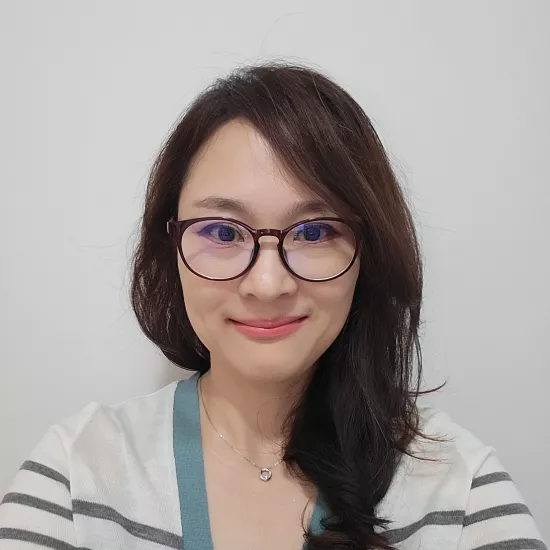
Ji-young Shin serves as an Assistant Professor in the Teaching Stream within Education Studies at the University of Toronto Mississauga's Department of Language Studies. Her position integrates teaching, research, and practical application in language education with emphasis on assessment innovation and technology integration. Her academic credentials include: PhD in English / Second Language Studies & ESL from Purdue University, USA MS in Educational Psychology & Research Methodology from Purdue University, USA MA in Teaching English to Speakers of Other Languages (TESOL) from Hankuk University of Foreign Studies, South Korea BA in English Education (Japanese minor) from Hankuk University of Foreign Studies, South Korea Shin's research program focuses on language assessment, corpus linguistics, and technology-mediated pedagogy. She employs mixed methods with quantitative emphasis, utilizing corpus-informed computational analysis and latent-trait modeling complemented by qualitative discourse analysis. Her work addresses critical gaps in second language acquisition, educational measurement, and digital learning environments, particularly regarding AI applications and test validation across diverse language contexts. Her publication trajectory from 2017-2025 demonstrates consistent innovation in language assessment methodologies and technology integration. Key themes include AI-powered chatbots for L2 Korean instruction, online vocabulary testing for Spanish, and corpus-based writing pedagogy. Her work shows increasing focus on artificial intelligence applications and cross-linguistic validation studies, reflecting evolving priorities in language education research. Shin has secured competitive research funding including: Global Classrooms Grant (2025–2026) for VR-enhanced intercultural competence Black, Indigenous, and/or Racialized Scholar Grant (2025–2026) for cross-border AI language learning IRCC Engage3 Project (2022–2024) as Co-PI on VR/AI educational advancement Advancement Fund Plus (2022) for generative AI in teacher education British Council Award (2019) for technology-mediated assessment development She teaches advanced courses including 'The Future of Ed Tech: Active Learning Classrooms and Artificial Intelligence' (EDS285) and supervises community-based experiential learning (EDS388). Her grant portfolio indicates active supervision of research assistants and collaboration with international teams focused on AI implementation and assessment validation. Current projects explore generative AI for language learning across diverse contexts and virtual reality applications in teacher education. While specific laboratory infrastructure isn't documented, her collaborative publications with researchers across Korea, Spain, and the United States suggest participation in international research networks focused on language assessment technology and corpus applications.
Prof. Dr. Claudia Schlaak is Professor of Language Teaching and Learning Research: Didactics of French and Spanish at the University of Kassel, where she serves as Head of the Department of Foreign Language Teaching and Learning Research. She has held this position since September 2020, following an acting professorship at the same institution from October 2018 to December 2019. Her academic work bridges theoretical research and practical application in foreign language education, with particular focus on inclusive teaching methodologies and multilingual contexts. Dr. Schlaak's research centers on foreign language teaching and learning, with special emphasis on didactics of French and Spanish, inclusive education approaches, multilingualism in educational contexts, and the integration of digital technologies in language acquisition. Her work examines how diverse language backgrounds influence learning processes, with particular attention to bilingual learners (especially German-Turkish bilinguals) acquiring Romance languages. She investigates pronunciation acquisition, text complexity, intercultural competence development, and the implementation of inclusive teaching strategies that recognize learner diversity as a resource rather than a challenge. Analysis of her recent publications reveals a strong trend toward digital learning environments, with increasing focus on virtual reality applications, 360-degree learning environments, and digital tools for pronunciation training. Her research consistently addresses multilingual contexts and inclusive approaches, with growing attention to potential-oriented teaching methodologies that shift focus from deficits to learner strengths. The interdisciplinary nature of her work connects linguistics, educational psychology, and technology-enhanced learning. Dr. Schlaak serves as co-editor of the journal Romance Language and its Didactics (since January 2019) and the series French Didactics in Dialogue (since April 2020). She has contributed significantly to academic discourse through numerous edited volumes, special journal issues, and collaborative research projects that bridge theoretical insights with practical classroom applications. Her work demonstrates strong commitment to teacher education, with multiple publications addressing pre-service and in-service teacher training, particularly regarding inclusive practices, intercultural competence development, and the integration of digital tools in language teaching. She has developed practical teaching materials, including method cards for foreign language instruction and inclusive teaching resources for Spanish language classrooms.
Dr. Olga Oleinikova is an Associate Professor and Director of the Social Impact Technologies and Democracy Research Hub (SITADHub) within the School of Communication at the University of Technology Sydney (UTS), Australia. Internationally recognized for her contributions to research and social impact, she has been named among Forbes Top 40 Global Ukrainians and Forbes 30 Under 30 Asia. She was also a finalist for the Australian Council of Humanities, Arts and Social Sciences (CHASS) Future Leader Award. Her educational background includes a PhD in Sociology from the University of Sydney (2016), with prestigious research fellowships at Oxford University's European Studies Centre (2018-2019), Charles University in Prague (2023-2024), and the WZB Berlin Social Science Center (2015). Dr. Oleinikova's research focuses on migration studies (particularly Eastern European migration to Australia), democracy studies, diaspora politics, and social impact technologies. Her work examines life strategies of migrants navigating displacement, democratic performance in Ukraine and Europe, and the intersection of technology and democracy. She has developed a theoretical framework distinguishing between 'achievement life strategies' and 'survival life strategies' among migrants from crisis regimes. Her publication portfolio includes several acclaimed works, with her most recent book 'New Eastern European Migration to Australia: From Ukraine, Czech Republic and Hungary' (Palgrave, 2023) examining new migration patterns. Her research demonstrates consistent focus on Eastern European migration, diaspora politics, and democratic development, with increasing attention to technology's role in democratic processes. Forbes Top 40 Global Ukrainians Forbes 30 Under 30 Asia CHASS Future Leader Award Finalist Visa People's Choice Award Anthill 30 Under 30 Winner Dr. Oleinikova has secured over $3 million in funding for social and commercial initiatives. She serves on several nonprofit boards, acts as an advisor to the Australia-Ukraine Chamber of Commerce, and mentors through the 1991 Open Data Incubator and Future Schools Australia. She founded the SITAD Visiting Fellowship Program, supporting Ukrainian early-career researchers and postgraduate students. Her media reach is substantial, with expert commentary featured in BBC News, Bloomberg, ABC News, CNA, The Conversation, Politico, SBS, and KyivPost, reaching an estimated 9.1 million people. She has delivered more than 30 keynote and invited talks at leading institutions worldwide. SITADHub, which she founded and directs, is a dynamic networked research center with 170 associates across 16 countries actively researching democracy, human-computer interaction, and global mobility, with a focus on Ukraine and broader Eastern Europe. The hub conducts unique research and maintains university partnerships throughout Europe and the Asia Pacific, including with WZB Berlin Social Science Research Centre, University of Oxford, and University of Sydney.
Jared F. Edgerton is an Assistant Professor at the University of Texas at Dallas, affiliated with the School of Economic, Political and Policy Sciences. His research focuses on how social relations and networks influence conflict dynamics, employing methodologies from network science and machine learning. He holds a Ph.D. (2021) and M.A. (2018) in Political Science from The Ohio State University. Key research interests include terrorism, international security, civil war, and data-driven approaches to conflict analysis. His work spans topics like media effects on violence (e.g., Rwanda's radio impact), extremist recruitment networks (Islamic State), and elite polarization in crises like the COVID-19 pandemic. Methodologically, he combines experimental designs, bipartite network analysis, and geospatial techniques. Notable contributions include analyzing genocide participation in Rwanda, resilience in cooperative state networks, and the socio-technical dimensions of conflict mobilization. His interdisciplinary approach bridges political science, computer science, and security studies. While no scientific awards are explicitly listed, his prolific output reflects sustained scholarly impact. Edgerton has advised no listed students but has engaged in quasi-experimental policy evaluations (e.g., prisoner recidivism programs) and applied geospatial analysis to post-conflict land safety in Cambodia. His research portfolio demonstrates a commitment to both theoretical innovation and real-world conflict mitigation strategies.
Konrad Burchardi is Professor of Economics at the Institute for International Economic Studies (IIES) at Stockholm University. His academic work focuses on understanding economic development processes and the social foundations of economic behavior, with significant contributions to development economics and migration studies. Professor Burchardi obtained his PhD in Economics from the London School of Economics (LSE), with prior studies conducted in Munich, Aix-en-Provence, and at LSE. His educational background reflects a strong international foundation in economic theory and development perspectives. His research primarily centers on productivity growth at early stages of economic development and the social underpinnings of economic interactions. Key contributions include field experiments on sharecropping contracts in developing countries, demonstrating how output-sharing rules affect agricultural productivity, and research showing how migration ancestry influences foreign direct investment patterns. His work spans agricultural economics, migration studies, experimental economics, and economic networks, often employing rigorous field and natural experimental designs to establish causal relationships. Analysis of Professor Burchardi's publication record reveals consistent contributions to top economics journals with a focus on development and labor economics. His work shows an evolution from examining micro-level economic behaviors in developing countries to broader questions about migration networks and their economic impacts. His recent publications indicate increasing attention to historical economic data and financial inclusion, with work scheduled through 2025.
Haiyang Ai is an Associate Professor in the Literacy and Second Language Studies program at the University of Cincinnati's School of Education. His research applies corpus linguistics and natural language processing to investigate second language acquisition, writing complexity, and bilingual language processing. His educational background includes a Ph.D. in Applied Linguistics from The Pennsylvania State University (2015), an M.A. in Linguistics & Applied Linguistics from the University of Chinese Academy of Sciences (2006), and a B.A. in English from Shaanxi Normal University (2003). Dr. Ai's research spans corpus linguistics, natural language processing, second language acquisition, and computer-assisted language learning. He specializes in compiling and analyzing native and learner corpora to develop intelligent language learning systems and investigate lexical/syntactic complexity in L2 writing. His methodological approach integrates computational tools with theoretical linguistics to address practical language teaching challenges. His recent publications (2019-2023) demonstrate consistent focus on lexical bundles in professional communication, automating complexity measurement in Chinese, speech perception mechanisms in bilinguals, and grammatical puzzles in English learning. These works bridge corpus-based analysis with psycholinguistic experimentation across diverse subfields including morphosyntax, pragmatic competence, and cognitive processing in L2 acquisition. Dr. Ai has secured multiple University of Cincinnati grants including three CECH Faculty Development Grants ($2500 in 2017-2018 for verb-noun collocation research, $2000 in 2016-2017 for corrective feedback tools) and the NCFDD Faculty Success Program ($3250 in 2017), all supporting his development of computational language learning resources.
Per Daniel Sävborg is a Professor of Scandinavian Studies at the University of Tartu's Faculty of Arts and Humanities, affiliated with the Institute of Foreign Languages and Cultures. He holds a Doctor's Degree from the University of Stockholm (1997), specializing in Old Norse literature and philology. His career includes roles as Head of Office and Programme Director in Tartu's foreign languages departments, alongside research positions at Uppsala University and the University of Iceland. Sävborg's research focuses on Old Norse literature, medieval Scandinavian folklore, Icelandic sagas, and Eddic poetry. He has led major projects such as 'Formulae in Icelandic Saga Literature' (2019-2022) and 'Viking Dynasties: Royal Families of Lejre and Uppsala' (2018-2019). His publications span book chapters, edited volumes, and articles in journals like Religionsvidenskabeligt Tidsskrift and Ethnologia Scandinavica . Notable works include analyses of Old Norse mythological themes, interdisciplinary Viking Age studies, and editorial contributions to sagas and epic poetry. Sävborg advises numerous doctoral and master’s students on topics ranging from medieval Nordic narratives to folklore. His work bridges literary, historical, and archaeological perspectives, emphasizing cultural memory and textual evolution.
Lori L. Holt is a Professor of Psychology at the University of Texas at Austin (UT-Austin), where she leads the Holt Lab. Previously, she served as faculty at Carnegie Mellon University (1999–2023), contributing to the Center for the Neural Basis of Cognition. Her research focuses on auditory cognitive neuroscience, exploring how learning, attention, and neural mechanisms shape speech perception and communication. She holds a BS and PhD in Psychology from the University of Wisconsin-Madison (1995, 1999). Her work investigates the neural foundations of listening, emphasizing adaptive plasticity in speech perception, statistical learning dynamics, and the interplay between sensory input and cognitive processes. Recent studies examine how short-term sound statistics influence perceptual weighting, the impact of accent exposure on speech production, and neural correlates of auditory category learning. The Holt Lab, equipped with EEG facilities, advances understanding of voice perception, speech motor control, and neurocognitive adaptation. Dr. Holt teaches courses such as Behavioral Neuroscience (PSY 332) and Biopsychology (PSY 308), reflecting her expertise in linking biological mechanisms to psychological processes. Her research has been published in leading journals, with a focus on auditory neuroscience, statistical learning, and neurorehabilitation.
Dr. Seyed Ali Alavi lectures on Middle Eastern and Iranian Studies at SOAS, with research focusing on Iran-Palestine relations, Orientalism, and geopolitical dynamics in the Middle East. Leads the MA Iranian Studies programme.
Dr Diana Lemberg is a Lecturer in the History of the United States (post 1850) at the School of History, University of St Andrews. Her research focuses on U.S. global influence through information policies, language education, and intellectual paradigms. Current projects include a manuscript on U.S. language training programs and a NEH fellowship-supported study on 'The Weapon of Words.' She holds a PhD from Yale University (2014) and previously served as Associate Professor at Lingnan University (Hong Kong) and a Central European University fellow. Her work explores connections between American power and knowledge dissemination, with notable publications like Barriers Down: How American Power and Free-Flow Policies Shaped Global Media (2019). Recent research activities include fellowships at Bielefeld University's Center for Interdisciplinary Research (2024) and NEH-funded leave (2024-25). Key themes include Cold War media diplomacy, language policy as geopolitical tool, and the interplay between modernization theory and applied linguistics. Expertise: Global media history, U.S. foreign policy, 20th century intellectual history Grants/Fellowships: NEH (2024-25), CEU IAS, Bielefeld CIF