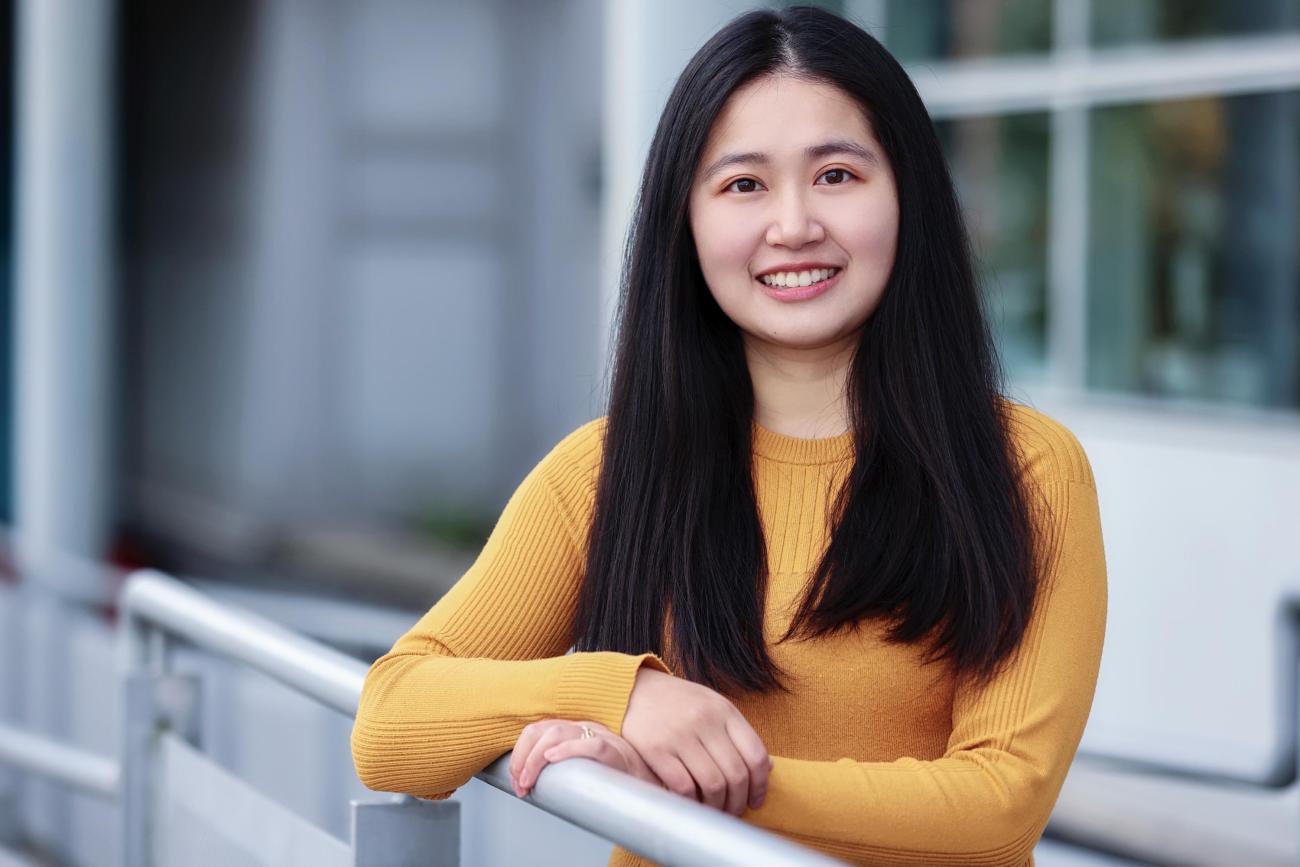
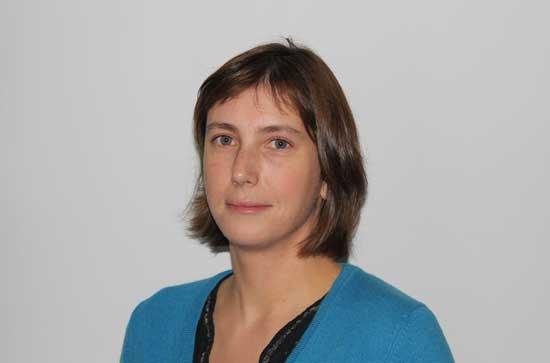
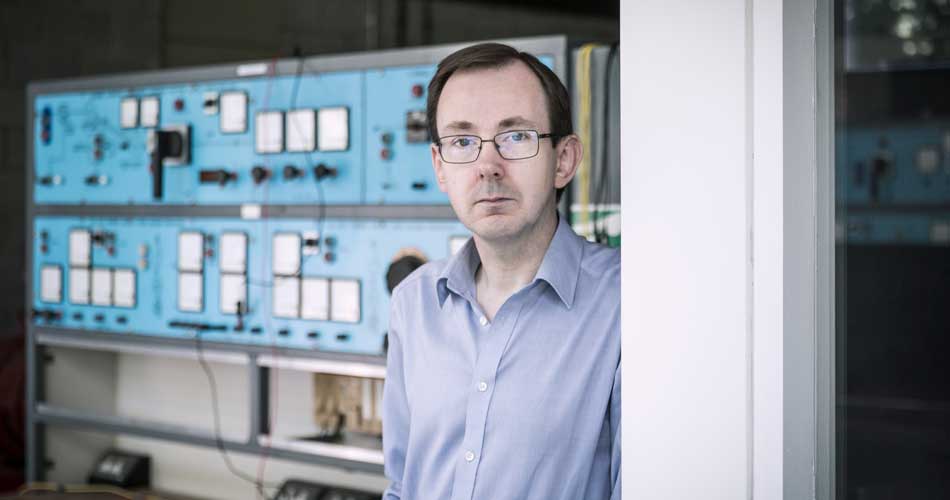
Prof. Anya Belz is Full Professor of Computer Science at Dublin City University's School of Computing and Science Lead at ADAPT Research Centre. A leading NLP researcher with PhD-level expertise, she specializes in natural language generation, evaluation methodologies, and multimodal systems. Recipient of multiple best paper awards and NAACL Test of Time Award nomination. Research innovations include foundational work on statistical language generation (deployed in weather forecasting systems), comparative evaluation frameworks, vision-language integration, and reproducibility quantification. Current EPSRC-funded ReproHum project coordinates 20 global labs studying evaluation consistency. Achievements : Developed industry-deployed generation systems for accessibility applications Pioneered cross-modal alignment techniques for image description Authored 100+ publications spanning generation, evaluation, and reproducibility
John Cotter is a Full Professor of Finance and Chair in Quantitative Finance at University College Dublin's Smurfit School of Business. He holds a PhD from Queen's University Belfast and prior academic roles include Associate Professor (2006-2012) and Senior Lecturer (2004-2006). His research focuses on volatility modeling, risk management, and asset pricing with applications in equity, real estate, and derivative markets. Cotter directs the Centre for Financial Markets and the Financial Mathematics Computation Cluster (FMC2), a multi-university research initiative funded by Science Foundation Ireland. Education: BComm and MEconSc from University College Cork, PhD in Finance from Queen's University Belfast. Research interests span asset pricing, volatility modeling, risk management, and financial market integration. His work has been published in top journals like Journal of Banking and Finance and Journal of International Money and Finance . He has secured grants including the ADAPT Phase 2 project (2021-2026). Cotter advises the European Securities Markets Authority (ESMA) and has consulted for numerous organizations globally. Notable awards include the UCD Outstanding Educator Teaching Award and UCD School of Business Research Contribution Award. He serves as Associate Editor for three journals and has supervised numerous PhD students through FMC2.
Dr. Dongyun Nie is an Assistant Professor at Dublin City University's School of Computing. She holds a PhD in Computer Science with a specialization in Customer Relationship Management. Her core research explores customer lifetime value, forecasting, data mining, and record linkage. Her recent publications demonstrate interdisciplinary work spanning health informatics, sports analytics, and environmental data engineering. Research predominantly focuses on machine learning applications for real-world data challenges including eye-tracking systems, lifelog analytics, and public health data infrastructure. Teaching responsibilities include modules on Machine Learning (CA4109), Enterprise Systems Configuration (CA2049), and Web Design (CA106), integrating research expertise into computing education.
Katarina Domijan is an Associate Professor in Statistics at the Department of Mathematics and Statistics, Maynooth University, Ireland. She holds a PhD in Statistics from Trinity College Dublin (2008) and has been affiliated with Maynooth University since 2008, transitioning from Lecturer/Assistant Professor to her current role in 2024. Her academic career includes editorial roles as Associate Editor for The R Journal (2021–present) and the Journal of Computational and Graphical Statistics (2015–2024). Research Interests focus on Bayesian methods for high-dimensional data, particularly in classification problems. She specializes in feature selection and model visualization, with applications spanning agricultural data analysis (e.g., hyperspectral imaging for lactose prediction), medical diagnostics (e.g., sepsis and cancer detection), and space physics (e.g., Saturn Kilometric Radiation classification). Her work bridges theoretical statistics with real-world challenges, including socio-economic studies and forensic science. Key Research Areas Bayesian statistical inference Machine learning for large feature spaces Statistical computing and model interpretability Data visualization and chemometrics Scientific Contributions include leading projects like VistaMilk Phase II (2024–2030, €152,300) and Measuring Carbon Sequestration (2024–2028, €174,788.90). Her 15 most recent publications highlight advancements in ensemble modeling, spatial statistics, and medical diagnostics. Scientific Awards Associate Editor, The R Journal (2021–present) Associate Editor, Journal of Computational and Graphical Statistics (2015–2024) Student Supervision includes PhD and MSc graduates such as Dr. Bruna Wundervald (2024) and Dr. Mark O’Connell (2017). She also collaborates with researchers across disciplines, including Dr. Nadim Akasheh in food hypersensitivity studies.
James Sweeney serves as Professor in the Department of Mathematics and Statistics at the University of Limerick, concurrently holding memberships in the Centre for Battery and Energy Materials Research and the Mathematics Applications Consortium for Science and Industry (MACSI). Actively accepting PhD students, his research bridges theoretical mathematics with practical industry applications across diverse sectors including energy materials, real estate, and public health. His research portfolio demonstrates exceptional interdisciplinary range, with core expertise in machine learning algorithms (particularly time series classification and neural networks), geospatial statistics for property valuation, and epidemiological modeling for disease surveillance. Key methodological contributions include evolutionary algorithms for optimization, dissimilarity-preserving representation learning, and flexible geospatial smoothing techniques that address complex real-world data challenges. Analysis of his 23 publications (2015-2024) reveals accelerating scholarly output since 2020, with 2024 being particularly prolific. His work consistently targets high-impact applications: developing diagnostic thresholds for bovine tuberculosis, modeling COVID-19 transmission dynamics in Dublin, and creating neural network solutions for geodemographic clustering. This trajectory reflects deepening engagement with computational approaches to solve pressing societal problems through mathematical innovation. As a PhD supervisor, he cultivates next-generation researchers in advanced computational methods. His collaborative framework extends through MACSI's industry partnerships and the Centre for Battery and Energy Materials Research, where mathematical modeling directly informs energy technology development. These dual affiliations position him at the critical intersection of academic research and industrial application, particularly in Ireland's growing tech and energy sectors. His laboratory activities center around computational mathematics teams within MACSI, focusing on applying statistical learning to battery materials research and real-world data challenges. Current projects involve time series analysis for sensor data, geospatial modeling for economic forecasting, and optimization algorithms for veterinary epidemiology – demonstrating remarkable methodological versatility across traditionally disparate domains.
John Breslin is a Personal Professor in Electronic Engineering at the College of Science and Engineering, University of Galway, serving as Director of the TechInnovate and AgInnovate programmes. Associated with two Taighde Éireann – Research Ireland Centres, he is a Principal Investigator at Insight Centre for Data Analytics (specializing in data analytics) and a Funded Investigator at VistaMilk (Agri-Technology), while also leading the EDIH Data2Sustain project. With an h-index of 50, over 12,000 citations, and 300+ peer-reviewed publications including seminal books on the Social Semantic Web, he ranks among Ireland's most influential researchers in digital technologies. Breslin's research fundamentally bridges Semantic Web technologies, AI-driven data analytics, and practical innovation. His co-creation of the SIOC framework—implemented across 65,000+ websites by entities like Yahoo and Boeing—demonstrates real-world impact in social data interoperability. Current work leverages blockchain and federated learning for sustainable Agri-Technology through VistaMilk, while his TechInnovate programmes translate academic research into commercial ventures across healthcare, smart manufacturing, and energy systems. Analysis of his 15 most recent publications reveals dominant themes in AI-enhanced security (35% of works), blockchain applications for sustainability (27%), and multimodal AI for healthcare (20%). His team pioneers privacy-preserving techniques for IoT and medical devices, neurosymbolic visual reasoning frameworks, and federated learning architectures addressing data heterogeneity—directly supporting his roles in national research infrastructures like Insight and VistaMilk. John has received several prestigious awards: IIA Net Visionary Award (twice) ITAG Outstanding Contribution to the ICT Sector Award Galway Chamber President’s Award Best Irish-Published Book Award (2020 for Old Ireland in Colour) Multiple Best Paper Awards He leads major research initiatives funded by Taighde Éireann – Research Ireland: Insight Centre for Data Analytics (as Principal Investigator) VistaMilk SFI Research Centre (as Funded Investigator) EDIH Data2Sustain (as Principal Investigator) His entrepreneurial programs TechInnovate and AgInnovate have mentored 200+ startups, securing €50M+ in follow-on funding. Breslin co-founded PorterShed (Galway City Innovation District) and serves on Scale Ireland's Steering Group, creating Ireland's most active regional innovation ecosystem outside Dublin. He maintains active industry partnerships with Vodafone, Boeing, and agricultural cooperatives through VistaMilk's testbed facilities.
Dr. Hamid Rabiei is an Assistant Professor in Geography at the School of History and Geography, Dublin City University. He holds a PhD in Spatial Planning and Urban Development from Politecnico di Milano, Italy. His research focuses on sustainable development, spatial inequalities, climate change, and remote sensing/GIS applications. He has secured prestigious grants like the Marie Skłodowska-Curie Fellowship and published extensively in top-tier journals such as Habitat International and Applied Geography . His work bridges engineering, social science, and data science to address global challenges like environmental degradation and urbanization patterns. Key research interests include smart cities, spatial composite indicators, gentrification, and social vulnerability to natural hazards. He has contributed to developing novel models like the Adaptive Inverse Distance Weighting (AIDW) for population estimation and the Ordered Geographically Weighted Averaging (OGWA) for composite indicators. Recent work includes spatial analysis of internal migration impacts in Iran, Afghan immigrant segregation in Tehran, and ensemble modeling of extreme temperatures. He serves on editorial boards of academic journals in environmental studies and urban planning. His research emphasizes policy relevance, collaborating with decision-makers to translate findings into actionable strategies. Publications span 2023-2025, reflecting interdisciplinary approaches to urban sustainability, disaster risk, and big data applications. Grants and fellowships highlight his international recognition, particularly in integrating geospatial techniques with socioeconomic analysis.
Dr. Georgiana Ifrim is an Associate Professor at the School of Computer Science, University College Dublin , where she serves as Director of Graduate Research and Co-Lead of the SFI Centre for Research Training in Machine Learning (ML-Labs). She holds concurrent appointments as an SFI Funded Investigator at the Insight Centre for Data Analytics and VistaMilk SFI Research Centre . Her academic journey includes postdoctoral research at Insight Centre, Cork Constraint Computation Centre (4C), and Aarhus University's Bioinformatics Research Centre (BiRC). Education: BSc in Computer Science, University of Bucharest, Romania MSc and PhD in Informatics, Max-Planck Institute for Informatics, Germany Dr. Ifrim specializes in scalable predictive modeling for diverse applications including: Sequence learning (DNA analysis, time series) Real-time prediction for streaming data (news/social media, energy) Interpretable machine learning models Knowledge graph exploitation (WordNet/Yago, Naga) Wearable sensor data analysis (sports science, health monitoring) Energy price forecasting for sustainable systems Her recent publications focus on time series explainability (TSHAP, tsCaptum), multivariate analysis (scalable channel selection), and healthcare applications (fall detection, walking speed estimation). Key contributions include open-source tools like SEQL (sequence learner) and Twitter-Topics (event detection). Scientific Awards: Winner of SNOW@WWW14 Data Challenge As Director of Graduate Research, she oversees advanced academic training while leading funded projects at the intersection of machine learning , real-time analytics , and domain-specific applications in agriculture, healthcare, and digital journalism. Her research group maintains active GitHub repositories with open-source implementations.
Dr. Salem S. Gharbia is the Head of the Department of Environmental Science and a Principal Investigator at Atlantic Technological University (ATU). He leads the Centre for Environmental Research Innovation and Sustainability (CERIS) and co-founded the Centre for Mathematical Modelling and Intelligent Systems for Health and Environment (MISHE). His research focuses on climate resilience, environmental monitoring, and modeling, with expertise in Geographic Information Systems (GIS), wireless sensor networks, and climate change impacts. Dr. Gharbia coordinates major EU projects like Horizon 2020 SCORE and has secured over €14M in research funding. He holds a PhD in Environmental Engineering from Trinity College Dublin, where he received the prestigious Ussher Award. His work spans collaborations with the Irish EPA, Horizon Europe, and the Marine Institute, addressing coastal flooding, microplastic detection, and sustainable agriculture. Education: PhD in Environmental Engineering, Trinity College Dublin. Research interests include climate adaptation strategies, urban resilience, and innovative sensor technologies for environmental monitoring. His projects emphasize interdisciplinary approaches to address global challenges such as rising sea levels, extreme rainfall, and coastal erosion. Awards: Trinity College Ussher Award. Grants: Over €14M secured over five years for projects like EmpowerUS, Pro-climate, and WaterFutures. Advising: Accepting PhD students in environmental science and engineering. Labs: CERIS and MISHE, focusing on climate modeling and environmental systems.
Fabiano Pallonetto is a Professor at Maynooth University's School of Business, with affiliations to the Hamilton Institute and Innovation Value Institute (IVI). He combines academic research with industry experience in energy, IT, and transport sectors. Role: Professor Location: Room 314, Maynooth University Contact: Fabiano.Pallonetto@mu.ie His research focuses on smart grid integration, energy system optimization, and sustainable development. Key projects include: NexSys (Funded Investigator): Developing net-zero energy pathways FLOW (Principal Investigator): Flexible EV-grid integration RES4CITY (Coordinator): Workforce upskilling for renewables Recent publications analyze energy flexibility software, deep learning optimization models, phase change materials for thermal storage, and blockchain security frameworks. His work spans smart cities , renewable integration , and AI-driven energy systems . Student Supervision: Currently advising MR B. Mohseni-Gharyehsafa (PhD research).
Dr. Francis Ward is Assistant Professor in Music Education at Dublin City University's Institute of Education. His interdisciplinary work connects academic scholarship, creative practice, and technology-enhanced learning with emphasis on socially engaged education and inclusive community arts. Research spans music education across formal/informal contexts, technology in music pedagogy, multicultural music education, Irish traditional music/dance, and responsible integration of generative AI in higher education. Current projects include GenAI in capstone assessment and Creative Linguistic Strategies for Irish Dance. Awarded Fulbright Scholar Fellowship (2019-20) and Irish Research Council PhD scholarship. Publications appear in Q1 journals covering virtual transmission of traditional arts, social justice in music education, and playful pedagogies. Creative outputs include compositions and choreography presented internationally. Teaches undergraduate/postgraduate courses in music/arts education and research methods. Co-developed Socially Inclusive Music Education specialism and MEd in Arts Education Practice. Supervises doctoral candidates in music/arts education and creative practice research.
Prof. Gregorio Iglesias is a Professor of Marine Renewable Energy at University College Cork (UCC) and Honorary Professor of Coastal Engineering at the University of Plymouth. His expertise lies in Marine Renewable Energy and Coastal Engineering, with a focus on wave and tidal energy systems, offshore wind integration, and coastal protection strategies. He has secured over €12M in research funding as Principal Investigator and authored/edited key texts such as Wave and Tidal Energy (Wiley) and Ocean Energy and Coastal Protection (Springer). Education: BEng (Civil Engineering, 1992), MEng (Civil Engineering, 1993), PhD (Engineering, 2001). Research Interests: Advanced modeling of wave energy converters, floating offshore wind turbines, coastal erosion mitigation, and climate change impacts on marine energy resources. His work bridges theoretical advancements and practical applications, including coasts like the Port of Gijón (Spain) and the Shannon Estuary. Recent publications highlight climate-driven renewable energy transitions, multi-hazard coastal resilience frameworks, and techno-economic assessments of offshore systems. He chairs the IEC Standards panel for wave energy device testing and serves as Subject Editor for Energy (Elsevier) . Professional Activities: Lead of Marine Renewable Energy research at MaREI (Ireland), former Head of the COAST Engineering Group at Plymouth (2012–2018), and member of PIANC’s Universities Consortium. His work has generated 5,459 citations with an h-index of 41. Teaching: Delivers modules on Ocean Energy (NE4003/NE6005) and Hydraulics (CE3007).
Dr. Paul Leahy is a Lecturer in Wind Energy Engineering at University College Cork (UCC) and a funded investigator in the SFI MaREI Centre for Energy, Climate, and Marine Research. He leads research on wind energy, circular economy applications for decommissioned turbine blades, and climate change impacts. His work includes the Re-Wind project, a transdisciplinary initiative funded by SFI, NSF, and Northern Ireland's Department for the Economy. He co-supervises six PhD students and has examined over 20 theses globally. Education: BE Electrical Engineering (1995), PhD Electrical Engineering (2001), Postgraduate Certificate in Teaching & Learning in Higher Education (2018). Research & Awards: Research focuses on wind energy forecasting, energy storage, and greenhouse gas emissions. Notable awards include the Environmental Research Letters' 2013 Highlight and an ISI Highly Cited Paper (2012). He contributed to IPCC Special Reports on climate change mitigation and co-edits Renewable & Sustainable Energy Reviews. Grants & Projects: Secured €320,000 for Re-Wind and led multiple EU, EPA, and industry-funded projects. Current research includes lifecycle assessments of repurposed turbine blades and hydrogen production via offshore wind. Teaching & Outreach: Coordinates modules like NE6003 Wind Energy Engineering and contributes to energy systems education. Engages in public lectures and policy initiatives like Energy Cork Cluster leadership. Labs & Teams: Collaborates with multidisciplinary teams on infrastructure repurposing (e.g., BladeBridges) and climate adaptation strategies for agriculture and peatlands.
Dr Damian Flynn is an Associate Professor at the UCD School of Electrical and Electronic Engineering , University College Dublin. His research focuses on the challenges of integrating renewable energy sources like wind and solar into power systems while maintaining stability and reliability. Research Themes: High renewable penetration, grid-forming converters, energy storage, and smart grid technologies. Collaborations: EirGrid, Glen Dimplex, Electricite de France, and General Electric. Dr Flynn’s work addresses the technical and economic feasibility of transitioning to 100% renewable energy systems, particularly for islanded grids like Ireland’s. His models explore scenarios for 2030–2050, emphasizing the need for adaptive infrastructure and policy frameworks. Key challenges include balancing unpredictable renewable supply with demand, managing grid congestion, and leveraging technologies such as electric vehicles and blockchain for system stability. Recent Publications highlight trends in grid-forming converter design, renewable curtailment reduction, and multi-carrier energy systems. He investigates solutions like transportable storage and dynamic line rating to enhance grid flexibility. Scientific Awards: Smurfit Kappa Newman Fellowship Award.
Kevin Meehan is Lecturer in Computing at ATU, Principal Investigator at Mathematical Modelling and Intelligent Systems for Health and Environment (MISHE), and Principal Investigator at Wireless Sensor Applied Research (WiSAR). His research explores computer vision, machine learning, and intelligent systems. Research focuses on: Deep learning approaches for computer vision Graph neural networks for biological applications Context-aware computing systems Pedestrian trajectory prediction Immune response classification His recent publications develop novel machine learning architectures for motion prediction and biological network analysis. He has secured over €400,000 in research funding and collaborated with 45+ SMEs on technology projects.