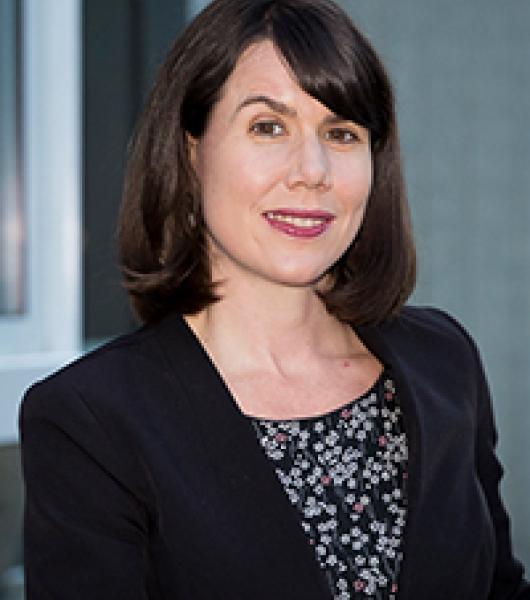
Kate Ogg is Professor and Associate Dean (Higher Degree Research) at ANU Law School. Her interdisciplinary research examines refugee law, human rights litigation, and feminist legal theory through works including the monograph 'Protection from Refuge: From Refugee Rights to Migration Management'. Ogg's scholarship investigates how courts shape refugee journeys globally. She holds a BA/LLB (First Class Honours, University Medal) from Griffith University, MSc (Distinction) from Oxford, and PhD from ANU. Ogg provides expert testimony to the Australian Federal Parliament and contributes to international media discourse on refugee policy. Research Focus: Current ARC-funded projects examine community sponsorship for refugees and movement litigation. Key research streams include: COVID-19 border restrictions' impact on citizenship conceptualizations Feminist engagements with international refugee law Deliberative democratic approaches to human rights adjudication Constitutional struggles in displacement contexts Recent publications analyze pandemic border controls as internal displacement events and refugee law's response to democratic backsliding. Collaborative work advances methodological innovation through refugee-centered legal scholarship. Leadership: As Director of the Rewriting Jurisprudence project, Ogg collaborates with scholars and lawyers with displacement experiences to reimagine legal precedents. She co-leads the Law, Governance & Institutions cluster at ANU's Institute for Climate, Energy & Disaster Solutions.
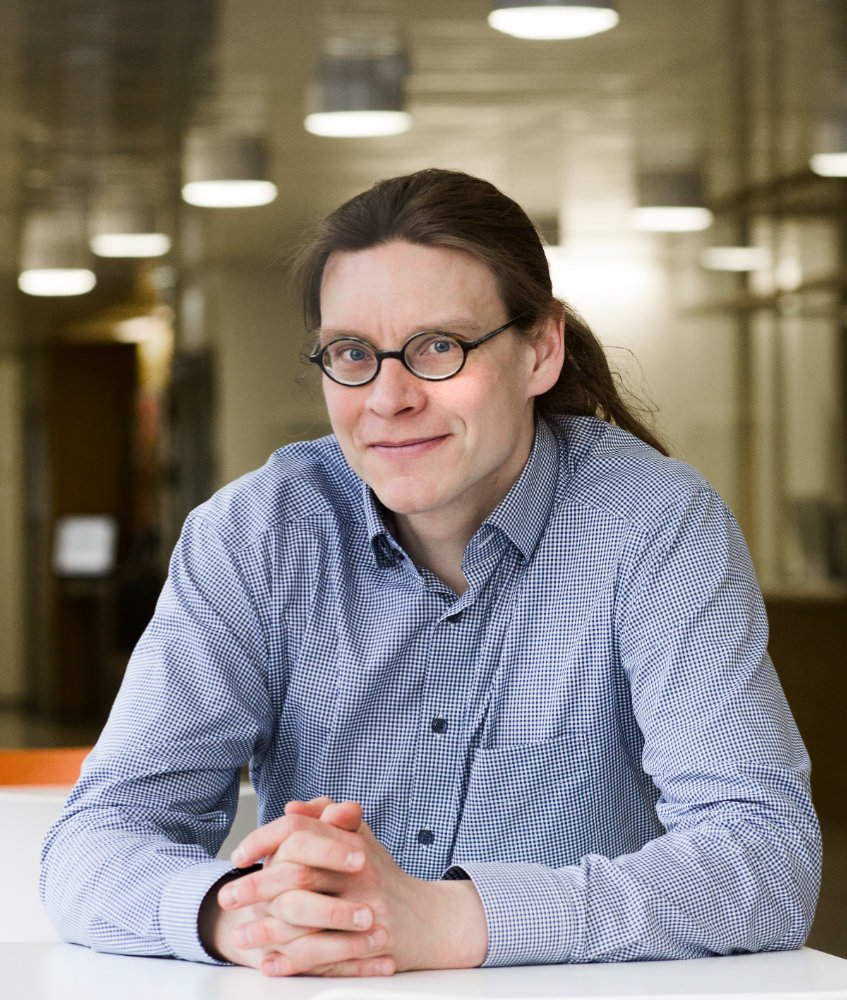
Pertti Ahonen is a Professor in the Department of History and Ethnology at the University of Jyväskylä. He completed his PhD at Yale University in 1999 and held teaching positions at the University of Sheffield and the University of Edinburgh for fifteen years before joining Jyväskylä in 2014. His research focuses on modern and contemporary European history, particularly post-1945 Germany and Central Europe, with emphasis on forced migrations, transnational history, and ethno-national categorizations. Notable publications include After the Expulsion (Oxford UP, 2003) and Death at the Berlin Wall (Oxford UP, 2010). Current research projects include Expellees and Ethno-National Categorizations in Europe , funded by the Research Council of Finland (2021-2025) Collaboration on Rethinking the Politics of Environment (2020-2022). His academic contributions span book reviews, journal articles, and conference organization, reflecting engagement with postwar European political discourse, Germany's Cold War dynamics, and migration studies.
Sergio Carrera serves as Senior Research Fellow and Head of the Justice and Home Affairs Unit at the Centre for European Policy Studies (CEPS), a prominent Brussels-based think tank. Additionally, he holds the position of Adjunct Professor at the Paris School of International Affairs (PSIA) in SciencesPo, France, where he contributes to academic teaching and research in international affairs. Dr. Carrera's academic background includes a Ph.D. on immigration and citizenship from Maastricht University (The Netherlands), an LL.M. in European, Comparative and International Law from the University of Maastricht, and a Law Degree from Universidad de Salamanca in Spain. His extensive educational foundation in European and international law underpins his expertise in EU justice and home affairs policy. His primary research interests focus on EU justice and home affairs (JHA) law and the Area of Freedom, Security and Justice policy, with particular emphasis on migration, asylum, citizenship, and Schengen policies. Dr. Carrera's expertise also extends to EU criminal justice law and police cooperation, examining their impacts on data protection, privacy, and the rights of the defense. His work consistently addresses the intersection between security measures and fundamental rights within the European context. Dr. Carrera has produced an extensive body of scholarly work, with over 190 published publications according to the available information. His recent research has particularly focused on EU-US data transfers, rule of law challenges in the context of migration management, global asylum governance, and the evolving landscape of EU security policy. His publications demonstrate a consistent concern with ensuring that security and migration policies uphold fundamental rights and the rule of law. Among his notable contributions are policy analyses on the European Green Deal's implications for climate policy, assessments of the EU's response to the Ukraine crisis, and examinations of the impact of the Trump administration on EU security policy. His research often bridges academic analysis with practical policy recommendations for EU institutions. Dr. Carrera leads and participates in numerous research projects addressing critical issues in EU policy. Current initiatives include "Reclaiming our past, rebuilding our future: new approaches to fighting antigypsyism" (2024-2026) and the "Study on Mapping Civil Dialogue Practices in the EU Institutions" (2024-2025). Previous significant projects include "Global Asylum Governance and European Union's Role" (ASILE, 2019-2023), "Pan-European Response to the ImpactS of COVID-19" (PERISCOPE, 2020-2023), and "IT tools and methods for managing migration FLOWS" (ITFLOWS, 2020-2023). His work has been commissioned by various EU institutions, including the European Parliament's Policy Department for Citizens' Rights and Constitutional Affairs, demonstrating the policy relevance and impact of his research. Dr. Carrera's expertise is frequently sought for task forces addressing timely issues such as EU-US data transfers, digital justice, and cross-border cooperation in criminal matters.
Rachel Heath is the Alberta C. Corkery Professor of Economics at the University of Washington, where she has been a faculty member since 2011. She was promoted to Associate Professor in 2018 and to her current named professorship in 2024. Her research focuses on development and labor economics, with particular emphasis on women's economic empowerment in developing countries. Dr. Heath received her PhD in Economics from Yale University in 2011, following an M.Phil (2008) and M.A. (2007) from the same institution. She earned her B.S. in Economics, magna cum laude, from Duke University in 2005, where she was also awarded the Robertson Scholarship and elected to Phi Beta Kappa. Her research interests span several interconnected areas within development economics. Much of her work examines labor market opportunities for women in developing countries, particularly in the garment industry in Bangladesh. She investigates how these new job opportunities affect women's lives, the factors influencing women's decisions to join the labor force, and how to improve working conditions in export manufacturing. Her research also explores intra-household resource allocation, social networks, and the relationship between female labor force participation and domestic violence. She has conducted extensive fieldwork in Africa (particularly Ghana) and South Asia (particularly Bangladesh). Her recent publications show a consistent focus on women's economic empowerment across multiple dimensions. She has examined the effects of graduation programs targeting women in the Democratic Republic of Congo, the impact of international scrutiny on manufacturing workers following the Rana Plaza collapse in Bangladesh, and labor supply responses to health shocks in urban Ghana. Her work often employs rigorous experimental and quasi-experimental methods to establish causal relationships. Dr. Heath has received numerous honors and awards for her scholarly contributions: Milliman Distinguished Scholar (2018-2024) World Bank Economic Review Excellence in Refereeing Award (2018, 2022, 2023) Corkery Distinguished Scholar (2017-2018) American Institute of Bangladesh Studies Program Support Award (2016) As an advisor, Dr. Heath has chaired or served on committees for numerous PhD students, many of whom have gone on to academic positions at institutions including UCLA, Rhodes University, Central Bank of Colombia, and Bryant University. Her research has been supported by substantial grants from organizations including the International Growth Centre, Weiss Foundation, Women's Economic Empowerment and Digital Connectivity initiative, and the Social Science Research Council. Dr. Heath is actively engaged with several research centers and initiatives, including the Abdul Latif Jameel Poverty Action Lab (J-PAL), Henry Bridges Center for Labor Studies, Bureau for Research and Economic Analysis of Development (BREAD), Center for Effective Global Action (CEGA), and Center for Statistics in the Social Sciences (CSSS) at the University of Washington.
Wesley Ueunten is a Professor in the Asian American Studies Department within San Francisco State University's College of Ethnic Studies. Currently on a Fulbright fellowship at Meio University in Okinawa, he researches Okinawan cultural identity in diaspora contexts shaped by U.S. and Japanese colonialism. Education: Ph.D. Ethnic Studies, University of California at Berkeley M.A. Sociology, University of Hawai'i, Manoa B.A. Ethnic Studies, University of Hawai'i, Manoa His research critically examines Okinawan identity formation through cultural transmission, intergenerational trauma, and resistance against appropriation. He investigates how discrimination within Japanese immigrant communities forced Okinawan traditions into private spheres, and how these practices later emerged as public symbols of identity amid commodification trends. His work centers Okinawan women's experiences and U.S. military occupation impacts. Analysis of his publications reveals a cohesive trajectory from historical resistance movements (e.g., 1970 Koza Uprising) to contemporary identity politics, with consistent focus on diaspora communities across Hawai'i, the Americas, and Okinawa. His scholarship demonstrates evolving methodologies from oral history to critical discourse analysis, highlighting gendered dimensions of cultural survival. Scientific Awards: Community University Empowerment Grant, SFSU Cesar Chavez Institute (2010) New Uchina Goodwill Ambassador Activities Support Program Grant Professor Ueunten actively mentors through campus roles as Faculty Advisor for the Asian Student Union and Hmong Student Association. His community leadership includes Vice Presidency of the Okinawa Kenjinkai of San Francisco, founding membership in Genyukai Berkeley, and research contributions to the Japanese Peruvian Oral History Project. His current Fulbright project documents the transnational journey of a traditional Okinawan song from hidden family practice to global symbol of identity, interviewing diaspora communities in Hawai'i, California, and Okinawa including South American return migrants.
Mikko Myrskylä is Director at the Max Planck Institute for Demographic Research (MPIDR) and Professor of Social Data Science at the University of Helsinki. Previously, he served as Professor of Demography at the London School of Economics. His academic training includes a PhD in Demography from the University of Pennsylvania and a PhD in Statistics from the University of Helsinki. His research focuses on population health, fertility dynamics, and demographic forecasting. Key areas include: Low fertility determinants through the ERC Synergy project BIOSFER Social inequalities in health via the Max Planck-University of Helsinki Center Labor demography and population aging He leads MPIDR's Laboratory of Population Health, Laboratory of Fertility and Well-Being, and Research Group Labor Demography. Myrskylä's recent publications show strong emphasis on: Fertility trends under economic uncertainty Health disparities across migration/life course stages Family dynamics and aging societies Methodological innovations in demographic analysis Work frequently employs large-scale register data and cross-national comparisons, particularly in Nordic contexts. He leads major collaborative initiatives including: ERC Synergy project BIOSFER (low fertility causes) MaxHel Center (social inequalities in health) with extensive interdisciplinary teams across Europe.
Ana Paulina Lee is an Assistant Professor of Writing and Digital Humanities in the Comparative Literature, English, and Creative Writing Department at the American University of Paris. She joined AUP in 2025 after teaching Latin American literature and culture at Columbia University for eight years and serving as a Mellon Postdoctoral Fellow at Tulane University. Her interdisciplinary scholarship bridges literature, history, law, and urban studies with particular focus on marginalized narratives in the Americas. Ph.D. from University of Southern California M.A. from New York University B.A. from Binghamton University Professor Lee's research examines how stories—archival, fictional, oral—shape legal imagination, social life, and urban experience in the Americas. She specializes in the intersections of magic, law, and literature in Latin America, with particular focus on Asian and African diasporas in Brazil. Her work traces how narrative functions as both historical record and catalyst for social transformation, exploring themes of slavery, emancipation, colonial legacies, and urban memory. She approaches these topics through interdisciplinary lenses combining literary analysis with histories of labor, migration, and performance. Lee's recent publications reveal a consistent focus on marginalized narratives and their impact on social structures. Her scholarship connects legal history with cultural production, showing how magical thinking and narrative practices shape urban spaces and social relations. Works like 'Urban Sorcery, Segregation, and Spectacle in Twentieth-Century Rio de Janeiro' and 'Black Magic City' demonstrate her innovative approach to understanding the relationship between occult logics and legal frameworks in Brazilian contexts. Her research on diasporic communities, particularly Chinese and Japanese experiences in Latin America, contributes significantly to transnational and comparative race studies. David B. Larson Fellowship in Health and Spirituality, Kluge Center, United States Library of Congress (2025-2026) National Endowment for the Humanities Fellowship (2025) Social Sciences Research Council, Inaugural Recipient of Interdisciplinary Projects in the Social Sciences (2020-2023) Institute for Ideas and Imagination Fellowship, Columbia University in Paris, France (2021-2022) Provost's Tsunoda Senior Fellowship, Visiting Scholar, Waseda University, Tokyo, Japan (2019) Heyman Center Fellow, The Heyman Center for the Humanities, Columbia University (2017-2018) Fulbright, Lisbon, Portugal (2013-2014) Professor Lee's scholarly activities have been generously supported by major research grants from the National Endowment for the Humanities, the Social Sciences Research Council, and the Library of Congress. Her work demonstrates a commitment to interdisciplinary approaches that bridge humanities and social sciences, particularly through projects examining intersections of race, migration, and cultural production in the Americas. Her publication 'Socially Engaged Oral History Pedagogy Amid the COVID-19 Pandemic' indicates a strong commitment to innovative teaching methods and community-based research. While specific details about current advisees aren't provided, her research program suggests engagement with graduate students interested in diaspora studies, urban history, and literary-cultural analysis. Though not explicitly mentioned in the available information, Professor Lee's research on urban spaces, magic, and law in Brazil likely involves collaborative work with scholars across disciplines. Her participation in centers like the Institute for Ideas and Imagination at Columbia University suggests engagement with interdisciplinary research communities focused on global cultural production and social transformation. Her work contributes to ongoing conversations about how narrative practices shape legal frameworks and social structures in the Americas, particularly regarding racial formation and diasporic experiences.
Jeyhun Alizade is a Postdoctoral Research Fellow at the WZB Berlin Social Science Center, affiliated with the Migration, Integration, Transnationalization department. He previously served as a Visiting Researcher in the Transformations of Democracy department. His work focuses on immigration, far-right extremism, crime, political violence, and political behavior. Alizade holds a Ph.D. in Politics from Princeton University and a B.A./M.A. in political science from the Free University of Berlin. Education: Ph.D. in Politics, Princeton University B.A./M.A. in Political Science, Free University of Berlin Research Interests: Alizade examines how immigration policies intersect with crime perception, far-right political mobilization, and democratic representation. His research employs experimental methods and comparative analyses, with a regional focus on Western Europe. Key topics include elite behavior, political violence impacts on governance, and institutional responses to extremism. Publications: His work appears in top journals like the American Journal of Political Science, Journal of Politics, and European Journal of Political Research. Notable contributions include studies on immigrant political representation and the electoral consequences of crime rhetoric. Awards: Best Graduate Student Paper Award, APSA Migration and Citizenship Section Current Projects: Includes a book project with Cambridge University Press on state biases in addressing right-wing extremism. Ongoing research explores security forces' far-right voting patterns and anti-extremist elite mobilization strategies.
Dr. Abi Stone is a Reader in Physical Geography at the University of Manchester since 2024, specializing in Quaternary environmental change and dryland systems. She holds expertise in luminescence dating, geoarchaeology, and hydrogeology. Her research focuses on understanding climatic and environmental shifts in deserts and their impacts on human migration, with active projects in the Namib Sand Sea, Saudi Arabia, and the Himalayas. She leads the MERI Earth History, Palaeoenvironments, and Archaeology theme and is affiliated with the Quaternary Environments and Geoarchaeology research groups. Education: DPhil (2009) in Quaternary Science from the University of Oxford, MSc (2004) from Royal Holloway, and BA (2003) in Geography (1st class) from the University of Oxford. Administrative Roles: Currently coordinates Postgraduate Research in Physical Geography and has held roles such as MERI Theme Champion and QEG Research Group Convener. External roles include External Examiner for Royal Holloway’s MSc Quaternary Science and the University of Gloucestershire’s BSc Geography. Research Interests: Interdisciplinary work combining Quaternary science, archaeology, and geomorphology. Key projects include the Leverhulme-funded PANS project studying human occupation in the Namib Sand Sea and collaborations on Saudi Arabian geoarchaeology. Active grants include the WiSH project (INQUA) and Manchester-Melbourne-Toronto initiatives. Awards: Recognized for teaching excellence with the Innovator of the Year (2019) and Outstanding PGT Dissertation Supervisor (2022). Supervised 4 PhD students and contributed to over 67 research outputs. Teaching: Convenes courses on Dryland Environments, Geomorphology, and fieldwork in the Pyrenees, while co-teaching advanced modules on environmental governance and decolonizing geography.
Dr. Daniel M. Parker is a Research Professor in the Department of Public Health at the University of California, Irvine. He holds a Ph.D. and has conducted postdoctoral research at the Shoklo Malaria Research Unit (a joint program of Mahidol University and the University of Oxford). His work focuses on spatial epidemiology and spatial demography, particularly in the context of infectious diseases like malaria. He has contributed to global health initiatives addressing malaria elimination in Myanmar, Thailand, Cambodia, and Syria. His research integrates geographic information systems (GIS), demographic models, and community engagement to combat health challenges in conflict zones and refugee settings. Key areas of research include malaria epidemiology, mass drug administration strategies, and the health impacts of population displacement. He has authored over 20 peer-reviewed articles on topics such as spatial clustering of malaria, the effects of air raids on disease incidence, and the role of herd protection in malaria control. His work emphasizes interdisciplinary approaches to address complex health systems challenges in resource-limited settings. Education: Ph.D. in Public Health (2014) Affiliations: Shoklo Malaria Research Unit, Mahidol-Oxford Tropical Medicine Research Unit Key Projects: Malaria Elimination Task Force in Eastern Myanmar, refugee health studies in Thailand-Myanmar border camps Dr. Parker’s research has informed policy on malaria control, including interventions targeting asymptomatic reservoirs and spatial analysis of disease hotspots. His work on the intersection of human migration and disease transmission highlights the need for holistic health approaches in conflict and displacement scenarios.
D. Burnett is an Assistant Professor in the Department of Anthropology, Faculty of Social Sciences, University of Victoria. Currently on leave, Burnett is a medical anthropologist specializing in Medical Anthropology, Cultural Anthropology, Anthropology of Race, and Anthropology of Religion. Educational background: PhD, University of Pennsylvania Burnett's research critically examines the intersections of race and racism, identity formation, religion/spirituality, and health inequities through frameworks of Indigeneity/Blackness and embodied spiritual practices. With deep commitment to community-driven health strategies, work spans chronic disease prevention, mental health, maternal/perinatal health, and the health benefits of love/family structures within structural inequities. Geographically focused on Brazil, Latin America, the Caribbean, North America, and the South Pacific, research explores how citizenship, globalization, migration, and policy shape partnerships, procreation, and parenting. Burnett actively engages in health promotion, policy implementation research, and community-based health initiatives, emphasizing how structural forces frame family formation and well-being across transnational contexts.
Nando Sigona is Professor of International Migration and Forced Displacement and Director of the Institute for Research into Superdiversity (IRiS) at the University of Birmingham, UK. He serves within the School of Geosciences Human Geography and Spatial Planning in the Urban Geography department, where he leads significant research on migration policy and forced displacement. His research spans critical areas including undocumented migration, the migration-citizenship nexus, naturalisation and denaturalisation processes, Romani politics and anti-Gypsyism, EU asylum systems, Brexit impacts on European mobility, and child and youth migration. Sigona's work is characterized by its policy relevance and theoretical innovation in understanding contemporary migration governance. His recent publications demonstrate a clear trend toward examining the intersection of migration enforcement, digital platforms, and labor markets, particularly evident in his 2025 research on migrant food delivery riders in Birmingham. His scholarly output spans foundational theoretical works like The Oxford Handbook of Superdiversity (2022) to urgent contemporary analyses of migration enforcement in the gig economy. Sigona has received significant research funding including Horizon Europe support for the I-CLAIM project (Improving the living and labour conditions of irregularised migrant households in Europe), where he serves as co-Investigator and Scientific Director. His work has been published across leading journals including Sociology, Social Anthropology, Antipode, Journal of Ethnic and Migration Studies, and Ethnic and Racial Studies. Founding editor of Migration Studies (Oxford University Press) Lead editor for Global Migration and Social Change book series (Bristol University Press) Director of the Institute for Research into Superdiversity (IRiS) His recent blog posts and media commentary reveal active engagement with contemporary policy debates, particularly regarding Labour's immigration enforcement strategies targeting migrant workers in the gig economy. Sigona's research team has documented a 79% increase in immigration raids in Birmingham since Labour came to office, based on Freedom of Information data (FOI2025 07429).
Nina Vollenbroker serves as Associate Professor of Architecture and Director of the Architectural Design PhD programme at University College London's Bartlett School of Architecture. A registered architect in the UK (ARB) and Germany (Architektenkammer NRW), she also acts as editor for Architectural Research Quarterly since 2020 and serves on the Society of Architectural Historians’ advisory committee on accessibility. Her educational background includes a PhD in Architectural History from UCL, along with multiple UCL degrees: Master of Architecture (2005), Certificate (2004), Master of Science (2002), Diploma (2001), and Bachelor of Architecture from Oxford Brookes University (1997). Vollenbroker's research centers on the intersection of deafness, disability, and architectural design, challenging normative spatial paradigms through historical and contemporary lenses. Her current Paul Mellon Centre-funded project "Hide and Speak" examines the first purpose-built deaf schools in 19th-century Britain, revealing how architecture actively shaped cultural understandings of deafness. She extends this work through "Deafening Architectural Modernism," which re-evaluates Adolf Loos's contributions through the lens of his hearing loss, demonstrating how sensory experience fundamentally informs spatial design. Her broader research encompasses migration studies, gendered domestic spaces, and critical examinations of architectural exclusion. Her recent publications span architectural history, disability studies, and material culture, with significant contributions to edited volumes on deafness in architecture (University of Illinois Press, 2025), mobile home-making (Brill, 2025), and the American West (Routledge, 2025). These works consistently demonstrate her methodological approach of centering marginalized perspectives within architectural discourse. Wilhelm Award from Pioneer America Society for outstanding research in material cultures studies Paul Mellon Centre Mid-Career Fellowship Royal Institute of British Architects Research Award British Academy Research Fund Award Vollenbroker supervises doctoral students in architectural design while securing major research funding from bodies including the Arts and Humanities Research Council, British Academy, and Royal Institute of British Architects. Her international collaborations include work with the Lebanese NGO Biladi on migration studies and knowledge-exchange programs funded by The Council for British Research in the Levant. She regularly convenes major conference sessions, including at the Society of Architectural Historians and Architectural Humanities Research Association conferences, and presents at institutions worldwide including Columbia University, Yale University, and Heidelberg University. Her research group actively engages with disability advocacy organizations and architectural practitioners to translate historical insights into contemporary inclusive design practices, particularly through her editorial work on special journal issues addressing disability and architecture.
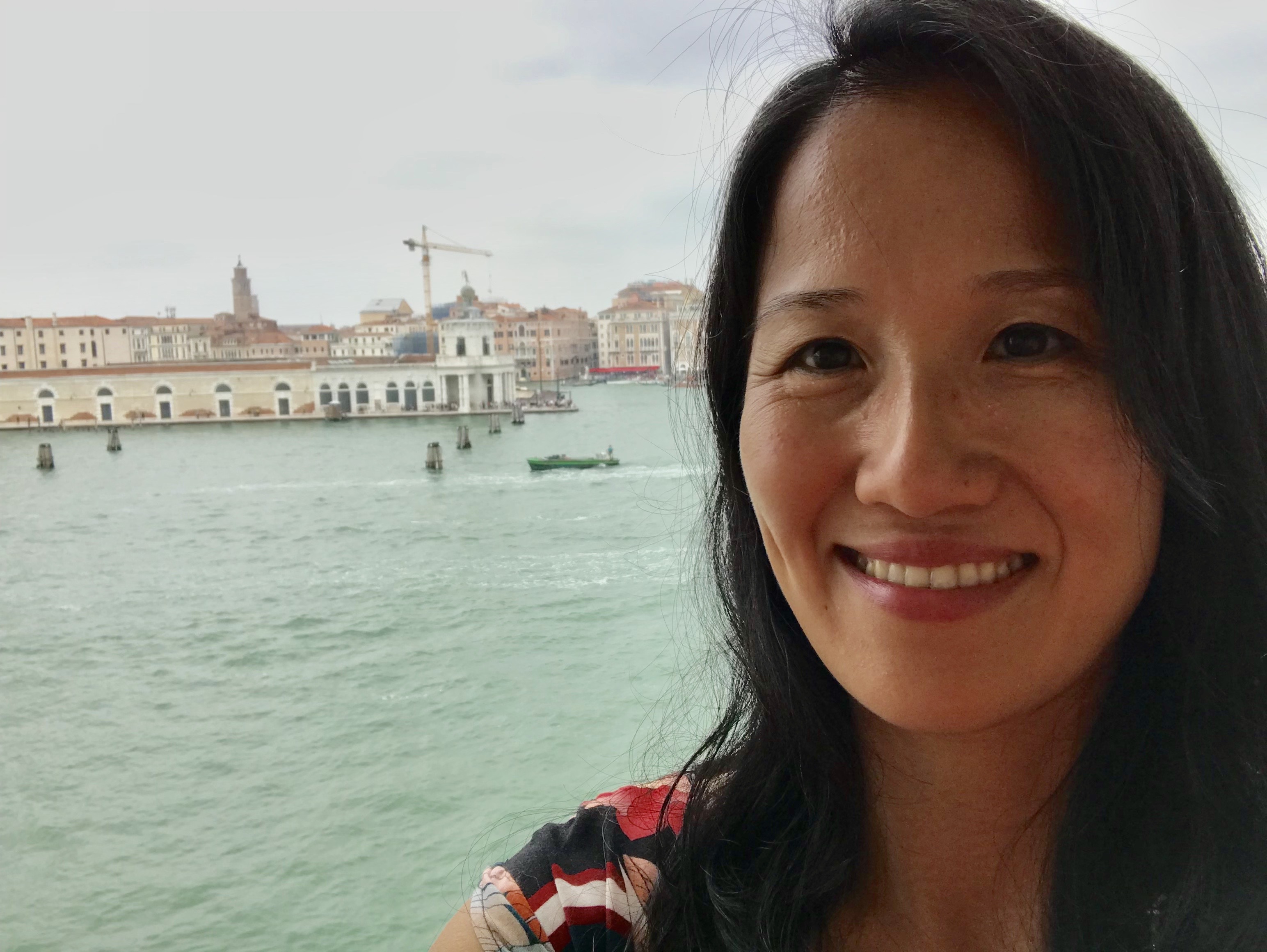
Roxane Caron is an Associate Professor at the École de travail social (School of Social Work) within the Faculty of Arts and Sciences at the Université de Montréal. She holds affiliations with the Centre d'études et de recherches internationales (CÉRIUM) and the CIUSSS du Nord-de-l'Île-de-Montréal – Hôpital du Sacré-Cœur. Her research focuses on refugee women's experiences, transnational social work, and decolonial methodologies. She teaches courses such as SVS-6425 (International Social Work) and supervises graduate students in social work and international studies. Her research expertise includes refugee camp dynamics, gendered migration, and intersectional theory. Key projects include the Clinic Mauve initiative addressing LGBTQI+ migrant health and the Transnationalism and Psycho-Social Well-Being project. She has led or co-led over 20 research grants funded by agencies like the CRSH and FRQSC, emphasizing community partnerships and equity. Award-winning educator, Caron's work bridges academic research, clinical practice, and activism. Her recent publications explore ethical frameworks in social work education and refugee integration challenges. She collaborates internationally on migration studies, particularly in the Middle East and Quebec.
Laia Balcells is a Professor in the Department of Government at Georgetown University. She holds a Ph.D. in Political Science from Yale University, along with M.Phil and M.A. degrees in Political Science from Yale, and a B.A. in Political Science from Universitat Pompeu Fabra. Her research focuses on political violence, civil wars, nationalism, and transitional justice. Her primary research examines the dynamics of violence in civil wars, post-conflict societies, and territorial disputes, with significant work on the Spanish Civil War and contemporary conflicts in Colombia and Catalonia. Key interests include the legacy of violence on political identities, mechanisms of transitional justice, and the relationship between historical memory and contemporary politics. Recent publications concentrate on themes of affective polarization in secessionist movements, the impact of international conflicts on domestic nationalism, and the role of cultural institutions in post-conflict reconciliation. Methodologically, her work combines historical archives with contemporary empirical analysis to study long-term effects of political violence.