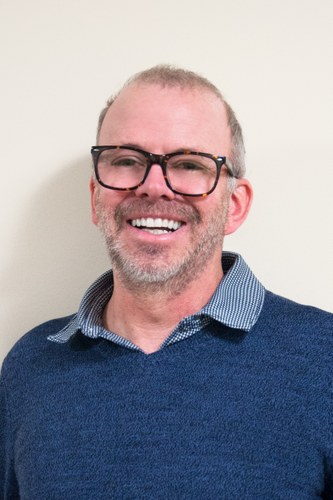
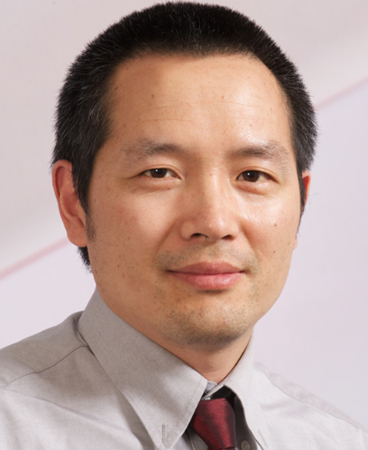
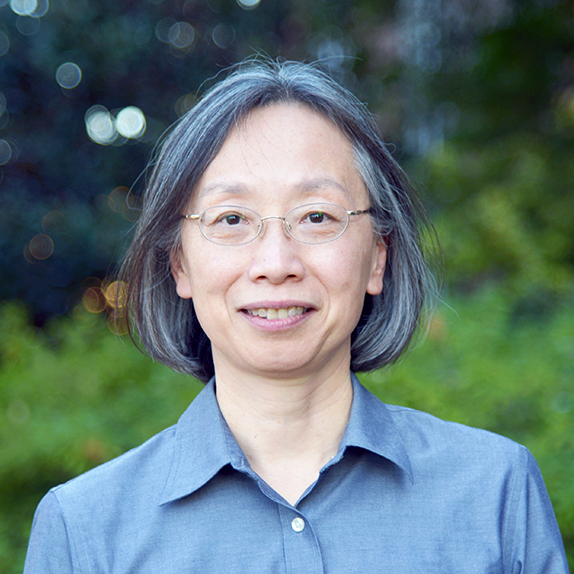
Douglas Bird is Professor of Anthropology at Penn State, researching interactions between social/ecological systems in foraging societies. His collaborative fieldwork with Martu Aboriginal communities examines hunting, fire ecology, and landscape evolution. Key research areas: Ethnoarchaeology of hunter-gatherers Anthropogenic fire regimes Co-evolution of humans/ecosystems Coastal archaeology Field sites include Australia's Western Desert and Torres Strait Islands.
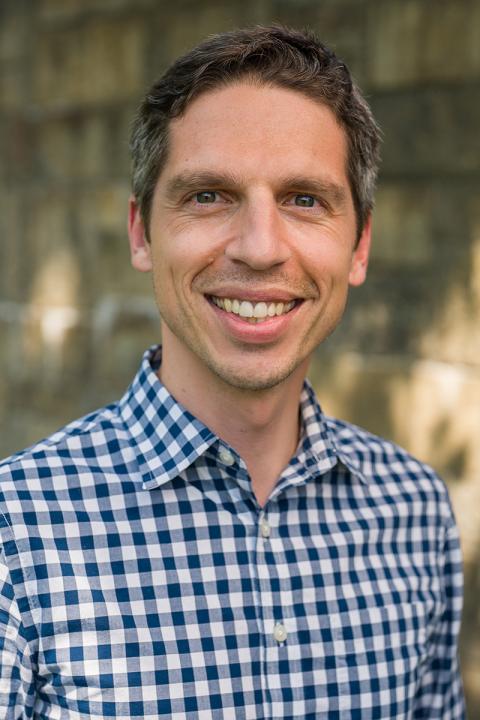
Anton Bekkerman is a Professor in the Department of Agriculture, Nutrition, and Food Systems at the University of New Hampshire, serving as Associate Dean for Research and Director of the New Hampshire Agricultural Experiment Station. He holds a Ph.D. and M.S. in Economics from North Carolina State University and a B.B.A. from Loyola University Maryland. His research spans agricultural marketing, price forecasting, policy analysis, and risk management, with specific expertise in: Commodity price dynamics (grain and fertilizer markets) Agricultural insurance and policy design Farm decision-making and risk analysis Spatial economic modeling Recent publications examine quality-based wheat pricing, biofuel policy impacts on fertilizer markets, crop insurance distributions, and economic dimensions of pest management. His work integrates economic theory with empirical analysis of agricultural systems. Dr. Bekkerman leads research initiatives addressing agricultural sustainability and economic resilience in changing climates.
Mywish Maredia is a fixed-term Professor of Development Economics at Michigan State University's Department of Agricultural, Food, and Resource Economics. She serves as Interim Co-Director of the Food Security Group and leads the Feed the Future Innovation Lab for Food Security Policy. Her research focuses on agricultural R&D impacts, technology adoption, seed systems, and nutrition policies in Africa, Asia, and Latin America. She holds a Ph.D. from Michigan State University and has over 20 years of experience with international organizations like USAID, CGIAR, and the World Bank. Education: Ph.D. (1993) and M.A./B.A. (1984-1986) in Economics from University of Bombay and Michigan State University Research Interests: Impact evaluation methodologies, agrifood system transformations, and policies promoting nutrition and poverty reduction. She has pioneered innovative approaches like DNA fingerprinting for crop variety tracking and ICT-based agro-advisory systems. Key Achievements: Over $94 million in grants secured, 40+ peer-reviewed publications, and recognition through awards like the Outstanding Dissertation Award (1994). Her work bridges academic rigor with practical policy advice, influencing agricultural strategies in over 30 countries. Scientific Awards: J-PAL Invited Researcher (2023), Ralph H. Smuckler Award (2021), Meritorious Achievement Award (2017) Mentoring: Currently advises 9 Ph.D. students and collaborates with researchers globally. Leads initiatives like the Myanmar Agriculture Policy Support Activity and Thailand Regional Agriculture Innovation Network. Labs/Teams: Director of the Food Security Policy Innovation Lab, co-leader of CGIAR's Policy Research Cluster, and affiliate of the MSU Center for Global Change and Earth Observations.
Gyoung-Ah Lee is a Professor in Anthropology at the University of Oregon, specializing in environmental archaeology, paleoethnobotany, and the origins of agriculture in East Asia. She has conducted fieldwork across Asia, Australia, Canada, and North America, focusing on the transition from foraging to farming and cultural niche construction. Education: B.A., Seoul National University (1992) M.S., University of Toronto (1997) Ph.D., University of Toronto (2003) Her research spans Neolithic to early historic societies, with expertise in phylogenetics of crops, traditional farming technologies, and quantitative archaeology. She teaches courses on food origins, East Asian archaeology, archaeobotany, and plant-human interactions. Recent publications examine Neolithic dietary patterns in Jeju Island, niche construction in Korea, and land use transformations in North China. These works integrate isotope analysis, soil micromorphology, and interdisciplinary methodologies. Active grants include the Korean Studies Promotion Service Grant (2015-20) and National Geographic Science & Exploration Grant (2015-16). Her fieldwork in Northeast China and Jeju Island reflects global research scope.
Heather Liddell is an Assistant Professor at Purdue University with joint appointments in Mechanical Engineering and Environmental & Ecological Engineering. She leads the Liddell Research Group, focusing on sustainable manufacturing, environmental life cycle assessment, and mechanics of multilayered systems. Her work bridges engineering and policy, addressing industrial decarbonization and sustainable supply chains. She holds a PhD in Materials Science from the University of Rochester, postdoctoral training at the U.S. Naval Research Laboratory, and prior DOE contract experience. Education: PhD (2013, Materials Science, University of Rochester), MS (2010, Mechanical Engineering, University of Rochester), BS (2008, Mechanical Engineering, University of Rochester). Research Interests : Industrial decarbonization strategies and circular economy frameworks Fracture mechanics in multilayer systems (e.g., coatings, composites) Environmental LCA of emerging technologies Lightweighting strategies for transportation sectors Awards include the 2024 EnergyTech Prize, ASEE Postdoctoral Fellowship (2017), and multiple Above and Beyond Awards. Her group includes 9 researchers studying topics like EEIO modeling, adhesion in lithium-ion batteries, and dairy forage drying LCA. Lab activities emphasize interdisciplinary collaboration, with projects funded by DOE and industry partnerships. Recent work addresses carbon performance reporting in Industry 4.0 and rebound effects in decarbonization initiatives.
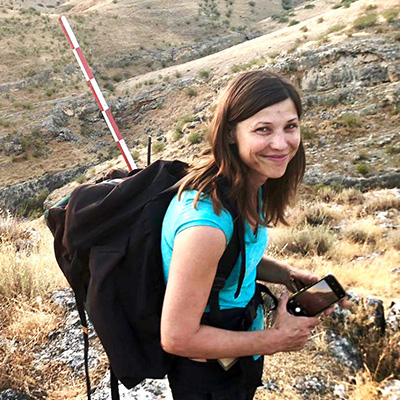
Jade d'Alpoim Guedes is an Assistant Professor in the Department of Anthropology at the University of California, San Diego (UCSD), and an affiliated researcher at the Scripps Institution of Oceanography. She specializes in environmental archaeology and ethnobiology, focusing on how human societies have adapted to climatic and environmental changes through agricultural and foraging strategies. Her work integrates archaeobotany, paleoclimate modeling, and computational analysis to study resilience in marginal environments across Asia. Education: Ph.D. in Anthropological Archaeology, Harvard University (2013) Postdoctoral Fellow, Department of Earth and Planetary Sciences, Harvard University (2013–2014) Research Interests: Her research explores the spread of agriculture across Asia, particularly on the Tibetan Plateau, and examines how prehistoric communities managed crop domestication and adaptation. Key projects include: High-altitude archaeology in Jiuzhaigou National Park, Sichuan Province Archaeobotanical analysis of Indus Valley sites (Harappa and Balakot) Climate change impacts on agricultural systems in China, Nepal, Thailand, and Pakistan Collaborations with crop scientists to study traditional landraces for modern resilience Publications: Recent work highlights: Climate-driven shifts in crop niches on the Tibetan Plateau Resilience strategies in marginal environments Archaeological evidence of early textile production and social complexity Grants & Collaboration: She collaborates with institutions like the Scripps Institution of Oceanography and international teams in Asia. Her research emphasizes interdisciplinary approaches to address modern agricultural challenges through archaeological insights.
Natalie Munro is a Professor in the Department of Anthropology at the University of Connecticut, specializing in zooarchaeology and the study of human-animal interactions during the transition to agriculture. She holds a Ph.D. from the University of Arizona (2001), an M.A. from Simon Fraser University (1994), and a B.S. from Southern Methodist University (1991). She was a postdoctoral fellow at the National Museum of Natural History of the Smithsonian Institution (2001-02) and has held fellowships at the University of Connecticut's Humanities Institute (2015-2016) and the Mandel Scholion Center at Hebrew University in Jerusalem (2017-2018). Her research focuses on the emergence of agriculture, zooarchaeology and taphonomy, animal domestication, behavioral ecology, human hunting practices, and human-animal interactions during the Epipaleolithic and Neolithic periods of Southwest Asia and the Eastern Mediterranean. She employs zooarchaeological methods to investigate the transition from hunting and gathering to food production, with particular attention to gazelle and other ungulate species in the Levant. Munro's extensive publication record includes articles in top journals like Science, PNAS, Current Anthropology, and Journal of Human Evolution. Her work demonstrates a consistent focus on understanding the complex pathways to animal domestication, particularly sheep and goats in Anatolia and the Levant, as well as specialized hunting strategies and ritual animal use during the Neolithic period. Her recent research explores mountain gazelle body size variation, aquatic resource exploitation during the Natufian period, and the emergence of animal management practices. She has received research support from prestigious organizations including the National Science Foundation and the Wenner-Gren Foundation for Anthropological Research. Munro serves as an Associate Editor for the Journal of Human Evolution and is a long-term co-chair and board member of the Connecticut Museum of Natural History. She teaches courses including Old World Archaeology, Near Eastern Prehistory, Origins of Agriculture, Zooarchaeology Method and Theory, and Quantitative Zooarchaeology.
Rachel A. Horowitz is an Assistant Professor in the Department of Anthropology at Washington State University (WSU), part of the College of Arts and Sciences. She holds a Ph.D. in Anthropology from Tulane University. Her research focuses on the organization of technology, particularly lithic production in ancient Maya economies, with fieldwork in western Belize and eastern Guatemala. She employs experimental archaeology and lithic sourcing methodologies to explore economic diversification and raw material procurement strategies. Education: Ph.D., Tulane University Research Interests: Lithic technology and its role in Maya socio-economic systems Experimental archaeology and technological organization Archaeological sourcing and material analysis Current Projects: Multi-sited analysis of Classic Maya lithic economies Lithic sourcing project in the Maya lowlands Awards/Grants: No specific awards listed in the provided text. Labs/Teams: Directs the Anthropology Lithics Lab at WSU, focusing on lithic analysis and experimental methods.
Jiangfeng Zhang is an Associate Professor in the Department of Automotive Engineering at Clemson University's College of Engineering, Computing and Applied Sciences. His research focuses on electric vehicle technologies, battery management, renewable energy integration, and smart grid solutions. Research Areas: His work spans battery optimization, grid resilience, autonomous vehicle control, and sustainable energy planning. Recent projects include solid-state battery advancements, V2G integration, and AI-driven energy management. Publication Trends: His articles predominantly address optimization challenges in electric mobility and grid stability, utilizing machine learning, game theory, and control systems. Key themes include decarbonization, cyber-physical security, and renewable integration under uncertainty.
Yucheng Feng is Professor of Soil Microbiology in Auburn University's Department of Crop, Soil & Environmental Sciences, College of Agriculture. Researches soil-plant-microbe interactions with focus on sustainable agriculture. Primary interests include soil health assessment, nutrient management (nitrogen/sulfur cycling), microbial source tracking in watersheds, and climate-smart practices like biochar application and cover cropping. Field studies emphasize US Coastal Plain ecosystems. Recent publications (2021-2025) predominantly address soil management (40%), microbial ecology (30%), and drought adaptation (20%). Emerging themes include DNA-based pollution tracing and circular economy approaches using agricultural waste. Laboratory based in Funchess Hall. Collaborates with Alabama Cooperative Extension on soil health initiatives.
Gregory T. Byrnes is a Professor in the Department of Biology at Siena University, where he has been a faculty member since 2012. He teaches upper-level courses including Comparative Biomechanics (integrating biology, physics, and engineering), Writing and Research Skills for Biologists, and General Biology, while actively involving undergraduates in hands-on research. His academic credentials include a Ph.D. in Integrative Biology from the University of California, Berkeley (2009), where he investigated gliding biomechanics in mammals, followed by postdoctoral research at the University of Cincinnati on arboreal snake locomotion. Ph.D., Integrative Biology, University of California, Berkeley, 2009 Postdoctoral Fellow, University of Cincinnati, 2009-2011 Teaching Fellow (NSF GK-12), UC Berkeley, 2008-2009 Dr. Byrnes' research centers on understanding animal locomotion through the physical interaction between organisms and their environments . He integrates laboratory-based physiology and field-based ecology to examine how morphology, physiology, and behavior contribute to performance in ecologically relevant behaviors. His work bridges functional morphology, evolutionary biology, and engineering to address questions at the interface of locomotor physiology and behavioral ecology, with emphasis on whole-organism performance in unpredictable natural settings. Analysis of his 15 most recent publications reveals a dominant focus on comparative biomechanics of arboreal and gliding locomotion across diverse taxa (squirrels, geckos, snakes, colugos). Key themes include tail-assisted aerial maneuvers, substrate interaction mechanics, locomotor trade-offs (safety vs. economy), and ecological implications of movement performance. This body of work demonstrates consistent application of interdisciplinary methods to solve problems ranging from fundamental biomechanics to conservation applications. His scientific recognition includes: Visiting Scientist position at the Max Planck Institute for Intelligent Systems (2018) Dr. Byrnes maintains a strong commitment to undergraduate research mentorship, embedding students directly in his biomechanics investigations. His teaching philosophy emphasizes merging research into classroom instruction to demonstrate scientific processes firsthand, leveraging Siena's small class sizes and laboratory-intensive curriculum. While specific grant details aren't provided, his sustained research output and international collaborations (including Max Planck Institute) indicate successful external funding acquisition. His laboratory work spans both controlled experimental settings and field studies, with recent projects exploring bio-inspired robotics applications (e.g., tail reflexes in soft robotics). Current research directions focus on optimizing habitat connectivity for gliding mammals and translating biomechanical insights into engineering solutions.
Bart Fischer is a Research Associate Professor and Co-Director of the Agricultural and Food Policy Center at Texas A&M University's College of Agriculture & Life Sciences. He holds a B.S. in Business and Administration and Agricultural Economics from Oklahoma State University, an M.Phil in Land Economy from the University of Cambridge, and a Ph.D. in Agricultural Economics from Texas A&M University. Fischer's research focuses on agricultural and natural resources policy, with expertise in farm economics, risk management, and policy analysis. His work addresses real-world challenges in agricultural policy design and implementation. His recent publications demonstrate a consistent focus on agricultural risk management frameworks, climate adaptation strategies, food security programs, and economic analyses of farm policies. Research frequently examines the intersection of agricultural economics, environmental sustainability, and policy implementation challenges.
Steven Hines is a Professor and Extension Educator with the University of Idaho Extension, serving Jerome and Twin Falls counties in the Magic Valley region. He is affiliated with the University of Idaho’s College of Agricultural and Life Sciences and works directly with farmers and landowners to promote sustainable agricultural practices. His role combines applied research, outreach, and education in crop production and soil health. B.S. in Agricultural Education, University of Idaho, 1992 M.S. in Agricultural Education, University of Idaho, 1996 Steven Hines' research and extension interests focus on sustainable farming systems, particularly cover crop adoption , interseeding cover crops into corn , soil health improvement , and farm management . His work emphasizes practical solutions for farmers, including optimizing forage and cereal production, managing farm succession, and enhancing soil and water conservation. He has led demonstration projects on wide-row corn and cover crop integration, aiming to improve long-term land productivity. His recent publications reflect a strong trend in applied agricultural science, with a focus on cover crops , soil health , forage-livestock systems , and economic aspects of farming . These works span peer-reviewed journals and extension bulletins, targeting both academic and practitioner audiences. Key themes include interseeding techniques, biostimulant use, and regional adoption of conservation practices. Steven Hines has received several prestigious awards for his contributions to agricultural extension and farm management: Search for Excellence in Farm and Ranch Financial Management, National Award Winner, National Association of County Agricultural Agents (2018) Distinguished Service Award, National Association of County Agricultural Agents (2017) Applied Research Poster - State Winner, National Association of County Agricultural Agents (2017) Agency Employee of the Year, Idaho Association of Soil Conservation Districts (2015) While he does not formally advise graduate students, Hines plays a critical advisory role for farmers, ranchers, and agricultural professionals. He has secured funding for applied research and extension projects, particularly in soil health, cover crops, and farm economics. His work often involves collaboration with county conservation districts, the Natural Resources Conservation Service (NRCS), and regional agricultural stakeholders. He has contributed to economic impact studies and developed educational programming on farm succession and financial management. Steven Hines is actively involved in the University of Idaho Extension’s regional programming, particularly in the Magic Valley. He leads demonstration farms and field days, collaborates with the Kimberly Research and Extension Center, and works with multi-agency teams to address agricultural challenges such as weed management and water conservation. His outreach extends through workshops, webinars, and publications, forming a vital link between research and on-farm application.
Mary Prendergast is an Associate Professor of Anthropology at Rice University, specializing in African archaeology with a focus on the interplay between human societies and their environments. Her research examines the origins and spread of pastoralism, ancient foraging strategies, and the ethical dimensions of biomolecular archaeology, particularly ancient DNA studies. She co-leads excavations at the Pastoral Neolithic site of Luxmanda in Tanzania and collaborates with institutions like the National Museum of Tanzania and the University of Florida. Her work integrates zooarchaeology, geoarchaeology, and biomolecular methods to explore how herders, foragers, and fishers interacted in eastern Africa. She emphasizes ethical frameworks for genetic research, advocating for meaningful stakeholder collaboration. Key themes include climate adaptation, disease dynamics, and long-term demographic shifts linked to subsistence changes. Prendergast’s research also spans the Pleistocene-Holocene transition, investigating technological innovations and dietary adaptations. She teaches courses on African Archaeology, Zooarchaeology, and Museum Ethics. Her publications highlight interdisciplinary approaches to understanding human ecological impacts and cultural evolution across millennia. Notable contributions include studies on the genetic history of African foragers, the entangled origins of Swahili coastal populations, and the ethics of ancient DNA research. She actively engages in public science communication through articles in Nature and The Conversation , bridging academic research with broader societal relevance.
Kathleen Morrison is the Sally and Alvin V. Shoemaker Professor of Anthropology at the University of Pennsylvania, affiliated with the School of Arts and Sciences and the Department of Anthropology. Her research focuses on historical ecology in South Asia, integrating archaeology, environmental science, and history to study long-term relationships between humans and the environment. She leads the LandCover6k initiative to improve climate models using archaeological and historical data. Education: PhD in Anthropology from UC Berkeley (1992), MA from University of New Mexico (1987), BA from University of Notre Dame (1984). Research interests include historical anthropology, colonialism, agricultural practices, political ecology, water management, and biodiversity. Her fieldwork in South India explores irrigation systems, landscape history, and socio-natural interactions. She directs the Paleoecology Lab and contributes to projects like the Vijayanagara Metropolitan Survey.