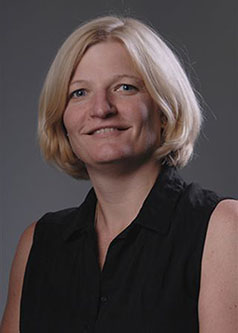
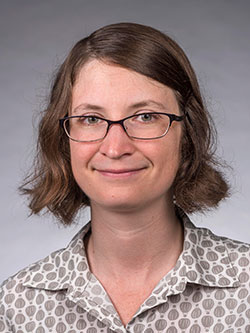
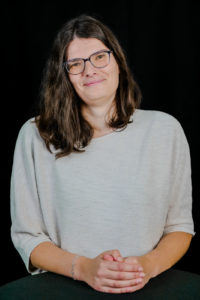
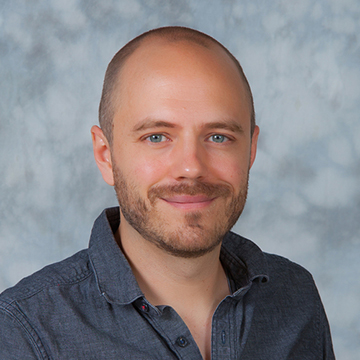
Dorota Czeszczewik is a Professor at the Institute of Biology , Faculty of Natural Sciences, University of Siedlce. Her work focuses on the ecology and behavior of birds in primeval forest ecosystems, particularly the Białowieża Forest. Research spans 45+ years of bird community dynamics Key areas: woodpecker foraging, flycatcher interactions, and biodiversity conservation Specializes in niche segregation and habitat utilization by avian species Research Trends : Analyzes long-term impacts of forest management, climate change, and dead wood resources on bird populations. Her recent publications (2023–2025) emphasize functional diversity, tree usage patterns, and resilience of primeval forests. Projects : Leads team (151/23/B) studying forest biodiversity and bird ecology in the Białowieża Forest.
Dr. Nigel Taylor is a Research Associate in the Conservation Science Group within the Department of Zoology at the University of Cambridge. His work focuses on evidence-based conservation, with particular interests in wetlands, invasive alien species, and the economic impacts of biological invasions. His research spans a wide range of conservation topics, including the restoration of peatlands and salt marshes, the impacts of climate change on seabirds, and the development of tools for tracking conservation progress. He is actively involved in synthesizing evidence to inform conservation practice, as seen in his work on the Conservation Evidence database and the Mangrove Restoration Tracker Tool. Dr. Taylor's recent publications highlight a strong emphasis on systematic reviews and evidence synthesis to address pressing conservation challenges. His work often bridges the gap between academic research and practical conservation management, with a focus on making scientific evidence accessible and actionable for practitioners. As part of the Conservation Science Group, Dr. Taylor collaborates with a diverse team of researchers and practitioners to address global conservation issues. His work on invasive species economics has revealed significant disparities in the distribution of biological invasion costs, and he has contributed to frameworks for climate change adaptation in conservation planning.
Dr. Mark Dyble is a Lecturer in Biological Anthropology at the University of Cambridge, with a focus on evolutionary anthropology and social organization across human populations and mammals. His work explores kinship dynamics, cultural evolution, and hunter-gatherer societies, particularly the Agta foragers of the Philippines. He contributes to the Cambridge Reproduction initiative and teaches courses on Human Comparative Biology and Evolutionary Medicine.
María del Mar Pujol López is a University Professor at the Department of Computer Science and Artificial Intelligence, University of Alicante, affiliated with the Higher Polytechnic School and the Institute of Computer Research. She has earned 6 teaching quinquenios and 4 research sexenios, demonstrating her dual excellence in teaching and research. Her research focuses on swarm robotics, artificial intelligence, and computer vision. She has directed 4 doctoral theses on topics including artificial swarms, object segmentation, sensor fusion, and morphological primitives. Her recent work explores emergent behaviors in swarm robotics using deep reinforcement learning, UAV deployment strategies, and applications of AI in Industry 5.0 and Smart City contexts. Her publications from the last five years show a consistent research trajectory in swarm intelligence with increasing applications in real-world scenarios. She has published in journals like IEEE Access, Advanced Robotics, and Scientific Reports, demonstrating interdisciplinary impact across computer science, robotics, and smart city applications. Professor Pujol López has coordinated multiple research projects including 'Comportamientos Inteligentes Multitarea de Enjambres Adaptativos' (2019-2021) and 'Adaptación y Autoensamblado Morfológico en Sistemas de Enjambre Inteligentes' (2010-2013). She has also participated in educational innovation projects like the Erasmus+ Eurobotique initiative. She teaches various courses including Statistics, Data Processing for Information Systems, and Computer Manufacturing Models across multiple computer engineering degrees. Her teaching methodology incorporates flipped classroom approaches and continuous assessment with online quizzes, reflecting her commitment to educational innovation within the European Higher Education Area framework.
Clay Corbin is a Professor of Biology in the Department of Biological and Health Sciences at Bloomsburg University. He holds a Ph.D. from Ohio University and teaches courses such as Ornithology, Comparative Vertebrate Anatomy, Vertebrate Zoology, and Anatomy and Physiology laboratory. His research focuses on Evolutionary Ecology , Foraging Ecology , and Ecological Morphology , often involving collaborations with Masters and undergraduate students. Education: Ph.D. in Biology from Ohio University His student-based research program includes projects on museum collections, ecological morphology, foraging ecology, and avian interactions with West Nile virus. Publications span topics from acid mine drainage effects on riparian birds to mosquito vector surveillance. Notably, he co-authored work on avian host diversity in mosquito blood meals and feeding mechanics in birds via comparative anatomy and niche specialization. While no explicit scientific awards are listed, his contributions to integrative biology through field research and student mentorship highlight his academic impact. Contact details include the university phone number (570-389-4134).
Miranda Prendergast-Miller is a Senior Lecturer in the Department of Geography and Environmental Sciences at Northumbria University . Her work bridges soil ecology, environmental sustainability, and biogeochemical cycles, with a focus on anthropogenic impacts on terrestrial ecosystems. Current academic affiliation: Northumbria University (2019–present) Prior postdoctoral roles: University of York (2015–2019), CSIRO Australia (2012–2015), University of Edinburgh (2009–2011) Her research explores below-ground interactions between microbes, soil fauna, and plants, particularly how these systems are disrupted by human activities. Key themes include: Greenhouse gas emissions and soil carbon sequestration Microplastic pollution and organic waste recycling Nutrient use efficiency in agricultural systems Novel soil amendment technologies Analysis of her publications reveals trends in microplastic ecotoxicology , earthworm-microbial dynamics , and agroecosystem resilience . Subfields span from polymer degradation in soils to silicon biogeochemistry in land-use transitions. She supervises postgraduate researchers in projects related to: Emily Donaghy (2023–present): Microfibres in soils Kevin Stott (2020–present): Carbonate precipitation in engineered soils
Alessio Mortelliti is an Associate Professor in Ecology at the Department of Life Sciences, University of Trieste (Italy), since 2022. Previously, he served as a professor at the University of Maine (USA). His research combines large-scale field projects with quantitative approaches to study global change impacts on wildlife, focusing on small mammals and birds across diverse regions (Europe, Africa, Asia, Australia, USA). Research Focus : Animal personality effects on ecosystem processes Climate change and land-use impacts Wildlife monitoring protocol development Fragmented landscape dynamics Seed dispersal and forest regeneration Teaching & Mentorship : Coordinates graduate programs (Global Change Ecology, Environmental Life Sciences) Advises 12 current PhD/MS students Lab alumni network across 8 countries Integrates citizen science in education Recent Publications : 2025 studies on climate-forest-small mammal interactions 2025 work on AI/camera trap data biases 2024 monitoring protocol for Togean babirusa 2025 predator size-based risk analysis for salmon 2025 standardized personality measurement methods Projects : NSF CAREER project on personality-plant dynamics Optimal monitoring in Julian Prealps Wildlife response to Maine forest management Togean Islands conservation
Dr Nikhil Chaudhary is a Lecturer in Human Evolutionary and Behavioural Ecology within the Department of Archaeology at the University of Cambridge . He is based in the Henry Wellcome Building and is affiliated with the Evolutionary Psychiatry Group at the Royal College of Psychiatrists. He actively supervises PhD students and is available for consultancy. Research Overview: Chaudhary's research spans human evolutionary ecology , cultural evolution , and evolutionary psychiatry , with a particular focus on hunter-gatherer societies in Africa and East Asia. His fieldwork with the BaYaka hunter-gatherers of northern Congo has been central to understanding how social relationships influence health, mating, and fertility. He is currently pioneering work in evolutionary psychiatry , investigating whether mental disorders are 'diseases of modernity' resulting from mismatches between ancestral and modern lifestyles. Publications & Impact: His work has been published in top-tier journals such as Nature Communications , PNAS , Science , and Current Biology . His research has also received significant media attention, including features in The New York Times , BBC News , Scientific American , and NPR , highlighting the broader societal relevance of his findings on parenting, cooperation, and mental health. Teaching & Supervision: Chaudhary contributes to teaching within the Department of Archaeology and welcomes prospective PhD students interested in evolutionary anthropology, hunter-gatherer studies, and evolutionary approaches to mental health.
Dr. Tamsin O'Connell is a Reader in Isotopic Ecology at the Department of Archaeology, University of Cambridge, and a Fellow of Trinity Hall. She is on research leave for the 2025–26 and 2026–27 academic years. Her research expertise includes Human Palaeoecology, Biomolecular Archaeology, and Stable Isotope Analysis , with a focus on reconstructing diets, migration patterns, and environmental interactions in prehistoric and historic populations. She has conducted studies across Europe, the Mediterranean, and South America . Key trends in her publications (2001–2011) include the use of stable isotopes to investigate Mesolithic–Neolithic transitions in Croatia dietary links to occupational patterns in Roman coastal communities isotopic signatures in endangered seabird populations ancient DNA analysis of historical parchment transatlantic slavery and forced migration . She supervises PhD students and is affiliated with the McDonald Institute for Archaeological Research and Trinity Hall .
Jennifer Burns serves as Professor and Department Chair in the Department of Biological Sciences at Texas Tech University, where she leads research on physiological adaptations of polar marine mammals to extreme environments. Her work bridges laboratory investigations with field studies in Antarctica, focusing on species like Weddell seals as models for understanding fundamental biological principles under climate change stressors. Dr. Burns' research centers on three interconnected pillars: physiological development in juvenile marine mammals, the relationship between physiological condition and diving performance, and how life history events reflect individual condition and environmental variables. Her laboratory employs multidisciplinary approaches including hormone assays, dive recorder analysis, and virological screening to unravel how polar species regulate energy allocation, thermoregulation, and foraging strategies in seasonal ecosystems. This work has direct implications for predicting ecosystem responses to habitat loss and prey shifts in the Antarctic. Analysis of her 2021-2025 publications reveals escalating integration of physiological data with conservation frameworks, particularly through studies on habitat shifts in crabeater seals and global movement patterns of marine megafauna. A significant emerging thread involves viral ecology, with multiple papers identifying novel anelloviruses, papillomaviruses, and circoviruses in Antarctic seal populations. Methodological innovation remains strong, exemplified by tools for reconstructing historic dive traces and 3D-printed tracking devices. Dr. Burns directs externally funded projects including NSF-supported research using Weddell seals as autonomous oceanographic sensors in the Ross Sea and collaborative studies on maternal iron transfer in grey seal pups. Her laboratory operates within Texas Tech's STEM CORE initiative, facilitating fieldwork in Antarctica through partnerships with national science foundations and international polar research programs. The Burns Lab maintains active field operations in Antarctica, utilizing instrumented seals to collect hydrographic data while investigating seasonal changes in body condition, hormone profiles, and viral loads. Current projects emphasize the intersection of climate-driven habitat alterations with physiological thresholds, particularly examining how reduced sea ice affects lactation energetics and pup development in ice-dependent species.
Carly Whelan is a faculty member in the Anthropology Department at California State University, Chico, where she serves as Certificate in Cultural Resource Management Co-Coordinator, Director of the Northeast Information Center (NEIC), and Director of the Archaeological Research Program (ARCH Lab). Her academic journey includes a B.A. from the University of Texas at Austin (2006), followed by an M.A. (2010) and Ph.D. (2016) from the University of California, Davis. Dr. Whelan's research examines pre-contact lifeways of California's indigenous populations, with particular focus on subsistence economies, settlement patterns, and exchange networks in the central and northern Sierra Nevada. She investigates how women shaped these systems, employing economic modeling, experimental archaeology, lithic artifact analysis, and raw material sourcing. Much of her current work centers on acorn storage economies, establishing field sites in the Sierra Nevada foothills to examine shifts in storage practices over time. Her publication record reveals a consistent thematic focus on hunter-gatherer adaptation strategies, particularly food storage systems and gender dynamics in foraging societies. The 2022 collaborative work on California and Great Basin archaeology demonstrates her engagement with broader theoretical frameworks, while her influential 2013 article on women's foraging opportunity costs established her innovative approach to gender analysis in archaeological contexts. Her methodology frequently integrates experimental techniques with traditional archaeological analysis. As NEIC Director, Dr. Whelan oversees a critical resource housing records for over 40,000 archaeological sites in northeast California. She teaches a comprehensive range of anthropology courses from introductory archaeology to advanced field methods, including ANTH 112 Introduction to Archaeology, ANTH 362W California Indians, and ANTH 602 Seminar in Archaeology. Her leadership in the ARCH Lab supports hands-on archaeological research and training for students.
Maeva Cremilleux is an Associate Professor in Animal Science at ISARA, affiliated with the Agroecology and Environment Unit. Her work focuses on agroecological dairy systems, grassland management, and cross-disciplinary approaches to sustainable livestock systems. Her research emphasizes holistic diagnosis of farms in transition , climate change adaptation in mountain dairy sectors , and innovative grassland management . Recent projects include ADAOPT (climate adaptation for dairy PDOs) and REACTIFFS (workforce renewal in PDO/PGI sectors). The 12 publications on HAL highlight her work in Agroecological transitions Climate stress impacts on dairy systems Soil-livestock interactions Farmer-centered diagnostic tools Feed efficiency optimization Cross-reality agricultural collaboration
Ryan Utz is an Associate Professor at the Falk School of Sustainability & Environment at Chatham University, where he has been teaching since 2015. His work focuses on aquatic ecology, particularly urban stream systems, salmonid biology, and ecological restoration. Prior to joining Chatham, Dr. Utz spent four years as an aquatic ecologist at the National Ecological Observatory Network (NEON). Dr. Utz received his academic training at three major institutions: PhD in Environmental Science from the University of Maryland (College Park, MD), 2010 MSc in Ecology from West Virginia University (Morgantown, WV), 2005 BS in Biology from the University of Miami (Miami, FL), 2003 He also holds a Wilderness First Responder certification. Dr. Utz's research spans multiple areas of aquatic ecology with particular emphasis on urban stream ecosystems. His work investigates how urbanization impacts stream chemistry and biology across different ecoregions, with a special focus on freshwater salinization syndrome. He has conducted extensive research on salmonid life history and bioenergetics, examining how environmental conditions affect fish growth and survival. Dr. Utz also studies ecological restoration effectiveness, particularly in urban settings, and has investigated the impacts of invasive species on native ecosystems. His research often employs long-term monitoring approaches to detect decadal-scale changes in stream ecosystems. Analysis of Dr. Utz's recent publications (2022-2025) reveals a strong focus on freshwater salinization syndrome and its ecological consequences. His work spans both temperate and tropical systems, examining how human activities alter stream chemistry and subsequently affect aquatic communities. A significant portion of his research investigates the interactions between invasive species and native ecosystems, with particular attention to how these dynamics vary across spatial scales. Dr. Utz frequently collaborates with large research networks, as evidenced by his involvement with NEON and multi-institutional studies on global environmental change. Dr. Utz maintains an active research laboratory focused on freshwater ecology and restoration. His lab conducts field studies on urban stream systems, examining chemical, physical, and biological parameters. Current projects include monitoring the effects of urbanization on stream ecosystems and investigating the ecological impacts of invasive plant species. The lab utilizes both traditional field sampling methods and innovative approaches to ecological monitoring, often incorporating citizen science observations for broader spatial coverage.
Dr. Catherine A Lindell is an Associate Professor in the Integrative Biology Department at Michigan State University, with a joint affiliation at the Center for Global Change and Earth Observations. Her research focuses on avian ecology, ecosystem services, and sustainable agricultural practices across temperate and tropical systems. Integrative Biology Department, Michigan State University Center for Global Change and Earth Observations Educator for courses in Ecology (IBIO/PLB 485) and Tropical Biology Dr. Lindell investigates bird behavior in managed ecosystems, specializing in: Avian contributions to pest management in agricultural systems Tropical forest restoration impacts on biodiversity Development of sustainable farming practices Human-wildlife interaction dynamics Ecological function enhancement in fruit production Her recent publications highlight applications of bird-based pest control in orchards, climate-smart agriculture strategies, and ecological interventions for degraded tropical landscapes. These studies span disciplines including agricultural ecology, conservation biology, and ecosystem management. Key projects include: NSF-funded research on kestrel nest boxes for bird-mediated pest control Michigan Tree Fruit Commission studies on high-density orchard management Tropical forest restoration evaluations in degraded ecosystems Development of sustainable bird management frameworks for farmers Dr. Lindell teaches ecology courses emphasizing: Population dynamics Ecosystem processes Climate change impacts Applied ecological research
Dr. Yvonne van Zeeland is an Associate Professor at Utrecht University's Faculty of Veterinary Medicine, Department of Clinical Sciences, specializing in Internal Medicine of Companion Animals. She works at the Division of Zoological Medicine, focusing on avian and exotic animal care. EBVS® European Veterinary Specialist in Avian and Small Mammal Medicine PhD in Feather Damaging Behavior in Grey Parrots (2013) Board-certified Diplomate of the European College of Zoological Medicine Co-promoter of multiple PhD studies including ferret welfare and parrot behavior Research interests include avian behavior and welfare, small mammal medicine, and environmental enrichment. Her work addresses stereotypic behaviors in captive parrots and develops medical/behavioral treatment protocols. Notable publications span topics like Feather Damaging Behavior Analysis , Foraging Enrichment , and Ferret Cardiology , reflecting her interdisciplinary focus on animal welfare and medical care. Scientific Awards: Lafeber Avian Practitioner of the Year (2021) Donald W Zantop Emerging Leader Award (2014) Junior Teacher Award (2012) Resident & Research Award (2005, 2006) Best of Class in Nutrition (1999) Professional Roles include Avian Scientific Chair for EAAV, Examination Committee Chair for ECZM, and Associate Editor for the Journal of Avian Medicine and Surgery. She actively contributes to national and international veterinary conferences through lectures and committee work.