Anthony Caterisano is a Professor of Health Sciences at Furman University, with over 35 years of academic and athletic leadership. He holds a Ph.D., M.A., and B.S. from The University of Connecticut, SUNY, and UNC Chapel Hill. His research focuses on exercise physiology, resistance training, and sports medicine, with notable publications in journals like Medicine and Science in Sports and Exercise . Dr. Caterisano is a Fellow of the American College of Sports Medicine (FACSM) and has authored/co-authored books on football training and resistance techniques. He has served as wrestling coach at Furman, Spartanburg Methodist College, and currently coaches at Wade Hampton High School. As a competitive powerlifter, he has secured 16 South Carolina state titles, 10 national titles, and 10 world gold medals in masters-level competitions. His work bridges scientific research and practical application, with grants and presentations on topics like strength training methodologies and cardiovascular adaptations. Key contributions include studies on Tsunami Barbell training, metabolic responses to exercise, and core muscle engagement. His awards reflect both academic excellence and athletic achievement, while his grants and presentations underscore his commitment to advancing sports science.
Dr. Ray Bobrownicki is a Lecturer in Sport Psychology and Co-Programme Director of the BSc (Hons) Applied Sport Science at the University of Edinburgh's Moray House School of Education and Sport. He holds affiliations with the Institute for Sport, Physical Education and Health Sciences (ISPEHS) and the Human Performance Science Research Group. As a chartered psychologist (BPS) and licensed athletics coach, his work bridges academic research and real-world sport practice. Educations: PhD (Sport Psychology and Coaching), University of Edinburgh MSc (Performance Psychology), University of Edinburgh AB (Psychology), Brown University PGCert (Academic Practice), University of the West of Scotland His research focuses on optimizing coaching instruction, motor learning, and performance under pressure. He explores how verbal instructions, analogies, and technology (e.g., VR) influence skill acquisition and athlete motivation. Secondary interests include the societal impacts of sporting policies on athlete welfare and identity. Recent work critiques traditional sport science methodologies and advocates for interdisciplinary, applied research. His publications span 2015–2025, emphasizing critical analysis of coaching practices, motor learning mechanisms, and systemic issues in sport. Key themes include instructional design, constraints-led approaches, and translational research validity. Awards: Fellow of the Higher Education Academy Chartered Psychologist (British Psychological Society) Associate Fellow (British Psychological Society) Teaching responsibilities include programme leadership for BSc Applied Sport Science and contributions to MSc Performance Psychology modules. He currently supervises PhD student Tongyu Liu on esports support taxonomies and welcomes inquiries on coaching instruction, performance psychology, and athlete policy impacts. Dr. Bobrownicki’s career integrates athletic experience (Commonwealth Games finalist, high jumper) with coaching expertise (e.g., mentoring record-breaking athletes) to inform evidence-based practice in sport science.
Dr. Mathew Todres is a Senior Lecturer in Management at the School of Business, Faculty of Business and Law, University of Wollongong. His research focuses on Management, Change Management, International Business Management, and Strategic Management, with a particular emphasis on Social Entrepreneurship and Workplace Value Congruence. He has conducted action research in Social Enterprise Development and published in journals such as the Social Enterprise Journal and Journal of Business Ethics . Dr. Todres currently supervises PhD candidates Douglas Opoku Agyeman (Micro Entrepreneurship in West Africa) and Grant Hughes (Sports Management). He has received a University of Wollongong Faculty of Business Start-Up Grant (2018). His peer-reviewed work spans organizational behavior, narrative analysis, and social enterprise innovation. His research interests include autoethnographic analysis, narratological analysis, and the application of social theory to entrepreneurial practices. Dr. Todres has contributed to journals such as Medical Education and serves as a reviewer for Journal of Spirituality, Leadership, and Management , among others. His work bridges theoretical frameworks with practical applications in organizational dynamics and social impact initiatives.
Professor Paweł Chmura is a Full Professor at Wrocław University of Health and Sport Sciences, specializing in Sports Sciences with a focus on football performance analysis. He serves in the Department of Individual and Team Sports, where he conducts research on exercise physiology, training load monitoring, and physical activity analysis in soccer players. With over 130 publications, Professor Chmura is a recognized expert in sports science and also holds a UEFA A coaching license. Professor Chmura's research interests center on exercise physiology, particularly in the context of team sports. His work extensively examines repeated maximum effort capabilities, physical activity analysis in soccer players, and monitoring training loads. He has developed innovative concepts such as the Psychomotor Fatigue Threshold and investigates how environmental factors like temperature and air quality affect athletic performance. His research bridges the gap between theoretical sports science and practical coaching applications, making significant contributions to football performance optimization. Professor Chmura's extensive publication record demonstrates a consistent focus on soccer performance analysis, with recent work expanding into multidisciplinary approaches including physiological, psychological, and tactical aspects of the game. His research shows increasing sophistication in methodology, incorporating advanced monitoring technologies and comprehensive analysis frameworks that consider multiple performance indicators simultaneously. This evolution reflects broader trends in sports science toward integrated, holistic approaches to athlete performance. Professor Chmura actively supervises the Motosoccer Student Research Club and invites master's and doctoral students to collaborate on research projects related to football, exercise physiology, game analysis, and motor preparation. His mentorship extends beyond formal academic supervision to practical coaching guidance, leveraging his UEFA A coaching certification to provide students with both theoretical knowledge and practical field experience. As a UEFA A-licensed football coach and tennis instructor, Professor Chmura maintains strong connections between academic research and practical sports applications. He leads the Motosoccer Student Research Club, which provides hands-on research opportunities for students interested in sports science. His dual expertise in academic research and practical coaching creates a unique environment for applied sports science research that directly impacts coaching methodologies and athlete development.
Prof. Daniel Memmert is a Professor at the German Sport University Cologne, leading research in Sport Informatics and Sports Games within the Institute of Exercise Training and Sport Informatics. His work focuses on cognitive aspects of sports performance, decision-making, and data-driven analysis in football (soccer) and other sports. He has published extensively on topics like penalty kick strategies, home advantage dynamics, artificial intelligence applications in coaching, and route-setting in climbing. Memmert's research bridges sports science, computer science, and psychology, with over 550 publications and 41 projects to his name. He frequently engages with media, explaining complex sports phenomena to the public. Key Research Areas: Football analytics, cognitive psychology in sports, sports technology, decision-making under pressure Media Contributions: Over 50 media features discussing topics such as AI in coaching, referee bias, and athlete creativity Projects: Includes initiatives on sports data visualization, performance metrics, and prevention of sports betting addiction His work emphasizes translating academic findings into practical tools for athletes, coaches, and sports organizations, combining rigorous data analysis with real-world applications.
Matthew Garver is a Professor and Chair of the Department of Nutrition, Kinesiology, and Health at the University of Central Missouri (UCM). He joined UCM in Fall 2016 after completing his Ph.D. in Exercise Science at The Ohio State University and teaching for five years in Abilene, Texas. Education: Ph.D. in Exercise Science (The Ohio State University) Garver’s research focuses on applied human performance, with emphasis on resistance training, interlimb asymmetry in athletes, and the intersection of exercise science with diversity, equity, and inclusion (DEI). His work spans collegiate sports, track and field, and health interventions for special populations. Recent publications highlight his exploration of artificial intelligence in sport science ethics, DEI initiatives in exercise research, and position-specific training in collegiate female soccer. His studies also address exercise-induced bronchoconstriction, biomechanical asymmetry in American football players, and affective responses to resistance training. Garver has contributed to understanding physical activity’s role in older adults, particularly patients with knee osteoarthritis, through the IMPACT-P trial. His interdisciplinary approach bridges kinesiology, physiology, and social science in promoting health and athletic performance. At UCM, he teaches courses in Kinesiology and leads research initiatives aimed at optimizing human performance and health outcomes through evidence-based strategies.
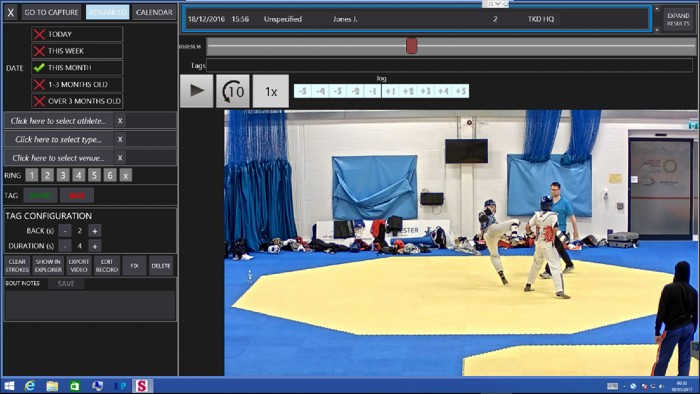
Dr. Simon Goodwill is the Head of Research in Sport and Physical Activity and Head of the Sports Engineering Research Group (SERG) at Sheffield Hallam University's Academy of Sport and Physical Activity. He holds a PhD focused on tennis ball-racket impact modeling and has collaborated with the International Tennis Federation. His expertise includes novel photogrammetry techniques, software development for athlete performance analysis, and camera calibration systems like check2d/check3d. He led projects supporting Team GB athletes in multiple Olympics, contributing to 42 medals at Rio 2016. Currently, he oversees the Advanced Wellbeing Research Centre (AWRC), applying sports performance methodologies to health research. His work integrates machine vision, data acquisition hardware, and elite athlete monitoring systems, with notable contributions to the EIS Innovation Partnership and sports tech exhibits like Le Tour Yorkshire's bike simulator. Education & Research: Simon’s PhD (modeling tennis impacts) and extensive software engineering background underpin his research. His projects span biomechanics, sports engineering, and health tech, with collaborations involving UK Sport, FIFA, and Adidas. He has developed systems used by athletes in London 2012, Rio 2016, and Glasgow 2014 Commonwealth Games. Research Themes: His work emphasizes performance analysis through photogrammetry, real-time athlete tracking, and health-related applications of sports tech. Key projects include court pace rating for the ITF, iBoxer2 boxing data tools, and the AWRC’s health innovations. Grants & Impact: The AWRC, funded by UK DoH and ESIF (£15.7M), reflects his role in translating elite athlete tech to public health. His work is cited in UK government reports on Olympic legacy and has received media attention, including BBC features on GB Boxing’s iBoxer software. Advising & Leadership: Supervised 17 PhD students on topics like machine learning in taekwondo, swimming analysis, and tennis racket dynamics. Served as External/External advisor and led 10+ Olympic cycle projects. Active in the International Sports Engineering Association as Director.
Benjamin Larkin is an Academic Dean of Management and Marketing and Co-Director of the Girard School of Business at Merrimack College. His research bridges technology, media consumption, and sports, analyzing modern consumer behavior in sports fandom and digital engagement. Ph.D. in Management from UMass Amherst M.S. in Sport Management from Southern New Hampshire University B.S. in Business Administration from the University of Maine His work focuses on Consumer Behavior , Sport Marketing , and the Intersection of Sport and Politics , particularly how technology alters traditional sports consumption patterns. Recent studies examine identity conflict in politically engaged fans, dehumanization of athletes, and the psychological impact of fantasy sports. Key trends in his publications include brand attachment , fan loyalty dynamics , collective narcissism , and media-driven consumer behavior in sports contexts. North American Society for Sport Management Research Fellow, 2024 Outstanding Professional Paper Award, Sport Marketing Association, 2018 Ph.D. Program Research Award, Isenberg School of Management, 2017 Larkin advises students in sports marketing and consumer behavior research. His work has been supported by grants from the Sport Marketing Association and Isenberg School of Management.
Tim Woodman is a Professor in Sport & Exercise at the School of Psychology and Sport Science , Bangor University. He is a leading expert in Performance Psychology , focusing on personality, stress, anxiety, and risk-taking in elite sports. His groundbreaking theory positions risk as central to human development and performance. Research Interests : Narcissism, anxiety-performance relationships, risk-taking behavior, athlete mental health, agentic emotion regulation. Scientific Contributions : Over 150 peer-reviewed publications, including 2025 studies on cricket mental health, coach support dynamics, and pressure training methodologies in elite sports. Projects : Leads the North West Air Ambulance performance psychology initiative and collaborates with Manchester City Football Club on personality-climate change research. Teaching & Supervision : Accepts PhD students interested in risk-taking, personality, and performance psychology topics.
Dr. Kris Beattie is a Lecturer in the Department of Sport and Health Science at Technological University Dublin (TU Dublin). He specializes in sports science education, coordinating modules such as Human Physiology 2, Sport & Exercise Physiology, and Applied Coaching Science. His research focuses on the physiological adaptations of strength, speed, and endurance training in athletes, particularly in endurance athletes and combat sports like boxing. Beattie holds a PhD from the University of Limerick (2012–2016), an MSc in Sports Physiology from Liverpool John Moores University (2008–2009), and a BSc (Hons) in Sport and Exercise Sciences from Ulster University (2005–2008). He is a UKSCA-accredited Strength & Conditioning coach. Beattie’s research interests include strength training modalities for sprint performance, physiological adaptations in Gaelic football and boxing, and the biomechanics of athletic movements. His work bridges theoretical and applied aspects of sports science, emphasizing practical applications in coaching and athlete development. Recent studies explore sprint testing methods in Gaelic games, strength characteristics of female athletes, and the role of maximal strength in punch impact force in boxing. His publications span peer-reviewed journals like the International Journal of Performance Analysis in Sport and Journal of Strength and Conditioning Research , with a focus on systematic reviews and empirical studies. Though no specific awards are listed, his h-index of 7 reflects growing recognition in sports physiology. Beattie actively collaborates with sports organizations and coaches to inform evidence-based training practices. He currently contributes to TU Dublin’s BSc (Hons) Sports Science with Exercise Physiology program, integrating his research into teaching. Future work likely continues exploring interdisciplinary approaches to athlete development and performance optimization.
Babett Lobinger is a Researcher at the Institute of Psychology at the German Sport University Cologne, specializing in Performance Psychology and Applied Sport Psychology. She holds academic qualifications including Dipl.-Psych., MA Sportwiss, and Dr. in Sport Sciences. Her research focuses on Performance Psychology , Motor Control Disorders (e.g., Yips in Golf), Movement Safety in Aging , and Coaching Psychology . She has collaborated with organizations like the DFB (German Football Association) and clubs like Arminia Bielefeld and 1.FC Köln, providing sport psychological consulting and research. Key Projects include: DFG-funded studies on Yips in Golf Cross-cultural training needs analysis for football coaches Development of the Athlete Competency Questionnaire for Employability (ACQE) She teaches in the German Football Association’s (DFB) coaching academy and contributes to sport psychology curricula for trainers. Her work appears in journals like InMind and conferences such as FEPSAC.
Professor Holly Thorpe is a Professor of Sociology in Te Huataki Waiora / School of Health at the University of Waikato, specializing in Sport and Human Movement. She serves as Associate Dean Research in the Division of Health PVC Office and is an internationally recognized sociologist of sport, physical culture and gender whose work has earned prestigious fellowships and awards including Fulbright, Leverhulme, and Royal Society honors. Her educational background includes a PhD from the University of Waikato and Papa Reo Level 1 certification from Te Wananga o Aotearoa, reflecting both academic excellence and cultural engagement with Māori language and knowledge systems. Professor Thorpe's research centers on equity and inclusion in sporting cultures, with particular attention to women's health and wellbeing, sport and gender, and the impact of social media on athletic experiences. She employs critical and feminist theoretical frameworks with expertise in qualitative methods to examine how sport, physical activity, and health intersect in rapidly changing social landscapes. Her work spans gender studies, feminist methodologies, sports science, sociology of health, and digital media studies within sporting contexts, with a strong commitment to community-engaged research. Her extensive publication record reveals consistent thematic focus on contemporary issues including menstruation in sport, digital technologies and athlete experiences, pandemic impacts on wellbeing, and the gendered dimensions of mega-sport events. Her work frequently employs intersectional analysis and collaborates across disciplines to address complex questions about embodiment, identity, and social change in sporting cultures, particularly as they relate to women and marginalized communities. Professor Thorpe's significant scholarly recognition includes: Royal Society Early Career Research Excellence Award for Social Sciences (2018) Fellow of the North American Society for the Sociology of Sport (2018) Royal Society James Cook Fellowship for a two-year project focused on women's wellbeing through and beyond pandemic (2021) She actively supervises students and has secured substantial research funding including the Te Punaha Matatini CORE Research Institute project 'Youth Wellbeing in Uncertain Times: The Voices of Rangatahi from Flood-Effected Tairāwhiti Gisborne' (2023-2025). Professor Thorpe collaborates extensively with international and national sports organizations including the International Olympic Committee, High Performance New Zealand, Sport New Zealand, Skateistan, and Voice in Sport to ensure her research has real-world impact on policy and practice. She serves as Series co-editor for 'New Femininities in Digital, Physical and Sporting Cultures' and maintains active media engagement through The Conversation and other outlets. Professor Thorpe leads several significant research initiatives including 'Reimagining Fields of Play' (2023) and co-organized the 'Gender, Health and Wellbeing Symposium' (2022), demonstrating her commitment to creating spaces for critical dialogue about sport, gender, and health while advancing culturally responsive methodologies that center Indigenous and diverse perspectives.
Javier Zamora is a Professor at IESE Business School , part of the University of Navarra. He holds a Ph.D. in Electrical Engineering from Columbia University and an M.Sc. in Telecommunications Engineering from the Polytechnic University of Catalonia. Education Ph.D., Electrical Engineering, Columbia University M.Sc., Telecommunications Engineering, Polytechnic University of Catalonia PDG, IESE Business School Research Interests : Zamora specializes in digital transformation, focusing on data-driven organizations and artificial intelligence. His work explores how new technologies reshape business models, organizational structures, and leadership strategies. Publications span topics from AI implementation in finance and sports management to cloud computing in crisis scenarios. His research emphasizes practical frameworks like the "Digital Density" concept and tools for assessing digital maturity. Professional Roles : He co-founded Inqbarna (AI-powered mobile solutions) and served as CEO of eNeo Labs (digital home products). Currently, he directs executive programs at IESE, including Digital Transformation: Senior Management Program and Navigating IT Architecture .
Dino Pedreschi is a Full Professor of Computer Science at the University of Pisa, affiliated with the Department of Computer Science (DI-UNIPI). He co-leads the Pisa KDD Lab, a joint research initiative between the University of Pisa and the Italian National Research Council’s Institute of Information Science and Technology, one of the earliest labs focused on data mining and knowledge discovery. His research spans Big Data Analytics , Social Network Analysis , Human Mobility Analysis , Privacy-by-Design , Explainable AI (XAI) , and ethical data mining . He is a pioneer in privacy-preserving data mining and has contributed significantly to understanding societal impacts of AI and big data. Recent publications highlight trends in explainable AI , fairness-aware data mining , urban mobility modeling , and socio-economic nowcasting , reflecting a strong interdisciplinary focus combining computer science, social science, and policy. Notable scientific awards include: Google Research Award on Privacy (2009) University of Pisa Ordine del Cherubino (2017) Pedreschi has played leadership roles in major conferences such as ECML/PKDD (Co-Chair 2004), ICDM (Vice-Chair 2005), and ICDE (Vice-Chair 2014). He founded the Business Informatics MSc program at the University of Pisa to train interdisciplinary data scientists. He has been a visiting scientist at the University of Texas at Austin, CWI Amsterdam, UCLA, and the Barabási Lab at Northeastern University. He actively contributes to European research initiatives including SoBigData++, FAIR, and TAILOR, and has advised on AI policy, including testimony before the Italian Parliament on AI and labor markets. He is a key member of the Pisa KDD Lab, a leading research group in data science and AI ethics, fostering collaboration between academia and public institutions.
Professor Maia Angelova is a leading academic in data science and mathematical physics at Aston University's Aston Digital Futures Institute (ADFI) and College of Engineering and Physical Sciences. Her research focuses on interdisciplinary AI applications in healthcare, including precision medicine, chronic disease modeling, and athlete performance analytics. She previously held roles as Professor of Data Analytics at Deakin University (2017–2023) and Professor of Mathematical Physics at Northumbria University (1997–2016), with early experience as a College Lecturer at Oxford University (1991–1996). Education: PhD, MSc, and BSc in Physics from Sofia University 'St. Kliment Ohridski'. Research interests span AI-driven healthcare solutions, dynamical systems modeling, and sports performance analysis. Her work addresses sleep disorders, diabetes management, chronic pain, and athlete performance using advanced machine learning and data analytics. She has secured over £5M in research funding and supervised over 30 PhD students and postdoctoral researchers. Awards include Fellowship of The Institute of Physics. Professional memberships include The London Mathematical Society, Australian Mathematical Society, and Complex Systems Society. Key achievements include founding the Data to Intelligence research centre (2018–2020) and leading large-scale interdisciplinary projects. Current initiatives focus on precision healthcare through AI integration in clinical decision-making systems.