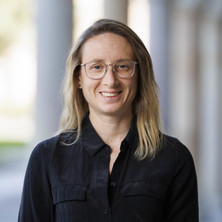
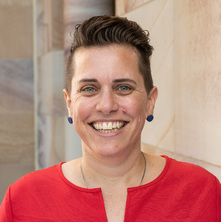
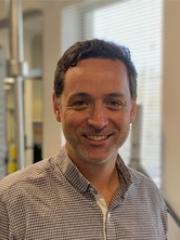
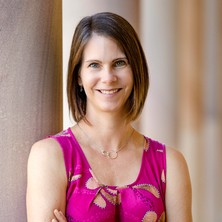
Dr Nga Wun (Doris) Li is a Senior Lecturer at the University of Technology Sydney (UTS) within the Faculty of Design, Architecture and Building, Department of Fashion and Textiles. She leads research in seamless knitting technology, smart textiles, and sustainable fashion innovation. PhD in Fashion & Textile Design (HK PolyU, 2021) BA (Hons) in Fashion & Textiles (HK PolyU, 2012) Certifications in Wholegarment Machine (Shima Seiki, Japan) and Higher Education Pedagogy (UTS) Her research focuses on functional garments, knitting technology, and bio-informed textile design. Key projects include smart socks for DVT prevention , one-size sports bras , and buoyant swimwear for children . She combines knitting with machine learning and 3D printing for material innovation. Recent publications highlight her work on compression textiles (2025), wearable glucose sensors (2025), and knitted metasurfaces for acoustic comfort (2024). She has secured AU$52,000+ in grants across 5 funded projects. Fashion Design Award (Jeanswest, China) Outstanding Presentation & Research Paper Awards (2024) Dr Li supervises PhD and MPhil students in smart textiles and sustainable design while coordinating machine knitting courses. She collaborates with AiDLab (Hong Kong) and Powerhouse Museum (Australia).
Dr. Anna Hatton is a Senior Lecturer at the School of Health and Rehabilitation Sciences , The University of Queensland. As Co-Director of the UQ Centre for Neurorehabilitation, Ageing and Balance Research and Associate Editor for Gait & Posture , she leads interdisciplinary research into sensory-based rehabilitation technologies. Her work bridges clinical practice with engineering innovation, focusing on footwear devices for balance enhancement. Research themes: novel textured/vibratory insoles , neurological gait analysis , age-related mobility Key funding: NHMRC IDEAS Grants , Bionics Queensland Challenge , Diabetes Australia , PA Research Foundation Her Young Tall Poppy Science Award (2016) recognizes contributions to plantar sensory stimulation. Current supervised projects explore bionic insole neurophysiology , combat sports injury prevention , and sport performance optimization . Media engagements focus on electromyography , sensorimotor function , and footwear interventions .
Professor Kylie Tucker is a distinguished academic at the University of Queensland, serving as Professor and School Director of Teaching and Learning in the School of Biomedical Sciences within the Faculty of Health, Medicine and Behavioural Sciences. She is also an Affiliate of the Centre for Innovation in Pain and Health Research (CIPHeR) and currently serves as President of the International Society of Electrophysiology and Kinesiology (ISEK) for the term 2024-2026. Professor Tucker leads a dynamic research environment focused on advancing knowledge about muscles and movement control, with significant contributions to understanding how pain impacts movement, methods for estimating muscle forces, and assessment of childhood movement control and adolescent skeletal maturity. Professor Tucker earned her Bachelor of Arts, Bachelor of Science, and Doctor of Philosophy from the University of Adelaide. Her academic journey has positioned her as a leader in neuromuscular research, particularly in the areas of motor control and pain adaptation. Within the School of Biomedical Sciences, she has held significant leadership roles including Deputy Director of Teaching and Learning (2018-2020), inaugural chair of the REMEDE committee (2021-2023), and Director of Teaching and Learning (2024-2025). She also co-facilitates UQ's flagship Career Progression for Women program. Her research interests span motor control, pain research, biomechanics, electromyography, neuromuscular control, pediatric movement, scoliosis, and muscle physiology. Professor Tucker's work has transformed understanding of pain's impact on movement and advanced assessment methods for childhood movement control and skeletal maturity. She has recently proposed new insights into scoliosis progression, identifying unique muscle features that can be non-invasively detected early in curve progression. Approximately 3-7% of children worldwide develop adolescent idiopathic scoliosis, often requiring surgical intervention when conservative treatments fail. Analysis of Professor Tucker's recent publications reveals a strong focus on neuromuscular control mechanisms, particularly in relation to pain, scoliosis, and pediatric movement disorders. Her work integrates advanced methodologies including electromyography, shear wave elastography, and biomechanical modeling to investigate muscle function across diverse populations. A notable trend is her leadership in consensus projects (CEDE) establishing standardized methodologies for electromyography research, reflecting her commitment to methodological rigor in the field. Professor Tucker actively mentors the next generation of researchers, supervising numerous PhD students across projects related to scoliosis, knee osteoarthritis, pain research, and pediatric movement disorders. Her research is supported by significant funding including NHMRC MRFF EPCDR grants for chronic musculoskeletal conditions in children and the SRS Research Grant for novel insights into adolescent idiopathic scoliosis. She leads the Motor Control and Pain Research Lab, a collaborative environment bringing together basic science and clinical researchers. The lab focuses on two main research streams: Motor Control and Pain Research and Child and Adolescent Neuromotor Control Research. Professor Tucker teaches across 10 UQ programs with class sizes ranging from 70-1400 students, demonstrating her commitment to education alongside her research leadership.
Dr. Peter Zilm is an Associate Professor in the Adelaide Dental School at the University of Adelaide, part of the Faculty of Health and Medical Sciences. His research focuses on bacterial biofilm dynamics, particularly in oral pathogens linked to caries and periodontal disease, and their systemic implications. Key projects include developing oral microbiome transplantation therapies and pH-responsive 'intelligent particles' as antimicrobial agents. Collaborations with chemical engineers and industry aim to advance nano-technological solutions for dental applications. Research interests span biofilm inhibition mechanisms, the gut microbiome's role in gastrointestinal inflammation triggered by periodontitis, and the development of novel antimicrobial coatings for medical devices. His work integrates advanced technologies like cellular impedance (exCELLigence) and next-generation sequencing. He has secured NHMRC funding (2020-25) for oral microbiome transplantation research. Projects are based at the Helen Mayo South Building and involve collaborations with institutions in Spain, the UK, and elsewhere. Dr. Zilm supervises Honours, Masters, and PhD students across multiple translational projects, including anti-biofilm agents, oral microbiome transplantation efficacy, and the relationship between oral bacteria and systemic diseases like cardiovascular issues and cancer. His recent publications highlight innovations in nano-technology, biofilm disruption, and probiotic interventions for periodontal disease.
Viv Chuter is an Honorary Professor in the School of Health Sciences at the University of Newcastle, specializing in Podiatry. With over 10 years of clinical experience in the private and public sectors across Victoria, Tasmania, and New South Wales prior to academia, she has made significant contributions to podiatric education and research. She played a key role in developing and establishing the undergraduate Bachelor of Podiatry program, which has received multiple university and national awards for teaching excellence. Professor Chuter's research focuses on diagnosis and treatment of musculoskeletal and vascular pathology of the lower extremity, including lower extremity biomechanical function and injury management, foot function and back pain, and biomechanical and vascular function in people with diabetes. Her expertise spans three-dimensional gait analysis, electromyography, plantar pressure analysis, musculoskeletal assessment and rehabilitation, and lower extremity vascular assessment. Her work has particular relevance to diabetes and the high-risk foot, addressing critical issues in diabetic foot complications and vascular assessment. Her recent publications demonstrate consistent research activity in diabetic foot complications, vascular assessment in diabetes, and biomechanics. She has contributed significantly to international guidelines on diabetes-related foot disease and has explored innovative approaches to foot care for Aboriginal and Torres Strait Islander Peoples. Her work shows a clear trajectory toward improving clinical assessment methods, developing evidence-based guidelines, and addressing health disparities in foot care. Scientific Awards: University of Newcastle Work Integrated Staff Member of the Year Award Vice Chancellors Award for Teaching and Learning Support Office of Teaching and Learning Citation for Outstanding Contributions to Student Learning 2015 Roche Best Oral Presentation Award ADS/ADEA Annual Scientific Meeting 2014 Faculty of Health and Medicine Indigenous Collaboration Award 2013 Office of Learning and Teaching Citation for Outstanding Contribution to Student Learning 2012 Vice-Chancellors Award 2011 Community Engagement Award 2010 University of Newcastle Work Integrated Learning Award Professor Chuter has attracted competitive and industry funding for her research and currently supervises multiple PhD and Honours students across her research areas. She is affiliated with the Hunter Medical Research Institute and collaborates with researchers from the Australian Catholic University and the University of Sydney. Her work bridges clinical practice, education, and research, with a strong emphasis on translating evidence into improved patient outcomes, particularly for vulnerable populations including people with diabetes and Indigenous communities.
Dr. Justin Sullivan is a Lecturer in Physiotherapy at the University of Sydney. He is affiliated with the Sydney Southeast Asia Centre and focuses on musculoskeletal health, sports injury epidemiology, and biomechanics. His research explores topics such as spinal kinematics in low back pain, ACL injury prevention in athletes, and the role of mechanical factors in plantar heel pain. Sullivan has secured grants for studies on motion analysis using wearable sensors and plantar heel pain etiology. His work emphasizes translational research to improve clinical outcomes and healthcare service design. Education: Details not explicitly stated in available text. Research interests include musculoskeletal disorders, sports biomechanics, and evidence-based physiotherapy practices. Recent studies investigate spinal kinematics in chronic low back pain and the heritability of motion in healthy populations. He has contributed to redesigning hospital care pathways for back pain patients and evaluating wearable sensor technologies for athletic performance analysis. Publications span injury epidemiology, biomechanical assessment, and clinical trial methodologies. Grants include a 2019 project on motion analysis (ATSE Bridging Grant) and a 2008 study on plantar heel pain (NSW Podiatrists Registration Board). Labs/Teams: Collaborations with the Sydney Southeast Asia Centre and interdisciplinary teams in musculoskeletal research.
Dr. G R Letchuman Ramanathan is a Professor of Medicine at the Jeffrey Cheah School of Medicine and Health Sciences, Monash University Malaysia since May 2021. Previously, he served as Senior Consultant Physician and Endocrinologist at Hospital Ipoh and National Head of the Ministry of Health Internal Medicine Services. He specializes in diabetes therapeutics, endemic goitre, health system research, and patient safety. His academic journey includes a MBBS from the University of Malaya (1981–1986) and a Master of Medicine from Universiti Kebangsaan Malaysia (1990–1994). His research focuses on diabetes epidemiology, patient safety, and health system improvements. Notable contributions include studies on allopurinol-induced drug reactions and barriers to research in government hospitals. He has led projects such as the 'Health effects of heat in Southeast Asia' and clinical trials for chronic kidney disease treatments. Dr. Ramanathan is also the President of the College of Physicians, Malaysia. His work contributes to UN Sustainable Development Goals related to health and well-being (SDG 3) and quality education (SDG 4). Key Awards: Fellow of Academy of Medicine, Malaysia Grants/Projects: Health effects of heat in Southeast Asia (2023–2027) Randomized trial on BI 690517 efficacy in kidney disease (2022–2023)
Luke Kelly is an Honorary Associate Professor at the School of Human Movement and Nutrition Sciences (The University of Queensland). Specializing in human foot biomechanics , his research explores the evolutionary, neuromuscular, and elastic tissue mechanisms underlying foot function during locomotion, with applications in health (osteoarthritis) , rehabilitation , and robotic/prosthetic design . Industry collaborations: Australian Sports Commission , Asics Oceania , Cricket Australia Research focus: Foot structure-function relationships , Muscle mechanics , Energy conservation His work employs advanced methodologies like biplanar videoradiography and markerless motion capture , addressing questions about foot adaptation to surfaces , diabetic foot morphology , and neuromechanical control . While not directly supervising students currently, he has guided research on foot fatigue , prosthetic optimization , and injury biomechanics . Luke Kelly’s contributions include: Key publications in Journal of Biomechanics , Royal Society Interface , and PNAS Dataset creation for foot shape modeling , muscle-tendon dynamics , and joint kinematics Grants from ARC Discovery , NHMRC , and Arthritis Foundation of Australia
Associate Professor Michelle Smith is a Titled Sports and Exercise Physiotherapist at The University of Queensland ( UQ ), affiliated with the School of Health and Rehabilitation Sciences and the Centre for Innovation in Pain and Health Research (CIPHeR) . She co-directs the International Ankle Consortium and the Sports Injury Rehabilitation and Prevention for Health (SIRPH) research unit, and serves as Associate Editor for Physical Therapy and Sport . Program Director for UQ's Masters of Sports Physiotherapy and Masters of Musculoskeletal Physiotherapy Chair of the School's External Engagement Committee Deputy Chair of the Australian Physiotherapy Association's Sports and Exercise Physiotherapy Group Her research focuses on lower limb joint health , spanning three key areas: (1) understanding ankle osteoarthritis and sprains across the lifespan, (2) evaluating injury prevention strategies in adolescent athletes, and (3) implementing osteoarthritis interventions in clinical settings. Recent studies explore radiographic joint alignment , pelvic floor morphometry , and workplace adaptations for OA patients . Michelle's publication trends (2023–2025) emphasize osteoarthritis management , injury prevention in sports , and clinical implementation science . She has secured grants from Arthritis Foundation of Australia and Metro North Hospital and Health Service for feasibility trials and program implementation. She has received Teaching Excellence Awards and supervises PhD projects in ankle injury rehabilitation, OA intervention implementation, and sports injury prevention, collaborating with institutions like Metro North Hospital and OMERACT Foot and Ankle Working Group .
Associate Professor Sarah Aitken is an academic vascular surgeon at the University of Sydney's Concord Clinical School, serving as Head of the Surgery Specialty and Co-Chair of the Concord Institute of Academic Surgery. She holds a MBBS (Hons), BTh, GradCert in Clinical Epidemiology, FRACS (Vascular) fellowship, and a PhD. Her research focuses on peripheral artery disease (PAD), geriatric surgical care, diabetes-related complications, and vascular surgery outcomes. Key interests include optimizing care for elderly patients, improving surgical education, and addressing disparities in vascular health outcomes. Aitken leads multidisciplinary studies on PAD epidemiology and has pioneered geriatric comanagement models to reduce hospital-acquired complications in older surgical patients. Education: MBBS (Hons) from University of Sydney, followed by specialized training in vascular surgery and clinical epidemiology. Her academic contributions include over 50 peer-reviewed articles, with recent work emphasizing frailty assessment in vascular surgery and the role of microlearning in surgical training. She co-leads the STAR-PAD trial investigating β3-adrenergic receptor stimulation for PAD treatment and chairs initiatives to address Australia's vascular workforce shortages. Her research spans clinical trials, qualitative studies on patient values, and systematic reviews of surgical interventions. Notable grants include a 2024 project on perioperative care optimization and a 2021 trial protocol for PAD medication protocols. Aitken collaborates with teams at the Concord Hospital and Sydney Medical School to advance patient-centered care strategies for complex vascular conditions.
Joanne Bradbury serves as Senior Lecturer in Evidence-Based Healthcare within the Faculty of Health at Southern Cross University. Her interdisciplinary expertise bridges clinical practice, nutritional science, and biostatistics, with a focus on translating research into patient-centered care through innovative methodologies like N-of-1 clinical trials. Her academic credentials demonstrate remarkable breadth: Bachelor of Arts (Psychology/History) from University of New South Wales (1983-1985) Bachelor of Naturopathy (Honours) from Southern Cross University Graduate Certificate in Academic Practice from Southern Cross University Graduate Diploma in Biostatistics from University of Sydney PhD in Nutritional Pharmacology from University of Queensland Dr. Bradbury's research program centers on the nexus between nutrition and mental health, particularly examining how dietary patterns, omega-3 fatty acids, and complementary medicine interventions influence psychological stress and positive mental health outcomes. Her methodological specialization in clinical trials analysis—especially N-of-1 designs—enables personalized evidence generation for chronic conditions. Current projects investigate diet-mood relationships, probiotics for pain management, and trauma-informed yoga interventions, all emphasizing patient self-management and integrative care models. Analysis of her 15 most recent publications reveals strong interdisciplinary trends: 60% address mental health applications of nutrition/complementary medicine, 25% focus on methodological innovation (particularly N-of-1 trials), and 15% examine healthcare system integration. Key thematic clusters include dietary patterns in depression, non-invasive diagnostics for chronic conditions, and workforce capacity in public health—with consistent emphasis on Australian population contexts and patient-centered outcomes. Dr. Bradbury has secured nearly $1 million in research funding through multi-disciplinary collaborations that collectively sought $3.5 million. She currently supervises six higher degree research students across topics including diet-mental health relationships, probiotics for chronic pain, and yoga for psychological wellbeing—building on her track record of successfully guiding two PhD and one Masters student to completion. She co-founded the SCU N-of-1 Clinical Trials Unit through industry partnerships, establishing Australia's first dedicated training program for practitioner-researchers in personalized trial methodology. This initiative has conducted three annual cohort training cycles and positioned her as a regular contributor to the International Collaborative Network for N-of-1 Clinical Trials Network through evidence-based blog content.
Professor Martin Veidt is a distinguished academic at the University of Queensland, serving as a Professor in the School of Mechanical and Mining Engineering. He is also an Affiliate of the Centre for Advanced Materials Processing and Manufacturing (AMPAM). With an extensive career in applied mechanics, Professor Veidt has established himself as a leading expert in composite materials and non-destructive evaluation techniques. Professor Veidt received his educational qualifications from the Swiss Federal Institute of Technology (ETH) in Zurich, earning his Dipl Masch Ing ETH in 1986 and his Dr sc techn in 1991. His academic journey has led him to become a prominent researcher in materials science and engineering, with a focus on the mechanical behavior of composite structures. Professor Veidt's research interests span a wide range of topics within applied mechanics. His work primarily focuses on through-life support of materials and structures, with special emphasis on composites including fibre-reinforced laminates, sandwich structures, and hybrid metal fibre laminates. His expertise encompasses quality assurance and quantitative non-destructive evaluation using conventional, guided wave and non-linear ultrasonics; stress analysis and damage mechanics; and experimental determination of mechanical characteristics of materials and interfaces. More recently, his research has expanded into areas such as non-linear ultrasonics, ultrasonic manipulation of microbubbles for drug delivery, functional composites, hybrid composite laminates, and light weighting technologies. Analysis of Professor Veidt's recent publications (2021-2025) reveals a strong focus on advanced materials characterization and structural health monitoring. His work spans multiple disciplines including biomechanics (gait analysis, foot plantar pressure), geomechanics (rock crack stress thresholds), tribology (wear behavior of polymer composites), and biomedical engineering (ultrasound-mediated drug delivery). A notable trend is the integration of computational methods with experimental approaches, particularly in the application of finite element simulation to composite materials and the use of artificial neural networks for analyzing complex biomechanical data. His research demonstrates a consistent commitment to solving practical engineering problems through innovative application of ultrasonic and non-destructive evaluation techniques. Professor Veidt maintains an active research program with numerous collaborations across disciplines. His work bridges fundamental mechanics with practical applications in aerospace, biomedical, marine, and civil engineering contexts. Based at the University of Queensland, Professor Veidt is affiliated with the Centre for Advanced Materials Processing and Manufacturing (AMPAM), which provides state-of-the-art facilities for materials research and development. His work likely involves collaboration with researchers across multiple disciplines within the School of Mechanical and Mining Engineering and beyond, contributing to the university's strong reputation in materials science and engineering.
Luca Fiorenza is an Associate Professor at Monash University's Department of Anatomy & Developmental Biology, affiliated with the Monash Biomedicine Discovery Institute. He also holds an adjunct position as Senior Lecturer in Palaeoanthropology at the University of New England (Australia). His research focuses on functional morphology of the masticatory apparatus in humans and primates, particularly investigating how diet influenced human evolution. Fiorenza leads the Palaeodiet Research Lab (www.palaeodiet.org) and has published in high-impact journals like Nature , Journal of Human Evolution , and American Journal of Physical Anthropology . He has attracted over $3.1M in research funding, including multiple ARC-Discovery Projects. Research Interests : Functional morphology of the masticatory system, Neanderthal dietary adaptations, biomechanical analyses of dental structures, and the evolution of human dietary strategies. His work integrates digital anatomy, 3D modeling, and finite element analysis to explore evolutionary and ecological adaptations. Recent Research Trends : Fiorenza's 2024 publications emphasize Neanderthal dietary habits, biomechanical studies of dentition, and applications of machine learning in dental prosthetics. Earlier work includes investigations into Australopithecus diets and the functional implications of craniofacial morphology. Awards : Australia's Top Researcher (2020) Monash BDI Awards for Outstanding Achievement (2019) Grants & Funding : Four ARC-Discovery Projects totaling over $3.1M AUD, including studies on human dietary transitions and Neanderthal biomechanics. Labs & Teams : Director of the Palaeodiet Research Lab, collaborating internationally on projects involving European and Australian institutions. Active in training workshops on cranio-dental functional morphology and digital anatomy techniques.
Dr. Phil Bell is an Associate Professor in Earth Sciences (Palaeontology) at the School of Environmental and Rural Science, University of New England, where he leads the Dino Lab within the Palaeoscience Research Centre. His fieldwork focuses on Cretaceous ecosystems in Canada, Mongolia, and Australia. Qualifications: PhD - University of Alberta BSc (First Class Honours) - Macquarie University Research examines dinosaur evolution, behavior through skin impressions, and Cretaceous paleoecology. Specific interests include dinosaur thermoregulation evidenced by skin morphology, trackway analysis, and taphonomic studies of bonebeds. Australian research concentrates on Lightning Ridge fossil sites. Teaching coordinates geoscience units including: Introductory Palaeontology; Dinosaurs!; Vertebrate Palaeontology; and Applied Geoscience. Recent publications demonstrate expertise in vertebrate ichnology, exceptional soft-tissue preservation, and high-latitude dinosaur faunas. Studies frequently integrate histological analysis and 3D preservation techniques to reconstruct paleobiology.
Associate Professor Gang Ren is affiliated with the School of Engineering at RMIT University, where he specializes in Civil Engineering and Resources Engineering. His research focuses on geotechnical engineering, mining subsidence, sustainable materials, and climate change impacts on infrastructure. His research interests include Civil Engineering, Resources Engineering and Extractive Metallurgy, Environmental Engineering, Geochemistry, and Interdisciplinary Engineering. He has supervised projects on topics such as viscoelastic deformation in mine shafts, clay stabilization using recycled materials, and ground movement monitoring during deep excavations. Teaching interests span Slope Stability Analysis, Retaining Structure Design, Soil Nailing, Ground Movements, Fibre Reinforced Concrete, Finite Element Methods, Site Investigation, Rock Mechanics, and Subsidence Prediction. Notable contributions include studies on climate change effects on residential footings, recycled material applications in pavements, and subsidence mechanisms in multi-seam mining. His work emphasizes sustainable practices and innovative material utilization.