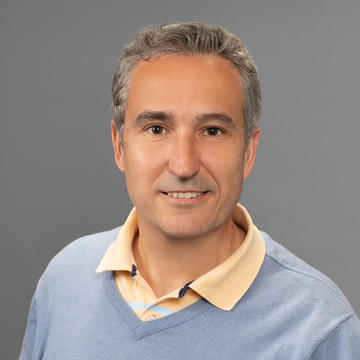
Tim Althoff is an Associate Professor at the Paul G. Allen School of Computer Science & Engineering, University of Washington, specializing in Artificial Intelligence and Human-Centered Computing. His research focuses on behavioral data science, combining Data Science Natural Language Processing Social Computing Human-Centered AI Ethics & Fairness to extract insights about health and well-being. Recent publications highlight advancements in: Mental health support through AI Wearable sensor health monitoring Online community analysis Reproducibility in data science Public health interventions with notable papers in ACL, Nature Machine Intelligence, and NeurIPS. Scientific recognition includes: ACL 2023 Outstanding Paper Award WWW 2021 Best Paper Award Double ICWSM 2021 Best Paper Awards SIGKDD Dissertation Award 2019 Fulbright Scholarship German National Merit Foundation Actively mentoring postdoctoral researchers and seeking PhD students in areas like neural representation learning, NLP applications to psychology, and mobile health technologies through his Behavioral Data Science Group .
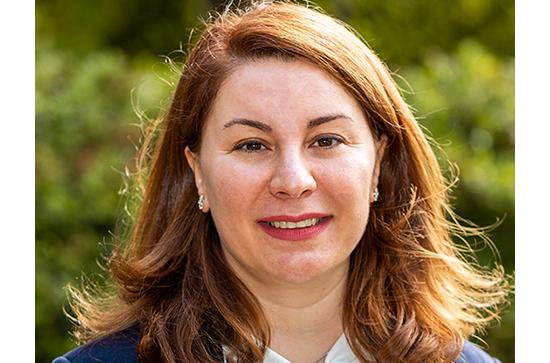
Katherine V. Gough is Professor of Human Geography at Lund University, Sweden, with a 30-year research focus on housing/home, work/entrepreneurship, youth/elderly geographies, mobility, urbanisation, and climate change across Africa, Latin America, and Asia-Pacific. She collaborates with Loughborough University's Clear Climate team on extreme heat mitigation in Ghana and leads the 'Trocha de Paz' project for Colombia's 'Total Peace' agenda. Research Themes Extreme Heat in Ghana Peacebuilding in Colombia Rural-Urban Dynamics Her multidisciplinary approach bridges academia, policy, and communities through projects like VEWEC, REFIT, and Paz Alto Cauca. Current work emphasizes: Climate-resilient housing design Post-conflict governance Informal sector innovation Scientific Engagement: British Academy funded VEWEC and REFIT projects Principal Investigator for Trocha de Paz (Colombia) Her collaborative research strengthens stakeholder networks in: West African urban livelihoods Colombian territorial peacebuilding Tropical climate adaptation
Christopher L. Tucci is a Professor of Digital Strategy & Innovation at Imperial College London's Business School and currently serves as Interim Vice Dean of Education. He is also the Founding Dean of NEOM's College of Business & Innovation in Saudi Arabia. Previously, he held the Chair in Corporate Strategy & Innovation at École Polytechnique Fédérale de Lausanne (EPFL), where he served as Dean of the College of Management from 2013 to 2018. His academic qualifications include a PhD in Management from MIT and multiple degrees from Stanford University: an AB in Music, BS in Mathematical Sciences, and MS in Computer Science and Computer Science. His research focuses on digital strategy, innovation management, open innovation, and business model innovation, with particular emphasis on how firms transition to new technologies and organizational forms. He has pioneered work on crowdsourcing, inter-networking, and AI-driven innovation. His award-winning article 'Crowdsourcing as a Solution to Distant Search' (co-authored with Allan Afuah) has received multiple accolades, including the AMR Decade Award in 2022. Professor Tucci teaches courses such as AI Ventures, Co-Creation in AI & Robotics, and Design Thinking. He actively contributes to academic leadership roles, including serving on the Academy of Management's Board of Governors and leading initiatives like Imperial's I-X (Artificial Intelligence and Digital Innovation hub). His work integrates technology, strategy, and organizational dynamics to address modern business challenges. Educations: PhD in Management, MIT (1992–1997) SM in Technology & Policy/EECS, MIT (1989–1991) BS in Mathematical Sciences, Stanford (1978–1982) AB in Music, Stanford (1979–1983) MS in Computer Science, Stanford (1982–1984) Labs/Teams: Co-Director of Imperial's I-X initiative, focusing on AI, data science, and digital innovation.
Pol Antràs serves as the Robert G. Ory Professor of Economics at Harvard University, where he has been a faculty member since 2003. He holds significant research affiliations as a Research Associate at the National Bureau of Economic Research (NBER), where he directed the International Trade and Organization Working Group, and as a Research Affiliate at the Centre for Economic Policy Research (CEPR). He also contributes to the Barcelona School of Economics as a member of its Scientific Council. His academic foundation includes a BA and MSc in Economics from Universitat Pompeu Fabra in Barcelona and a PhD in Economics from MIT (2003). Antràs specializes in international economics and applied theory, with recent research focusing on global value chains, the interplay between globalization and interest rates, market power in global markets, and international relations. His work examines how firms organize cross-border production, the implications for trade policy, and the structural transformations in international trade following events like pandemics. He bridges rigorous theoretical modeling with empirical analysis to address contemporary economic challenges. His publication record reveals a sustained focus on the evolution of global trade architecture, particularly the rise of production networks and their vulnerability to disruptions. Recent work explores unconventional intersections such as monetary policy's impact on trade flows and the political economy of ideology-driven foreign influence. His major scientific distinctions include: Alfred P. Sloan Research Fellowship (2007) Fundación Banco Herrero Prize (2009) Fellow of the Econometric Society (2015) Member of the American Academy of Arts and Sciences (2024) As Editor of the Quarterly Journal of Economics (2015-2020) and contributor to multiple editorial boards, Antràs shapes scholarly discourse in economics. His research is institutionally supported through NBER and CEPR affiliations, though specific grant details aren't publicly itemized. He maintains an active role in mentoring graduate students at Harvard. He drives collaborative research through leadership in the NBER's International Trade and Organization Working Group and CEPR's research networks, fostering international scholarly exchange on trade and globalization.
Martina Artmann is a Research Professor in Green Infrastructure at the University of Applied Science Weihenstephan-Triesdorf, Germany. She leads the Leibniz Junior Research Group URBNANCE on Urban Human-Nature Resonance at the Leibniz Institute of Ecological Urban and Regional Development (IOER) in Dresden. Her work spans urban ecology, green infrastructure, and sustainability transformation, with a focus on human-nature interactions in cities. PhD in Natural Sciences, University of Salzburg & Bavarian Academy for Nature Protection MSc in Landscape, Regional and Urban Management, University of Salzburg BSc in Agricultural Science, University of Hohenheim Her research centers on urban ecosystem services, green infrastructure, and edible cities as nature-based solutions for urban sustainability. She investigates how urban agriculture, soil sealing, and green space planning contribute to resilient cities. Her work integrates transdisciplinary methods, citizen science, and policy evaluation to foster human-nature resonance and transformative change. Her recent publications reflect a strong trend toward systemic assessments of urban agriculture, sustainability transformation, and the role of relational values in urban ecology. Themes include edible cities, green infrastructure, urban human-nature interactions, and the integration of ecological and social dimensions in urban planning. Student Award, German IALE-D (2012–2014) Doctoral Scholarship, German Federal Foundation for Environment (DBU, 2011) TUD Young Investigator, TU Dresden (2013) Fellowships for study in China (2005) and New Zealand (DAAD) Artmann has led multiple funded research projects, including DFG’s Edible Cities, BMBF’s Future Town Dresden, and BMVI’s meinGrün. She mentors students through project-based teaching at TU Dresden and has served as a visiting professor at the University of Bucharest. She is a Review Editor for Frontiers in Environmental Science and actively contributes to academic networks such as the Society for Urban Ecology (SURE) and the China Centre for Urban Ecology (CCUE). She is involved in research labs and teams including the URBNANCE Junior Research Group at IOER and collaborates with interdisciplinary teams on urban sustainability projects. Her work emphasizes transdisciplinary research, stakeholder engagement, and the co-creation of knowledge for sustainable urban development.
Professor Adam Yuet Chau is a Fellow and Director of Studies at St John's College and holds the Professor of the Anthropology of China position at the Faculty of Asian and Middle Eastern Studies, University of Cambridge . His academic journey includes training at Stanford University (PhD in Anthropology, 2001) and teaching roles at Oxford and SOAS before joining Cambridge in 2008. Focus on Chinese religions and their social dimensions Specializes in ritual theory and cultural transformations Develops comparative frameworks for understanding religious practices His research spans religion under socialism , hosting in political/religious contexts , and ritual polytropy . Recent projects include editing Chinese Religious Culture in 100 Objects and analyzing 'spheres' (界) in Chinese society . Publications like Miraculous Response (2006) and Religion in Contemporary China (2011) establish him as a key figure in religious anthropology. Current and past PhD/MPhil students explore topics from temple festivals in Taiwan to religious subjectification . He actively reviews for leading presses (Cambridge, Oxford, Harvard) and journals ( Ethnos , Modern China ), and participates in international academic workshops.
Ashwani K. Gupta is a Distinguished University Professor at the University of Maryland, holding the Minta Martin Professorship in Engineering. He serves as Professor in the Department of Mechanical Engineering, Professor at the Institute of Physical Science and Technology, and Affiliate Professor in the Department of Aerospace Engineering. With over 45 years of experience in combustion engineering since graduating from Southampton University in 1970, Gupta has established himself as a leading authority in advanced combustion technologies. Dr. Gupta earned his Ph.D. from the University of Sheffield in 1973, followed by a D.Sc. from the same institution in 1986 and another D.Sc. from Southampton University in 2013. His academic journey includes six years at MIT as a research staff member and three years at Sheffield University as an independent research worker before joining the University of Maryland in 1983. Gupta's research focuses on revolutionizing combustion technology through innovations in swirl flows, high-temperature air combustion (HiTAC), and distributed combustion systems. His pioneering work on 'colorless distributed combustion' has enabled ultra-low emission combustion processes with significant applications in gas turbine engines and waste-to-energy conversion. His research spans biofuels, CO2 utilization, sulfur chemistry, waste conversion, and advanced laser diagnostics, addressing critical challenges in sustainable energy and environmental protection. Analyzing his recent publications reveals a strong emphasis on waste-to-energy conversion, biomass processing, and CO2-assisted technologies. Gupta's work demonstrates a clear trajectory toward sustainable energy solutions, with increasing integration of artificial intelligence for combustion optimization and emission control. His research bridges fundamental combustion science with practical engineering applications for cleaner energy systems. Among Gupta's numerous accolades are: Election to Fellowship of the Royal Academy of Engineering (2023) Honorary Fellowship of the Royal Aeronautical Society (2020) Recognition as one of the top 2% of scientists worldwide by Stanford University (2022-2024) Multiple prestigious medals from ASME and AIAA including the Soichiro Honda Medal (2018) and AIAA Air Breathing Propulsion Award (2014) Honorary doctorates from three international universities Gupta has secured substantial research funding throughout his career, resulting in over 850 technical papers, three books, 18 edited books, and 22 book chapters. He has delivered over 100 plenary/keynote/invited presentations at international conferences. His mentorship has shaped numerous graduate students who continue to contribute to the field of combustion engineering. Gupta directs the Combustion Laboratory at the University of Maryland, which serves as a hub for cutting-edge research in sustainable combustion technologies. The Combustion Laboratory, under Gupta's leadership, has become a center of excellence for advanced combustion research, particularly in distributed combustion systems, waste-to-energy conversion, and alternative fuels. The lab maintains strong collaborations with industry partners and international research institutions, facilitating technology transfer and practical implementation of research findings. Gupta's team employs state-of-the-art diagnostics and computational tools to advance fundamental understanding while developing practical engineering solutions for cleaner energy systems.
Professor Ruchi Choudhary is a Professor in Architectural Engineering at the University of Cambridge, Department of Engineering, within the School of Technology. She leads the Energy Efficient Cities initiative (EECi), a cross-disciplinary research project focused on strengthening the UK's capacity to address energy demand reduction and environmental impact in cities through research in building and transport technologies, district power systems, and urban planning. Her research interests span urban energy systems, building energy modeling, sustainable cities, geothermal energy systems, and data-driven energy modeling . She has pioneered work in digital twins for energy systems, urban subsurface thermal modeling, and building-integrated agriculture. Her research group develops numerical tools to improve energy efficiency of cities, with particular focus on modeling energy consumption of large building sets at multiple time and spatial resolutions. Analysis of her recent publications reveals a strong trend toward integrating machine learning with physics-based modeling for energy systems, with increasing emphasis on uncertainty quantification, digital twins, and value of information analysis for decision-making. Her work bridges the gap between theoretical modeling and practical urban implementation, with significant focus on city-scale geothermal potential, underground climate change impacts, and energy equity considerations. Professor Choudhary has supervised numerous PhD students who have gone on to prominent positions at institutions including UCL, University of Cambridge, BEIS, Arup, and various international universities. Her research group includes faculty members, research associates, graduate students, and international collaborators from institutions worldwide. Her current research focuses on two parallel investigations: one on using multi-scale multidisciplinary models to address energy use questions in the built environment, and second, on quantifying uncertainties in model outcomes. Current projects include integration of food production in urban environments, analysis of underground transport systems as energy sources, large-scale integration of ground source heat pumps, and distributed energy networks.
Xavier Brusset is a Professor in Supply Chain at SKEMA Business School since 2016, where he also serves as Director of the PRISM Research Center since 2017. Previously, he held professorial positions at Toulouse Business School (2015-2016) and ESSCA School of Management (2009-2015), where he was responsible for the Master 2 in Purchasing and Supply Chain Management program. His academic journey includes a PhD in Management Sciences from Université Catholique de Louvain (2010) and a Habilitation à Diriger des Recherches from Université Paris Ouest Nanterre La Défense (2016). His research spans multiple critical areas in supply chain management, with particular focus on supply chain resilience, blockchain applications, weather risk management, and pandemic impacts on supply chains. Brusset has developed innovative approaches to understanding how supply chain partners interact, how information affects their behavior, and how external disruptions like weather anomalies and pandemics impact operational efficiency. His work bridges theoretical models with practical applications, often developing decision-support tools for managers facing complex supply chain challenges. Brusset's publication record shows a clear evolution of research interests, beginning with foundational work on supply chain contracts and information sharing, then expanding to weather risk management, and most recently focusing on pandemic disruptions and blockchain applications. His 15 most recent publications (2018-2025) demonstrate increasing sophistication in modeling complex supply chain phenomena, with particular emphasis on network effects, ripple effects, and multi-echelon optimization under disruption scenarios. Editorial board member of Logistics Research Editor of International Journal of Retail and Distribution Management (2022-2023) Recognized EU expert for CINEA research projects evaluation Organizer of the Colloquium on European Research in Retailing (CERR) Reviewer for multiple top journals including International Journal of Production Economics As an advisor, Brusset has supervised doctoral students including R. Alkhudary (co-director, Université Paris 2 Panthéon-Assas) and V. Capocasale (rapporteur). His professional experience extends beyond academia to include industry roles in financial markets and logistics technology, having co-founded WebLogistix, a platform for sharing logistics information in Argentina. His research has practical applications across multiple sectors, particularly in retail, food supply chains, and manufacturing, where he develops tools to help managers mitigate risks and optimize operations under uncertainty.
Meg Rithmire serves as the James E. Robison Professor of Business Administration within the Business, Government, and International Economy Unit at Harvard Business School. She holds concurrent faculty affiliations at Harvard's Weatherhead Center for International Affairs, Fairbank Center for East Asian Studies, and Harvard Faculty Committee on Southeast Asia, where she convenes the Chinese Economy Seminar. Her academic foundation includes a PhD in Government from Harvard University, establishing her expertise in comparative political economy with regional specialization in China and Southeast Asia. Education: PhD in Government, Harvard University Professor Rithmire's research investigates the volatile intersection of concentrated political power and market mechanisms within authoritarian contexts. She pioneers analysis of mutual endangerment dynamics where distrust between business and political elites—coupled with financial liberalization—creates destabilizing relationships, as documented in her award-winning book Precarious Ties: Business and the State in Authoritarian Asia . Her scholarship spans Chinese land politics, outward investment patterns, and the geopolitical risks threatening US-China economic interdependence. Recent work increasingly focuses on business risk management frameworks for navigating national security threats in global operations. Analysis of her 15 most recent publications reveals a sharp pivot toward geopolitical risk governance, with 60% of her 2022-2025 output addressing business resilience in deteriorating US-China relations. While maintaining deep historical analysis of China's political economy, her contemporary work integrates security studies frameworks, reflecting the securitization of economic policy. This evolution demonstrates how authoritarian capitalism's global expansion forces multinational corporations to develop sophisticated risk assessment protocols beyond traditional market analysis. Awards & Honors: 2023 HBS Student Association Faculty Teaching Award for Outstanding Teaching in the Elective Curriculum 2020 Greenhill Award for Outstanding Service to the HBS Community 2015 Charles M. Williams Award for Teaching Excellence 2015 HBS Student Association Faculty Award for Outstanding Teaching in the Required Curriculum Professor Rithmire advises executive education programs on geopolitical risk management while co-chairing the U.S. Chamber of Commerce Foundation's Business Geopolitical Risk and Resilience initiative. Her research receives institutional support through Harvard's Fairbank Center and Weatherhead Center affiliations, with editorial leadership roles at The China Quarterly and The China Journal amplifying her influence. Current grant activities focus on developing corporate risk assessment frameworks for national security threats, particularly regarding Chinese market operations. She leads the Business Geopolitical Risk and Resilience initiative with the U.S. Chamber of Commerce Foundation, convening multinational executives and policymakers to develop practical risk management protocols. Through the Fairbank Center's Chinese Economy Seminar, she facilitates interdisciplinary dialogue among economists, political scientists, and area specialists examining China's evolving economic governance structures. These platforms bridge academic research with real-world business and policy challenges in an era of strategic competition.
Zohreh Pourzolfaghar is an Assistant Professor in Management Information Systems (MIS) at the School of Business, Maynooth University (MU). She serves as Director of the IT-Enable Innovation Programme and cluster lead for the Digital Construction cluster at the Innovation Value Institute (IVI). She is also a member of Lero, the SFI Research Centre for Software. Education: PhD in Project Management (University Putra Malaysia, 2011); MSc in Management Systems and Productivity; BSc in Software Engineering. Research Interests : Focuses on digital transformation for SMEs, information management in construction, and smart city architectures. Leads EU-funded projects like EnTrust (agri-data governance), DIGI+ (sustainable digital transformation), and DigiFABs (food & beverage SMEs). Co-PI for projects such as GDI-IE (genomic data infrastructure) and PERFORM (digital retail innovation). Grants & Awards : Secured funding from SFI, Enterprise Ireland, and EU. Notable awards include the BIM Hero Award (2022) and Research Engaged Award (2022). Teaching : Courses include Digital Business, Digital Technology Governance, and Enterprise Architecture. Advises PhD students in MIS and digital transformation. Industry Collaboration : Works with firms like ArcDox and Corballis Technologies on BIM standards and data governance. Active in national and EU policy networks, including NSAI committees.
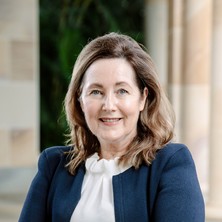
Professor Janet McColl-Kennedy is a leading figure in marketing and service science at The University of Queensland's Business School. She serves as Program Lead for Innovation Pathways (FaBA) and co-founded the Service Innovation Alliance (SIA) research hub, focusing on customer experience, AI, digital transformation, and sustainability. With Fellow status in the Academy of the Social Sciences in Australia and the Australian and New Zealand Marketing Academy, she holds international recognition including Research.com's World's Best Business Scientists ranking and the Christopher Lovelock Career Contributions to the Services Discipline Award (2025). University of Queensland Business School Honorary Visiting Professor, Cambridge Service Alliance Research Collaborator, University of Cambridge Her research spans customer experience management, service ecosystems, digital transformation, and healthcare services. She has pioneered frameworks for customer value co-creation and service recovery strategies, integrating AI and behavioral science. Her 2019 paper on customer experience insights was implemented by a major B2B organization, while her work on value co-creation improved outcomes at Lutheran Community Care. Recent publications focus on AI impacts in food and beverage services, sustainable service ecosystems, and digital health interventions. She has secured over $89 million in competitive grants, including multiple ARC Linkage and Discovery Projects, and leads cross-disciplinary teams with institutions like Cambridge University and Arizona State University. 2024 - ARC College of Experts appointment 2023 - Bo Edvardsson Industry Impact in Services Award 2022 - Elected Fellow of Academy of the Social Sciences in Australia 2021 - Clarivate Highly Cited Researcher 2018 - Ranked most influential marketing academic in Australia With over 220 publications and a Google Scholar H-index of 62, she has mentored 15 PhD students and examined theses at multiple universities. Her teaching spans 30+ years across undergraduate, postgraduate, and executive programs in Australia, USA, Italy, China, and Korea, with awards for blended learning and corporate education.
Mo Mansouri is a Teaching Professor and Director of Graduate Studies at the Department of Systems and Enterprises, Charles V. Schaefer, Jr. School of Engineering and Science, Stevens Institute of Technology. He also serves as a Visiting Professor at the University of North-Eastern Norway, highlighting his international academic engagement. His leadership extends to directing Systems Engineering and Socio-technical Systems Programs, underscoring his central role in shaping academic and research initiatives in systems engineering. Education: PhD in Engineering Management, The George Washington University (2004) MS in Industrial Engineering, University of Tehran (1999) BS in Industrial Engineering, Sharif University of Technology (1997) Dr. Mansouri's research is centered on computational governance frameworks , resilience design , and behavioral modeling in complex socio-technical systems . His work applies systems thinking to urban systems, smart cities, infrastructure, and healthcare, with a strong emphasis on data-driven policy design and multi-stakeholder coordination. He investigates how real-time data, sensing, and analytics can inform governance in complex environments such as transportation, energy, and public health systems. His recent publications (2023–2024) reveal a strong trend toward AI and digital transformation in healthcare , electric and urban mobility systems , and pandemic and societal resilience . These works frequently employ systems thinking, systemigram modeling, and system of systems engineering methodologies, published in IEEE, INCOSE, and IARIA venues. The interdisciplinary nature of his research spans engineering, policy, and human behavior. Scientific Awards and Recognitions: While specific awards are not listed in the provided text, his leadership roles and extensive funding indicate high professional recognition. Advising and Grants: Dr. Mansouri has served as Principal Investigator (PI) or Co-PI on multiple high-value research grants totaling millions of dollars from DoD, Lockheed Martin, NED, and FAA. These projects focus on capability assessment, smart city dashboards, governance modeling, and social development. He mentors students through doctoral and master’s level courses and research, though specific advisee names are not provided. Labs and Research Teams: While specific lab names are not mentioned, his research is conducted within the Department of Systems and Enterprises at Stevens, involving collaborations with students and professionals in areas such as smart cities, healthcare systems, and infrastructure resilience. His work with international institutions and professional societies indicates active participation in global research networks.
Sanford E. DeVoe is a Professor of Management and Organizations at UCLA Anderson School of Management. He currently serves as Senior Associate Dean of MBA Programs and teaches leadership foundations to Full-Time, Fully Employed, and Executive MBA students. Ph.D. in Organizational Behavior, Stanford University (2007) B.A. in Psychology with High Honors, Swarthmore College (2000) DeVoe's research explores the psychological impacts of monetizing time, including trade-offs between time and money, workplace stress, and societal well-being. His work uses experimental and survey methods to analyze how organizations can improve quality of life through behavioral interventions. His recent scholarly trends examine temporal psychology in organizational contexts, financial impatience, and stressor mitigation in service industries. Articles span behavioral economics, consumer culture analysis, and time-use optimization. Excellence in Teaching award (6 times) Dean’s Award for Excellence in Research (2011, Rotman School of Management) Featured in top media outlets like New York Times , Economist , and Wall Street Journal DeVoe has served as Senior Editor at Organization Science and sits on editorial boards of leading management journals. He actively bridges academic research with public discourse through media engagements and advisory roles.
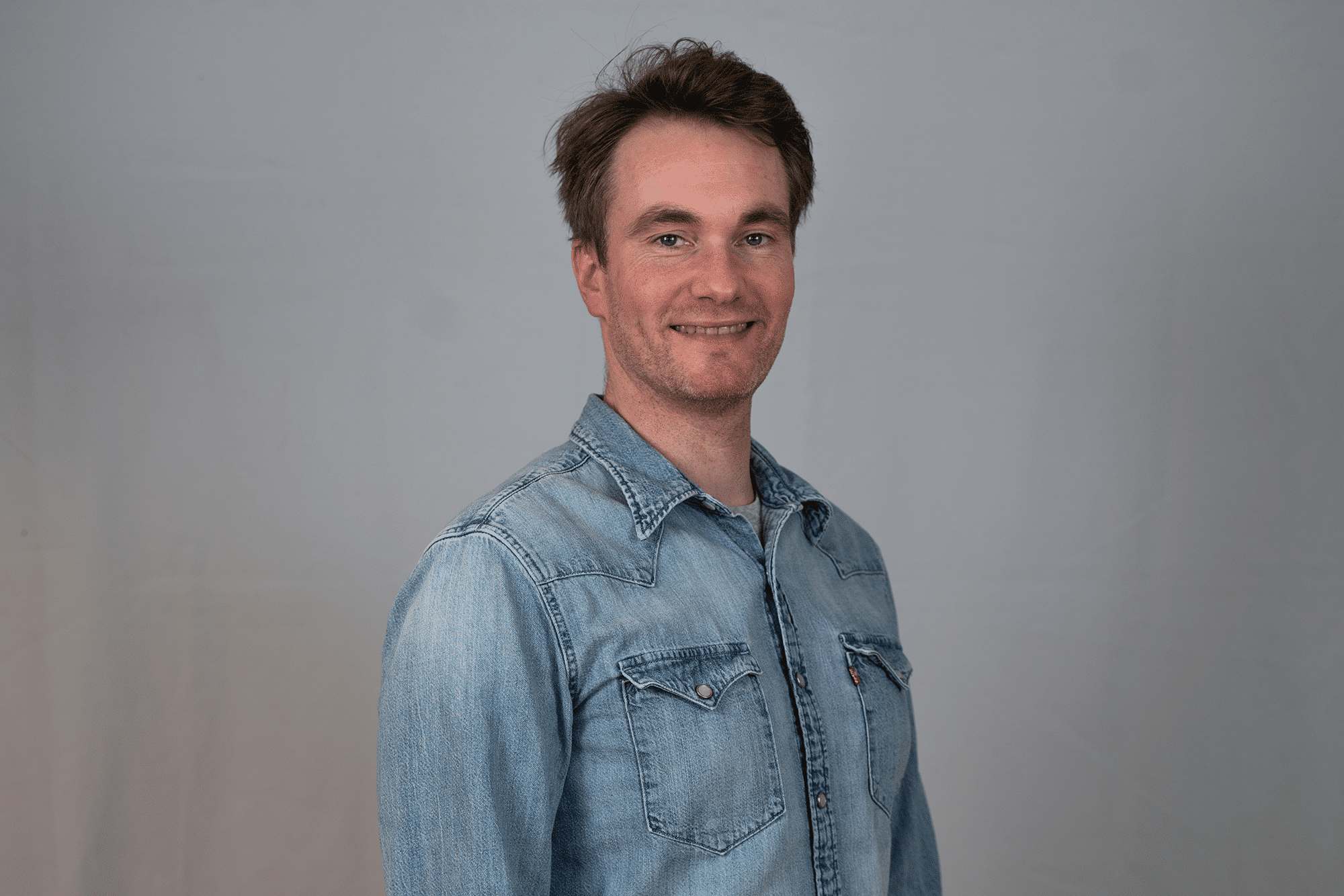
Laurent DUPONT is a Research Engineer and Co-coordinator of the IUVTT Master’s program at ENSGSI (École Nationale Supérieure de Géologie et de Sciences Industrielles), part of the Groupe INP in Nancy, France. He also serves as Scientific Manager of the Lorraine Fab Living Lab. His work focuses on user-driven innovation, smart and sustainable territories, collaborative engineering, and immersive environments. He holds a PhD in Industrial Systems Engineering from INPL (2009), a DEA (2004), and a degree in Industrial Systems Engineering (2003) from ENSGSI. Research interests include innovation lab strategies, open innovation spaces, territorial resilience, and digital twin applications in manufacturing. He leads projects like INEDIT, exploring co-design frameworks and circular economy solutions. His articles highlight trends in collaborative innovation networks, systemic impact mapping, and the integration of extended reality in industrial contexts. Key contributions include frameworks for evaluating territorial resilience and tools for monitoring innovation lab networks. He has been involved in initiatives such as the DHDA Project for resilience assessment and the Smagrinet project on smart grid training. His work bridges academia and practice through participatory methods and cross-sector collaborations. Current projects emphasize Industry 5.0, open manufacturing, and community-driven innovation.