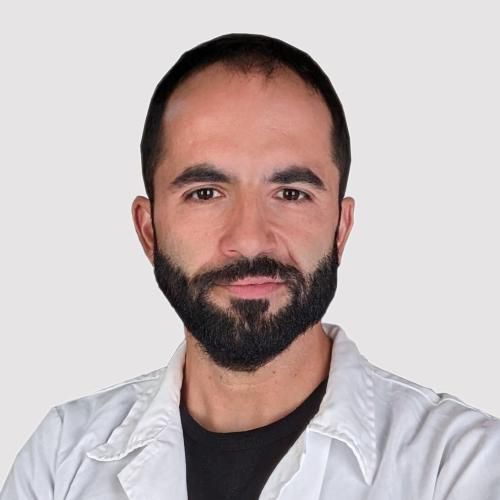
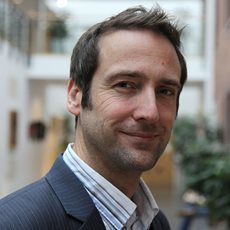
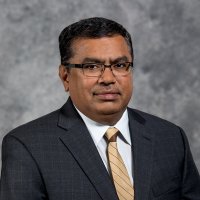
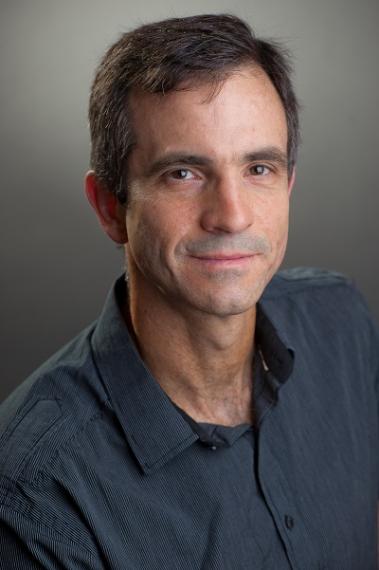
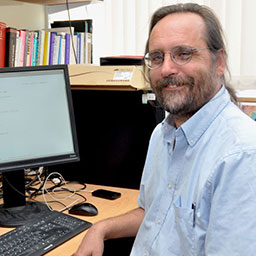
Fernando De Mathia is a researcher at the Institute of Bioprocess Science and Engineering, part of the Department of Biotechnology and Food Science at the University of Natural Resources and Life Sciences, Vienna (BOKU). His work focuses on bioprocess optimization, particularly in vaccine development and protein purification technologies. Research interests include bioprocess science, bioengineering, and downstream purification techniques for viral and recombinant protein-based therapeutics. His recent publications address continuous virus filtration and antibody purification processes, with applications in biopharmaceutical manufacturing. Key projects involve optimizing affinity-based RNA purification systems and continuous bioprocessing methods. He holds an M.Sc. degree and collaborates with international research teams on biotechnological innovations.
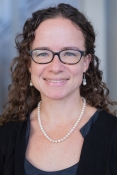
Colleen Naughton is an Assistant Professor in the Civil & Environmental Engineering Department at the University of California, Merced. Her work bridges engineering, public health, and policy, focusing on Food-Energy-Water Systems (FEWS), Life Cycle Sustainability Assessment (LCSA), and water infrastructure in underserved communities. Ph.D., Civil Engineering with Water, Health, and Sustainability Certificate (2016) – University of South Florida M.S., Civil Engineering (2013) – University of South Florida B.S., Civil Engineering with Environmental Concentration (2008) – Purdue University Her research integrates GIS with environmental justice frameworks to address water contamination, wastewater surveillance, and climate adaptation. She develops machine learning models for groundwater pollution prediction and designs community-centric sanitation solutions in developing regions. Recent publications emphasize wastewater-based epidemiology for equitable disease monitoring (SARS-CoV-2, dengue), climate-suitable agricultural planning, and life cycle assessment of irrigation systems. Her work combines technical innovation with social equity considerations. Outstanding Reviewers for Environmental Science: Water Research & Technology (2022) Dr. Naughton’s projects often involve multidisciplinary collaboration, including partnerships with public health agencies and rural communities. She advocates for standardized data reporting in wastewater surveillance and addresses legacy pollutants like 1,2,3-trichloropropane in California’s Central Valley.
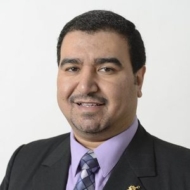
Dr. Ahmed El-Sayed is an Associate Professor in the Department of Electrical and Computer Engineering at the School of Engineering, University of Bridgeport. He holds a Ph.D. in Computer Science and Engineering (2016) and M.Sc. degrees in Computer Engineering (2011) and Engineering Mathematics (2006). Ph.D. in Computer Science and Engineering, University of Bridgeport (2016) M.Sc. in Computer Engineering, University of Bridgeport (2011) M.Sc. in Engineering Mathematics, Alexandria University (2006) B.Sc. in Electrical Engineering, Alexandria University (2003) His academic work focuses on robotics , artificial intelligence , and computer vision , with specific emphasis on fuzzy systems , machine learning , and soft computing . His research spans theoretical developments and practical implementations in autonomous systems , medical imaging , and industrial automation . The 15 most recent publications highlight his contributions to generative models , medical diagnostics , disassembly sequencing , and high-dimensional feature analysis . These works intersect disciplines such as robotics , machine learning , and sustainable manufacturing . Professional Memberships: IEEE ASEE Phi Kappa Phi Upsilon Pi Epsilon Egyptian Engineering Syndicate (lifetime member) He teaches courses including Embedded Systems Design , Computer Vision , and Introduction to Autonomous Vehicles .
Dr. Michael Rzanny is a Scientist at the Max Planck Institute for Biogeochemistry in Jena, Germany, working within the Department of Biogeochemical Integration and the Biod.AI.versity Observation & Integration research group. His work focuses on leveraging technology and citizen science to advance ecological research. Email: mrzanny@... Location: Hans-Knöll-Str. 10, 07745 Jena, Germany Dr. Rzanny's research spans several critical areas in ecology and biodiversity science. He specializes in plant phenology , using citizen science data and machine learning to monitor and predict plant life cycle events across Central European forests and grasslands. His work also explores multitrophic interactions , examining how plant diversity affects predator and herbivore specialization in complex ecosystems. Additionally, he contributes to digital taxonomy through mobile apps like Flora Incognita and Flora Capture, which enable automated plant species identification using smartphone technology. His research extends to functional diversity in grassland ecosystems, analyzing how species richness impacts ecological multifunctionality and food web stability. Dr. Rzanny's publications demonstrate a strong trend toward integrating automated image analysis with ecological monitoring . His work on phenological dynamics combines observational networks, citizen science databases, and land surface models to understand climate change impacts on plant communities. He has developed methodologies for leaf shape analysis using deep learning, validated through geometric morphometrics. His projects like Flora Incognita and Flora Capture emphasize the potential of mobile applications in transforming biodiversity research and public engagement with natural environments.
Angel Joy Gonzalez is a Professor at the Department of Food Hygiene and Technology, Faculty of Veterinary Medicine, University of León. Her career focuses on food microbiology and safety, particularly in dairy products and antimicrobial resistance. PhD in Microbiology (University of Oviedo, 2013) Research Interests: • Food microbiology and safety • Antimicrobial resistance in foodborne pathogens • Starter cultures and traditional fermented foods • Molecular techniques for microbial analysis Publication Trends: Recent work addresses antimicrobial resistance (ESBL, colistin resistance), bacteriophage applications, and advanced molecular techniques like MALDI-TOF and next-generation sequencing in food systems. Earlier studies focus on microbial characterization of traditional cheeses and stress physiology of lactic acid bacteria. Laboratory: Member of the SAMA Food Safety and Food Microbiology research group.
Dipl.-Ing.Dr. Gudrun Obersteiner is an Associate Professor and Deputy at the Institute for Waste Management and Circularity at the University of Natural Resources and Life Sciences Vienna (BOKU). She serves as a Deputy Member of the Senate and coordinates the research focus on food waste at the institution. Her contact information shows she is based at Muthgasse 107/III, 1190 Vienna with phone +43 1 47654-81319. Dr. Obersteiner specializes in waste management, circular economy, and food waste prevention with approximately 20 years of research experience in these fields. Her work demonstrates significant focus on quantifying food waste patterns in Austrian households, where she has found that every household throws away up to 133 kilograms of avoidable food annually (worth €250-€800), with bread/pastries (28%) and fruits/vegetables (27%) being most commonly discarded. She has led research projects examining consumer behavior and waste prevention strategies. Dr. Obersteiner has been actively involved in numerous research initiatives including circularhouseholds.eu, Plastic Pirates, Tid(y)Up, and URBANWASTE. Her recent and upcoming projects span from 2021 through 2025, demonstrating continued active research engagement. She has published research on waste management systems, food waste patterns, and environmental assessment methodologies. Teaching Award 2014 (3rd prize) for work with Andreas Pertl and Roland Linzner Coordinator of the university course 'Sustainability Assessment in Companies' Featured expert in the Natural History Museum's exhibition 'Expiry Date – When Food Becomes Garbage' (2021) Contributor to BOKU's press releases on food waste in 2021 As a recognized expert, Dr. Obersteiner has participated in panel discussions about food waste, including one at the Natural History Museum in February 2021. She leads research examining how exhibition visitors respond to food waste messaging, aiming to identify the most effective strategies for changing consumer behavior regarding food waste reduction.
Professor Remco Veltkamp holds a faculty position at Utrecht University's Faculty of Science with a focus on Game and Media Technology . As Scientific Director of AI Labs and coordinator of the Utrecht Center for Game Research , his work bridges serious games, virtual reality, and human-centered AI applications. He leads the Dynamics of Youth Hub 'Healthy Play, Better Coping' exploring gaming's role in pediatric chronic illness management. Academic leadership in gaming technology Director of Utrecht's AI Labs Founder of Serious Game Society Editor of International Journal of Serious Games Research spans game design, AR/VR interaction, 3D object recognition, and multimedia systems with applications in: Healthcare gamification Energy conservation Bioinformatics Social behavior analysis Computer vision Recent work includes: 2025: Developing fatigue management therapy games 2024: Analyzing protest dynamics through social media 2023: Creating equine pain assessment systems 2022: Gamification in food sustainability As educator, he teaches Game Programming and Small Project Game and Media Technology , while pioneering applications of gaming in healthcare and education sectors.
Professor Robert Elliott is a Professor of Economics and Director of Research in the Department of Economics at the University of Birmingham's Birmingham Business School. His work spans international economics, development economics, environmental and energy economics, and international business, with particular expertise in the Chinese economy, firm behavior, natural disasters, and globalization's environmental impacts. Professor Elliott holds a BA in Economics from the University of Leicester, an MA in Economics from the University of Essex, and completed his PhD at the University of Nottingham under the supervision of Professor David Greenaway, Dr Peter Wright, and Robert Hine. His research focuses on empirical environmental, international trade, development, energy, and labor economics. Key areas include the economics of China and East Asia, empirical environmental economics, economic geography, globalization and environment, natural disasters (floods, typhoons, earthquakes), biodiversity and deforestation, trade and environment, FDI and industrial restructuring, and energy economics. His interdisciplinary approach often combines large dataset manipulation with advanced econometric techniques. Analysis of his recent publications reveals a strong focus on environmental economics, particularly examining the intersection of climate change, natural disasters, and economic outcomes. His work spans historical environmental events in China, contemporary energy and transportation economics, air quality policy evaluation, and the economic impacts of natural disasters across different regions and time periods. A significant portion of his research applies advanced statistical and machine learning methods to environmental policy questions. Professor Elliott serves as an editor for the Sustainable Future Policy Lab and Director of the Trade, Environment, Development and Energy (TEDE) research group. He is also a Co-Investigator on ReLIB as part of the Faraday Institute, a member of Water Challenges in a Changing World IGI, and an Affiliate of the Lloyds Bank Centre for Responsible Business. He actively supervises PhD students across international and development economics and environmental and energy economics. His current projects include the "Brexit Uncertainty Index" and Leverhulme Trust research projects in "Globalisation and the Environment" with Matthew Cole. He has received significant funding including an ESRC grant for "China-UK energy issues" worth approximately £1 million. Professor Elliott is a key member of the Birmingham Plastics Network, an interdisciplinary team of over 40 academics addressing the global plastics problem. This network brings together experts from diverse fields including chemistry, environmental science, engineering, philosophy, linguistics, economics, and law to develop holistic solutions for plastics sustainability.
Marti Roger is an Ordentlicher Professor (Full Professor) of Organic Chemistry and Process Chemistry at the University of Applied Sciences and Arts Western Switzerland (HES-SO), specifically at the Haute école d'ingénierie et d'architecture de Fribourg (HEIA-FR). He is a member of the ChemTech Institute of Chemical Technologies and holds a leadership role in research and education in sustainable chemistry. His academic career includes positions at ZHAW Winterthur/Wädenswil (2004–2009) and HEIA-FR since 2009. Education: B.Sc. in Chemistry from Technikum Winterthur and ETH Zurich, followed by a Ph.D. under Prof. Dr. D. Seebach at ETH Zurich. Postdoctoral research at Sandoz Pharma USA and industrial experience at Carbogen AG in pharmaceutical development and scale-up. Research focuses on synthetic organic chemistry, green chemistry, process development, and polymer science. Key projects include biodegradable facemasks (Public Mask project), smart hydrogels for tissue engineering, and sustainable biofuels from PHA. He leads or collaborates in HES-SO-funded projects addressing environmental challenges in materials and energy sectors. Teaching responsibilities include B.Sc. courses in organic chemistry (aromatic compounds, carboxylic acids, organometallic reactions) and M.Sc. courses in process chemistry and polymer applications. He emphasizes flow chemistry education and sustainable process design. Notable achievements include scaling up diformylxylose production from biomass, designing mini-CSTR reactors for oxidation reactions, and developing biodegradable polymers for medical use. His work balances academic innovation with industrial relevance, guided by life-cycle assessments for environmental impact minimization. Labs/Teams: Active in ChemTech Institute and collaborates with partners like Hepia, iTEC, and VS-Instituts. Projects span from bio-based materials to CO2-neutral fuels and eco-concretes.
Prof. Christoph Ellert is a Professor in Physics and holds the academic rank of Professeur HES Ordinaire at HES-SO Valais-Wallis. His primary affiliation is with the School of Engineering and IT (Technique et IT), Department of Energy and Environmental Technologies (Energie et techniques environnementales). Education & Early Career: PhD in Physics (1995, University of Freiburg, Germany) focusing on optical spectroscopy of metal clusters. Postdoctoral research at the National Research Council (Ottawa, Canada) and CEA Grenoble/Paris (France), specializing in laser-matter interactions and plasma physics. Research Interests: Plasma technology for energy and environmental applications (e.g., waste conversion, surface treatment) Renewable energy systems: Photovoltaic integration, DC microgrids, hydrogen storage Material science: Plasma deposition of thin films (e.g., hematite, functional coatings) Energy management: Grid stability, peak shaving, and electrolysis for green hydrogen Key Projects: Plastic-to-hydrocarbon conversion via hydrogen plasma (2022–2024) DC-microgrid development for industrial energy autonomy (2017–2019) Cold atmospheric plasma for food decontamination (2014–2015) Solar energy potential assessment in urban environments (Geneva solar cadaster) Grants & Funding: Over CHF 2.5M in grants from Innosuisse, HES-SO Rectorate, and industry partners. Projects emphasize applied R&D in energy systems, plasma engineering, and sustainable technologies. Labs & Teams: Leads the Energy Systems Group at HES-SO Valais-Wallis, collaborating with interdisciplinary teams across engineering, materials science, and environmental technology. Key partners include EPFL, Oerlikon Solar, and local industry.
Prafulla Salunke is an Assistant Professor in the Department of Dairy and Food Science at South Dakota State University (SDSU). He holds a B.S. and M.S. in Dairy Technology from Gujarat Agricultural University (1993–1996) and a Ph.D. in Biological Sciences focusing on Dairy Manufacturing from SDSU (2013). His academic responsibilities include teaching courses such as DS 492 (Multidisciplinary Project), DS 442 (Dairy Product Development), and DS 731 (Lab Techniques in Dairy Science). Salunke’s research focuses on cheese technology, dairy ingredient development, and enzyme applications. Specific interests include optimizing cheese functionality, developing novel dairy-based ingredients, and exploring enzyme-driven protein modifications. He has advised two doctoral, six master’s, and one undergraduate student. Professional affiliations include the American Dairy Science Association, Institute of Food Technologists, and Gamma Sigma Delta. He has held roles like advisor at the North Central Cheese Industry Association and PI of the Institute for Dairy Ingredient Processing at SDSU. His work experience includes R&D coordination at Saputo Cheese (2013–2021) and managerial roles at AmulFed Dairy and cooperative dairies in India (1993–2007). Salunke has published 20 peer-reviewed papers, 26 conference presentations, and six invited talks. His research spans cheese texture analysis, ingredient functionality, and dairy processing innovations.
Alejandro Marangoni is a Professor and Tier I Canada Research Chair in Food, Health and Aging at the University of Guelph. He holds a B.Sc. from McGill University and a Ph.D. from the University of Guelph. His research focuses on the physical properties of fats and oils, including structured emulsions, oleogels, and sustainable materials for food and non-food applications. Marangoni’s academic roles include editorial leadership as Co-Editor-in-Chief of Current Opinion in Food Science and Technology and former Editor-in-Chief of Food Research International . He has been recognized with over 40 patents and numerous awards, including the E.W.R. Steacie Memorial Fellowship and the Kaufmann Medal. His work bridges food science, chemistry, and materials engineering, addressing sustainability challenges in food production and environmental remediation. Education: B.Sc. (McGill University), Ph.D. (University of Guelph) Affiliations: Fellow of the Royal Society of Chemistry, Fellow of AOCS, Member of IFT and APS Research Themes: Fat crystallization, edible emulsions, biolubricants, anti-aging cosmetics His lab has trained over 100 researchers, many now in academia and industry. Recent projects include plant-based cheese alternatives, sulfolane separation in groundwater, and ferroelectric soft materials. Marangoni’s interdisciplinary approach drives innovation in both food systems and sustainable technologies.
Dr Mark Poolman is a Senior Research Fellow in Systems Biology at the School of Biological and Medical Sciences, Oxford Brookes University . His research focuses on metabolic modeling , systems-wide analysis , and computational approaches to understanding biological processes in plants, microbes, and pathogens. His funded projects include: BBSRC Institute Strategic Programme : Microbes and Food Safety (2023–2028). European Commission -funded work on antimicrobial targets (2021–2025). CCnet project for carbon recycling (2019–2025). Dr Poolman’s work spans photosynthesis , photorespiration , nitrogen fixation , and metabolic engineering in organisms like Clostridium autoethanogenum , Phaeodactylum tricornutum , and Escherichia coli . His recent publications highlight trends in algorithm development for elementary mode analysis , applications of flux balance analysis in plant and microbial systems, and industrial biotechnology for sustainable chemical production.
Anaïs Rameau, MD MPhil is an attending laryngologist and Associate Professor of Otolaryngology at Weill Cornell Medical College. She serves as the Chief of Dysphagia at the Sean Parker Institute for the Voice and founded the Laryngology Innovation Lab , focusing on transdisciplinary collaborations with engineers and social scientists. Her work bridges clinical expertise in Swallowing disorders Voice restoration Airway rehabilitation Artificial intelligence diagnostics Education: M.Phil., Cambridge University (2017) M.D., McGill University (2010) M.Sc., London School of Economics (2005) B.A., Cornell University (2004) M.S., Weill Cornell Medical College (2022) Research focus: Outcomes studies for dysphagia interventions, AI-driven diagnostic tools, and preventative measures for aspiration in dementia patients. She leads NIH-funded projects including Bridge2AI-Voice consortium Mobile app for gender-affirming voice training Low-cost endoscopy simulators Scientific contributions: First otolaryngology recipient of Paul B. Beeson Award Co-developed AI frameworks for vocal fold pathology classification Advocated for improved telehealth equity in laryngology Authored consensus statements on high-resolution manometry Developed open-source medical device protocols Pioneered cough airflow analysis post-injection laryngoplasty Global impact: Maintains active collaboration with the University of Zimbabwe's Otolaryngology Department while advancing equitable AI development practices.
ERCAN YATMAZ is an Assistant Professor at Akdeniz University's Göynük Cuisine Arts Vocational School, Department of Hotel, Restaurant and Catering, where he has served since 2015. He currently holds the position of Head of Department (2019-Present) and previously served as Assistant Director of the Vocational School (2017-2020). His educational background includes a Doctorate (2012-2016), Postgraduate (2010-2012), and Undergraduate (2005-2010) degrees, all in Food Engineering from Akdeniz University. His doctoral dissertation focused on "Mannan Production and Purification Techniques". Dr. Yatmaz's research spans multiple disciplines including Food Engineering , Food Science , Food Microbiology , and Food Biotechnology . His work demonstrates particular expertise in enzyme production (especially mannanase and inulinase), fermentation optimization, and utilization of alternative substrates like carob. He has developed innovative approaches using 3D printing for bioreactor design and microparticle technology for controlling fungal morphology during fermentation processes. His publication record shows consistent output with 76 Web of Science publications and an h-index of 8. Recent work (2021-2025) reveals a strong focus on mathematical modeling of bioprocesses, xylitol production, kombucha tea characterization, and enzyme applications in food processing. Dr. Yatmaz has secured multiple competitive grants including several TUBITAK projects focusing on xylitol production from alternative sources, biotechnological production of protein substitutes, and inulinase production from Stevia Rebaudiana. He also teaches courses including Molecular Gastronomy, Quality Management Systems, Entrepreneurship, and World Kitchen Cultures.