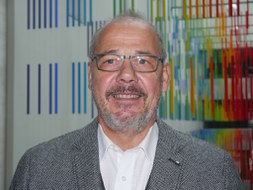
Dr. Jürgen Getzschmann serves as a Senior Lecturer at Technische Universität Dresden, where he conducts specialized research in materials characterization through X-ray diffraction methodologies and teaches core inorganic chemistry practicals. His research expertise spans: Metal-Organic Frameworks (MOFs) characterization Single-crystal and powder X-ray diffraction Crystal structure determination and refinement Advanced materials analysis With continuous publication activity since 2008, his scholarly work demonstrates sustained focus on applying diffraction techniques to solve structural problems in inorganic materials science. His teaching directly supports undergraduate training through the 'Chemistry of the Elements' practical course for Chemistry and Food Chemistry Bachelor's students.
Sabina Leanti La Rosa is an Associate Professor of Microbiology at the Norwegian University of Life Sciences (NMBU). She received her PhD in 2014 from NMBU, completed postdoctoral training at the University of Texas Health Science Center in Houston investigating enterococcal pathogenicity, and worked with Assoc. Prof. Bjørge Westereng on beta-mannan degradation before joining Prof. Phil B. Pope's Microbial Ecology and Meta-omics group in 2018. She was appointed Associate Professor at NMBU in 2022. Dr. La Rosa's research program focuses on gut microbiome dynamics with three main thrusts: Investigating how diet- and wood-derived carbohydrates modulate gut microbiota composition and metabolic output across humans, farm animals, and fish Applying multi-omic tools to decipher mechanistic connections between diet, host, and microbiome Elucidating mechanisms of gut bacterial breakdown of food additives and human milk oligosaccharides Her publication record demonstrates significant expertise in fish microbiomes, xanthan gum metabolism, and carbohydrate-active enzymes (CAZymes), with articles in Nature Microbiology, Nature Communications, PNAS, and other high-impact journals. Recent work shows increasing focus on sustainable aquaculture applications and designer fibers for microbiome manipulation. Dr. La Rosa has received recognition as a Fellow of NMBU's Research Talent 2021-2022 program. She is an active scientific communicator, regularly presenting at international conferences including ISME, CBM, and specialized microbiome symposia across Europe and Africa. As an educator, she is responsible for the course BIO341 Pathogenic Microorganisms and serves as a guest lecturer for courses on Applied Biocatalysis and Biorefining and Genome Sequencing.
Else Skovgaard Holmfred is a Postdoctoral Researcher at Stanford University's Department of Pharmacy within the School of Medicine. She specializes in advanced analytical chemistry applications in pharmaceutical science, with expertise in ICP-MS, mass spectrometry, HPLC, DLS, and multivariate data analysis. Her work focuses on developing innovative pharmaceutical methodologies using isotopic and trace elemental analysis to detect non-visual drug counterfeits. Her educational background includes: Ph.D. in Pharmaceutical Sciences from Technical University of Denmark (2018-2022) M.Sc. in Pharmaceutical Sciences from University of Copenhagen (2015-2017) B.Sc. in Pharmacy from University of Copenhagen (2011-2014) Dr. Holmfred's research integrates biogeochemistry with pharmaceutical science to create novel approaches for drug authentication. Her work spans isotopic analysis of pharmaceutical products, trace element fingerprinting, nanomaterial characterization, and pharmaceutical excipient studies. She employs sophisticated analytical techniques to address critical issues in drug quality and safety, with particular emphasis on detecting counterfeit medications that cannot be identified through visual inspection. Her publication record demonstrates consistent output in high-impact journals, showing a clear trajectory from nanomaterial dissolution studies toward increasingly sophisticated pharmaceutical authentication methods. Recent work focuses on isotopic patterns in drug products (2025), trace element analysis in ibuprofen (2024), and protein compaction properties (2024), reflecting her evolving expertise at the intersection of analytical chemistry and pharmaceutical science. Scientific recognition includes: Carlsberg Foundation Internationalisation Fellowship (2022) Novo Nordisk Foundation Visiting Scholar Stanford Bio-X Fellowship (2023) Her research has garnered significant attention, being picked up by 10 news outlets, referenced in policy sources, and blogged about extensively. She conducts her research in the Chamberlain lab at Stanford University, where she applies biogeochemical approaches to pharmaceutical challenges. Her work has practical implications for drug safety and quality control, with potential applications in regulatory science and pharmaceutical manufacturing.
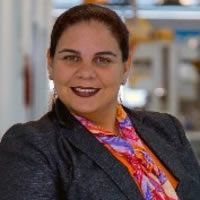
Danay Carrillo Nieves is a Research Professor at Tecnológico de Monterrey's School of Engineering and Sciences with over 18 years of academic experience specializing in agri-food waste valorization and sustainable production systems. Her work bridges food science, environmental engineering, and circular economy principles through innovative bioremediation and biomass conversion approaches. Education: Chemical Engineer, Instituto Superior Politécnico José Antonio Echeverría Master in Process Analysis and Control, Instituto Superior Politécnico José Antonio Echeverría PhD in Food Science and Technology, Universidad Autónoma de Coahuila Her research focuses on transforming agricultural and industrial waste streams into high-value products through biotechnological processes. Key areas include Sargassum seaweed valorization for UV-protective compounds and biofuels, microalgal bioremediation of livestock wastewater, and development of functional foods from food processing byproducts. Her work demonstrates strong integration of environmental sustainability with industrial applications. Recent publications reveal an increasing emphasis on marine biomass (particularly Sargassum) for circular economy applications, with significant contributions to biorefinery design, techno-economic assessments, and sustainable extraction methods. The research shows consistent interdisciplinary collaboration across environmental science, food engineering, and materials science domains. Scientific Recognition: Premio Internacional Academia de Ciencias de Cuba (2018) Título de Oro engineering award for academic excellence (2006) Mexican Researcher Certification - Level 1 As an educator, she supervises doctoral research and develops innovative teaching strategies including problem-based learning for climate change education. Her work aligns with 12 UN Sustainable Development Goals, particularly Zero Hunger, Responsible Consumption, and Climate Action. She maintains active research collaborations reflected in 33 publications over the last decade and significant Mendeley readership across multiple publications.