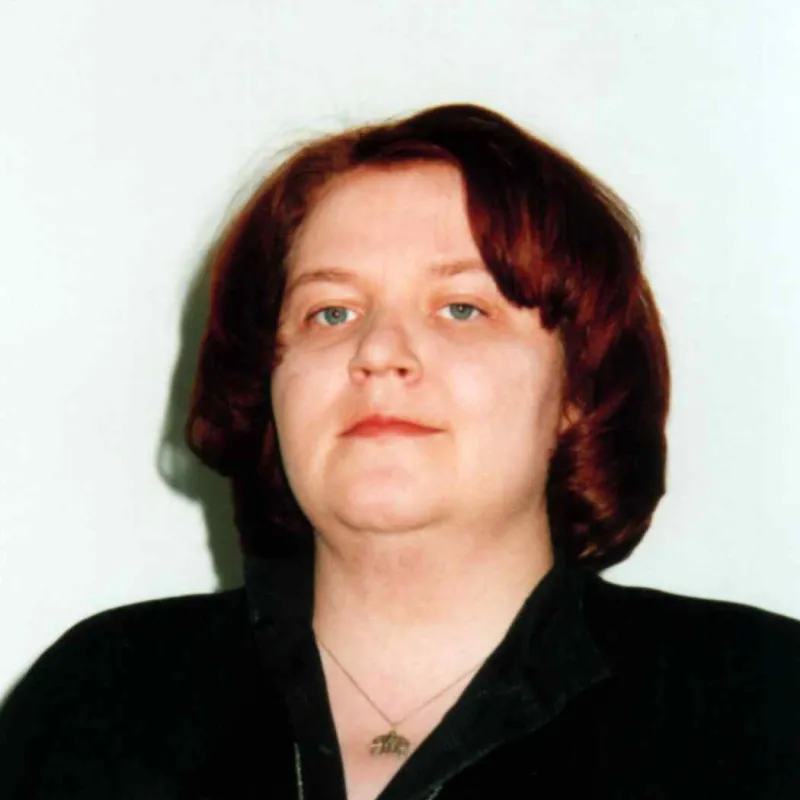
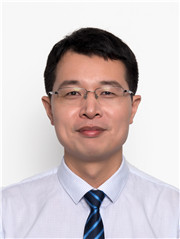
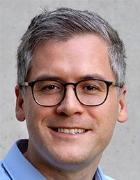
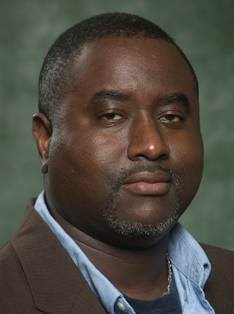
Professor Sang-Heon Lee is a faculty member at the University of South Australia, affiliated with the UniSA STEM division. His research spans interdisciplinary domains including machine vision, supply chain optimization, and material science. His research interests focus on developing advanced imaging systems for food safety (e.g., aflatoxin detection in almonds), optimizing reverse supply chains for electronic waste and solar panels, and engineering nanocomposites for construction materials. He also investigates biomedical imaging techniques for mucociliary transit assessment and clinical coding methodologies. The 15 most recent publications highlight his work in multispectral/hyperspectral imaging, fuzzy logic optimization, and nanomaterials. Key trends include non-destructive food testing, sustainable e-waste management, and biomedical imaging analysis. As a research degree supervisor, he contributes to academic training in these areas. No scientific awards or lab affiliations were explicitly mentioned in the provided text.
Dr. Joanna Gambetta serves as a Lecturer in Food Science at the University of Newcastle , affiliated with the School of Environmental and Life Sciences . With academic qualifications from Montpellier SupAgro (MSc in Oenology and Viticulture) and the University of Adelaide (PhD in Wine Science), her research focuses on grape and wine quality assessment , biotic/abiotic stress impacts on aroma composition , and practical solutions for vineyard challenges in Australian contexts. Education : MSc in Oenology and Viticulture, Montpellier SupAgro PhD in Wine Science, University of Adelaide Research Interests span three primary domains: Antifungal microbial volatile organic compounds (VOCs) for biocontrol applications, particularly against Botrytis cinerea and Alternaria alternata through novel analytical approaches Climate change adaptation strategies in viticulture, including modeling vine phenology and mitigating sunburn damage via secondary metabolite analysis Food chemistry innovations in plant-based protein gels and dairy alternatives, integrating fermentation and enzymatic crosslinking Publication Trends reveal a multidisciplinary approach combining analytical chemistry (SPME-GC-MS, LC-MS/MS), chemometrics , and industrial collaboration . Her work bridges agricultural science with food sensory analysis , while recent studies tackle plant-based cheese development using pea protein emulsions.
Laura R. Ment, MD, is a Professor of Pediatrics (Neurology) and Associate Dean for Admissions and Financial Aid at Yale School of Medicine . She specializes in neonatal brain injuries and neurological conditions in infants, including intraventricular hemorrhage , periventricular white matter injury , and epilepsy . Her research focuses on the adaptive mechanisms of the developing brain , utilizing advanced MRI techniques and molecular technologies to identify biomarkers for brain maturation. Education : MD, Tufts University School of Medicine (1973) Pediatrics & Pediatric Neurology Training, Massachusetts General Hospital (1974–1979) Research Interests : Dr. Ment leads studies on neonatal brain injury , neurodevelopmental sequelae of preterm birth , and genetic mechanisms in developmental disorders . She pioneered multicenter trials on prevention of preterm brain injury and neural connectivity in preterm infants . Scientific Awards : Leah Lowenstein Award (2009) Norman Siegal Award (2023) Leadership & Grants : As a former member of the NIH/NINDS Council and Chair of its Clinical Trial Subcommittee, she has driven national research priorities. She currently oversees the START Program at Yale and serves as a sub-investigator for the Genomic Basis of Neurodevelopmental and Brain Outcomes in Congenital Heart Disease trial (HIC ID 2000020449).
John van Duynhoven is a Professor of Biophysics at Wageningen University and Research. His work bridges advanced imaging techniques and food science, focusing on lipid oxidation, protein processing, and emulsion structure. Affiliation: Wageningen University and Research Academic Rank: Professor Research Interests: He investigates food structure and stability using NMR spectroscopy, super-resolution microscopy, and magnetic resonance imaging. Key areas include lipid oxidation pathways, plant-protein extrusion, and granular flow dynamics. Scientific Contributions: Supervised multiple PhD projects on multiscale protein modeling, emulsion oxidation, and infant nutrition protein digestion. His recent articles highlight innovations in quantifying anisotropic food structures and oxidation products. Collaborations: Partnerships span imaging techniques, X-ray scattering, and food technology. Active projects include lipid oxidation mapping and protein extrusion modeling.
Satu-Pia Reinikainen is a tenured Professor in Computational Engineering at the Lappeenranta-Lahti University of Technology (LUT) School of Engineering Sciences . With expertise in chemometrics and multivariate analysis, her work bridges statistical modeling, spectroscopy, and environmental monitoring. Research Focus Development of advanced kernel-based methods for process control Application of hyperspectral imaging in material and environmental analysis Microplastic pollution dynamics in aquatic systems Integration of spectroscopic techniques for real-time monitoring Conservation of geological and heritage materials through data-driven approaches Her research combines chemometric algorithms, environmental data analysis, and industrial process monitoring to solve complex analytical challenges.
Zhao Zhigang is an Associate Professor at the School of New Materials and New Energy, Shenzhen University of Technology, where he has been employed since May 2017. Previously, he served as a Lecturer at the School of Optoelectronic Engineering, Shenzhen University (2013-2017) and completed postdoctoral research at Shenzhen University (2010-2012) after earning his PhD from Huazhong University of Science and Technology. His academic journey began with undergraduate and master's studies at PLA Ordnance Engineering College (now Army Engineering University). His educational background includes: PhD in Optical Engineering, Huazhong University of Science and Technology (2005-2010) Master's in Optical Engineering, PLA Ordnance Engineering College (2002-2005) Bachelor's in Military Optoelectronic Engineering, PLA Ordnance Engineering College (1995-1999) Zhao's research focuses on hyperspectral imaging systems and machine learning applications for material classification. His work emphasizes embedded image data acquisition and processing using ARM and FPGA platforms, with significant contributions to micro-hyperspectral imaging technology. His research spans three primary areas: hyperspectral image processing on ARM/FPGA systems, machine learning applications in spectral analysis, and embedded AI implementations on FPGA/Zynq platforms. This interdisciplinary work bridges optical engineering, computer vision, and hardware design. Analysis of his recent publications reveals a strong emphasis on hyperspectral data compression techniques , machine learning applications for spectral analysis , and embedded system implementations . His work demonstrates a consistent focus on practical applications of hyperspectral imaging in fields ranging from food quality assessment to battery health monitoring, with increasing incorporation of deep learning techniques in recent years. His scientific recognition includes: Multiple teaching awards at Shenzhen University of Technology (2019-2024) Shenzhen City high-level professional talent designation (2016) Numerous national competition awards as student supervisor (2016-2023) Outstanding Paper Award at Shenzhen Optical Society (2010) Zhao has secured substantial research funding as Principal Investigator, including horizontal projects (2023-2024), Shenzhen Postdoctoral Research Funding (2019-2020), and Shenzhen Basic Research Projects. He has successfully guided students in academic competitions, resulting in five national first prizes. His research group maintains strong industry connections through multiple school-enterprise cooperation projects focused on practical applications of hyperspectral imaging technology. His laboratory work centers on FPGA-based embedded systems for hyperspectral imaging, with recent projects developing micro-hyperspectral spectrometers for UAV platforms, real-time video processing systems, and specialized hardware for spectral data acquisition and compression. These efforts demonstrate a clear trajectory from fundamental optical engineering toward practical applications of machine learning in spectral analysis.
Prof. Jan De Beenhouwer is a faculty member at the University of Antwerp, affiliated with the Department of Physics and the imec Vision Lab. His research focuses on advanced computational imaging techniques, particularly in X-ray tomography, phase contrast imaging, and reconstruction algorithms for medical and industrial applications. His primary research interests include: Development of novel X-ray imaging methodologies like edge illumination phase contrast Advanced CT reconstruction algorithms for sparse-view and dynamic systems Integration of deep learning with tomographic reconstruction Industrial applications including defect detection and material characterization Biomedical imaging such as bone structure analysis and tissue modeling Analysis of recent publications (2024-2025) reveals strong emphasis on: Innovations in phase contrast imaging hardware and simulation tools Advanced reconstruction techniques for motion compensation and sparse data AI-powered approaches for industrial inspection and biomedical research Development of open-source tools (CAD-ASTRA) for the tomography community He leads research at imec Vision Lab, focusing on both fundamental imaging physics and practical applications. The lab collaborates extensively with industrial partners on non-destructive testing solutions.
Victor Cadarso Busto is an Associate Professor in the Department of Mechanical and Aerospace Engineering at Monash University, Australia, and a founding member of the Centre to Impact Antimicrobial Resistance (AMR). He holds leadership roles in strategic groups like Community Engagement and Industry. His expertise spans applied micro/nanotechnologies, photonics, microfluidics, and biosensors, with a focus on advancing life sciences and biomedical engineering. Dr. Cadarso earned his PhD in Physics from the Universitat Autònoma de Barcelona. He has held postdoctoral fellowships, including a Marie Curie Fellowship (2009–2012) and an Ambizione Fellowship at the Paul Scherrer Institute. Since 2016, he has led the Applied Micro and Nano-Technology Lab at Monash, developing scalable technologies for biological applications, antimicrobial surfaces, and climate change mitigation. His research addresses critical challenges such as antimicrobial resistance, sustainable regenerative medicine, and reducing methane emissions from livestock. He has pioneered novel devices like SU-8-based MOEMS, commercialized polymers, and founded two micro/nanotechnology startups. Key collaborators include institutions like the Australian Research Council and industry partners such as PolVax Pty Ltd. Recent projects include developing acoustic-based cell imaging systems, microfluidic biosensors for bacterial detection, and non-invasive embryo metabolic imaging. His work aligns with UN Sustainable Development Goals, particularly in health, clean energy, and innovation.
Dr. Ilija Vego is a Research Fellow at The University of Sydney's School of Civil Engineering. He holds a PhD from Université Grenoble Alpes (2023), specializing in hygroscopic particle assembly through multi-modal imaging techniques. His research focuses on microstructural analysis of materials using X-ray tomography, neutron tomography, and MRI, with applications in geotechnics, mining, biology, and industrial sectors like food and pharmaceuticals. Education: Bachelor's/Master's in Civil Engineering (University of Padova, Italy) PhD in Hygroscopic Particle Assembly (Université Grenoble Alpes, France) Collaborative research at Georgia Institute of Technology (USA) and Université Grenoble Alpes Research Interests: Imaging techniques for material characterization Multi-phase systems mechanics Swelling and degradation of hygroscopic materials Bio-inspired engineering solutions His work bridges civil engineering and materials science, with tools like the open-source SPAM software for practical material analysis. Current projects explore granular media behavior under humidity and root-inspired anchorage mechanics.
Johann Kastner is a Professor at Upper Austria University of Applied Sciences, leading the Research Center Wels Computed Tomography R&D-Headquarters. He is affiliated with Centers of Excellence in Automotive/Mobility, Energy, and Smart Production. His research focuses on advanced materials characterization using X-ray computed tomography (X-CT), with applications in non-destructive testing, composite materials, and biomedical engineering. Key research areas include porosity analysis in carbon fiber reinforced polymers, phase contrast imaging, and additive manufacturing. He has led over 10 projects, including the EU-funded xCTing initiative (2021–2025) and the X-PRO project (2020–2024), emphasizing industrial CT applications and cross-virtuality data analysis. His work spans 335+ publications, with notable contributions to XCT-based defect detection, material microstructure analysis, and AI-driven image segmentation. Collaborations include COMET K Projects and FTI-Structurförderung grants. He has advised 2 PhD students and actively participates in international conferences and workshops. Laboratory facilities include state-of-the-art XCT systems for 3D microstructural analysis, Talbot-Lau grating interferometry, and augmented reality visualization tools for industrial applications.
Prof. Dr. Stephen Schrettl holds a professorship in the TUM School of Life Sciences at Technische Universität München , focusing on functional materials for food packaging . His research emphasizes mechanochromic materials, polymer chemistry, and supramolecular systems. Key areas include strain-sensing polymers, self-healing materials, and adaptive nanocomposites. His work spans interdisciplinary topics like mechanoresponsive polymers , smart coatings , and nanomaterial fabrication . Recent studies highlight advancements in mechanochromic inclusions, reversible crosslinking mechanisms, and microphase-separated metallosupramolecular polymers. He has contributed to applications in automotive materials, biomedical devices, and environmental sensors. Publications from 2024–2020 showcase innovations in straining-induced fluorescence , liquid crystal-driven nanoparticle assembly , and platinum nanocomposite synthesis . His research bridges fundamental polymer science with industrial applications, particularly in materials that integrate mechanical and optical functionalities.
Dr. Aleese Barron is a Postdoctoral Research Fellow at the Australian National University (ANU) , working within the Materials Physics department and the X-ray tomography and applications group . Her research focuses on applying microCT imaging to archaeobotanical studies, particularly for identifying domesticated plant remains in pottery sherds and reconstructing early agricultural practices. Key research areas: Archaeobotany, 3D imaging of ancient plant residues, plant domestication analysis, and geoarchaeological investigations. Collaboration with Dr. Tim Denham and other experts on projects spanning Southeast Asia, Papua New Guinea, and Northern Mali. Publication Trends : Aleese's work bridges material physics and archaeology, with publications on MicroCT protocols for plant remains, domestication of rice/sorghum/millet, and analysis of shell middens. Her methodologies have been applied to sites in Guangxi (China) , Nombe rockshelter (PNG) , and Northern Mali . Collaborative Networks : Works with interdisciplinary teams including Dr. Tim Denham, Dr. Yulai Zhang, and geologists from ANU's X-ray tomography group. No explicit mention of academic awards or student supervision in available texts.
Dr. F. Robin O'Keefe is a Professor in the Department of Biology at Marshall University, West Virginia, where he has taught over 2000 undergraduates since 2006. His research focuses on marine reptiles from the age of dinosaurs and Pleistocene megafauna at Rancho La Brea, with expertise in plesiosaur reproduction and evolutionary biology. B.A. in Honors Biology , Stanford University (1992) Ph.D. in Evolutionary Biology , University of Chicago (2000) His research spans: Marine reptile evolutionary patterns (plesiosaurs, elasmosaurids) Paleoecological analysis of Rancho La Brea carnivores Permian reptile morphology and systematics Statistical approaches to phenotypic covariance 3D scanning applications in skeletal preservation Publications in Science , Nature , and PNAS demonstrate his contributions to understanding viviparity in marine reptiles and Pleistocene ecosystem dynamics. He was awarded the 2013 Drinko Distinguished Research Fellowship and has mentored 19 completed Master's theses with two in progress. Contact: okeefef@marshall.edu
Gianluca Boccardo is an Associate Professor at the Department of Applied Science and Technology (DISAT) at Polytechnic University of Turin, where he conducts research at the intersection of computational fluid dynamics, deep learning, and porous media applications. His work bridges theoretical chemical process development with practical industrial applications in energy systems and sustainable engineering. His research interests span multiple domains of engineering and computational science: Computational Fluid Dynamics for complex engineering systems Deep learning applications in chemical process modeling Multiscale modeling of transport phenomena in porous media Energy processes engineering and sustainable technologies Fluid mechanics applications in industrial contexts Analysis of his recent publications reveals a strong trend toward integrating machine learning techniques with traditional computational methods to solve challenging problems in chemical engineering. His work particularly focuses on applying these hybrid approaches to porous media systems, pharmaceutical processes, and energy storage technologies, demonstrating a commitment to both theoretical advancement and practical industrial application. Professor Boccardo actively supervises numerous PhD students working on cutting-edge research topics and leads significant research initiatives including the MULTIPHASE Erasmus Mundus Joint Master program and the BATCAT Battery Cell Assembly Twin project. His research group receives funding from both competitive EU grants and commercial contracts with industry partners. He is an active member of the Molecular Engineering Lab (MolE) and the Multiscale Modeling research group at DISAT, where his team develops innovative approaches to modeling complex chemical processes and developing sustainable engineering solutions.
Dr. Christopher M. Greene is an Associate Professor at the School of Systems Science and Industrial Engineering, Binghamton University. His research focuses on applying Industry 4.0 technologies to enhance manufacturing systems, including collaborative robotics, additive manufacturing, and data analytics. He holds a BS from Syracuse University and MS/PhD degrees from Binghamton University. His expertise spans quality engineering, AI-driven robotics, and electronics manufacturing. Key research areas include improving solder joint reliability, optimizing manufacturing processes via DMAIC/Six Sigma, and leveraging augmented reality in cobotics. Recent publications emphasize defect analysis in electronics, healthcare robotics ethics, and material science advancements. He actively contributes to advancing quality control frameworks in printing and pharmaceutical processes. His work bridges theoretical models with industrial applications, aiming to solve real-world manufacturing challenges.