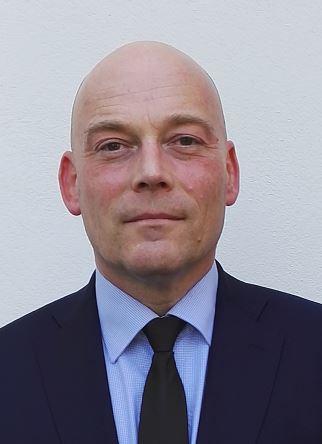
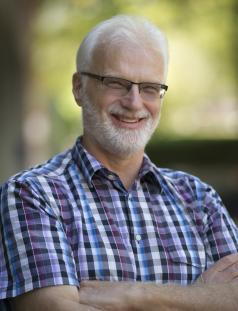
Thomas Alter is a Professor and Managing Director of the Institute of Food Safety and Food Hygiene at the School of Veterinary Medicine, Freie Universität Berlin, and serves as a member of the FAO Reference Center for Antimicrobial Resistance (FAO RC AMR). His leadership spans institutional administration and global antimicrobial resistance initiatives. His research centers on antimicrobial resistance mechanisms, food safety protocols, and veterinary public health systems, with emphasis on interdisciplinary approaches to combat antibiotic resistance in food production chains. These efforts directly support the mission of the Veterinary Centre for Resistance Research (TZR), where his work bridges veterinary medicine and human health security. The institute operates under the newly established Veterinary Centre for Resistance Research (TZR), which held its ceremonial opening on April 26, 2022. This center coordinates proteomics research, resistance monitoring, and international policy development through its specialized laboratories and collaborative networks.
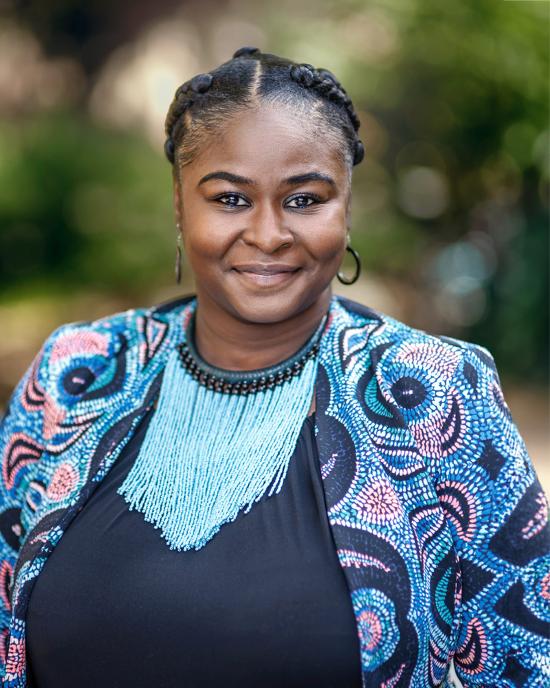
Dr. Shauna C. Henley is a Senior Agent and Affiliate Agent in the Department of Nutrition & Food Science at the University of Maryland , affiliated with the College of Agriculture and Natural Resources . She specializes in food safety education , nutrition , and consumer behavior research , with a focus on improving safe food handling practices across the supply chain. Dr. Henley earned her B.S. in Biology from Muhlenberg College, an M.S. in Nutrition & Food Science from the University of Vermont, and a Ph.D. in Biology with a concentration in Human Nutrition from Drexel University. Her research spans food safety education , behavioral interventions , and community-based extension programs , including workshops on boiling-water-bath canning and FSMA compliance for farmers and food entrepreneurs. Her 15 most recent publications (2017-2025) address critical food safety issues, including home canning practices , Salmonella prevention , and consumer education strategies . She has received recognition such as the University of Maryland Extension Excellence Award (2025) and the Best in Class award from the Association for Communication Excellence (2025) for ProduceTRAINer.org. Dr. Henley has secured multiple grants, including a USDA-FSOP grant for food safety training and a McCormick Science Institute grant for herb and spice safety research. She leads initiatives like the Food Safety Action Team and contributes to national food safety campaigns , such as the widely recognized ' Don't Wash Your Chicken! ' project.
Anton Rozhkov is an Industry Assistant Professor and Director of the M.S. in Applied Urban Science and Informatics Program at the Center for Urban Science and Progress (CUSP) at New York University (NYU) Tandon School of Engineering. His work focuses on applying geospatial tools, modeling techniques, and data science to address complex challenges in urban environments, with particular emphasis on infrastructure planning and city design. Dr. Rozhkov earned his Ph.D. in Urban Planning and Policy from the University of Illinois Chicago, where his research centered on decentralized and renewable energy systems in urban contexts through a complex systems approach. Prior to his doctoral studies, he received an M.S./B.S. in Engineering in Land Cadaster from the State University of Land Use Planning in Moscow, Russia, and worked as a senior specialist in the Russian power grid sector with "Rosseti" Group of Companies. His research interests span the application of complex systems, data science, and spatial analytics to solve urban challenges, particularly focusing on how data-driven policies and new technologies can transform infrastructure planning and city design. Dr. Rozhkov employs methods including causal loop diagrams, system dynamics, and agent-based modeling to understand how decentralized energy systems interact with existing power grids and contribute to sustainable urban development. He has published extensively on urban transportation, energy systems, and census data analysis, with a notable focus on Chicago's urban landscape and Illinois state initiatives. Dr. Rozhkov has been actively involved in several significant research projects including an empirical investigation into affordable transit-oriented development in California sponsored by the California State University Transportation Consortium, the Sustainable Urban-Regional Modeling Network project funded by the Illinois Innovation Network, and the Census 2020 Map-The-Count project with the Illinois Department of Human Services which developed predictive models for census response rates and a GIS platform for reporting outreach activities. Ph.D. in Urban Planning and Policy, University of Illinois Chicago M.S./B.S. in Engineering in Land Cadaster, State University of Land Use Planning (Moscow, Russia) His teaching portfolio includes courses on geographic information systems (GIS), advanced spatial analysis, decision modeling, and machine learning for cities. Dr. Rozhkov emphasizes not just understanding urban trends but exploring the "why" behind these trends to develop sustainable solutions. His recent publications (2020-2025) demonstrate a consistent research trajectory examining the complex interrelationships between urban infrastructure systems, particularly focusing on energy, transportation, and spatial patterns through sophisticated analytical methods. Outside of his academic work, Dr. Rozhkov is passionate about urban and landscape photography, traveling, running, snowboarding, and playing guitar. He was born and raised in Balashikha, a city in the Moscow suburbs in Russia, and maintains a gallery of his photographic work from various global locations.
Krisztina Kis-Katos serves as Professor for International Economic Policy at the University of Göttingen's Department of Economics, a position she assumed in 2016. She holds prominent leadership roles including Chairwoman of the Standing Field Committee of Development Economics of the German Economic Association (Verein für Socialpolitik) and Chairwoman of the Scientific Advisory Board of the RWI Leibniz Institute for Economic Research. Her institutional affiliations extend to research fellowships at IZA and RWI, along with editorial positions at the Journal of Labour Market Research, European Journal of Political Economy, Bulletin of Indonesian Economic Studies, and Journal of Development Studies. Professor Kis-Katos earned her Economics education in Szeged and Konstanz, attended the Swiss Doctoral Program at the Study Center Gerzensee, and received her doctoral degree from the University of Freiburg in 2010. Her scholarly work spans applied development economics and political economy with particular focus on how (de-)globalization and macroeconomic processes affect social and economic outcomes including labor markets, firm performance, land use change, deforestation, and conflict. Her research portfolio reveals consistent thematic threads across recent publications: the intersection of environmental concerns with economic development (particularly deforestation and palm oil in Indonesia), the gendered impacts of trade liberalization, the socioeconomic effects of pandemics like COVID-19, and the complex relationship between governance, corruption, and economic outcomes. Methodologically, her work combines rigorous econometric approaches with innovative data sources including satellite imagery and high-frequency power usage data. Teaching prize for the best doctoral course in RTG 1723, University of Göttingen (2019) Teaching prize of the Student Union of Economics of the University of Freiburg (2014) BMZ/GIZ Public Policy Award (2013) Friedrich-August-von-Hayek-award (2011) Excellence award of the KfW Development Bank (2011) Professor Kis-Katos leads multiple significant research initiatives including the BMZ-DEval funded evaluation of Madagascar's forest restoration program, the DFG-funded Thailand-Vietnam Socioeconomic Panel, and the DFG Research Training Group on Sustainable Food Systems. Her advisory role extends to supervising doctoral candidates through these projects and previously serving as spokesperson for the Research Training Group 1723 on Globalization and Development. Her substantial grant portfolio demonstrates strong research leadership across international collaborations involving institutions in Germany, Indonesia, Thailand, Vietnam, and the United States. Her work connects closely with the Collaborative Research Centre 990 on Ecological and Socioeconomic Functions of Tropical Lowland Rainforest Transformation Systems in Sumatra, Indonesia, reflecting her deep engagement with environmental-economic research questions in Southeast Asia. She also contributes to interdisciplinary teams through projects like PlanetHealth examining global land-use impacts of the COVID-19 pandemic.
Jordan A. Sand is a Professor of Japanese History at Georgetown University's College, with a joint appointment in the Department of East Asian Languages and Cultures. He holds a Ph.D. in History from Columbia University and a Master's in Architectural History from the University of Tokyo. His research explores Japanese modernity through the lens of urbanism, material culture, and everyday life. Key works include House and Home in Modern Japan (2004), Tokyo Vernacular (2013), and Teikoku Nihon no seikatsu kūkan (2015). His interdisciplinary research spans urban fires, food history (notably sushi and miso), and colonialism's material legacies. He co-directs the Asian Cities: Urban Settlers project, focusing on marginalized communities in Asian megacities. Recent publications address pandemic resilience, urban displacement, and the cultural history of mask-wearing. Education: Columbia University: Ph.D. in History (Year unspecified) University of Tokyo: M.E. in Architectural History Columbia University: B.A. (Year unspecified) Research Interests: Colonial urban spaces and material culture Comparative urban studies and informality Food as cultural and historical artifact His work bridges global and local histories, emphasizing interdisciplinary methods and collaborative urban studies. Current projects include analyzing Tokyo's postindustrial landscapes and rethinking Pacific historiography through trans-imperial networks.
Bernd Ladwig is a University Professor of Political Theory and Philosophy at the Free University of Berlin's Otto Suhr Institute for Political Science. He has held this position since February 2011, following a Junior Professorship at the same institution from 2004-2010. His academic career includes previous positions as a Scientific Assistant at Otto-von-Guericke University Magdeburg (2000-2004) and at Humboldt University Berlin (1998-2000). Ladwig received his doctorate in philosophy from Humboldt University of Berlin in 1999 (summa cum laude) with a thesis on "Justice and Responsibility: A Study of the Concept of Equality in Ethical Liberalism," supervised by Prof. Dr. Herfried Münkler and Prof. Dr. Axel Honneth. He completed his Diplom in Political Science at Freie Universität Berlin in 1994 with highest distinction. His research focuses on human rights, animal rights, justice theory, political philosophy, and applied ethics. He has developed significant expertise in normative theories of global relations, multiculturalism, democracy theories, and the intersection of political theory with animal ethics. His work often explores the anthropological foundations of ethics and the relationship between theoretical frameworks and practical political issues. Ladwig has published extensively on topics ranging from the philosophical foundations of human rights to the political theory of human-animal relationships. Ladwig's recent publications demonstrate a clear trajectory toward integrating animal ethics into mainstream political theory. His work challenges traditional boundaries between human and non-human rights while maintaining rigorous philosophical standards. He has developed a distinctive position that advocates for political justice for animals without necessarily granting them citizenship status in human political communities. Principal Investigator of the Interdisciplinary Graduate College "Human Rights under Pressure - Ethics, Law, and Politics" (2014-2017) Director of the annual course "The Diversity of Human Rights" at the Inter-University Center Dubrovnik Member of the Green Academy Co-editor of the journal Leviathan - Berlin Journal for Social Science Member of the Political Theory and Intellectual History section of the German Political Science Association (DVPW) Ladwig has supervised numerous doctoral students and has been actively involved in academic service as a reviewer for major journals and research foundations. His teaching covers a wide range of topics including political theory, philosophy of human rights, animal ethics, and classical political philosophy from Rousseau to Kant.
Evan Davies is a Professor in the Civil and Environmental Engineering Department at the University of Alberta's Faculty of Engineering. He has been a Full Professor since July 2021, following his promotion from Associate Professor (2015-2021) and Assistant Professor (2009-2015) positions at the same institution. Education: Ph.D. (Civil and Environmental Engineering), The University of Western Ontario, London, Ontario (2003-2007) M.E.S. (Environment and Resource Studies), The University of Waterloo, Waterloo, Ontario with field research in China and India (2001-2003) B.A.Sc. (Systems Design Engineering), The University of Waterloo, Waterloo, Ontario, including a year-long exchange at Technical University of Hamburg-Harburg, Germany (1995-2001) Evan Davies' primary research focuses on water resources planning and management, systems thinking and modeling, and sustainable development. His work develops and applies hydrological, water use, and water quality models to understand complex feedbacks among water availability, use, and quality within their social, economic, and environmental contexts. His research spans municipal to global spatial scales and daily to decadal time scales, aiming to provide decision-makers with tools to compare structural, management, and policy alternatives for sustainable water planning. His recent projects include global and regional-scale modeling of water security and the water-energy-food nexus, irrigation reservoir management, municipal water demand projections, flood risk management, and chloramine dissipation in stormwater pipes. Recent research trends show a strong focus on: Integrated assessment modeling of water-energy-food systems Climate change impacts on water resources Machine learning applications in hydrology Water security under decarbonization scenarios Flood risk assessment and management Sustainable urban water systems Scientific Awards: Faculty of Engineering Graduate Teaching Award, University of Alberta (2020-2021) Faculty of Engineering Undergraduate Teaching Award, University of Alberta (2018-2019) Doctoral Fellowship (CGS), Natural Sciences and Engineering Research Council (2005-2007) University of Western Ontario Graduate Tuition Scholarship (2005-2007) Ontario Graduate Scholarship in Science and Technology (2004-2005) Masters/Doctoral Fellowship (PGS A/B), Natural Sciences and Engineering Research Council (2002-2004) Davies has supervised numerous graduate students working on projects related to water resources planning and management. His research has been supported by various grants, including funding from the Natural Sciences and Engineering Research Council. He collaborates extensively with researchers at the Joint Global Change Research Institute (JGCRI) in College Park, MD, and with government agencies and industry partners on water management projects across Canada, particularly in Alberta's Bow River basin. Davies leads a research group focused on water resources systems modeling, which employs system dynamics, optimization techniques, and machine learning approaches to address complex water management challenges. His team collaborates with decision-makers and stakeholders to ensure research outcomes are directly applicable to real-world water management problems.
Anders Backlund is Professor of Pharmacognosy at Uppsala University's Department of Pharmaceutical Biosciences, with dual institutional roles including Garden Director at Uppsala Linnaean Gardens. His work bridges pharmaceutical sciences and botanical heritage through the university's historic gardens. His research centers on pharmacognosy and natural products chemistry, with pioneering development of the ChemGPS-NP platform for chemical space navigation. This computational tool maps biological activity in chemical property space, enabling prediction of pharmacological effects and mechanisms of action. His work spans plant metabolomics, evolutionary chemography, and drug discovery from natural sources including marine organisms, fungi, and medicinal plants. Recent publications (2019-2023) demonstrate strong continuity in applying ChemGPS-NP to diverse problems: predicting membrane permeability of Alpinia galanga constituents (2022), evaluating Ononis isoflavonoids for CNS targeting (2022), and decoding multi-functional bioactivities in Maca (2021). His work increasingly integrates computational prediction with experimental validation across anti-inflammatory, anti-allergic, and antimicrobial domains. As Garden Director of Uppsala Linnaean Gardens, he maintains institutional connections to botanical heritage while advancing modern pharmacognosy. His dual roles exemplify the integration of historical plant knowledge with contemporary drug discovery methodologies.
Nyeema Harris is the Knobloch Family Associate Professor of Wildlife and Land Conservation at the Yale School of the Environment (YSE), part of Yale University. She focuses on wildlife conservation, urban ecology, and the socio-ecological dimensions of human-wildlife interactions. Her work examines how urbanization impacts predator behavior, diets, and biodiversity, while advocating for inclusive sustainability approaches that address equity and justice in environmental scholarship. Education includes a PhD from North Carolina State University, an MS from The University of Montana, and a BS from Virginia Polytechnic Institute and State University. These degrees span wildlife science and conservation biology. Her research interests emphasize urban carnivore ecology, community-based conservation strategies, and systemic racism’s ecological consequences. She integrates spatial modeling with social equity frameworks, as seen in her publications on textured species range maps and critiques of environmental landscapes of fear. Publications highlight trends in urban wildlife adaptation, interdisciplinary methods, and ethical considerations in conservation. Key themes include dietary shifts in predators due to environmental changes, the role of historical data in species forecasting, and mitigating health risks linked to urbanization and gentrification. Dr. Harris actively advises doctoral students and is involved in initiatives like SNAPSHOT USA and Michigan ZoomIN, leveraging citizen science for ecological monitoring. She has not been noted for specific scientific awards in the provided texts. Her office is located in Kroon Hall, Room 223, at 195 Prospect Street, New Haven, CT. She contributes to environmental justice discourse and has been featured in news articles discussing her work on African carnivore range loss, urban rodent control, and systemic racism in urban ecosystems.
Professor Ashish Sinha is a leading academic in Marketing at the UQ Business School, holding concurrent roles as Visiting Professor at the Indian School of Business and Research Fellow at the Hong Kong Polytechnic University. His career spans senior leadership in academia (e.g., Academic Dean of Executive Education at ISB, Interim Dean at UTS Business School) and industry (Vice President at IRI, Chicago). His research bridges theory and practice, focusing on digital transformation, AI-driven strategies, ESG impact analysis, and marketing analytics. He has pioneered frameworks for retail optimization, category management, and B2B innovation adoption, with over 30 journal articles in top-tier outlets like Journal of Marketing and Marketing Science . Research Impacts: Sinha’s work has transformed executive education programs (e.g., ISB’s #38-ranked custom programs) and driven research excellence at UTS. He is a serial entrepreneur, having founded two analytics firms acquired for their practical impact. His $240M Food Agility CRC participation highlights his role in agribusiness innovation. Awards include the Davidson Award and twice runner-up for the Gary Lilien Practice Award for applied marketing science. Key Research Themes: AI in Marketing, Digital Transformation, ESG Strategies, Consumer Sentiment Analysis Leadership Roles: Academic Dean (ISB), ADR (UTS), Head of Marketing (UNSW) Industry Experience: Analytics leadership at IRI, strategic consulting across sectors Grants/Partnerships: CI in Food Agility CRC ($240M), multiple ERA-recognized research collaborations. Advises on AI ethics, sustainable marketing, and global business strategy.
MARIO MARTINEZ MARTINEZ is Associate Professor at University of Valladolid's Department of Agricultural and Forestry Engineering, with secondary appointments at Aarhus University and Purdue University. His research develops plant-based macromolecular assemblies for food, pharmaceutical, and packaging applications. Research focuses on: Structure-function relationships of plant biopolymers Green modification techniques for polysaccharides Food waste valorization strategies Edible packaging development Nutrient bioaccessibility enhancement Recent publications showcase innovative approaches to starch modification using deep eutectic solvents, waste upcycling (bread, apple pomace, garlic peels), and functional ingredient development from underutilized sources (macroalgae, hawthorn). Major recognitions include: Nils Foss Talent Prize 2021 DFF-Sapere Aude excellence grant (€1M) Ontario Early Researcher Award Young Scientist Award from Cereals & Grains Association Leads research on sustainable food systems through international collaborations and industry partnerships.
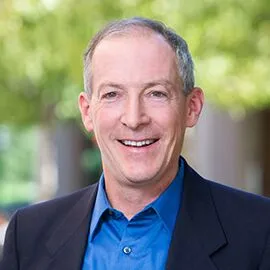
Lawrence M. Wein is the Jeffrey S. Skoll Professor of Management Science at Stanford University's Graduate School of Business, where he also serves as Senior Associate Dean of Academic Affairs. He holds a PhD in Operations Research from Stanford (1988) and has taught operations management at MIT (1988–2002) and Stanford since 2003. His research spans operations management, public health, and homeland security, with notable contributions to HIV therapy optimization, bioterror response logistics, and forensic science innovations. His academic roles include Senior Fellow at Stanford’s Center for International Security and Cooperation, and editorial leadership as Editor-in-Chief of Operations Research (2000–2005). Notable awards include the Kimball Medal, Lanchester Prize, and membership in the National Academy of Engineering. Research interests emphasize applying operations research to real-world challenges, such as optimizing radiation detection systems, analyzing sexual assault kit backlogs, and improving ballistic imaging techniques. His work bridges theoretical models with practical policy, impacting areas like healthcare, counterterrorism, and criminal justice. Key contributions include developing the workload regulating release policy in semiconductor manufacturing, influencing U.S. smallpox vaccination strategy, and advancing mathematical models for cancer treatment and pandemic influenza control. His recent focus includes forensic genetic genealogy and crime-solving technologies. Grants and collaborations span industries, governments, and academic institutions, reflecting interdisciplinary impact. His teaching includes courses on operations management, stochastic networks, and homeland security applications.
Maria Sharmina is a Professor in Energy and Sustainability at The University of Manchester’s School of Engineering, affiliated with the Tyndall Centre for Climate Change Research and Policy@Manchester. She holds roles including Co-Director of Policy@Manchester, UKRI Digital Security & Resilience Theme advisor, and Sustainable Robotics Committee member at BSI. Her work focuses on low-carbon business models, circular economy, and climate policy, with leadership in projects like the £6M UKRI BuildZero programme. Education: PhD in the Tyndall Centre, background in economics and statistics. She advises governments (e.g., UK Government Office for Science, BEIS) and has served on University Senate and Departmental Research Leadership roles. Research Interests: Energy systems transformation, food-energy-water nexus, emission scenarios, and policy design. She emphasizes sustainable innovation, net-zero housing, and plastics circularity. Key projects include analyzing hydrogen’s role in decarbonization, SME compliance with plastics policies, and financing smart local energy systems. Awards: 2024 Social Responsibility Medal and Making A Difference Award for contributions to social/environmental impact via entrepreneurship. Her work bridges academia and policy, with outputs including 79 research publications and 16 projects. Grants/Consultancy: Principal Investigator on BuildZero (UKRI £6M), funded studies on community energy finance, and consultancy with Oxfam, Manchester City Council, and the Co-operative Group. Labs/Teams: Lead researcher at Tyndall Manchester, collaborates across disciplines (e.g., Digital Futures Institute) to address sustainability challenges through systemic approaches.
Nina Schwarz is Assistant Professor of human-environment interactions in cities at the Department of Urban and Regional Planning and Geo-Information Management, ITC—University of Twente. Holding a Diploma in Environmental Sciences (University of Lüneburg, 2003) and a PhD in Social and Economic Sciences (University of Kassel, 2007), she spent a decade as senior scientist at the Helmholtz Centre for Environmental Research – UFZ before joining ITC. Her interdisciplinary research integrates urban land-use science, ecosystem-service evaluation and advanced modelling techniques—especially agent-based models—to explore sustainable urban development under global change. Research interests revolve around three interconnected themes: (i) urban land-use change —understanding how residential, commercial and green-space dynamics co-evolve; (ii) urban ecosystem services —quantifying both supply and demand of services such as local climate regulation, recreation and biodiversity; and (iii) behavioural modelling —formalising human decision-making to simulate policy scenarios ranging from slum-upgrading to vineyard management. She actively links these themes to UN Sustainable Development Goals, notably SDG 11 (Sustainable Cities) and SDG 15 (Life on Land). Recent publications (2022-2025) reveal a methodological breadth spanning citizen-science impact assessment in Suriname, cooling effects of urban water bodies in Chinese mega-cities, European wine-growers’ adaptive behaviour, and methodological advances in upscaling and validating agent-based land-use models. Across these studies, Schwarz consistently combines empirical field data, geospatial analytics and participatory approaches to produce policy-relevant insights for cities in both the Global North and South. She has (co-)authored >80 peer-reviewed works, accumulating c. 5 900 citations and an h-index of 28 (Scopus). While specific honours are not itemised in the supplied text, her sustained citation impact and invited contributions to major conferences (e.g., iEMSs 2020, IAHR 2025) underscore scientific recognition. Schwarz frequently engages with societal stakeholders: her projects have generated open datasets on urban green-space monitoring in Paramaribo, e-learning modules for Latin-American universities, and interactive dashboards for sustainable water management. Within ITC she contributes to capacity-building programmes for emerging economies, supervises graduate researchers and maintains active collaborations across Europe, Latin America, Africa and Asia. No explicit lists of PhD students or personal grants are provided in the current corpus, but her leadership of externally funded projects (e.g., citizen-science evaluation, vineyard decision-making database) indicates ongoing acquisition of research funding.
Ralph C. Martin is a retired Professor in the Department of Plant Agriculture at the University of Guelph. His research focuses on sustainable food production, emphasizing resilient farming systems, soil health, and nitrogen use efficiency. He holds a Ph.D. from McGill University and has contributed to interdisciplinary projects across cropping systems, forage agronomy, and environmental stewardship. Education: B.A. and M.Sc. from Carleton University; Ph.D. from MacDonald College, McGill University. Research interests include sustainable agriculture, agroecology, climate change adaptation, and food security. His work bridges agronomic practices with ecological principles to enhance productivity while preserving natural resources. Notable contributions include books like Food Security: From Excess to Enough (2019) and over 150 peer-reviewed publications. He received the 2015 Sustainability Best Paper Award for his review on organic farming's carbon impacts. Recent publications address groundwater nitrate dynamics, cover crop effects, and automated pasture technologies. Martin actively engages in public discourse on food systems through op-eds and keynote talks, advocating for systemic changes to ensure equitable and resilient food production.