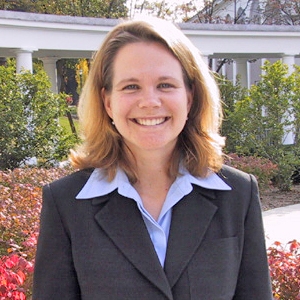
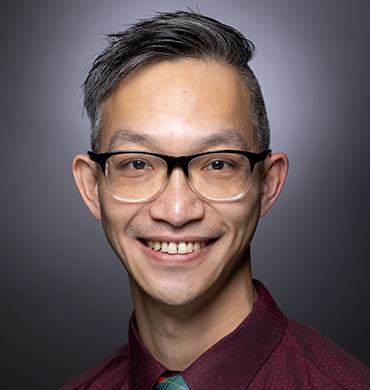
Benjamin D. Wandelt is a Research Professor at Johns Hopkins University with joint appointments in the Department of Physics and Astronomy and the Department of Applied Mathematics and Statistics. As a cosmologist and data scientist, he studies fundamental physics through astronomical observations using AI/ML and statistical inference. His research connects theoretical astrophysics with large-scale astronomical data to explore the cosmological framework. Research Focuses: Cosmological parameter estimation from supernova and CMB data Dark energy constraints through large-scale structure Machine learning applications in astrophysical inference Statistical methods for cosmological data analysis Major Honors: Gruber Prize in Cosmology (2018) Friedrich Wilhelm Bessel Prize Fellow of the American Physical Society Fellow of the International Association of Astrostatisticians
Pablo Schenone is an Assistant Professor of Economics at Fordham University, previously at Arizona State University. His research focuses on decision theory, game theory, and network theory, with applications to economic modeling and causal analysis. He holds a Ph.D. in Economics from Northwestern University. Education: Ph.D., Economics, Northwestern University, Evanston, IL Research Interests: Schenone explores the intersections of decision theory, game theory, and network theory. His work includes analyzing choice correspondences in extensive form games, market dynamics in networked environments, and causal frameworks using Bayesian graphs. Collaborations with Javier Donna and Gregory Veramendi address industrial organization and matching models. Publications Trends: Recent work emphasizes preference spaces (2025), dynamic market conjectures (2024), and price dispersion in networks (2020). Earlier research (2010–2016) laid foundations in subjective beliefs and causal modeling. Teaching & Grants: No listed advisees. Grants and collaborations are unspecified. Labs/Teams: No dedicated lab mentioned, but active in academic networks through collaborations.
Dr Agnieszka Goral is an Assistant Professor at the Department of Slavic Linguistics, Faculty of Languages, Literatures and Cultures, Maria Curie-Skłodowska University (UMCS). She specializes in contemporary Polish language, Slavic linguistics, and contrastive grammar, with a focus on Polish-East Slavic linguistic borderlands, derivational morphology, and educational linguistics. Education: Polish Philology (2003, UMCS), Ukrainian Philology (2002, UMCS), Belarusian Philology (1999, UMCS), and postgraduate studies in Computer Science (KUL). Her research spans East Slavic languages, folklore, and suffixation in Slavic linguistics. She has authored two monographs and over 70 publications, including studies on urbanonyms, dialects, and anniversary folk poetics. She serves as secretary of the academic annual Studia Białorutenistyczne and teaches Polish as a foreign language. Scientific Awards: Medal of the National Education Commission (KEN) for outstanding contributions to education and upbringing Dr Goral holds an ORCID ID (0000-0003-1622-970X) and maintains an active research profile at UMCS. She offers online consultations via Microsoft Teams on Tuesdays and Thursdays at 9:00-10:00.
John S. Hutchinson is a Professor of Chemistry and Associate Chair for Undergraduate Studies at Rice University. His academic career spans over 40 years, including roles as Dean of Undergraduates (2010-2018), Associate Vice President for Student Affairs, and residential college faculty master. He earned his B.S. and Ph.D. from the University of Texas, where his doctoral work was recognized as Outstanding Dissertation in 1981. Hutchinson specializes in theoretical chemical physics, focusing on vibrational dynamics of reactive molecules, and chemical education research emphasizing active learning and constructivist approaches. His textbook Concept Development Studies in Chemistry is a cornerstone of interactive teaching methods. His research has been supported by NSF, Welch Foundation, and other organizations. He has advised 8 doctoral and 3 master’s students. Hutchinson has pioneered innovations in general chemistry instruction, including online resources and teacher training programs. He has received prestigious accolades including multiple George R. Brown Awards for Teaching Excellence, the Piper Professor recognition, and the George R. Brown Certificate of Highest Merit. Beyond academia, he is a folk guitarist and avid hiker in Colorado. Key contributions include advancing active learning methodologies, developing inquiry-based laboratory systems, and creating scalable teacher professional development programs using distance learning. His work bridges theoretical chemistry with practical educational advancements, impacting both undergraduate STEM education and science teacher preparation nationwide.
Assoc. Prof. Serife Yilmaz serves as an Assistant Professor in the Department of Mathematics at Karadeniz Technical University's Faculty of Science, a position she has held since 2017 following prior appointments as Lecturer PhD (2011-2017) and Lecturer (2010-2011) at the same institution. Her academic credentials include: Doctorate in Mathematics, Karadeniz Technical University (2005-2011) Postgraduate in Mathematics, Erciyes University (2002-2004) Undergraduate in Mathematics, Erciyes University (1998-2002) Dr. Yilmaz's research centers on Algebra, Number Theory, and Ordered Algebraic Structures with specialization in Fuzzy Mathematics, Lattice Theory, and Soft Set Theory. Her work investigates triangular norms, hyperstructures, and fuzzy logic applications, recently expanding into cryptographic implementations. She maintains active contributions to both theoretical foundations and practical applications in algebraic systems. Analysis of her 14 journal publications (2007-2025) reveals consistent focus on lattice-based structures and fuzzy algebraic systems, with notable evolution from foundational triangular norm research toward cryptographic applications. Her recent 2025 publications demonstrate integration of lattice theory with encryption methods, reflecting interdisciplinary expansion while maintaining core algebraic expertise. She has advised two graduate theses and participated in one research project. Academic service includes thesis jury memberships at Giresun University (2019) and assistant professorship appointment committees at Black Sea Technical University (2018). Additional professional activities include jury service for national folk dance competitions organized by the Turkish University Sports Federation and Turkish Folk Dance Federation (2013-2016), demonstrating engagement beyond core academic duties.
Susanne Kreitz-Sandberg is a Senior Lecturer at Stockholm University's Department of Education, where she conducts research and teaching in International and Comparative Education. She coordinates the Master's Programme for International and Comparative Education and teaches courses at all levels of higher education, including PhD studies. Her research focuses on comparative education with special emphasis on gender and education, school attendance problems, and educational practices across different cultural contexts. Having lived, studied, and worked in Sweden, Germany, and Japan for over a decade, she brings deep contextual knowledge to her international comparative studies. Her recent publications demonstrate strong engagement with contemporary educational challenges including pandemic-related remote learning, school absenteeism across different national contexts, programming education, and gender equality in teacher education. Her work employs both quantitative and qualitative methodologies, often taking a mixed-methods approach to complex educational phenomena. Susanne currently leads a Swedish Research Council-funded project on International Comparative Perspectives on School Attendance Problems among 15-17 year olds in Sweden, the UK, Germany, and Japan. She has also served as director of studies for various Master's programmes at Linköping University and has extensive experience in university administration. She is actively engaged in PhD supervision, having previously co-advised completed doctoral research on CPR training in secondary schools and programming in science centers, and currently supervising research on topics including Nathalie Dewan's and Adrian Rexgren's work. Susanne is affiliated with two research groups at Stockholm University: the Higher Education Learning Practices (HELP) group and the International and Comparative Education Research (ICER) group, both focusing on theoretical and empirical research in their respective educational domains.
Peter van Kranenburg is an Assistant Professor in Music Information Computing at Utrecht University (The Netherlands) and a guest researcher at the KNAW Meertens Institute in Amsterdam. His work bridges computer science and musicology with a focus on computational approaches to music analysis. His research spans computational musicology, computational humanities, and music information retrieval. Van Kranenburg specializes in developing computational models for analyzing musical structures, particularly melodic similarity measures, folk song transmission patterns, and large-scale analysis of song traditions. His work often involves interdisciplinary collaboration between computer scientists and musicologists. His recent publications demonstrate consistent research in computational approaches to music analysis, with a focus on melodic similarity, folk song transmission, and computational modeling of musical traditions. His work spans both technical computer science aspects of music information retrieval and substantive musicological applications. Van Kranenburg has been involved in several significant research projects including the H2020 Polifonia-project (2021-2024), which focused on large scale analysis of European song traditions and curation of historic data on musical instruments, particularly pipe organs. His educational background combines technical and musicological expertise, having earned master's degrees in both Electrical Engineering (Delft University of Technology, 2003) and Musicology (Utrecht University, 2004), followed by a PhD from Utrecht University. His doctoral research developed melodic similarity measures and software tools for analysis of audio recordings of religious chant.
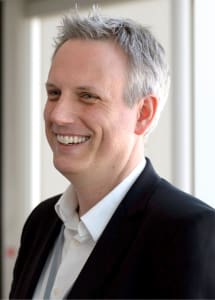
Michael Messerli is a Professor at the University of Zurich in the Department of Philosophy , currently holding an SNSF Starting Grant for his research project on Motivational Change . His academic work bridges philosophy, economics, and cognitive science. Doctorate in Philosophy and Economics, LMU Munich Master's and Bachelor's in Philosophy and Economics, University of Bern Messerli's research focuses on values , rationality , decision theory , and the philosophy of economics . He investigates how individuals make choices under uncertainty, the nature of hard decisions, and the role of preferences in rationality. His recent publications include work on transformative experiences , preference dynamics , and counterpreferential choices , often integrating empirical methods with philosophical analysis. His research spans theoretical and applied ethics, with a focus on behavioral economics and moral psychology . Scientific Awards: SNSF Starting Grant Ambizione fellowship (Swiss National Science Foundation) As part of his SNSF Starting Grant, Messerli leads a team including postdoctoral researchers and student assistants, collaborating with institutions like the University of Sheffield and the University of Bayreuth. His work has implications for both theoretical philosophy and applied ethical decision-making.
Kristin Bidoshi is a Professor of Russian and Director of Russian and East European Studies at Union College. She holds a B.A. from Beloit College and M.A. and Ph.D. from The Ohio State University. Her research focuses on Russian literature and culture, with specializations in Chekhovian prose, folklore studies, and vampire narratives in post-war American contexts. She also contributes to language pedagogy, particularly in integrating digital tools like VR for Russian verb-of-motion instruction. Her academic leadership includes editorial roles for journals such as Folklorica and Symposium . Notable works include analyses of Chekhov’s House with a Mezzanine , Gogol’s Arabesques , and Albanian folk traditions. She has published extensively on Slavic folklore, post-Soviet cultural studies, and comparative literature. Bidoshi’s teaching and research reflect interdisciplinary engagement with both literary analysis and applied language education. She has collaborated on multimedia projects such as Golosa textbook supplements and the Tochki zreniia video series.
Chiwei Hui is an Associate Professor and Director of Choral Activities at the University of Wisconsin-Stout, affiliated with the College of Arts & Human Sciences and the School of Art & Design’s Visual & Performing Arts Department. He is a composer, conductor, and performer whose work bridges contemporary and early music traditions. D.M.A. in Music Composition/Choral Conducting, University of Wisconsin-Madison M.M. in Music Composition and Choral Conducting, University of Oregon B.A. in Music Composition and Computer Science, University of Wisconsin-Madison Dr. Hui's research and artistic interests focus on contemporary choral music , early music , historically informed performance practices , and arts entrepreneurship . His work emphasizes interdisciplinary creativity, audience engagement, and innovative presentation of music. He blends humor and serious artistry, described as “seriously fun” with “accomplished contrapuntal texture.” His compositions span orchestral, chamber, choral, and operatic forms, often exploring cultural and technological themes. His recent compositions reflect a strong trend in contemporary choral music with interdisciplinary and global influences. Works like Hands , Stars , and Wired For Love demonstrate engagement with modern social themes, technology, and cross-cultural narratives. The repertoire includes sacred texts, folk adaptations, and original satirical operas, indicating a broad creative scope. His music has been performed internationally and featured in festivals such as the World Saxophone Congress and Society of Composers conferences. Dr. Hui has received notable recognition including: Robert Helps Prize (2008) for Of Water & Love Commission featured at the World Saxophone Congress As a conductor and mentor, he directs the UW-Stout Choirs, Schola Cantorum of Eau Claire, and Chippewa Valley Festival Choir. He has premiered works by emerging composers and fostered student-led projects, such as the moon landing-themed concert script developed by a student team. He has also secured support from the Baldrige Cross-Disciplinary Collaboration Committee, highlighting his success in obtaining academic and artistic grants. Dr. Hui leads several ensembles including the Schola Cantorum of Eau Claire , the first early music chamber choir in northern Wisconsin, UW-Stout Choirs , Chippewa Valley Festival Choir , and collaborates with the Madison Early Music Festival and Eliza’s Toyes . These groups emphasize historically informed performance and community engagement, bridging academic and public audiences.
Ève Poudrier is an Assistant Professor of Music Theory at the School of Music , University of British Columbia . Her research bridges music theory , cognitive psychology , and digital humanities , focusing on rhythmic complexity , polyphony , and French-Canadian folk traditions . She leads the Rhythm Research Cluster and develops computational tools like Composite for analyzing rhythmic structures. DEC (Collège Lionel-Groulx) B.A., M.A., Ph.D (CUNY) Research areas encompass empirical aesthetics , music cognition , and computer-aided musicology . She explores how listeners process temporal multiplicity in 20th-century music and examines emotional responses to rhythmic dissonance . Her work integrates behavioral experimentation , digital corpora , and graphic linear analysis . Recent publications span Journal of New Music Research , Empirical Musicology Review , and proceedings from the International Conference on Music Perception and Cognition . She collaborates with Craig Sapp on the Polyrhythm Project , which analyzes 725 polyphonic works from 1900-1950.
Dr. Dijana Drandić is an Associate Professor at the Faculty of Educational Sciences , Juraj Dobrila University of Pula , specializing in Early and Preschool Education . As Lecturer in charge for courses like General Didactics and Intercultural Communication , she emphasizes inclusive practices and pedagogical innovation. Research Interests : Intercultural communication, inclusive education for children with developmental disabilities, music pedagogy, and ICT integration in special education. Key Projects : Collaborative work on ICT in Special Education , Montessori Adaptation for Disabilities , and intercultural readiness studies. Publications : 15+ works on intercultural sensitivity, traditional music in education, and bilingualism in multicultural kindergartens. Advising : Supervised 20+ theses, including studies on autism inclusion, Roma education, and creative workshops for special needs. Her recent work explores technology-enhanced learning for children with disabilities and curriculum design for intercultural competence. She also co-authored practical guides on ICT as Special Needs Support and Native Identity Development in Istrian contexts.
Manuel Burghardt is a full-time Professor of Computational Humanities at the Institute of Computer Science , Leipzig University . He coordinates the Bachelor's and Master's programs in Digital Humanities and serves as a spokesperson for the GI's Computer Science and Digital Humanities Group and the Forum for Digital Humanities Leipzig . PhD in Information Science (summa cum laude) from University of Regensburg Magisterstudium in Information Science, English Linguistics, General Linguistics, and Corpus Linguistics at University of Regensburg Burghardt's research spans multiple Computational Humanities domains: Digital Environmental Humanities : Integrating Computational Literary Studies with Biodiversity Research via NLP and Information Retrieval Immersive Humanities : Applying AR/VR/XR, Eye Tracking, and Tangible Interfaces for Digital Humanities Text Mining & NLP : Focused on text reuse detection, similarity analysis, and sentiment modeling Video Analytics : Analyzing news videos and cinematic media through Distant Viewing techniques Theory of Digital Humanities : Investigating methodological foundations and scientometric trends Computational Game Studies : Multimodal empirical analysis of games Computational Spatial Humanities : Spatial data analysis in humanities contexts His recent publications demonstrate strong focus on: Improving OCR for historical documents (2015-2020) Computational drama analysis using sentiment and text mining techniques (2016-2019) Music information retrieval applications in folk song and manuscript analysis (2015-2019) Development of specialized tools for humanities data processing
Ramesh Jain is a distinguished Professor and Founding Director of the UCI Institute for Future Health at the University of California, Irvine. He holds leadership roles across multiple institutions, including founding directorships of the Artificial Intelligence Laboratory at the University of Michigan (1987), Visual Computing Lab at UC San Diego (1995), and editorships of IEEE MultiMedia and Machine Vision and Applications journal. His research focuses on AI, computer vision, and healthcare innovation, particularly in data-driven health navigation systems and experiential computing. Education: Ph.D. in Electronics & Electrical Communications Engineering from IIT Kharagpur (1975). Research Interests: Building computing frameworks for personalized healthcare AI applications in nutrition and disease prevention Experiential computing and multimedia systems Multimodal data fusion for health monitoring Scientific Awards: ACM Distinguished Service Award (2023), ACM SIGMM Technical Achievement Award (2010), and Fellowships from ACM, IEEE, AAAS, IAPR, AAAI, and SPIE. Professional Contributions: Founded SIGMultiMedia, pioneered multimedia computing concepts like Folk Computing and Experiential Computing, and advised over 15 companies in early stages. Current projects include the Open Source Personal Health Navigator at Peng Cheng Lab, Shenzhen. Lab/Team: Leads the UCI Institute for Future Health, focusing on integrating AI and health informatics for preventive care.
Olivier Lartillot is a Researcher at the RITMO Centre for Interdisciplinary Studies in Rhythm, Time and Motion at the University of Oslo. His work focuses on computational music and sound analysis, artificial intelligence, and music information retrieval. He developed the MIRtoolbox and MiningSuite frameworks, tools widely used in music analysis. Previously, he held roles including Academy of Finland Research Fellow (2009–2014) and postdoctoral positions at the Finnish Centre of Excellence in Interdisciplinary Music Research. Education: PhD in Music and Acoustics from IRCAM/UPMC Paris (2000–2004); Master’s in Musicology from Sorbonne University (1996–1999). Research Projects: MIRAGE (AI-based music analysis), SoundTracer (Norwegian folk music transcription), HIGH-M (music and health interaction). His research interests span computational models of music structure, cross-cultural music analysis, and applications in music therapy and digital heritage. He has authored over 80 articles (3,000+ citations) and contributed to initiatives like the Norwegian Folk Music Archive digitization. He is a member of the editorial board for Transactions of the International Society for Music Information Retrieval and an expert evaluator for EU Horizon 2020 programs. His work bridges technical innovation with musicological theory, addressing challenges in automated transcription, segmentation, and expressive performance analysis.




/mmesserli/photo/Unbenannt.png.png)