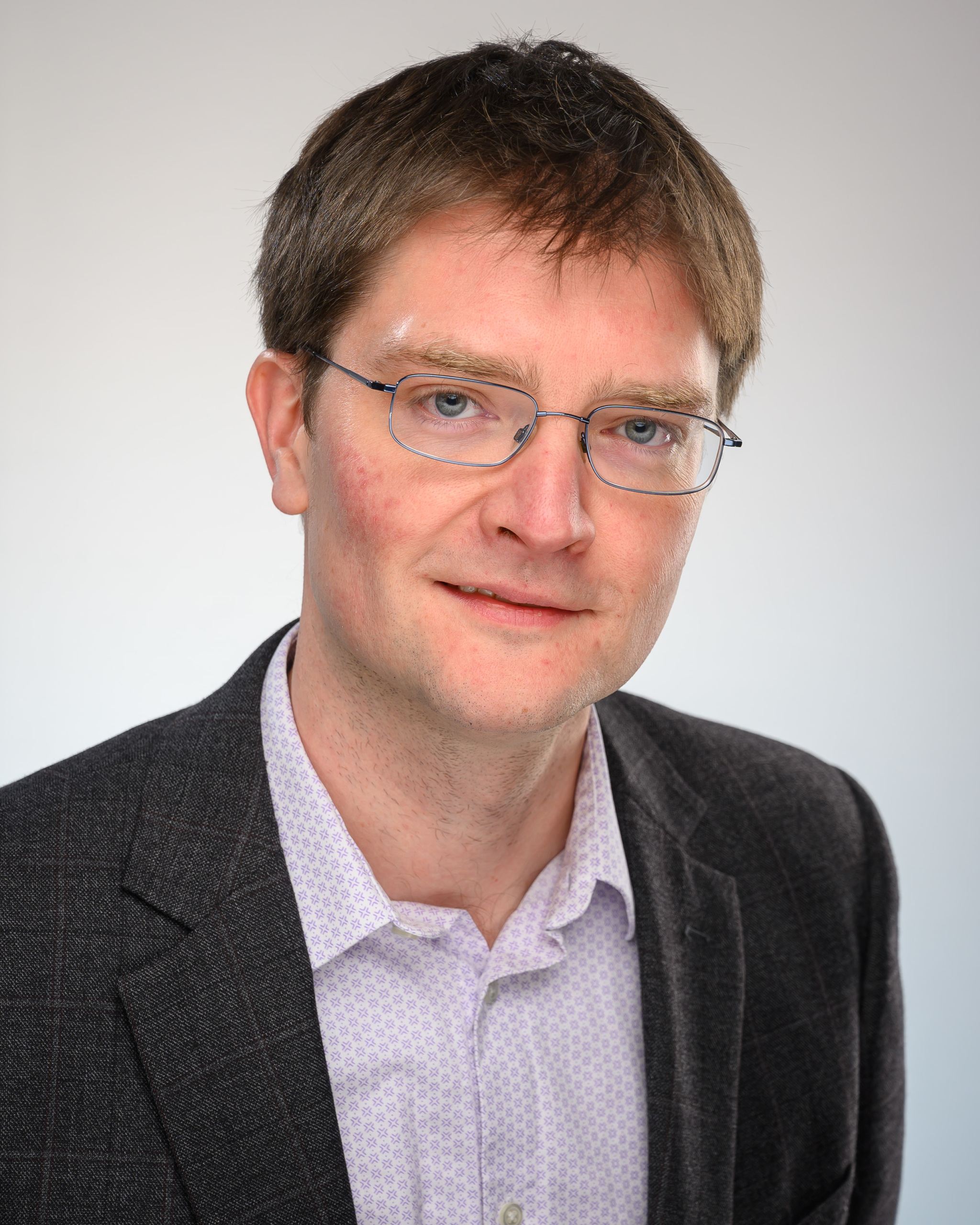
David Bourget is an Associate Professor in the Department of Philosophy at Western University and serves as the Director of the Centre for Digital Philosophy . He holds a PhD from the Australian National University (2010) and a BSc in Computer Science from L'Université Laval (2002). His research focuses on consciousness, intentionality, and digital philosophy , with a special emphasis on the intersection of AI and philosophical inquiry through projects like PhilPapers.org. Education: PhD, Australian National University (2010) BSc, L'Université Laval (2002) Key Research Areas: Philosophy of Mind Philosophy of Language Digital Philosophy Infrastructure Metaphilosophy His recent publications explore topics such as phenomenal intentionality, representationalism, and debunking theories . The Centre for Digital Philosophy , which he leads, maintains major resources like PhilPapers, PhilPeople, and PhilEvents, supported by CFI and ORF grants . He actively collaborates with philosophers like Angela Mendelovici on intentionality and representational theories.
Christopher Witulski is an Associate Teaching Professor of Ethnomusicology at Bowling Green State University's College of Musical Arts, where he has served since 2016. He holds a PhD in Ethnomusicology from the University of Florida (2014). His research focuses on Moroccan ritual music, North African musical practices, and the intersection of music with religion, globalization, and cultural identity. Witulski is the author of two major works: The Gnawa Lions: Opportunity and Authenticity in Moroccan Ritual Music (2018) and Focus: Music and Religion of Morocco (2019). His articles explore how musicians navigate listener expectations, global markets, and ritual aesthetics in contemporary North Africa. Witulski is an active performer on violin, 'ud, and banjo, with professional experience in orchestras and festivals across Morocco, Florida, Georgia, and Michigan. His performance interests include Arabic music, American old-time music, and building banjos. Additional research interests incorporate computational music analysis, ethical dimensions of religious music, and interdisciplinary music studies. His scholarly articles (2014–2023) consistently analyze Moroccan musical scenes, Sufi rituals, and global music dynamics. No scientific awards are explicitly listed, though his publications indicate prestigious contributions to ethnomusicology. He previously taught at Florida State University before joining BGSU. No lab affiliations or grant details are provided in the text.
Dr. John Miller serves as the Director of the Division of Performing Arts and Professor of Music Theory at North Dakota State University (NDSU). He holds a Ph.D., M.M., and B.A. in Music Theory from Northwestern University. Prior to NDSU, he held faculty and administrative roles in Music Theory and Technology at institutions including the University of North Dakota and Northwestern, DePaul, and Eastern Illinois Universities. He has professional experience as a guitarist, bassist, and composer/arranger in Chicago's commercial music industry. Education: Ph.D. in Music Theory, Northwestern University M.M. in Music Theory, Northwestern University B.A. in Music Theory, Northwestern University His research focuses on early music analysis, counterpoint, and pedagogical technology. He has co-authored computer-assisted instructional materials for Norton & McGraw-Hill, developed the MAPLE music programming language, and edited Miriam Makeba’s The World of African Song . He also co-authored Folk Guitar (Quadrangle Books/New York Times). Dr. Miller is active in academic organizations: Region 3 Chair and visiting accreditation team chair for NASM, CMS Fund Treasurer, and former Board President of the Fargo Moorhead Symphony Orchestra. He oversees program annotations for the Fargo Moorhead Symphony Orchestra with his students. No scientific awards are explicitly listed, but his contributions to pedagogical technology and music theory are significant. Grants and specific lab affiliations are not detailed in the provided text.
Mitch Herschbach is a Lecturer in the Department of Philosophy at California State University, Northridge (CSUN), where he has been teaching since 2011. He also teaches courses in the Department of Interdisciplinary Studies at CSUN, demonstrating his commitment to cross-disciplinary approaches to philosophical inquiry. Herschbach received his Ph.D. in Philosophy & Cognitive Science from the University of California, San Diego. This interdisciplinary training forms the foundation of his scholarly work, which bridges philosophical analysis with empirical findings from cognitive science and neuroscience. His research primarily focuses on the philosophy of mind and philosophy of science, with specific attention to cognitive science, psychology, and neuroscience. A significant portion of his work examines human social cognition—the capacity to understand others' mental states, commonly referred to as 'mentalizing,' 'mindreading,' or 'theory of mind.' From a philosophy of science perspective, Herschbach critically investigates explanatory frameworks in cognitive science, particularly the mechanistic approach and its relationship to more radical alternatives emphasizing the embodied, embedded, enactive, and extended nature of cognition. His scholarship consistently engages with simulation theory, folk psychology, and alternative accounts of how we understand other minds. Herschbach's publication record reveals a sustained engagement with foundational questions in social cognition. His most recent work, 'Revising Simulation Theory Beyond Recognition: A Reply to Yousefi Heris' (2025), demonstrates his active participation in contemporary debates. Over time, his research has evolved to address emerging frameworks like 4E cognition (embodied, embedded, enactive, extended) while maintaining critical engagement with traditional theories of social understanding. His work spans theoretical analysis of cognitive architecture, examination of neural mechanisms, and philosophical implications of empirical findings in cognitive science. As an educator, Herschbach has over a decade of experience teaching diverse philosophy courses including Ethics & Technology, Business Ethics and Public Policy, Philosophy and Biology, philosophy of mind, philosophy of science (covering cognitive sciences and biology), logic and critical thinking, socio-political philosophy, and various ethics courses. His Fall 2025 teaching schedule includes multiple sections of Business Ethics and Public Policy alongside Ethics & Technology. Herschbach is an active participant in the academic community, particularly through the Society for Philosophy and Neuroscience (SPAN). He has presented his research at events like SPAN2025, where he discussed his views on simulation theory and anti-localizationist accounts of brain function. He maintains professional profiles on academic platforms including Google Scholar, PhilPeople, ResearchGate, and ORCiD, facilitating scholarly connections in his field.
Professor Michael Winikoff is a prominent academic at Victoria University of Wellington's School of Information Management, where he joined in June 2019 and served as Head of School from early 2021 to early 2025. Previously, he was Head of Department at University of Otago's Department of Information Science (February 2011 to December 2016) and Associate Professor at RMIT University's School of Computer Science and IT. His career spans over two decades of research in autonomous systems and agent-oriented software engineering. His educational background includes a PhD from the University of Melbourne (1994-1997). His research focuses on improving software creation methodologies, particularly for intelligent agents that exhibit robust and flexible behavior. He is best known for developing the Prometheus methodology for agent-based systems design. More recently, his work has expanded to address societal consequences of autonomous systems and trust issues, with significant contributions to explainable AI (XAI). His publication record demonstrates consistent contributions to autonomous systems research, with recent work focusing on explainability frameworks, trust calibration, and certification of reliable autonomous systems. His 15 most recent publications (2018-2025) show a clear evolution from technical agent design toward broader societal implications, particularly the intersection of technical design and human trust in autonomous systems. The publications span journals like Artificial Intelligence and IEEE Internet Computing, as well as major conferences including AAMAS. Past President of International Foundation for Autonomous Agents and Multiagent Systems (IFAAMAS) Co-Editor-in-Chief of Journal of Autonomous Agents and Multi-Agent Systems (JAAMAS) Chair of ICORE rankings management committee Editor-in-Chief for International Journal of Agent-Oriented Software Engineering (IJAOSE) Vice President of Computing Research and Education Association of Australasia (CORE) Professor Winikoff has led significant research projects funded by the Australian Research Council, including work on adaptive personae for interactive toys, service-oriented negotiation in multi-agent systems, and advanced software engineering for intelligent agent systems. His current research continues this trajectory, focusing on making autonomous systems more explainable and trustworthy through engineering approaches that consider both technical and human factors. He maintains active collaborations across institutions, with recent work involving researchers from RMIT University and other international partners.
Professor Martin Clayton is a leading scholar in Ethnomusicology at Durham University's Department of Music. He holds a BA in Music/Hindi (SOAS, 1988) and a PhD in Ethnomusicology (SOAS, 1993). His work focuses on Hindustani classical music, rhythmic analysis, and embodied musical interaction. He has directed major research projects like the EU-funded EnTimeMent and AHRC-funded 'Interpersonal Entrainment in Music Performance.' Clayton is a Fellow of the British Academy (2020) and former editor of the British Journal of Ethnomusicology. His research explores cross-cultural musicology, computational analysis of performance, and rhythmic entrainment across global traditions. Education: Bachelor of Arts in Music and Hindi (SOAS, University of London, 1988) Doctor of Philosophy in Ethnomusicology (SOAS, University of London, 1993) Research Interests: Clayton’s work bridges ethnomusicology with computational methods, focusing on rhythmic structures in Indian classical music, embodied performance practices, and cross-cultural musical interactions. His studies analyze gesture-sound relationships, temporal frameworks in rag performance, and the social dimensions of musical entrainment. Recent projects integrate machine learning and computer vision to classify ragas and analyze performer movements in ensemble contexts. Publications Overview: His 15+ years of research span theoretical works (e.g., Time in Indian Music , 2000), edited volumes (e.g., Experience and Meaning in Music Performance , 2013), and interdisciplinary studies combining ethnography with computational analysis. Recent work emphasizes multimodal data collection to study synchronization in global music traditions, including Japanese gagaku and Indian khyal. Awards: British Academy Fellowship (2020), Leverhulme Trust Major Research Fellowship Advising & Grants: Supervised doctoral students focusing on Indian music, global guitar practices, and embodied music interaction. He led a £1.2M AHRC grant (2016–2018) on interpersonal entrainment and co-investigated projects on Khyal music and South Asian cultural networks. Labs/Teams: Collaborates with interdisciplinary teams on projects like the Interpersonal Entrainment in Music Performance (IEMP) initiative, developing tools such as the movementsync R package for synchrony analysis. Active in global music research networks, including ESEM and the British Forum for Ethnomusicology.
Bertram F. Malle is a Professor of Cognitive and Psychological Sciences at Brown University, holding a joint appointment in the Department of Cognitive and Psychological Sciences. He is affiliated with the Humanity-Centered Robotics Initiative and has collaborated with institutions like the Army Research Laboratory and the Office of Naval Research. His academic journey includes a Master’s in Philosophy/Linguistics (1987) and Psychology (1989) from the University of Graz, Austria, followed by a Ph.D. in Psychology from Stanford University (1995). Before joining Brown in 2008, he was at the University of Oregon. His research focuses on moral psychology, social cognition, and human-robot interaction. Key interests include moral judgments, blame attribution, social norms, and the cognitive foundations of human-machine collaboration. He has been funded by NSF, DARPA, and the Department of Defense, among others. Malle’s work bridges psychology, philosophy, and AI, emphasizing moral competence in robots and the societal implications of human-robot interaction. His awards include the SESP Outstanding Dissertation Award (1995), NSF CAREER Award, and the 2019 SESP Scientific Impact Award. He is also a Fellow of multiple prestigious societies, including APS and SPSP. His teaching spans courses like Social Psychology, Moral Psychology, and Multivariate Statistics. Collaborators include experts in computer science and robotics, reflecting his interdisciplinary approach to advancing human-centric AI systems.
Ben Glaser is Associate Professor of English at Yale University, specializing in Anglophone poetics and prosody. He holds a Ph.D. from Cornell University (2012), M.A. from Cornell (2008), and B.A. magna cum laude from New York University (2005). His research spans sound studies, disability studies, African American and Caribbean poetry, computational humanities, and critical approaches to AI. Glaser's research examines poetic meter and form through interdisciplinary frameworks. His publications explore racial identity in verse, modernist prosody, and the intersection of poetry with technology. Recent work investigates formalization processes in poetry and racialized textual structures. Glaser's publications demonstrate sustained engagement with prosodic theory across historical periods. His scholarship examines how metrical forms encode cultural and political meanings, with particular attention to marginalized voices in literary history. Research trends reveal consistent focus on the materiality of poetic language and its social dimensions.
Professor Satyaki Roy is a faculty member at the Indian Institute of Technology Kanpur , serving in the Department of Design and the Media Technology Centre . Since October 2001 he has been instrumental in establishing the Media Technology Centre and the 90.4 FM Community Radio Station on campus, and has founded the start-up Gestures Design and Media Solutions Pvt. Ltd. Education PhD, Kala Bhavana, Visva-Bharati University, Santiniketan (2003–07) MFA, Kala Bhavana, Visva-Bharati University, Santiniketan (1997–99) BFA, Kala Bhavana, Visva-Bharati University, Santiniketan (1992–97) Research & Creative Focus Professor Roy’s research integrates visual communication, folk art & crafts, creativity, film-making, design thinking, and user-experience design . His work explores the intersection of traditional Indian aesthetics with contemporary design practice, employing visual ethnography, augmented-reality applications, and emotion-driven design methodologies to address challenges in education, urbanism, and sustainable craft livelihoods. Publications Trajectory Across 2021 alone, Roy co-authored four major journal and conference papers on themes ranging from commoditization of Gond art to emotion dynamics in design processes and visual literacy for children. Earlier works (2017–2015) concentrated on augmented-reality toolkits, urban visual perception methodologies, and empowerment of craft clusters, demonstrating a steady evolution from ethnographic documentation to actionable design interventions. Honours & Patents National recognition for contributions to the NPTEL Phase I-II (2004–2014) Indian Patent 234987 – “The Drift-Battery Operated Campus Vehicle” Indian Patent 238758 – “Stair Climbing Wheel Chair” Best-paper recognition at the Design History Society Annual Conference, Barcelona Advising & Grants He has supervised 60+ M.Des theses and currently guides eight active PhD scholars in areas such as folk-painting aesthetics, emotion in design, sustainable pottery, assistive yoga tools, signage, and medical-device design. His projects have been funded by MHRD, MOE, DST, MIB, DMSRDE, UPPCL, NOKIA, JCBL and others, totalling more than 30 completed and ongoing initiatives in e-content creation, community radio, digital agriculture, and rural craft revitalisation. Labs & Teams Roy spearheads activities at the Media Technology Centre , the 90.4 FM Community Radio Station , and collaborates with the Design Programme at IIT Kanpur. These interdisciplinary hubs integrate design research, media production, and outreach to foster innovation in education, culture, and social development.
Dr. Eve Klein is an Associate Professor and Senior Lecturer in Music Technology and Popular Music at The University of Queensland (UQ) School of Music. She leads a research cluster in interactive composition, focusing on virtual/augmented reality works and guiding postgraduate composers. Her work bridges classical music traditions with digital innovation, addressing themes like gender in technology, identity, and participatory cultures. Dr. Klein holds a PhD in Music and Sound and has pioneered immersive art music experiences for festivals such as MONA FOMA and VIVID Sydney. Her artistic works include Vocal Womb (a laryngoscopy-based opera exploring voice and power) and City Symphony (an AR soundwalk overlaying Brisbane’s CBD). She is a recipient of the 2023 Art Music Award for Experimental Practice and the IASPM 2016 Open Publication Prize. Her research spans music technology curriculum design, future work skills in the arts, and epistemic fluency through transdisciplinary collaboration. She co-founded the Touch Ensemble, a technology-focused performance group collaborating with engineering students. Dr. Klein’s work frequently addresses social justice themes, including gendered violence and climate change. Education: PhD in Music and Sound Awards: 2023 Art Music Award, IASPM 2016 Prize, UQ Program Innovation Award Her articles critically examine virtual orchestras’ impact on classical norms, while her creative works challenge traditional performance boundaries. Klein collaborates internationally with festivals, scientists, and NGOs to create transformative cultural projects.
Dr. Chris Montgomery is a Senior Lecturer in Dialectology at the School of English, University of Sheffield, where he has held roles since 2012. Prior to this, he was a Lecturer at Sheffield Hallam University and completed an ESRC Postdoctoral Fellowship at the University of Edinburgh. His research focuses on non-linguists' perceptions of language variation, particularly in northern England and southern Scotland, integrating GIS technologies and sociolinguistic methods. He explores how real-time reactions to regional speech are influenced by salience and stereotypes, emphasizing methodologies like starburst charts and geospatial analysis. His research interests span perceptual dialectology, folk linguistics, computational sociolinguistics, and the role of borders in linguistic perception. He contributes to interdisciplinary collaborations, applying geographical science techniques to linguistic studies. Dr. Montgomery teaches modules on language variation, regional identity, and language attitudes at both undergraduate and postgraduate levels. His work has been published in journals such as Journal of Sociolinguistics and Frontiers in Artificial Intelligence , and he co-edited volumes like Language and a Sense of Place (2017) and Cityscapes and Perceptual Dialectology (2016). Dr. Montgomery’s methodologies include innovative approaches to mapping perceptual dialect landscapes, with a focus on urban and border regions. His recent projects examine insular dialects (e.g., Isles of Scilly) and utilize Twitter data for lexical variation studies. He actively supervises students in perceptual dialectology, computational methods, and sociolinguistic theory.
Žanna Pärtlas is a Senior Researcher at the Estonian Academy of Music and Theatre (EAMT), specializing in ethnomusicology with a focus on Finno-Ugric folk traditions. Her research examines polyphonic singing practices in Seto, Mordovian, Udmurt, and Russian cultures using anthropological, music-analytical, and cognitive approaches. She holds a PhD from the Rimsky-Korsakov Saint Petersburg State Conservatory and a BA in Opera Singing from EAMT. Her research interests include: Structural analysis of multipart singing traditions Ethnographic fieldwork methodologies Digital preservation of folk music Cross-cultural comparative studies of Finno-Ugric musical practices Pärtlas's publications predominantly explore vocal polyphony, lament traditions, and computational analysis of folk songs. Recent works focus on developing digital tools for teaching Seto multipart singing and typological studies of traditional tunes. Awards & Honors: 2022 Cultural Endowment Award for Seto heritage preservation 2022 Lokulaud Deed of the Year Award 2021 Baltic-American Research Scholarship She has supervised 7 doctoral/master's students in ethnomusicology and currently leads research projects including 'Ethnogenesis of Seto People' (PRG2600) and 'Seto Song Typology' (KUM-TA32). Her extensive fieldwork includes multichannel recordings across Estonia, Russia, and Udmurtia.
Dr. Stephanie Tong is a Professor in the Department of Communication Studies at Wayne State University, where she directs the Social Media and Relational Technologies (SMART) Labs. Her academic journey includes a BA from the University of California, Davis, and both MA and PhD degrees from Michigan State University. Position: Professor, Department of Communication Studies Institution: Wayne State University Research Lab: Director of SMART Labs Education: BA (UC Davis), MA & PhD (Michigan State) Dr. Tong's research focuses on the intersection of social media and relational communication, specifically examining how people initiate, maintain, and terminate relationships using popular social media platforms. Her work spans several key areas including online dating, romantic relationships in the digital age, online hate speech, and the impact of AI on interpersonal communication. She has developed particular expertise in Asian American experiences with online hate during the pandemic and the role of social media in health contexts like chronic pain management. Her extensive publication record includes articles in top-tier journals such as Social Media + Society, Psychology and Health, Personal Relationships, New Media and Society, and Journal of Computer-Mediated Communication. Her recent research (2023-2025) shows a growing focus on AI in communication education, foundations of online hate research, and the psychological impacts of social media on marginalized communities. Her book 'Up to Date: Communication and Technology in Romantic Relationships' (2022) with Brandon Van Der Heide represents a significant contribution to understanding digital romance. Online Hate Research: Asian American resilience to pandemic-related online harassment Relationship Technology: How digital platforms shape romantic connections Health Communication: Facebook support groups for chronic pain management AI Communication: Effects on interpersonal dynamics and educational approaches Dr. Tong teaches interpersonal communication, communication theory, research methods, and pedagogy at both undergraduate and graduate levels. She is particularly known for innovative teaching approaches, including hands-on methods for teaching complex research concepts. Her courses include Interpersonal Communication (COM2200), Quantitative Research Methods (COM7260), and Seminar in Communication Education (COM7810). Outside the classroom, Dr. Tong maintains an active lifestyle with interests in rock climbing and running. She lives with her husband, son, and a Chihuahua-pug mix dog named Panzo. Her SMART Labs continues to investigate how technology affects relationship decisions, with ongoing recruitment for research assistants indicating active projects and funding.
Simon Hutchinson, Ph.D. is an Associate Professor and Chair of the Department of Music, Theater, and Dance at the University of New Haven's College of Arts and Sciences. He also serves as Coordinator for the Game Design and Interactive Media program. His academic home is firmly situated within the Department of Music, Theater, and Dance where he leads both departmental administration and specialized program coordination. Hutchinson's research interests span multiple domains of contemporary music creation and technology. He specializes in Synthesis and Sound Design, Interactive and Electronic Audio, and Composition, with particular emphasis on the synthesis of disparate musical traditions. His work bridges European concert traditions with creative electronics, acoustic instruments with digital video games, and East Asian folk with American jazz, rock and funk. This interdisciplinary approach yields novel musical experiences that critically engage with relationships between society, technology, and human experience. His international scholarly output demonstrates consistent engagement with cutting-edge conferences in electronic music, sound design, and interactive media. The performance venues reflect a strong focus on experimental music technology, electroacoustic composition, and the intersection of music with digital gaming and interactive media. His work has been presented across North America, Europe, and Asia, indicating a significant global scholarly presence. Outstanding Graduate Scholar in Music (University of Oregon) Sasakawa Young Leader's Fellowship Fund (SYLFF) Hutchinson's academic journey includes significant research support and recognition. His cross-cultural composition studies were supported by the prestigious Sasakawa Young Leader's Fellowship Fund, demonstrating the international significance of his scholarly work. While specific grant information isn't detailed in the provided text, his extensive international performance record suggests successful acquisition of research and creative activity funding to support these global presentations.
Dániel Péter Biró is a Professor of Composition at the Grieg Academy – Department of Music, University of Bergen, Norway. His academic and artistic trajectory spans institutions including Princeton University (PhD 2004), University of Victoria, Utrecht University, and Harvard University. Current research integrates music composition with philosophy (Spinoza), computational ethnomusicology, and Jewish/Islamic chant analysis Key projects: Sounding Philosophy (Norwegian Artistic Research Program 2021-2024), Computational Ethnomusicology (since 2007) His research interests focus on historicized composition, where melodic contours from oral traditions (Jewish Torah trope, Qur’an recitation) are algorithmically analyzed and transformed into contemporary works. This bridges medieval musical syntax with modern computational methods, exploring memory citation, negative space in historical dialogue, and philosophical concepts like Spinoza's Geist and intuition . Scientific awards include: Guggenheim Fellowship (2017) Ernst von Siemens Music Foundation grants (2010, 2012) Radcliffe Institute Fellowship (2014-2015) Internal Research Grants from University of Victoria and Princeton University His compositions are published by Edition Gravis, with recordings featured on Neos Music and German radio (Deutschlandfunk).