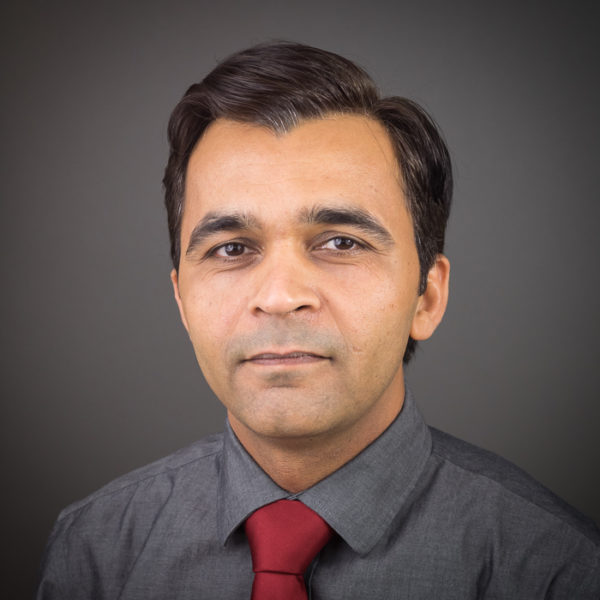
Yu Xiao is an Associate Professor at the Department of Information and Communications Engineering, Aalto University, specializing in edge computing, extended reality (XR), wearable computing, and crowdsensing. Their research contributes to the UN Sustainable Development Goals, particularly in education and technology innovation. Active in mobile cloud computing and decentralized systems Principal Investigator in EU-funded projects (EMIL, TUTL) Expert in 5G networks, autonomous systems, and human activity recognition Yu Xiao's work spans interdisciplinary domains, including healthcare (cardiovascular resuscitation devices) and urban mobility (autonomous vehicle interactions). They have received multiple awards, including Best Paper Awards and Nokia Foundation Scholarships. Focus on low-latency communication and multiagent reinforcement learning Developed frameworks like FediLive for decentralized social networks Contributed to 128+ publications and software tools Recent collaborations include institutions like Pontificia Universidad Católica de Chile and participation in IEEE committees. Their research integrates blockchain for secure IoT communication and advanced AR applications.
Christopher G. Brinton is the Elmore Associate Professor of Electrical and Computer Engineering at Purdue University, where he leads the ION research lab. He is affiliated with the Department of Electrical and Computer Engineering in the College of Engineering at Purdue University's West Lafayette campus. Dr. Brinton received his PhD from Princeton University, where he was previously the Associate Director of the EDGE Lab and a Lecturer of Electrical Engineering. His research focuses on the intersection of networking, communications, and machine learning, with particular emphasis on Fog computing systems, the Internet of Things (IoT), NextG Wireless, and social learning networks. His research integrates foundational techniques including convex and non-convex optimization, machine learning, and signal processing to address challenges in networked intelligent systems. The ION lab under his leadership develops both theoretical frameworks and practical implementations for next-generation networking solutions, with strong industry collaborations including Qualcomm, Nokia, Intel, Cisco, Dell, and Ericsson. Recent publications reveal a strong trend toward federated learning, decentralized algorithms, and edge intelligence, with significant contributions to model partitioning, communication-efficient learning, and robust network architectures. His work increasingly bridges traditional communication theory with modern machine learning techniques to solve emerging challenges in distributed networked systems. NSF CAREER Award ONR Young Investigator Program (YIP) Award DARPA Young Faculty Award (YFA) AFOSR Young Investigator Program (YIP) Award Intel Rising Star Faculty Award (RSA) Dr. Brinton teaches several courses including ECE 647: Performance Modeling of Computer Communication Networks, ECE 301: Signals and Systems, and ECE 547: Introduction to Computer Communication Networks. He has co-authored the book 'The Power of Networks: Six Principles That Connect Our Lives' and taught three Massive Open Online Courses (MOOCs) with over 400,000 cumulative students. While not currently actively recruiting students, he remains open to connecting with highly motivated individuals. Dr. Brinton leads the ION (Intelligent Optimization and Networking) research lab, which focuses on creating theoretical foundations and practical implementations for next-generation networked systems. The lab has recently published significant work on 6G taxonomy in collaboration with major industry partners and continues to push boundaries in distributed learning and network optimization.
Professor Barry Porter is a faculty member at Lancaster University in the School of Computing and Communications . His research focuses on emergent software platforms that address software complexity through component models , meta-software platforms , and machine learning . Key areas include distributed systems, cloud integration with sensor nodes, green computing, and real-time visualization. Research Interests : Runtime adaptation in complex systems Self-assembling software architectures Machine learning for code optimization Distributed emergent systems at scale Green computing for multi-core environments Edge-cloud continuum integration Recent Publication Trends : His 2025 work explores genetic improvement for software using speciation algorithms , program geometry projection , and multi-agent decision frameworks . Earlier studies (2022-2024) investigate edge-cloud systems , neural transfer learning , and ecosystem curation in emergent software. Supervision & Projects : He supervises PhD student Ben Craine and leads projects like B-EGI (Bio-Enhanced Genetic Improvement) and BBC Prosperity Partnership for media delivery. Collaborations span environmental IoT, multi-agent learning, and fog computing. Labs & Groups : Affiliated with the Lancaster Intelligent, Robotic and Autonomous Systems Centre , Centre of Excellence in Environmental Data Science , and the Distributed Systems group.
Maximilian Egger is a Doctoral Researcher at the Institute for Communications Engineering under Prof. Antonia Wachter-Zeh at the Technical University of Munich (TUM). His research focuses on distributed machine learning, privacy-preserving computing, and information theory. He holds an M.Sc. in Electrical Engineering and Information Technology (2022, TUM) and a B.Eng. in Electrical Engineering (2020). He has conducted research stays at École Polytechnique Fédérale de Lausanne (2024) and Imperial College London (2023). Egger has received several awards, including the DAAD Scholarship (2023) and the VDE Award Bavaria (2020). His work emphasizes secure federated learning, Byzantine-resilient systems, and efficient distributed algorithms. He is affiliated with the Chair of Coding and Cryptography and actively contributes to advancements in decentralized learning systems. Recent publications highlight breakthroughs in privacy preservation, channel capacity estimation, and scalable federated edge learning.
Sanjeev Baskiyar is a Professor in the Department of Computer Science and Software Engineering at Auburn University's College of Engineering. He has been actively involved in research, teaching, and academic leadership, with a strong focus on computer systems, real-time and embedded computing, scheduling, cloud and fog computing, and energy-aware architectures. Education: Ph.D., Electrical and Computer Engineering, University of Minnesota M.S., Electrical and Computer Engineering, University of Minnesota B.S., Electronics and Communications, Indian Institute of Science, Bangalore B.S., Physics (with honors), and distinction in Mathematics Dr. Baskiyar’s research interests span scheduling, real-time and embedded systems, computer architecture, fog/cloud computing, thermal/energy-aware computing, and STEM education. His recent work explores machine learning applications in scheduling and quantum computing for fake news detection. He has supervised over 25 graduate students, many of whom now hold academic and industry positions. His recent publications emphasize fog computing simulation, service placement, quantum-inspired fake news detection, and adaptive scheduling using machine learning. These works reflect a trend towards intelligent, scalable, and energy-efficient computing systems, particularly in distributed and edge environments. Scientific Awards and Honors: Walker Teaching Excellence Award, Auburn University, 2020 Summer Faculty Fellow, Air Force Research Labs, 2020 Nominated Best Teaching Assistant, University of Minnesota, 1992 Multiples Merit and State-merit Scholarships Honors in Physics and Distinction in Mathematics Dr. Baskiyar has successfully advised numerous MS and PhD students and secured over $2 million in research funding as Principal Investigator from the National Science Foundation, DARPA, NASA, and industry partners like Wind River Systems and Mentor Graphics. His grants focus on parallel computing education, real-time micro-architectures, and embedded systems. He has also served on editorial boards, program committees, and as a reviewer for NSF and IEEE journals. He has held leadership roles including Senator in the University Faculty Senate and Chair of the E-day Committee. Labs and Research Groups: While not explicitly named, Dr. Baskiyar leads a research group focused on computer systems, scheduling, and embedded computing, as evidenced by his long list of graduate student supervision and funded projects in fog, cloud, and real-time systems.
Shahid Raza is a Professor of Cybersecurity at the University of Glasgow's School of Computing Science. He previously led the RISE Cybersecurity Unit in Sweden, establishing it as a leading research group. His expertise spans IoT Security, PKI, AI-driven cybersecurity solutions, and hardware/data security. Raza holds a PhD and Docentship from Uppsala University, alongside a Bachelor's with a Gold Medal for academic excellence. Education: B.Sc. (Computer Science, 3.99/4.0 CGPA, Gold Medal), Licentiate, PhD, and Docentship in Cybersecurity from Sweden. He leads EU-funded projects like H2020 CONCORDIA and Horizon Europe CUSTODES, coordinating initiatives such as the Cyber Node and Cyber Range. Active in cybersecurity policy, he serves on the EU SCCG, ECSO, and EARTO Security & Defence Research working groups. Research Interests Public Key Infrastructure (PKI) for IoT AIAgent-Driven Cybersecurity Solutions IoT Certification Standards Hardware Security for Low-Power Devices Grants & Projects Coordinator: Horizon Europe CUSTODES Technical Leader: H2020 Arcadian-IoT Founder: RISE Cyber Range (Sweden's largest cybersecurity test facility) Awards & Memberships IEEE Senior Member Gold Medal for Academic Excellence (Bachelor's)
Brad Campbell is an Associate Professor in the Department of Computer Science and Electrical and Computer Engineering at the University of Virginia, where he is a member of the Link Lab, a cross-disciplinary research group focused on cyber-physical systems. His research centers on designing and building scalable, effective, and unobtrusive embedded systems for the Internet of Things, with applications in smart buildings, smart cities, and personal health. His work spans hardware design, networking, and cloud infrastructure, with a strong emphasis on energy-harvesting systems, low-power wireless communication, and resilient embedded operating systems. He has led projects such as the Living Link Lab, a heavily instrumented smart building testbed, and has developed open-source platforms for self-powered sensing and IoT ecosystems. His recent publications reflect a strong trend toward privacy-preserving federated learning, contactless occupancy sensing using WiFi and light, decentralized edge computing, and sustainable IoT systems. These works are published in top venues including SenSys, BuildSys, MobiCom, and IPSN, indicating a high impact in the systems and networking community. NSF CAREER Award (2022) Best Paper Award at DFHS’19 Multiple graduate fellowships and teaching awards for his students UVA Engineering Endowed Graduate Fellowships Link Lab Seminar Award CPS Rising Star recognition Brad Campbell has advised numerous PhD and master’s students, many of whom have gone on to academic and industry roles. He has secured significant research funding, including from the NSF, and has contributed to curriculum development in cyber-physical systems. He is actively involved in teaching courses on computer networking, IoT, and operating systems, and has co-taught wireless IoT courses across multiple institutions. His lab focuses on real-world deployment of IoT systems, emphasizing scalability, fault tolerance, and long-term sustainability. He continues to push the boundaries of what embedded systems can achieve in everyday environments, from homes to cities.
John Byabazaire is a Research Fellow at the School of Computer Science, University College Dublin (UCD). He holds a PhD in Computer Science from UCD (2024), following a BSc (Gulu University, 2013) and MSc (Waterford Institute of Technology, 2018). His research focuses on IoT systems for data collection, remote sensing, AI-driven end-to-end system management, and fog analytics. He has held academic roles including Assistant Lecturer at Gulu University (2018–2019) and teaching roles at UCD since 2019, including Occasional Lecturer and Senior Teaching Assistant. His research spans smart agriculture, data quality in IoT, and education technology. Notable contributions include frameworks for yield mapping in precision agriculture, trust-based data validation in IoT, and machine learning approaches for livestock health monitoring. He has secured grants like the National ICT Initiatives Support Program (Uganda Government, 2019–2020). Teaching includes courses on cloud computing, web development, and distributed systems. His articles emphasize IoT data quality, agricultural analytics, and educational technology innovation. He actively promotes technology adoption in African education and agriculture sectors through collaborative projects.
David Hästbacka is an Associate Professor (tenure track) at the Department of Computing Sciences, Faculty of Information Technology and Communication Sciences at Tampere University. His research focuses on software engineering, industrial automation, and energy systems, emphasizing system architecture, interoperability frameworks, and dependable IoT solutions. He leads a research group exploring edge and cloud computing, semantic integration, and smart energy systems. Education & Professional Background : While specific educational details are not provided, his academic career includes roles such as Postdoctoral Researcher in the SEMIS project (2017-2020) and extensive involvement in EU-funded initiatives like COCOP (EU H2020) and Horizon Europe projects. Research Projects : Active in high-impact projects like Hedge-IoT (Horizon Europe, 2024-2027), TwinfFlow (Business Finland), and TRINEFLEX (Horizon Europe), with a focus on industrial automation, distributed systems, and energy grids. Past projects include FEMMa (Business Finland), DisMa (Academy of Finland), and Arrowhead (ECSEL). Teaching & Supervision : Specializes in Web/Cloud architectures, IoT systems, and dependable automation technologies. Supervises students in topics like edge computing frameworks and MLOps pipelines. Technical Contributions : Develops frameworks for industrial interoperability (e.g., OPC UA PubSub integration), edge-cloud toolchains, and MLOps methodologies. His work addresses challenges in microservices, Kubernetes distributions, and semantic data integration. Labs & Teams : Leads a research group advancing automation technologies through interdisciplinary collaboration, with partnerships in industry and academia to bridge theory and practice in smart systems.
Rongxing Lu is an Adjunct Professor at the Faculty of Computer Science, University of New Brunswick (UNB), Canada, since August 2016. Previously, he held positions at Nanyang Technological University (NTU), Singapore (2012–2016) and the University of Waterloo, Canada (PhD in 2012). His research focuses on applied cryptography, privacy enhancing technologies, and IoT-big data security. He has over 7,500 citations and received prestigious awards like the Governor General’s Gold Medal (2012) and the IEEE ComSoc Asia Pacific Outstanding Young Researcher Award (2013). He is an IEEE senior member and serves on editorial boards of journals like IEEE Network. **Education**: PhD in Electrical & Computer Engineering, University of Waterloo (2012), awarded Governor General’s Gold Medal Postdoctoral Fellow at University of Waterloo (2012–2013) **Research Interests**: Developing cryptographic protocols for IoT and big data systems Privacy-preserving techniques for distributed systems Secure communication in 5G/6G networks and vehicular systems **Awards and Recognition**: Recipient of multiple best paper awards in IEEE conferences 2016–2017 Excellence in Teaching Award at UNB **Editorial and Leadership Roles**: Symposium co-chair at IEEE Globecom’16 Secretary of IEEE ComSoc CIS-TC Organized special issues on fog computing security (Elsevier) and big data security (IEEE IoT Journal) **Key Contributions**: Pioneered privacy-aware data reporting schemes for vehicular networks Designed lightweight IoT authentication protocols Advanced secure machine learning frameworks with privacy guarantees
Michel Gendreau is a Full Professor in the Department of Mathematics and Industrial Engineering at Polytechnique Montréal . His research focuses on the application of Operations Research to Transportation , Telecommunications , and Energy Systems , with an emphasis on Stochastic Optimization and Real-time Planning . He co-directs the Intelligent Transportation Systems Laboratory and is affiliated with the CIRRELT , IVADO , and Trottier Energy Institute . Education : Ph.D. in Computer Science (1984), Université de Montréal His work includes developing metaheuristics for complex optimization problems and dynamic transportation systems . Recent projects address smart supply chains and real-time logistics . He has supervised over 40 doctoral and master's students, including notable graduates like Sanchez-Martinez, Guillen Reyes, and Parada Pradenas. Dr. Gendreau has been recognized with prestigious fellowships from IFORS (2022) and INFORMS (2010). His academic contributions span 420 publications, with recent studies appearing in Reliability Engineering and System Safety and Networks , focusing on stochastic programming , multiperiod routing , and UAV network design . He collaborates extensively with industry partners and has secured grants from organizations like FRQNT and CIRRELT . His research integrates machine learning with operations research to solve real-world challenges in transportation , energy , and logistics .
Priya Narasimhan is a Professor of Electrical & Computer Engineering at Carnegie Mellon University (CMU), affiliated with the College of Engineering. Her research focuses on dependable distributed systems, fault-tolerance, embedded systems, mobile systems, and sports technology. She leads the Intel Science and Technology Center in Embedded Computing (ISTC-EC) and founded YinzCam, a CMU spin-off providing mobile live streaming to sports venues. She holds multiple awards, including the Sloan Fellowship and NSF CAREER Award. Education: Ph.D. and M.S. in Electrical & Computer Engineering from UC Santa Barbara. Notable roles include former CTO of Eternal Systems, Director of Intel Labs Pittsburgh, and Director of CMU's CyLab Mobility Research Center. Research spans failure diagnosis in distributed systems, live upgrades, mobile cloud computing, football technology, assistive tech for the blind (Trinetra), and civic tech (iBurgh). Over 30+ students advised across Ph.D., M.S., and undergraduate programs. Active in entrepreneurship, teaching (courses like 18-349 Embedded Systems), and industry collaborations.
Virginia Polytechnic Institute and State UniversityUnited States
Jonathan Boreyko serves as an Associate Professor and John R. Jones III Faculty Fellow in Virginia Tech's College of Engineering, Department of Mechanical Engineering. His research integrates fluid dynamics, heat transfer, and biomimetic engineering to develop sustainable solutions for water and energy harvesting through innovations like Fog Harps and synthetic trees. Dr. Boreyko earned his Ph.D. in Mechanical Engineering from Duke University (2012), following an M.S. and B.S. in Mechanical Engineering and Physics from Trinity College (2007). His academic journey includes postdoctoral research at Oak Ridge National Laboratory and faculty appointments in Biomedical Engineering and Mechanics at Virginia Tech before transitioning to Mechanical Engineering. His research program centers on interfacial phenomena in micro/nano-structured materials, with core expertise in droplet dynamics, phase-change heat transfer (condensation, evaporation, boiling), and biomimetic water harvesting systems. The Nature-Inspired Fluids and Interfaces Lab examines how natural designs—from plant transpiration to insect surfaces—can inform engineered solutions for atmospheric water collection, anti-icing, and thermal management. Analysis of his 15 most recent publications reveals three dominant research thrusts: (1) biomimetic water harvesting systems (Fog Harps for atmospheric water collection), (2) thermal diodes leveraging droplet bridging for directional heat transfer, and (3) anti-clogging/anti-tangling mechanisms in fog harvesting meshes. These works consistently bridge fundamental fluid mechanics with practical sustainability applications. His scientific achievements include: John R. Jones III Faculty Fellow (2020) NSF CAREER Award for Thermal Transport Processes (2017) AFOSR Young Investigator Program Award (2016) 3M Non-Tenured Faculty Award (2016) Multiple best poster awards at APS, Gordon Research Conferences, and MRS meetings Dr. Boreyko has advised graduate students including Weiwei (Ph.D., 2020) and Viverjita (M.S., 2020), with research funded by NSF, AFOSR, and 3M. His lab maintains active collaborations with industry partners and national laboratories for technology translation. The Nature-Inspired Fluids and Interfaces Lab combines experimental fluid dynamics, materials characterization, and computational modeling to develop deployable systems. Current projects include scaling Fog Harps for real-world water harvesting, optimizing synthetic trees for passive desalination, and exploring jumping-droplet phenomena for thermal management in electronics.
Guillaume Pierre is a Professor and research leader at Univ Rennes, affiliated with Inria, CNRS, and IRISA, where he leads the Magellan research team. He is based at the Institute of Science and Technology of Information and Communication (ISTIC), Department of Computer Science and Electronics. His research focuses on fog computing, cloud computing, and large-scale distributed systems, with applications in scalable web hosting and edge intelligence. Research Interests: Fog and Edge Computing Cloud Computing and Resource Management Scalable Web Application Hosting Peer-to-Peer and Decentralized Systems Stream Processing and Kubernetes Orchestration Elasticity and Energy Efficiency in Distributed Environments His recent publications highlight a strong trend in geo-distributed systems, particularly focusing on Kubernetes cluster federation, fog-based environmental monitoring, and elasticity in stream processing. His work bridges theoretical advances with practical implementations in real-world fog and cloud infrastructures. Scientific Awards: Best Paper Award, IEEE International Symposium on Applications and the Internet (2005) Best Paper Award, IEEE International Conference on Cloud Engineering (IC2E 2014) Guillaume Pierre has advised numerous PhD students, many of whom now hold positions at Google, Amazon, Ericsson, and Ansys. He has coordinated major research projects such as the H2020 FogGuru initiative and the DiPET project on distributed data stream processing. His work is supported by EU funding and institutional collaborations. Labs and Teams: He leads the Magellan research team at the INRIA/IRISA lab, which is at the forefront of innovation in fog and cloud computing technologies.
Dr. Lokendra Pal is the EJ Woody Rice Professor and University Faculty Scholar in Sustainable Materials/Paper Science and Engineering at NC State University's Department of Forest Biomaterials. He leads research in bio-based materials, smart manufacturing, and energy innovation, with 23+ years of global industry experience. His lab focuses on decarbonizing forest/waste industries through electrification and AI-driven smart manufacturing. He directs NC State's Paper Pilot Plant-Smart Manufacturing Center and co-founded the Tissue Pack Innovation Lab (TPIL). Education: Ph.D. in Paper and Imaging Science (Western Michigan University). Awards include NC State Faculty Scholar (2021), TAPPI Fellow (2021), and University Outstanding Teacher Award (2022). Professional roles include leadership in TAPPI, ACS, and AIChE. Research Interests: Sustainable bioproducts, nanomaterials, barrier coatings, 3D printing, smart manufacturing systems, and AI/ML integration. Current projects address waste-to-energy conversion, lignocellulose dewatering, and crop protection via biodegradable matrices. Grants: Over $10M in funding from USDA, DOE, and industry consortia for projects like AI-enabled MSW analysis, hemp valorization, and smart manufacturing platforms. Key initiatives include USDA-funded biomass conversion and DOE-backed smart manufacturing innovation. Labs/Teams: Leads the Pal Research Group and collaborates with industry partners through APPTI, CESMII, and EPICX. Active in global projects like the 'Wrap & Plant' nematode control technology for African agriculture.