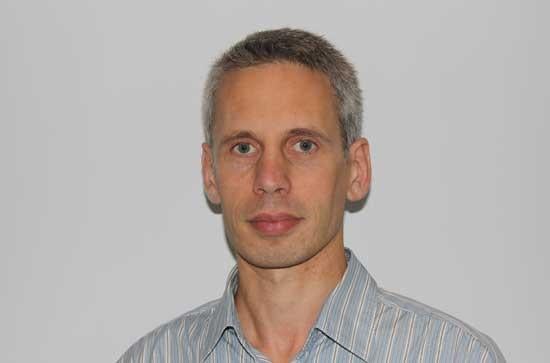
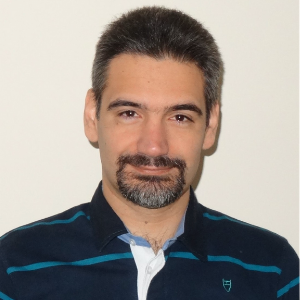
John Byabazaire is a Research Fellow at the School of Computer Science, University College Dublin (UCD). He holds a PhD in Computer Science from UCD (2024), following a BSc (Gulu University, 2013) and MSc (Waterford Institute of Technology, 2018). His research focuses on IoT systems for data collection, remote sensing, AI-driven end-to-end system management, and fog analytics. He has held academic roles including Assistant Lecturer at Gulu University (2018–2019) and teaching roles at UCD since 2019, including Occasional Lecturer and Senior Teaching Assistant. His research spans smart agriculture, data quality in IoT, and education technology. Notable contributions include frameworks for yield mapping in precision agriculture, trust-based data validation in IoT, and machine learning approaches for livestock health monitoring. He has secured grants like the National ICT Initiatives Support Program (Uganda Government, 2019–2020). Teaching includes courses on cloud computing, web development, and distributed systems. His articles emphasize IoT data quality, agricultural analytics, and educational technology innovation. He actively promotes technology adoption in African education and agriculture sectors through collaborative projects.
Dr. Barry Cardiff is an Assistant Professor in the School of Electrical and Electronic Engineering at University College Dublin (UCD), where he has been a member of academic staff since September 2013. His career spans both industry and academia, with significant experience at Nokia Mobile Phone (UK) Ltd and Silicon & Software Systems (S3 group) before returning to complete his PhD at UCD. Education: B.Eng (1992), M.Eng.Sc. (1995), PhD (2011) from University College Dublin Professional Experience: Design Engineer at Nokia (1993-2001), Systems Architect at S3 group (2001-2007, 2011-2013) Current Position: Assistant Professor at UCD School of Electrical and Electronic Engineering Dr. Cardiff's research focuses on Digital Signal Processing applications in communication systems, with particular emphasis on theoretical analysis and practical implementation. His work bridges traditional communication theory with emerging biomedical applications, especially in wearable IoT sensors. He has made significant contributions to power/complexity reduction techniques in circuit design, specifically DSP algorithms for digitally assisted analog circuits. His research program addresses critical challenges in biomedical signal processing, sensor fusion, and efficient data transmission for healthcare applications. His recent publications demonstrate a strong trend toward biomedical applications of signal processing techniques, with a focus on ECG analysis, atrial fibrillation detection, and respiratory rate estimation using multimodal sensor fusion. The research shows a clear progression from traditional communication systems toward healthcare applications, with an emphasis on edge computing solutions that reduce power consumption in wearable devices. IEEE BioCas best paper award (2024) IEEE senior member since 2019 Active reviewer for multiple IEEE journals including Transactions on Biomedical Circuits and Systems, Circuits and Systems, and VLSI Systems Dr. Cardiff has supervised numerous research projects and has been instrumental in developing curriculum for digital communications, signal processing, and wireless systems. His teaching philosophy emphasizes open, friendly, and hands-on approaches that encourage independent thinking. He coordinates multiple modules including Communication Theory, Digital Electronics, DSP Technology, and Wireless Systems, demonstrating his commitment to both theoretical foundations and practical applications of electrical engineering principles. His research group works at the intersection of signal processing, machine learning, and biomedical engineering, developing innovative solutions for wearable healthcare monitoring. Current projects focus on event-driven processing architectures, decentralized classification systems, and signal quality-aware fusion techniques that enable robust performance in noisy real-world environments.
Rem Collier is an Associate Professor in the School of Computer Science at University College Dublin (UCD). He holds a PhD in Computer Science from UCD (2001) and has held academic roles including Assistant Lecturer (2004), College Lecturer (2005–2018), and his current position since 2018. His research focuses on Multi-Agent Systems (MAS), Agent-Oriented Software Engineering (AOSE), Hypermedia MAS, Digital Twins, and applications in smart agriculture and urban simulation. He leads the CONSUS project (2022–2024) and collaborates on CAMEO (2021–2024). Education: BSc (Pure/Applied Mathematics, University of Bristol, 1994), MSc (Computation, UMIST, 1995), MPhil (UMIST, 1996), PhD (UCD, 2001). Research interests include Agent Factory Framework, ASTRA programming language, and integrating MAS with microservices. Notable achievements include the CIA System Innovation Award 2003 (ACCESS architecture) and Best Paper Awards at EMAS2020 and Mobile Learning 2006. His work spans over 150 peer-reviewed publications and grants such as HOTAIR (2004–2005) and SIFT (2008–2011). Teaching includes modules on Multi-Agent Systems, Distributed Systems, and Security. He has coordinated courses at UCD and the Joint UCD-Fudan program in Beijing and Sri Lanka. Labs/Teams: Active in Hypermedia MAS Simulation, collaborating on projects like CONSUS and CAMEO, emphasizing smart agriculture and distributed knowledge graphs.
Omer Ali is a Lecturer (Software Development) at the Department of Computing, South East Technological University (SETU) Carlow campus. His research focuses on Machine Learning, Internet of Things (IoT), and Embedded Systems, with a particular emphasis on energy optimization and sustainable technology integration. Education: PhD in Electrical Engineering (Universiti Sains Malaysia, 2006–2022) MSc in Communications Engineering (University of Manchester, 2007–2008) BSc in Computer Systems Engineering (Bahauddin Zakariya University, 2001–2005) His work explores adaptive machine learning for real-time battery state estimation, energy-efficient wireless sensor networks, and IoT middleware integration. Recent publications highlight trends in AI/IoT for sustainable smart cities and battery health monitoring in low-power electronics. Scientific Awards: 3MT Thesis Winner (2021) Ali has contributed to 23 research outputs, including a 2022 article in Sensors with 84 Scopus citations, and actively engages in peer-review activities for journals like IEEE Access. His research aligns with UN Sustainable Development Goals, particularly in education and sustainability.
Dr. Sobia Jangsher is an Assistant Professor at the School of Electronic Engineering, Dublin City University (DCU), Ireland. Prior to joining DCU, she held academic roles at the Institute of Space Technology, Islamabad (2015–2021) and Khalifa University, Abu Dhabi (2021–2023). She earned her PhD in Optimization for Wireless Communication from the University of Hong Kong (2015) and an MS in Communication Systems from NUST (2007). Her research focuses on resource allocation/optimization , AI/ML for wireless communication , and intelligent reflective surfaces (IRS) . She has authored over 50 peer-reviewed articles in top-tier journals and conferences, with recent work emphasizing IRS-assisted UAV networks, federated learning for vehicular edge computing, and secure communication protocols. Key research trends in her articles include: Integration of AI/ML techniques for dynamic resource allocation in mobile networks Optimization of IRS elements for UAV swarm communications Secure key generation using physical layer techniques Energy-efficient frameworks in heterogeneous networks (HetNets) Her teaching interests span Wireless Communication, Machine Learning, and Stochastic Processes . No awards or grants are explicitly listed in the provided materials.
Dr. Dan Grigoras is a Senior Lecturer at the School of Computer Science and Information Technology, University College Cork. He holds a PhD from Politehnica University, Bucharest, and has industry experience as a computer systems engineer. Dr. Grigoras founded the Mobile and Cluster Computing Group in 2003 and initiated the MSc programme in Software and Systems for Mobile Networks, which he coordinated until 2011. His research focuses on mobile cloud computing, ad-hoc networks, middleware, and smart city applications. Key contributions include the development of context-aware middleware systems and cloud-managed MANETs. His work integrates mobile devices, cloud resources, and IoT infrastructure to enhance user experiences in dynamic environments. Dr. Grigoras' publications emphasize mobile cloud architectures, drone-based services, and emergency response systems. Trends show a shift from theoretical distributed computing to practical applications in real-time data processing, geo-analytics, and scalable cloud frameworks. Best Paper Award, CloudTech 2018 Cloud Challenge Award, IEEE/ACM 2015 He advises PhD and MSc students and has secured grants including €72,000 from IRCSET for mobile cloud user experience research and €16,244 for healthcare mobile cloud enterprises. His lab focuses on crowdsensing for smart cities and mobile cloud middleware.
Dr. Mohit Taneja is an Assistant Lecturer at South East Technological University and former Postdoctoral Research Fellow at Walton Institute. His research develops distributed computing solutions for IoT systems. Taneja's work focuses on fog computing architectures for latency-sensitive applications, particularly in agricultural technology. His EU-funded projects implement IoT solutions for smart dairy farming, including animal welfare monitoring and climate-neutral practices. Recent publications address network function virtualization management and blockchain transaction analysis. His technical innovations include machine learning frameworks for SLA compliance and resource optimization in edge computing environments.
Rudi Villing is an Associate Professor and Programme Director for Robotics & Intelligent Devices at Maynooth University's Department of Electronic Engineering, Faculty of Science & Engineering. He is actively affiliated with the Hamilton Institute and the Assisting Living and Learning (ALL) Institute at Maynooth University. Dr. Villing holds a first class honours B.Eng. in Electronic Engineering from Dublin City University and a PhD in Engineering from NUI Maynooth. Prior to his academic career, he spent 10 years working in the telecommunications software industry, specializing in Telecommunications Management Networks and software systems architecture. His primary research focuses on autonomous mobile robotics , systems for health and wellbeing , and applications of real-time intelligent systems . With expertise spanning system design, real-time embedded software, machine learning, autonomous behavior, signal processing, communications, and psychoperception, his work bridges theoretical research with practical applications. His recent publications demonstrate strong activity in robot vision, assistive robotics for elderly care, and computational healthcare applications, particularly in Parkinson's disease rehabilitation through the BeatHealth project. Dr. Villing's scientific contributions have been supported by funding from: Science Foundation Ireland Enterprise Ireland Irish Research Council European Commission As Programme Director, he plays a key leadership role in robotics education while maintaining an active research program. His work consistently translates theoretical concepts into practical implementations, particularly evident in his research on gait rehabilitation systems and quality control applications in food engineering. His recent publications show increasing interdisciplinary work at the intersection of robotics, healthcare, and food science. Dr. Villing is deeply involved with the Hamilton Institute and the ALL Institute, contributing to interdisciplinary research initiatives focused on intelligent systems with real-world impact. His laboratory work emphasizes practical robotics applications that address tangible human needs, especially in healthcare contexts where technology can improve quality of life for vulnerable populations.
Aamir Akbar serves as an Assistant Professor in the Department of Computer Science & Information Systems at Abdul Wali Khan University Mardan (AWKUM), where he also co-directs both the AWKUM AI Lab and AWKUM Robotics initiatives while coordinating final year projects. His academic journey culminated in a PhD from Aston University, Birmingham, UK, with research focused on energy-efficient methods for hybrid mobile cloud computing. His educational background includes a PhD in Computer Science from Aston University (2015-2019, awarded February 2020), where his dissertation explored energy-efficient approaches for hybrid mobile cloud computing systems. Dr. Akbar's research spans multiple cutting-edge domains in computer science, with particular emphasis on Artificial Intelligence , Cloud and Fog Computing , Internet of Things , and Software Defined Networks . His multidisciplinary approach combines evolutionary computation, multi-objective optimization, and machine learning to develop resource-efficient intelligent systems. His work frequently addresses challenges in Cyber-Physical Systems, Mobile-Cloud Computing, and IoT/IoV applications, demonstrating strong practical relevance to real-world problems. Analysis of his recent publications (2021-2024) reveals a clear research trajectory toward increasingly sophisticated AI applications in networking and distributed systems. His work shows strong focus on reliability, energy efficiency, and security across multiple domains including medical IoT, smart cities, and industrial automation. The growing citation impact (612 total citations, h-index: 14) demonstrates increasing recognition of his contributions to these fields. Dr. Akbar maintains active presence in the research community with 19 total publications showing accelerating output in recent years (6 in 2021, 2 in 2022, 5 in 2023, and 2 in 2024). His Google Scholar profile reflects substantial impact with an h-index of 14 and i10-index of 16. As an educator and researcher, Dr. Akbar brings both academic rigor and industry experience to his role. His technical expertise spans the full stack of modern computing systems, from frontend development (HTML, CSS, Angular, React) through backend frameworks (Flask, Django, Node.js) to database systems (MySQL, PostgreSQL, MongoDB) and cloud infrastructure (AWS, Kubernetes, Docker). This comprehensive skill set enables him to bridge theoretical research with practical implementation. He leads research initiatives through the AWKUM AI Lab and AWKUM Robotics, providing students with opportunities to engage in cutting-edge projects that combine theoretical foundations with real-world applications. His GitHub activity shows ongoing engagement with AI and systems development projects, including repositories focused on neural networks, Python programming, and network simulation.
Kouros Zanbouri is a CONNECT PhD researcher at University College Cork , supervised by Prof. Dirk Pesch and Prof. Cormac Sreenan. Education : BSc in Information Technology (IT) engineering (2016) MSc in IT engineering – specialization in Computer Networks (2018) Research Interests : Wireless Time-Sensitive Networking (TSN) Cloud and Fog Computing Internet of Things (IoT) Engineering Optimization Metaheuristics Research Trends : His recent publications focus on integrating TSN with 5G for industrial settings, optimizing blockchain-based IoT systems using bio-inspired algorithms, and designing energy-efficient IoT solutions for industrial applications. His work spans theoretical modeling, algorithm development, and real-world implementation in smart cities and dependable networks. Academic Contributions : Guest reviewer for multiple journals Active in interdisciplinary research combining IoT, optimization algorithms, and network engineering
Prof. Gabriel-Miro Muntean is a Professor at the School of Electronic Engineering, Dublin City University (DCU), Ireland. He holds a Ph.D. (2003) from DCU and B.Eng./M.Sc. degrees in Software Engineering from Politehnica University of Timisoara, Romania. He co-directs the DCU Performance Engineering Laboratory and is a Principal Investigator with Insight and Lero National Research Centres. His research focuses on multimedia networking, wireless/energy-aware communications, and technology-enhanced learning. Education: B.Eng. Software Engineering (Politehnica University of Timisoara, 1996) M.Sc. Software Engineering (Politehnica University of Timisoara, 1997) Ph.D. Electronic Engineering (DCU, 2003) Research Interests: Quality-oriented adaptive multimedia streaming Energy-efficient networking Personalized learning technologies 5G/6G network architectures Edge computing optimization Publications & Grants: Over 450 papers, 4 books, and 26 book chapters (H-index=53) EU Horizon 2020 projects: Coordinator of NEWTON, Lead in TRACTION Awards: IEEE Fellow (202X) IEEE Broadcast Technology Society Fellow Advising & Labs: Supervised 25 PhD students and 15 postdocs Co-director of DCU Performance Engineering Lab
Dr. Mingming Liu is a tenured Assistant Professor in the School of Electronic Engineering at Dublin City University (DCU). Prior to this, he served as a data scientist, applied researcher, and H2020 project lead (5G-Solutions) at IBM Ireland Lab, focusing on machine learning and optimization for industrial challenges. Earlier, he held postdoctoral roles at University College Dublin (UCD) within the Control Engineering and Decision Science Research Group, contributing to EU and SFI-funded projects like Green Transportation and Networks (SFI) and Enable-S3 (H2020). His work emphasizes collaborations with academia and industry. Research interests include Machine Learning, Deep Learning, Reinforcement Learning, Federated Learning, Data Science, and Distributed Control, among others. He has applied these methodologies to IoT, Edge/Fog/Cloud Computing, Smart Cities, and Smart Healthcare. His contributions span mathematical modeling, optimization, and systems engineering. Notable projects include leadership in the EU-funded 5G-Solutions and contributions to Green Transportation and Enable-S3. His research bridges theoretical advancements with practical industry applications, particularly in smart infrastructure and transportation systems.
Stefan Weber is a Professor at the Trinity College Dublin , affiliated with the School of Computer Science & Statistics . His research spans Information-Centric Networking (ICN) , Security & Botnets , and Mobile Ad hoc Networks (MANETs) , with a focus on optimizing communication in dynamic environments. Exploiting ICN for data-centric infrastructure Security challenges in distributed systems Protocol design for mobility and disconnection His recent publications address topics in networking , security , and IoT , though some interdisciplinary works touch on epidemiology and genetics . While no formal awards are listed, his collaborations include the EU FP7 N4C Project . Stefan has supervised students including Andriana Ioannou (caching in ICN), Amber Higgins (container-based honeypots), and Joseph O'Hara (network telescopes), among others.
Elias Tragos is a Research Fellow at the Insight Centre for Data Analytics, affiliated with University College Dublin (UCD), Ireland. His expertise spans wireless and mobile communications, cognitive radios, network architectures, fog computing, and security/privacy domains. PhD in Wireless Communications Master’s in Business Administration (MBA) in Techno-Economics Dr. Tragos has led or participated in numerous EU and national research projects, serving as researcher, Technical Manager, and Project Coordinator. His work has resulted in over 70 peer-reviewed publications with 1500+ citations (h-index 18).