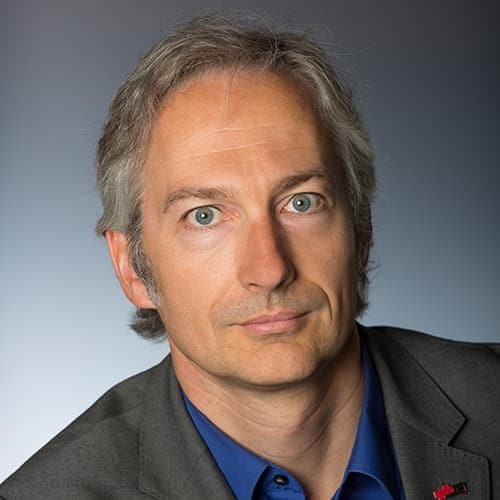
Nicola Dragoni is a Professor in Cybersecurity Engineering at the Department of Applied Mathematics and Computer Science, Technical University of Denmark (DTU). As Deputy Director and Head of Section, he leads research initiatives focused on securing emerging technologies. Key Research Areas : Internet of Things (IoT) security, machine learning for intrusion detection, cyber-deception techniques, fog computing, malware analysis, blockchain applications, and wireless sensor network security. Supervision : Actively supervising multiple PhD students in projects related to cyber-deception, moving target defense, and bio-inspired security mechanisms. Recent Publications : Contributions to IoT honeypots, drone identification via RF signals, passkey adoption challenges, and cyber range taxonomies.
Henrik Schønau Fog is an Associate Professor and Deputy Head of Department at Aalborg University's Department of Architecture, Design and Media Technology, part of The Technical Faculty of IT and Design. His research focuses on interactive storytelling, game design, and educational technology, with a particular emphasis on adaptive narratives, player engagement, and serious games. He leads initiatives such as the Center for Applied Game Research (CEAGAR) and the SMILE Lab, exploring real-time filmmaking, virtual reality, and gamification in education. His work bridges theory and practice, addressing challenges in interactive media, climate awareness through games, and improving learning outcomes via purposive game development. Key projects include AGAVE (AI-Driven Game Adaptation for Virtual Environments) and ViZARTS (Visualization and Adaptive Real-Time Storytelling). Fog has authored over 60 publications, with notable contributions in adaptive narratives, emotional response analysis, and educational game frameworks. He has received prestigious awards, including Best Paper recognitions at HCI in Games and Interactive Storytelling conferences. His teaching portfolio emphasizes problem-based learning and hybrid educational models, fostering technical and collaborative skills through game development courses. Fog collaborates internationally, engaging with institutions like Arizona State University and contributing to media innovations showcased in film, virtual reality, and interactive installations. His research also extends to measuring workplace well-being via wearable technology and enhancing museum experiences through immersive VR interfaces.
Paul Pop is a Professor at the Department of Applied Mathematics and Computer Science, Technical University of Denmark (DTU). He holds the position of Professor within the Embedded Systems Engineering group at DTU Compute. His academic journey includes a Ph.D. in Computer Systems from Linköping University, Sweden (2003), followed by roles as an Assistant Professor there before joining DTU in 2006. Dr. Pop's research focuses on systems engineering methodologies for embedded and cyber-physical systems, with emphasis on modeling, analysis, optimization, and real-time guarantees. His work addresses challenges in time-sensitive networking (TSN), automotive systems, industrial automation, and fog computing. Key application areas include safety-critical systems, mixed-criticality architectures, and sustainable industrial IoT solutions aligned with UN SDGs. He leads major research projects such as G3C (Green Computing & Communication Continuum), TRANSACT (Safety-Critical Cyber-Physical Systems), and AgroRobottiFleet (Agricultural Robotics). His contributions span 194 publications in journals/conferences and 31 active/completed projects, emphasizing interdisciplinary collaboration. Dr. Pop advises doctoral students in embedded systems and serves as Principal Investigator on EU-funded initiatives. His technical expertise includes TSN configuration tools (TSNConf), fog computing platforms (FORA), and microfluidic biochip design. He actively contributes to industry standards through IEEE 802.1 TSN working groups and collaborates internationally with institutions like Nordic Innovation and EU Horizon programs.
Edlira Dushku is a Tenure Track Assistant Professor at the Department of Electronic Systems, Aalborg University (Denmark), affiliated with the Cyber Security Group. She holds a PhD in Computer Science from Sapienza University of Rome and has held postdoctoral positions at DTU Compute, Denmark. Her research focuses on IoT Security, Cybersecurity, Blockchain, and Fog Computing, particularly in remote attestation and hardware security. Education: 2023: University Pedagogical Programme, Aalborg University 2016–2020: PhD in Computer Science, Sapienza University of Rome 2013: MSc in Computer Science, University of Tirana 2010: BSc in Computer Science, University of Tirana Research Interests: Dr. Dushku specializes in securing IoT devices and distributed systems through remote attestation, blockchain applications, and machine learning-based security. She explores challenges in fog computing, PUF protection, and adversarial defense mechanisms. Her work emphasizes trust management and public verifiability in IoT ecosystems. Teaching: She teaches courses like Security in IoT and Cloud Architectures (MSc) and Computer System Security (BSc) at Aalborg University. Previously, she was an academic supervisor for students with special needs at DTU. Grants & Projects: Coordinator of the EUopStart proposal for MSCA (2024) Guest editor for MDPI Sensors Special Issue on IoT Security Program chairs for multiple conferences (e.g., FMEC 2021) Lab & Collaborations: Collaborates with industry partners like Terma and Develco Products, focusing on applied IoT security solutions. Her work bridges academia and industry through co-supervised theses and real-world system implementations.
Mieszko Jan Ferens Michalek is a Researcher at Aalborg University's Department of Electronic Systems within The Technical Faculty of IT and Design. His work focuses on cybersecurity, machine learning, and edge computing with applications in IoT and cloud-edge networks. Education: Master in Telecommunication Engineering (2022), University of Valladolid Bachelor in Telecommunication Engineering Technologies (2020), University of Valladolid Research Interests: Explores machine learning for secure IoT systems, PUF-based hardware authentication, adversarial attack modeling, and simulation environments for cloud-edge networks. Specializes in integrating quantum-resistant cryptography into IoT infrastructure through projects like QUCISAFE. Projects: QUCISAFE (2025-2027) : Develops post-quantum cryptography and QKD for critical infrastructure in cloud-edge-IoT systems. IoTalentum (2020-2025) : Advances IoT training and machine learning for secure IoT ecosystems. Key Contributions: Developed predictive adversarial systems to model attackers targeting PUFs, created the STEROCEN simulation tool for cloud-edge resource management, and proposed MetaLung architecture for secure metaverse healthcare systems.
Sajad Homayoun is a Tenure Track Assistant Professor at Aalborg University's Department of Electronic Systems within The Technical Faculty of IT and Design. His research focuses on integrating Artificial Intelligence with cybersecurity to develop advanced solutions for threat detection and mitigation. PhD in Computer Science Specialization in Cybersecurity & Machine Learning His technical expertise spans: AI-driven intrusion detection systems Adversarial machine learning (AML) Explainable AI (XAI) for security transparency Time series and graph analysis MLOps implementation with MLflow Python development using pandas, scikit-learn, and TensorFlow Research trends from his publications show strong emphasis on: Combating phishing attacks through ML Applying deep learning to crowdsensing trustworthiness Failure prediction in industrial systems Extracting behavioral patterns from ransomware Blockchain-based security applications He teaches Network Security courses during fall semesters and maintains active collaborations with researchers across Denmark and international institutions.
Sokol Kosta is an Associate Professor in the Department of Electronic Systems at the Technical Faculty of IT and Design, Aalborg University, Copenhagen, Denmark. His research focuses on edge computing, mobile cloud computing, cybersecurity, privacy, and the societal impact of digital technologies, particularly in public service media and data protection regulation. He is affiliated with the Cyber Security Group and contributes to initiatives such as 'AI for the People'. His research interests include edge and fog computing, computation offloading, Internet of Things (IoT), Internet of Floating Things, GPGPU acceleration, blockchain-based systems, privacy-preserving technologies, GDPR compliance, and public service media digital transformation. His work bridges technical innovation with policy and societal implications. His publications span from 2010 to 2025, with a strong presence in high-impact venues such as IEEE INFOCOM, IEEE Transactions on Mobile Computing, and The Web Conference. The articles reflect a consistent focus on mobile and edge computing systems, performance modeling, security, and privacy, increasingly incorporating societal and policy dimensions, especially post-GDPR. Trends include computation offloading optimization, decentralized systems, and empirical studies on web tracking and data governance. He has received 14 prizes and recognitions for his research contributions, though specific awards are not detailed in the provided text. He has supervised PhD students, including Jannick Kirk Sørensen, and has been involved in significant research projects such as the 'European Open Web Privacy Measurement' project (2017–2020), which examined GDPR's impact on third-party web services. He has presented his work internationally, including at The Web Conference 2019 in San Francisco, and has been featured in media coverage discussing data privacy compliance of Danish public websites. His lab and team activities are centered around the Cyber Security Group and collaborative projects involving distributed computing, edge AI, and privacy measurement.
Aishah Hussain is a Researcher affiliated with Aalborg University's Technical Faculty of IT and Design, specifically within the Department of Architecture, Design and Media Technology. She contributes to the Media Innovation & Game Research (Me-Ga) group in Copenhagen, focusing on applied research in real-time motion capture and virtual reality systems. Research interests: Autism Spectrum Disorder interventions via VR, adaptive storytelling, visual feedback mechanisms Key projects: ViZARTS (Visualization and Adaptive Real-Time Storytelling for Film, Animation, and Games) Collaborations: Fog, H. S. (PI), Larsen, B. A., Reng, L., Bruni, L. E., Selvig, D. R., and other interdisciplinary researchers Her work combines mixed reality technologies with behavioral studies, emphasizing real-time interaction and visualization for creative industries and therapeutic applications. Two peer-reviewed publications (2018-2019) demonstrate her contributions to VR-based social skills training and motion capture analysis. Current affiliations include campus Copenhagen (A.C. Meyers Vænge 15, B12, 2450 København SV, Denmark). Contact: aihu@create.aau.dk
Bjarne Fog is an Academic Researcher at the University of Copenhagen's Department of Geosciences and Natural Resource Management, specializing in the Geography, People and Processes research group. His work focuses on applying advanced geospatial technologies to address critical environmental and urban challenges, particularly in developing regions. His research interests span Geography , Remote Sensing , and Environmental Science , with particular expertise in using UAV (drone) technology and LiDAR for urban flood risk assessment. His work demonstrates strong interdisciplinary collaboration across multiple continents, with significant research conducted in Africa (particularly Ghana, Burkina Faso, Niger, and Tanzania) and the Pacific Islands. The research articles reveal a clear progression toward increasingly sophisticated geospatial technologies, with recent work (2021-2022) focusing on UAV-LiDAR applications for urban flood modeling in Accra, Ghana. Earlier work examined broader environmental change in the Sahel region, land use trajectories in Niger, and shifting cultivation systems in the Pacific. His publications consistently bridge technical geospatial methods with practical applications for urban planning and climate adaptation. Fog has produced substantial research output with 31 documented publications including 18 journal articles, 5 posters, 2 conference abstracts in proceedings, and various other research formats. His work has been cited extensively, with his 2022 paper on UAV-LiDAR flood modeling accumulating 58 Scopus citations and his 2016 Sahel environmental change paper receiving 37 citations. His collaborative network is extensive, with research referenced in multiple policy sources and substantial academic engagement (125+ readers on Mendeley for recent work). While specific grant information isn't provided in the available text, his research demonstrates consistent funding support for international fieldwork and advanced technology applications. Fog's work is characterized by its practical application to real-world environmental challenges, particularly in urban settings facing climate change impacts. His research group focuses on integrating cutting-edge geospatial technology with community engagement approaches to develop more resilient urban environments.
Kay Römer is Professor and Director of the Institute for Technical Informatics at Graz University of Technology, Austria. He previously held a professorship at the University of Lübeck, Germany, and was a senior researcher at ETH Zurich, where he obtained his doctorate in computer science in 2005. His research focuses on networked embedded systems, particularly in the domains of Wireless Sensor Networks, Internet of Things (IoT), and Cyber-Physical Systems. Key areas include wireless networking, operating systems, programming models, dependability, and deployment methodologies for large-scale embedded networks. The most recent publications reflect a consistent trend in dependable and scalable IoT systems, with emphasis on wireless protocols, fault tolerance, real-time operation, and system robustness. His work bridges theoretical innovation with practical deployment, often involving cross-layer design and energy efficiency. Associate Editor, IEEE Transactions on Mobile Computing Associate Editor, IEEE Transactions on Computers Program Co-Chair, ACM SenSys 2011 Program Co-Chair, ACM/IEEE IPSN 2013 Coordinator, EU FP7 FIRE Project RELYonIT Coordinator, TU Graz Excellence Project "Dependable Internet of Things" Kay Römer has advised multiple research teams and coordinated major international projects funded by the Swiss National Science Foundation, European Commission, German Science Foundation, German Federal Ministry of Education and Research, and the Austrian Federal Ministry of Science, Research, and Economy. He has delivered invited keynote talks and co-directed five international summer schools, demonstrating strong leadership in research dissemination and mentoring. He leads research activities within the Institute for Technical Informatics at TU Graz, focusing on dependable and secure IoT systems, with active collaborations across Europe and industry partners.
Eder Ollora Zaballa is a Senior Scientific Officer and researcher at the Technical University of Denmark (DTU), specifically affiliated with DTU Fotonik. His expertise spans software-defined networking, control and data plane programming, and next-generation network technologies with applications in telecommunications and transportation systems. His educational journey began with a Bachelor's degree in Telecommunication Engineering from the University of the Basque Country (EHU) in Bilbao, Spain, followed by a Master of Science in Telecommunication Engineering at DTU. He completed his PhD at DTU in 2022 with the thesis "Control and Data Plane Programming-driven SDN Management and Operation: A Top-Down Approach." Zaballa's research focuses on cutting-edge networking innovations including Software-Defined Networking (SDN), P4 programmable data planes, Network Function Virtualization (NFV), and their practical implementations. His work bridges theoretical frameworks with real-world applications, particularly in railway communication systems, cellular networks, and energy-efficient networking solutions. He has made significant contributions to open-source networking through the Open Networking Foundation ONOS community since 2016. His publication record shows a clear trajectory toward greener networking solutions, performance optimization of programmable hardware, and integration of SDN technologies in heterogeneous environments. Recent work demonstrates expertise in latency profiling of P4-based hardware, railway communication systems, and green cellular networks, with practical implications for network reliability, efficiency, and flexibility across multiple industries. Active contributor to European projects including Bandwidth-on-Demand (BoD), SDX-L2, NGPaaS, X2Rail-3, and X2Rail-5 Regular peer reviewer for Sensors journal and European Conference on Computer Systems Guest lecturer on SDN management, programmable networks, and P4 programming at multiple institutions Zaballa maintains strong international collaborations with research groups including the I2T Research Group at the University of the Basque Country, Networks and Intelligent Systems group at the University of Alcalá, and Fundació i2CAT. His work contributes to UN Sustainable Development Goals through advancements in green communications and efficient network infrastructure.
Anne Fog Lomholt serves as a Clinical Associate Professor in the Department of Clinical Medicine at the University of Copenhagen's Faculty of Health and Medical Sciences, specializing in Otorhinolaryngology. Based at Blegdamsvej 3, Copenhagen N, she maintains dual affiliation with the University of Copenhagen and the Capital Region of Denmark (Region Hovedstaden), as evidenced by her regionh.dk email and clinical hospital address. Her research centers on advancing diagnostic and surgical methodologies in head/neck oncology, with particular emphasis on ultrasound applications for thyroid nodule characterization and intraoperative tumor margin assessment. Current investigations include human-AI collaboration frameworks for ultrasound diagnostics, comparative needle techniques in fine-needle aspiration, and HPV-driven cancer detection protocols. Her work bridges clinical practice with technological innovation, notably in transoral robotic surgery for oropharyngeal carcinomas and thyroid cancer management. Recent publications demonstrate leadership in multicenter randomized controlled trials (2025) addressing critical gaps in thyroid nodule biopsy standards and surgical oncology outcomes. Her clinical trial on spinal versus conventional needles has already influenced practice through citation in clinical guidelines, while her 2024 work on HPV detection in unknown primary cancers establishes new diagnostic paradigms. The research portfolio consistently targets improved diagnostic accuracy and surgical precision in otolaryngology. No scientific awards or student mentoring records were documented in the source material. Similarly, specific grant funding details, laboratory facilities, or dedicated research team structures remain unreported, though her publications indicate extensive national collaborations across Danish medical institutions.
Mustafa Özger is a Tenure Track Assistant Professor at the Department of Electronic Systems within the Technical Faculty of IT and Design at Aalborg University, Denmark. His research focuses on advanced communication systems, including 6G networks, non-terrestrial networks (NTN), unmanned aerial vehicles (UAVs), cognitive radio systems, and ultra-reliable low-latency communication (URLLC). He has contributed significantly to edge computing and networking, with a particular emphasis on integrating sensing capabilities with communication systems. His work also addresses challenges in network architecture design, handover management, and deep reinforcement learning applications for improving connectivity and reliability. Key research interests include airspace and network integration for future communication systems, signal classification using neural networks, and low-latency solutions for multi-connectivity scenarios. He has published extensively, with over 73 peer-reviewed articles since 2013, covering topics from cognitive radio networks to satellite constellations. His research often explores the intersection of machine learning and communication systems, with practical applications in IoT, vehicular networks, and underwater acoustic communications. Özger’s recent work highlights his leadership in emerging 6G technologies, particularly in adaptive network architectures that combine terrestrial and non-terrestrial elements. He has also pioneered methods for minimizing handover delays in NTN environments using Open RAN functional splits and developed denoising techniques for localization systems using autoencoder algorithms.
Gitte Moos Knudsen is a Clinical Professor at the Department of Clinical Medicine, Faculty of Health and Medical Sciences, University of Copenhagen, and serves as Chair of the Neurobiology Research Unit at Copenhagen University Hospital, Rigshospitalet. With over 30 years of experience, she is a translational neurobiologist and clinical neurologist whose research focuses on brain disease mechanisms and responses to neuromodulatory interventions. Her research interests span neurology, brain research, neuropsychopharmacology, PET imaging, fMRI, and translational neuroscience, with particular expertise in serotonin research, psychedelics, alcohol use disorder, depression, and epilepsy. She utilizes advanced imaging techniques including PET brain scanning to image brain receptors and fMRI to evaluate drug effects on brain hemodynamics and functional connectivity. Her recent publications (2023-2025) demonstrate a strong focus on psychedelic research, serotonin receptor mapping, depression treatment mechanisms, and addiction neuroscience. These works reveal consistent themes in neuromodulation, receptor occupancy studies, and the application of advanced imaging techniques to understand brain function in health and disease. Mogens Fog Prize 1993 Synthelabo Recherche Award 1994 Anne Bochardt Prize 1999 Member of the Royal Danish Academy of Sciences and Letters since 2004 Carlsberg Foundation Researcher Award for Sciences, 2014 Kuhl-Lassen Award 2024 As leader of the Neurobiology Research Unit (NRU) since 2004, she oversees approximately 120 staff members and affiliates, publishes around 60 peer-reviewed papers annually, and manages an annual budget of roughly $5 million. She serves as Principal Investigator of the strategic alliance BrainDrugs since 2019, funded by a Lundbeck Foundation grant of 2.1 million euros. Her research institute supervises about 30 national and international pregraduate and PhD students each year. She leads the NRU laboratory focused on precision medicine approaches to identify optimal treatments for patients with major depressive disorder or epilepsy, working within the BrainDrugs alliance. Her team employs sophisticated molecular imaging techniques and maintains strong international collaborations across multiple research consortia.