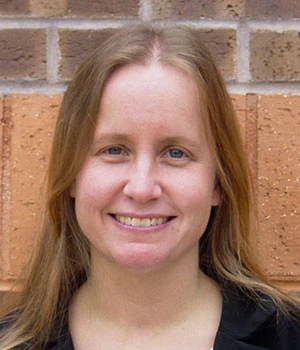
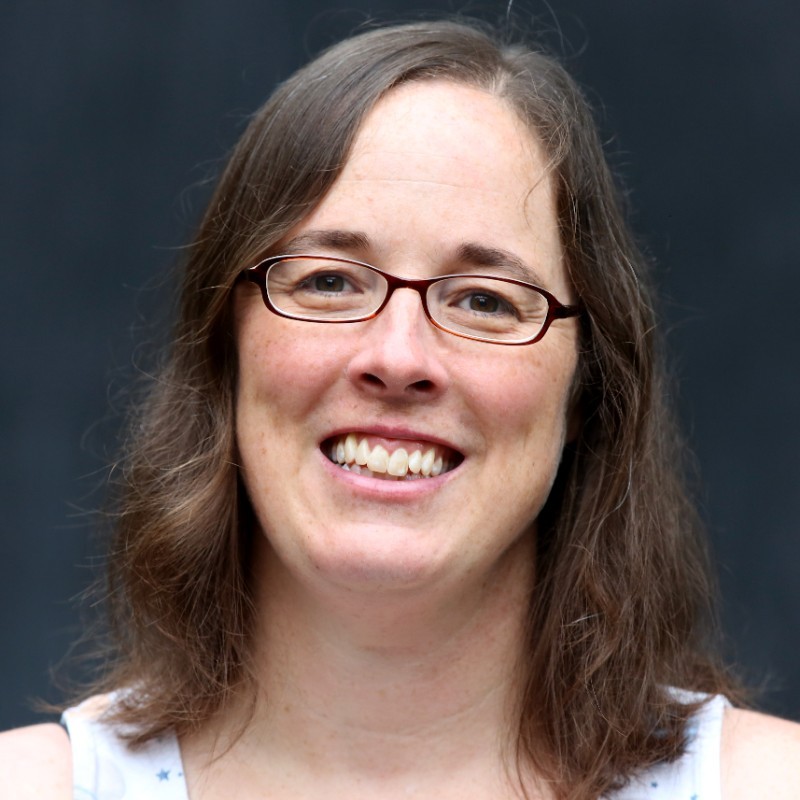
Lindsay McHenry is Professor and Department Chair of Geosciences at the University of Wisconsin-Milwaukee. She holds a Ph.D. from Rutgers University, an M.S. from Dartmouth College, and a B.S. from Dartmouth College. Her research focuses on using volcanic ash composition to correlate archaeological sites in East Africa and identifying terrestrial analogues for Martian surface minerals. Her research interests include tephrostratigraphy for human evolution studies, Mars geology analogs, sulfate mineral formation processes, and paleolimnology of saline-alkaline systems. Recent publications demonstrate strong focus on Martian analog studies using terrestrial environments (Iceland, East African lakes), mineral mapping with remote sensing/ML techniques, and paleolake reconstruction. Work increasingly incorporates drone technology and machine learning for planetary exploration applications.
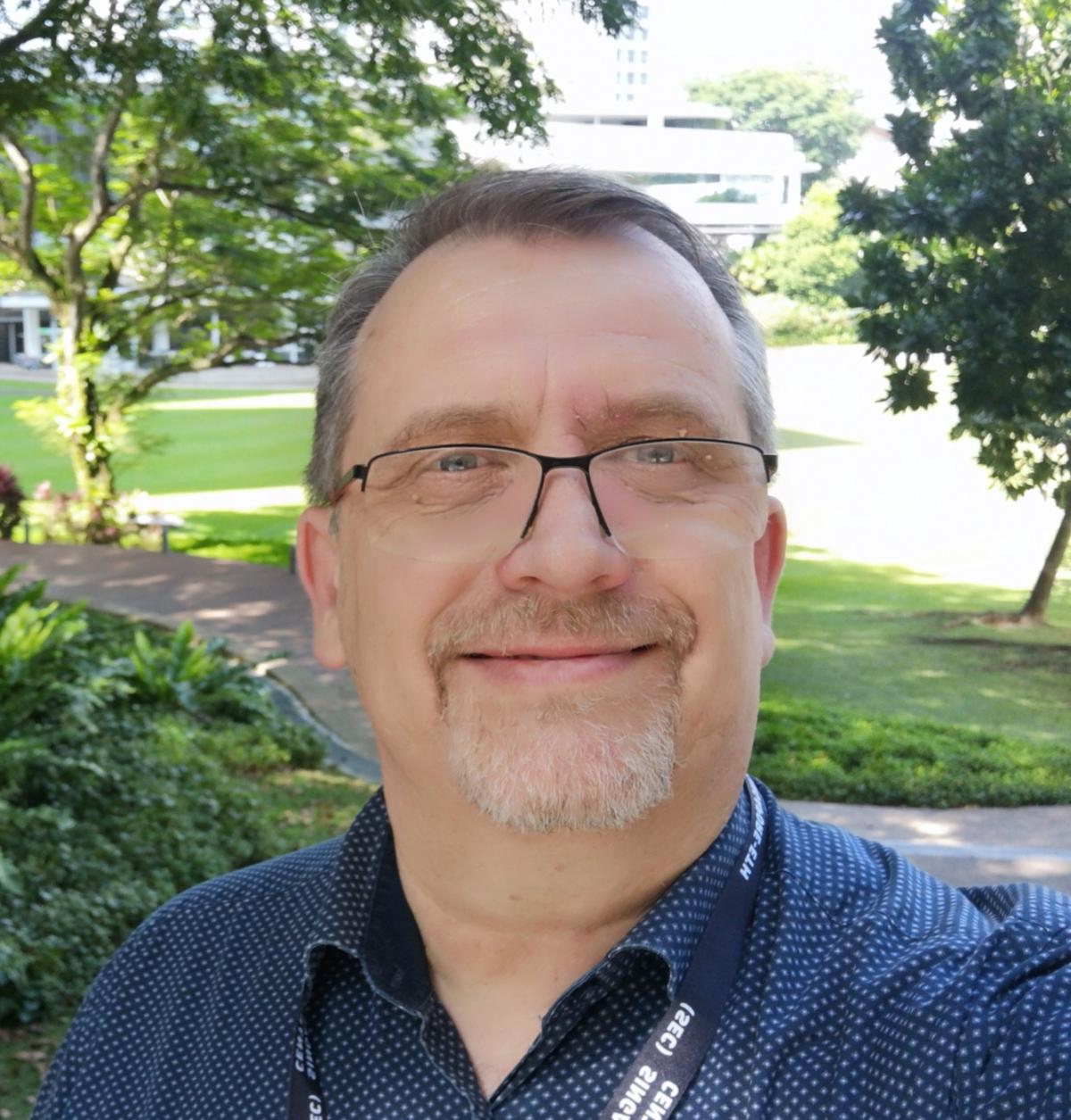
Diego Riveros-Iregui is a Professor in the Department of Geography at the University of North Carolina at Chapel Hill, recognized for pioneering research in ecohydrology and biogeochemistry. His work focuses on water-carbon-nitrogen interactions in tropical ecosystems, urban-rural gradients, and climate-impacted watersheds, employing high-frequency monitoring and advanced modeling techniques to address critical environmental challenges. His research interests center on tropical ecohydrology, particularly in Andean páramos and Galápagos Islands, examining carbon cycling in peatlands, nitrogen dynamics across land-use gradients, and stormwater impacts on urban streams. He integrates stable isotope analysis, machine learning, and field observations to study how geomorphology and climate variability regulate biogeochemical fluxes, with emphasis on vulnerable ecosystems facing anthropogenic pressures. Analysis of his 15 most recent publications (2021-2025) reveals dominant trends in high-resolution watershed monitoring, tropical carbon emissions, and urban hydrology. Key methodological innovations include machine learning for water use estimation, isotope-based tempestology, and bias correction in contaminant plume mapping, demonstrating interdisciplinary approaches spanning environmental engineering, climatology, and ecosystem science. Professor Riveros-Iregui has received the following scientific awards: Presidential Early Career Award for Scientists and Engineers (PECASE), the U.S. government's highest honor for early-career scientists, nominated by the National Science Foundation As a PECASE awardee, he leads NSF-funded research programs examining watershed processes across tropical and temperate regions. His collaborative work includes contributions to the EU-funded WELL CARE consortium on water security, though specific grant details and student mentorship records aren't documented in the source material. Current research priorities involve scaling point observations to watershed-level fluxes and assessing climate change impacts on island hydrology. While no dedicated laboratory is specified, his field studies leverage international partnerships in Ecuador's páramos and the Galápagos archipelago, focusing on microclimate-soil microbiome interactions and sustainable water resource management in high-elevation ecosystems.
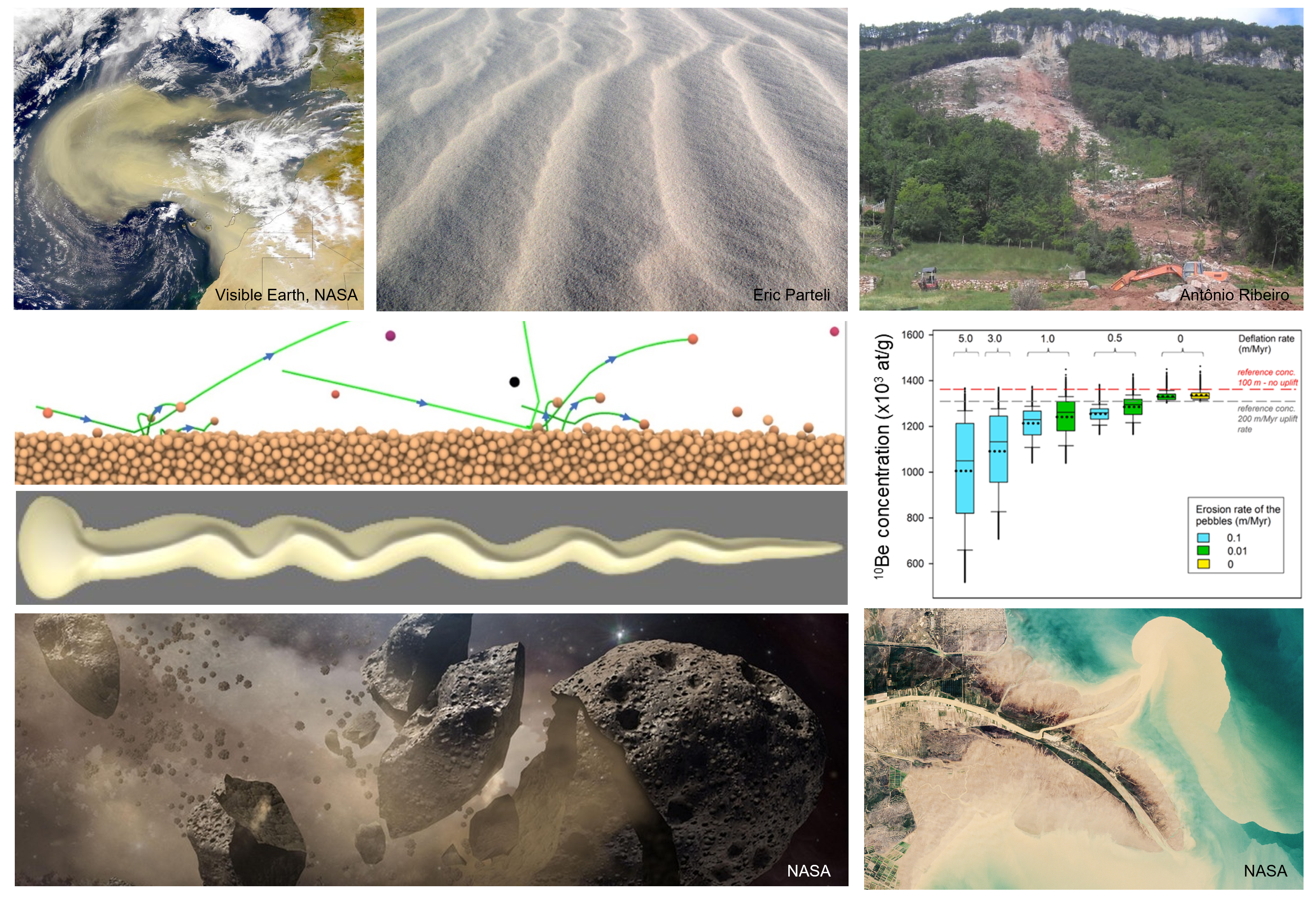
Dr. Eric Parteli is a Heisenberg Group Leader at the Faculty of Physics, University of Duisburg-Essen , with affiliations to the University of Cologne (Computational Geosciences) and The University of Alabama . He leads research on Earth surface particulate materials and their dynamics under wind, fluvial processes, and gravitational forces. Current and former students include PhD candidates, Master/Bachelor candidates, and research assistants like Cong Jiang , Maria Determann , Mateusz Kryger , and Joel Jankowiak . His group develops computational tools to model particle interactions and feedbacks with geomorphology, biosphere, and atmosphere across scales, with applications in climate science, planetary geophysics, and natural hazard risk assessment. Key research themes include aeolian processes , hydrological modeling , granular material behavior , and coupled Earth surface systems . No scientific awards are explicitly mentioned in the provided texts. His lab operates from Room MG 364 at the University of Duisburg-Essen and collaborates with the Computational Geosciences department at the University of Cologne. Recent publications highlight anomalous scaling in sand transport , angle of repose modeling , and regional hydrological systems in arid environments.
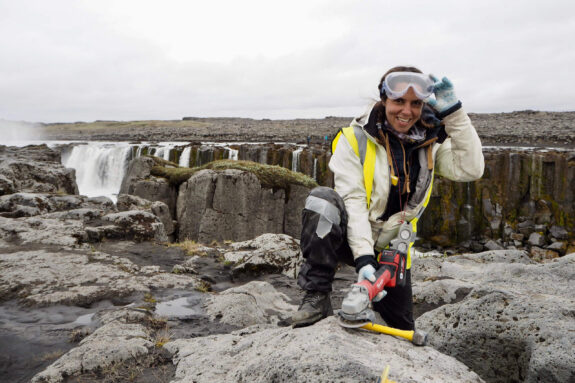
Gaia Stucky de Quay is an Assistant Professor of Earth and Planetary Sciences at the Massachusetts Institute of Technology (MIT), appointed to the Department of Earth, Atmospheric and Planetary Sciences (EAPS) in 2023. She holds the Peter Puster (1995) and Paula Waschbusch (1994) Career Development Professorship, effective January 1, 2025. Her research investigates the driving forces behind the formation, evolution, and decay of planetary surfaces across the solar system, with particular focus on Mars and Earth analogs. Dr. Stucky de Quay's research interests span planetary surface processes including fluvial systems, lakes & hydrology, volcanic terrains, glaciated landforms, icy satellites, uplift & dynamic support, climate-land links, and landscape evolution. She employs a multi-faceted approach combining theoretical studies, field work, remote sensing, and laboratory analyses to quantify the interactions between fluvial erosion, climate, and tectonics across various spatial and temporal scales. Her work seeks to understand whether Mars had conditions suitable for life by examining ancient river systems and lake formations. Her publication record demonstrates expertise in Martian paleoclimate studies, with significant contributions to understanding precipitation constraints from paleolakes on Mars and the persistence of climate-driven runoff in Mars' history. She also conducts important research on Earth's post-glacial landscape evolution, particularly in Iceland, which serves as an analog for understanding Martian surface processes. Early Career Grant, British Society for Geomorphology (2020) Ralph Brown Expedition Award, Royal Geographical Society (2020) Dr. Stucky de Quay's research bridges Earth and planetary sciences, with implications for understanding both planetary habitability and natural hazards on Earth. Her lab investigates volcanic islands as accessible analogs for Martian terrain, examining how climate shapes landscapes over geological time. She is building a research group focused on planetary analog studies that transfers knowledge between different planetary bodies while integrating multiple techniques from field work to computational analysis.
Peter Molnar is a Professor at ETH Zürich's Department of Civil, Environmental and Geomatic Engineering, where he leads research in hydrology, geomorphology, and environmental engineering. His work spans river basin dynamics, sediment transport, precipitation modeling, and climate-water interactions, with field sites focused on Alpine systems. His research interests center on river basin water and sediment dynamics , precipitation analysis and stochastic modeling , fluvial systems including river networks and riparian zones , and geomorphic processes in mountain streams . Key projects include the Maggia River Experimental Site, basin sediment cascade modeling, and hydroclimatic analysis of rainfall intensity-temperature relationships. His publication record shows consistent high-impact work in journals including Nature , Nature Climate Change , and Water Resources Research , with recent focus on climate change impacts, sensor development, and sustainable agriculture. Golden Owl Award for best teaching (2011) Organizer of international workshops on geomorphology complexity and urban precipitation Patron of CometX initiative Molnar actively mentors PhD students including current candidates working on droughts in Ethiopia, Alpine Rhine sediment budgets, and mountain ecohydrology. His research is supported by Swiss National Science Foundation grants, ETH funding, and international collaborations. He leads experimental work at the Maggia River site and develops warning systems for rainfall-triggered landslides.
Catherine Neish is an Associate Professor in the Department of Earth Sciences at The University of Western Ontario. She serves as the Associate Director of Research for Western Space and is a Co-Investigator on NASA's Dragonfly mission to Titan. Her research focuses on planetary radar observations, impact cratering processes, and the geological evolution of planetary surfaces, particularly on the Moon, Titan, and other Solar System bodies. Ph.D. in Planetary Sciences, University of Arizona (2008) B.Sc. in Combined Honours Physics and Astronomy, University of British Columbia (2004) Her recent publications highlight studies on lunar impact crater thermophysics, Titan's impact melt dynamics, and radar-based analyses of planetary surfaces. She has contributed to missions including Lunar Reconnaissance Orbiter (Mini-RF), Cassini RADAR, and Dragonfly. Scientific Awards: College of New Scholars, Royal Society of Canada (2021) Early Researcher Award, Ontario (2017) Minor Planet 16972 Neish (2017) AGU Ron Greeley Award (2014) NASA Postdoctoral Fellowship (2012) NASA Group Achievement Award (2010) NSERC Postgraduate Scholarship (2005-2008) Julie Payette-NSERC Research Scholarship (2004-2005) Dr. Neish supervises a dynamic lab with current and former students investigating planetary geology, impact cratering, and remote sensing. Her work bridges field studies (e.g., Earth analogs), laboratory experiments, and spacecraft data analysis.
Ralf Jaumann is a Professor at the Free University of Berlin within the Institute of Geological Sciences, Department of Planetary Sciences and Remote Sensing . He serves as Deputy Director of the Institute of Planetary Research and previously led the Planetary Geology Department at the German Aerospace Center (DLR) in Berlin-Adlershof until January 2020. As Principal Investigator of the High Resolution Stereo Camera (HRSC) on ESA's Mars Express mission (2013-2021), he has significantly contributed to Mars geology studies. Co-PI of Mastcam-Z on NASA's Mars 2020 mission Co-I on instruments for Rosetta , Cassini , Dawn , and ExoMars missions Coordinated global Mars color mosaics and long-term surface change detection using HRSC data His research focuses on planetary geology , remote sensing , and space mission instrumentation , particularly analyzing geological processes on Mars, asteroids, and icy satellites. Recent publications examine spectral properties of asteroid regolith, Martian aeolian processes, and hydration dynamics on the Moon. Despite his extensive involvement in mission operations, no specific student advisement records or scientific awards are mentioned in the provided data. Jaumann teaches Planetary Exploration: Space Missions and Planetologie Literaturseminar at the graduate level.
Davin Wallace is an Associate Professor at the University of Southern Mississippi's School of Ocean Science and Engineering, where he investigates coastal and marine system responses to storms, sea-level rise, and sediment dynamics across timescales ranging from days to millennia. His research employs field observations, laboratory analyses, and numerical modeling, with active sites across the Gulf of Mexico, Bermuda, and the Philippines. Education: Ph.D. in Earth Science, Rice University (2007-2010) B.S. in Geology and German, Tulane University (2003-2006) Research Focus: Dr. Wallace's work bridges paleotempestology, coastal geomorphology, and sedimentary processes. His research examines hurricane impacts on sediment structures, barrier island resilience under sea-level rise, and Holocene coastal evolution. He specializes in reconstructing historical storm patterns using geologic proxies and assessing anthropogenic influences on coastal erosion. Publication Trends: His recent articles demonstrate interdisciplinary approaches to coastal vulnerability, combining geophysical data, machine learning, and multiproxy sediment analysis. Work consistently addresses climate change impacts, with emphasis on sedimentation mechanisms during extreme events and Quaternary landscape evolution. Scientific Recognition: No major awards documented in provided sources. Academic Leadership: Leads the USM Coastal Evolution and Hazards Research Lab, supervising field campaigns and collaborative projects. Secured grants for Gulf Coast studies from NSF and NOAA. Mentors graduate students in geological oceanography programs and coordinates international research teams across field sites.
Dr. Brian Dzwonkowski is an Associate Professor at the University of South Alabama's Stokes School of Marine & Environmental Sciences and a Senior Marine Scientist at the Dauphin Island Sea Lab. He holds a Ph.D. (2009) and M.S. (2003) in Marine Studies from the University of Delaware, and a B.A. in Mathematics (1999) from The College of New Jersey. Education: Ph.D., Marine Studies (Physical Oceanography), University of Delaware M.S., Marine Studies (Oceanographic Remote Sensing), University of Delaware B.A., Mathematics, The College of New Jersey His research focuses on coastal physical oceanography, examining how tides, winds, and river discharge drive water movement and layering in coastal systems. He investigates interactions between physical processes and biogeochemical cycling, with emphasis on hypoxia, harmful algal blooms, and ecosystem vulnerability to climate change. His work integrates in situ data, satellite observations, and numerical models across spatiotemporal scales. Recent publications highlight his expertise in hurricane-ocean interactions (e.g., J. Phys. Oceanogr. , 2022), shelf hypoxia dynamics (e.g., J. Geophys. Res. Oceans , 2021), and estuarine-shelf exchange processes. Collaborative projects span topics like Vibrio ecology (2024), compound fluvial-marine flooding (2021), and coastal climate resilience. Dr. Dzwonkowski mentors graduate and undergraduate students, including former Ph.D. advisees Steve Dykstra and Jeff Coogan. He contributes to coastal monitoring initiatives via the MyMobileBay.com platform and leads interdisciplinary studies on estuarine restoration (e.g., West Fowl River project).
Scott Johnston serves as Professor (Research Scholar) and Deputy Associate Dean of Education (Students) at Southern Cross University's Faculty of Science and Engineering, where he co-leads the Catchments, Coasts and Communities Research Cluster. His environmental hydrogeochemistry expertise focuses on water quality processes in wetlands, coastal floodplains, and river systems, particularly regarding acid sulfate soils and toxic element cycling. His academic background includes a Bachelor of Applied Science from the University of New England (1990-1993) and a PhD from Southern Cross University. These qualifications underpin his research on redox-sensitive element transformations and contaminant behavior in natural environments. Johnston's research examines iron, sulfur, and carbon cycling alongside toxic trace elements (arsenic, antimony, aluminum) through field studies and mineral-water interface experiments. Recent work addresses climate extremes, bushfire impacts on water quality, and revolutionary findings on tree-mediated methane emissions in wetlands, revealing previously underestimated ecosystem fluxes. Analysis of his 2023-2025 publications shows dominant themes in antimony/arsenic geochemistry within mining-impacted systems and acid sulfate environments, coupled with innovative investigations into wetland methane dynamics from tree stems. These studies integrate advanced spectroscopic techniques and field monitoring to develop practical remediation strategies. His scientific recognition includes: Australian Research Council APDI Fellowship (2008) Australian Research Council Future Fellowship (2011-2015) Outstanding Teaching Award from Southern Cross University (2024) Johnston has secured >$5.1 million in external funding as lead CI, directing large-scale ARC/CRC projects with government and industry partners. He currently supervises 8 PhD and 1 Master's student (with 8 PhD and 1 Master's completions), while teaching undergraduate courses in Earth Systems, Environmental Chemistry, and Hydrodynamics. As founding Co-Lead of the Catchments, Coasts and Communities Research Cluster, he coordinates interdisciplinary teams conducting sub-catchment scale field research and laboratory experiments. His community collaborations include citizen science projects quantifying bushfire impacts on water quality across eastern Australia.
CARMEN PADILLA RASCÓN is a Researcher at the Department of Chemical, Environmental and Materials Engineering at the University of Jaén. She obtained her Doctorate in 2022 with the thesis "Production of furfural and bioethanol from olive stones." Education: PhD in Chemical Engineering, University of Jaén (2022) Her research focuses on lignocellulosic biomass valorization through biorefinery systems, particularly using agricultural residues like olive stones and vine shoots for producing biofuels and high-value chemicals. Key techniques include steam explosion, acid/alkaline pretreatments, and microwave-assisted processing. Recent publications highlight integrated biorefinery strategies, furfural production optimization, and recovery of bioactive phenolic compounds. The work often involves process engineering, catalytic transformations, and circular economy principles.
Jessica Conroy is a Professor in the School of Integrative Biology at the University of Illinois at Urbana-Champaign, with additional appointments in Earth Science and Environmental Change and Plant Biology. Her research program investigates climate variability across timescales using stable isotope geochemistry, paleolimnology, and climate modeling approaches. Education: Ph.D. (2011) and M.S. (2006) from the University of Arizona, B.A. (2003) from the College of Wooster. Research Focus: Conroy's lab specializes in reconstructing past climate dynamics through stable isotope analysis of geological archives. Key interests include: paleoclimate variability (interannual to millennial scales), isotope hydrology, atmospheric circulation patterns, ocean-atmosphere interactions in the tropical Pacific, loess-paleosol records, and climate responses to external forcings. Current projects examine isotopic signatures in precipitation, seawater, and vapor; paleowind reconstructions; and modern wind trend analysis. Publication Trends: Her recent articles (2022-2025) demonstrate a strong focus on isotopic proxies for climate reconstruction, with emphasis on tropical Pacific dynamics, Laurentide Ice Sheet influences, loess chronology, and methodological innovations including machine learning applications. Studies frequently utilize multi-proxy approaches across diverse archives like lacustrine sediments, marine carbonates, and aeolian deposits. Awards and Honors: NSF CAREER Award (2019) Kavli Frontiers of Science Fellow, National Academy of Sciences (2017) List of Teachers Ranked as Excellent (2015, 2017, 2018) Arnold O. Beckman Award, UIUC Campus Research Board (2013) DISCCRS VIII Participant (2013) Lab Leadership: Conroy directs an active research group (Conroy Lab) investigating past, present, and future climate variability using proxy records, observational data, and model simulations. The lab maintains field programs in the Galápagos, Palau, and midcontinental North America.
Ajay B. Limaye is an Assistant Professor in the Department of Environmental Sciences at the University of Virginia. His research spans terrestrial and planetary landscapes, focusing on fluvial geomorphology, quantitative stratigraphy, and planetary surface processes. He employs remote sensing, geospatial analysis, numerical modeling, and laboratory experiments to study river dynamics, sedimentary deposits, and climate records on Earth, Mars, and Titan. His work integrates NSF and NASA-funded projects, including the development of a Landscape Evolution Laboratory with a 7m×3m experimental basin for controlled landscape modeling. His research explores feedbacks between landslides and ecology in central Virginia, Martian deltaic deposits, and submarine channel systems. He teaches courses in geomorphology, planetary geology, and fundamental geosciences. NSF CAREER Award (2023) : "GLOW: Sequencing rivers with machine learning and bioinformatics" Keck Institute Fellowship (2010) : High-resolution stratigraphy of Mars polar deposits Recent publications analyze braided river dynamics (e.g., Brahmaputra-Jamuna River), meander bend geometry, landslide-vegetation interactions, and planetary hydrology. His experimental work on autogenic fluvial terraces and turbidity maximum zones in estuaries demonstrates interdisciplinary methodological rigor.
Professor Geoff Duller has been a faculty member at Aberystwyth University's Department of Geography & Earth Sciences since 1995, holding a Personal Chair since 2005. He studied Geography at St Catherine's College Oxford (BA 1987), completed his PhD in 1992 at Aberystwyth on luminescence dating of Quaternary sediments in New Zealand, and established the Aberystwyth Luminescence Research Laboratory in 2000. His research focuses on luminescence dating method development and application, particularly for Quaternary environmental change studies. Key contributions include creating single-aliquot dating methods and leading the NERC-funded BRITICE-Chrono project for ice sheet deglaciation chronology. He serves as Associate Editor of Radiation Measurements and editor of Journal of Quaternary Science , with editorial board membership at Ancient TL . His article portfolio demonstrates expertise in: Luminescence signal analysis (2025: IRPL/IRSL in feldspars; 2024: opercula thermoluminescence) Quaternary chronology (2025: Thar desert floodouts; 2024: Tibetan glaciofluvial sediments) Methodological innovation (2025: EMCCD crosstalk reduction; 2024: pIRIR protocol optimization) Scientific recognition includes the Bigsby Medal (2012). Current supervision includes PhD students Robyn Pinder, Svenja Riedesel, and Nina Ataee. He co-directs the Aberystwyth Luminescence Research Laboratory and manages specialized equipment including Risø luminescence readers.
Nik Callow is an Associate Professor at the UWA School of Agriculture and Environment and co-Director of the UWA Centre for Water and Spatial Science. His expertise spans hydrology, geomorphology, remote sensing, and GIS. He leads major projects like the Australian Plant Phenomics Network (APPN) and WaterSmart Dams, focusing on water-dependent ecosystems and spatial science innovations. Callow oversees UWA’s drone operations and supports ~60 drone pilots. He teaches courses in geographical sciences and environmental monitoring, and his research integrates drone technology with climate change studies. Education: PhD in Geography (UWA, 2007), GCHEd (UQ, 2011) Affiliations: Member of the Western Australian EPA Expert Scientific Advisory Council, Resilient Landscapes Hub (NESP), and multiple industry collaborations. Research interests include ecohydrology, marginal snowpacks, and palaeoclimate studies. Projects address water management, biodiversity, and climate resilience in Australia and globally. His work has received the EGU Jim Dooge Award (2020) for contributions to wetland salinity research. Active grants include partnerships with Snowy Hydro, Rio Tinto, and the Grains Research and Development Corporation. Teaching focuses on field science, GIS, and climate processes.