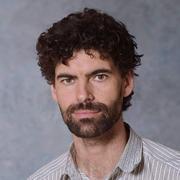
Rajan Kumar Thapa serves as Professor in the Department of Process, Energy and Environmental Technology at the Faculty of Technology, Natural Sciences and Maritime Sciences, University of South-Eastern Norway. Based at the Porsgrunn campus, he holds dual responsibilities in advanced structural engineering education and cutting-edge renewable energy research. His research portfolio centers on sustainable energy systems with emphasis on: Biomass gasification optimization in fluidized bed reactors Computational modeling of multiphase fluid-particle interactions Thermochemical conversion processes for waste valorization Structural integrity analysis of industrial piping systems Professor Thapa's work bridges theoretical modeling with practical engineering applications, targeting efficiency improvements in renewable energy infrastructure. His doctoral research established foundational methodologies for flow behavior optimization in biomass conversion systems. He actively mentors PhD, Master's and Bachelor's students while teaching specialized courses in Pipe and Structure Material Engineering. Current supervision focuses on computational energy systems and structural reliability projects within Norway's sustainable technology framework.
Dr. Thorsten Zirwes serves as Deputy Head of Institute at the Institute for Reactive Currents (IRST) at the University of Stuttgart, where he leads research in combustion engineering and reactive flows. With a strong background in chemical engineering from Karlsruhe Institute of Technology (KIT), where he completed his B.Sc., M.Sc., and PhD, Dr. Zirwes has established himself as a leading researcher in computational combustion. Deputy Head of Institute, Institute for Reactive Currents, University of Stuttgart (2023-present) DAAD PRIME Fellow & Visiting Postdoctoral Scholar, Stanford University (2022) PhD in Chemical Engineering and Process Engineering, Karlsruhe Institute of Technology (2016-2021) Dr. Zirwes' research focuses on advancing computational methods for understanding and modeling complex combustion processes, with particular emphasis on carbon-free fuels like hydrogen and ammonia. His work spans fundamental flame dynamics, turbulent combustion, and the development of efficient numerical algorithms for high-performance computing environments. He has made significant contributions to the understanding of thermodiffusion effects, flame instabilities, and porous media combustion for clean energy applications. His extensive publication record shows a clear trend toward sustainable energy solutions, with increasing focus on hydrogen and ammonia combustion as carbon-free alternatives. The research spans fundamental fluid dynamics, practical combustion applications, and computational method development, demonstrating both theoretical depth and practical relevance to energy transition challenges. Jürgen Warnatz Prize (German Section Combustion Institute, 2023) Distinguished Paper Award from the Combustion Institute (2023) Bernard-Lewis Fellowship of the Combustion Institute (2022) Most downloaded author of the Springer Journal FTaC (2022) Doctorate at KIT with summa cum laude (2021) Dr. Zirwes actively supervises research projects and collaborates with both academic and industrial partners. His group develops and maintains the EBI-DNS solver, an OpenFOAM extension for direct numerical simulation of combustion processes. Current research emphasizes carbon-free combustion technologies crucial for achieving climate goals, with strong connections to industry partners working on sustainable energy solutions. His research group maintains strong connections with international institutions, including Stanford University, and participates in major collaborative projects focused on advancing clean combustion technologies. The team combines expertise in fluid dynamics, numerical methods, and high-performance computing to tackle challenging problems in sustainable energy.
Dr. Herman Haustein is a Senior Lecturer at Tel Aviv University's School of Mechanical Engineering, where he heads the Micro Phase & Heat Transfer Laboratory . His research focuses on thermal management challenges in microelectronics through advanced heat transfer mechanisms. Education: B.Sc. with highest honors and direct Ph.D. from Technion Postdoctoral research at RWTH Aachen University, Germany Research Focus: Dr. Haustein investigates multiphase flow dynamics and phase-change phenomena, specializing in: Boiling mechanisms (nucleate pool, droplet) Impinging jet heat transfer (free-surface/submerged) Microscale convective enhancement Wavy film dynamics for cooling applications His work bridges experimental thermofluid dynamics with predictive modeling for electronic thermal management. Publication Trends: Recent articles (2012-2018) demonstrate consistent focus on experimental and theoretical analysis of boiling dynamics, jet impingement cooling, and reactive flows. Dominant methodologies include high-speed flow visualization, kinetic modeling of phase transitions, and optimization of thermal transport in constrained geometries.
Martin Peterlechner serves as Head of Transmission Electron Microscopy at Karlsruhe Institute of Technology (KIT), leading a core research facility focused on advanced materials characterization. His role bridges technical leadership and scientific investigation within KIT's research infrastructure. His research spans Materials Science , Electron Microscopy , and Phase Change Materials , with specialized expertise in High-Entropy Alloys , Diffusion Analysis , and Nanomaterial Characterization . He employs techniques including atom probe tomography, nanoindentation, and electron correlation microscopy to study microstructural evolution under deformation, irradiation, and thermal processing. Analysis of his 15 most recent publications (2024-2026) reveals dominant themes in phase change materials (GeSbTe systems), severe plastic deformation effects in alloys, and diffusion mechanisms. His collaborative work frequently appears in high-impact journals like Acta Materialia and Advanced Energy Materials , demonstrating methodological rigor across materials synthesis, characterization, and property analysis. As laboratory head, Dr. Peterlechner directs the Transmission Electron Microscopy group at KIT, providing critical infrastructure for materials research while advancing fundamental understanding of structure-property relationships through his publication record.
Jan Pettersson is a Professor in the Department of Chemistry and Molecular Biology at the University of Gothenburg, where he leads research on atmospheric aerosols and their dual impact on human health and Earth's climate system. His work bridges laboratory experiments, theoretical modeling, and global field studies to address critical environmental challenges. His research focuses on: Atmospheric aerosol formation and transformation processes Cloud-aerosol interactions affecting climate Chemical analysis of airborne nanoparticles using advanced mass spectrometry Health and climate impacts of combustion and marine aerosols Field characterization of particles across diverse global environments Recent publications (2023-2025) reveal a strong emphasis on chemical speciation of atmospheric particles, particularly salt aerosols and combustion emissions. His work combines cutting-edge analytical techniques (XPS, surface ionization) with climate-relevant studies, often through international collaborations. Key themes include surface composition dynamics, alkali release mechanisms in energy systems, and planetary atmospheric processes. Professor Pettersson teaches core courses including Aerosols (KEM720) and Environmental Chemistry (KEM490), where he integrates his research on air pollution and climate science. His active publication record indicates ongoing research funding, though specific grants aren't detailed. Students benefit from opportunities in instrument development, laboratory experimentation, and field studies addressing urgent environmental questions. His research group develops specialized analytical systems for nanoparticle characterization, enabling unique insights into atmospheric processes. Current projects examine particle surface chemistry under environmentally relevant conditions, with implications for both climate modeling and air quality management worldwide.
Reinhard Rauch is a Professor at the Karlsruhe Institute of Technology (KIT), affiliated with the Engler-Bunte-Institut's department of Chemical Energy Carriers – Fuel Technology. His research centers on sustainable energy solutions, particularly Fischer-Tropsch synthesis, biomass gasification, hydrogen production, and catalytic biofuel refinement. He maintains active collaborations, including international projects in Thailand focused on dual fluidized bed gasification systems. His work addresses critical challenges in renewable energy, such as optimizing gasification parameters, developing Fe-based catalysts for hydrocarbon synthesis, and integrating renewable fuels into existing refinery infrastructures. Recent publications emphasize process efficiency, waste valorization (e.g., plastic pyrolysis), and scalable biofuel production. Research interests include: Renewable hydrocarbon production via Fischer-Tropsch Biomass and waste gasification for hydrogen/syngas Catalytic upgrading of biofuels to meet industrial standards Hybrid processing of fossil and renewable feedstocks No awards, lab-specific details, or active student advisees are documented. For collaboration, contact reinhard.rauch@does-not-exist.kit.edu.