Professor Alexander Routh is a leading academic in Colloid Science at the University of Cambridge's Department of Chemical Engineering & Biotechnology, where he has been based since 2006. His research spans physical sciences with applications in industrial processes and diagnostic technologies. His research focuses on encapsulation techniques , drying dynamics of colloidal dispersions , and energy-efficient industrial modeling . Key areas include pattern formation during film drying, stratification mechanisms, neutron scattering applications, and development of low-cost diagnostic devices through blood droplet analysis. His work bridges fundamental colloid science with practical engineering solutions. Recent publications (2023-2025) demonstrate strong emphasis on microencapsulation systems for consumer products, magnetic photocatalysts for environmental remediation, and neurodegenerative disease mechanisms through protein aggregation studies. The research consistently integrates experimental work with computational modeling. Routh maintains active collaborations across disciplines, particularly with biomedical researchers studying α-synuclein aggregation and petroleum engineers investigating wellbore integrity. His laboratory work frequently employs advanced imaging and scattering techniques to probe colloidal behavior at micro and nano scales.
Dr Matthias Kramer is a Senior Lecturer at the UNSW Canberra , School of Engineering and Information Technology. He has previously worked at the University of Queensland and the University of Stuttgart. His research focuses on open-channel hydrodynamics with an emphasis on multiphase flows, hydraulic structures, and measurement instrumentation. Education: PhD from University of Stuttgart (2015) on 'Air demand of impulse turbines in counter pressure operation' His research interests include open-channel flow dynamics, multiphase flow analysis, and the development of innovative flow measurement technologies . He has extensively published on topics such as air-water flow properties , turbulent free-surface flows , and plastic pollution transport in fluvial systems. His recent publications demonstrate a focus on environmental engineering , with strong emphasis on fluid dynamics , instrumentation , and hydrological systems . These works include studies on air-water flow measurement , plastic transport modeling , and hydraulic structure design . Dr Kramer has received multiple scientific awards including: UNSW Rector Funded Visiting Fellowship Research Infrastructure Scheme (Combined open-channel/wave flume) Substantial merit-based startup grant (UNSW Canberra) Establishment award (UNSW Canberra) DFG research fellowship on 'Air-water mass transfer at hydraulic structures' He currently supervises PhD candidate Hanwen Cui (joint with Dr Stefan Felder) and Masters student Reilly Cox (UNSW Sydney). Dr Kramer is involved in hydro-environmental research infrastructure at UNSW and serves on the Editorial Panel of ICE Water Management .
Pieter Rauwoens is a Professor at the Department of Civil Engineering within the Faculty of Engineering Technology at KU Leuven. His work focuses on coastal engineering, hydraulics, and sustainable material applications, particularly in dune dynamics and nature-based coastal defense systems. He leads multiple long-term projects and serves as promotor for interdisciplinary research initiatives. Coastal & Ocean Basin (COB) wind tunnel system development Sustainable sand management for hybrid dune-dike systems Vegatation impact on coastal dune stability Supplementary cementitious materials from recycled aggregates His research integrates field monitoring, numerical simulations, and laboratory experiments to address coastal resilience challenges under climate change. Key methodologies include CFD modeling, sediment transport analysis, and material reactivity studies. Current research trends emphasize: Hybrid blue-grey coastal defense systems Mechanochemical activation of recycled materials Wave-structure interactions around monopiles Aeolian transport dynamics in vegetated dunes Sustainable sediment management Climate adaptation infrastructure
Dr. Oliver Plümper is an active researcher at Utrecht University's Faculty of Geosciences, specifically within the Earth Sciences department and the Structural Geology & Electron Microscopy group. His work spans multiple disciplines at the intersection of geology, chemistry, physics, and materials science, with a particular focus on understanding processes occurring at the nanoscale that influence large-scale geological phenomena. Plümper's research interests center around fluid-rock/mineral interaction, nano(geo)sciences, mineral physics, and rock deformation. He employs a multi-faceted approach that combines natural observations, experimental techniques, micro and nano-analytics, and numerical modeling to address fundamental questions in Earth sciences. His work particularly emphasizes how nanoscale processes in the Earth's interior can influence large-scale geological structures and phenomena, including mountain building, earthquake generation, and the carbon cycle. His current research portfolio includes several major projects: the ERC Starting grant 'nanoEARTH' investigating mineral-water interactions deep within the Earth; the Dutch Research Council Vidi project 'RELEASE' studying carbon cycling in subduction zones; the EU INFRAIA project 'EXCITE NETWORK' as co-Principal Investigator supporting access to advanced imaging facilities; the UIO-UU project 'serpAI' using artificial intelligence to study mantle rock alteration; and the UU-NIOZ project 'I-NANO' examining iron nanoparticles' effects on ocean biogeochemistry. These projects collectively demonstrate his focus on understanding how nanoscale processes influence planetary-scale phenomena. Plümper is a strong advocate for open science and transdisciplinary research, leading a diverse team of scientists from earth sciences, chemical engineering, mathematics, physics, and chemistry. He actively contributes to the Utrecht University Electron Microscopy Center and is involved in multiple initiatives promoting open access to analytical facilities. His collaborative approach is evident in his extensive publication record across high-impact journals including Nature Geoscience, PNAS, and Geology, with research spanning from fundamental mineral physics to applications in geothermal energy, raw material extraction, and carbon storage.
Barbara Mones is a Teaching Professor in the Paul G. Allen School of Computer Science & Engineering at the University of Washington. She serves as Director of the Reality Studio, part of the Reality Lab, and leads the Facial Expression Research Group (FERG) and the Octopus Research Group (ORG). Education: Undergraduate degree from University of Michigan, Ann Arbor Post graduate certification in Animation from Sheridan College, Oakville, Canada MFA from Rhode Island School of Design Professor Mones specializes in Human-Centered Computing and Interaction with the Physical World, with expertise in Augmented, Virtual & Mixed Reality; Computer Graphics & Animation; and Computing Education Research. Her research focuses on the intersection of animation, storytelling, and immersive technologies, exploring how these can be effectively integrated into educational contexts and creative production pipelines. She has developed specialized curriculum for facial expression in animated characters and immersive storytelling environments. Professor Mones has directed and produced more than twenty animated shorts throughout her career at the University of Washington. Her recent works demonstrate expertise in character animation, facial expression, and digital storytelling, often incorporating innovative techniques in virtual and augmented reality. These films showcase her commitment to advancing both the artistic and technical aspects of computer animation. Scientific Awards: SIGGRAPH 2021 Distinguished Teaching Award NASA Group Achievement Award Professor Mones has been instrumental in developing animation curriculum that has influenced programs worldwide. She serves on the ACM SIGGRAPH Executive Committee and the Education Committee, where she continues to shape computer graphics education globally. Her teaching approach emphasizes hands-on, project-based learning through the complete animation production pipeline. She leads the Reality Studio, which focuses on research and development in immersive storytelling technologies, and oversees the Facial Expression Research Group which investigates the technical and artistic aspects of creating expressive digital characters for animation and virtual environments.
Elia Distaso is an Assistant Professor at the Department of Mechanics, Mathematics & Management, Politecnico di Bari, Italy. His research focuses on fluid dynamics, hydrogen combustion, and computational modeling. University: Politecnico di Bari Department: Mechanics, Mathematics & Management Academic Rank: Assistant Professor Email: elia.distaso@poliba.it His work spans hydrogen engines , CFD simulations , and hydraulic systems , with recent publications addressing auto-ignition mechanisms, cavitation phenomena, and sustainable aviation technologies. He specializes in leveraging numerical methods for combustion and fluid flow analysis. His 15 most recent publications highlight trends in computational fluid dynamics, including boundary condition modeling, pressure-velocity coupling, and OpenFOAM® applications. Key subfields include hydrogen combustion dynamics , lubricant oil reactivity , cryogenic heat exchanger design , and piezohydraulic pump analysis .
Dr. Cliff Frohlich is a Senior Research Scientist Emeritus and Senior Research Scientist at the Institute for Geophysics, Jackson School of Geosciences, The University of Texas at Austin. He specializes in seismology with a focus on deep earthquakes, Texas and moonquakes, and statistical earthquake analysis. Education: Ph.D. and M.S. from Cornell University, B.A. from Grinnell College. Research Interests : Frohlich’s work spans induced seismicity, tectonic stress analysis, and the geophysical implications of energy resource activities. He investigates correlations between wastewater injection, fracking, and seismic events in Texas, Oklahoma, and other regions. His studies also address global patterns of deep earthquakes and moonquake mechanisms. Publications : Frohlich has authored/co-authored over 100 peer-reviewed articles and two books: Texas Earthquakes (UT Press) and Deep Earthquakes (Cambridge University Press). Recent work focuses on seismic vulnerability assessments, fault stress orientations, and the TexNet seismic network. Labs/Teams : Active within the UT Institute for Geophysics, collaborating on projects like the Scotia Arc GPS Project (SCARP) and educational outreach through films like Big League Earth Science .
Fanze Kong is a Pearson Fellow and Acting Instructor at the Applied Math Department of the University of Washington. He holds a Ph.D. in Mathematics from the University of British Columbia (2021-2024), an M.Sc. in Mathematics from Southwestern University of Finance and Economics (2018-2021), and dual B.Sc. degrees in Mathematics and Economics from the same institution (2014-2018). His research focuses on the analysis of Partial Differential Equations (PDEs), particularly reaction-advection-diffusion systems and chemotaxis models. Key interests include: Nonlinear dynamics in biological systems Pattern formation and stability Fluid-structure interactions in chemotaxis His recent publications explore phenomena such as spike dynamics in Keller-Segel models, aggregation in chemotaxis-fluid systems, and localized patterns under advection-dominated conditions. These studies bridge applied mathematics with mathematical biology, emphasizing rigorous analytical techniques. No scientific awards are listed. While no advising or grant details are provided, his work is disseminated through platforms like Google Scholar and institutional homepages.
Professor Neelesh A. Patankar is a faculty member in the Department of Mechanical Engineering at Northwestern University's McCormick School of Engineering, serving as Director of the Northwestern Academy for Interdisciplinary Science (NAISE). His academic rank is Professor, with a courtesy appointment in Engineering Sciences and Applied Mathematics. He holds a Ph.D. from the University of Pennsylvania and a B.Tech. from the Indian Institute of Technology Bombay. Research interests span three core areas: computational fluid dynamics (CFD) for fluid-structure interaction, biomechanical analysis of organs (e.g., esophagus, aorta), and phase transition engineering using surface roughness. His work bridges mechanics and clinical practice, with applications in anti-icing, boiling, and biomedical diagnostics. He teaches courses in CFD, microfluidics, and engineering analysis, and has developed innovative computational methods for neuromechanics and aquatic locomotion. Education: Ph.D., Mechanical Engineering, University of Pennsylvania M.S., Mechanical Engineering, University of Pennsylvania B.Tech., Mechanical Engineering, Indian Institute of Technology Bombay Awards: International Conference on Multiphase Flow Junior Award (2010) NSF CAREER Award (2002) Searle Junior Fellowship (2001) His research group, the Patankar Group, focuses on metasurface design, immersed body techniques, and applications in aquatic locomotion and biomedical systems. Collaborations include studies on esophageal transport, neuromuscular mechanics, and superhydrophobic surfaces. He advises numerous graduate students and postdoctoral researchers, contributing to over 100 publications and impactful interdisciplinary projects.
David Chopp is a Professor of Engineering Sciences and Applied Mathematics at Northwestern University's McCormick School of Engineering. His research focuses on numerical methods, scientific computing, and interface motion, with applications in bacterial biofilms, neurophysiology, and materials science. He holds the Charles Deering McCormick Professor of Teaching Excellence award. Chopp earned his Ph.D. in Mathematics from UC Berkeley and a B.S. in Mathematics and Applied Mathematics from the University of Washington. Research interests include level set methods, computational neuroscience, fracture mechanics, and biofilm modeling. Notable contributions span phase field modeling, microbial fuel cell simulations, and adaptive algorithms for neural systems. His work bridges computational tools with real-world applications in engineering and biology. Key Projects: Phase field modeling with large driving forces (2023), biofilm potassium signaling (2021), non-planar crack tracking (2016). Awards: Charles Deering McCormick Professor of Teaching Excellence. Chopp advises students in biofilm dynamics, computational materials, and fracture mechanics. His lab develops algorithms for interface tracking and neural simulations, collaborating on biofilm bioclogging and material failure analysis. Active in teaching and publishing, he authored textbooks on high-performance computing and contributed to over 60 peer-reviewed articles.
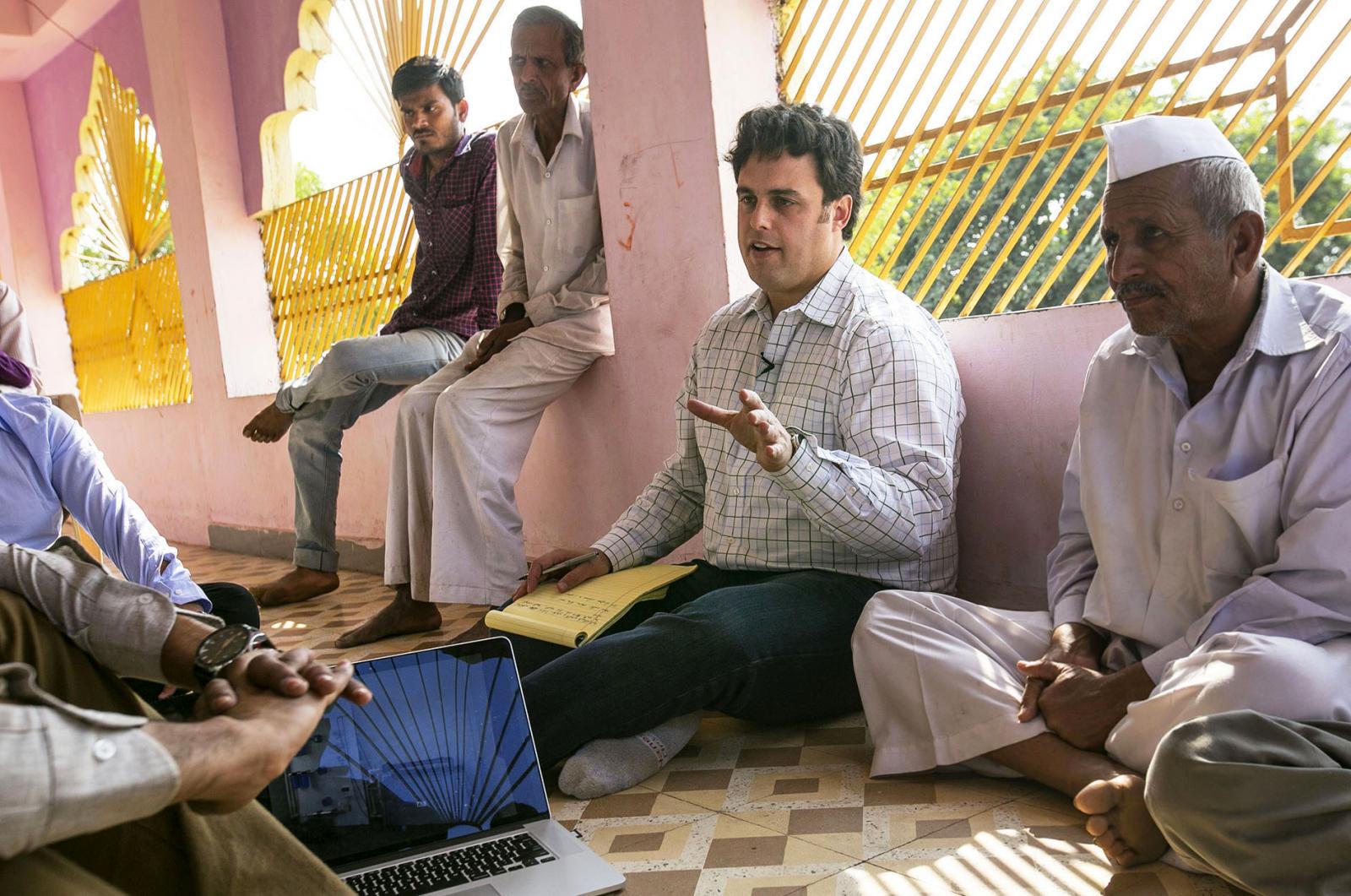
Professor Amos Winter is the Germeshausen Professor in Mechanical Engineering at the Massachusetts Institute of Technology (MIT). He directs the K. Lisa Yang Global Engineering and Research (GEAR) Center, focusing on creating high-performance, low-cost technologies for emerging markets through interdisciplinary engineering science. His work spans water purification, prosthetics, agricultural systems, and transportation solutions. Education: B.S. in Mechanical Engineering from Tufts University (2003), S.M. and Ph.D. from MIT (2005, 2011) Labs: Founder and Director of MIT Mobility Lab (2007-2012), GEAR Center PI Winter’s research combines biologically-inspired design with mechanical and product development, emphasizing constraints-driven innovation. His projects include a solar-powered desalination system for rural India, the Leveraged Freedom Chair for off-road mobility, and smart drip irrigation systems for water-stressed regions. His publications analyze biomechanical interactions, adaptive robotics, and reverse innovation frameworks. Recent projects focus on time-variant desalination systems, low-pressure drip emitters, and energy-efficient agricultural technologies. These align with his expertise in mechanics, fluid dynamics, and cross-cultural technology transfer. Winter has received numerous honors including the 2025 Bose Award for Excellence in Teaching, the 2017 NSF CAREER Award, and the 2015 USAID Desal Prize. He was named to the TR35 list in 2013 and earned multiple design accolades for humanitarian technologies. As a co-founder of Global Research Innovation and Technology (GRIT), Winter bridges academic research with real-world implementation. He teaches Design and Manufacturing (2.007) and Global Engineering (2.76) at MIT, while advising startups and mentoring students through initiatives like the MIT Formula SAE Team.
Toan T. Nguyen is a Professor in the Department of Mathematics at Pennsylvania State University, affiliated with the Eberly College of Science. He holds a Ph.D. from Indiana University (2009). His research focuses on Partial Differential Equations, Mathematical Physics, Fluid Dynamics, and Kinetic Theory, with contributions to boundary layer stability, inviscid limits, and plasma physics. Education: Ph.D. in Mathematics, Indiana University, 2009. Affiliations: Editorial Board member of Kinetic & Related Models and SIAM Journal on Mathematical Analysis. Grants & Support: Recipient of Simons Fellowship (2019), Centennial Fellowship (2018). His work bridges theoretical analysis and applications, including nonlinear wave dynamics, fluid-structure interactions, and quantum kinetic models. He has organized international conferences, such as the VIASM Summer School in Mathematical Physics (2023–2024), and advised Ph.D. students like Chanjin You and Trinh T. Nguyen. Awards: T. Brooke Benjamin Prize (2022), highlighting his contributions to nonlinear waves and Landau damping. His research also explores instabilities in boundary layers and the mathematical foundations of plasma physics. Nguyen collaborates internationally, contributing to journals like the Journal of the American Mathematical Society and Communications in Mathematical Physics. His teaching includes advanced graduate courses on PDEs and kinetic theory.
Dr. Budi Zhao is a Lecturer/Assistant Professor in the School of Civil Engineering at University College Dublin since August 2020. He holds a PhD from City University of Hong Kong (2017) and has held academic positions at Imperial College London (Research Associate, 2019–2020) and King Abdullah University of Science and Technology (Postdoctoral Fellow, 2017–2019). His research focuses on multi-physics processes in soil and rock, employing advanced techniques like X-ray micro-tomography (μCT), microfluidics, and numerical modeling (e.g., DEM and CFD-DEM). Key areas include crushable sands, desiccation cracking, fines migration, and energy geotechnics. He serves on ISSMGE committees TC105 and TC308, and is a member of the editorial board of the Journal of Rock Mechanics and Geotechnical Engineering . His research outputs span topics such as 3D printed composites, microplastic transport, and internal erosion mechanisms. Notable projects include grants on multi-scale analysis of clays and salt precipitation effects. Dr. Zhao coordinates modules like Geotechnical Engineering and Soil Mechanics at UCD, emphasizing innovative teaching methods like flipped classrooms. His work bridges fundamental science and engineering applications, with a focus on sustainable geotechnical solutions. Education: PhD (City University of Hong Kong, 2017), B.Eng (Chongqing University), Professional Certificate in University Teaching (UCD). Grants: Includes funding for offshore wind energy anchors and carbon geological storage projects. Advising: Supervises multiple PhD students in geomechanics and energy geotechnics. Labs/Teams: Leads research using state-of-the-art facilities for μCT imaging and microfluidics.
Dr. Joshua Bostwick is an Associate Professor in the Department of Mechanical Engineering at Clemson University's College of Engineering, Computing and Applied Sciences. He joined Clemson in January 2016 after appointments as Golovin Assistant Professor at Northwestern University and postdoc researcher at NC State University, focusing on interfacial fluid mechanics with industrial and biological applications. Education: Ph.D., Theoretical and Applied Mechanics, Cornell University, 2011 B.S., Civil Engineering and Mechanics, University of Wisconsin-Milwaukee, 2005 B.S., Physics, University of Wisconsin-Milwaukee, 2005 His research centers on wetting phenomena and elastocapillarity—examining liquid interactions with soft substrates through mathematical modeling and experimentation. Key interests include surface tension-driven dynamics, pattern formation, soft matter physics, and interfacial instabilities. Current projects span droplet durotaxis, ultrasonic soldering, splashing on soft substrates, and granular raft mechanics, emphasizing fundamental physics with practical applications in microfluidics and manufacturing. Recent publications (2024-2025) reveal expanding work on granular-fluid systems, electrokinetic instabilities, and elastocapillary transitions, demonstrating cross-disciplinary impact in environmental remediation (oil spill cleanup), bioprinting, and semiconductor manufacturing. His group integrates theoretical frameworks with experimental validation across scales. Scientific Awards: NSF CAREER Award (2018) for elastocapillary fluid mechanics research Dr. Bostwick actively mentors graduate students and recruits researchers for his group, supported by federal grants including the NSF CAREER award. His ultrasonic soldering platform enables precise study of flux-free joining for dissimilar materials, with industry collaborations enhancing manufacturing applications. The research group collaborates with Clemson colleagues like X. Xuan on complex fluid microfluidics and develops experimental systems for studying droplet dynamics, soft fracture, and granular matter. Current initiatives include automated soldering platforms and investigations into mitochondrial membrane mechanics.
Dr. Zhen Li is an Assistant Professor in the Department of Mechanical Engineering at Clemson University's College of Engineering, Computing and Applied Sciences. He joined Clemson in August 2019 after serving as a research associate professor at Brown University and a postdoctoral research associate at University of California, Merced. Education: Ph.D. in Fluid Mechanics, Shanghai University, 2012 MS in Fluid Mechanics, Shanghai University, 2008 BS in Engineering Mechanics, Wuhan University, 2005 Dr. Li's research focuses on multiscale modeling of soft matter, complex fluids, biophysics, and collective dynamics using both bottom-up (coarse-grained molecular modeling) and top-down (from continuum descriptions to fluctuating hydrodynamics) approaches, along with high-performance computing. His work spans mathematical theory for coarse-graining and model reduction, statistical methods and machine-learning approaches applied to multiscale modeling, memory effects in complex fluids, and concurrent coupling of heterogeneous solvers for scale-bridging. Analysis of Dr. Li's recent publications reveals a strong trend toward integrating machine learning with traditional computational methods, particularly neural operators for multiscale problems. His work spans diverse applications from bubble dynamics and blood flow to materials science and bioprinting, demonstrating the versatility of his computational approaches across multiple disciplines in engineering and physics. Awards and Recognition: CECAS Dean's Professor Award (2024) Award of Excellence - Junior Faculty (2021-2022) Best Research Poster Award at SC19 (2019) 2nd Place Award of Best Poster Presentation at DOE/EFRC AIM for Composites meeting (2024) Dr. Li actively mentors PhD students including Miles Lu, Ryan Wan, Haizhou Wen, and Ali Mohammadi, who have published significant research in computational mechanics. His research is supported by multiple grants including an NSF Elements grant as PI for 'SciMem: Enabling High Performance Multi-Scale Simulation on Big Memory Platforms', an NSF CDS&E grant as co-PI for 'HAM3R: Heterogeneous Automated Management of Multiscale Methods and Resources', a DOE/EFRC grant as Thrust lead co-PI for 'AIM for Composites', and a NASA EPSCoR grant as Science-PI. Dr. Li leads the MuthComp (Multiscale theory and Computation) research group, which focuses on developing interfaces between Engineering, Applied Mathematics, Physics-based Machine Learning, and High Performance Scientific Computing. The group has active collaborations with institutions including Idaho National Laboratory, University of Tokyo, and Brown University, and has developed open-source software including USERMESO for GPU-accelerated DPD simulations.