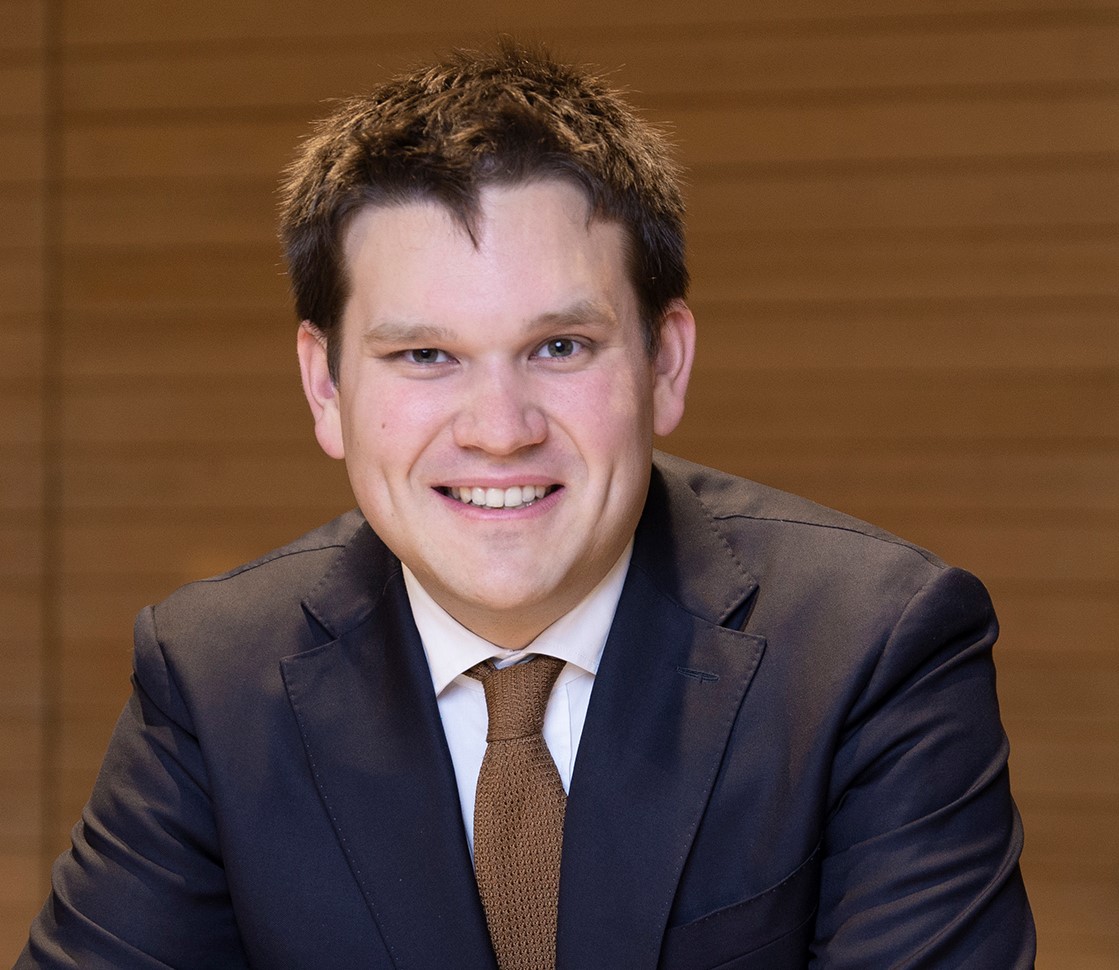
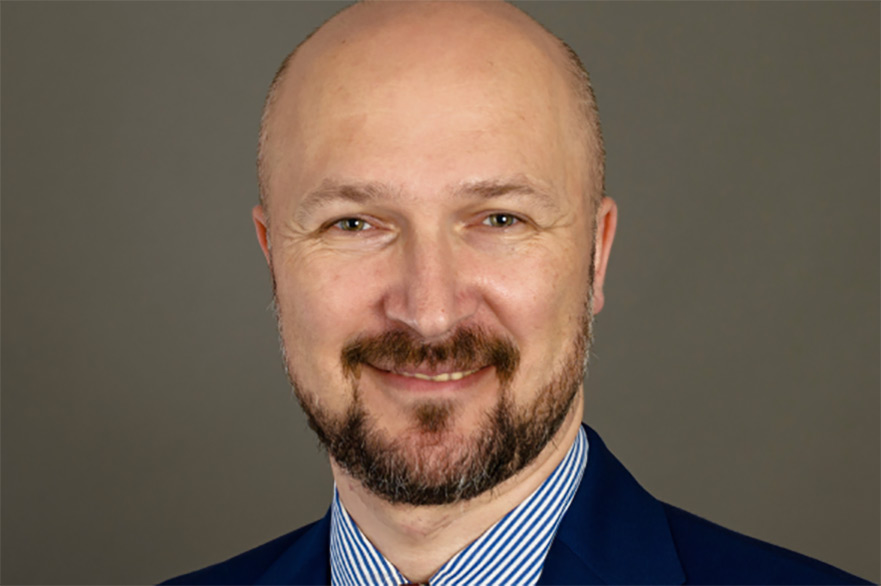
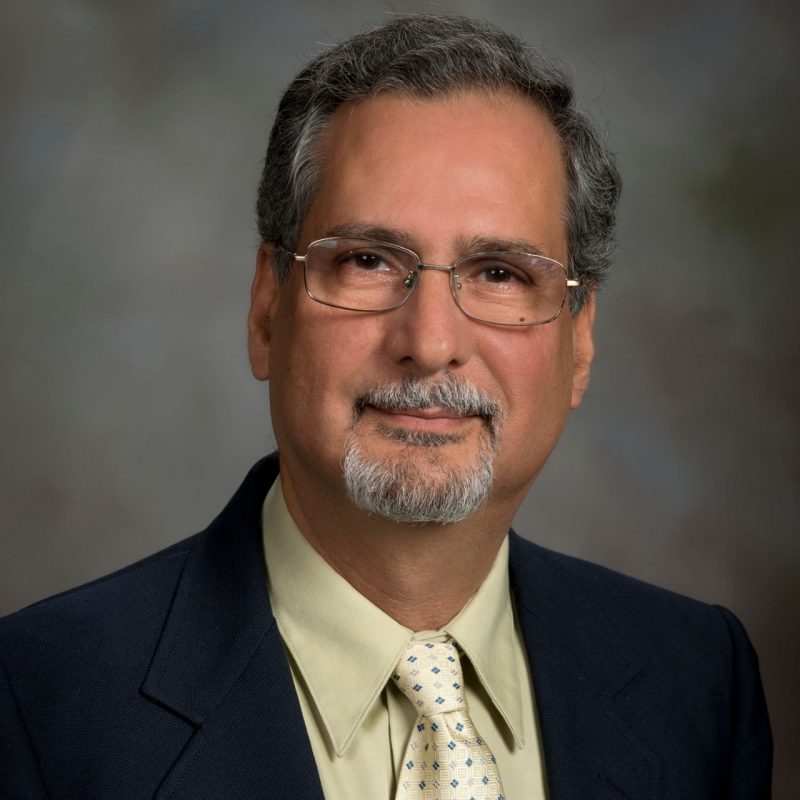
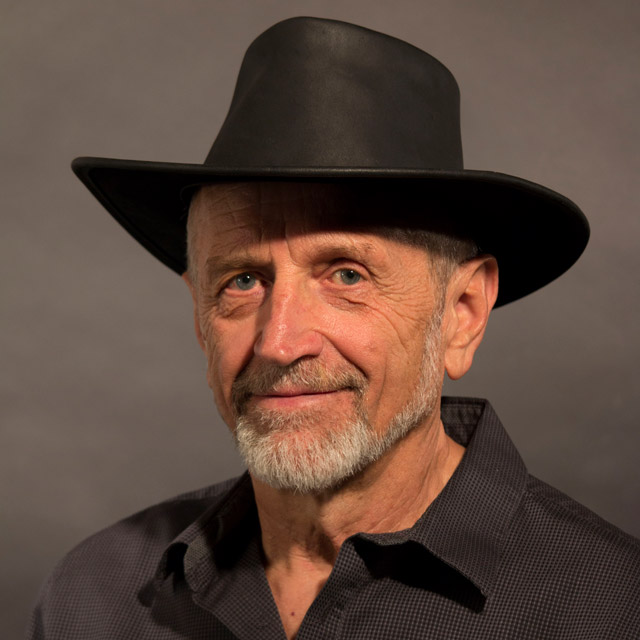
Raine Viitala is an Assistant Professor at Aalto University's Department of Energy and Mechanical Engineering. His research focuses on mechanical vibration analysis, electromagnetic influence in rotating systems, and sustainable energy management in industrial applications. Aalto University Department of Energy and Mechanical Engineering His work spans mechanical engineering , fluid dynamics , and machine learning applications . Recent publications address torsional vibration modeling, aerostatic bearing design, and AI integration in pulp & paper industry energy systems. Viitala's research trends include digital twin technology for collaborative design, eddy current sensing for tool monitoring, and nonlinear damping solutions for mechanical systems.
Dr. Mykola Tasinkevych is a Senior Lecturer at the School of Science & Technology, Nottingham Trent University (since 2021). Previously, he held research positions at the Max Planck Institute for Metals Research (Senior Scientist), University of Lisbon (FCT Fellow), and Northwestern University. He completed his PhD in 1999 and has since published 75+ peer-reviewed papers, secured €1M+ in competitive grants (FCT, DFG, EU), and supervised 15+ students/postdocs. His research centers on soft condensed matter , with expertise in: Liquid crystal-enabled nanoparticle self-assembly and topological defects Dynamics of active colloids and microswimmers Superhydrophobic surfaces and wetting phenomena Capillary interactions at fluid interfaces He collaborates internationally with groups at University of Colorado Boulder, University of Lisbon, and University of Hawaiʻi. His recent publications (2020–2025) focus on active matter control (e.g., microswimmers in ratchets), liquid crystal skyrmions under flow/topological constraints, and nanoparticle assembly in chiral environments. Machine learning applications for texture analysis also emerge in forthcoming work. Awards/Grants: FCT Postdoctoral Fellowship (1999–2003) FCT 5-year Principal Investigator Fellowship (2017; 10% success rate) DFG/EU FP7 Grants (2007–2016) FCT Major Grant PTDC/FIS-MAC/5689/2020 (6% success rate) He leads theoretical research groups on soft matter, advising projects in physics and securing funding for international collaborations. Current work explores dynamical phenomena in topological solitons and nanoparticle composites.
Kathryn Johnson is a Professor in the Department of Electrical Engineering at Colorado School of Mines with a joint appointment at the National Renewable Energy Laboratory (NREL). She holds the Ben Fryrear Chair for Innovation and Excellence and earned her B.S. from Clarkson University (2000), and M.S./Ph.D. from University of Colorado Boulder (2002/2004). Her research spans wind energy control systems (floating offshore turbines, ultra-scale rotors, wind farm optimization) and sociotechnical engineering education (macroethics, social justice integration). Research Focus: Dr. Johnson leads pioneering work in aerodynamic control of floating offshore wind turbines, developing morphing rotor technologies for 50-MW systems, and optimizing wind-hydrogen integration. Her education research examines how sociotechnical thinking develops in engineering students, with fieldwork validated through international collaborations. Publication Trends: Recent works (2021-2023) demonstrate dual emphasis on: 1) Advanced wind turbine control (aerodynamic load mitigation, floating platform stabilization, grid integration) and 2) Engineering pedagogy (sociotechnical identity formation, ethics frameworks, justice-oriented curriculum design). Over 75% of recent publications involve experimental validation through NREL field tests. Awards & Honors: Fulbright Canada Research Chair in STEM Education (2021) Clare Boothe Luce Endowed Professorship (2005) IEEE Senior Member recognition Educational Leadership: Teaches core courses including Feedback Control Systems, Modern Control Design, and Wind Energy Systems. Developed Mines' first sociotechnical integration modules for control engineering curricula. Supervised 15+ graduate students in wind energy and education research. Facilities & Collaboration: Leads experimental work at NREL's National Wind Technology Center, directing the SUMR (Segmented Ultralight Morphing Rotor) consortium. Collaborates with 10+ institutions on DOE-funded projects including USFLOWT floating turbine initiative.
Niclas Jansson is a researcher at the PDC Center for High Performance Computing at KTH Royal Institute of Technology. He holds an M.S. in Computer Science (2008) and a Ph.D. in Numerical Analysis (2013) from KTH. His career spans roles such as postdoctoral researcher at RIKEN Advanced Institute for Computational Science (2013-2016) and visiting scientist at RIKEN (2018-2021), where he contributed to the Japanese exascale program Flagship 2020. A core focus of his research involves extreme-scale computing and numerical method development. He is a key developer of RIKEN's multiphysics framework CUBE , the HPC branch of FEniCS , and the spectral element flow solver Neko . His work is currently supported by a Swedish Research Council Starting Grant aimed at enhancing high-order spectral element methods for exascale fluid simulations. Niclas has published extensively on topics such as GPU acceleration , adaptive finite element methods , in situ visualization , and extreme-scale turbulence modeling . He also teaches Computational Fluid Dynamics (SG2212) at KTH.
Danesh Tafti is the William S. Cross Professor and Associate Department Head for Graduate Studies in the Department of Mechanical Engineering at Virginia Tech. He holds a PhD from Pennsylvania State University (1989) and has held roles at institutions including the University of Illinois at Urbana-Champaign and West Virginia Institute of Technology. His research focuses on computational fluid dynamics (CFD) and heat transfer, with applications in gas turbines, biomedical systems, and renewable energy. Key research areas include turbulence modeling, fluid-structure interaction, and biofluid mechanics, leveraging high-performance computing. His work spans aerodynamics of flapping flight, cardiovascular flows, and particle-laden flows. Tafti leads the High Performance Computational Fluid-Thermal Science and Engineering Lab, developing tools like GenIDLEST software for complex fluid-thermal systems analysis. Education: PhD (Penn State, 1989), MS (Texas Tech, 1983), BE (Bombay University, 1980) Awards: ASME Fellow (2014), Virginia Tech Dean’s Research Award (2012) Labs: High Performance Computational Fluid-Thermal Science and Engineering Lab Publications emphasize CFD advancements, machine learning integration, and multiphase flow modeling. Tafti’s work bridges computational methods with real-world applications in energy systems, aerospace, and biomedicine.
Dr. Thomas Eiter is a Young Investigator in the Collaborative Research Centre CRC 1114 at Freie Universität Berlin and a member of the Partial Differential Equations research group at the Weierstrass Institute of Applied Analysis and Stochastics (WIAS). He holds a PhD from Technical University of Darmstadt (2020), focusing on existence and spatial decay of periodic Navier-Stokes flows in exterior domains. His research emphasizes mathematical analysis of PDEs motivated by fluid mechanics, including existence of solutions, time-periodicity, unbounded domains, and asymptotic behavior. Teaching highlights include courses such as 'Introduction to Mathematical Modeling with PDEs' at Freie Universität Berlin and 'Harmonic Analysis' at University of Kassel. He has organized workshops like the 2025 'Mathematical Analysis of Fluid Flows by Variational Methods' at WIAS. Current projects include the SPP 2410 initiative on energy-variational solutions for hyperbolic conservation laws. His work bridges theoretical PDE analysis with applications in continuum mechanics, with contributions to viscous flow dynamics, Navier-Stokes equations, and material models. He actively participates in academic leadership through seminar organization and conference minisymposia on fluid mechanics and nonlinear analysis.
Tyler Van Buren is an Assistant Professor in the Department of Mechanical Engineering at the University of Delaware, part of the College of Engineering. He holds a Ph.D., M.S., and B.S. in Aerospace and Mechanical Engineering from Rensselaer Polytechnic Institute (2008–2013). Previously, he served as a Research Scientist at Princeton University (2014–2019), focusing on bio-inspired propulsion, turbulence, and flow control. His research emphasizes unsteady flows and coherent structures, with a focus on fluid-structure interaction, bioinspired systems, and practical applications in energy efficiency and robotics. Key areas include vortex dynamics, synthetic jet actuation, and turbulent boundary layer control. Recent work explores optimal parameters for oscillating fins, vortex generator emulation, and eddy self-similarity in pipe flows. His studies bridge fundamental fluid mechanics with real-world impacts, such as improving vehicle design and energy-saving technologies. Lab activities concentrate on experimental methods for analyzing unsteady flows, including flapping propulsion systems and turbulence-induced phenomena. Collaborative projects address challenges in wind energy harvesting and biomedical fluid dynamics.
Krishan Kumar is a Postdoctoral Researcher at West Virginia University's Plasma & Space Physics department, affiliated with the Scime Group. His work focuses on experimental and theoretical investigations of plasma dynamics, particularly in dusty plasma environments. He holds a Researcher academic rank and is engaged in cutting-edge studies of soliton formation, plasma flow phenomena, and phase transitions in complex plasmas. Research Interests: Nonlinear plasma dynamics and soliton physics Experimental studies of dusty plasma systems Phase transitions in non-equilibrium plasmas Wave-particle interactions in flowing plasmas His recent publications (2021-2025) concentrate on soliton excitation mechanisms, plasma flow instabilities, and multidimensional plasma structures. Notable works include experimental validations of soliton theories using the forced Kadomtsev-Petviashvili equation and investigations of Kelvin-Helmholtz instabilities in dusty fluids. Simulation studies using Particle-in-Cell methods complement his experimental efforts. He has also contributed to ionospheric plasma cross-section measurements relevant for space weather studies. Currently, his research explores the interplay between plasma confinement and structural phase transitions in two-dimensional dust crystals, as well as the role of non-thermal electrons in magnetic reconnection processes. These studies are conducted in collaboration with the Scime Group's advanced laboratory facilities.
Dr. Kristin O'Grady is an Assistant Professor in the Department of Biomedical Engineering and Department of Radiology & Radiological Sciences at Vanderbilt University's School of Engineering. Her research focuses on developing quantitative MRI methodologies for the brain and spinal cord, particularly improving spinal cord MRI for neurological diseases like multiple sclerosis. She specializes in diffusion tensor imaging, functional connectivity analysis, and high-field MRI applications. Her work spans advanced imaging techniques including MP2RAGE, susceptibility-weighted MRI, and phase imaging, with a focus on clinical feasibility and disease markers. She has contributed to studies on spinal cord morphometry, paramagnetic rim lesions, and biological interactions affecting CNS structure. No scientific awards or grants are explicitly listed in the provided materials. Dr. O'Grady collaborates across interdisciplinary teams within the School of Engineering, focusing on translational research in neuroimaging technologies.
Cass T. Miller is the Okun Distinguished Professor in Environmental Sciences and Engineering at the UNC Gillings School of Global Public Health . He serves as an Adjunct Professor in Applied Physical Sciences while maintaining a full-time faculty status. His research bridges environmental engineering, computational physics, and biomedical modeling. PhD in Environmental Engineering (University of Michigan, 1984) MS in Environmental Engineering (University of Michigan, 1981) MS in Civil Engineering (University of Toledo, 1979) BS in Civil Engineering (University of Toledo, 1977) Professor Miller's research focuses on mass, momentum, and energy transport in multiphase systems across natural, engineered, and biological domains. He pioneered the Thermodynamically Constrained Averaging Theory (TCAT) , which provides first-principles modeling of porous medium systems. His work spans groundwater hydrology, carbon sequestration, hydraulic fracturing risk analysis, and tumor growth modeling. Recent publications demonstrate methodological innovation in Physics of Fluids (2025), foundational TCAT theory in ARC Geophysical Research (2024), and transformative open science publishing models in Journal of Scholarly Publishing (2023). His 2021 Archive of Applied Mechanics article connects environmental physics to cancer research through continuum mechanical frameworks. Scientific leadership highlights: 7-year continuous DOE INCITE supercomputing grant for multiphase porous medium simulations Founder of the Arc Geophysical Research journal Creator of the Academic Research Community (ARC) Alliance for diamond open access He teaches core graduate courses covering Environmental Physics I-II , Numerical Methods , and Uncertainty Quantification . His Multiphase Transport Phenomena class emphasizes first-principles modeling of complex systems.
Prof. Mastroddi Franco is a Full Professor at the Department of Mechanical and Aerospace Engineering (DIMA) of Sapienza University of Rome, affiliated with the Faculty of Civil and Industrial Engineering. His expertise spans aerospace engineering, aeroelasticity, and multidisciplinary design optimization. He contributes to training programs such as the 2nd-level Master's in 'Satellites and Orbiting Platforms' and 'Energy Efficiency and Renewable Energy Sources'. His research focuses on fluid-structure interactions, sloshing dynamics in aircraft tanks, and sustainable aircraft design. He has led studies on green aviation technologies, launch vehicle aerodynamics, and numerical modeling techniques like Smoothed Particle Hydrodynamics (SPH). Research Interests: Aeroelastic Stability and Response Hydrogen-Powered Aircraft Systems Neural Network Applications in Fluid Dynamics Green Energy Integration in Aviation Reduced-Order Modeling for Complex Systems Publications highlight contributions to sloshing dynamics, hybrid aircraft design, and computational methods for hypersonic systems. Awards: None explicitly mentioned. Grants and advisory roles include participation in the 'Premio Liviu Librescu' thesis award committee (2010). He collaborates on projects involving structural damping models and multi-objective optimization for aerospace systems.
Brian Hoskins is a Professor at the University of Reading, specializing in atmospheric science and climatology. His research focuses on climate dynamics, Hadley Cell dynamics, storm tracks, and the impacts of climate change on energy demand and weather patterns. He has authored over 125 publications in prestigious journals such as the Journal of Climate and Quarterly Journal of the Royal Meteorological Society. Key research areas include the structure and variability of atmospheric circulation patterns, tropical meteorology, and the interaction between ocean and atmospheric processes. His work also explores the application of climate science to energy systems and societal challenges, such as predicting winter gas demand based on weather patterns. Dr. Hoskins collaborates extensively with institutions like the Met Office and global researchers, contributing to advancements in numerical weather prediction and climate modeling. His studies on African easterly waves and Rossby waves highlight his deep engagement with tropical atmospheric dynamics.
George Danko is a Professor in the Department of Mining and Metallurgical Engineering at the University of Nevada, Reno (UNR), part of the Mackay School of Earth Sciences and Engineering. He holds a DSc from the Hungarian Academy of Sciences (2010) and has held academic positions since 1978, including roles at the University of Technology, Budapest and the University of Minnesota. His research focuses on thermal systems, robotics in mining, mine ventilation, and geothermal/nuclear waste management. Education: DSc (2010, Hungarian Academy of Sciences), Ph.D. (1985), Dr. Tech. (1976), and dual M.S. degrees in Applied Mathematics and Mechanical Engineering from Eotvos University and Budapest University of Technology. Research interests include robotics automation in mining, thermal-hydrologic modeling for nuclear waste repositories (e.g., Yucca Mountain), multiphase transport modeling, and mine ventilation systems. His work integrates advanced computational tools like MULTIFLUX and TOUGH2 for simulating subsurface processes. Publications highlight contributions to mine climate simulation, robotic sensor networks, and nuclear waste thermal management. His 34 peer-reviewed papers and 10 patents (e.g., coordinated joint motion control systems, multiphase transport models) reflect interdisciplinary innovation. Grants totaling $7M+ support his research in DOE-funded projects and industry collaborations like Newmont Mining. Honors include Fulbright Visiting Professorship (2008) and Sabbatical Awards (UNR). He teaches advanced mining equipment design, robotics, and subsurface transport modeling courses.
Prof Adrian Sheppard is a Professor in the Department of Materials Physics at The Australian National University (ANU). He holds a B.Sc. (Hons) from the University of Adelaide and a Ph.D. from ANU. His research focuses on porous media analysis, X-ray tomography, and carbon sequestration, with expertise in fluid dynamics, geologic storage, and advanced imaging techniques. He leads projects on CO2 geostorage, multiphase flow modeling, and high-resolution tomographic imaging. His work bridges materials physics, environmental science, and engineering, addressing challenges in energy storage and climate mitigation. He has supervised numerous research students and collaborates on initiatives like the ARC Training Centre for Multiscale 3D Imaging. Key research interests include pore-scale fluid dynamics, supercritical CO2 behavior, and X-ray microtomography applications. Over 200 publications highlight his contributions to understanding fluid trapping mechanisms, beam hardening correction in tomography, and multiscale imaging techniques. He has pioneered methods for analyzing heterogeneous materials and improving tomographic image quality. His projects span geologic carbon storage, additive manufacturing inspection, and environmental fluid dynamics. Prof Sheppard has secured 26 research grants, including projects on CO2 sequestration, X-ray source optimization, and advanced manufacturing. He advises on imaging technologies and leads ANU's efforts in multiscale materials characterization. His lab focuses on applying cutting-edge imaging tools to solve real-world problems in energy and environmental science.
Prof Alison Rodger is a Professor in the Research School of Chemistry at The Australian National University, where she leads research in biophysical spectroscopy. Formerly at Macquarie University (2017–2024) and the University of Warwick (1990s–2017), she specializes in developing advanced spectroscopic techniques for biomacromolecule analysis. Her work integrates circular dichroism, linear dichroism, and Raman methods to study nucleic acids, proteins, and membrane systems. She co-directs the ARC-funded Industrial Transformation Training Centre in Facilitated Advancement of Australia’s Bioactives (FAAB) and runs an open-access biophysical spectroscopy lab. Key awards include Fellowships from the Australian Academy of Science (2021) and Royal Society of Chemistry (2000), and recognition in the Analytical Science Power List (2015). Education: BSc, PhD, DSc (Sydney University) MA (Oxford) DSc (Warwick) BA (Chester) Research Interests: Development of polarized-light spectroscopies for biomacromolecule analysis, including electronic/circular dichroism, Raman spectroscopy, and hybrid techniques. Applications span protein-DNA interactions, membrane biophysics, and biopharmaceutical characterization. She invented five spectroscopic techniques, including micro-volume Couette flow linear dichroism and fluorescence-detected linear dichroism. Awards & Roles: Fellow of the Australian Academy of Science Fellow of the Royal Society of Chemistry Emeritus Professor (University of Warwick) Recipient of Science Teachers of NSW Dedicated Service Award Consultant to European Science Foundation CASPER project Advising & Grants: Supervises PhD students in interdisciplinary biophysical chemistry. Led the EPSRC-funded Molecular Organisation and Assembly in Cells DTC at Warwick. Currently co-directs the ARC FAAB Centre, focusing on bioactive product characterization. Labs & Collaborations: Operates an open-access biophysical spectroscopy lab supporting academic and commercial users. Collaborations span mathematics, medicine, and engineering, with projects on DNA knotting, antimicrobial peptides, and nanomaterials for biosensing.