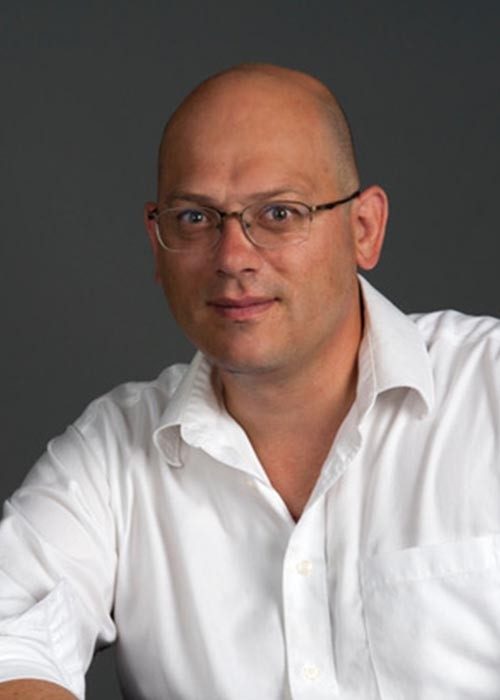
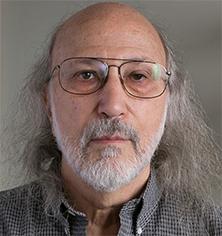
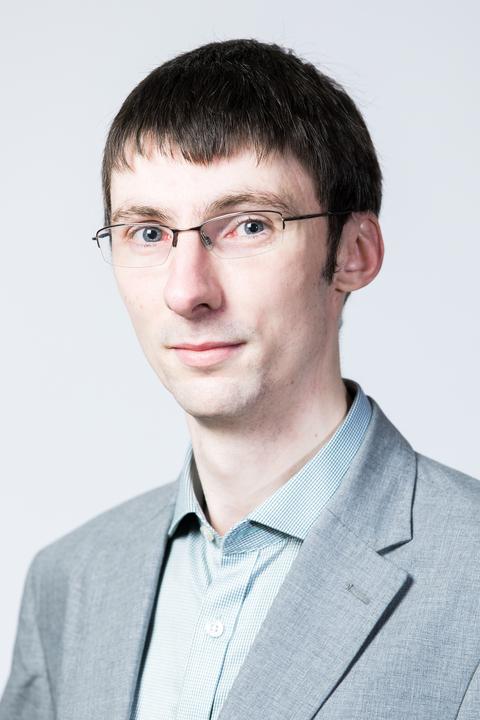
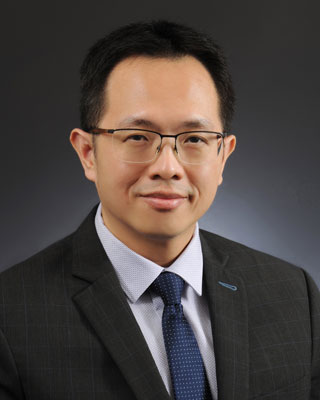
Eric Barthélemy is a University Professor at Grenoble Institute of Technology (ENSE3) and has been a member of the Laboratory of Geophysical and Industrial Flows (LEGI) since 1989. His research focuses on wave dynamics , coastal physics , and hydro-sedimentary mechanisms driving coastal evolution. Research Interests Gravity wave and soliton gas dynamics Coastal morphological changes (event and long-term scales) Vorticity dynamics in surge zones Sediment transport mechanisms (sheet/plug flow) Substrate stability under non-permanent flows Publications & Research Trends : His work spans experimental (wave channels, wind tunnels), analytical, and numerical studies of shallow water wave turbulence, rip current vorticity, sediment transport in coastal zones, and soliton gas statistics. Collaborations include N. Mordant, H. Michallet, and R. Cienfuegos. Teaching : Lectures on wave mechanics , sediment transport , and free surface flows at the master's level. Labs & Teams : Works with the MEIGE team and utilizes LEGI facilities like the wave channel and variable slope channel. Technical collaborators include J.-M. Barnoud and C. Rousseau (ENSE3).
Darshan Sarojini is an Assistant Professor in the Aerospace and Ocean Engineering Department at Virginia Tech (College of Engineering). His research focuses on Multidisciplinary Design, Analysis, and Optimization (MDAO) , Certification-Driven Aircraft Design , and Systems Engineering , with applications in Urban Air Mobility (UAM) and electric vertical takeoff and landing (eVTOL) systems. He leads the Intelligent Design Optimization (IDOpt) Lab , which develops advanced methods for complex engineering systems design. Education: Ph.D. & M.S. in Aerospace Engineering, Georgia Institute of Technology M.S. in Computational Science and Engineering, Georgia Tech B.E. in Mechanical Engineering, B.M.S. College of Engineering, India Research expertise includes integrating Model-Based Systems Engineering (MBSE) with MDAO, high-performance computing (HPC) workflows, and structural optimization under dynamic loads. He has served as Technical Discipline Chair for the AIAA Modeling and Simulation Technologies committee and contributed to NASA ULI projects. Recent work emphasizes large-scale MDO of eVTOL concepts, certification-constrained design, and computational frameworks for aircraft systems. He has mentored students from the ENLACE program and collaborated with industry partners like Archer Aviation and Aurora Flight Sciences. Honors include Best Application Paper Awards at IFToMM 2015 and the 2015 National Conference on Machines and Mechanisms. His lab actively engages in student competitions (e.g., IndySCC) and promotes broader participation in HPC through workshops.
Luca Massa is an Associate Professor in the Kevin T. Crofton Department of Aerospace and Ocean Engineering at Virginia Polytechnic Institute and State University , where he has served since 2016. His research centers on chemically reactive flows and the multi-scale coupling between fluid dynamics and thermochemistry in high-speed flight. Education Ph.D. in Aerospace Engineering – Mississippi State University B.S. in Mechanical Engineering – Politecnico di Bari, Italy Research Interests Massa’s work seeks innovative ways to couple fluid and chemical scales to improve aerospace-vehicle performance. In hypersonic transition he studies how acoustic modes interacting with fluid thermochemistry can delay turbulence onset, enabling lighter thermal-protection systems and larger payloads. In plasma-coupled combustion he develops computational models to exploit weakly-ionized plasma for radical generation and controlled ignition in high-speed combustors. Publication Trends His 2023-2025 publications reveal an intense focus on solid-fuel scramjets , plasma-assisted ignition , and hypersonic heat-flux reconstruction . The body of work integrates large-eddy simulation, reduced-order modeling, and experimental validation to advance understanding of combustion instability, detonation dynamics, and thermal management in extreme environments. Contact & Resources Office: Virginia Tech Swing Space, Room 232, 1600 Innovation Drive, Blacksburg, VA 24061 Email: lmassa@vt.edu Phone: (540) 231-6940 Google Scholar: Profile
Kara Maki is a Professor in the School of Mathematics and Statistics at the Rochester Institute of Technology (RIT), serving as Director of the Applied and Computational Mathematics MS Program. She holds a BS from the University of New Hampshire and MS and PhD degrees from the University of Delaware. Her research focuses on mathematical modeling of fluid dynamics, particularly tear film dynamics, droplet evaporation, and interfacial phenomena. She has contributed to understanding biological systems like ocular surfaces and respiratory models, as well as engineering applications in microfluidics and materials science. Dr. Maki teaches advanced courses such as Mathematical Modeling I & II, Differential Equations, and supervises graduate research through capstone and thesis programs. Her work bridges applied mathematics with interdisciplinary fields, including collaborations on tear film mechanics, nanoparticle behavior, and viral infection modeling. She actively engages in educational outreach through programs like the SMASH Experience for Girls, promoting STEM education for underrepresented groups. Her publications span topics from evaporation-driven flows to contact lens mechanics, with notable contributions to the Journal of Engineering Mathematics, Journal of Aerosol Science, and Langmuir. While no formal awards are listed, her research has garnered attention for its practical implications in healthcare and engineering. Ongoing projects include computational modeling of biological systems and the development of low-cost microfluidic devices.
Joel Koplik is a Professor of Physics at the City College of New York (CCNY), affiliated with the Levich Institute. His research focuses on fluid dynamics, colloid science, and molecular dynamics simulations, particularly investigating interfacial phenomena, nanoparticle behavior, and thermocapillary migration. Recent work explores active colloids, Janus motors, and self-propulsion mechanisms at fluid interfaces. Key research areas include the dynamics of droplets under electric fields, surfactant effects on interfacial deformation, and the hydrodynamic interactions of colloids in confined geometries. His studies often bridge nanoscale and macroscopic fluid behaviors, with applications in materials science and nanotechnology. Publications highlight advancements in understanding capillary bridges, thermocapillary migration in particle-laden systems, and the design of self-propelled nanomotors. Collaborative projects, such as the 2007 proposal on nanoparticle separation using patterned surfaces, underscore his interest in experimental and computational fluid dynamics. Awards and grants are not explicitly listed, but his extensive publication record reflects sustained contributions to interdisciplinary fluid mechanics and soft matter physics.
Prof. Erik Toorman is a leading academic at the KU Leuven within the Faculty of Engineering Science and Department of Civil Engineering . He serves as Head of the Hydraulics and Geotechnics unit and Program Director for Water Resources Engineering. His work bridges theoretical and applied research in sediment mechanics, computational fluid dynamics, and coastal morphodynamics. Key Roles: Promotor for multiple EU/FWO projects, Lecturer in hydraulic engineering, Scientific advisor to Flanders Hydraulics Research. Research Focus: His expertise spans cohesive/non-cohesive sediment transport , two-phase flow dynamics , fluid mud rheology , and microplastics dispersal . Recent projects include nature-based coastal defense (e.g., Lanice conchilega polychaete), high-concentration sediment modeling, and plastic flux quantification in the Scheldt estuary. Publications reveal a strong emphasis on CFD for ship-mud interactions , validated morphodynamic models , bio-geomorphodynamic approaches , sediment-turbulence coupling . Teaching: Coordinates courses like Hydraulics , Sediment Mechanics , and Research Methods for Civil and Water Resources Engineering programs. Collaborations: Partners include Flanders Hydraulics Research , Vrije Universiteit Brussel , and international dredging consultants (DEME, Jan de Nul). He leads the COSINUS and PLUXIN projects, integrating sediment transport with climate resilience and plastic pollution mitigation.
Craig Dutton is a Professor Emeritus at the Department of Aerospace Engineering, University of Illinois at Urbana-Champaign (UIUC). He holds affiliations within the College of Engineering and has served in multiple academic leadership roles, including Head of the Department of Aerospace Engineering (2007–2011) and Abel Bliss Professor (2007–2012). His academic journey includes a Ph.D. in Mechanical Engineering (ME) from UIUC (1979), an M.S. in ME from Oregon State University (1975), and a B.S. in Mechanical Engineering from the University of Washington (1973). Research Interests : Dutton’s work focuses on experimental fluid mechanics, particularly high-speed separated flows, shock wave interactions, and laser diagnostics. His research spans gas dynamics, compressible turbulence, and flow control, with applications in aerospace and biomedical engineering. Notable areas include supersonic base flows, jet dynamics, and cell-matrix interactions in engineered tissues. Selected Contributions : His publications cover over 200 peer-reviewed articles, emphasizing experimental methodologies like particle image velocimetry (PIV) and pressure-sensitive paint. Recent work includes studies on supersonic shear layers, plasma actuator control, and freezing-induced cell deformation. He has advised numerous undergraduate students in research projects, including UROP programs from 2015–2020. Labs & Mentorship : Dutton has mentored PhD students through the Mavis Future Faculty Fellows Program (2016–2021) and contributed to academic leadership in UIUC’s College of Engineering. His research facilities include the Talbot Laboratory, where his team conducts high-speed flow experiments.
Prof. Yanzhong Li is a Professor at the Department of Refrigeration and Cryogenic Engineering, Xi'an Jiaotong University, China. He serves as Editor-in-Chief of the journal Cryo and leads research in Thermal Engineering, Cryogenic Engineering, and Fluid Dynamics. His work focuses on cryogenic fluid dynamics, hydrogen liquefaction systems, and phase change phenomena in energy systems. Key affiliations include the Department of Refrigeration and Cryogenic Engineering at Xi'an Jiaotong University, with additional collaborations across institutions such as the State Key Laboratory of Mining Response and Disaster Prevention (Anhui University) and the School of Hydrology and Water Resources (Nanjing University). Co-authored papers with 264 collaborators, including Bengt Sunden and Chengfeng Zhu. Research interests emphasize cryogenic applications in aerospace, thermal systems optimization, and multiphase flow dynamics. Editorial leadership in Cryo reflects his commitment to advancing cryogenic science.
Roberto Verzicco is a Full Professor at the University of Twente's MESA+ Institute, specializing in the Physics of Fluids. His research focuses on fluid dynamics, thermal convection, and computational fluid dynamics (CFD), with particular emphasis on non-Newtonian fluids and turbulence. He has contributed to advancing numerical methods for simulating complex fluid systems, including porous media flows and phoretic particle dynamics. Key research areas include direct numerical simulation (DNS), heat and momentum transport, and rheological modeling. His work integrates computational approaches with experimental insights, addressing challenges in melting phenomena, multiphase flows, and parameter identifiability in fluid models. Collaborations with researchers like Detlef Lohse and Roberto Stevens highlight his engagement in international networks. His datasets and presentations underscore contributions to understanding rotating Rayleigh-Bénard convection and confined thermal systems. Supervision of 15 works reflects his academic mentorship.
Kevin Hanley is Senior Lecturer and Deputy Head of Research Institute at the University of Edinburgh's School of Engineering, specializing in Chemical Engineering. His research focuses on discrete element method (DEM) simulations of granular systems with applications in geotechnics and industrial processes. Research investigates particle behavior in pneumatic conveying, soil mechanics, and filtration systems. Leads the CCC-ParaSolS computational community and develops geoLAMMPS for soil mechanics simulations. Teaching includes Chemical Engineering Design and supervision of research projects.
Brian Peterson holds the position of Personal Chair of Advanced Laser Diagnostics within the School of Engineering at the University of Edinburgh, where he serves as a Professor in the Department of Mechanical Engineering. His research focuses on advanced experimental techniques for combustion and thermofluids, with particular emphasis on flame-wall interactions, turbulent flow dynamics, and pyrolysis processes. He actively supervises PhD students and leads multiple high-impact research projects funded by major international bodies. Research Expertise: Professor Peterson specializes in cutting-edge laser diagnostics including Particle Image Velocimetry (PIV), phosphor thermometry, and wavelet-based optical flow velocimetry (wOFV). His work investigates fundamental combustion phenomena in internal combustion engines, fire safety applications, and biomass combustion systems. Key contributions include high-speed measurements of flame-vortex interactions, pyrolysis front tracking in solid fuels, and surface temperature mapping during flame-wall quenching events. Publication Trends: Recent publications (2022-2025) demonstrate a strong focus on high-speed diagnostics for resolving transient combustion phenomena in narrow passages and turbulent boundary layers. His work integrates combustion science, fluid dynamics, and thermofluids to address challenges in engine efficiency, fire safety, and hydrogen combustion. The research consistently emphasizes experimental validation through advanced optical techniques capable of kHz-rate measurements. Research Leadership: Professor Peterson serves as Principal Investigator on multiple funded projects including: Unresolved fluid mechanics at liquid/gas interfaces for atomizing sprays (UKRI, 2023-2028) Premixed flame-wall interaction in turbulent boundary layers (EPSRC, 2021-2025) EPIC: Energy transfer Processes at gas/wall Interfaces under extreme Conditions (European Commission, 2017-2023) He has secured funding from EPSRC, UKRI, European Commission, and industry partners for combustion diagnostics and thermofluids research. Facilities and Collaborations: Based in the James Clerk Maxwell Building (Room 2.2415), he contributes to the Multiscale Thermofluids Research group and has developed specialized datasets on aerosol dispersion for virus transmission risk mitigation. His work involves international collaborations with institutions in Germany (Technical University of Darmstadt) and industry partners in automotive and energy sectors.
Lin Ma is a Senior Lecturer at the University of Manchester, specializing in multi-scale imaging and characterization of rocks for geoenergy applications. She holds leadership roles including Head of International Student Recruitment in the Faculty of Science and Engineering (FSE) and Academic Lead for the Women@Manchester staff network (~800 members). Her research focuses on digital rock physics, subsurface energy storage, and machine learning-assisted analysis. She leads major grants totaling over £2M as Principal Investigator (PI) and £8M as Co-Investigator (Co-I) in UKRI/industrial projects. Notable roles include Deputy Editor-in-Chief of Marine and Petroleum Geology and Vice Chair of the Energy Group at The Geological Society. Education: PhD (Petroleum Geosciences, University of Manchester, 2012–2016), MSc (Petroleum Geology, Jilin University, 2009–2012), BSc (Petroleum Geology, Jilin University, 2005–2009). Research interests span shale gas, carbon storage, geothermal energy, and synchrotron-based imaging. She has secured >80 synchrotron beamtime days at facilities like Diamond Light Source and Stanford Synchrotron Radiation Lightsource. Research highlights include 4D imaging of porous material evolution under subsurface conditions (temperature/pressure/chemistry) and machine learning for upscaling microstructure analysis. Collaborations span global institutions, including the Brazilian Synchrotron Light Laboratory (LNLS) and European Synchrotron Radiation Facility (ESRF). Awards include NERC Independent Fellowship (2018) and STFC Rutherford Fellowship (2018). Teaching includes courses on subsurface modeling and engineering design. Current projects include the University of Manchester at Harwell campus and hydrogen storage feasibility studies. Supervised 10+ PhD students and postdoctoral researchers, with active labs focused on energy decarbonization and subsurface engineering.
Prof LEE Poh Seng is a Professor and Head of the Department of Mechanical Engineering at the National University of Singapore (NUS), affiliated with the College of Design and Engineering. He holds a PhD from Purdue University and has extensive expertise in thermal systems, microfluidics, and solar energy solutions. His research focuses on high-performance cooling techniques, waste heat recovery, and solar thermal systems. He has developed novel passive methods to enhance microchannel heat sinks and holds 2 US patents. Education: PhD in Mechanical Engineering, Purdue University (2007) MEng in Mechanical Engineering, NUS BEng (1st Class Honors) in Mechanical Engineering, NUS Research interests span: High efficiency cooling for electronics (single/two-phase microchannel systems) Solar energy harvesting and thermal storage Low-grade waste heat recovery Innovative heat transfer enhancement techniques Key publications (2005–2012) focus on microchannel heat transfer, flow boiling dynamics, and wavy channel optimization. Awards include the Tan Kah Kee Young Inventors Award (2009) and IES Engineering Achievement Award (2011). He teaches modules like Heat Transfer and Applied Thermodynamics.
Associate Professor Pierre Rognon is a researcher in the School of Civil Engineering at the University of Sydney, specializing in granular mechanics and geomechanics. His research focuses on predicting soil failure mechanisms, landslides, and avalanche dynamics to enhance safety measures. He holds a PhD from École Nationale des Ponts et Chaussées (France). Research interests include dense granular flows, soil-structure interaction, and the rheology of particulate materials. He collaborates with industry partners like Abergeldie and Transgrid to address challenges in geotechnical engineering, energy storage, and infrastructure design. Current projects involve optimizing energy farm foundations and developing cost-effective soil anchors. Pierre has authored over 80 peer-reviewed articles, including studies on granular diffusion, shear-induced phenomena, and machine learning applications in granular analysis. His work bridges geophysics, materials science, and computational modeling. He advises students on topics like desiccation crack impacts and energy infrastructure resilience. Key collaborations include partnerships with CNRS (France) for granular dynamics research and the development of the patented Stadium Shear Device to study dense granular flows. His research also extends to biomimetic anchor designs inspired by tree roots.
Meissam Bahlali is a Researcher at Imperial College London's Department of Earth Science & Engineering within the Faculty of Engineering, part of the Novel Reservoir and Simulation group (NORMS). He specializes in fluid mechanics and applied mathematics with applications to porous media flow, geothermal energy, and atmospheric dynamics. Educational Background: PhD in Fluid Mechanics (2015-2018) from CEREA, École des Ponts ParisTech/EDF R&D Postdoctoral Researcher at Aix-Marseille Université (2020) Research Associate at Imperial College London (2019) Research Focus: His work spans stochastic fluid mechanics models, unstructured adaptive mesh techniques for density-dependent flows in porous media, lattice Boltzmann methods for moving boundaries, and applications to saline intrusion, geothermal storage, and copper transport in sedimentary basins. He has contributed to over 15 peer-reviewed publications and presented at major conferences like AGU, EGU, and SEG. Teaching & Supervision: He has supervised 1 PhD and 2 MSc students (2024), taught MSc courses on geo-energy systems, and delivered training sessions on computational fluid dynamics. He also served as an examiner for a PhD defense on Lagrangian pollutant dispersion models. Affiliations: Active in NORMS group, with links to ResearchGate, LinkedIn, and a personal website. His work integrates numerical methods, geoscience, and environmental engineering to address challenges in resource modeling and climate systems.