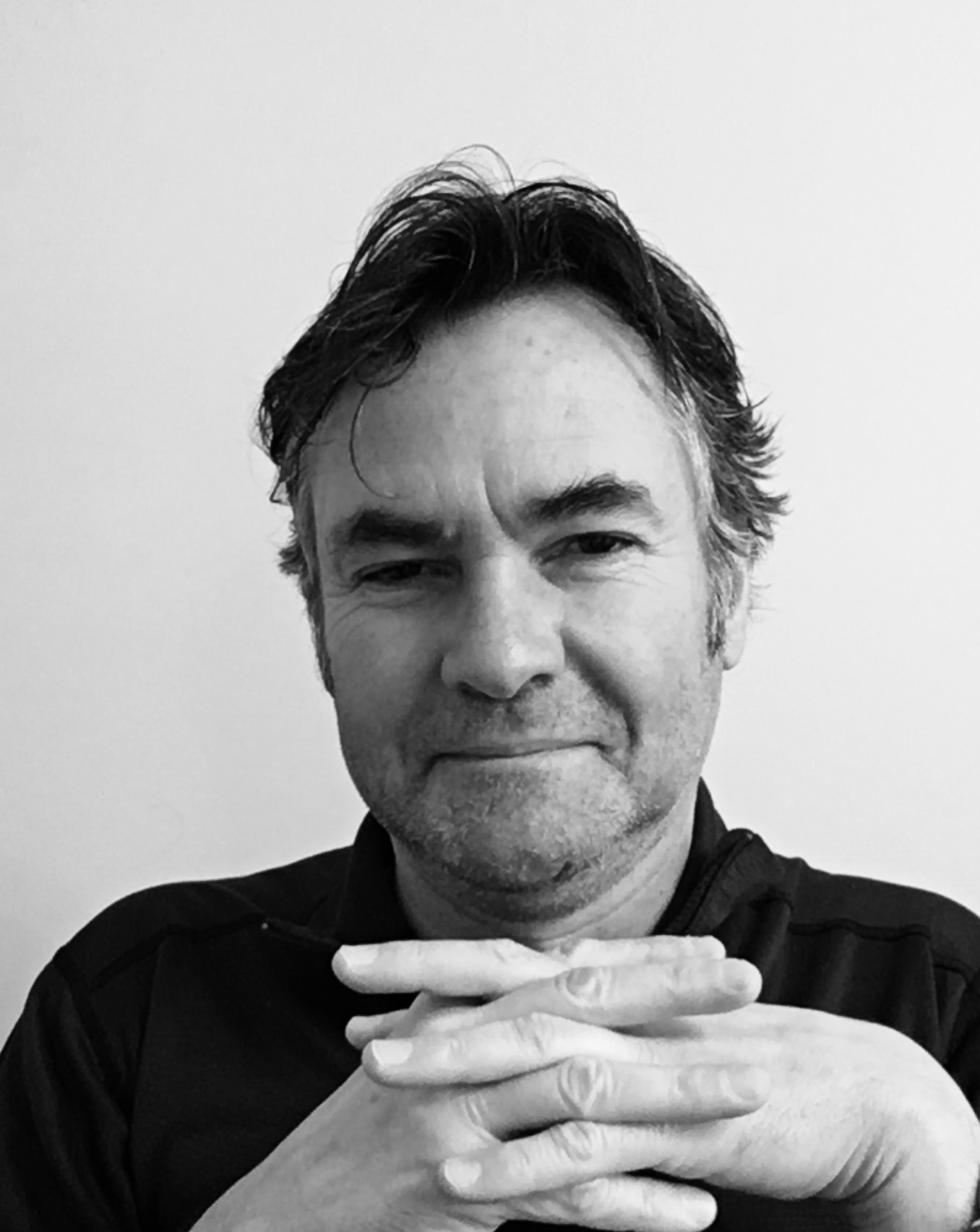
Dr. Horia Hangan is a Professor of Mechanical Engineering and Canada Research Chair in Adaptive Aerodynamics at Ontario Tech University's Faculty of Engineering and Applied Science. He holds an adjunct professorship at Western University. His research focuses on Experimental Fluid Mechanics, particularly bluff body aerodynamics, turbulent coherent structures, and aerodynamic control, with applications to buildings, vehicles, and aerostructures. He pioneered the WindEEE Dome, a unique facility simulating complex 3D wind flows, enabling studies of tornado-like vortices and non-Gaussian wind phenomena. Education: PhD in Wind Engineering from Western University (1996), Diplomat Engineering Degree in Aeronautics from the Polytechnic University of Bucharest (1985). Research interests include downburst dynamics, wind–structure interaction, and renewable energy. Over 150 publications span experimental and numerical studies of tornado-like vortices, downburst flows, and wind turbine performance. Notable awards include the CSME Fellowship (2016), ENR News Maker of the Year (2015), and the ASME Lewis F. Moody Award (2010). His work bridges fundamental aerodynamics with practical engineering solutions for wind-related challenges.
Scott T. M. Dawson is an Assistant Professor in the Mechanical, Materials, and Aerospace Engineering Department at Illinois Institute of Technology (Illinois Tech). He holds positions in the Armour College of Engineering and leads research at the intersection of fluid mechanics, dynamical systems, control theory, and data science. His work focuses on extracting dynamic models from large datasets to analyze and control turbulent flows and unsteady aerodynamic systems. Education includes a Ph.D. and M.A. from Princeton University (2017, 2013), and B.Eng. and B.S. degrees from Monash University (2010, 2009). Prior to Illinois Tech, he was a postdoctoral scholar at Caltech’s Graduate Aerospace Laboratories under Prof. Beverley McKeon. Research interests emphasize reduced-order modeling, data-driven techniques for fluid flows, and flow control applications. His group’s work is supported by NSF, AFOSR, and DOE grants. Recent projects include sparsity-promoting methods for flow analysis, wavelet-based resolvent analysis, and neural network-driven flow control systems. Publications span over 60 peer-reviewed articles, with a focus on turbulence modeling, transient flow dynamics, and machine learning integration in fluid mechanics. Key contributions include novel algorithms for isolating amplification mechanisms in wall-bounded flows and robust neural network frameworks for closed-loop flow stabilization. Grants and collaborations include multi-year NSF CAREER funding for automated distillation of coherent flow structures. Ongoing efforts explore time-localized spectral methods, nonlinear dimensionality reduction, and hydrogen decarbonization in vehicular systems.
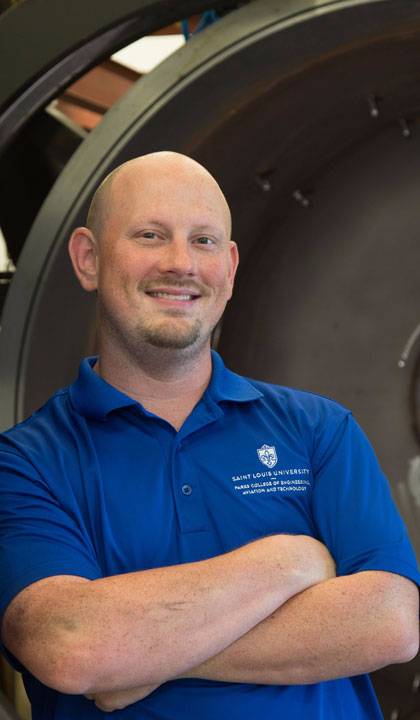
Mark McQuilling is an Associate Professor of Aerospace and Mechanical Engineering at Saint Louis University's School of Science and Engineering. He holds a Ph.D. in Engineering from Wright State University, alongside M.S. and B.S. degrees in Mechanical Engineering from the University of Kentucky. His research focuses on experimental fluid mechanics, low Reynolds number flows, laminar-to-turbulent transition, airfoil design, unsteady aerodynamics (turbomachinery and airdrop systems), bio-fluid flows, and flow control. His work integrates advanced fluid dynamics techniques with practical applications in aerospace and biomedical engineering. Dr. McQuilling oversees the Fluid Systems Laboratory, which includes subsonic and supersonic wind tunnels, a water tunnel, and thermal system facilities. These labs support undergraduate and graduate research, with capabilities such as Laser Doppler Velocimetry, DPIV systems, and strain gauge balances. His thermal research spans micro-scale fluid phenomena to planetary atmospheric modeling, including studies on Uranus/Neptune vortex dynamics and airdrop parachute aerodynamics. Highlighted research areas include low-pressure turbine blade aerodynamics, parachute drag prediction, and bio-fluid studies like pharyngeal airflow analysis in sleep apnea patients. His peer-reviewed publications (over 20 entries) address topics ranging from micro-air vehicle wing design to thermal management in turbine blades. McQuilling is active in professional organizations like AIAA, ASME, and ASEE, and previously worked at the Air Force Research Laboratory. His email is mark.mcquilling@slu.edu.
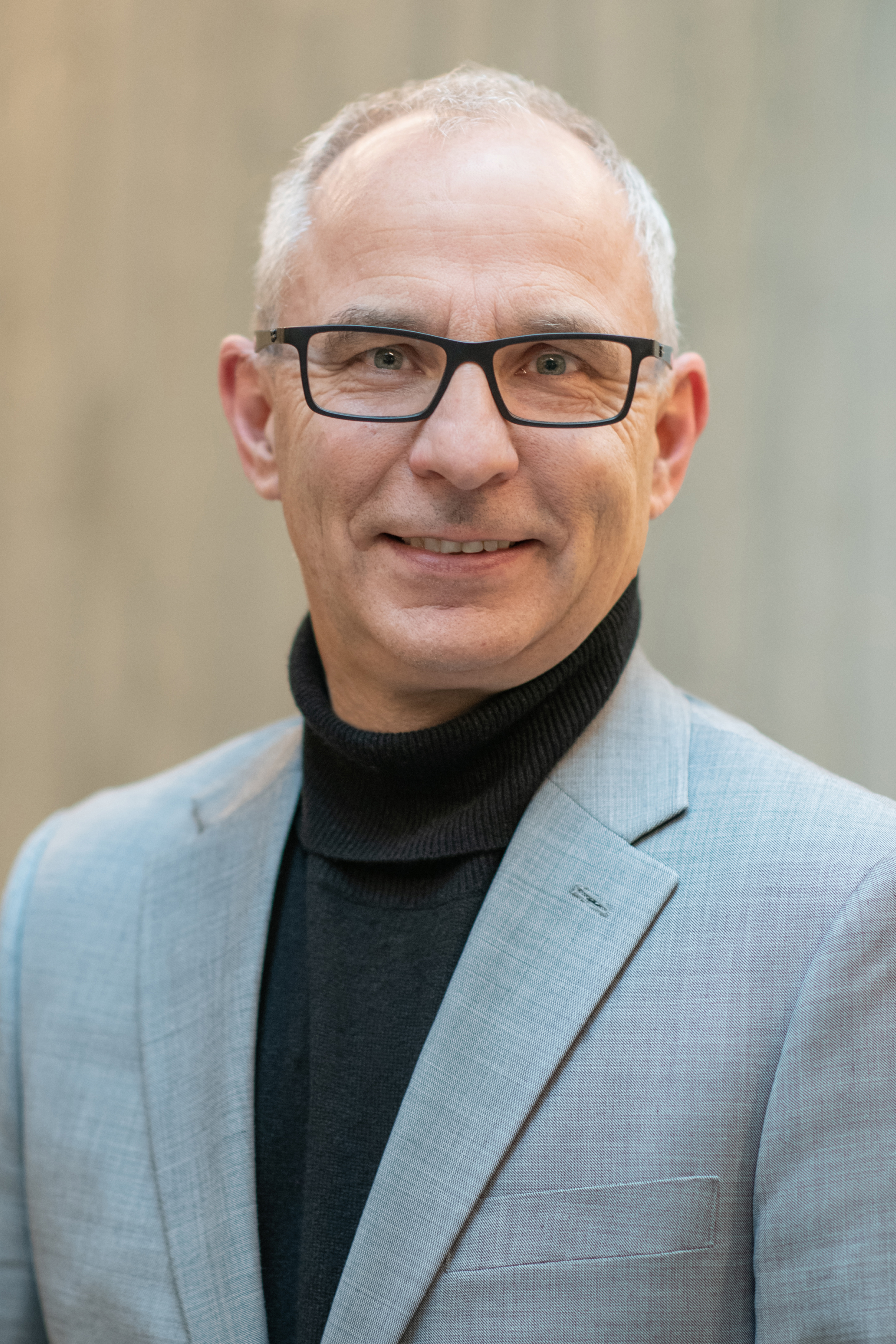
Prof. Karsten Urban is a Full Professor of Numerical Mathematics at the University of Ulm, leading the Institute for Numerical Mathematics. He holds roles such as Dean of Studies in Computational Science and Engineering (CSE) and Deputy Spokesman for the Research Association for Scientific Computing in Baden-Württemberg. He is an active member of prestigious societies including the Deutsche Mathematikervereinigung (DMV) and SIAM. His academic journey includes a PhD from RWTH Aachen (1995), Habilitation (2001), and a full professorship at Ulm since 2005. Research focuses on numerical methods for PDEs, reduced basis techniques, multiscale simulations in fluid mechanics, biomechanics, quantum sciences, and financial mathematics. He has pioneered wavelet-based methods and collaborated with industries on ship propulsion and energy trading models. His work integrates mathematical rigor with real-world applications, emphasizing model reduction and computational efficiency. Editorial Roles: Managing Editor of Advances in Computational Mathematics , Editor of SN Partial Differential Equations and Applications . Awards: Teaching award of Baden-Württemberg (2005), Science-Economy Cooperation Awards (2004, 2008). Administrative Roles: Member of the University Council and ASIIN expert committee. Supervises doctoral students in numerical analysis, quantum simulations, and biomechanics. Active in interdisciplinary projects, including quantum systems (IQST) and fracture healing modeling in collaboration with biomechanics experts. His contributions bridge academia and industry, driving innovation in computational methods.
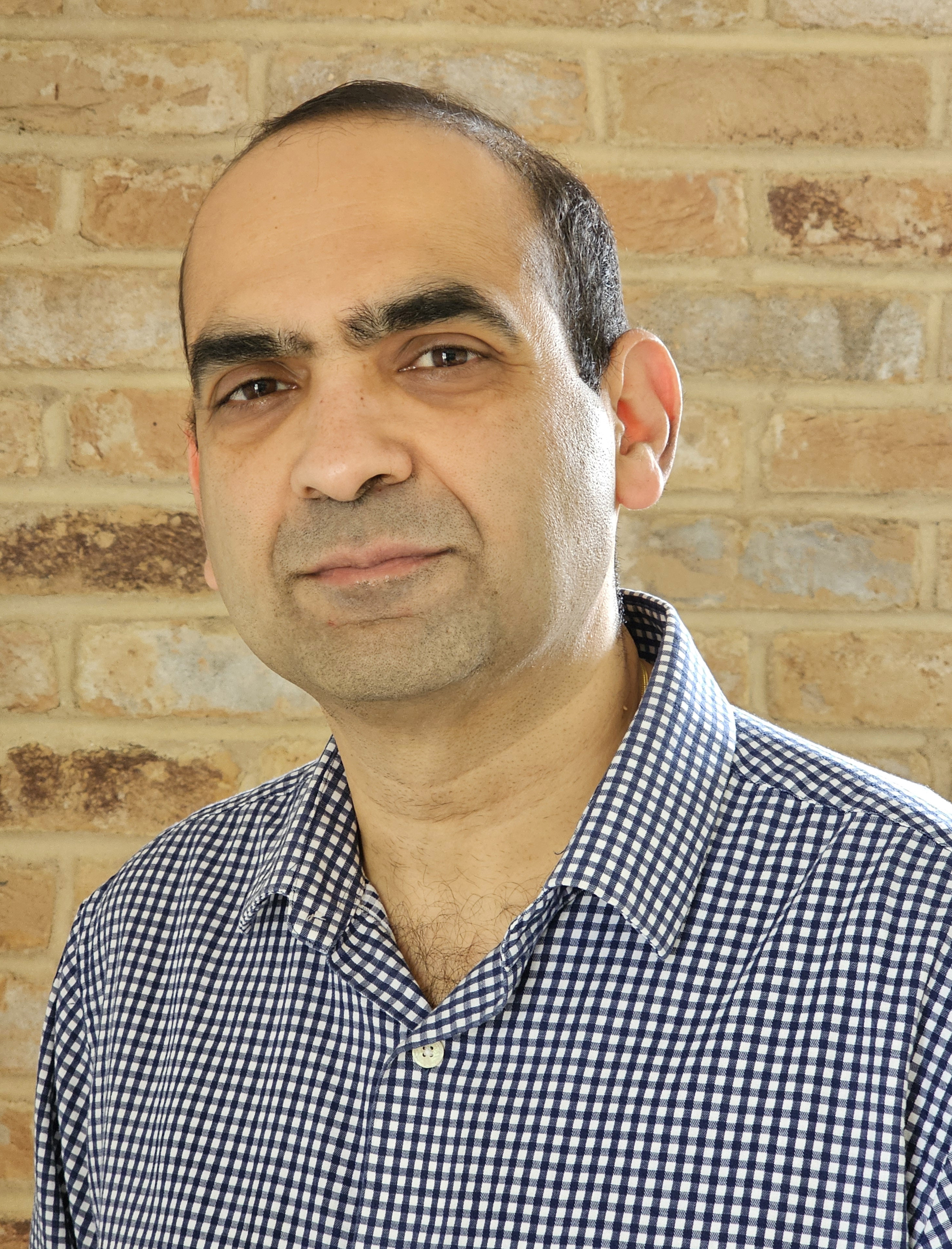
Vikram Deshpande is a Professor in the Department of Engineering at the University of Cambridge, UK, where he has been employed since 2010. He also maintains significant international connections, having served as a Visiting Professor at the Technical University of Eindhoven (2009-2017) and previously holding positions at the University of California, Santa Barbara and Brown University. His research spans multiple disciplines within solid mechanics and materials science, focusing on fundamental mechanisms that govern material behavior across different scales. His research interests encompass Mechanobiology , where he explores cellular organization mechanisms; Solid mechanics with applications to impact and failure; Data-driven mechanics approaches; Microarchitectured solids including mechanical metamaterials; Fluid-structure interaction in impact scenarios; Chemo-mechanics of battery materials; and Dislocation mechanics for understanding material deformation. His work uniquely bridges fundamental physics with practical engineering applications, particularly in developing materials with tailored mechanical properties. The analysis of his recent publications reveals a strong focus on mechanical metamaterials, cellular mechanics, and electro-chemo-mechanical phenomena in energy storage systems. His research demonstrates a consistent pattern of addressing fundamental scientific questions while maintaining strong connections to practical engineering applications, particularly in materials design, protective systems, and energy technologies. His publications frequently combine experimental approaches with sophisticated modeling techniques across multiple scales. 2024 Zdeněk P. Bažant Medal for Failure and Damage Prevention 2023 Fellow, Royal Academy of Engineering and International Member US National Academy of Engineering 2022 Warner T. Koiter Medal and William Prager Medal 2022 European Research Council (ERC) Advanced Grant 2021 Gili Agostinelli Prize and IIT Bombay Distinguished Alumnus Award 2020 Fellow, Royal Society of London and Rodney Hill Prize Professor Deshpande has served on numerous editorial boards including the Journal of the Mechanics and Physics of Solids (current Associate Editor), Modelling and Simulation in Materials Science and Engineering, and Proceedings of the Royal Society A. He chairs the Royal Society Sectional Committee 4 and serves on the Advisory Board of the European Mechanics Society EUROMECH. His leadership extends to directing the International Conference on Fracture and chairing the EUROMECH Mechanics of Materials Conference committee. His research group at Cambridge, accessible through cambridgesolidmechanics.co.uk, focuses on developing fundamental understanding of material behavior to enable the design of next-generation engineering materials.
Fahim Khan is an Assistant Professor in the Department of Computer Science and Software Engineering at California Polytechnic State University’s College of Engineering. He specializes in computer graphics, data visualization, computer vision, and machine learning, with a focus on applying these technologies to education, environmental monitoring, and public safety. His research emphasizes making complex data accessible through advanced tools, bridging the gap between raw data and actionable insights. He is deeply committed to inclusive education and fostering interdisciplinary collaboration. His work often integrates citizen science initiatives, empowering communities through mobile applications and machine learning. Notable projects include real-time rip current detection systems and platforms for high school students to engage in research. Khan advocates for equity in technology, designing inclusive learning environments and promoting diversity in STEM. He actively supports the university’s Learn by Doing philosophy, blending practical education with theoretical rigor. Professionally, he contributes to coastal observation networks and autonomous vehicle datasets while maintaining a balance through outdoor activities like exploring Pismo Beach. His research trends reflect a strong focus on mobile computing, environmental applications, and education technology, with recent efforts emphasizing citizen science and data-driven solutions. While no formal grants or advising records are detailed, his projects implicitly involve collaborative efforts. He is affiliated with labs focused on environmental monitoring and mobile technology development, though specific lab names are not mentioned.
Dr. Kidambi Sreenivas is an Associate Professor in Mechanical Engineering at the University of Tennessee at Chattanooga (UTC), affiliated with the College of Engineering and Computer Science. He holds a PhD in Mechanical Engineering and specializes in computational fluid dynamics (CFD), with a focus on unstructured multi-physics flow solvers and applications in aerospace, environmental systems, and biomedical engineering. His research bridges academia and industry, collaborating with NASA, the U.S. Navy, Department of Energy, and private companies. Dr. Sreenivas' research interests include rotating machinery simulations, pre-conditioners for non-ideal fluids, and real-world applications such as submarine hydrodynamics, wind farm optimization, aerodynamic efficiency of vehicles, and contaminant dispersal modeling. He has pioneered methods for simulating complex geometries and physics, including high-fidelity simulations of hypersonic vehicles, weapons bay cavities, and shock-wave interactions. Recent work emphasizes advanced CFD methodologies for high-speed flows, thermal effects on turbulence, and aerothermal characteristics of hypersonic test articles. His collaborations have led to practical solutions for drag reduction on Class 8 trucks and improved accuracy in wind turbine modeling. Dr. Sreenivas also contributes to educational initiatives, such as developing PIV systems for undergraduate fluid mechanics labs. His advising and grants reflect partnerships with federal agencies and private sectors, focusing on projects like microplastic sampling devices for stormwater management. These projects highlight his interdisciplinary approach to solving real-world engineering challenges through cutting-edge computational methods.
Benoît Valley is a Full Professor at the University of Neuchâtel's Faculty of Science and Director of the Centre for Hydrogeology and Geothermics (CHYN). He specializes in geomechanics, geothermics, and hydrogeology, focusing on stress and fracture characterization in rock masses. His work addresses geothermal energy, CO2 storage, and nuclear waste sequestration. Education: PhD from ETH Zurich (2007), followed by research roles at MIRARCO Canada and ETH Zurich. Appointed to University of Neuchâtel in 2014 as Assistant Professor, promoted to Full Professor in 2020. Research interests include stress field dynamics, hydraulic stimulation, and fracture network analysis. Awards include the Bernard Kübler and Jean Landry Prize (2002). Teaching includes courses on geosciences, hydrogeology, and geothermal energy at undergraduate and graduate levels. Key initiatives: Leadership in CHYN, involvement in Swiss geoscience platforms, and contributions to projects like SPINE (EU-funded) and TIBEX (SFOE-funded). Labs: Established the Geothermics and Geomechanics Laboratory at CHYN, focusing on deep geothermal systems and reservoir engineering.
Elena Celledoni is a Professor in the Department of Mathematical Sciences at the Norwegian University of Science and Technology (NTNU). She has been employed at NTNU since 2004 and has held the position of professor since 2009. She is a member of the Differential Equations and Numerical Analysis Group at the Department of Mathematical Sciences and serves as its leader. Her educational background includes: Master's degree in Mathematics from the University of Trieste (1993) Ph.D. in Computational Mathematics from the University of Padua, Italy (1997) Elena Celledoni's research focuses on numerical analysis, particularly structure preserving algorithms for differential equations and geometric numerical integration. Her work bridges theoretical mathematics with practical computational methods, developing algorithms that maintain the geometric properties of the systems they approximate. She has made significant contributions to Lie group integrators, energy-preserving methods, and the application of these techniques to mechanical systems and shape analysis. In recent years, her research has expanded to include the intersection of numerical methods with machine learning, exploring how structure-preserving approaches can enhance neural networks and data-driven modeling. Her publications demonstrate a clear trend toward integrating traditional numerical analysis with modern machine learning techniques while maintaining a strong foundation in geometric integration and structure preservation. This interdisciplinary approach has led to innovations in neural ODEs, structure-preserving neural networks, and physics-informed machine learning models that respect the underlying mathematical structures of the systems they model. Elena Celledoni has received recognition for her work through the following honors: Member of the Royal Norwegian Society of Sciences and Letters Member of the European Consortium of Mathematics in Industry Council Member of the board of the International Council of Mathematics in Industry and Applications Editorial board member for SIAM Review, Journal of Computational Dynamics, Journal of Geometric Mechanics, Calcolo, and Networks and Heterogeneous Media As an advisor, she has mentored several students including Torbjørn Ringholm who completed his doctoral dissertation on 'Discrete gradient methods in image processing and partial differential equations on moving meshes.' Her research has been supported by various grants enabling her to lead projects on geometric numerical integration, collaborate internationally, and organize significant academic events such as the special semester at Isaac Newton Institute of MS in 2019 on 'Geometry, compatibility and structure preservation.' She leads the Differential Equations and Numerical Analysis Group at NTNU, which focuses on developing and analyzing numerical methods that preserve the geometric structure of differential equations. The group maintains active collaborations with researchers worldwide and has made substantial contributions to advancing the field of geometric numerical integration and its applications to real-world problems.
Dr. Ismail Kul is a Professor of Chemistry at Widener University, affiliated with the Biochemistry (BS) and Chemistry (BA/BS) programs. He holds a PhD in Physical Chemistry from Clemson University (2001). His teaching philosophy emphasizes critical thinking and effective communication skills, ensuring students apply classroom knowledge to real-world contexts. His research focuses on addressing societal challenges through studies of alternative refrigerants, flammability of hydrocarbons, ionic liquid thermodynamics, and medicinal compound behavior. Key projects include investigations into CO₂ solubility in ionic liquids and thermophysical properties of ionic solutions. Dr. Kul has received notable awards including the 2015 Arts & Sciences Outstanding Research Award and promotions to Full Professor (2015) and Associate Professor (2008). He collaborates extensively with colleagues and alumni on studies published in journals like Journal of Physical Chemistry B and Fluid Phase Equilibria . Recent collaborative efforts include research on phenylboronic acid and trans-resveratrol properties with Professors Krishna Bhat, Alexis Nagengast, and alumnae like Alyssa Knox. His work bridges fundamental chemistry with applied solutions for environmental and medicinal domains.
Dr. Harriet Bennett-Lenane is a Lecturer in Clinical Pharmaceutics at the School of Pharmacy, University College Cork (UCC). She holds a BSc(Pharm) from Trinity College Dublin (2017), an MPharm from the Royal College of Surgeons in Ireland (2018), and a PhD in Pharmaceutics from UCC (2022), supported by an Irish Research Council Postgraduate Scholarship. Her research focuses on machine learning applications in drug formulation, computational pharmaceutics, and digital pharmacy practice. She has industry experience in Quality Assurance and Regulatory Affairs roles at Eli Lilly, MSD, and Clinigen. Research Interests include optimizing medicines using AI, improving drug delivery systems, and enhancing pharmacy services for vulnerable patients. Her work bridges academia and industry, emphasizing translational research. Notable Awards: Gold Medal for Pharmaceutics (Trinity College Dublin, 2017), Irish Research Council Postgraduate Scholarship (2018), and Entrance Exhibition Scholar (Trinity College Dublin, 2014). Teaching: Focuses on integrating research-led, active learning approaches in Clinical Pharmacy and Pharmaceutics.
Bauyrzhan Primkulov is an Assistant Professor of Mechanical Engineering at Yale University. His research focuses on interfacial fluid dynamics and soft matter physics, with emphasis on fluid-fluid displacement in disordered environments and hydrodynamic pilot-wave theory. He holds a Ph.D. from MIT (2022) and B.Sc./M.Sc. from the University of Alberta. Primkulov's work bridges theoretical and experimental approaches to address energy and environmental challenges. His team investigates phenomena such as capillary flow dynamics in porous media, wettability effects on displacement patterns, and pilot-wave systems that mimic quantum behaviors. Key contributions include advancing Lenormand's phase diagram for multiphase flows and studying avalanches in imbibition processes. Recipient of InterPore PoreLab Award (2024) and MIT's CEE Best Doctoral Thesis (2022) Expertise spans experimental hydrodynamics, multiphase flow modeling, and granular media mechanics Active in developing novel methods like photoporomechanics to visualize stress fields in fluid-filled granular systems His recent studies explore crossover dynamics between stick-slip and steady sliding regimes in viscous slugs, as well as confinement effects in pilot-wave hydrodynamics. Primkulov collaborates across disciplines to translate fundamental fluid mechanics insights into practical solutions for energy storage and environmental systems.
Dr Xinchen Zhang is a Grant-Funded Researcher (A) at the University of Adelaide's Department of Mechanical Engineering within the School of Electrical and Mechanical Engineering. His research focuses on integrating machine learning with computational fluid dynamics (CFD) to enhance predictive capabilities for multiphase flow solutions, particularly in sustainable energy applications like decarbonization technologies. He holds a PhD (2022) with a Dean's Commendation for Doctoral Thesis Excellence, emphasizing fluid and particle dynamics in particle-laden flows. His work addresses challenges in net-zero industrial processes such as limestone calcination and hydrogen production via methane pyrolysis, leveraging advanced CFD and ML-augmented methodologies. Key research areas include turbulence modeling, particle dispersion in jets, and flow regime analysis in horizontal particle-laden pipe systems. He is eligible to supervise Masters and PhD students as a co-supervisor. Dr Zhang's publications span 2018–2024, with recent trends focusing on physics-informed machine learning for turbulence modeling and multiphase flow optimization. His contributions advance computational efficiency and accuracy in predicting complex fluid-particle interactions.
Somnath Basu is a Professor in the Department of Metallurgical Engineering and Materials Science at the Indian Institute of Technology Bombay. He has been serving in academic roles since 2011, progressing from Assistant Professor to Associate Professor and then to Professor in 2022. His work is deeply rooted in process metallurgy and materials engineering, with a focus on industrial steelmaking technologies. His research interests include metal refining , thermodynamics of slag-metal reactions , phosphorus and sulfur removal , and continuous casting processes . He also explores nanofluids and their transport properties, indicating interdisciplinary engagement. His work bridges fundamental thermodynamic studies with practical industrial applications in iron and steel production. The selected publications reflect a strong trend in steelmaking process optimization , particularly in reaction kinetics , inclusion behavior , and process monitoring . His research spans both experimental investigations and thermodynamic modeling, targeting improvements in steel purity and casting efficiency. Scientific Contributions: Published in leading journals such as ISIJ International , Steel Research International , and Metallurgical and Materials Transactions B . Contributions to understanding phosphorus partitioning, nozzle clogging, and nanofluid conductivity. While no specific students or grants are listed, his long-standing academic position and publication record suggest active supervision of graduate research and involvement in funded projects related to metallurgical process innovation. His work likely supports both academic and industrial advancements in steel technology. He is affiliated with a leading research department equipped with advanced facilities for metallurgical experimentation and process simulation, though specific lab names or team structures are not mentioned in the text.
Brian Kirby is the Meinig Family Professor in the Department of Mechanical Engineering at the College of Engineering, Cornell University. He is a leading researcher in microfluidics, biomedical engineering, and cancer diagnostics, with a strong emphasis on circulating tumor cells (CTCs), rare cell isolation, and biophysical forces in disease. His work bridges engineering, biology, and clinical medicine. Institution: Cornell University School: College of Engineering Department: Mechanical Engineering Rank: Professor Education: Stanford University, 2001 Brian Kirby's research focuses on developing and applying microfluidic technologies to solve biomedical challenges. His work centers on microfluidic rare cell capture , particularly circulating tumor cells (CTCs) , enabling early cancer detection and monitoring treatment response. He investigates biophysical forces such as shear stress and surface interactions in conditions like thrombosis and cancer metastasis. His lab also works on dielectrophoresis , acoustophoresis , and electrokinetics for cell separation and analysis. Additional interests include bioinstrumentation , lab-on-a-chip devices , and fluid mechanics in biological systems . His recent publications show a consistent focus on microfluidic diagnostics, cancer biophysics, and smart fluid systems. Articles span topics from CTC isolation in prostate and pancreatic cancers to thrombosis in medical devices and programmable viscosity metamaterials . The research integrates engineering design with clinical applications, often involving interdisciplinary collaboration. Scientific Awards: Creative Teaching Award, Cornell Center for Teaching Innovation Advising Award, College of Engineering, Cornell University, 2015 Research Award, College of Engineering, Cornell University, 2015 Brian Kirby is actively involved in advising and research mentorship. While specific student names are not listed in the provided text, his extensive publication record and leadership of a research group indicate active supervision of graduate students and postdoctoral researchers. His research is supported by grants related to cancer diagnostics, microfluidics, and biomedical engineering, though specific grant details are not provided. He has contributed to the development of novel microfluidic devices such as the GEDI (Geometrically Enhanced Differential Immunocapture) platform for CTC capture and functional analysis. Labs and Teams: Kirby leads a research laboratory at Cornell focused on microfluidics and biomedical instrumentation. His team develops and applies microfluidic platforms for clinical diagnostics, particularly in oncology and hematology. The lab collaborates with clinicians and scientists across disciplines to translate engineering innovations into medical applications.