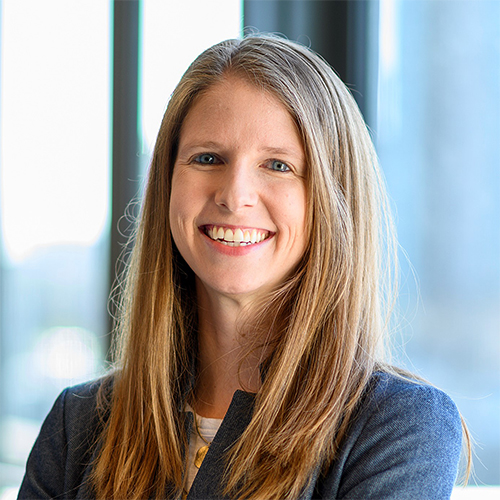
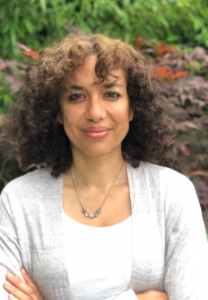
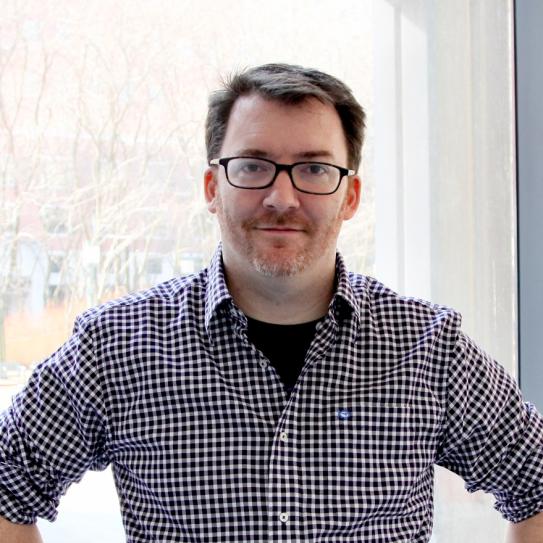
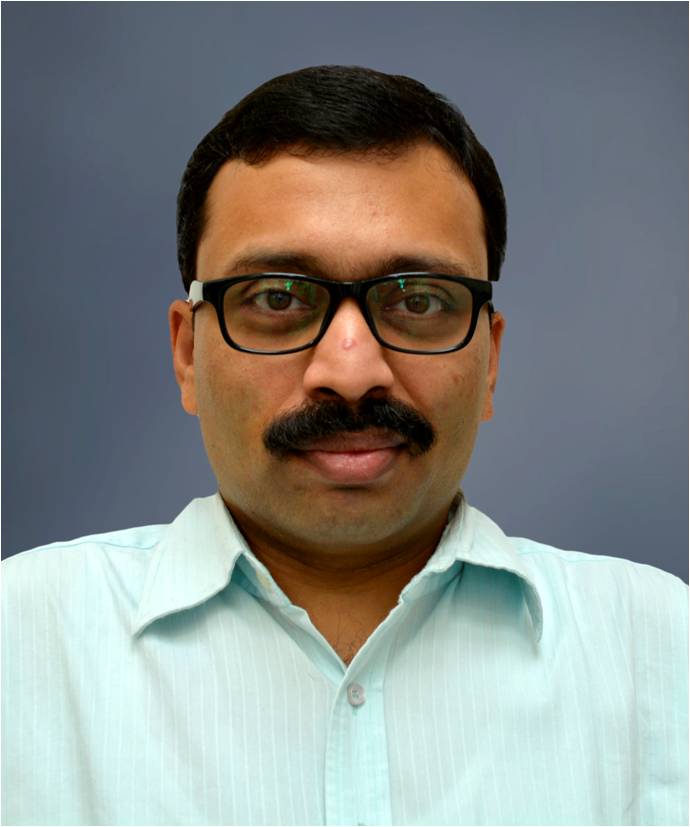
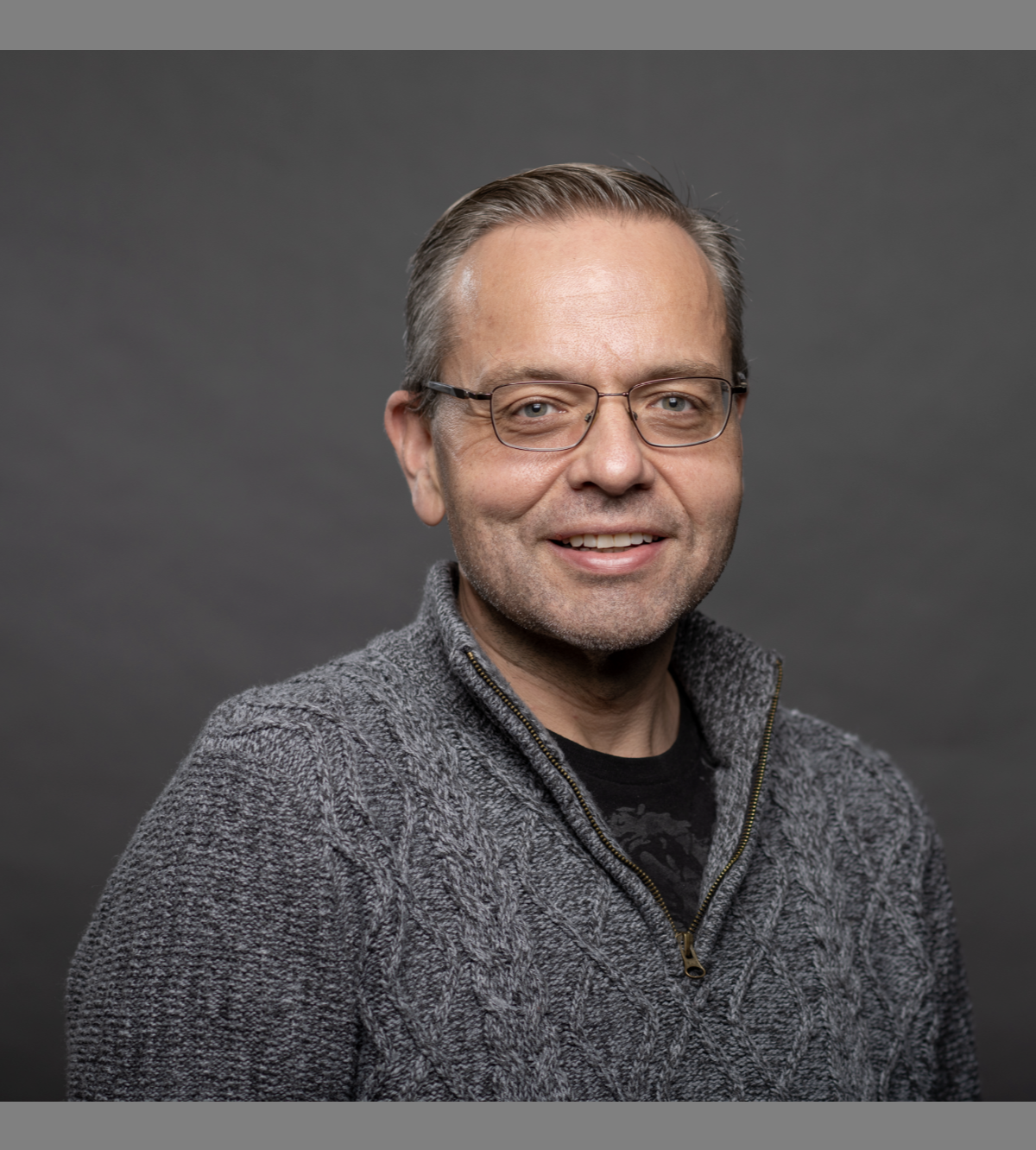
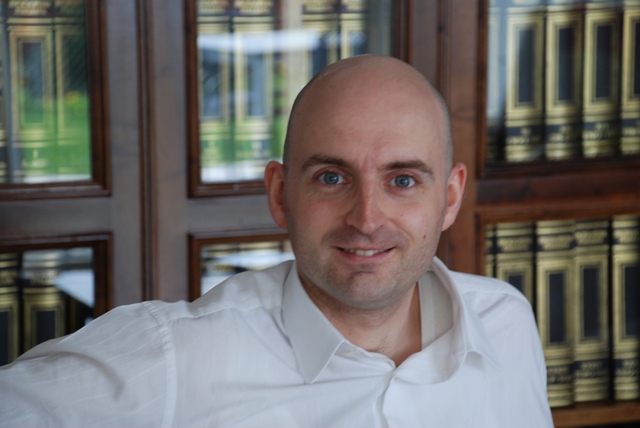
Jan Martin Nordbotten is a full-time Professor at the Department of Mathematics, University of Bergen (UiB), with adjunct positions at Princeton University and NORCE. His research focuses on applied mathematics, particularly in porous media, CO2 storage, fluid dynamics, and interdisciplinary applications in hydrology, biomedicine, and ecology. He completed his PhD at UiB in 2004 and became Norway's third youngest professor in 2007. His work emphasizes numerical methods, multiscale modeling, and experimental validation. Affiliations: UiB (full-time), Princeton (adjunct), NORCE (adjunct) Research Group: Center for Sustainable Subsurface Resources Research interests span mathematical modeling of subsurface processes, including flow in fractured media, geomechanics, and phase-field fracture. Notable contributions include analytical and numerical solutions for CO2 leakage, multiphase flow, and development of tools like DarSIA for image processing in porous media. Publications highlight advancements in mixed-dimensional models, finite element methods, and experimental validation of CO2 storage forecasts. His work bridges theoretical mathematics with practical applications in energy and environmental systems.
Dr. John W. Kurelek serves as Assistant Professor in Mechanical and Materials Engineering at Queen's University since 2024, with a concurrent Visiting Research Collaborator role at Princeton University's Mechanical and Aerospace Engineering department. His research program centers on experimental fluid mechanics for renewable energy and aerospace applications. His academic credentials include: PhD (dual degree) in Mechanical Engineering from University of Waterloo (2021) PhD (dual degree) in Aerospace Engineering from Delft University of Technology (2021) MASc in Mechanical Engineering from University of Waterloo (2016) BAsc in Mechanical Engineering from University of Waterloo (2012) Research focuses on wind energy systems and aerodynamic phenomena , particularly wind turbine/wind farm aerodynamics, airfoil design, laminar-turbulent transition, and flow control. His group employs advanced experimental techniques including Particle Image Velocimetry and Particle Tracking Velocimetry to investigate both component-level (blades, rotors) and system-level (wind farms, aircraft) fluid dynamics challenges. Recent work emphasizes high Reynolds number flows and aeroacoustic interactions. Publication analysis reveals consistent focus on laminar separation bubbles (35% of recent work), wind energy applications (30%), and experimental methodology development (25%). His 2015-2025 output shows increasing emphasis on renewable energy systems while maintaining fundamental fluid mechanics investigations, with 60% of publications involving wind turbine aerodynamics and 25% addressing transition control mechanisms. No scientific awards are documented in the provided materials. Dr. Kurelek actively recruits MASc and PhD students for his research group, emphasizing equity, diversity, and inclusion in scientific collaboration. Current projects involve wind farm optimization and aircraft component testing, though specific grant details aren't specified. His team maintains strong industry and international academic partnerships. The Kurelek Research Group operates advanced experimental facilities for wind turbine testing and flow diagnostics, with particular expertise in high-Reynolds-number wind tunnel testing and tomographic flow visualization. Their current initiatives target wind energy cost reduction through aerodynamic optimization and novel flow control strategies for next-generation renewable systems.
Dr. Zhigang Peng is a Professor in the School of Earth & Atmospheric Sciences at Georgia Institute of Technology, part of the College of Sciences. His research focuses on seismicity dynamics, fault zone imaging, and data science applications in geophysics. He holds a Ph.D. in Geological Sciences from the University of Southern California (2004), an M.S. in Electrical Engineering (2002), and a B.S. in Geophysics from the University of Science and Technology of China (1998). Dr. Peng’s work spans seismological studies of earthquake triggering mechanisms, fault zone structures, and deep-focus earthquakes. He has pioneered dense seismic array techniques to image fault systems and employs machine learning for event detection and phase picking. His recent projects include analyzing the 2023 Kahramanmaraş earthquake sequence in Türkiye and the 2024 Noto earthquake in Japan. He leads initiatives like the Center for Collective Impact in Earthquake Science (C-CIES), promoting inclusive scientific collaboration. Research Highlights: Fault zone imaging, dynamic triggering, AI-driven seismology Labs: ES&T 2235 (Seismology Lab), ES&T 2256 (Office) His awards include the 2002 AGU Outstanding Student Paper Award. He actively contributes to earthquake hazard assessment, nuclear explosion monitoring, and volcano-seismic interactions, with over 150 peer-reviewed publications.
Jennifer Ryan is a Professor of Numerical Analysis and Division Head of Numerical Analysis, Optimization, and Systems Theory at the Department of Mathematics, KTH Royal Institute of Technology. Her research focuses on designing and developing numerical schemes to extract accuracy from simulations, particularly through superconvergence properties and computational efficiency improvements. She applies these techniques to applications such as imaging, fluid visualization, and plasma dynamics. Education: PhD in Applied Mathematics, Brown University; MS in Mathematics, Courant Institute; BA in Applied Mathematics, Rutgers University. Professional Activities: Member of editorial boards for BIT Numerical Mathematics, ESAIM:M2AN, and Communications on Applied Mathematics and Computation; Steering committee member of AWM's Women in Numerical Analysis and Scientific Computing (WINASc). Her publications emphasize discontinuous Galerkin methods, SIAC filtering, and applications in fluid dynamics. She has served on multiple grant review panels and received awards for diversity and inclusion initiatives. Grants: Principal Investigator for projects funded by the Swedish Research Council, NSF, and US Air Force Office of Scientific Research. Awards: Fellow of UK Higher Education Academy, DAAD Fellowship, and Householder Fellowship.
Professor Andrew Berry is an Associate Professor and Head of the Geochemistry Research Area at the Research School of Earth Sciences, Australian National University (ANU). He holds a D.Phil. from the University of Oxford and a B.Sc. (Hons) from the University of Sydney. His research focuses on experimental petrology, geochemical processes in high-temperature environments, and the use of synchrotron-based techniques like X-ray absorption spectroscopy (XAS) to study element speciation in melts and minerals. Key areas include mantle metasomatism, oxidation state analysis of metals (Fe, Ti, Cr), and the geochemistry of carbonatites and rare earth elements. Education: D.Phil. (University of Oxford, 1997), B.Sc. (University of Sydney, 1991). Employment: Senior Fellow/Associate Professor at ANU (2012–present), Senior Lecturer at Imperial College London (2005–2011), and Research Fellow/Postdoctoral roles at ANU (2000–2005). Research Interests: Experimental studies of melt connectivity, oxidation state controls on element partitioning, and applications of synchrotron techniques. Current projects include investigating Fe³+/Fe²+ ratios in MORB, Ti oxidation states in hibonite, and REE behavior in carbonatites. Scientific Awards: Humboldt Research Fellowship (Universität Frankfurt, 2005). Advising & Grants: Supervised numerous PhD projects on topics like mantle metasomatism and zircon oxy-barometry. Active in collaborative projects on critical metals and carbonate melt geochemistry. Labs/Teams: Leader of the Experimental Petrology group at ANU, contributing to facilities like the Australian Synchrotron.
Anna Mayo is the Anna Loomis McCandless Assistant Professor of Organizational Behavior at Carnegie Mellon University’s Heinz College. Her research focuses on dynamic teamwork in modern organizations, particularly in healthcare and cross-sector settings. She investigates how teams adapt to fluid participation, technology integration, and volatile environments to enhance productivity and collaboration. Education: Ph.D. & M.S. in Organizational Behavior & Theory, Carnegie Mellon Tepper School of Business B.A. in Psychology, Denison University Research Interests: Mayo explores team coordination, cognitive versatility, and the impact of organizational structures on teamwork efficacy. She combines lab and field studies (e.g., healthcare, sales teams) to address challenges like rapid team formation/dissolution and distributed member roles. Her work emphasizes agility while mitigating risks to team outcomes. Publications: Her research appears in top journals such as Administrative Science Quarterly, Academy of Management Annals, and BMJ Leader. Recent studies address pandemic teamwork dynamics, nursing-physician collaboration, and the role of coordinated attention in group performance. Prior Experience: Before joining CMU, Mayo held roles at Johns Hopkins Carey Business School and worked in nonprofit human services. She teaches Organizational Design & Implementation (Course 94-700).
Craig Lee is a Professor of Oceanography at the University of Washington, where he also serves as Senior Principal Oceanographer and Assistant Director for Research at the Applied Physics Laboratory. His work focuses on physical oceanography with emphasis on observational studies and instrument development. Lee leads research programs studying upper ocean dynamics, coastal processes, and high-latitude oceanography across diverse regions including the Arctic, North Atlantic, and South China Sea. Dr. Lee's educational background includes: B.S. in Electrical Engineering and Computer Science from the University of California, Berkeley (1987) Ph.D. in Physical Oceanography from the University of Washington (1995) Lee's primary research interests center on three interconnected areas: (1) upper ocean dynamics, particularly mesoscale and submesoscale fronts and eddies; (2) interactions between biology, biogeochemistry and ocean physics; and (3) high-latitude oceanography in changing Arctic environments. His work often combines field observations with instrument development to address fundamental questions about ocean circulation and its role in climate systems. He has pioneered approaches using autonomous platforms to study difficult-to-access regions like ice-covered waters. Analysis of Lee's recent publications reveals a strong focus on Arctic oceanography, upper ocean mixing processes, and the application of autonomous observing technologies. His research spans multiple ocean basins with particular emphasis on the Arctic, North Atlantic, and western Pacific. A notable trend is the increasing integration of biogeochemical measurements with physical oceanography to understand coupled systems. His work often addresses climate-relevant questions about ocean circulation, heat transport, and ecosystem responses to environmental change. Dr. Lee provides leadership through service on science steering committees for large research programs and advisory panels for U.S. Arctic efforts. He actively supports and advises graduate students while teaching courses on ocean circulation observations and experimental design. His team has developed innovative technologies including autonomous gliders for ice-covered waters, high-performance towed vehicles, and lightweight mooring systems. Lee leads a research team pursuing diverse field programs including Arctic PISCES, Stratified Ocean Dynamics of the Arctic (SODA), and studies of the Kuroshio Current. His group collaborates extensively with institutions worldwide and contributes to major international research initiatives focused on understanding ocean processes and their climate implications.
Professor Joy Singarayer is a leading academic in the Department of Meteorology at the University of Reading, specializing in paleoclimatology. She holds the position of Joint Head of Department (Facilities and Finance) and is actively involved in research on climate-human interactions and past environmental changes. Her work bridges climate science, archaeology, and ecology, with a focus on understanding how past climate fluctuations inform future environmental resilience. Her research interests include the impact of climate change on agriculture and water resources, human-land-climate interactions across prehistoric to modern eras, and paleoclimate reconstructions using Quaternary records. Notable projects include CROPP (Peruvian climate resilience), PRIDE (Caspian Sea biodiversity), and Amazonian paleoecology studies. Professor Singarayer has supervised numerous PhD students exploring topics like agent-based modeling of pre-Columbian cultures, Caspian Sea hydrology, and Amazonian drought responses. Her interdisciplinary approach integrates climate modeling, fieldwork, and data analysis to address global environmental challenges. She is affiliated with the University of Reading's Meteorology Department and collaborates internationally on projects like the PotASH initiative studying southern hemisphere paleolakes. Her contributions span academic leadership, policy-relevant research, and fostering inclusive academic environments through her role on the SMPCS WIDE committee.
Paul Mativenga is a Professor of Mechanical and Aerospace Engineering at The University of Manchester, leading research in sustainable and advanced manufacturing. His roles include strategic leadership of Social Responsibility and Equality, Diversity, and Inclusion within the Faculty of Science and Engineering. He holds a PhD from the University of Liverpool and is a Member of the CIRP Academy for Production Engineering. Research focuses on resource-efficient manufacturing, laser processing, and circular economy strategies. Key interests include sustainable manufacturing technologies, energy reduction in machining, and recycling systems. He leads the Laser Processing Research Centre (LPRC) and collaborates on projects like the RE3 initiative for plastic recycling optimization. Recent work emphasizes carbon emission modeling in manufacturing, additive manufacturing optimization, and policy frameworks for industrial sustainability. He has supervised multiple PhD students and received the 2014 A M Strickland Prize for contributions to mechanical engineering. Active editorial roles include associate editorships at Elsevier and Sage Publications. His laboratory, the Laser Processing Research Laboratory, supports cutting-edge research in laser-material interactions and sustainable processes.
R. Luke DuBois is an Associate Professor and Co-Chair of the Technology, Culture and Society Department at the NYU Tandon School of Engineering, where he also directs the Integrated Design & Media program and the Brooklyn Experimental Media Center. He holds a DMA in music composition from Columbia University and is a renowned artist, composer, and performer whose work explores intersections between technology, sound, and visual media. His research focuses on digital media, human-computer interaction, and emerging technologies applied to artistic expression and accessibility. Key roles include directing the SONYC initiative (addressing urban noise pollution via AI) and leading the NYU Ability Project (advancing disability studies through technology). He has collaborated with institutions like the Smithsonian and artists such as Maya Lin, and his work has been exhibited globally, including at the Sundance Film Festival and the Aspen Institute. DuBois co-developed the Jitter software suite for real-time data manipulation and performs in avant-garde groups like Bioluminescence and Fair Use. His artistic practice combines time-lapse phonography, interactive installations, and interdisciplinary projects that critique cultural ephemera while advancing accessibility in STEM and the arts. Recent contributions include browser-based tools for accessible music notation (SoundCells) and sonification techniques for calculus education. He serves on the Board of the ISSUE Project Room and has been featured in major publications like the New York Times and TED Conference talks.
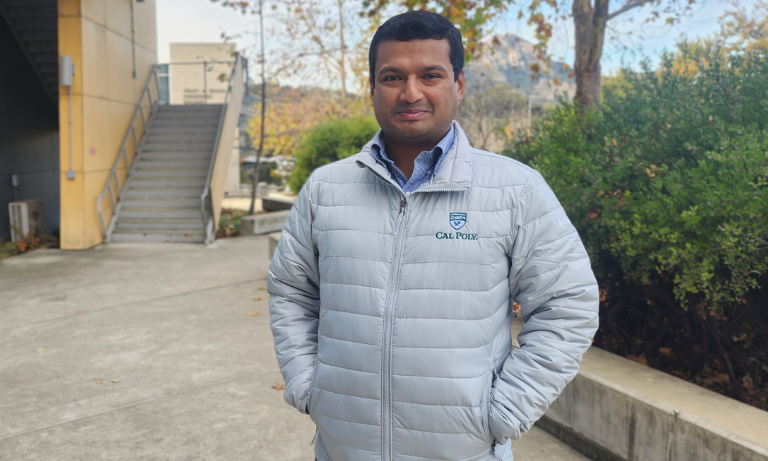
Fahim Khan is an Assistant Professor in the Department of Computer Science and Software Engineering at California Polytechnic State University’s College of Engineering. He specializes in computer graphics, data visualization, computer vision, and machine learning, with a focus on applying these technologies to education, environmental monitoring, and public safety. His research emphasizes making complex data accessible through advanced tools, bridging the gap between raw data and actionable insights. He is deeply committed to inclusive education and fostering interdisciplinary collaboration. His work often integrates citizen science initiatives, empowering communities through mobile applications and machine learning. Notable projects include real-time rip current detection systems and platforms for high school students to engage in research. Khan advocates for equity in technology, designing inclusive learning environments and promoting diversity in STEM. He actively supports the university’s Learn by Doing philosophy, blending practical education with theoretical rigor. Professionally, he contributes to coastal observation networks and autonomous vehicle datasets while maintaining a balance through outdoor activities like exploring Pismo Beach. His research trends reflect a strong focus on mobile computing, environmental applications, and education technology, with recent efforts emphasizing citizen science and data-driven solutions. While no formal grants or advising records are detailed, his projects implicitly involve collaborative efforts. He is affiliated with labs focused on environmental monitoring and mobile technology development, though specific lab names are not mentioned.
Somnath Basu is a Professor in the Department of Metallurgical Engineering and Materials Science at the Indian Institute of Technology Bombay. He has been serving in academic roles since 2011, progressing from Assistant Professor to Associate Professor and then to Professor in 2022. His work is deeply rooted in process metallurgy and materials engineering, with a focus on industrial steelmaking technologies. His research interests include metal refining , thermodynamics of slag-metal reactions , phosphorus and sulfur removal , and continuous casting processes . He also explores nanofluids and their transport properties, indicating interdisciplinary engagement. His work bridges fundamental thermodynamic studies with practical industrial applications in iron and steel production. The selected publications reflect a strong trend in steelmaking process optimization , particularly in reaction kinetics , inclusion behavior , and process monitoring . His research spans both experimental investigations and thermodynamic modeling, targeting improvements in steel purity and casting efficiency. Scientific Contributions: Published in leading journals such as ISIJ International , Steel Research International , and Metallurgical and Materials Transactions B . Contributions to understanding phosphorus partitioning, nozzle clogging, and nanofluid conductivity. While no specific students or grants are listed, his long-standing academic position and publication record suggest active supervision of graduate research and involvement in funded projects related to metallurgical process innovation. His work likely supports both academic and industrial advancements in steel technology. He is affiliated with a leading research department equipped with advanced facilities for metallurgical experimentation and process simulation, though specific lab names or team structures are not mentioned in the text.
Dr. Kate Fu is the Jay and Cynthia Ihlenfeld Associate Professor of Mechanical Engineering at the University of Wisconsin-Madison. She previously held academic positions at Georgia Institute of Technology (2014-2021) and completed postdoctoral fellowships at MIT and Singapore University of Technology and Design. Her education includes a Ph.D. (2012), M.S. (2009) from Carnegie Mellon University, and B.S. (2007) from Brown University. Her research focuses on engineering design cognition, computational design tools, and design innovation. Key areas include creativity enhancement, design-by-analogy methodologies, and integrating artificial intelligence into design processes. She has pioneered work on gender dynamics in engineering teams and equity in education. Notable awards include the NSF CAREER Award (2019), ASME Young Investigator Award (2020), and SREB Mentor of the Year (2022). She actively contributes to engineering education through courses like Geometric Modeling for Design, Experiential Design Projects, and graduate research supervision. Her work bridges disciplinary boundaries with projects on additive manufacturing, design justice frameworks, and social impacts of engineering solutions. Current research explores equity in makerspaces, energy justice metrics, and cognitive processes in design teams.
Ronald D. Haynes is a Full Professor and Chair of Scientific Computing Graduate Programs in the Department of Mathematics and Statistics at Memorial University of Newfoundland. He leads research in numerical methods for PDEs and industrial-scale optimization problems. His work develops advanced domain decomposition techniques, adaptive mesh methods, and parallel computing approaches for solving complex physical systems. Applications include modeling pitting corrosion of materials, predicting rock strength for drilling optimization, and simulating multiphase fluid flows in porous media. Recent publications demonstrate innovations in mesh adaptation, parallel algorithms, and machine learning applications for industrial problems. Collaborative projects have addressed reservoir simulation, drill bit analysis, and corrosion prediction through integrated computational approaches. Professor Haynes has received the President's Award for Outstanding Research (2018) and Dean of Science Distinguished Teaching Award (2017). He serves as Co-editor-in-chief of the CAIMS Mathematics in Science and Industry Journal and was President-Elect of the Canadian Applied and Industrial Mathematics Society (2023-2025). He maintains active doctoral supervision with current research groups focusing on domain decomposition methods, closest point algorithms, and optimization techniques. Industry partnerships include projects with ExxonMobil and Global Maritime addressing drilling optimization and mooring design challenges.
Camillo De Lellis is a Professor at the Institute for Advanced Study since July 2018, with a distinguished career spanning multiple institutions including the University of Zürich, where he served as Full Professor from 2005 and Assistant Professor in 2004. Prior to that, he held postdoctoral positions at the Max Planck Institute for Mathematics in the Sciences (Leipzig) and ETH Zürich. Research Interests encompass calculus of variations , geometric measure theory , partial differential equations , and incompressible fluid dynamics . His work bridges deep analytical techniques with geometric insights, particularly in understanding regularity theory for area-minimizing surfaces and anomalous dissipation in fluid flows. Publications highlight groundbreaking contributions to geometric analysis and fluid dynamics, including regularity theory for currents, Onsager's conjecture, and convex integration methods for Euler equations. These works span subfields like center manifold theory , blow-up analysis , Hölder continuous flows , and Q-valued functions . Scientific Awards Maryam Mirzakhani Prize (2022) Feltrinelli Prize (2021) Bôcher Memorial Prize (2020) Caccioppoli Prize (2014) Stampacchia Medal (2009)