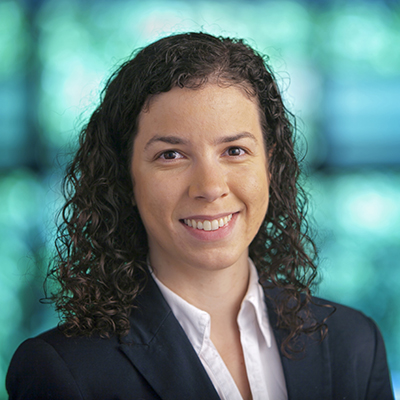
Celia Reina is an Associate Professor in the Department of Mechanical Engineering and Applied Mechanics at the University of Pennsylvania’s School of Engineering and Applied Science (SEAS). Her research focuses on multiscale modeling of materials, bridging statistical mechanics, thermodynamics, and machine learning. She develops novel frameworks for predicting non-equilibrium material behavior using data-driven methods and uncertainty quantification. Her work emphasizes integrating computational tools like neural networks (Stat-PINNs, VONNs) with physical principles to model dissipative systems, phase transitions, and mesoscale dynamics. Key areas include coarse-graining techniques, epistemic uncertainty analysis, and predictive modeling of complex materials under dynamic loading. Recent publications highlight advancements in stochastic systems, resonant metamaterials, and the derivation of thermodynamic models from particle-level fluctuations. She leads efforts in experimental-simulation co-design to enhance predictive capabilities in materials science.
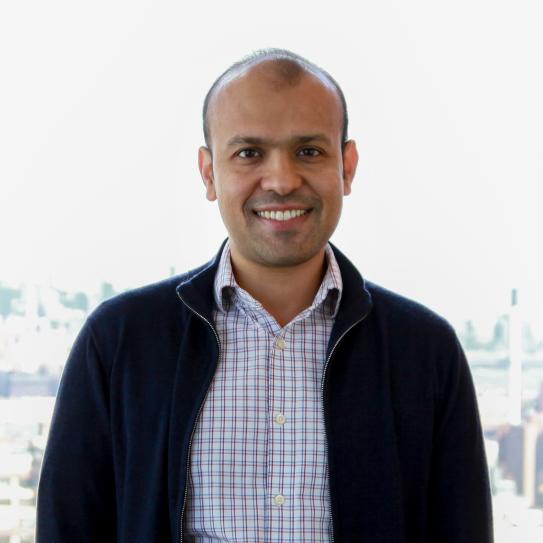
Siddharth Garg is the Institute Associate Professor of Electrical and Computer Engineering at NYU Tandon School of Engineering, leading the EnSuRe Research Group. He holds a Ph.D. from Carnegie Mellon University (2009) and a B.Tech. from IIT Madras. His research focuses on secure and energy-efficient computing systems, integrating machine learning, cybersecurity, and hardware design. He previously held roles as Assistant Professor at NYU Tandon (2014-2020) and the University of Waterloo (2010-2014). Key affiliations include NYU Center for Cybersecurity (CCS), NYU Wireless, and the Center for Advanced Technology in Telecommunications. His work has been recognized with prestigious awards like the NSF CAREER Award (2015) and inclusion in Popular Science’s 'Brilliant 10' (2016). Notable research includes private inference optimization, secure hardware IP protection, and adversarial machine learning defenses. Publications highlight advancements in zero-knowledge proofs, AI-driven chip design, and mitigating backdoor attacks in neural networks. His grants include funding from NYU Wireless and NSF initiatives like the Chips4All project. The EnSuRe group emphasizes bridging software and hardware design gaps using AI and fostering cybersecurity education.
Dr. Kenneth Edwin Barker is a Professor in the Department of Computer Science within the Faculty of Science at the University of Calgary, where he also serves as Director of the Institute for Security, Privacy and Information Assurance (ISPIA). His academic career spans several decades with significant contributions to database systems and privacy research. Dr. Barker earned his B.S. and M.S. in Computer Science from the University of Calgary in 1982 and 1984 respectively, followed by a Ph.D. in Computer Science from the University of Alberta in 1990. His educational background established the foundation for his extensive research career in database systems and information security. His primary research interests focus on Privacy Preserving Data Repositories , with specific attention to protecting privacy in mobile applications, understanding privacy's impact on data analytics, and architecting database management systems that inherently respect user privacy. His work also extends to distributed database environments, integration of legacy systems, and multidatabase environments. Dr. Barker's research bridges theoretical foundations with practical applications, making significant contributions to how privacy is implemented in real-world systems. An analysis of his recent publications reveals a strong trend toward practical privacy-preserving techniques for cloud data, social networks, and location-based services. His work consistently addresses the tension between data utility and privacy protection, developing innovative methods to maintain data value while safeguarding personal information. The publications span multiple subfields including encrypted search, graph privacy, high-dimensional data privacy, and privacy metrics. Best Paper Award at DBSec 2012 Best Paper Award at CODASPY 2012 Best Paper at BNCOD 2009 Dr. Barker has been instrumental in establishing privacy research infrastructure at the University of Calgary through his leadership of ISPIA. His research has attracted significant funding from various sources supporting privacy and security initiatives. While specific grant details aren't provided in the text, his extensive publication record indicates sustained research funding throughout his career. He has collaborated extensively with researchers both within and outside the University of Calgary, particularly with R. Alhajj and other colleagues on numerous projects. As Director of ISPIA, Dr. Barker oversees a research environment focused on advancing security and privacy technologies. The institute serves as a hub for interdisciplinary research, bringing together computer scientists, social scientists, and legal experts to address complex privacy challenges. His leadership has positioned the University of Calgary as a significant player in privacy research within Canada.
Suresh Venkatesh is an Assistant Professor in the Department of Electrical and Computer Engineering at North Carolina State University. He previously served as a postdoctoral research associate at Princeton University (2018–2022) and earned his Ph.D. in Electrical Engineering from the University of Utah in 2017. His academic journey also includes a Master's degree in Electrical Engineering from NC State in 2010. Education: Ph.D. in Electrical Engineering, University of Utah, 2017 Master's in Electrical Engineering, North Carolina State University, 2010 Research Interests: His work focuses on metamaterials and surfaces at GHz-THz frequencies, millimeter-wave phased arrays, and innovative applications in 5G/6G communication systems. Key areas include antenna design, physical layer security, advanced electromagnetic simulations, and reconfigurable systems using CMOS integration. He explores origami-based platforms for adaptive RF imaging and employs spatio-temporal modulation techniques to enhance wireless security and efficiency. Publications Trends: Recent work emphasizes mmWave and THz communication, with a focus on reconfigurable intelligent surfaces, secure low-latency links, and CMOS-based designs for direct detection receivers and cytometers. His research bridges theoretical concepts with experimental validation, particularly in wavefront manipulation and sparse imaging techniques. Awards and Honors: Mistletoe Research Fellowship (2021) Advising and Grants: Venkatesh contributes to research teams like the NC State 6GNC initiative, which spans 6G technologies. He actively organizes conferences such as the World Microwave Congress 2024 as TPC Co-Chair and participates in IEEE technical committees. His grants and collaborations drive advancements in metamaterials, secure wireless systems, and CMOS-integrated solutions. Labs and Teams: He leads efforts in the NC State ECE Department, focusing on labs involving reconfigurable antennas, computational imaging, and integrated systems. His work intersects with the 6GNC team to develop future communication technologies and secure mmWave/THz systems.
Ryan Murray is an Assistant Professor in the Department of Mathematics at North Carolina State University (NC State). His research focuses on developing mathematical tools to address problems in applied analysis, including calculus of variations, partial differential equations (PDEs), and their applications to machine learning, fluid dynamics, and control theory. He holds a PhD in Mathematics from Carnegie Mellon University (2016). His expertise spans regularization methods for machine learning, singular perturbations in materials science, algorithms for distributed optimization, and singularity formation in fluid dynamics. His work is supported by the National Science Foundation (NSF) and the Simons Foundation. He actively collaborates with researchers in data science, PDE analysis, and optimization. Key research areas include adversarial training in classification, geometric data analysis via statistical depths, and the analysis of vortex sheet singularities. His teaching experience includes courses on partial differential equations, optimal control theory, and linear control systems. Ryan has published extensively in journals such as SIAM Journal on Mathematics of Data Science , Archive for Rational Mechanics and Analysis , and Journal of Machine Learning Research . His articles explore topics ranging from graph-based learning to fluid dynamics instabilities.
Yves Bourgault is a Full Professor in the Department of Mathematics and Statistics at the University of Ottawa. He holds a MSc and PhD from Laval University. His research focuses on computational fluid dynamics, numerical methods, finite element techniques, and continuum mechanics modeling, with applications in cardiac electrophysiology and ecological systems. Dr. Bourgault has supervised several graduate students, including Edward Boey (co-supervised), Sana Keita, Saint-Cyr Koyagurebo-Ime, and Kak Choon Loy. His work integrates advanced numerical techniques to address complex problems in biomedical engineering, environmental science, and mathematical physics. Key methodologies include finite element methods, deferred correction schemes, and anisotropic mesh adaptation. His research group is part of the Applied Mathematics division at the University of Ottawa, emphasizing interdisciplinary applications. Recent work explores climate change impacts on ecological systems, cardiac tissue modeling using high-resolution MRI data, and robust numerical methods for reaction-diffusion equations. Publications span topics such as bidomain models for cardiac electrophysiology, fluid-structure interaction in heart mechanics, and mathematical modeling of fuel cells. His contributions bridge theoretical numerical analysis with real-world biomedical and environmental challenges.
Hossein Farahmand is a Professor at the Department of Electric Energy, Norwegian University of Science and Technology (NTNU), and leads the Electricity Markets and Energy Systems Planning (EMESP) research group. He holds an Associate Editor role at IEEE Transactions on Energy Markets, Policy and Regulation and contributes to international initiatives like IEA Wind Task 25 and ISGAN Annex 9. Education : Dr.ing. (PhD) from NTNU (2012) His research focuses on power market analysis, hydropower scheduling, power system balancing, and local flexibility markets in smart grids. Recent work explores renewable energy integration, digitalization, and hydrogen systems. Trends include machine learning applications in hydropower scheduling, offshore wind economics, and grid flexibility solutions. Scientific awards include Senior Member of IEEE and representation in ISGAN Annex 9 and IEA Wind Task 25 . He supervises PhD candidates and co-supervised projects in areas like grid tariffs , local energy communities , and electric vehicle integration . Grants include EU Horizon 2020 and Research Council of Norway funding for projects such as IntHydro , HONOR , and Ocean Grid . Labs and teams include the EMESP research group at NTNU, collaborations with Hohai University , Smart Innovation Norway , and industry partners in China and Norway.
Scott Armstrong is a Professor of Mathematics at the Courant Institute of Mathematical Sciences, New York University. His research focuses on partial differential equations, calculus of variations, and probability theory, with a specialization in stochastic homogenization of PDEs in random media and related statistical mechanical systems. He holds a Ph.D. from UC Berkeley (2009) and a B.S. from Texas A&M University (2002). Education: Ph.D. in Mathematics, University of California, Berkeley, USA (2009) B.S. in Mathematics, Texas A&M University, USA (2002) Research Interests: Scott's work addresses fundamental questions in homogenization theory, including quantitative estimates for elliptic and parabolic equations in random media, renormalization group methods, and applications to statistical mechanics. His contributions bridge analysis, probability, and mathematical physics, with a focus on rigorous mathematical frameworks for understanding macroscopic behavior from microscopic models. Publications: His recent work includes studies on anomalous diffusion, renormalization group techniques, and quantitative homogenization in high-contrast media. Over 50 peer-reviewed articles highlight his expertise in stochastic PDEs, elliptic regularity, and variational methods. Awards: No specific awards listed in the provided text. Advising & Grants: No student advisees or grant details explicitly mentioned in the text. Labs/Teams: No dedicated labs or collaborative teams explicitly noted, though his research likely involves interdisciplinary collaborations within the Courant Institute.
Dr. Arno Onken is a Lecturer (Assistant Professor) in Data Science for Life Sciences at the School of Informatics, University of Edinburgh, where he is also affiliated with the Institute for Adaptive and Neural Computation. He leads a research group focused on developing machine learning and statistical methods for modeling neural activity and analyzing large-scale neuroscience data. His work bridges artificial intelligence and computational neuroscience. His research interests lie at the intersection of machine learning, statistics, and neuroscience. He develops flexible probabilistic models such as copulas and Gaussian processes, deep learning architectures like Vision Transformers for brain activity prediction, and matrix/tensor factorization techniques for dimensionality reduction in neural datasets. His group aims to uncover interpretable structure in complex neural recordings and understand how behavior and cognition are encoded in population activity. The recent publications reflect a strong trend in combining modern deep learning with classical statistical modeling to analyze large-scale neural recordings. His work spans from foundational methods in copula modeling and information theory to applications in predicting visual cortex responses and modeling brainstem-hippocampus interactions across sleep states. The research has been published in top venues including NeurIPS, CVPR, eLife, and PLoS Computational Biology. Dr. Onken actively supervises PhD students and has developed several open-source scientific software packages, including the Mixed Vine Toolbox and Population Spike Train Factorization Toolbox. He teaches core courses in Machine Learning and Pattern Recognition and Data Mining and Exploration at the University of Edinburgh.
Alison Elder, Ph.D., is an Associate Professor in the Department of Environmental Medicine at the University of Rochester School of Medicine and Dentistry. She is affiliated with several research programs including the Environmental Health Sciences Center, the Inhalation Exposure Facility, the Toxicology Training Program (as Co-Director), the Lung Biology and Disease Program, and the Multidisciplinary Training in Pulmonary Research Program. Her research focuses on the toxicology of inhaled ultrafine particles (UFPs) and engineered nanomaterials, with implications for pulmonary, cardiovascular, and central nervous system health. Ph.D. in Environmental Toxicology, University of California, Irvine (1997) B.S. in Chemistry, Chatham College (1992) Post-doctoral Fellow, Department of Environmental Medicine, University of Rochester (1997–2000) Dr. Elder’s research centers on the health impacts of airborne particulate matter, particularly how age, co-pollutants, and health status influence responses to inhaled particles. Her work explores the translocation of particles to extrapulmonary tissues, including the brain, and their role in neurodegenerative diseases like Alzheimer’s. She investigates mechanisms such as oxidative stress, inflammation, and glymphatic dysfunction. Her lab also studies airborne micro- and nanoplastics, focusing on exposure characterization and health implications. Her recent publications span topics including Alzheimer’s disease models, glymphatic impairment, nanoparticle dissolution, and diesel exhaust effects on lung barriers. These works emphasize particle-induced inflammation, neurotoxicity, and the intersection of environmental exposure with neurological outcomes. Young Investigator Award, Society of Toxicology (2009) Cornerstone Alumna Award, Chatham University (2007) Graduate Student Fellowship, U.S. EPA (1995–1996) College Chemistry Award, Society for Analytical Chemists of Pittsburgh (1992) Dr. Elder mentors graduate students in toxicology and has trained numerous postdoctoral fellows and technicians. She leads an active research laboratory funded by NIH and DOD, investigating air pollution’s role in brain health and military burn pit exposures. Her collaborative research includes work with experts in neuroscience, materials science, and environmental engineering. She is also involved in national workshops on nanomaterial risk assessment and children’s environmental health. She leads the Elder Lab, which conducts studies on air pollution and Alzheimer’s disease, characterizes airborne micro- and nanoplastics, and develops models for nanoparticle toxicity. The lab uses advanced techniques in particle characterization, animal modeling, and cellular assays to assess health risks.
Amirreza Aghakhani is a Assistant Professor and Director of the Institute for Biomaterials and Biomolecular Systems at the University of Stuttgart . His work focuses on Microrobotics and Biomedical Engineering , particularly in targeted drug delivery, microsurgery, detoxification, and diagnostics using micro- and nanofabrication and ultrasound technologies . Research Interests: Microrobotics, biomedical applications, wireless actuation, acoustic manipulation, lab-on-a-chip systems, and smart materials. Recent publications highlight advancements in piezoelectric energy harvesting , magnetic microrollers for therapy, and acoustic trapping of particles. His team explores adaptive microrobotic agents and biologically-inspired designs to bridge biomedical research with clinical applications.
Eduardo Saez De Villarreal Sáez is a Professor in the Department of Sports and Information Technology at Universidad Pablo de Olavide, where he is affiliated with the Center for Research in Physical and Sports Performance (CIRFD) and the AFSD Physical Activity, Health and Sport research group. His academic work spans both theoretical and applied aspects of sports science, with a particular focus on physical performance metrics and training methodologies. His research interests center on athletic performance optimization, with specific expertise in strength training methodologies, sprint mechanics, and resistance training adaptations. Dr. Saez De Villarreal's work frequently examines velocity-based training, blood flow restriction techniques, and the biomechanical aspects of athletic movement. His research bridges laboratory findings with practical applications for athletes across multiple sports disciplines including football (soccer), water polo, cycling, and even unique applications to professional bullfighting performance. Analysis of his recent publications (2024-2026) reveals a strong focus on velocity-based resistance training, with particular attention to velocity loss thresholds and their impact on strength development. His work demonstrates increasing sophistication in training methodology research, with systematic reviews and meta-analyses becoming more prominent alongside experimental studies. The research spans multiple sports contexts while maintaining a strong physiological and biomechanical foundation. Dr. Saez De Villarreal supervises doctoral students in the Physical Activity, Sports and Health Sciences program and collaborates with researchers internationally. His work shows consistent output with publications extending into 2026, indicating ongoing active research. His laboratory work appears to focus on practical applications of sports science research across various athletic populations, from youth athletes to professionals.
Mohammed J. Zaki is a Professor and Department Head at the Department of Computer Science , Rensselaer Polytechnic Institute . He co-directs the NSF IUCRC Center for Research Towards Advancing Financial Technologies (CRAFT) and has authored the textbook Data Mining and Machine Learning (2nd Ed, Cambridge University Press, 2020). Research Focus : Novel data mining techniques for graph-structured and textual data with applications in bioinformatics, personal health, and financial analytics. Leadership : Co-chair of BIOKDD workshops, Associate Editor for multiple journals, and Program Co-chair for SIGKDD, SDM, ICDM, and other top conferences. Scientific Awards include: EDBT'24 Test of Time Award NSF CAREER Award DOE Early Career Award HP Innovation Research Award Google Faculty Research Award Fellowships: IEEE, ACM, AAAS, SIAM Recent Publications highlight advancements in: Knowledge Graph Completion with Directed Attention Multi-Sense Embeddings for Language Models Financial Trend Prediction via Graph Neural Networks Health-Guided Recipe Recommendation Systems Triplet Interaction in Molecular Graph Learning Temporal Personal Health Data Analysis
Priya L. Donti is an Assistant Professor at MIT's Department of Electrical Engineering and Computer Science (EECS) and Laboratory for Information and Decision Systems (LIDS). She co-founded and chairs Climate Change AI , a global nonprofit focusing on climate-AI intersections. Education: Ph.D. in Computer Science & Engineering & Public Policy, Carnegie Mellon University (advised by Zico Kolter and Inês Azevedo) Undergraduate in Computer Science & Math, Harvey Mudd College Research Focus: Machine learning for high-renewables power grids, incorporating physics and constraints into deep learning. Key areas include robust optimization, control systems, and climate-AI alignment. Article Trends: 2024-2022 works emphasize climate mitigation through AI (keywords: environmental science, AI ethics, policy modeling), while 2019-2021 studies focus on grid stability (power engineering, optimization) and hybrid AI-logic systems (symbolic reasoning, constraint handling). Scientific Recognition: MIT Technology Review 35 Innovators Under 35 (2021) Vox Future Perfect 50 (2023) Schmidt Sciences AI2050 Early Career Fellowship ACM SIGEnergy Doctoral Dissertation Award (2022) Best paper/poster awards at ACM e-Energy 2021 and PECI 2019 Her group at MIT develops physics-informed ML for power grids, with funding from NSF, DOE, and Center for Climate and Energy Decision Making. She actively advises prospective students through MIT EECS applications.
Borjan Geshkovski is a Researcher affiliated with the Universidad Autónoma de Madrid (UAM) under a Marie Skłodowska-Curie fellowship at the Conflex Project. He has been associated with institutions such as FAU Erlangen-Nürnberg, University of Deusto, and the DyCon team during his academic journey. PhD in Control Theory (2021, UAM) MSc in Applied Mathematics (2016–2018, University of Bordeaux) BSc in Applied Mathematics and Computer Science (2012–2016, University of Bordeaux) His research focuses on the intersection of Control Theory and Free Boundary Problems in fluid mechanics, with recent explorations into Deep Learning from a mathematical control perspective. Key contributions include work on turnpike properties, optimal actuator design, and controllability of nonlinear PDEs. Scientific awards include the Best Review and Presentation Prize at the 2nd ConFlex workshop (2019). His publications span topics like neural ODEs, porous medium flows, and obstacle problems, reflecting collaborations with the DyCon team and ConFlex consortium.