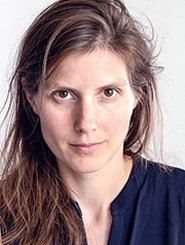
Ylva Sjöberg is an Associate Professor at the Department of Ecology, Environment and Geoscience, Umeå University. Her research focuses on Arctic hydrology, permafrost dynamics, and climate change impacts on water resources, employing numerical modeling and field-based methods across northern Fennoscandia, Greenland, and Alaska. Key research areas include: Mechanistic understanding of Arctic river methane emissions (ARIMETH project, 2025) Cryospheric impacts on water quality and flow paths Development of standardized permafrost thaw monitoring protocols Science communication through Frozen-Ground Cartoons Her publications emphasize interdisciplinary approaches, linking groundwater-surface water interactions, permafrost thaw cascades, and biogeochemical processes in Arctic catchments. She actively collaborates with Indigenous communities and contributes to Arctic policy frameworks.
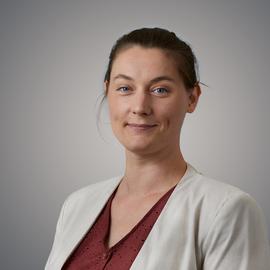
Maud Lanau is an Assistant Professor at Chalmers University of Technology's Department of Building Technology within the School of Architecture and Civil Engineering. Her research focuses on sustainable built environments, integrating industrial ecology, socioeconomic metabolism, and circular economy principles to reduce environmental impacts. She specializes in material stock and flow analysis, carbon accounting, and urban resource cadasters. Education: PhD in Environmental Engineering (2020), University of Southern Denmark MSc in Industrial Ecology (2014), Chalmers University of Technology Mastère in Housing Engineering (2011), University Paul Sabatier of Toulouse BSc in Mathematics, Physics, and Chemistry (2012), University Paul Sabatier of Toulouse Research Interests: Lanau’s work examines how built environment stocks can support circular economy transitions. She develops methods for material stock modeling, integrates data collection frameworks for construction practitioners, and explores urban morphology-material stock relationships. Her projects include the NUMMS initiative linking urban form to material stocks and the Future URCs project addressing circular logistics in construction. Collaborations & Teaching: She co-supervises PhD students on topics like construction plastics circularity and sustainable mass handling. Lanau teaches the master’s course 'Sustainability Analytics and Visualization,' emphasizing industrial ecology tools and visualization techniques. She actively participates in interdisciplinary projects like CREATE and the Swedish Circular Economy Colloquium.
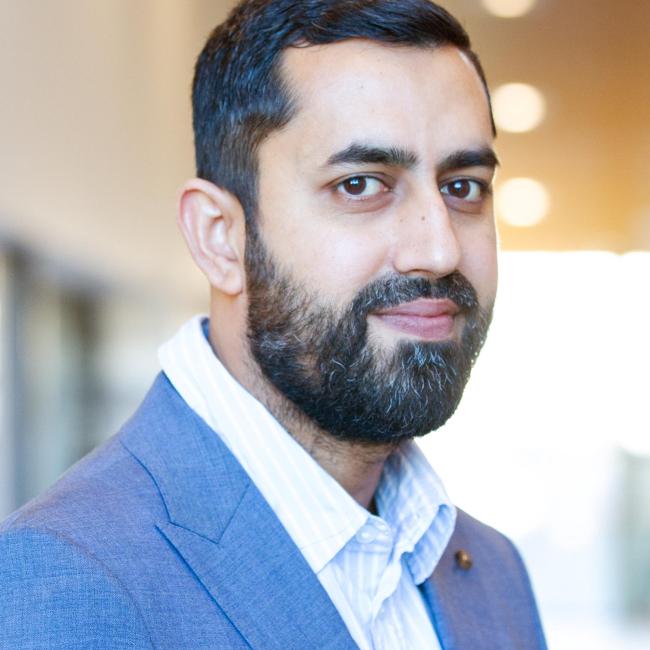
Dr. Muhammad Usman is a Senior Lecturer at the Department of Mathematics and Computer Science, Karlstad University, Sweden. His research focuses on cloud and edge computing, distributed systems, performance observability, DevOps automation, and networked systems. He holds a B.S. from NUST (Pakistan), and integrated M.S./Ph.D. from GIST (South Korea). He teaches master's-level courses in Distributed Systems and Cloud Computing. His research interests include optimizing container orchestration for edge-IoT workloads, developing AI-driven frameworks for industrial IoT (e.g., AIDA), and enhancing observability of distributed systems through frameworks like DESK and SmartX. His work often addresses challenges in resource efficiency, scalability, and fault detection in edge and cloud environments. Notable contributions include benchmarking lightweight container orchestration platforms, designing cost-effective testbeds for DevSecOps, and creating visualization frameworks for SDN-enabled clouds. His publications span topics from IIoT lifecycle management to intent-based network control. Usman actively collaborates internationally, with projects involving institutions like GIST, Aalto University, and the IEEE community. His work bridges theoretical research and practical applications in edge computing and cloud-native systems.
Emily Baird is a Professor at the Department of Zoology, Stockholm University , leading interdisciplinary research at the intersection of sensory ecology , neuroethology , and comparative morphology . Her work focuses on how insects like dung beetles and bumblebees process visual information to guide behavior in diverse environments. Key Collaborations : Dlife Project with University of Southern Denmark and University of Kiel (Human Frontiers Science Project) INVISMO Project with Lund University (Swedish Research Council) Research Themes : 3D micro-CT analysis of insect eyes Neural mechanisms for straight-line orientation Flight control in cluttered environments Mechanical principles of dung beetle ball rolling Techniques : Behavioral experiments, X-ray microtomography, computational modeling, ray-tracing simulations.
Christoph Egger is an Assistant Professor at Chalmers University of Technology in the Department of Computer Science and Engineering, where he works with the Security & Privacy Lab and the Crypto Team. Prior to this position, he was a Marie-Curie Fellow at Institut de Recherche en Informatique Fondamentale (IRIF) from fall 2022 to 2024, researching connections between cryptography and complexity theory. His educational background includes: PhD: "On Abstraction and Modularization in Protocol Analysis" Master's: "An implementation of global caching for the alternation-free coalgebraic μ-calculus" Bachelor's: "Analysing and attacking the I2P Network Database" Dr. Egger's research focuses on cryptography and its connections to computational complexity, statistical privacy, and formal methods. His work spans multiple areas including cryptographic foundations (random oracles, key agreement protocols), privacy-enhancing technologies (ring signatures, information flow techniques), and practical applications in genomic data security. He develops both theoretical frameworks and practical tools like CryptoZoo for cryptographic proof visualization, bridging the gap between theoretical cryptography and real-world security challenges. His recent publications demonstrate a strong focus on cryptographic foundations and privacy technologies, with significant contributions to ring signatures, key agreement protocols, and genomic data security. His work bridges theoretical cryptography with practical applications in blockchain, anonymous communications, and healthcare data management, showing consistent productivity across multiple high-impact venues in security and privacy. Dr. Egger has served on program committees for prestigious conferences including IEEE Computer Security Foundations Symposium (CSF), Proceedings on Privacy Enhancing Technologies (PETS), and Conference on Applied Cryptography and Network Security (ACNS). He currently advises PhD students Lucia Lavagnino at Chalmers and Kirthivaasan Puniamurthy at Aalto University. Previously, he advised Master's students including Julian Brost and Kirthivaasan Puniamurthy. His Marie-Curie Fellowship was cofunded by EU H2020 Marie Sklodowska-Curie Action and FSMP Comunity Service. Dr. Egger is an active member of the Security & Privacy Lab and Crypto Team at Chalmers. He is also a founding member of the FAUST CTF team and has been a Debian Developer for over a decade, contributing to various Free Software projects including the Linux kernel and Git version control system, demonstrating his commitment to both academic research and practical software security.
Tino Ebbers is a Professor in Physiological Measurements at Linköping University, affiliated with the Department of Health, Medicine and Caring Sciences and the Division of Diagnostics and Specialist Medicine. He holds leadership roles, including Chair of the Strategic Area Circulation and Metabolism (LiU-CircM) and membership on the Faculty of Medicine and Health Sciences Board. His research focuses on cardiovascular imaging and modeling, emphasizing non-invasive assessment of blood flow dynamics and tissue characteristics using MRI and CT technologies. Key projects include HEART4FLOW and the Center for Medical Image Science and Visualization (CMIV). Education: PhD (Biomedical Engineering, 2001), MSc (Electrical Engineering, 1996). Previous roles include Visiting Professor at UCSF (2015) and Predevelopment Engineer at Philips Medical Systems (2002–2004). Research interests span 4D flow MRI, computational fluid dynamics, and translational imaging techniques for cardiovascular disease diagnostics. He received the 2024 Onkel Adam Prize for his contributions to medicine-technology integration in cardiovascular research. Teaching roles include examiner for courses in physiological pressures, biomedical engineering, and electrical engineering. His work bridges clinical needs with technological innovation, aiming to improve diagnostic accuracy and patient care through advanced imaging and modeling.
Ingrid Hotz is a Professor in Scientific Visualization at Linköping University, affiliated with the Department of Science and Technology (ITN) and the Center for Medical Image Science and Visualization (CMIV). She holds a Master's in Theoretical Physics from Ludwig Maximilian University (Munich) and a PhD in Computer Science from the University of Kaiserslautern. Her research focuses on data analysis and scientific visualization, spanning applications in fluid dynamics, medical imaging, and large-scale simulations. She has led research groups at the Zuse Institute Berlin (2006–2013) and the German Aerospace Center (DLR, 2013–2015). Her work integrates methods from computer graphics, computational geometry, and topology. Key research areas include multi-field visualization, topological data analysis, and scalable systems for ocean data exploration. She has contributed to software tools like VIAMD and pyParaOcean. Notable collaborations include material science research (e.g., beryllonitrene synthesis) and large-scale conference organization (Eurographics 2020, attracting 23,000 participants). Her research bridges theoretical foundations with practical applications in medicine, engineering, and environmental science. Publications highlight advancements in visualization techniques for molecular dynamics, medical imaging, and climate modeling. She actively participates in interdisciplinary projects, such as predicting liver steatosis dynamics and developing frameworks for analyzing brain activity via fMRI data. Her work emphasizes bridging gaps between computational methods and real-world scientific challenges.
Niklas Gador is a Senior Lecturer in the Department of Computer Science at the Faculty of Natural Science. His research focuses on applying machine learning techniques to microbiological challenges, particularly in water distribution systems. He specializes in visualization, classification, anomaly detection, forecasting, and reinforcement learning, using Python as his primary tool. Current teaching responsibilities include courses in Discrete Mathematics, Statistics, Methods for Measuring Electricity, and Calculus and Algebra. Research collaborations include projects like EIVF-AI (Enhancing In Vitro Fertilization with AI) and studies on bacterial changes in drinking water systems post-monochloramine removal. He has participated in conferences such as the 3rd Annual RECS Workshop on AI and organized events on smart AI taxi systems. His work frequently involves flow cytometry and environmental data analysis. He serves as a deputy supervisor for a PhD project on bathing water quality using machine learning and DNA-based methods. Despite his active research profile, no scientific awards are explicitly mentioned in the provided texts.
Carl-Johan Carlhäll serves as Professor and Head of Department of Cardiovascular Medicine at Linköping University's Department of Health, Medicine and Care within the Medical Faculty. His institutional affiliations include the Department of Diagnostics and Specialist Medicine (DISP) and the Cardiovascular Sciences Unit (KAV), where he leads the interdisciplinary Cardiovascular Imaging and Modeling (CIM) research cluster focused on advancing understanding of the cardiovascular system through novel imaging-based methods. Professor Carlhäll's research spans cardiovascular imaging science with particular emphasis on 4D flow MRI techniques, cardiac hemodynamics, and AI applications in medical image analysis. His work bridges engineering methodologies from automotive industries with clinical cardiology to simulate heart function and analyze blood flow dynamics. The research cluster he leads develops and applies new imaging-based methods for assessing cardiac function, hemodynamics, and tissue characterization in both health and disease states. Analysis of his recent publications reveals a strong trend toward integrating artificial intelligence with cardiovascular magnetic resonance imaging, particularly in segmentation of cardiac structures, analysis of blood flow turbulence, and assessment of tissue characteristics. His work increasingly focuses on computational modeling of cardiac function and hemodynamics, with applications in valvular heart disease, atrial fibrillation, and metabolic conditions like type 2 diabetes. Scientific recognition includes: 9.3 million SEK project grant from the Swedish Heart and Lung Foundation (2020) Development of lightning-fast cardiac examination methods using CT scanner images to simulate individual patient heart function Professor Carlhäll's research group has secured significant funding for heart and lung research, developing innovative approaches that translate engineering methods to clinical cardiology. His team collaborates extensively within the Center for Medical Image Science and Visualization (CMIV), leveraging interdisciplinary expertise to advance cardiovascular diagnostics and treatment planning through sophisticated imaging and modeling techniques. The Cardiovascular Imaging and Modeling (CIM) research cluster under his leadership represents a significant interdisciplinary effort at Linköping University, bringing together medical, engineering, and computational expertise to solve complex problems in cardiovascular medicine through advanced imaging technologies and computational modeling approaches.
Lotten Wiréhn is a Lecturer at Linköping University's Department of Theme (TEMA) , specializing in Theme Environmental Change (TEMAM) . Her research focuses on the intersections between climate change, human-natural systems, and sustainable development, with a particular emphasis on creating actionable climate information through Climate services Visualization tools Contextual relevance Decision-making support Her work spans diverse domains including Swedish agricultural adaptation , urban heat management , and climate aid in East Africa . She develops methodologies for climate risk assessment and innovative tools like the interactive Norrköping's Decision Arena to enhance climate adaptation dialogues and data interpretation. Current projects include BRIGHT : Strengthening urban heat adaptation in Swedish cities Decision support : Customized climate indicators for forestry and agriculture CSPR : Climate policy research for global impact
Patric Jensfelt is a full-time Professor at the Robotics, Perception and Learning (RPL) division within the School of Electrical Engineering and Computer Science (EECS) at KTH Royal Institute of Technology . He contributes to robotics and autonomous systems through research, teaching, and industry collaboration. Academic Rank: Professor Department: Robotics, Perception and Learning (RPL) School: School of Electrical Engineering and Computer Science (EECS) University: KTH Royal Institute of Technology His research focuses on robotics and autonomous systems , particularly spatial cognition for enabling robots to understand and model their environments. He integrates sensor data with high-level symbolic reasoning to advance navigation, mapping, and system integration. Recent work includes applications in service robotics, 3D foot scanning (via the company Volumental ), and drone-based perception. The 15 most recent articles highlight advancements in scene flow estimation, autonomous driving, LiDAR processing, and domain adaptation. They emphasize self-supervised learning , dynamic environment modeling , and robust spatial representations for autonomous systems. Patric supervises Master’s and PhD students, particularly in project courses like DD2410 Introduction to Robotics , DD2419 Project Course in Robotics and Autonomous Systems , and the doctoral course FDD3356 System Integration for Robotics . He is actively involved in the WASP Graduate School , teaching Autonomous Systems annually. He leads the Robotics, Perception and Learning (RPL) division, which fosters innovation in robotics through experimental projects and industry partnerships like Intelligent Machines . The division supports internships (unpaid) and encourages applicants to demonstrate prior engagement with his research.
Raffaello Mariani is an Associate Professor at the Royal Institute of Technology (KTH), affiliated with the AEROSPACE, MOVEABILITY AND NAVAL ARCHITECTURE school and the Aeronautical and Vehicle Engineering Unit. He holds a BSc in Aerospace Engineering from Embry-Riddle Aeronautical University (2003), an MEng in Experimental Methods from Old Dominion University (2005), and a PhD in Fundamental Fluid Dynamics from The University of Manchester (2012). His career includes roles at BMT FM, ONERA, and Nanyang Technological University before joining KTH in 2018. Research focuses on experimental aerodynamics, supersonic jets, shock wave dynamics, and UAV design. Key areas include wind tunnel testing techniques (e.g., rainbow schlieren), flow control strategies, and hybrid-electric propulsion systems for sustainable aviation. He leads the Green Raven project, developing a hydrogen-powered blended-wing-body UAV to combat climate change. Teaching responsibilities include courses like Advanced Topics in Aeronautics and Future Sustainable Aviation . Active in interdisciplinary collaborations, he integrates electrochemistry, mechatronics, and embedded systems into aerospace engineering solutions. Award-winning contributions include pioneering work on vortex ring interactions and supersonic jet noise mitigation. His recent studies explore bio-inspired wing designs and ground-effect aircraft optimization.
Dr. Enayat Rajabi is an Associate Professor of Data Analytics at the Shannon School of Business , Cape Breton University , Canada. He also serves as an Adjunct Professor at Dalhousie University and is affiliated with Nova Scotia Health as a scientist. His academic journey included a Ph.D. in Information and Knowledge Engineering from the University of Alcalá, Spain, and he has contributed extensively to machine learning and semantic web domains. Education: Ph.D. in Information and Knowledge Engineering, University of Alcalá, Spain (2015) Master of Software Engineering, Ferdowsi University of Mashhad, Iran (2004) Bachelor of Software Engineering, Razi University, Iran (2001) Dr. Rajabi's research focuses on machine learning , knowledge engineering , and semantic web applications in healthcare and smart cities. His work explores explainable AI frameworks, knowledge graph construction, and data-driven solutions for sustainable transportation and clinical decision support systems. His recent publications highlight trends in knowledge graph integration with large language models for healthcare, graph neural networks , and predictive analytics in urban environments. He has secured significant grants, including the NSERC Discovery Grant and Mitacs Research Training Award , to advance these domains. Scientific Contributions: NSERC Discovery Grant (2020-2025) - Semantic Web Analysis over Nova Scotia Open Data ($156,000) New Health Investigator Grant (2022-2024) - Machine Learning for ALC Patients ($97,418) Mitacs Globalink ($4,250) - Graph Neural Networks CBU RISE grants for Explainable Clinical Decision Support Systems and Multi-Label Text Classification Dr. Rajabi has mentored numerous research assistants across projects and maintains active collaborations with institutions in Canada, Spain, and Iran. His technical expertise spans Python, Tableau, Databricks, and PySpark, with teaching responsibilities in Predictive Analytics , Data Visualization , and Quantitative Methods .
Jens Forssén is an Assistant Professor in the Department of Technical Acoustics , Vibroacoustics research group at Chalmers University of Technology . His work focuses on outdoor sound propagation , community noise , and urban acoustics , with a particular emphasis on the influence of meteorology , terrain , and soil properties on noise levels. Research Interests: Outdoor acoustics, urban soundscapes, road and train traffic noise, wind turbine noise, noise barriers, auralization techniques, and health impacts of environmental noise. Recent Trends: Analysis of low-frequency noise in urban environments, 3D noise mapping , digital twinning for urban design, and sonic crystal applications in noise reduction. Scientific Contributions: Publications on noise propagation models , auralization methods , traffic noise assessment , and health impact studies related to urban sound environments. Labs & Collaborations: Collaborates with the LISTEN project , SONORUS project , and HOSANNA project to develop urban noise mitigation strategies. His work includes partnerships with researchers like Wolfgang Kropp , Leon Müller , and Maarten Hornikx .
Jan Sundberg is a Professor of Electrical Engineering at Uppsala University, specializing in ecological aspects within the Department of Electrical Engineering at The Ångström Laboratory. His research spans two distinct but equally significant fields: wave energy technology and marine renewable energy systems, and earlier work in avian ecology focusing on yellowhammers. His research interests center on the intersection of electrical engineering and environmental science, with particular focus on wave energy conversion systems, ecological impact assessment of marine renewable energy installations, and underwater acoustic monitoring techniques. Sundberg has made significant contributions to understanding how wave energy converters interact with marine ecosystems, including fish behavior, marine mammal responses, and benthic community development around energy infrastructure. Analysis of Sundberg's publication record reveals a clear evolution of research focus. Beginning with ornithological studies in the 1990s examining yellowhammer mating behaviors and plumage coloration, his work transitioned toward renewable energy research in the early 2000s. Since 2005, his publications have predominantly focused on wave energy technology, with particular emphasis on environmental monitoring using sonar systems, ecological impacts of marine energy installations, and operational characteristics of wave energy converters. His most recent work (2020-2023) demonstrates sophisticated approaches to monitoring marine life interactions with renewable energy infrastructure using advanced sonar technologies. Sundberg has been actively involved with the Lysekil Research Site in Sweden, a key facility for wave energy research where he has contributed to numerous studies examining noise emissions, ecological impacts, and operational characteristics of wave energy converters. His work often involves interdisciplinary collaboration with marine biologists, environmental scientists, and engineering specialists.