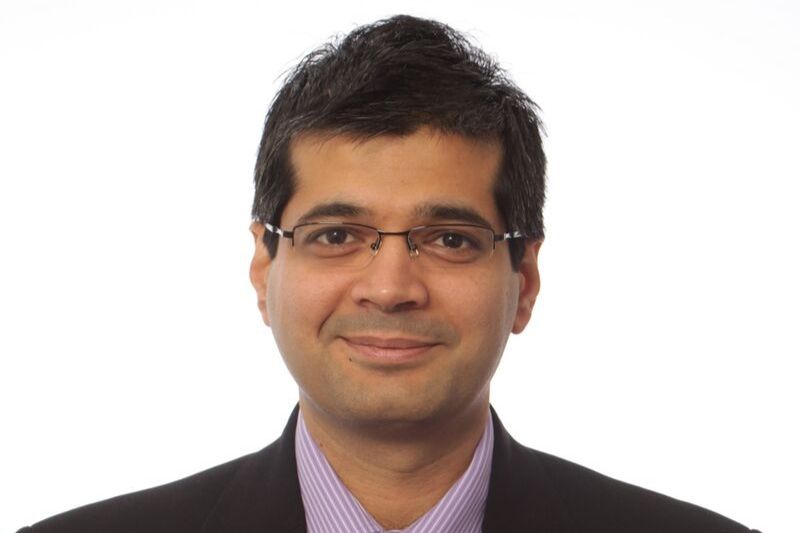
Prof.dr.ir. Hans Kuipers leads the Multiscale Modelling of Multiphase Flows group at Eindhoven University of Technology. He develops advanced computational models for chemical reactors used in industrial processes. A member of the Royal Netherlands Academy of Arts and Sciences, Kuipers has received prestigious grants including an Advanced ERC grant and NWO Gravitation grant. His research focuses on multiphase reactor hydrodynamics and non-invasive monitoring techniques. Kuipers has made seminal contributions to chemical reaction engineering fundamentals, particularly in fluidized bed technology and particle-resolved simulations.
Evgeny Rebrov is a part-time Full Professor of Energy Intensified Chemical Reaction Engineering at Eindhoven University of Technology (TU/e) and holds concurrent roles as Chair of Chemical Engineering at the University of Warwick (UK) and Full Professor at Queen’s University Belfast (UK). His expertise spans catalytic reaction engineering, multiphase reactors, and sustainable process development. Academic Background: He earned his PhD (cum laude) in Chemistry from the Boreskov Institute of Catalysis (1999) and DSc in Chemical Engineering from Lomonosov Moscow University (2012). Key career milestones include research at Cambridge University (2007) and leadership roles at TU/e, Warwick, and Queen’s University. Research Focus: His work centers on structured multiphase catalytic reactors for fine chemical synthesis, energy-intensified plasma-catalytic systems, and transient reactor operations. Applications include cost-efficient production of vitamins and agrichemicals via reactor design innovation. He leads EU-funded projects like the ERC Synergy grant (SCOPE) for plasma-catalyst integration. Recognition: He has received four major EU awards, including ERC Starting, Proof of Concept, Synergy grants, and an SME Innovation Council grant. His research contributes to UN SDGs related to affordable industry, clean energy, and climate action. Advising & Grants: Supervised 43 academic works and secured substantial grants for projects like plasma-fluidized bed reactors for ethylene production and CO₂ conversion. Collaborates with industries such as DSM, SABIC, and Airbus. Labs & Teams: Active in EIRES Research and the Energy Intensified Chemical Reaction Engineering group, advancing portable plasma technologies and sustainable process engineering solutions.
Carola Raffel is a Doctoral Candidate at the Eindhoven University of Technology , specializing in Chemical Engineering and Chemistry . Her research bridges Chemical Reactor Engineering and Sustainable Process Engineering , focusing on optimizing chemical processes involving fatty acids and nitriles. University: Eindhoven University of Technology Department: Chemical Engineering and Chemistry Research Interests include in-situ spectroscopic calibration, water activity effects in chemical synthesis, hydrogenation reactions, and reactor design for sustainable processes. Her work addresses challenges in Fluid Dynamics , Reaction Engineering , and Process Optimization , particularly in fatty acid ammoniation and nitrile production. Publication Trends show a focus on green chemistry and process intensification , with recent studies (2025) exploring real-time calibration methods and dynamic modeling for reactor systems.
Peter Lipman is a Researcher at the Chemical Engineering and Chemistry department of Eindhoven University of Technology . His work focuses on Chemical Engineering , Reactor Engineering , and Mass Transfer processes. Research Interests : Chemical Reactor Engineering, Sustainable Process Engineering, Plasma Processing, Gas Adsorption/Desorption, Nanostructured Materials, and Porous Media Dynamics. Affiliation : Department of Chemical Engineering and Chemistry, Eindhoven University of Technology. His recent publications highlight advancements in Plasma Processing for Nanoparticle Synthesis , CFD-DEM Modeling of Fluidized Beds , and Diffusion-Reaction Analysis in Coarse Porous Media . Key trends include applications in Separation Processes , Transport Phenomena , and Catalytic Systems . Email : p.j.l.lipman@tue.nl
Maike W. Baltussen is Assistant Professor in the Multiscale Modelling of Multiphase Flows group at Eindhoven University of Technology. Her research develops advanced reactor models for industrial multiphase reactors, focusing on hydrodynamics and heat/mass transfer. She specializes in gas-liquid, gas-solid and gas-liquid-solid systems using multi-scale modelling from DNS to phenomenological approaches. Academic background includes MSc in Chemical Engineering (cum laude) and Nanotechnology from University of Twente, with PhD from TU/e on 'Bubbles on the cutting edge: direct numerical simulations of gas-liquid-solid three-phase flows'. Current projects include CFD-DEM simulations of clustering behavior, droplet collisions, and trickle bed reactors. She teaches Multiphase Computational Fluid Dynamics and Advanced Numerical Methods.
Jeff Gostick is the Azzam-Dullien Endowed Chair & Professor in the Department of Chemical Engineering at the University of Waterloo, serving as Associate Chair for Graduate Studies. His research focuses on porous materials engineering, multiphase flow dynamics, and electrochemical energy conversion, with applications in batteries and fuel cells. He leads the Porous Materials Engineering & Analysis Lab (PMEAL), which develops novel characterization tools and pore network models to optimize material performance. Education: 2008 – Doctorate in Chemical Engineering, University of Waterloo 2002 – Master of Applied Science in Chemical Engineering, University of Waterloo 2000 – Bachelor of Engineering in Chemical Engineering, Ryerson University Research Interests: Porous media and multiphase flow phenomena Pore network modeling for energy storage systems Electrode design and optimization for redox flow batteries X-ray tomography and image-based analysis Computational multiphysics simulations Notable Awards: Azzam-Dullien Professorship (2023) Waterloo Engineering Research Excellence Award (2023) Canadian Society for Chemical Engineering 'Emerging Leader' (2021) Teaching & Advising: Recent courses include CHE 181, CHE 200, CHE 331, and NE 111 Focus on active learning pedagogy Labs/Teams: PMEAL lab specializes in advanced materials characterization and computational modeling, with collaborations across academia and industry. Ongoing projects include graphene oxide membranes, 3D-printed electrodes, and CO2 conversion systems.
Dr. Haresh Manyar is a Senior Lecturer at Queen's University Belfast's School of Chemistry and Chemical Engineering, specializing in heterogeneous catalysis and sustainable chemical processes. His research focuses on designing advanced catalysts for biofuel production, CO2 conversion, and renewable chemicals, leveraging techniques like in situ operando spectroscopy. He leads projects addressing energy sustainability and waste valorization, collaborating on initiatives such as CO2-to-fuel conversion and biorefinery systems. Dr. Manyar actively engages in academic discourse through invited talks on sustainable manufacturing and catalytic innovation. His work contributes to UN Sustainable Development Goals related to climate action and affordable clean energy. Research Interests: Catalysis, Green Chemistry, Sustainable Energy, CO2 Utilization Projects: Includes EU-funded initiatives like CO2-to-emission-free fuels and zeolite-based biorefinery systems Collaborations: International partnerships on catalytic materials and renewable energy Dr. Manyar supervises PhD students in catalysis and green processes, emphasizing experimental and theoretical approaches to catalyst design. His labs focus on flow chemistry platforms and advanced spectroscopic analysis.
Lirong Liu is an Associate Professor at the School of Sustainability, Civil and Environmental Engineering within the Faculty of Engineering and Physical Sciences at the University of Surrey. Additionally, they hold a Research Fellow position at the University of Surrey's Institute for Sustainability. Their past affiliations include the University of Regina in Canada. Liu’s research spans interdisciplinary fields including environmental science, engineering, energy systems, and sustainability policy. Their work focuses on environ-economic modeling, climate change mitigation, and sustainable resource management. Key areas include hydrogen integration in industrial decarbonization, socio-economic impacts of emissions trading, and policy frameworks for sustainable development. Recent publications emphasize whole-system approaches to energy storage, building envelope improvements, and supply chain carbon emissions. Liu has developed advanced models for analyzing multi-regional environmental and economic interactions, such as factorial input-output analysis and copula-based systems modeling. Their research also addresses global challenges like post-Brexit trade impacts and small modular reactor siting under climate variability. No scientific awards are explicitly mentioned in the provided texts. Liu’s advising and grant activities are not detailed here, but their research collaborations span academia, industry, and policy sectors. They contribute to labs and teams focused on sustainability, energy transition, and climate resilience.
Dominik Johannes Krug is an Associate Professor at the MESA+ Institute, specializing in the Physics of Fluids. His research focuses on turbulence, bubble dynamics, and multiphase flow phenomena, with applications in acoustics, renewable energy, and advanced manufacturing. He contributes to UN Sustainable Development Goals related to affordable and clean energy (SDG 7) and industry innovation (SDG 9) through studies on hydrogen evolution reactions and additive manufacturing of microfluidic systems. Key research areas include bubble curtains for noise reduction, electrolyte behavior during water electrolysis, and turbulence effects on particle collisions. His work has been published in journals like the Journal of the Acoustical Society of America and Nature Communications . Dr. Krug collaborates internationally and has supervised 6 research projects, contributing datasets on bubble-particle collisions and microgravity fluid dynamics.
Andrea Testino is a Senior Scientist at Paul Scherrer Institute's Laboratory for Chemical Processes and Materials. His research develops continuous synthesis methods for functional nanomaterials with applications in catalysis, batteries, and environmental technologies. Recent work focuses on sulfur capture materials for supercritical water systems and low-molecular-mass resists for nanoscale lithography. His group employs segmented flow tubular reactors for scalable nanomaterial production.
Prof. Atsushi Urakawa is a Professor of Catalysis Engineering at Delft University of Technology’s Department of Chemical Engineering. Previously, he served as Group Leader at ICIQ (2010–2019) and held roles at ETH Zurich (2006–2010). His research focuses on heterogeneous catalysis, particularly CO2 conversion, environmental catalysis, and sustainable energy carriers like hydrogen and methanol. He actively collaborates with industry to bridge fundamental and applied research. Education BSc in Applied Chemistry, Kyushu University (Japan) MSc in Chemical Engineering, Delft University of Technology (Netherlands) PhD in Chemical Engineering, ETH Zurich (Switzerland) Research Interests Development of heterogeneous catalysts via in situ/operando spectroscopy CO2 conversion to methanol/dimethyl ether using high-pressure methods Catalytic processes for automotive emissions and green hydrogen production Spectroscopic tools for catalyst structure-activity relationships Recent Publications Highlight advancements in CO2 hydrogenation mechanisms, formic acid synthesis, and cobalt-based catalysts for hydrogen evolution. His work emphasizes practical industrial relevance and sustainability. Awards Fellow of the Royal Society of Chemistry (2016) JSPS Prize (2020) Japan Academy Medal (2021) Industry Collaboration Focuses on translating catalyst innovations into industrial applications, including patents for efficient CO2-to-methanol processes. His team develops analytical tools to optimize catalyst performance under operando conditions. Lab & Team Leads a multidisciplinary group at TU Delft, previously at ICIQ, advancing catalytic engineering for a greener future.
Dr. Giovanni Giustini is a Lecturer in Engineering Simulation & Data Science within the Mechanical and Aerospace Engineering department at the University of Manchester, affiliated with the Modelling & Simulation Centre. He holds an Honorary Lecturer position at Imperial College London's Mechanical Engineering Department. His research focuses on numerical simulation of complex flow phenomena, particularly multiphase and boiling systems, with emphasis on developing robust computational fluid dynamics (CFD) models for industrial applications in nuclear energy and propulsion. Key areas include bubble dynamics, microlayer formation, and phase-change mechanisms in high-pressure and microchannel environments. Giustini's work contributes to UN Sustainable Development Goals related to affordable and clean energy (SDG 7) and industry innovation (SDG 9). He serves as Editor for Applied Thermal Engineering (Elsevier) and collaborates with institutions globally. Recent research highlights include buoyancy effects in microchannel flows, physics-informed neural networks for heat transfer prediction, and advanced CFD models for nucleate boiling phenomena. His projects, such as the Fluids Research Group at Manchester, aim to bridge foundational numerical methods with practical engineering challenges. Current interests span thermal hydraulics, interfacial mass transfer, and high-fidelity simulation techniques applicable to nuclear reactor safety and energy systems optimization.
Fabio Scenini is a Professor in Materials Performance at the University of Manchester's Department of Materials Engineering. He holds a Mechanical Engineering degree from Politecnico di Milano, an MSc in Corrosion from UMIST, and a PhD from the University of Manchester. His research focuses on materials performance under extreme conditions, particularly corrosion, stress corrosion cracking, and fatigue in nuclear and aerospace materials. He leads the Materials Performance Centre and serves as Research Area Lead for Materials Systems for Demanding Environments at the Royce Institute. His work contributes to UN Sustainable Development Goals related to energy and advanced materials. He collaborates extensively with industry and has authored over 120 papers. His group specializes in corrosion mechanisms, high-pressure testing, and advanced manufacturing. Education: Mechanical Engineering, Politecnico di Milano MSc in Corrosion, UMIST PhD, University of Manchester Research Interests: Stress corrosion cracking of austenitic alloys Oxidation of Ni-based alloys in nuclear environments High-temperature aqueous electrochemistry Additive manufacturing of materials Image correlation techniques Grants and Projects: MPC: Materials Performance Centre (ongoing) Fatigue Mechanisms - Rolls-Royce (2019-2023) Understanding low-potential SCC in nuclear reactors (2017-2021) Labs/Teams: Corrosion and Protection Group, Materials Performance Centre, Royce Institute facilities.
Professor Geoff Wang is a faculty member at the University of Queensland, affiliated with the School of Chemical Engineering within the Faculty of Engineering, Architecture and Information Technology. He holds the position of Professor and leads the Baosteel Joint Research and Development Centre. His research focuses on energy and environmental technologies, particularly in modeling fluid flow, heat, and mass transfer in chemical reactors and porous media. Key areas include CO2 capture and utilization, clean coal technologies, advanced ironmaking, and steelmaking processes. He has authored a monograph and over 100 journal publications, with patents in related fields. Education: PhD in Chemical and Metallurgical Engineering from Northeastern University (1990), followed by a visiting academic role at the University of New South Wales. Research interests span CO2 sequestration, coalbed methane recovery, and sustainable energy solutions. He leads several grants, including the ARC Research Hub in Zero-emission Power Generation and the HBIS-UQ Innovation Centre for Sustainable Steel. Supervision: Actively involved in doctoral supervision, focusing on topics like CO2 electrolysis, hydrogen ironmaking, and steel refinement. Collaborates with industry partners such as HBIS Group and Baosteel. His work integrates computational modeling, experimental validation, and industrial applications to address global energy and environmental challenges. Labs/Teams: Directs the Baosteel-Australia Joint Research and Development Centre and contributes to cross-disciplinary initiatives in sustainable materials and energy systems. Future work emphasizes scalable CO2 mitigation technologies and low-emission steel production.
Bahamin Bazooyar is a part-time lecturer in Mechanical Engineering at Staffordshire University's School of Digital, Tech, Innovation & Business. He holds a Ph.D. from a dual program between Iran University of Science and Technology and Petroleum University of Technology (2017). His research focuses on combustion science, renewable energy systems, and carbon capture technologies. He has led industry-collaborative projects including FEED studies for decarbonizing sugar refineries and oxyfuel combustion systems. Notable awards include Iran’s Best Researcher of the Year (2016) and Best Reviewer accolades from APPLIED ENERGY (2020) and ACS (2023). He teaches modules like Power Plants and Clean Technology, Turbulent Flows, and Low-Carbon Energy Systems. His recent work includes hydrogen combustion design and membrane-based CO₂ separation technologies. Education: Master of Science (Petroleum University of Technology, 2012), Ph.D. (Dual Program, 2017). Postdoctoral fellowships at Staffordshire/Cranfield Universities (2017–2019) and Cranfield/Origen Power (2021–2022). Professional memberships include The Combustion Institute and American Society of Mechanical Engineering. Research Interests: Combustion modeling, renewable fuels (hydrogen, ammonia), fluid mechanics, and process simulation. Over 40 peer-reviewed publications and 100+ article reviews. Collaborations with industries like Bladon Microturine, Addfield Environmental Systems, and sugar refineries. Active in grant writing and consultancy for reactor design, fluid-solid interaction analysis, and low-carbon technology feasibility studies. Grants and Projects: Innovate UK-funded microturbine combustor project (2017–2019), sugar refinery decarbonization FEED study (2021–2022), and syngas processing design for Powerhouse PLC. Consultancies include pyrolysis reactor feasibility and reciprocating pump optimization.