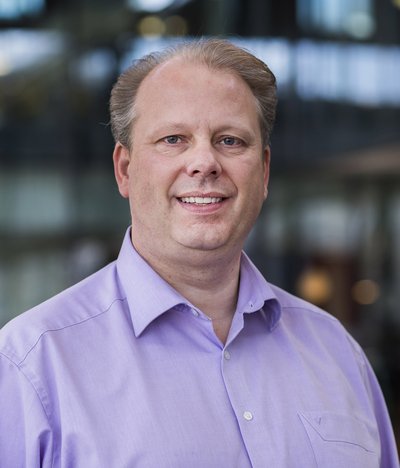
Hugo Atle Jakobsen is a Professor at the Norwegian University of Science and Technology (NTNU), specializing in computational fluid dynamics within the Department of Chemical Engineering. His research encompasses multiphase reactive flows, reactor technology (including packed beds, fluidized beds, and bubble columns), phase separation processes, and advanced numerical methods in fluid dynamics. He teaches courses in Transport Phenomena (TKP4160/KP8904), Reactor Technology (TKP4145/KP8902), and specialized reactor modeling. Jakobsen's research interests focus on: Multiphase reactive flow modeling for chemical reactors Development of finite volume and weighted residual methods for computational fluid dynamics Population balance modeling for complex fluid systems Experimental analysis of fluid particle behavior under turbulent conditions His recent publications (2021-2025) predominantly explore bubble/drop dynamics, interfacial mass transfer, and reactor modeling, with consistent themes in experimental validation of computational frameworks for multiphase systems. Trends indicate strong emphasis on turbulence effects, non-Newtonian fluid behavior, and innovations in population balance equations.
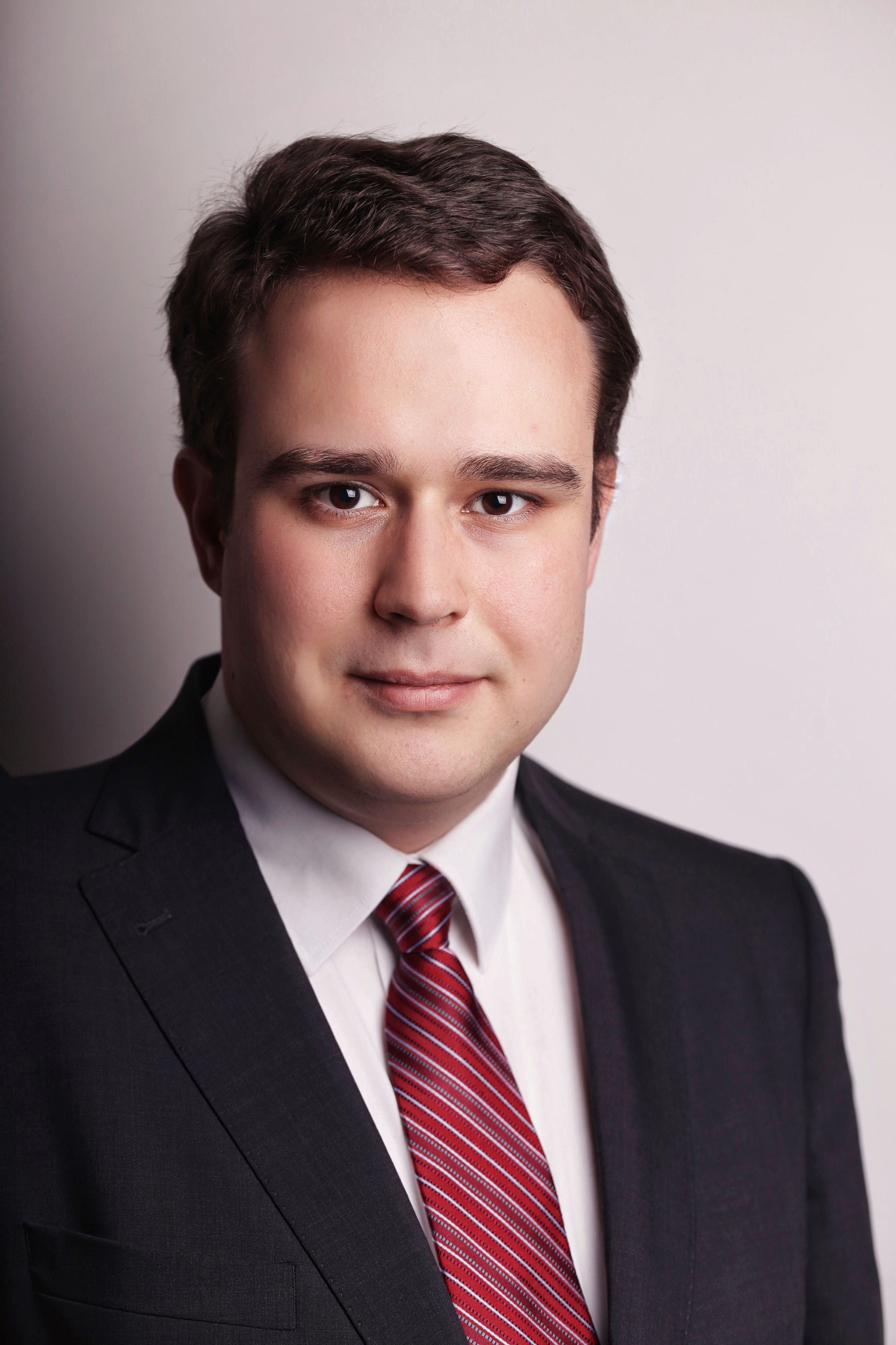
Suat Canberk Ozan is an Associate Professor in the Department of Chemical Engineering at the Norwegian University of Science and Technology (NTNU), actively engaged in research on multiphase flow phenomena with a focus on fluid particle coalescence, film drainage dynamics, and cavitation processes. His work integrates theoretical fluid dynamics with practical applications in chemical engineering and biomechanics. Dr. Ozan's research investigates the critical role of interfacial rheology, surface viscoelasticity, and non-Newtonian fluid behavior in coalescence mechanisms. Key areas include modeling film drainage in power-law fluids, surfactant effects on bubble dissolution, and numerical challenges in synovial fluid dynamics. His methodologies bridge fundamental interfacial science with industrial process optimization, particularly in reactor design and multiphase system efficiency. Analysis of his 2019-2024 publications reveals consistent advancement in coalescence kernel development, emphasizing the interplay between critical velocity models, energy dissipation, and surface rheological properties. His recent work extends to cavitation-assisted radical production and fluid particle interactions in biological contexts, demonstrating cross-disciplinary innovation from chemical reactors to biomedical applications. No scientific awards were specified in the available information. Details regarding student advising, research grants, laboratory affiliations, or future research directions were not provided in the source material.
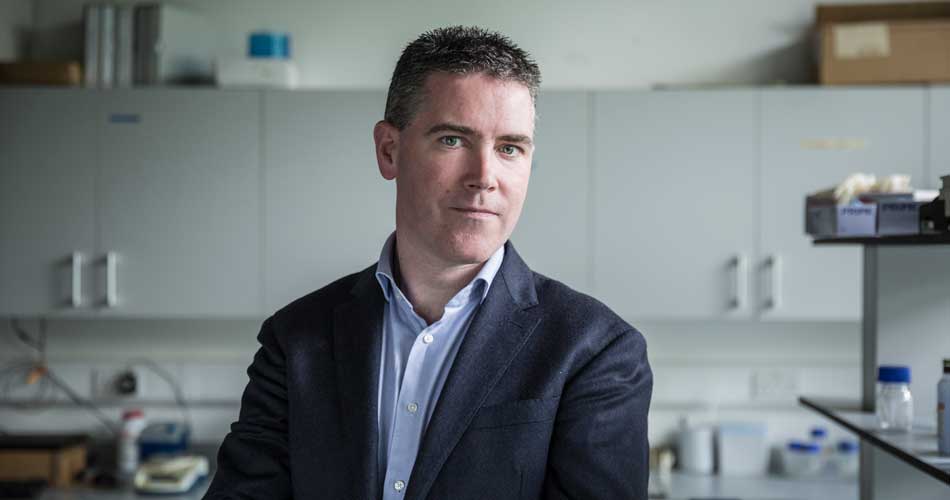
Martin van Sint Annaland is a Full Professor at the Department of Chemical Engineering and Chemistry at Eindhoven University of Technology (TU/e), The Netherlands. He chairs the Chemical Process Intensification research group, focusing on advanced (multi-phase) reactor models and experimental demonstration of novel reactor concepts. His work integrates reaction and separation processes, heat exchange, and chemical looping for sustainable energy systems. Department: Chemical Engineering and Chemistry Research group: Chemical Process Intensification Ranks: Full Professor His research interests revolve around process intensification , with key themes including: Integration of reaction and separation via membrane reactors and sorption-enhanced processes; Coupling endothermic and exothermic reactions (e.g., propane dehydrogenation and methane combustion); Dynamically operated packed beds for cryogenic CO2 capture and chemical looping combustion. The articles extracted from his work span topics in chemical reactor engineering and multi-phase flow modeling , with a focus on hydrogen production, CO2 capture, and drag force dynamics in bubble swarms. He teaches courses such as Advanced Separation Technology and Multiphase Reactor Modeling , and has engaged in consultancy for CO2Zero and grant reviews in chemical engineering.
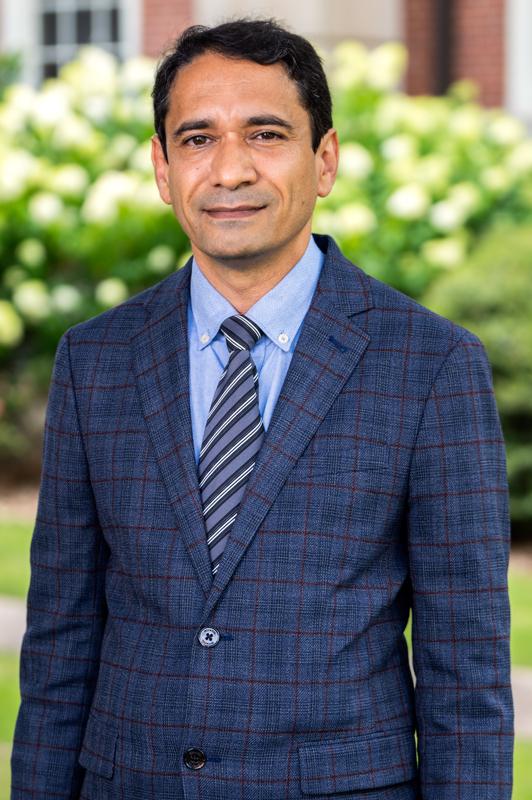
Bram Huygens is a postdoctoral researcher at the Department of Bio-engineering Sciences , Vrije Universiteit Brussel, Belgium. His work focuses on axial dispersion in porous media , with applications in chromatography , chemical reactor design , and fluid dynamics . He is associated with the Chemical Engineering and Industrial Chemistry group. Research Interests : Understanding and modeling axial dispersion in porous media Computational Fluid Dynamics (CFD) simulations Microfluidic flow visualization Chromatographic column design and optimization Hybrid reversed-phase and HILIC chromatography Scientific Awards : Csaba Horváth Young Scientist Award (2025) Rising Stars of Separation Science Award (2024) Ilya Prigogine Prijs (2019) Multiple conference prizes (Slam contests at ISC 2024 and HPLC 2025) Collaborations and Activities : Huygens has collaborated with researchers like Gert Desmet and Claudia Venditti. He presented at international conferences (e.g., HPLC 2025, ISC 2024) on topics related to van Deemter’s equation and flow modeling.
Professor Michael Vynnycky is a faculty member in the Department of Mathematics and Statistics at the University of Limerick , with affiliations to multiple research centers including the Centre for Battery and Energy Materials Research , Mathematics Applications Consortium for Science and Industry (MACSI) , and SSPC - The Research Ireland Centre for Pharmaceuticals . His research spans applied mathematics, electrochemistry, and industrial process modeling, with a focus on energy storage and metallurgical systems. Polymer electrolyte fuel cells Vanadium redox batteries Electrochemical pickling of steel Mpemba effect Continuous casting of metals Geophysical processes (mantle convection, magmatic ascent) Recent publications highlight his expertise in asymptotic analysis, Stefan problems, and numerical simulations applied to energy systems, chemical processes, and materials science. His work contributes to UN Sustainable Development Goals in clean energy and sustainable industry practices. Professor Vynnycky supervises PhD students and collaborates on interdisciplinary projects with computational and experimental components.
David Adolph is a Researcher at the Microwave Electronics department of Chalmers University of Technology . With over a decade of publications in premier journals and conferences like IEEE Journal of Quantum Electronics and Applied Physics Express , he specializes in advanced semiconductor materials and device physics. Current projects: Enkristallin Yttrium Aluminium Nitrid för Elektronik (2023-2026, funded by Vetenskapsrådet) Center for III Nitride semiconductor technology (C3NiT) phase 2 (2022-2027, VINNOVA-funded) His research focuses on ZnO/GaN multilayer systems for optoelectronic applications, including distributed Bragg reflectors and microwave high-electron-mobility transistors (HEMTs). His work combines plasma-assisted molecular beam epitaxy (PAMBE) with advanced characterization techniques. Key publication trends show expertise in III-nitride semiconductors , MBE growth optimization , and defect analysis in microwave devices. Recent collaborations include researchers from Stanford University and KTH Royal Institute of Technology . Contact: adolph@chalmers.se | Chalmers Profile
Astrid Buran Holan is an Associate Professor at the Norwegian Fisheries College , UiT The Arctic University of Norway, Tromsø. Her research focuses on recirculating aquaculture systems (RAS) , membrane filtration technology , and water quality control in marine aquaculture. Research Areas: Membrane bioreactor applications Microbial community dynamics Particulate matter removal Fish health and disease prevention System design optimization Collaborations: Steven T. Summerfelt Bendik Fyhn Terjesen Per-Arvid Wold TorOve Leiknes Jelena Kolarevic Her work spans both technical development of aquaculture systems and microbiological analysis of water treatment processes, with publications covering system design, filtration efficacy, and marine species rearing. Key trends in her research include computational fluid dynamics for fish farm design, microbial control strategies, and membrane fouling behavior in commercial-scale systems. She has contributed to aquaculture engineering through studies on Atlantic salmon and cod production systems, evaluating tank geometry, water treatment technologies, and environmentally controlled production methods.
Soma Vesztergom is an Assistant Professor at the Department of Chemistry and Department of Physical Chemistry of Eötvös Loránd University (ELTE), Budapest, Hungary. His research focuses on electrochemistry, particularly CO2 electroreduction, catalyst stability, and advanced electrode materials. His work emphasizes CO2 electroreduction , catalyst design , and electrochemical engineering . Key techniques include operando characterization (e.g., laser scattering, Raman spectroscopy), gas diffusion electrodes , and impedance analysis . Recent publications address pH effects on catalyst performance , flooding phenomena in gas diffusion electrodes, and novel methods for electrolyte management . His studies span from fundamental interfacial processes to applied renewable energy technologies. His research team at ELTE’s Electrochemistry and Electroanalytical Laboratory employs EDX tomography , identical location SEM , and digital simulation tools to optimize electrochemical systems.
Professor Eoin Casey is a distinguished academic at University College Dublin's College of Engineering and Architecture, where he serves in the School of Chemical and Bioprocess Engineering. His career has been dedicated to advancing sustainable wastewater treatment technologies, with a particular focus on energy efficiency and environmental impact reduction. Professor Casey leads groundbreaking research that bridges academic inquiry with practical industrial applications through collaborations with spin-out companies. Professor Casey's primary research interests center around Membrane Aerated Biofilm Reactor (MABR) technology, which represents a paradigm shift in wastewater treatment. His work explores biofilm dynamics, energy optimization in treatment processes, membrane technology applications, and sustainable engineering solutions for water management. His research group investigates how bacterial biofilms function within MABR systems, examining both the fundamental science and practical implementation challenges. This research spans environmental engineering, chemical engineering, and sustainable technology development, with significant implications for global water and energy conservation efforts. The articles published by Professor Casey and his research group demonstrate a consistent focus on optimizing wastewater treatment processes while reducing energy consumption. Recent publications reveal an expanding scope that now includes data-driven modeling, continuous biomanufacturing, and integration of water treatment facilities into broader energy systems. His work shows a clear trajectory from fundamental biofilm research toward practical implementation of energy-efficient systems that address climate change challenges. The research increasingly incorporates advanced modeling techniques, process optimization, and consideration of the energy-water nexus. Professor Casey's research has generated significant commercial and environmental impact through the spin-out company OxyMem, founded in 2013 with support from NovaUCD. While specific personal awards aren't detailed in the provided text, his work has contributed to OxyMem receiving notable recognition including the 2014 Irish Times Innovation Award, the US Imagine H2O 2015 Infrastructure Challenge award, and a Knowledge Transfer Ireland 2015 Impact Award. OxyMem was also named in the prestigious Global Cleantech 100 in 2016 and 2017. Professor Casey's research group has secured substantial funding from Science Foundation Ireland and Enterprise Ireland to develop and scale MABR technology. His work has progressed from laboratory experiments to full-scale implementation at wastewater treatment plants, demonstrating energy savings of up to 75% compared to conventional treatment methods. The commercial deployment of this technology in countries including the United States, Singapore, Brazil, Spain, and Japan represents significant international impact. His research group continues to collaborate with OxyMem on further development and optimization of the technology. The research led by Professor Casey operates through specialized laboratories focused on membrane technology, biofilm reactors, and sustainable water treatment. His team has successfully demonstrated the scalability of MABR technology from laboratory settings to full-scale wastewater treatment plants, most notably in a demonstration plant near Birmingham, UK. The research infrastructure supports both fundamental investigations of biofilm mechanics and practical engineering development of commercial systems.
Nicola Pedroni is an Associate Professor at the Department of Energy (DENERG) of Politecnico di Torino, Italy. His research focuses on advanced computational methods for nuclear safety, uncertainty quantification, and artificial intelligence applications in risk assessment. He has held external academic roles at institutions including MIT, École Centrale Paris, and CEA Saclay. Research Interests: Artificial Intelligence, Monte Carlo Methods, Nuclear Safety, Uncertainty Quantification, Probabilistic Risk Assessment, Resilience Analysis His recent work spans inverse uncertainty quantification, fault detection in safety-critical systems, and metamodeling techniques for nuclear reactor analysis. He serves on editorial boards for Frontiers in Nuclear Engineering , Energies , and Proceedings of the Institution of Mechanical Engineers, Part O . Pedroni leads the ARISTOTELES project on AI and stochastic simulation for critical infrastructure resilience and contributes to the EU-funded ENDURANCE project for molten salt reactor safety. He supervises PhD student George Afful and teaches courses in nuclear plant modeling and risk analysis.
Luca Marmo is an Associate Professor at the Politecnico di Torino , affiliated with the Department of Applied Science and Technology (DISAT) and the SISCON Interdepartmental Center for infrastructure safety. He teaches in the Chemical and Food Engineering program and coordinates research at the Dust Explosion and Process Safety Research Group and Experimental Center for Industrial Safety of Explosive Atmospheres .
Hassan Khodaei serves as an Assistant Research Professor in the Biosystems Engineering program at Auburn University. His academic foundation includes a PhD in Mechanical Engineering from Edith Cowan University (ECU), complemented by an MS from K.N.Toosi University of Tehran and a BS from the University of Kerman. His research bridges mechanical engineering principles with sustainable biosystems applications, focusing on thermal conversion processes for renewable energy solutions. Education PhD in Mechanical Engineering, Edith Cowan University (ECU) MS in Mechanical Engineering, K.N.Toosi University of Tehran BS in Mechanical Engineering, University of Kerman Research Interests Dr. Khodaei specializes in biomass thermal conversion , biofuel and biocarbon production , and advanced computational fluid dynamics (CFD) modeling. His work develops innovative pathways for converting biomass and waste streams—such as construction debris and plastic waste—into biochar, biofuels, and energy. He employs high-fidelity CFD simulations to optimize reactor designs and operational parameters across scales, from laboratory experiments to industrial plants, with emphasis on emission reduction and process efficiency. Publication Trends His 16-year publication record reveals a strategic evolution from refinery energy systems (2009-2014) toward biomass thermochemical conversion (2015-2025). Recent work demonstrates increasing sophistication in multiphase CFD modeling of pyrolysis and gasification reactors, with growing emphasis on circular economy applications like plastic-biomass co-processing. The consistent integration of experimental validation with simulation across his portfolio highlights a rigorous methodology for industrial-scale sustainable technology development. Scientific Awards No scientific awards were documented in the provided materials. Advising and Grants While specific student mentorship or grant details were not disclosed, his role as Assistant Research Professor implies active participation in research supervision and funding acquisition within Auburn University's engineering ecosystem.
Christos Comninellis is an Honorary Professor at the School of Basic Sciences (SB) of EPFL, affiliated with the Institute of Chemical Sciences and Engineering (ISIC). He specializes in environmental electrochemistry, electrocatalysis, and fuel cell technology. His research focuses on electrochemical oxidation processes for wastewater treatment, electrochemical promotion of catalytic activity (EPOCAP), and the development of advanced electrochemical reactors for sustainable applications. Education: BSc in Chemistry (University of Alexandria, 1970) and PhD in Technical Sciences (EPFL, 1979). Teaching includes Applied Chemistry, Transport Phenomena, and Environmental Technologies. He has authored over 170 papers, 14 patents, and supervised 17 doctoral theses. Collaborations with industry led to innovations in bipolar electrochemical reactors for oxidant regeneration. Research highlights include studies on active/non-active electrode behavior (IrO₂ and BDD electrodes), kinetic modeling of organic oxidation, and the Non-Faradaic Electrochemical Modification of Catalytic Activity (NEMCA). His work bridges fundamental electrochemistry and practical applications in environmental protection. Professional roles include membership in EPFL's Evaluation Committee and jury for outstanding PhD theses. Active in academic leadership, he has presented at over 130 international conferences, delivering five plenary lectures in recent years. His lab, part of ISIC, collaborates across disciplines to advance electrochemical solutions for global challenges.
Nausheen Basha is a Researcher in the Department of Chemical Engineering at Imperial College London, part of the Faculty of Engineering. Previously, she held a Research Assistant position at City, University of London. She earned her PhD in Chemical Engineering from City, University of London (2017–2021) and an MSc in Aerospace Engineering from the University of Manchester (2013–2014). Education: PhD in Chemical Engineering, City, University of London (2017–2021) MSc in Aerospace Engineering, University of Manchester (2013–2014) Research Interests: Nausheen’s work focuses on integrating machine learning and computational fluid dynamics (CFD) to enhance engineering design and optimization. Her research spans computational fluid dynamics, chemical engineering optimization, and the application of machine learning techniques such as deep learning and Bayesian optimization. She explores multiphase systems, reactor design, and the development of surrogate models to improve simulation efficiency and accuracy in fluid dynamics and mechanical engineering contexts. Research Trends: Her recent work emphasizes multi-fidelity methods, Bayesian optimization, and machine learning-driven approaches to solve complex fluid dynamics problems. She has contributed to advancements in flow reactor design, laminar mixing systems, and the analysis of dispersed oil-water flows, often leveraging CFD simulations combined with data-driven frameworks. Advising & Grants: No formal advisees or grant information is listed in the provided text. Her contributions are primarily through research publications and academic positions.
Ivo Roghair is an Assistant Professor in Chemical Process Intensification at Eindhoven University of Technology (TU/e), with additional affiliations in EAISI Health and EIRES Research. His research develops computational tools for intensified reactor concepts including membrane reactors, chemical looping processes, and fluidized bed systems. He holds an MSc from the University of Twente and a PhD from TU/e focused on numerical simulations of dense bubbly flows. Research interests include: Multiscale modeling of reactor systems (1D to 3D CFD) Fluidized bed membrane reactor design Chemical looping combustion kinetics Inter-particle forces in high-temperature fluidization Polymer drying processes and agglomeration prevention Recent publications show strong emphasis on 3D-printed catalyst structures, heat transfer optimization, and multiphase flow modeling. His work integrates computational methods with experimental validation to advance reactor design and process efficiency. Dr. Roghair leads projects including C-Recycle (chemical recycling technologies) and Cryogene CO₂ capture systems. He received the Best Bachelor Lecturer award in 2017 and contributes to courses on numerical methods and process technology.