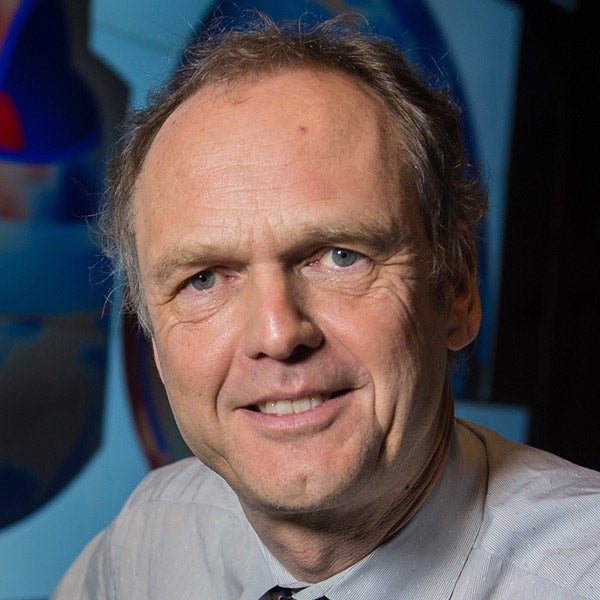
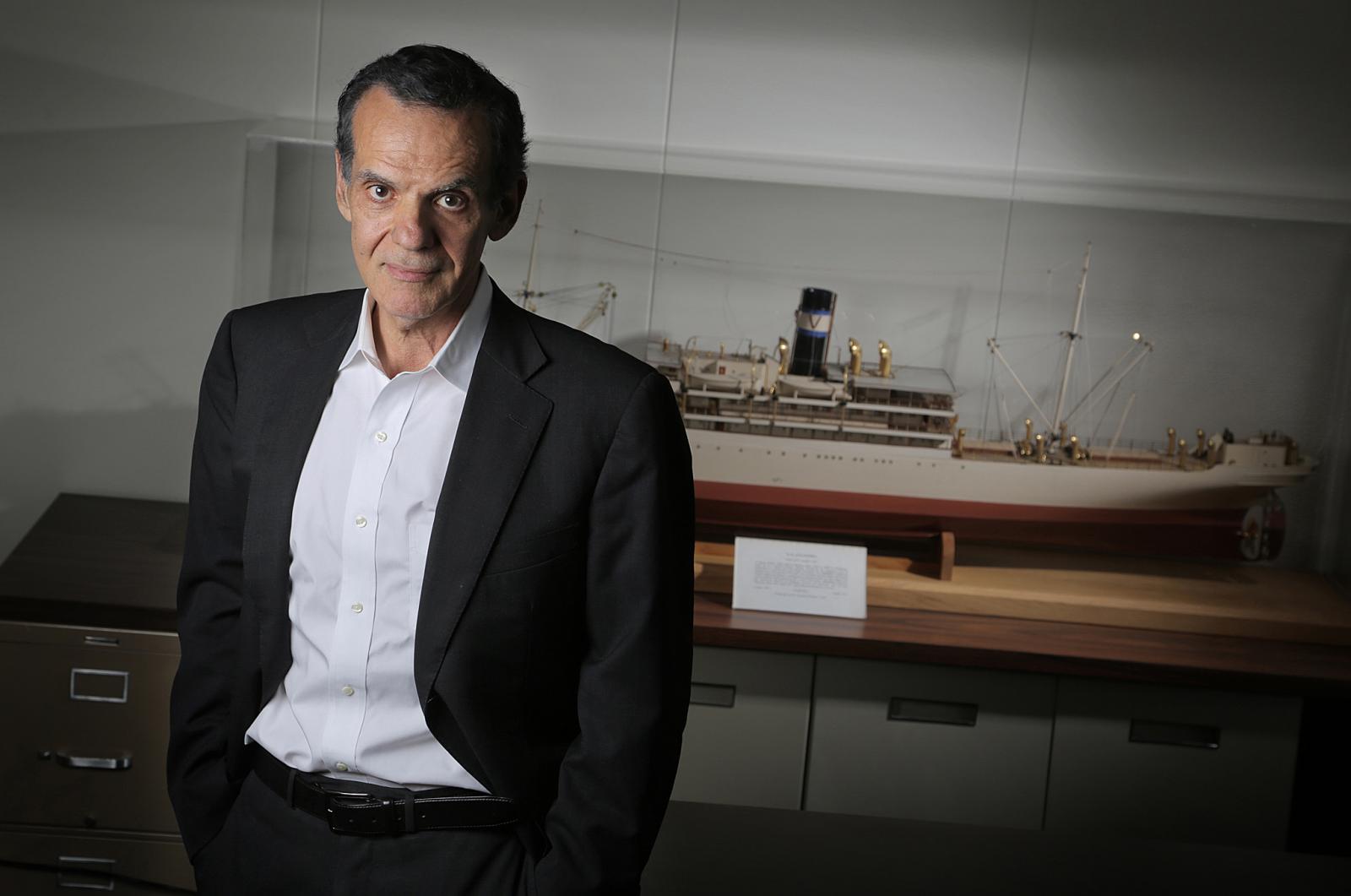
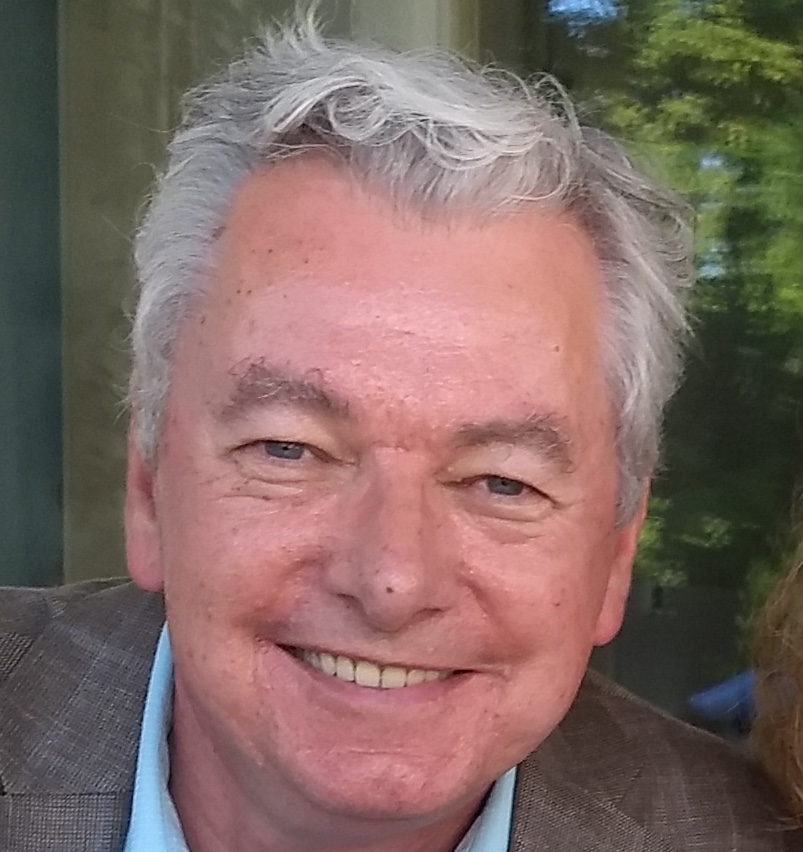
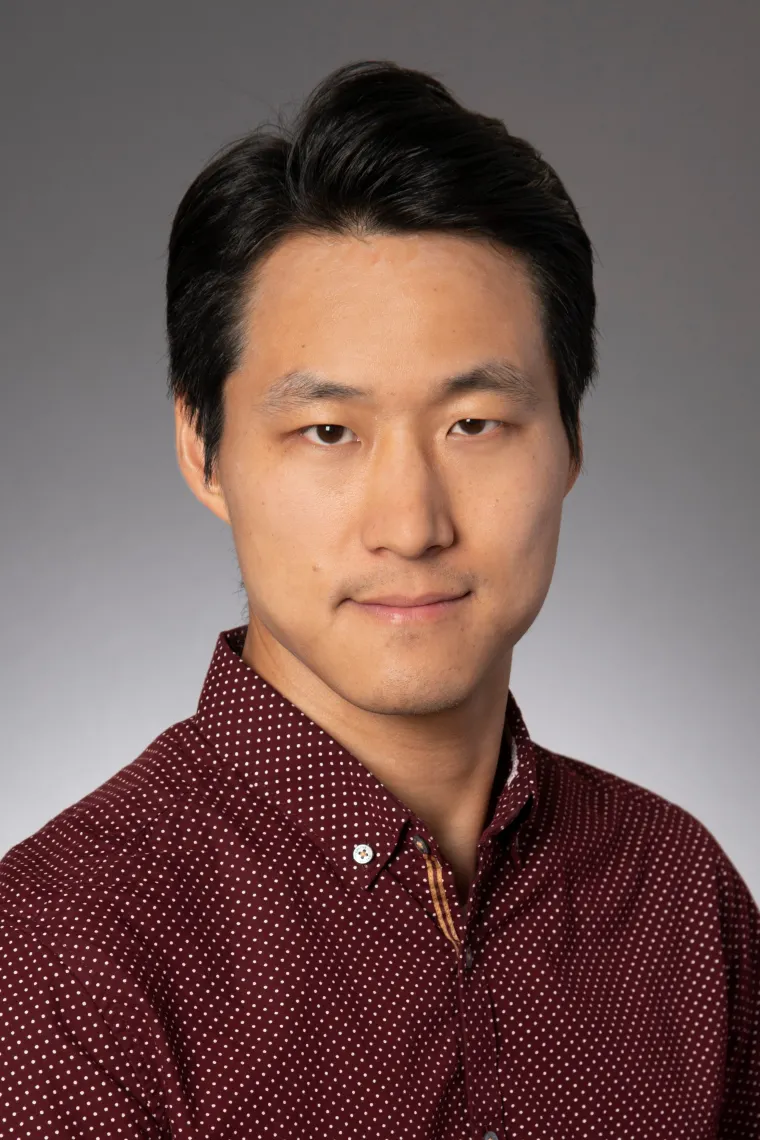
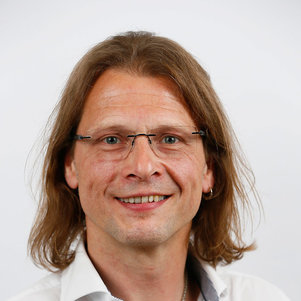
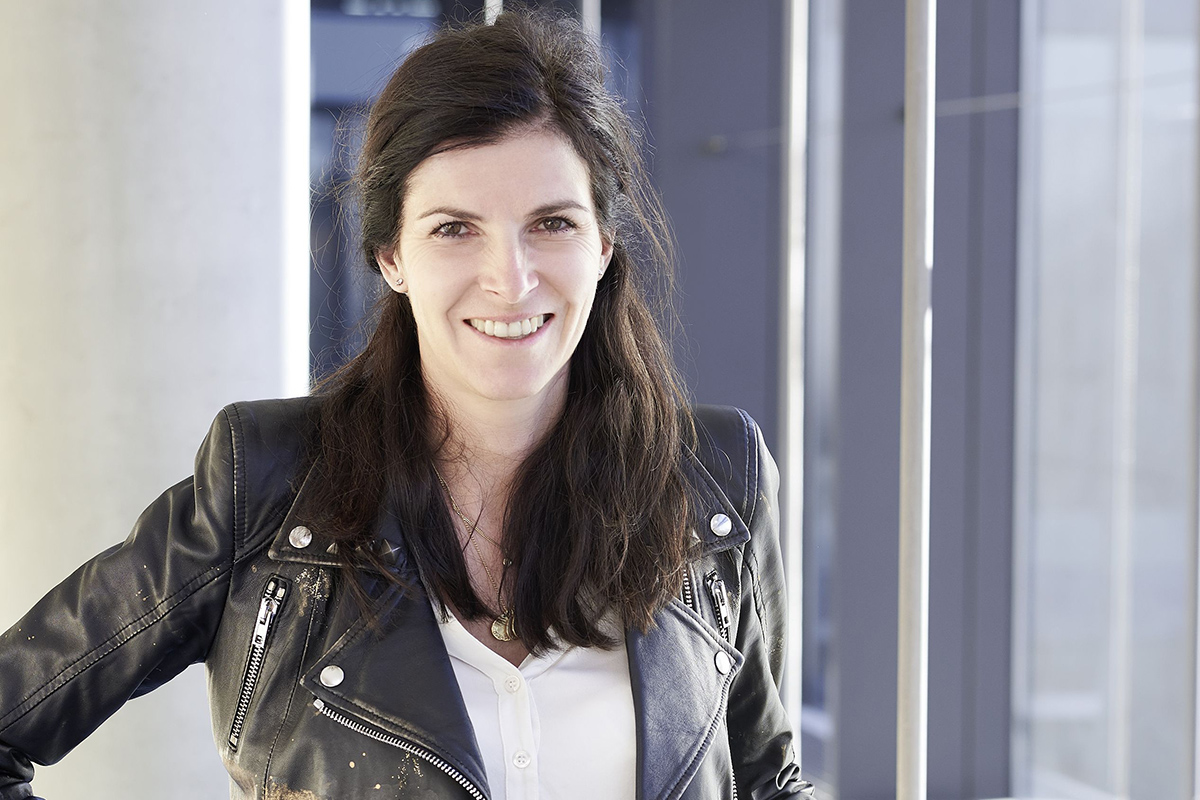
Maarten de Hoop is the Simons Chair and Professor of Computational and Applied Mathematics at Rice University, part of the George R. Brown School of Engineering. He holds visiting roles at MIT and the Chinese Academy of Sciences. His research spans seismic wave analysis, inverse problems, deep learning, and planetary seismology. He earned his Ph.D. in Technical Sciences from Delft University of Technology (1992), and earlier degrees from Utrecht University. Notable awards include the 1996 J. Clarence Karcher Award and 2001 Fellowship from the Institute of Physics. His work integrates computational mathematics with geophysics, focusing on extracting signal information from large datasets, developing novel inverse scattering methods, and applying deep learning to geoscience challenges. Recent studies include transformer models for in-context learning, semialgebraic neural networks, and seismic waveform foundation models like SeisLM. He leads the Geo-Mathematical Imaging Group, fostering interdisciplinary projects in planetary missions and data-driven discovery.
Stefano Rossi is a Full Professor of Finance at Bocconi University's Department of Finance, serving as Chair of the Department. He holds affiliations with the Centre for Economic Policy Research (CEPR) and the European Corporate Governance Institute (ECGI), and serves on editorial boards for journals including Journal of Law, Finance, and Accounting and European Financial Management . His research focuses on corporate governance, bankruptcy, debt financing, sovereign borrowing, and quantitative trading, with publications in top journals such as The Journal of Finance and Journal of Monetary Economics . He has received international recognition, including awards for his work on ownership evolution. Prior to Bocconi, he taught at institutions including the Stockholm School of Economics and Cornell University. He earned his BA/MSc from Bocconi and a PhD in Finance from London Business School. Prof. Rossi's research explores intersections between corporate finance and public policy, with recent work analyzing credit cycles, municipal bankruptcy law, and liquidity shocks in insurance markets. His articles frequently address systemic financial risks and institutional frameworks governing corporate and sovereign debt. Awards include the ECGI Best Paper Prize for his collaborative research on ownership dynamics. Teaching spans corporate finance, valuation, and financial markets at undergraduate, graduate, and executive levels. He has developed courses at Bocconi's undergraduate, MBA, and PhD programs, emphasizing practical applications of theoretical finance models. His comprehensive curriculum includes mergers & acquisitions and private equity strategies. Key contributions include studies on shareholder voting mechanisms, sovereign default dynamics, and the impact of tax policies on corporate behavior. His work often bridges academic rigor with real-world policy implications, influencing both academic discourse and regulatory practices.
Assoc Prof Ying Chen is an Associate Professor at the National University of Singapore , affiliated with the Department of Mathematics, Asian Institute of Digital Finance (as Academic Director of PhD Program in Digital FinTech 2022–2024), Risk Management Institute (2019–2023), Department of Statistics and Data Science (2019–2023), and Department of Economics (2018–2023). She also contributes to NUS Graduate School for Integrative Sciences and Engineering since 2016. Research Interests include: AI forecasting and quantum computing for finance Nonstationary time series and functional data analysis Energy data analytics and precision medicine Network autoregression and spatial-temporal modeling Explainable AI and citation metrics Portfolio liquidation and market-making algorithms Article Trends demonstrate expertise in: Adaptive forecasting for gas flows and electricity prices Blockchain network influence detection Quantum computing applications in finance Functional autoregression with mixed predictors Credit rating fairness and explainability High-resolution implied volatility modeling Scientific Awards include: ISI Elected Member (2016–) International Statistical Institute Council (2023–2027) IASC Scientific Secretary (2017–2019, 2023–2025) Advisory roles for EU FIN-TECH and xAIM projects
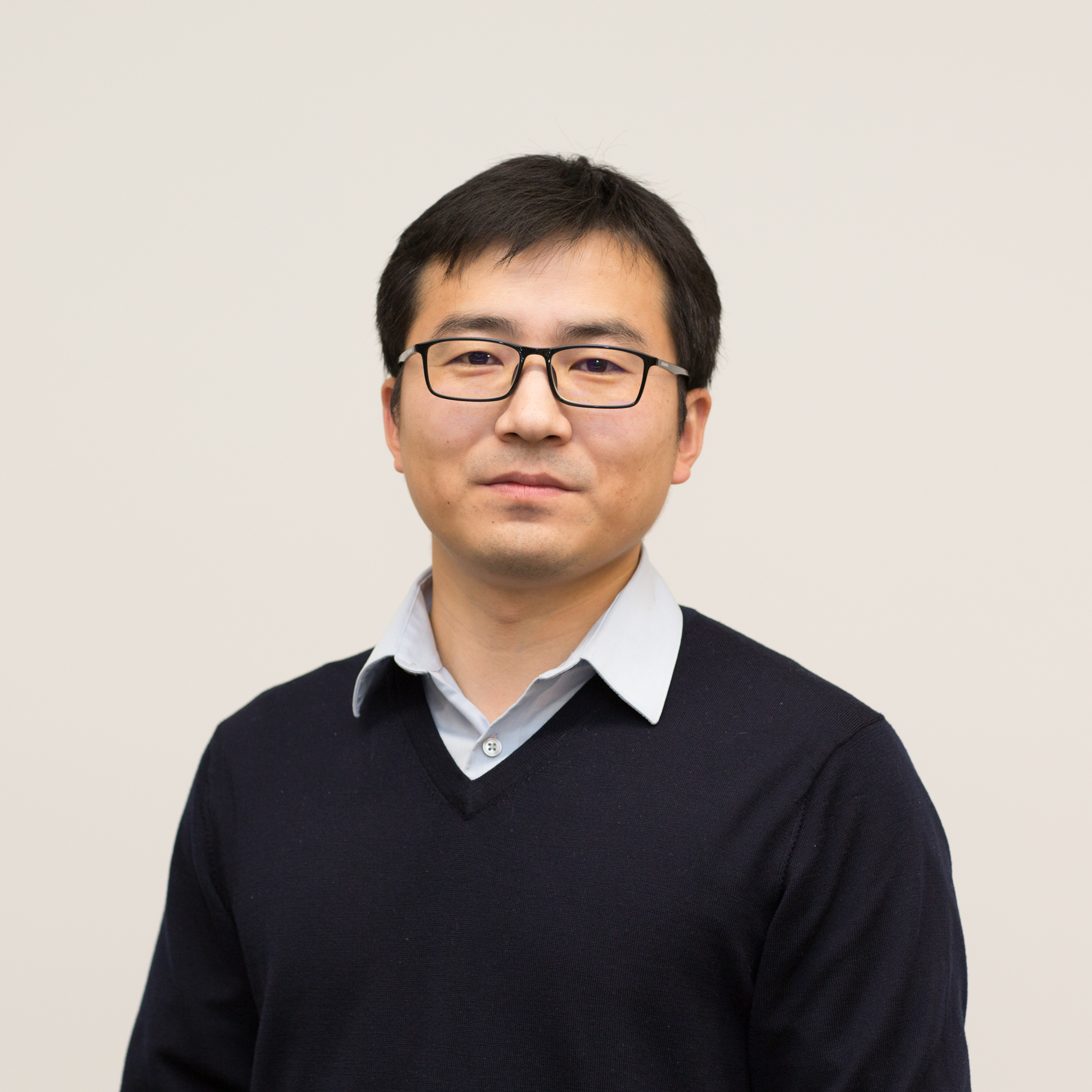
Di Shi is an Associate Professor at the Klipsch School of Electrical and Computer Engineering , New Mexico State University (NMSU), holding the Paul W. and Valerie Klipsch Distinguished Professorship. He previously founded the AI energy startup AInergy, LLC and held leadership roles at GEIRI North America, NEC Laboratories America, and Arizona State University. Education: PhD in Electrical Engineering, Arizona State University (2012) MS in Electrical Engineering, Arizona State University (2009) BS in Electrical Engineering, Xi'an Jiaotong University (2007) His research focuses on power system data analytics , energy storage , artificial intelligence , and IoT applications for grid stability and renewable integration. His work bridges theoretical innovation with real-world deployment, including software adopted by 15 utility companies. Recent publications highlight his leadership in deep reinforcement learning for grid control, blockchain frameworks for energy management, and tensor decomposition for efficient load modeling. He has secured a $6M NSF grant for AI-driven digital twinning to address climate-aware energy resilience. Awards & Recognition: 2025 Paul W. and Valerie Klipsch Distinguished Professorship 2024 University Research Council Mid-Career Award 2024 IET Fellow Multiple IEEE Best Paper Awards (2019–2022) 2019 L2RPN AI Competition Championship He serves as an editor for IEEE Transactions on Power Systems , IET Generation, Transmission & Distribution , and other journals, and leads the IEEE Task Force on IoT for Power Systems . His team’s patents cover AI-driven load modeling , energy storage scheduling , and state estimation , with 42 granted or pending.
Jim Hall is a Professor of Climate and Environmental Risk at the University of Oxford's School of Geography and the Environment, and serves as Director of Research there. He is also a Visiting Fellow at Linacre College and holds leadership roles including Chair of the Science Advisory Committee at IIASA, and Expert Advisor to the UK's National Infrastructure Commission. His work focuses on systemic risk analysis, infrastructure resilience, and policy implications of climate change adaptation. Prof Hall has pioneered methodologies like the National Infrastructure Systems Model (NISMOD) and chairs the Data and Analytics Facility for National Infrastructure (DAFNI). His research spans flood risk management, energy systems decarbonization, and transboundary water resource conflicts in regions such as the Eastern Nile Basin and the Caribbean. Key research areas include robust decision making under uncertainty, info-gap theory applications, and integrated assessments of human-environmental systems. He has contributed to major international assessments, including the IPCC's Fourth Assessment Report, and developed frameworks for multi-hazard stress testing of infrastructure networks. Scientific Awards: George Stephenson Medal (2001), Prince Sultan Prize for Water (2018), Royal Academy of Engineering Fellowship (2010) His advising and grants work includes mentoring a DPhil student Erin Canning and leading projects like MARIUS and ENHANCE. He has also developed innovative modeling tools for coastal erosion prediction and probabilistic assessments of global shipping fuel transitions. Prof Hall’s research groups actively engage in interdisciplinary projects, including the Oxford Martin Programme on Resource Stewardship and the UK Infrastructure Transitions Research Consortium. His work emphasizes bridging scientific analysis with actionable policy solutions for climate adaptation.
Associate Professor Wenhua Zhao is a globally recognized expert in offshore hydrodynamics and renewable energy technologies at The University of Queensland , School of Civil Engineering. With over 110 publications and 30 million AUD in secured research funding, his work bridges theoretical and practical advancements in marine engineering. Research focuses on Clean Energy , Artificial Intelligence , and Climate Change , specifically floating wind energy, floating solar, offshore aquaculture, and green hydrogen production. His 15 most recent articles (2024-2025) emphasize wave-structure interactions, gap resonance dynamics, and AI-driven wave prediction, published in top journals like Journal of Fluid Mechanics and Ocean Engineering . Scientific awards include the prestigious ARC Future Fellowship (2024-2028) and DECRA Fellowship (2019-2022) , recognizing his contributions to academia and industry. He teaches the 'Design of Offshore Energy Systems' course , training hundreds of students in coastal and ocean engineering, and serves as Deputy Editor for Ocean Engineering and Associate Editor for ASME's Journal of OMAE . Available for research supervision, Zhao actively collaborates with editorial boards of Applied Ocean Research and other Q1 journals.
Yang Weng is an Associate Professor at the School of Electrical, Computer and Energy Engineering, Arizona State University. He leads the U.S.-Israel International Consortium on Energy Cyber Initiative on Cybersecurity R&D and directs a research lab focused on smart grid resilience and machine learning applications. Previously, he was a TomKat Postdoctoral Scholar at Stanford University. Education: Ph.D. in Electrical and Computer Engineering, Carnegie Mellon University M.S. in Machine Learning, Carnegie Mellon University Research: His interdisciplinary work bridges power systems, machine learning, and cybersecurity, emphasizing renewable integration, grid optimization, and cyber-physical resilience. Key themes include physics-informed AI, adversarial robustness in energy infrastructure, and real-time control algorithms for dynamic grids. Publications: Recent articles (2024–2025) demonstrate strong trends in AI-driven grid security, adaptive control under uncertainty, and climate-impact modeling. Dominant domains include neural network applications for stability guarantees, cyber-attack mitigation, and data-efficient renewable integration. Awards: NSF CAREER Award (2021), Amazon Research Award (2023) Best Paper Awards at IEEE SmartGridComm (2012, 2013), PES GM (2014), PMAPS (2016) IEEE Senior Member, Sun Award (ASU), Centennial Award (ASU) Grants & Leadership: Secured DOE, NSF, and AFOSR funding for projects on AI-enhanced grid resilience. Advises PhD/postdoc candidates and chairs the U.S.-Israel Energy Center consortium. Organized international workshops (e.g., ICRDE 2023) and validated research via hardware-in-the-loop experiments. Lab & Team: Directs a research group developing deployable ML solutions for utilities (e.g., OPAL-RT collaborations). Focus areas: cybersecurity toolchains, reinforcement learning for grid control, and anomaly detection architectures.
Professor Paul D. Sclavounos is a faculty member in the Department of Mechanical Engineering at the Massachusetts Institute of Technology (MIT). He earned his B.Sc. from the National Technical University of Athens in 1977 and Ph.D. from MIT in 1981. Research Interests : Marine hydrodynamics, stochastic control, offshore wind/wave/tidal/solar energy, machine learning applications, magnetohydrodynamic propulsion systems. Notable Contributions : Development of computational tools like SWAN and SML software suites; analysis of nonlinear wave dynamics; integration of AI/ML in marine hydrodynamics. Scientific Recognition : First Prize in National Mathematics Competition (1972), Georg Weinblum Memorial Lecturer (2010-2011), Best Paper Award at OMAE 2019, AEOLOS Scientific Award (2024). Leadership : Director of the Laboratory for Ship and Platform Flows since 1985; advisory roles for US Navy, US Department of Energy, and Det Norske Veritas (DNV). Teaching : Courses in Hydrodynamics (2.016), Advanced Fluid Mechanics (2.25), and Naval Architecture (2.701).
Mennatallah El-Assady serves as Assistant Professor at ETH Zurich's Department of Computer Science, where she leads the Interactive Visualization and Intelligence Augmentation Lab (IVIA). Her academic trajectory includes research fellowships at ETH's AI Center and doctoral work at University of Konstanz and OntarioTech University, establishing her expertise at the intersection of visualization and artificial intelligence. Her research focuses on advancing responsible data-driven decision-making through human-centered analytics, with particular emphasis on explainable machine learning systems. Dr. El-Assady combines data mining techniques with visual interfaces to create transparent AI workflows, specializing in text data analysis. Her work bridges computational linguistics, digital humanities, and information visualization to develop tools that make complex AI processes interpretable for end users. Recent publications demonstrate growing focus on generative AI's impact on visualization practices and sophisticated frameworks for interactive machine learning. Her research consistently addresses the challenge of maintaining human agency in increasingly automated systems, with applications spanning political debate analysis, musicology, and healthcare data interpretation. The trend shows increasing sophistication in evaluation methodologies for visual analytics systems. Best Paper Award: Honorable Mention for 'Progressive Learning of Topic Modeling Parameters: A Visual Analytics Framework' Dr. El-Assady actively shapes her field through workshop leadership including ArgVis (Argument Visualization), Vis4DH (Visualization for Digital Humanities), and VISxAI (Visualization for AI Explainability). Her teaching includes 'Interactive Machine Learning- Visualization and Explainability' at ETH Zurich, training next-generation researchers in human-centered AI development. She maintains strong industry connections with coverage in Forbes and ETH News regarding human-AI collaboration frameworks. The Interactive Visualization and Intelligence Augmentation Lab (IVIA) develops cutting-edge tools including explAIner for transparent machine learning, LingVis for linguistic analysis, VisArgue for debate structure visualization, and VALIDA for political deliberation analysis. These projects share a common thread of enhancing human understanding through carefully designed visual interfaces that expose AI decision processes.
Padhraic Smyth is a Distinguished Professor and Hasso Plattner Endowed Chair in Artificial Intelligence at the University of California, Irvine (UCI), holding joint appointments in the Department of Computer Science and Department of Statistics. He leads the DataLab research group, focusing on machine learning, AI, and their applications in climate science, healthcare, and education. His research spans probabilistic modeling, deep learning, and human-AI collaboration. Education: PhD in Electrical Engineering from the California Institute of Technology (1988), MSEE (1985), and BEng (1984). Prior to UCI, he worked at NASA's Jet Propulsion Laboratory (1988–1996). Research Interests: Machine learning, AI, pattern recognition, Bayesian methods, climate science applications, algorithmic fairness, and human-AI interaction. He has published over 200 papers and co-authored textbooks like Modeling the Internet and the Web . Awards: ACM Fellow, IEEE Fellow, AAAI Fellow, AAAS Fellow, and ACM SIGKDD Innovation Award recipient. He has held leadership roles in UCI's Center for Machine Learning and Data Science. Key Projects: Human-AI collaboration frameworks, robustness in deep learning, climate modeling using spatio-temporal data, and AI fairness with missing attributes. Collaborates with institutions like NASA and industry partners (e.g., Google, eBay). Labs/Teams: Director of UCI’s Data Science Initiative and HPI Research Center in Machine Learning. Supervises a vibrant PhD program with over 30 alumni in academia and industry.
Fabio Miranda is an Assistant Professor at the Department of Computer Science, University of Illinois at Chicago (UIC) . His research bridges visualization , machine learning , data management , and computer graphics to enable interactive visual analysis of large-scale urban datasets . He has developed systems like UrbanRama (for VR navigation) and The Urban Toolkit (a grammar-based framework), which have been deployed in academia, industry, and government agencies. Education: Ph.D., Computer Science , New York University (2018) M.S., Computer Science , Pontifical Catholic University of Rio de Janeiro (2011) B.S., Computer Science , Federal University of Minas Gerais (2009) Research Interests center on urban visual analytics , 3D analytics , and machine learning for accessibility . His work addresses challenges like sunlight access , sidewalk quality assessment , and commuting flow modeling , often collaborating with urban planners, climate scientists, and occupational therapists. Scientific Recognition includes awards at IEEE VIS , SIBGRAPI , and SIGMOD . His research is funded by NSF , NIH , DOT , and DPI , with media coverage in The New York Times , The Economist , and Architectural Digest . Teaching includes courses like CS 524: Big Data Visualization and Analytics and CS 424: Visualization and Visual Analytics . He emphasizes web-based systems, dataflow frameworks, and interdisciplinary collaboration, with open positions for PhD , MSc , and undergraduate researchers .
Kwang-Sung Jun is an Assistant Professor at the University of Arizona, Department of Computer Science. His research spans interactive machine learning, reinforcement learning, and learning theory, with a focus on multi-armed bandits, Bayesian optimization, and generalized linear models. Education : Ph.D. in Computer Science from the University of Wisconsin-Madison (2015). Research Trends : Kwang-Sung's recent work (2023-2025) emphasizes bandit algorithms with second-order bounds, adaptive experimentation, and PAC-Bayes frameworks. He explores low-rank structures in regression, explainable reward shaping, and environmental risk modeling via probabilistic assessments of postfire debris-flows. His publications often bridge theoretical guarantees (e.g., regret bounds) with practical applications in machine learning and environmental hazards. Expertise : Interactive machine learning Multi-armed bandits Confidence sequences Reinforcement learning Human-machine hybrid systems
Professor Tongming Zhou is a faculty member in the Department of Civil, Environmental and Mining Engineering at the School of Engineering, The University of Western Australia (UWA) . He serves as Director of the UWA Boundary Layer Wind Tunnel Laboratory and Program Chair for Civil Engineering , contributing to both academic leadership and industrial applications. His work bridges fundamental fluid mechanics with practical engineering challenges. Education : PhD in Fluid Mechanics from The University of Newcastle (1999) Teaching : Coordinates core units like CIVL2551, CIVL5551, and CIVL4402/CIVL3402 Hydraulics, emphasizing real-world application and industry collaboration Research Interests focus on: Suppression of vortex shedding and vortex-induced vibrations (VIV) in cylindrical structures Enhancement of VIV and galloping for renewable energy harvesting Wave resonance in floating LNG facilities Sloshing dynamics in tanks with Newtonian/non-Newtonian fluids Wind tunnel testing for industrial wind load analysis Recent Research Trends show interdisciplinary work combining experimental and numerical fluid dynamics, with applications to offshore engineering, maritime safety, and energy systems. His projects explore VIV in flexible risers, gas leakage effects on pipelines, and triboelectric nanogenerators for wind energy. Grants : ARC Grant (2019-2021): Development of novel inerter-based dampers ARC Grant (2013-2015): Local Scour below Offshore Pipelines ARC Grant (2011-2015): Vortex & Force Characteristics of Inclined Cylinders UWA Grant (2008): Control of Vortex Shedding with Helical Strakes Facilities Leadership : Upgraded UWA’s Boundary Layer Wind Tunnel , Hydraulic Laboratory Water Flume , and 6DOF Hexapod motion platform , acquiring advanced equipment like PIV systems and high-precision load cells.
Prof. Hans van Lint is a Professor of Traffic Simulation and Computing at Delft University of Technology (TU Delft), where he holds the Anthony van Leeuwenhoek Chair since 2013. He is affiliated with the Department of Transport & Planning within the Faculty of Civil Engineering and Geosciences. His research focuses on the intersection of traffic flow theory, data analytics, and traffic simulation, with applications in estimating and predicting traffic states in networks. He has supervised numerous PhD students and contributed to valorization projects translating research into practical solutions. Van Lint earned his MSc in Civil Engineering in 1997 and returned to TU Delft for his PhD, which he completed in 2004 on 'Freeway Travel Time Prediction.' He has held roles including Assistant Professor (until 2009), Associate Professor, and has served as Director of Education for the MSc Transport, Infrastructure and Logistics program from 2010–2016. His research interests include traffic simulation frameworks, data assimilation techniques, and the development of tools for traffic state estimation. He has authored influential papers on topics such as microscopic traffic modeling, congestion pattern analysis, and macroscopic fundamental diagrams. His work emphasizes bridging theoretical models with real-world applications, enhancing traffic management and infrastructure planning. Van Lint teaches courses like 'Transport & Planning' and 'Interdisciplinary Fundamentals,' reflecting his commitment to both research and education. He actively contributes to TU Delft's labs, including the Traffic Dynamics, Modelling and Control Lab, advancing interdisciplinary approaches to mobility challenges.
Prof. Dr. Evi Hartmann holds the Chair of Business Administration, especially Supply Chain Management at Friedrich-Alexander University Erlangen-Nuremberg (FAU) within the Department of Business, Economics, and Social Sciences. She is actively involved in multiple research focus areas including sustainability, energy markets and energy system analysis, and insurance and risk. Her academic leadership extends across interdisciplinary collaborations with engineering, mathematics, and industry partners. Dr. Hartmann studied industrial engineering at the University of Karlsruhe (TH), received her doctorate in 2002 from the Institute of Technology and Management at the Technical University of Berlin, and completed her habilitation in business administration in 2008. Prior to her academic career, she worked as a consultant at AT Kearney from 1998 to 2005, followed by a junior professorship for 'Purchasing and Supply Management' at the Supply Chain Management Institute at the European Business School. Her research program focuses on supply chain management, purchasing, and strategic foresight, with particular emphasis on application-oriented approaches that bridge theory and practice. Current research trajectories include supply chain resilience in crisis situations (including pandemic response), digital transformation through Industry 4.0 technologies, sustainable and low-carbon supply chains, and the integration of strategic foresight methodologies in logistics decision-making. Her work frequently employs Delphi studies, bibliometric analyses, and multi-tier case studies to examine complex supply chain phenomena. Analysis of her recent publications reveals a strong trend toward interdisciplinary research that combines supply chain management with digital transformation, sustainability, and crisis response. Her work increasingly examines the intersection of technology adoption (particularly Industry 4.0), organizational culture, and supply chain resilience across multiple industries including automotive, food, and maritime logistics. Prof. Hartmann is recognized as the author of two academic bestsellers in her field, though specific awards are not detailed in available materials. Her research has been published in top-tier journals including IEEE Transactions on Engineering Management, International Journal of Production Research, and Journal of Cleaner Production. Her research program demonstrates extensive industry collaboration, with numerous projects involving real-world implementations and close partnerships with companies. She leads research initiatives examining the practical implications of digital transformation, sustainability challenges, and resilience strategies in supply chain operations. Current projects include studies on digital ecosystems, physical internet applications, and the future of freight forwarding technologies. Prof. Hartmann participates in several research networks including the Energy Campus Nuremberg (EnCN) and collaborates with the Department of Mathematics on gas networks and markets research. She is also involved with the Nuremberg Energy Region (Energieregion Nürnberg eV) and contributes to interdisciplinary research centers focused on sustainable development and digital transformation in supply chains.